
How to Prevent Mold Under Flooring: Complete Moisture Protection Guide for Homeowners
Mold under flooring can cause serious structural damage, unpleasant odors, and costly repairs. Because moisture often becomes trapped beneath floors, mold growth may go unnoticed until damage spreads throughout the subfloor and surrounding materials.
To prevent mold under flooring, control leaks quickly, keep indoor humidity near 30–50%, use the right vapor barrier for the floor system, dry spills before they reach seams, and inspect subfloors or crawlspaces before moisture becomes trapped.
This article is part of our broader guide to how to prevent recurring moisture damage, where homeowners can learn practical ways to keep structural materials dry after leaks, humidity problems, or water intrusion.
Why Mold Forms Under Flooring
Mold develops under flooring when moisture becomes trapped in seams, underlayment, padding, subfloors, or enclosed spaces with limited airflow. If those layers stay damp, mold growth can begin within 24 to 48 hours.
For a broader overview of how leaks, humidity, and hidden moisture affect the whole home, see our guide to finding, fixing, and preventing moisture problems in homes.
How Moisture Gets Trapped Beneath Floors
- Water leaks from plumbing systems
- Spills that soak into flooring seams
- Flooding or appliance failures
- High indoor humidity levels
- Condensation forming on subfloors
- Ground moisture entering from below
This article focuses on prevention. If you already notice musty odors, staining, soft spots, buckling, or suspicious discoloration, use our guide to signs of mold under flooring to evaluate possible symptoms.
Flooring Types Most Vulnerable to Mold Growth
Not all flooring materials respond to moisture the same way. Some materials absorb water quickly, while others trap moisture beneath their surface layers.
Flooring Mold Risk by Material Type
| Flooring Type | Mold Risk Level | Why Risk Occurs |
|---|---|---|
| Hardwood flooring | High | Wood absorbs moisture and swells |
| Laminate flooring | High | Traps moisture beneath panels |
| Carpet | Very High | Retains moisture deep in fibers |
| Vinyl flooring | Moderate | Moisture trapped underneath surface |
| Tile flooring | Low to Moderate | Moisture enters through grout lines |
Moisture-resistant flooring still needs a dry subfloor, sealed seams, and proper installation to prevent hidden mold problems.
Moisture Sources That Lead to Mold Under Flooring
Most flooring mold prevention comes down to stopping moisture before it reaches seams, underlayment, padding, or subfloors. When dampness keeps returning, the source is often a leak, wet subfloor, crawlspace humidity, or water intrusion problem that was never fully corrected.
Primary Causes of Flooring Mold Problems
- Slow plumbing leaks beneath floors
- Dishwasher or washing machine leaks
- Roof leaks reaching upper-level flooring
- Poor ventilation in humid rooms
- Flooding or water intrusion events
- High humidity sustained over long periods
- Missing vapor barriers under flooring
Hidden moisture problems often develop slowly over time. If water reaches the underlayment or subfloor, surface drying alone may not be enough. This article focuses on prevention; for floor-specific recovery steps after a water event, see our guide on how to dry flooring after minor flooding.
The Role of Humidity in Mold Growth Under Flooring
Humidity plays a major role in mold development beneath floors. Even without direct water exposure, elevated humidity levels can introduce enough moisture to support mold growth.
Safe Humidity Levels to Prevent Mold
| Humidity Level | Risk Level | Recommended Action |
|---|---|---|
| 30–50% | Low | Maintain normal indoor control |
| 50–60% | Moderate | Monitor conditions closely |
| Above 60% | High | Use dehumidification immediately |
To measure indoor moisture more accurately and confirm whether humidity is staying in a safer range, see our guide on how to test indoor humidity levels.
Core Strategies to Prevent Mold Under Flooring
Preventing mold under flooring requires a layered approach because moisture can enter from above, below, or inside the floor system. Homeowners should combine leak control, humidity management, proper installation, vapor protection, and routine inspections.
The most important rule is not to trap moisture inside the floor system. If a floor, underlayment, pad, or subfloor is damp, fix the source and confirm drying before covering it again.
Strategy 1 — Fix Water Leaks Immediately
Water leaks are the leading cause of mold growth under flooring. Even small leaks can introduce enough moisture to trigger mold development within hidden floor layers.
Common Leak Sources Beneath Floors
- Dishwasher supply lines
- Refrigerator water connections
- Bathroom plumbing leaks
- Toilet seal failures
- Water heater connections
- Washing machine hoses
Check around appliance supply lines, toilet bases, sink cabinets, refrigerator water connections, and washing machine hoses for damp flooring, darkened seams, warped edges, soft spots, or musty odor. If you suspect hidden moisture beneath floors, review our guide on moisture levels that indicate water damage to evaluate moisture conditions early.
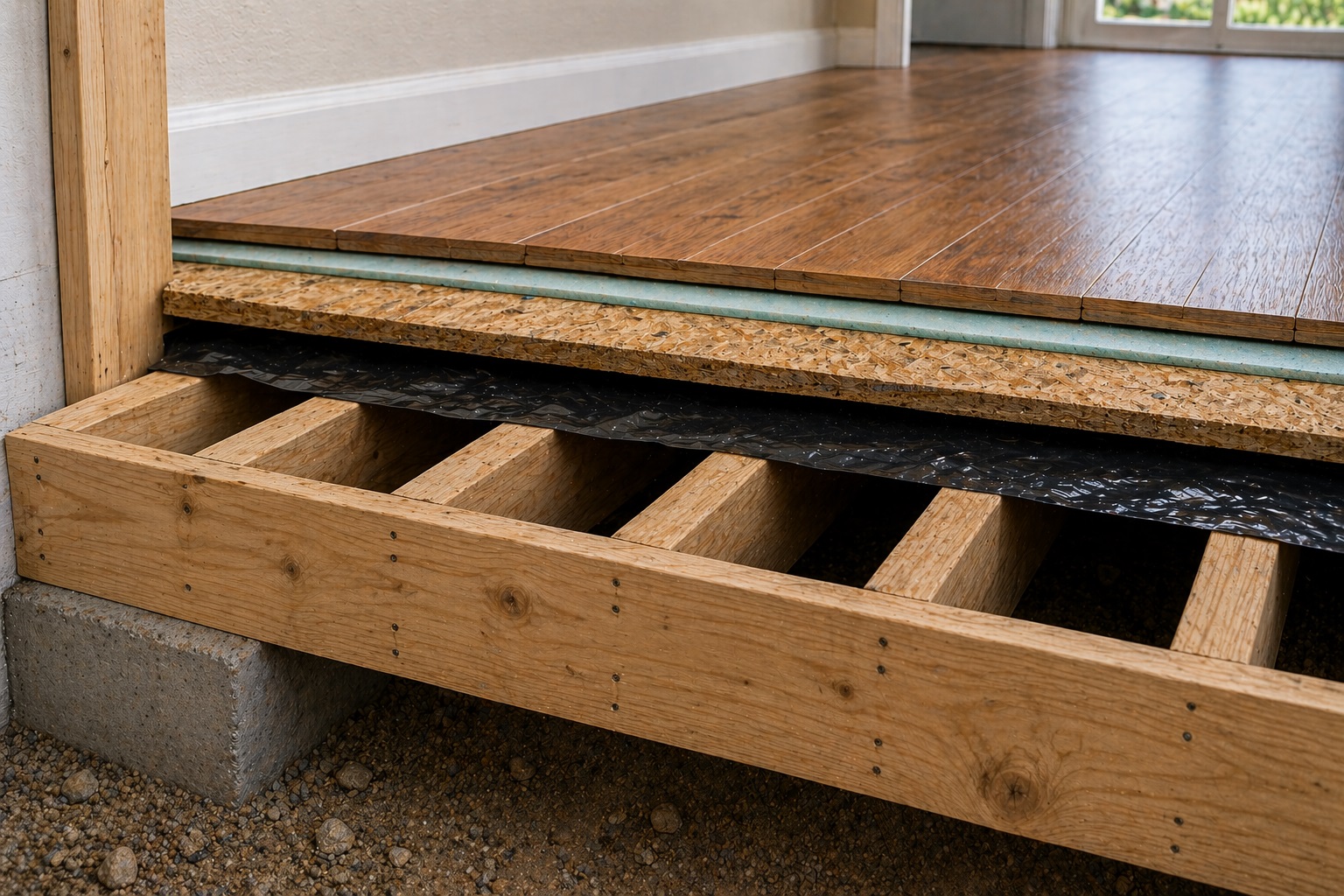
Strategy 2 — Use Proper Vapor Barriers
Vapor barriers are one of the most effective tools for preventing mold beneath flooring. These materials prevent ground moisture or subfloor moisture from migrating upward into flooring materials.
Where Vapor Barriers Are Most Important
- Concrete slab flooring systems
- Basement flooring installations
- Crawlspace flooring structures
- Areas prone to ground moisture intrusion
The right vapor barrier depends on the flooring material, subfloor type, and manufacturer requirements. Using the wrong barrier can trap moisture instead of controlling it, especially over concrete or in crawlspace conditions.
How Vapor Barriers Prevent Mold
| Function | How It Helps |
|---|---|
| Blocks moisture movement | Prevents water vapor from reaching flooring |
| Protects subfloor materials | Reduces mold risk inside floor layers |
| Maintains stable moisture levels | Improves long-term flooring durability |
Homes built on concrete slabs are especially vulnerable to ground moisture problems. If your home includes basement spaces, review moisture prevention methods in our guide to how to waterproof basements and control water intrusion.
Strategy 3 — Maintain Proper Indoor Humidity
Humidity control helps protect floors even when there is no obvious leak, because elevated indoor moisture can affect flooring materials over time.
Ways to Maintain Safe Indoor Humidity
- Use dehumidifiers during humid seasons
- Operate exhaust fans in kitchens and bathrooms
- Improve airflow in enclosed spaces
- Monitor humidity regularly using hygrometers
- Avoid indoor moisture buildup from daily activities
If humidity levels remain elevated, using properly sized equipment can make a significant difference. Learn more in our guide on how to choose and use a dehumidifier effectively.
Strategy 4 — Dry Spills and Water Intrusion Quickly
Prompt drying is critical when water contacts flooring materials. Moisture that remains trapped beneath flooring can lead to mold growth within 24 to 48 hours.
Immediate Response Steps After Water Exposure
- Remove standing water as quickly as possible
- Dry visible flooring surfaces immediately
- Use fans to circulate air
- Operate dehumidifiers to remove moisture
- Inspect beneath flooring if water entered seams, reached carpet padding, soaked under appliances, or remained for more than a short surface spill
Do not cover damp flooring with rugs, new flooring, underlayment, paint, or sealers until the moisture source is fixed and the material below the surface is confirmed dry. If the water came from sewage, flooding, or contaminated runoff, treat the flooring as a contamination risk and call a qualified restoration professional.
If flooding or major leaks occur, do not reinstall flooring until the underlayment and subfloor are dry. For wood subfloor recovery, see our guide on how to dry subfloors after water damage.
Strategy 5 — Improve Ventilation Around Flooring Areas
Poor airflow allows moisture to accumulate beneath floors, especially in enclosed spaces such as crawlspaces or basements.
Areas That Benefit From Improved Ventilation
- Crawlspaces beneath flooring
- Basement-level floors
- Bathrooms with limited airflow
- Kitchens with heavy moisture production
- Closets built over subfloor areas
Ventilation helps remove excess moisture before it becomes trapped beneath flooring materials, but it must be paired with leak control, drainage, vapor protection, and humidity management.
In crawlspaces and basement-level floors, ventilation should work together with drainage control, vapor barriers, and humidity management so moisture is not simply moved from one hidden area to another.
How to Protect Subfloors From Moisture Damage
Subfloors provide the structural base beneath finished flooring. If subfloors become wet or humid, mold can develop beneath flooring materials even when the visible surface appears dry.
Subfloor Moisture Protection Methods
- Seal exposed wood surfaces when recommended for the floor system
- Install vapor barriers when recommended for concrete slabs, basements, crawlspaces, or manufacturer-required floor systems
- Inspect subfloors for stains, softness, odor, or elevated moisture before remodeling
- Repair damaged seams, gaps, cracked grout, or lifted edges where water can enter
- Maintain consistent indoor humidity, especially in basements, bathrooms, kitchens, laundry rooms, and crawlspace-adjacent floors
Subfloor protection is especially important after water damage. If subfloors have been exposed to moisture, proper drying becomes essential to prevent long-term damage.
A finished floor may look dry while moisture remains in plywood, OSB, concrete, underlayment, or padding below the surface.
Preventing Mold During Flooring Installation
Many mold problems originate during improper flooring installation. Installing flooring without moisture protection creates long-term risks that may not appear for months or years.
Installation Practices That Reduce Mold Risk
| Installation Practice | Why It Helps |
|---|---|
| Allow materials to acclimate | Reduces moisture imbalance |
| Use moisture barriers | Prevents vapor intrusion |
| Seal seams properly | Prevents water entry |
| Test moisture before installation | Ensures safe subfloor conditions |
Testing moisture before installation helps prevent long-term mold risks. Do not install new flooring over a damp subfloor, wet concrete slab, recently flooded underlayment, or padding that has not been fully dried or replaced. Moisture testing tools are discussed in detail in our moisture levels that indicate water damage guide.
Long-Term Inspection Routines to Prevent Mold Under Flooring
Regular inspections help prevent mold under flooring because many problems begin slowly and remain hidden until staining, swelling, odors, or soft spots appear.
Recommended Flooring Inspection Schedule
| Inspection Type | Frequency | What to Check |
|---|---|---|
| Visual floor inspection | Monthly | Look for stains, swelling, or discoloration |
| Appliance area inspection | Every 3 months | Check for hidden leaks under appliances |
| Humidity monitoring | Weekly | Verify humidity stays within 30–50% |
| Subfloor inspection | Annually | Inspect crawlspaces or basement areas |
If warning signs appear during inspections, early detection becomes critical. Review our guide on signs of mold under flooring to identify symptoms before damage spreads.
Prevention Tips Based on Flooring Type
Different flooring materials require different prevention strategies. Understanding how each flooring type reacts to moisture helps reduce mold risk significantly.
Hardwood Flooring Mold Prevention
- Maintain stable humidity year-round
- Clean spills immediately
- Avoid excessive wet cleaning methods
- Use protective finishes on wood surfaces
- Inspect seams and joints regularly
Laminate Flooring Mold Prevention
- Seal exposed edges during installation
- Clean spills immediately
- Avoid prolonged moisture exposure
- Use vapor barriers when recommended
- Maintain consistent indoor humidity
Tile Flooring Mold Prevention
- Seal grout lines regularly
- Repair cracked grout quickly
- Improve ventilation in tiled rooms
- Inspect grout for discoloration
- Keep tile surfaces dry after use
Carpet Flooring Mold Prevention
- Use moisture-resistant padding
- Dry spills immediately
- Use dehumidifiers in humid rooms
- Avoid carpet installation in high-moisture areas
- Replace water-damaged padding promptly
Carpet installations are especially vulnerable to mold growth because moisture can remain trapped beneath fibers and padding.
Common Mistakes That Lead to Mold Under Flooring
Most flooring mold problems become serious when small leaks, damp subfloors, high humidity, or wet padding are covered up instead of being corrected.
Mistakes That Increase Mold Risk
| Mistake | Why It Causes Problems |
|---|---|
| Ignoring small water leaks | Moisture accumulates beneath flooring |
| Installing flooring over damp subfloors | Traps moisture beneath materials |
| Skipping vapor barrier installation | Allows moisture intrusion from below |
| Allowing high indoor humidity | Creates mold-friendly conditions |
| Delaying drying after spills | Allows moisture to penetrate floor layers |
If mold problems develop despite preventive efforts, structural drying may be necessary. Flooring, underlayment, padding, and subfloors should be evaluated before the area is covered again.
When to Call a Professional for Flooring Mold Prevention or Repair
Some moisture problems beneath flooring require professional equipment and expertise. Early professional involvement can prevent major structural damage and costly repairs.
Situations That Require Professional Help
- Repeated moisture problems under flooring
- Persistent musty odors
- Large water damage events, sewage backups, floodwater, or contaminated water exposure
- Soft, sagging, crumbling, or structurally damaged flooring or subfloor materials
- Mold contamination across large areas
- Hidden water damage suspected beneath flooring
Professional inspections often include moisture detection tools that identify hidden problems before visible damage occurs.
If you need to evaluate hidden moisture before it becomes a mold problem, start with floor-specific warning signs in our guide to signs of mold under flooring, or use moisture readings from our guide to moisture levels that indicate water damage.
Frequently Asked Questions About Preventing Mold Under Flooring
What causes mold to grow under flooring?
Mold under flooring is typically caused by trapped moisture from leaks, flooding, condensation, or elevated humidity. Moisture that remains beneath flooring materials creates ideal conditions for mold growth.
Can mold grow under tile flooring?
Yes. Although tile itself is water-resistant, moisture can enter through grout lines or cracks. Mold often develops beneath tile where moisture becomes trapped.
How do I prevent mold after water damage under flooring?
Dry visible surfaces immediately, control humidity, and check whether moisture reached the underlayment, padding, seams, or subfloor. Quick surface drying helps, but hidden layers must also dry before flooring is covered again.
Is humidity alone enough to cause mold under floors?
Yes. Prolonged humidity above 60% can introduce enough moisture into flooring materials to support mold growth, even without visible water exposure.
Should I install a vapor barrier under flooring?
Vapor barriers are strongly recommended where moisture intrusion is likely, such as basements, crawlspaces, and concrete slab installations. Always match the barrier to the flooring type, subfloor, and manufacturer requirements.
Final Prevention Checklist for Mold Under Flooring
Preventing mold under flooring depends on keeping water out of seams, subfloors, underlayment, carpet padding, and enclosed spaces where moisture dries slowly.
The most reliable prevention routine is simple: keep humidity controlled, repair leaks quickly, dry water before it reaches seams or padding, and never cover flooring until the layers below are dry.
For broader prevention planning, use our guide to preventing recurring moisture damage to connect flooring protection with leak repair, humidity control, drying, and long-term monitoring.
One Comment
Comments are closed.