Best Roof Vent Pipe Boot Repair Kits for Leaking Roof Penetrations
A cracked roof vent boot can let rainwater follow a plumbing vent pipe into the attic, insulation, ceiling, or wall cavity. The failure may look small from the roof, but repeated wetting can stain drywall, deteriorate roof decking, and create conditions that support mold growth. The right repair depends on whether only the seal around the pipe has deteriorated or the entire flashing base has failed.
The best roof vent pipe boot repair kits include secondary collars, rigid repair covers, complete asphalt-shingle flashing assemblies, split retrofit boots for pipes that cannot be disconnected, and heat-resistant silicone boots for compatible metal-roof penetrations. These products are not interchangeable. A collar can cover a cracked rubber opening, but it cannot correct a rusted flange, lifted shingles, loose fasteners, or water entering beneath the flashing base.
This guide compares six practical options for asphalt-shingle and metal roofs. Before purchasing, identify the pipe diameter, roofing material, roof slope, pipe temperature, and condition of the original flashing.
As an Amazon Associate, this site earns from qualifying purchases. This does not affect the price you pay. Our recommendations are based on research, product reliability, and real-world usability in moisture-prone environments.
Quick Picks: Roof Vent Pipe Boot Repair and Replacement Options
- Best Overall Gasketless Replacement for Asphalt-Shingle Roofs: Perma-Boot 82885 Adjustable 3-in-1 Roof Vent Pipe Flashing
- Best Budget Secondary Repair Collar: Oatey 14136 Rain Collar for No-Calk Roof Flashings
- Best Repair Cover for 4-Inch Plumbing Vent Pipes: Perma-Boot 82873 4-Inch Roof Vent Pipe Boot Repair
- Best Split Retrofit Boot for Metal Roofs: Oatey 14049 Retro Master Flash
- Best Heavy-Duty Retrofit for Larger Metal-Roof Pipes: Dektite RF802G Retrofit EPDM Flexible Pipe Flashing
- Best High-Temperature Silicone Retrofit for Metal Roofs: Dektite RF901RE Retrofit Silicone Flexible Pipe Flashing
Six Roof Vent Boot Solutions for Different Leak and Roof Types
Before choosing a product: If you are still determining where the water is entering, begin with Signs Roof Penetrations Are Leaking. A damp pipe in the attic does not automatically prove that the rubber boot is the only failed component.
Best Overall Gasketless Replacement for Asphalt-Shingle Roofs: Perma-Boot 82885 Adjustable 3-in-1 Roof Vent Pipe Flashing
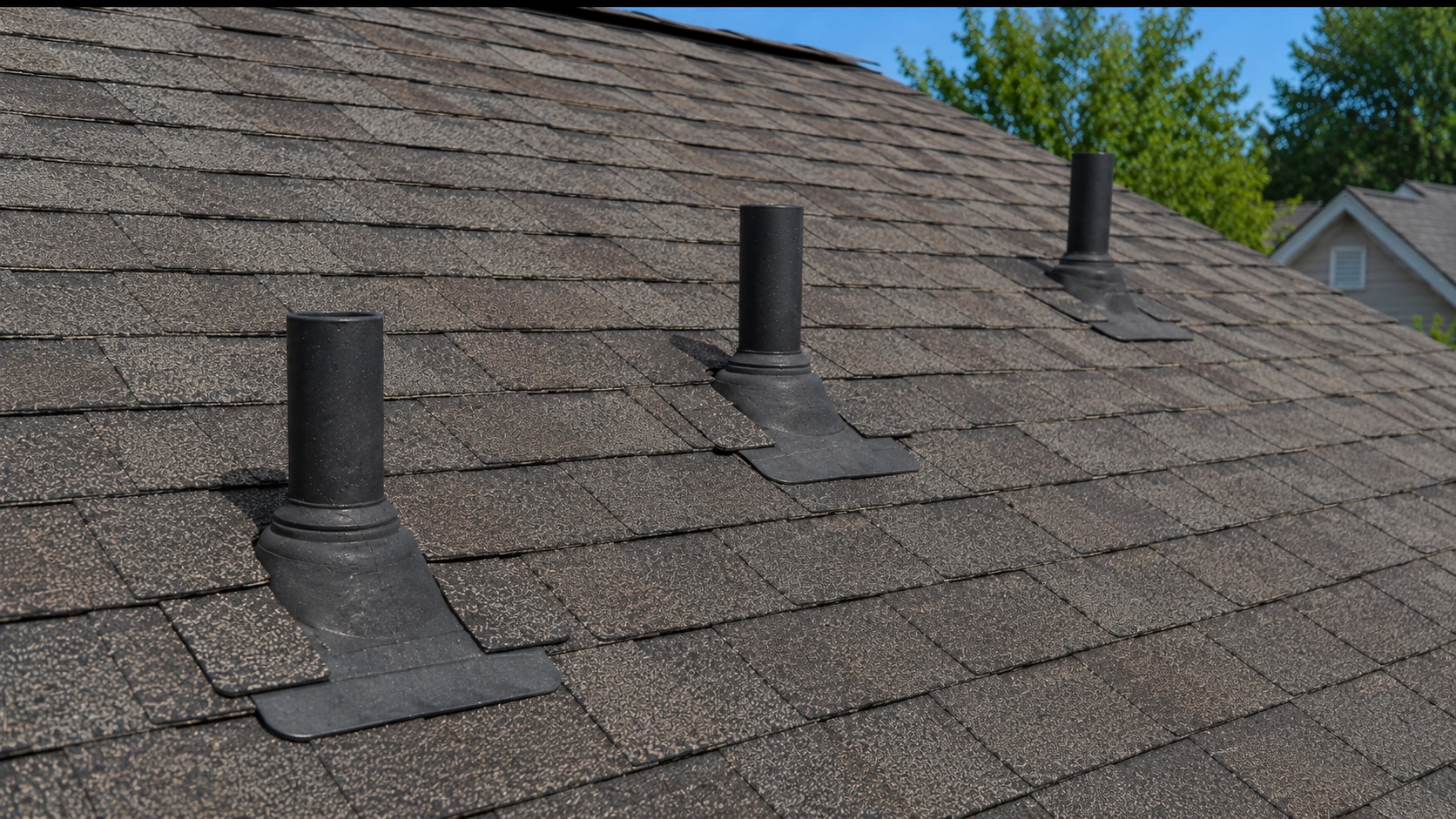
The Perma-Boot 82885 is the most complete asphalt-shingle option in this comparison. Rather than relying on a conventional exposed rubber gasket that can crack after years of ultraviolet exposure, it uses a rigid, gasketless flashing system. The adjustable design accommodates several common residential plumbing vent sizes, making it more versatile than a fixed-size boot.
This product is best treated as a complete flashing system rather than a simple collar that slips over a failed seal. Its flange must be integrated correctly with the roofing so that water flows over the lower portion of the flashing instead of underneath it. That makes installation more involved, but it also addresses more of the roof penetration than a small repair collar.
Key Features
- Adjustable configuration for common 1.5-, 2-, and 3-inch plumbing vent pipes
- Gasketless rigid-plastic design avoids the usual exposed rubber pipe collar
- Designed for common asphalt-shingle roof slopes
- Complete assembly includes a flange, base section, and upper cover
- Can also suit certain wood-shake, slate, or composite roof installations when installed correctly
- Intended for plumbing vent stacks rather than high-temperature exhaust pipes
Pros
- ✔ Avoids another conventional exposed rubber gasket
- ✔ Covers several common residential pipe sizes
- ✔ More complete than a collar-only repair
- ✔ Strong choice during reroofing or full vent-flashing replacement
Cons
- ✖ Requires proper integration with shingles and underlayment
- ✖ More installation work than a slide-over collar
- ✖ Not intended for hot flues or combustion-vent systems
- ✖ Existing shingles may need to be loosened or replaced around the opening
Best For
- Homeowners replacing a failed vent flashing on an asphalt-shingle roof
- Reroofing projects where the old flashing can be removed
- Common 1.5-, 2-, or 3-inch plumbing vent stacks
- Situations where avoiding another exposed rubber gasket is a priority
Best Budget Secondary Repair Collar: Oatey 14136 Rain Collar for No-Calk Roof Flashings
The Oatey 14136 is a focused repair product for a common failure: deterioration immediately around the plumbing vent pipe while the original flashing base remains sound. It slides over the pipe and existing collar to create a secondary water-shedding barrier.
This is the least invasive option in the lineup, but it also has the narrowest job. It should not be used to hide a corroded metal base, cracked plastic flange, loose flashing, failed fasteners, or poor shingle integration. Think of it as a secondary collar for a localized seal failure, not a replacement for the entire roof flashing.
Key Features
- Designed for compatible plumbing vent pipes approximately 1.5 to 3 inches in diameter
- Slides over an existing no-calk flashing collar
- Does not require removal of the original flashing base
- Compact design limits disturbance to surrounding shingles
- Made by an established plumbing and roof-flashing manufacturer
- Designed as a secondary water shield rather than a complete flashing assembly
Pros
- ✔ Straightforward solution for a deteriorated pipe collar
- ✔ Minimal disturbance to the roof surface
- ✔ Useful when the flashing base remains flat and watertight
- ✔ Easier for many homeowners than full flashing replacement
Cons
- ✖ Does not repair leaks beneath the flashing base
- ✖ Cannot correct rust, lifting, cracking, or poor installation
- ✖ More limited than a complete replacement system
- ✖ Pipe sizing must still be checked before purchase
Best For
- A cracked or hardened rubber collar around a plumbing vent
- A secondary collar repair when the original flange remains sound and properly integrated
- Homeowners who want to avoid disturbing otherwise serviceable shingles
- Lower-risk roofs that can be accessed safely
Check the Oatey 14136 Rain Collar on Amazon to see current availability.
Best Repair Cover for 4-Inch Plumbing Vent Pipes: Perma-Boot 82873 4-Inch Roof Vent Pipe Boot Repair
The Perma-Boot 82873 fills an important size gap because many adjustable residential repair products stop at 3-inch pipes. This model is designed specifically for a 4-inch plumbing vent and fits over the existing vent-boot area without requiring a full conventional flashing replacement.
Its rigid cover design can be useful when the original rubber seal has split or pulled away from the pipe but the lower flashing base is still properly integrated into the shingles. As with any cover-style repair, inspecting the base first is essential. A cover over the pipe cannot stop water that is already entering beneath a lifted or deteriorated flange.
Key Features
- Fixed-size design for a 4-inch plumbing vent pipe
- Rigid gasketless cover rather than a conventional exposed rubber collar
- Designed for asphalt-shingle roofs
- Installs over the existing boot area without removing the entire flashing base
- Suitable for a broad range of common residential roof pitches
- No specialized roofing sealant is intended to serve as the main water barrier
Pros
- ✔ One of the few purpose-built repair covers for 4-inch plumbing vents
- ✔ Avoids repeating the same rubber-gasket failure point
- ✔ Less disruptive than replacing shingles and flashing
- ✔ Clear fixed sizing reduces uncertainty for a verified 4-inch pipe
Cons
- ✖ Only useful for the specified pipe size
- ✖ Does not replace a damaged flashing base
- ✖ Requires adequate vent height and clearance for the cover
- ✖ Not suitable for hot chimney or appliance flue pipes
Best For
- Four-inch plumbing vent stacks on asphalt-shingle roofs
- Cracked or missing rubber seals with an otherwise sound base
- Homeowners who want a cover-style repair instead of conventional rubber
- Roofs where the original shingles and flashing remain properly positioned
Check the Perma-Boot 82873 4-Inch Roof Vent Pipe Boot Repair on Amazon to see current availability.
Best Split Retrofit Boot for Metal Roofs: Oatey 14049 Retro Master Flash
The Oatey 14049 Retro Master Flash is designed for profiled metal roofing rather than asphalt shingles. Its flexible EPDM cone can be cut to the required pipe diameter, while the formable metal base follows ribs and panel contours. The split retrofit design allows it to wrap around an existing penetration that cannot easily be disconnected from above.
This model is useful for plumbing vents, conduits, and other compatible penetrations within the manufacturer’s pipe-size and temperature limits. It should not be substituted for a shingle flashing. Metal-panel installations depend on correct shaping, compatible sealant, and properly placed fasteners around the base.
Key Features
- Split retrofit construction for pipes that cannot be disconnected
- Designed for approximately 1/4- to 4-inch pipes when cut according to the manufacturer’s sizing guide
- Flexible EPDM cone for compatible moderate-temperature penetrations
- Formable metal base conforms to profiled metal roofing
- Designed to accommodate normal movement and vibration around penetrations
- Approximately 8-by-8-inch base on the selected model
Pros
- ✔ Can be installed around an existing obstructed pipe
- ✔ Better suited to corrugated and ribbed metal roofs than shingle flashings
- ✔ Established brand with documented flashing products
- ✔ Flexible base can follow common panel profiles
Cons
- ✖ Not the right product for ordinary asphalt-shingle roofs
- ✖ Requires careful cutting to avoid making the opening too large
- ✖ Fastening and sealant quality directly affect the finished repair
- ✖ Standard EPDM is not suitable for every high-temperature penetration
Best For
- Plumbing vents and compatible service pipes through metal roofs
- Pipes that cannot be removed or disconnected during flashing work
- Profiled panels requiring a formable flashing base
- Moderate-temperature pipes within the product’s cutting range
Check the Oatey 14049 Retro Master Flash on Amazon to see current availability.
Best Heavy-Duty Retrofit for Larger Metal-Roof Pipes: Dektite RF802G Retrofit EPDM Flexible Pipe Flashing
The Dektite RF802G is a larger split EPDM flashing for metal-roof penetrations. Its broad pipe range and larger flexible base make it more appropriate than compact boots when the penetration is too large for a standard plumbing-vent flashing.
The boot opens along its split, wraps around the pipe, and is closed before the base is shaped to the roofing profile. It is a stronger fit for larger exhaust, service, or utility penetrations than for a small residential plumbing stack. Exact suitability still depends on the pipe’s outside diameter, operating temperature, and the roof-panel configuration.
Key Features
- Split retrofit design for existing or obstructed pipes
- Cut-to-fit range for approximately 2- to 7-1/4-inch outside-diameter pipes
- EPDM construction for compatible moderate-temperature applications
- Broad flexible base for shaping over metal panels
- Cut-to-fit cone allows the opening to be matched closely to the pipe
- Designed to tolerate normal roof and pipe movement
Pros
- ✔ Handles larger-diameter penetrations
- ✔ Can be installed without disconnecting the top of the pipe
- ✔ Broad base provides useful coverage around an existing opening
- ✔ Established specialist manufacturer of flexible roof flashings
Cons
- ✖ Unnecessary for a small plumbing vent
- ✖ EPDM temperature limits must be respected
- ✖ Installation requires compatible sealant and correctly spaced fasteners
- ✖ Mainly intended for metal roofing, not asphalt shingles
Best For
- Larger pipes passing through corrugated or ribbed metal roofs
- Existing pipes that cannot be disconnected
- Repairs where a compact flashing base would not provide enough coverage
- Moderate-temperature penetrations within the EPDM rating
Check the Dektite RF802G Retrofit EPDM Flexible Pipe Flashing on Amazon to see current availability.
Best High-Temperature Silicone Retrofit for Metal Roofs: Dektite RF901RE Retrofit Silicone Flexible Pipe Flashing
The Dektite RF901RE uses silicone instead of standard EPDM, giving it a higher operating-temperature range for compatible roof penetrations. Its split design allows installation around an existing pipe, and its flexible base is intended to conform to metal roofing profiles.
This is not a universal chimney boot. High-temperature appliance vents, wood-stove systems, factory-built chimneys, and gas vents may have specific clearance, support, storm-collar, and flashing requirements. The silicone material makes this product the strongest heat-resistant option in the comparison, but the pipe-system manufacturer’s instructions remain controlling.
Key Features
- High-temperature silicone construction
- Split retrofit design for obstructed pipes
- Cut-to-fit range for approximately 3/4- to 2-3/4-inch outside-diameter pipes
- Flexible base designed for metal roofing profiles
- Continuous service range of approximately −58°F to 392°F, subject to the requirements of the specific vent system
- Suitable only when the exact penetration system permits this flashing type
Pros
- ✔ Better heat resistance than ordinary EPDM flashing
- ✔ Installs around pipes that cannot be disconnected
- ✔ Flexible base conforms to common metal-roof shapes
- ✔ Fills a distinct need not covered by plumbing-vent repair collars
Cons
- ✖ Not automatically approved for every chimney or flue
- ✖ More specialized than a standard plumbing vent boot
- ✖ Incorrect cutting can weaken the seal around the pipe
- ✖ Not intended as an asphalt-shingle flashing
Best For
- Compatible hotter pipes passing through metal roofing
- Penetrations exceeding the practical temperature range of ordinary EPDM
- Existing pipes that cannot be separated for installation
- Projects where the vent or appliance manufacturer permits a silicone retrofit boot
Compare Repair Collars, Gasketless Flashings, and Metal-Roof Retrofit Boots
| Product | Category | Roof Type | Pipe Size or Range | Best Use Case | Key Strength | Main Limitation | Amazon |
|---|---|---|---|---|---|---|---|
| Perma-Boot 82885 Adjustable 3-in-1 | Best Overall Gasketless Replacement | Asphalt shingles and compatible steep-slope roofing | 1.5, 2, and 3 inches | Full replacement around a common plumbing vent | Rigid gasketless system covering several common vent sizes | Requires correct integration with the roof covering | View on Amazon |
| Oatey 14136 Rain Collar | Best Budget Secondary Collar | Existing compatible no-calk roof flashing | Approximately 1.5 to 3 inches | Cracked pipe collar with a sound flashing base | Minimal disturbance to the roof surface | Does not repair the flange or shingle integration | View on Amazon |
| Perma-Boot 82873 | Best 4-Inch Repair Cover | Asphalt shingles | 4 inches | Four-inch plumbing vent with a serviceable flashing base | Purpose-built rigid cover for a less common vent size | Only works when the existing flashing base is sound | View on Amazon |
| Oatey 14049 Retro Master Flash | Best Split Metal-Roof Retrofit | Profiled metal roofing | Approximately 1/4 to 4 inches | Compatible smaller penetrations that cannot be disconnected | Split EPDM boot with a formable metal base | Not intended for asphalt-shingle flashing replacement | View on Amazon |
| Dektite RF802G | Best Heavy-Duty Large-Pipe Retrofit | Profiled metal roofing | Approximately 2 to 7.25 inches outside diameter | Larger moderate-temperature pipes through metal roofs | Large pipe range and broad flexible base | Standard EPDM has temperature limitations | View on Amazon |
| Dektite RF901RE | Best High-Temperature Silicone Retrofit | Profiled metal roofing | Approximately 0.75 to 2.75 inches outside diameter | Compatible hotter penetrations through metal roofs | Higher heat resistance than standard EPDM | Not universally approved for every chimney or flue | View on Amazon |
Choose a Collar, Repair Cover, or Complete Vent Flashing
Determine Whether the Collar or the Entire Flashing Has Failed
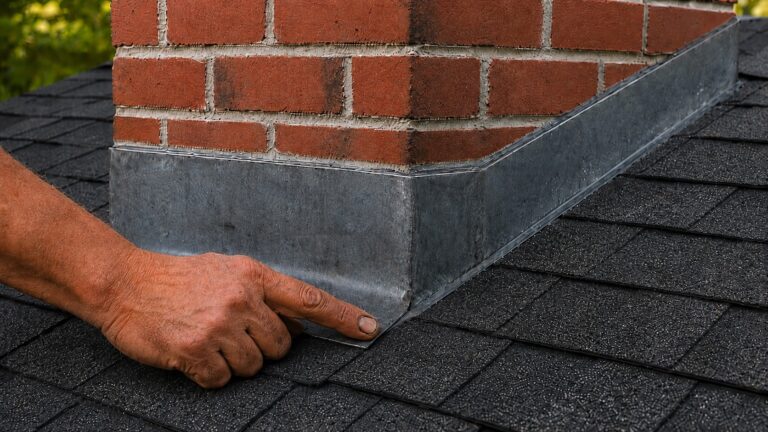
Begin by identifying the actual water-entry point. A cracked rubber collar is one of the most visible failures, but it is not the only possibility. Water can also enter beneath the uphill edge of the flange, through exposed fasteners, around deteriorated sealant, beneath loosened shingles, or through a split or corroded flashing base.
A secondary collar such as the Oatey 14136 makes sense when the base remains flat, intact, and correctly integrated. A repair cover such as the 4-inch Perma-Boot 82873 can work when the original flashing base remains reliable but the pipe seal has failed. The Perma-Boot 82885 is a complete flashing assembly and requires proper integration with the roofing. When the flange is cracked, rusty, loose, badly installed, or leaking beneath the shingles, replace or professionally rebuild the complete flashing assembly.
Review Signs Roof Flashing Is Failing and Why Roof Flashing Failures Cause Leaks before assuming a collar will solve the problem.
Match the Product to the Roofing Material
Asphalt shingles and metal panels shed water differently. Shingle flashings normally use a broad rigid or semi-rigid flange woven into the roofing courses. The uphill portion goes beneath the shingles, while the lower portion remains above the roofing so water can drain over it.
Metal-roof boots usually use a flexible base that can be formed over ribs and valleys. That base is sealed and fastened to the panel. A flexible metal-roof boot should not automatically be placed beneath shingles, and a rigid shingle flashing may not conform properly to a ribbed metal panel.
Measure the Pipe’s Outside Diameter
Measure the outside of the actual pipe rather than relying only on the nominal plumbing size. This is especially important for metal-roof boots because their cutting charts are generally based on outside diameter.
Do not cut a flexible cone to the largest likely mark and hope the seal will tighten. The opening should normally be slightly smaller than the pipe so the material stretches around it according to the manufacturer’s directions.
Confirm Whether the Pipe Can Be Disconnected
A conventional one-piece flashing must slide over the top of the pipe. That may be easy with an open plumbing vent but impossible around an electrical mast, fixed cap, exhaust assembly, or pipe connected to equipment.
Split retrofit boots open along one side and close around the pipe. They are useful when the pipe cannot be disconnected, but the seam must be closed exactly as directed.
Check the Pipe Temperature
Black or gray EPDM boots work well for many ordinary plumbing and service penetrations, but they have a lower heat limit than silicone. Red silicone boots are commonly used where higher temperature resistance is required.
Material color alone is not enough to establish safety. Verify the flashing rating and the requirements for the exact appliance, chimney, vent connector, or exhaust pipe. Some systems require specific listed components and clearances that a generic flexible boot cannot replace.
Consider Roof Pitch and Access
A product may fit the pipe but still be inappropriate for the roof slope. Confirm the stated pitch range, especially on steep roofs. More importantly, do not treat product compatibility as proof that the installation is a safe do-it-yourself project.
A steep, wet, icy, moss-covered, fragile, or unusually high roof should be left to a qualified roofer. Professional help is also appropriate when shingles, decking, underlayment, or surrounding flashing are already damaged. The broader Most Common Roofing Material Failures guide can help put a failed pipe boot in the context of the rest of the roof system.
Call a roofer instead of installing a cover when: the flashing base is rusted, cracked, lifted, or poorly layered; surrounding shingles are damaged; decking feels soft; the leak path is uncertain; or the roof is steep, wet, fragile, or otherwise unsafe to access.
Prepare and Install a Vent Boot Without Creating New Leak Paths
Inspect From the Attic Before Buying a Repair
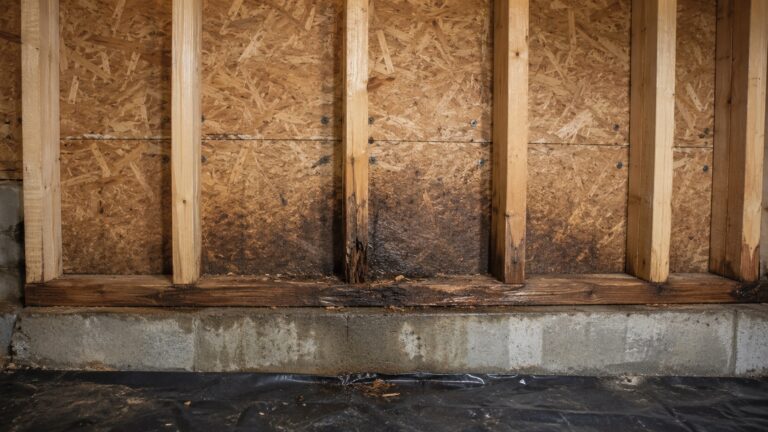
When safe access is available, inspect the underside of the roof around the pipe. Look for darkened decking, rusty nail points, damp insulation, water tracks, staining below the flange, and evidence that water has traveled along a rafter.
For a broader inspection sequence, see How to Inspect Roof Areas for Leak Damage.
Remember that visible dripping may occur downhill from the actual entry point. A pipe that appears wet does not always mean the rubber collar is the only source.
Clean the Existing Surface Carefully
Dirt, oxidation, old sealant, and loose roofing granules can interfere with a repair. Clean only as aggressively as the roofing material permits. Avoid scraping through protective coatings on metal panels or damaging brittle shingles around an older vent.
Follow the Cutting Guide on Flexible Boots
Use the molded size markings or manufacturer chart. Cut evenly with suitable snips or a sharp utility knife. An oversized opening may not seal against the pipe, while a severely undersized opening can place excessive stress on the boot.
Shape Metal-Roof Bases Before Final Fastening
Press the flexible base carefully into the panel profile. The flange should sit evenly without bridging over deep ribs or leaving gaps in panel valleys. Use only sealants and fasteners compatible with the roof material and flashing manufacturer.
Integrate Shingle Flashing With the Water-Shedding Layers
A full shingle-roof replacement must work with gravity. The uphill flange generally belongs beneath the upper shingles, while the lower section sheds water on top of the shingles below. Roofing cement around every exposed edge is not a substitute for correct layering.
Test the Repair Without Flooding the Roof
After installation, observe the area during natural rainfall or use a controlled low-flow hose test from the lowest area upward. Do not spray water forcefully beneath shingles or uphill into seams because that can create an artificial leak that normal rainfall would not produce.
Have another person observe the attic when practical. If the area has already been wet, allow time for the decking and insulation to dry before deciding whether new moisture has appeared.
Vent Boot Repair Mistakes That Can Leave the Roof Leaking
- Covering a failed flange with another collar: A collar cannot correct water entering beneath a loose, cracked, or rusted flashing base.
- Using a metal-roof boot on asphalt shingles: The flexible base may not integrate correctly with shingle courses and underlayment.
- Using a shingle flashing on ribbed metal panels: A rigid flange may bridge over profiles and leave unsealed channels.
- Buying by nominal pipe size alone: Always compare the actual outside diameter with the product’s sizing chart.
- Cutting a flexible boot opening too large: Removing too much material can prevent the cone from gripping the pipe.
- Assuming every red silicone boot fits every flue: Appliance and chimney systems can require listed components, clearances, and specialized flashing details.
- Relying on roof sealant as the primary repair: Sealant is an installation accessory, not a substitute for a properly layered flashing assembly.
- Fastening through the wrong part of a shingle flashing: Exposed fasteners uphill of the pipe can become new leak points.
- Ignoring wet decking or insulation: The roof leak may be stopped while trapped moisture remains below it.
- Working on an unsafe roof: Product savings do not justify a fall risk. Use a qualified roofer when access is questionable.
Homeowners planning a safe, limited repair may also find the tool guidance in Best Roof Repair Tools for Homeowners useful.
Questions Homeowners Ask Before Covering or Replacing a Vent Boot
Can I install a new repair collar over the old rubber boot?
Yes, when the deterioration is limited to the rubber seal around the pipe and the original flashing base remains intact, flat, and properly integrated with the roof. The Oatey rain collar is intended for this type of secondary protection. Do not use a collar to conceal a cracked, rusted, lifted, or poorly installed flange.
Is a roof vent boot repair permanent?
It depends on the repair type and the underlying condition. A rigid gasketless system or correctly installed complete flashing may provide a longer-term solution than a simple secondary collar. A collar installed over an aging base should be viewed more cautiously because the original flashing remains part of the water barrier.
Should I replace the entire vent flashing or just cover the old boot?
Use a cover or collar when the base and surrounding roof are demonstrably sound. Replace the complete assembly when the base is rusted, split, warped, loose, improperly layered, or leaking beneath the roofing. Full replacement is also more appropriate when nearby shingles or underlayment must be repaired.
Can Perma-Boot products be used on metal roofs?
The Perma-Boot products in this comparison are primarily intended for asphalt-shingle and other compatible steep-slope roofing installations. For profiled metal panels, use a product specifically designed with a formable metal-roof base, such as the Oatey Retro Master Flash or an appropriate Dektite model.
Is EPDM or silicone better for a roof pipe boot?
Neither material is universally better. EPDM is appropriate for many ordinary plumbing vents and moderate-temperature penetrations. Silicone is better suited to certain higher-temperature applications. The correct choice depends on the pipe temperature, roof material, exposure, and manufacturer requirements.
Can I use roofing caulk instead of replacing a cracked boot?
Roofing caulk may temporarily slow water entry in some circumstances, but it does not restore a badly deteriorated rubber collar or correct failed flashing geometry. Caulk should be used only where appropriate as part of a compatible installation, not as the main long-term structure of the repair.
How do I know whether water is entering around the pipe or beneath the flashing?
Inspect the collar for splits and gaps, then examine the flashing base, fasteners, shingle edges, and attic-side water tracks. Water beneath the flange may appear below the pipe, downhill from it, or along a rafter. When the pathway is uncertain, a roofer can perform a controlled inspection before materials are purchased.
Can a leaking vent boot cause mold?
A leaking boot does not automatically cause mold, but repeated moisture can wet wood, insulation, drywall, and dust-containing surfaces. Mold risk increases when those materials remain damp. Repair the water entry, remove or dry wet materials as appropriate, and investigate any persistent odor or staining.
Final Recommendation: Match the Repair to the Failed Part
For a full asphalt-shingle flashing replacement around a common plumbing vent, the Perma-Boot 82885 Adjustable 3-in-1 is the strongest option in this comparison. Its gasketless design avoids repeating the exposed rubber-collar failure found on many conventional boots.
Choose the Oatey 14136 Rain Collar when the existing flashing base remains sound and only the seal around the pipe needs secondary protection. For a confirmed 4-inch plumbing vent with a serviceable base, the Perma-Boot 82873 provides a more specialized rigid repair cover.
On a metal roof, the Oatey 14049 Retro Master Flash is the better general-purpose split retrofit for compatible smaller penetrations. The Dektite RF802G offers additional range for larger pipes. When the penetration operates above normal EPDM limits and the pipe system permits this flashing style, consider the Dektite RF901RE silicone retrofit.
The most important decision is not the brand. It is choosing the correct repair level. A collar belongs over a sound flashing base. A failed base, damaged shingle integration, wet decking, or uncertain water pathway calls for a complete replacement or professional roof inspection.