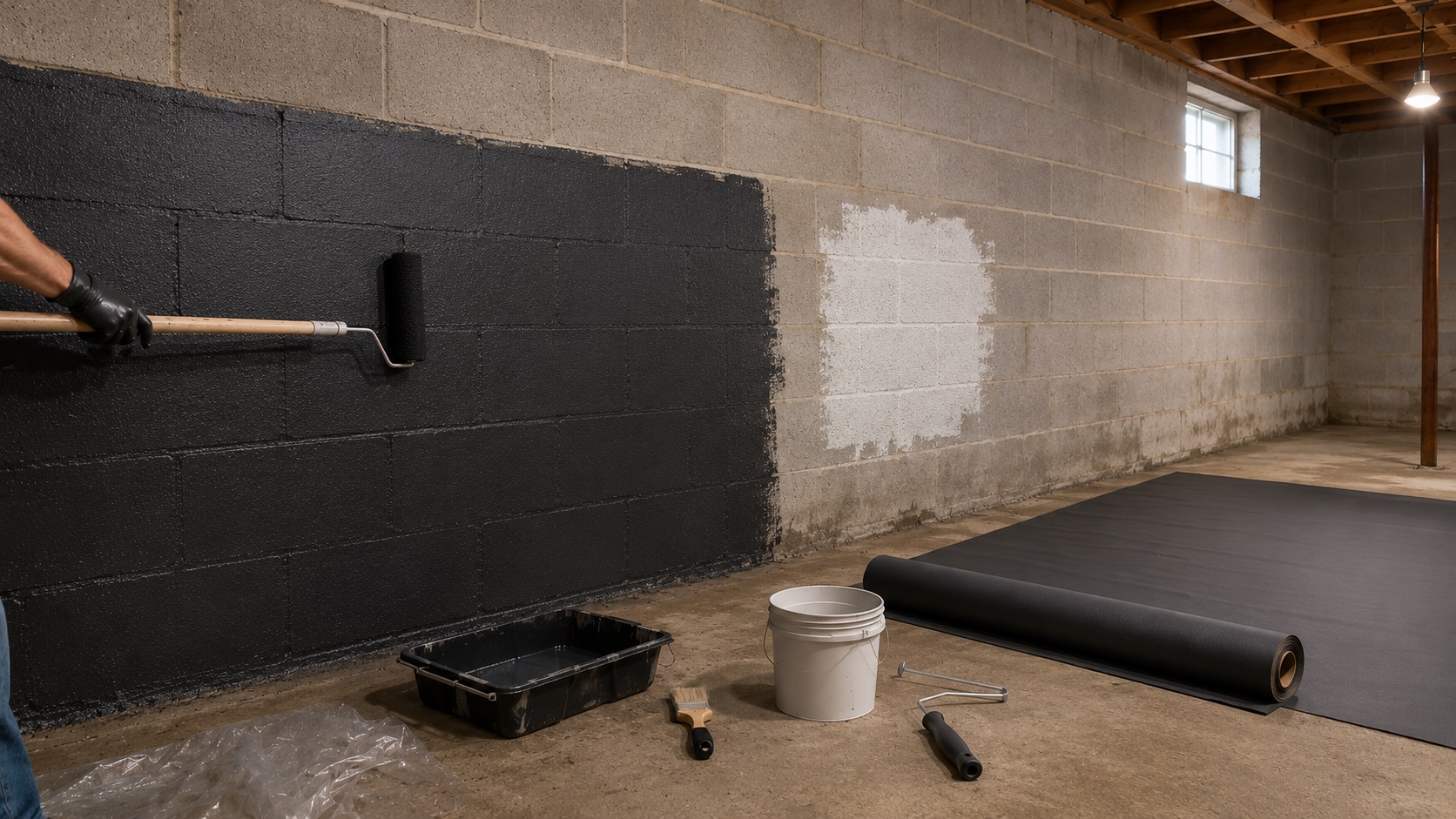
Best Waterproofing Membranes for Basements
Introduction
Basement moisture problems are frustrating because they rarely come from just one source. Damp concrete walls, minor seepage, slab moisture, wet basement bathrooms, and flooring installed over concrete all require different kinds of protection. That is why choosing the best waterproofing membranes for basements is not as simple as buying one coating and expecting it to solve every leak.
A liquid-applied membrane may help protect prepared concrete or masonry walls. A masonry waterproofing coating may be enough for light dampness. A sheet membrane may be better for tiled basement wet areas. A vapor barrier film may be the right choice under floating basement flooring. The key is matching the product to the surface, the moisture source, and the severity of the problem.
This guide compares practical Amazon-available options for homeowners who want better moisture protection in basement spaces. For a broader system-level explanation, see our guide on How to Waterproof Basements and Control Water Intrusion.
As an Amazon Associate, this site earns from qualifying purchases. This does not affect the price you pay. Our recommendations are based on research, product reliability, and real-world usability in moisture-prone environments.
Quick Picks Summary
- Best Overall: Liquid Rubber Basement and Foundation Repair Sealant
- Best Flexible Liquid Rubber Membrane: AMES Blue Max White Liquid Rubber Waterproofer
- Best Budget Basement Wall Coating: KILZ Basement and Masonry Waterproofing Paint
- Best for Basement Bathrooms and Tile Areas: Custom Building Products RedGard Waterproofing & Crack Prevention Membrane
- Best Sheet Membrane for Basement Wet Areas: Schluter Kerdi Bonded Waterproofing and Vapor-Retardant Membrane
- Best Under-Floor Vapor Barrier: ROBERTS 70-115 Moisture Barricade Underlayment Film
Basement Waterproofing Membrane Reviews
Liquid Rubber Basement and Foundation Repair Sealant: Best Overall
Liquid Rubber Basement and Foundation Repair Sealant is the strongest overall choice for homeowners who want a flexible waterproofing membrane specifically aimed at basement and foundation surfaces. It is best suited for prepared concrete, masonry, and foundation areas where a brush-on or roller-applied membrane makes sense. It is not a substitute for fixing active structural leaks, failed exterior drainage, or serious foundation cracks, but it is one of the most directly relevant products for basement waterproofing projects.
This product fits well in basements where walls show minor dampness, where the surface has already been cleaned and repaired, or where a homeowner wants an added protective coating before finishing or improving a basement area. If water is entering because of soil pressure or exterior drainage failure, read our guide on why hydrostatic pressure causes basement leaks before relying on an interior coating alone.
Key Features
- Liquid-applied waterproofing membrane for basement and foundation use
- Flexible coating that can move better than rigid paints when properly applied
- Can be used on interior or exterior foundation surfaces when the project conditions are suitable
- Works with brush, roller, or similar coating methods depending on surface and project size
- Useful for homeowners who want a membrane-style product rather than a simple masonry paint
Pros
- ✔ Very strong match for basement and foundation waterproofing projects
- ✔ Flexible liquid membrane format is useful on concrete and masonry surfaces
- ✔ Good option when the goal is a thicker protective coating
- ✔ More basement-specific than many general-purpose waterproof coatings
Cons
- ✖ Surface preparation is critical for good results
- ✖ May require multiple coats to build the needed film thickness
- ✖ Not a standalone fix for active water intrusion, major cracks, or failed drainage
- ✖ Coverage can drop significantly on rough or porous surfaces
Best For
- Homeowners who want a flexible basement foundation membrane
- Prepared basement walls with minor dampness or previous seepage concerns
- Foundation surfaces that need a heavier coating than standard waterproofing paint
AMES Blue Max White Liquid Rubber Waterproofer: Best Flexible Liquid Rubber Membrane
AMES Blue Max White Liquid Rubber Waterproofer is another strong liquid membrane option for basement and foundation-related moisture control. It is a good fit for homeowners who want a flexible coating but prefer a white waterproofing product instead of a black foundation coating. Because it is a liquid-applied product, it can conform to irregular surfaces more easily than sheet products, provided the wall is clean, sound, and properly prepared.
This is a practical choice for basement walls, below-grade foundation areas, and other masonry or concrete surfaces where the goal is added water resistance. Like any membrane, it should be used as part of a moisture-control strategy, not as a way to ignore exterior grading, gutters, cracks, sump pump problems, or drainage failures. If the basement leaks mostly during storms, compare this product choice with the causes explained in why basement walls leak during rain.
Key Features
- Flexible liquid rubber waterproofing coating
- White finish can be more visually acceptable than black coatings in some basement spaces
- Designed for multiple waterproofing applications, including basement and foundation use
- Can help create a continuous coating over prepared surfaces
- Useful where small surface irregularities make sheet membranes impractical
Pros
- ✔ Strong flexible membrane alternative to Liquid Rubber
- ✔ White color may work better for visible interior basement walls
- ✔ Good choice for masonry and concrete surfaces when properly prepared
- ✔ More versatile than products meant only for tile or flooring
Cons
- ✖ Needs careful surface cleaning and drying before application
- ✖ Not ideal for active leaks or wet walls during application
- ✖ Multiple coats may be needed for full protection
- ✖ Should not be confused with a full exterior waterproofing system
Best For
- Interior basement wall coating where a white flexible membrane is preferred
- Homeowners who want a liquid rubber product for concrete or masonry
- Basement walls that need a flexible protective layer after the moisture source is addressed
Check the AMES Blue Max White Liquid Rubber Waterproofer on Amazon to see current availability.
KILZ Basement and Masonry Waterproofing Paint: Best Budget Basement Wall Coating
KILZ Basement and Masonry Waterproofing Paint is a better choice for homeowners who need a practical waterproofing coating rather than a thick flexible membrane. It is designed for concrete, brick, cinder block, and masonry surfaces, making it a natural fit for unfinished basement walls where the main concern is dampness, staining, or minor moisture movement rather than active leaking.
This product is best understood as a basement wall coating, not a full membrane system. That distinction matters. If the wall has visible seepage, puddling, structural cracking, or water pressure pushing through the wall, the first step is diagnosing the source. Our guide on how to prevent water seepage through basement walls explains why drainage, wall condition, and exterior water management matter before applying any coating.
Key Features
- Waterproofing paint for basement and masonry surfaces
- Designed for concrete, brick, stucco, and cinder block walls
- Interior and exterior use depending on project conditions
- More familiar application process for DIY homeowners
- Good option for improving bare masonry walls after preparation
Pros
- ✔ Easier for many homeowners to apply than heavy liquid membranes
- ✔ Good fit for concrete block and masonry basement walls
- ✔ Useful when the goal is a cleaner, brighter wall coating
- ✔ Strong option for light dampness and general wall protection
Cons
- ✖ Less flexible than liquid rubber membrane products
- ✖ Not the best choice for moving cracks or active seepage
- ✖ Can fail if applied over dirty, chalky, glossy, or wet surfaces
- ✖ May be mistaken for a cure-all basement waterproofing system
Best For
- Budget-conscious homeowners with concrete or block basement walls
- Basements with mild dampness rather than active water intrusion
- Unfinished walls where a waterproofing paint is more practical than a thick membrane
Check the KILZ Basement and Masonry Waterproofing Paint on Amazon to see current availability.
Custom Building Products RedGard Waterproofing & Crack Prevention Membrane: Best for Basement Bathrooms and Tile Areas
Custom Building Products RedGard Waterproofing & Crack Prevention Membrane is not the product I would choose first for coating general basement foundation walls. Its best role in this article is more specific: basement bathrooms, laundry areas, tiled floors, shower surrounds, and other wet-area substrates where a tile-compatible waterproofing and crack-prevention membrane is needed.
That narrower use case is important. RedGard can be a strong product when used in the right assembly, but it should not be presented as a fix for foundation seepage, leaking basement walls, or hydrostatic pressure. It belongs in the article because many finished basements include bathrooms, laundry spaces, or tiled areas where moisture protection under tile matters. If the issue is water coming through the basement floor itself, also read how to prevent water seepage through basement floors.
Key Features
- Liquid-applied waterproofing and crack-prevention membrane
- Useful under tile in wet or moisture-prone basement areas
- Can be applied to suitable substrates before tile installation
- Helps create a continuous waterproof layer when installed correctly
- Good fit for basement bathrooms and laundry room tile projects
Pros
- ✔ Strong choice for basement bathrooms and tiled wet areas
- ✔ Liquid format helps cover corners and transitions when detailed correctly
- ✔ Useful where crack isolation and waterproofing are both concerns
- ✔ Well-known product in tile-related waterproofing projects
Cons
- ✖ Not the best general-purpose foundation wall membrane
- ✖ Can be overused in situations where drainage or structural repair is needed
- ✖ Requires correct thickness and detailing to perform as intended
- ✖ Availability and price positioning can vary, so check the listing carefully
Best For
- Basement bathrooms with tile floors or walls
- Laundry rooms and utility areas with tiled surfaces
- Wet-area substrates where a tile-compatible membrane is needed
Schluter Kerdi Bonded Waterproofing and Vapor-Retardant Membrane: Best Sheet Membrane for Basement Wet Areas
Schluter Kerdi Bonded Waterproofing and Vapor-Retardant Membrane is the best fit here for homeowners who want a sheet membrane rather than a liquid-applied product. It is especially relevant for tiled basement bathrooms, shower areas, and other wet basement spaces where the waterproofing layer needs to be part of a tile assembly.
Kerdi is a premium-style solution for specific wet-area projects, not a foundation wall paint or a slab moisture film. That makes it less universal than Liquid Rubber or AMES Blue Max, but very useful when the project calls for a sheet-applied waterproofing membrane behind or under tile. If you are planning a broader finished basement project, it may pair with other moisture-control steps such as basement ventilation, dehumidification, and drainage inspection.
Key Features
- Sheet-applied waterproofing and vapor-retardant membrane
- Designed for tile applications in wet areas
- Consistent sheet thickness compared with liquid-applied coatings
- Useful for basement bathrooms, shower surrounds, and tiled utility areas
- Pairs with compatible seams, bands, and waterproofing accessories
Pros
- ✔ Excellent option for tile-focused basement wet areas
- ✔ Sheet format avoids some thickness guesswork of liquid membranes
- ✔ Good for planned bathroom or shower waterproofing assemblies
- ✔ Strong premium choice for careful DIYers or contractor-installed projects
Cons
- ✖ Not intended for coating raw foundation walls
- ✖ Requires careful seam, corner, and transition detailing
- ✖ Less useful for unfinished basement dampness
- ✖ May be more involved than a simple coating project
Best For
- Basement bathrooms and shower areas
- Tile installations where a sheet waterproofing membrane is preferred
- Homeowners who want a more controlled membrane layer under tile
ROBERTS 70-115 Moisture Barricade Underlayment Film: Best Under-Floor Vapor Barrier
ROBERTS 70-115 Moisture Barricade Underlayment Film is different from the wall membranes and tile membranes above. It is not meant to waterproof a foundation wall or stop basement seepage. Its role is under-floor moisture protection, especially when installing certain floating floors over concrete slabs.
This makes it a useful pick for finished basements where the main concern is moisture vapor coming up through the concrete slab and affecting laminate, vinyl, SPC, or engineered wood flooring. It is best used as part of a flooring system that allows or requires this type of underlayment film. Before installing flooring over a damp slab, check for ongoing moisture problems and review signs of water coming through basement floors. If water is actively appearing on the floor, the problem is larger than a vapor barrier film.
Key Features
- 6-mil polyethylene moisture barrier film
- Designed for use under compatible flooring over concrete slabs
- Helps separate flooring from slab moisture vapor
- Roll format works for larger floor areas
- Useful for basement flooring projects where moisture control is part of the installation plan
Pros
- ✔ Good choice for floating basement flooring over concrete
- ✔ Practical vapor barrier option for slab moisture concerns
- ✔ Easier to install than liquid coatings in many floor assemblies
- ✔ Useful companion product for finished basement projects
Cons
- ✖ Does not waterproof basement walls
- ✖ Does not fix active water coming through cracks or floor joints
- ✖ Must be compatible with the flooring manufacturer’s instructions
- ✖ Poor seam handling can reduce effectiveness
Best For
- Basement concrete floors under compatible floating flooring
- Homeowners installing laminate, vinyl, SPC, or engineered wood flooring
- Finished basement projects where slab vapor needs to be managed
Check the ROBERTS 70-115 Moisture Barricade Underlayment Film on Amazon to see current availability.
Basement Membrane Comparison Table
| Product | Best Pick | Best Use Case | Key Strengths | Main Limitation | Amazon Link |
|---|---|---|---|---|---|
| Liquid Rubber Basement and Foundation Repair Sealant | Best Overall | Prepared basement and foundation walls | Flexible liquid membrane; strong basement/foundation fit | Not a fix for active leaks or major structural problems | View on Amazon |
| AMES Blue Max White Liquid Rubber Waterproofer | Best Flexible Liquid Rubber Membrane | Interior basement walls where a white flexible coating is preferred | Flexible rubberized coating; useful on concrete and masonry | Requires careful prep and dry application conditions | View on Amazon |
| KILZ Basement and Masonry Waterproofing Paint | Best Budget Basement Wall Coating | Concrete, brick, and cinder block walls with light dampness | DIY-friendly masonry coating; good for unfinished walls | Less flexible than liquid rubber membranes | View on Amazon |
| Custom Building Products RedGard Waterproofing & Crack Prevention Membrane | Best for Basement Bathrooms and Tile Areas | Tile areas, basement bathrooms, and laundry room substrates | Liquid-applied tile-area waterproofing and crack-prevention membrane | Not the best choice for general foundation wall waterproofing | View on Amazon |
| Schluter Kerdi Bonded Waterproofing and Vapor-Retardant Membrane | Best Sheet Membrane for Basement Wet Areas | Basement showers, bathrooms, and tile assemblies | Sheet membrane format; controlled waterproofing layer for tile | Requires careful seam and transition detailing | View on Amazon |
| ROBERTS 70-115 Moisture Barricade Underlayment Film | Best Under-Floor Vapor Barrier | Concrete basement floors under compatible floating flooring | 6-mil moisture barrier film; useful for slab vapor control | Does not stop active leaks or wall seepage | View on Amazon |
How to Choose the Right Basement Waterproofing Product
The right product depends on where the moisture is coming from. A basement wall coating, a tile membrane, and an under-floor vapor barrier solve different problems. Before buying, identify whether you are dealing with wall dampness, floor moisture vapor, a finished bathroom, or active water intrusion.
Choose a liquid rubber membrane for prepared basement walls
If your basement walls are concrete, block, or masonry and you want a heavier protective coating, start with a flexible liquid membrane such as Liquid Rubber or AMES Blue Max. These are better choices when the goal is a continuous coating that can handle minor surface movement better than a rigid paint.
However, the wall must be clean, sound, and dry enough for the product. If paint is peeling, powdery residue is present, or water is actively entering, coating over the problem may waste money. In that case, inspect the source of water first.
Choose a masonry waterproofing paint for mild dampness
KILZ Basement and Masonry Waterproofing Paint is better for homeowners who want a simpler coating for bare concrete, brick, or block walls. It is not as membrane-like as liquid rubber, but it can be a practical option for light dampness and unfinished basement walls.
This type of product makes the most sense after obvious water entry problems have been corrected. It should not be used as a substitute for drainage repairs, foundation crack repair, or exterior grading improvements.
Choose RedGard or Kerdi for basement bathrooms and tiled wet areas
Finished basements often include bathrooms, laundry rooms, or wet bars. These areas need a different approach than foundation walls. For tile assemblies, RedGard and Schluter Kerdi are more appropriate than general basement wall coatings.
RedGard is a liquid-applied option, while Kerdi is a sheet membrane. RedGard may be easier for some irregular surfaces, but Kerdi gives a consistent sheet layer when seams and corners are detailed correctly. Both should be used according to the tile assembly requirements.
Choose ROBERTS 70-115 for compatible flooring over concrete
If your issue is slab moisture under a floating floor, a product like ROBERTS 70-115 may be the better choice. It is meant to act as a moisture barrier film under compatible flooring systems, not as a coating for walls or a repair for leaking cracks.
Before installing flooring, check whether the slab has active water problems. A vapor barrier film can help manage moisture vapor, but it should not be expected to hold back standing water, hydrostatic pressure, or water entering through cracks.
Know when a product is not enough
Waterproofing membranes for basements can be useful, but they cannot overcome every problem. If you see puddles, flowing water, widening cracks, bowing walls, recurring seepage after rain, or water pushing through the slab, the basement likely needs a system-level solution. That may include drainage correction, sump pump work, crack repair, exterior waterproofing, or professional evaluation.
For larger warning signs, see our guide to signs of failed basement waterproofing.
How to Apply Basement Waterproofing Membranes Correctly
Clean and prepare the surface first
Most waterproofing membrane failures start with poor preparation. Remove loose paint, dust, efflorescence, dirt, grease, mildew, and crumbling masonry. A coating can only bond to what is firmly attached to the wall or floor.
If the wall is chalky or powdery, brushing a new membrane over it may only trap a weak layer underneath. If old coatings are peeling, scrape them back to a solid surface before applying anything new.
Fix cracks and gaps before coating
Membranes are not the same as structural repair products. Hairline imperfections may be handled differently than larger cracks, but open cracks, wall-floor gaps, and active seepage points should be repaired before coating. If the main problem is foundation cracking, a product from our guide to best foundation crack repair kits may be more relevant than a membrane.
Respect drying and curing times
Do not rush recoating or covering a membrane. Liquid-applied products need time to dry between coats and cure before being exposed to moisture or covered by finished materials. Applying the next coat too soon can trap moisture and weaken the final result.
Use the correct thickness
Many liquid waterproofing products need a specific film thickness to perform as intended. A thin cosmetic coat is not the same as a waterproofing membrane. Follow the product instructions for coverage, number of coats, and application thickness.
Detail corners, seams, and transitions carefully
Leaks often happen at edges, corners, penetrations, wall-floor joints, and seams. Sheet membranes need properly overlapped or sealed seams. Liquid membranes need enough material at changes of plane. Under-floor vapor barriers need careful seam handling and edge treatment.
Test moisture before covering the area
Before finishing a basement wall or installing flooring, verify that the area is not still actively wet. A membrane can hide a moisture problem long enough for mold, odor, or material damage to develop behind finishes. If you are unsure whether basement materials are still damp, see our guide on how to inspect basement waterproofing systems.
Basement Waterproofing Membrane Mistakes to Avoid
Using an interior coating to fight exterior water pressure
One of the biggest mistakes is expecting an interior wall coating to solve exterior drainage failure. If gutters dump water near the foundation, soil slopes toward the house, or hydrostatic pressure is pushing water inward, the coating may fail or trap moisture.
Applying membrane over wet or dirty surfaces
Most waterproofing products need a clean, dry, stable surface. Applying a membrane over damp, dirty, or crumbling masonry can lead to peeling, bubbling, or poor adhesion.
Choosing a tile membrane for foundation walls
RedGard and Kerdi are useful products, but they are not the same as basement foundation wall membranes. Use them for tiled basement wet areas, not as the main solution for leaking concrete walls.
Using floor vapor barrier film to stop active leaks
ROBERTS 70-115 is useful under compatible flooring, but it is not meant to stop water pushing through cracks or pooling on a slab. Active water intrusion needs diagnosis before flooring is installed.
Ignoring mold and hidden moisture before finishing the basement
If a basement has recurring musty odors, wall stains, damp baseboards, or mold growth, do not cover the area immediately. Coatings and flooring can hide the problem. Address moisture first, then finish the space.
Skipping ventilation and humidity control
A membrane may help with liquid water or vapor movement, but basement humidity can still cause condensation, musty odors, and mold risk. Many basements also need dehumidification or airflow improvements. For airflow-related product options, see our guide to best basement ventilation systems.
Basement Waterproofing Membrane FAQ
What is the best waterproofing membrane for basement walls?
For prepared basement and foundation walls, Liquid Rubber Basement and Foundation Repair Sealant is the strongest overall pick in this guide. AMES Blue Max White Liquid Rubber Waterproofer is another good flexible liquid membrane option, especially if you prefer a white coating. For mild dampness on masonry walls, KILZ Basement and Masonry Waterproofing Paint may be enough.
Can a waterproofing membrane stop basement leaks?
A membrane can help protect prepared surfaces from moisture, but it should not be treated as a guaranteed leak fix. Active leaks, hydrostatic pressure, failed drainage, foundation cracks, and water entering at the wall-floor joint usually need more than a coating. Diagnose the water source first.
Should I waterproof basement walls from the inside or outside?
Interior coatings can help manage certain dampness problems, but exterior waterproofing and drainage improvements are often better for water pushing in from outside. The right approach depends on soil conditions, wall condition, drainage, crack severity, and whether water appears during rain.
Is waterproofing paint the same as a waterproofing membrane?
Not exactly. Waterproofing paint is usually a coating designed for masonry surfaces. A liquid-applied membrane is often thicker and more flexible. Sheet membranes are separate physical layers used in specific assemblies, such as tiled wet areas. The right choice depends on the project.
Can I use RedGard on basement walls?
RedGard is best used for tile-related wet areas, such as basement bathrooms, laundry rooms, and tiled substrates. It is not the best primary choice for general basement foundation wall waterproofing. For foundation walls, Liquid Rubber, AMES Blue Max, or a masonry waterproofing coating is usually a more relevant category.
Is Schluter Kerdi good for basements?
Schluter Kerdi can be good for basement bathrooms, showers, and tiled wet areas. It is not meant to coat raw foundation walls or solve basement seepage. Use it where a tile assembly needs a sheet waterproofing membrane.
Do I need a vapor barrier under basement flooring?
Many basement flooring systems over concrete require some type of moisture or vapor control, but the exact requirement depends on the flooring manufacturer and the condition of the slab. ROBERTS 70-115 is a practical under-floor moisture barrier option for compatible floating floors, but it should not be used to hide active water problems.
When should I call a basement waterproofing contractor?
Call a professional if you see recurring puddles, flowing water, bowing walls, widening foundation cracks, strong musty odors that return, failed previous waterproofing, or water entering after every heavy rain. Our guide on when to hire a basement waterproofing contractor explains the warning signs in more detail.
Which Basement Waterproofing Membrane Should You Choose?
The best waterproofing membranes for basements depend on the surface and the moisture problem. For most homeowners looking for a basement or foundation wall membrane, Liquid Rubber Basement and Foundation Repair Sealant is the strongest overall choice. If you want a flexible white liquid membrane, AMES Blue Max White Liquid Rubber Waterproofer is a good alternative.
For a simpler masonry wall coating, KILZ Basement and Masonry Waterproofing Paint is the most practical budget-style pick. For basement bathrooms and tiled wet areas, RedGard and Schluter Kerdi are better fits than general foundation coatings. For basement flooring over concrete, ROBERTS 70-115 Moisture Barricade Underlayment Film is the right kind of product to consider.
The main rule is simple: match the membrane to the moisture source. A good product can help protect the right surface, but it cannot replace drainage correction, crack repair, sump pump maintenance, or professional waterproofing when the basement has active water intrusion.