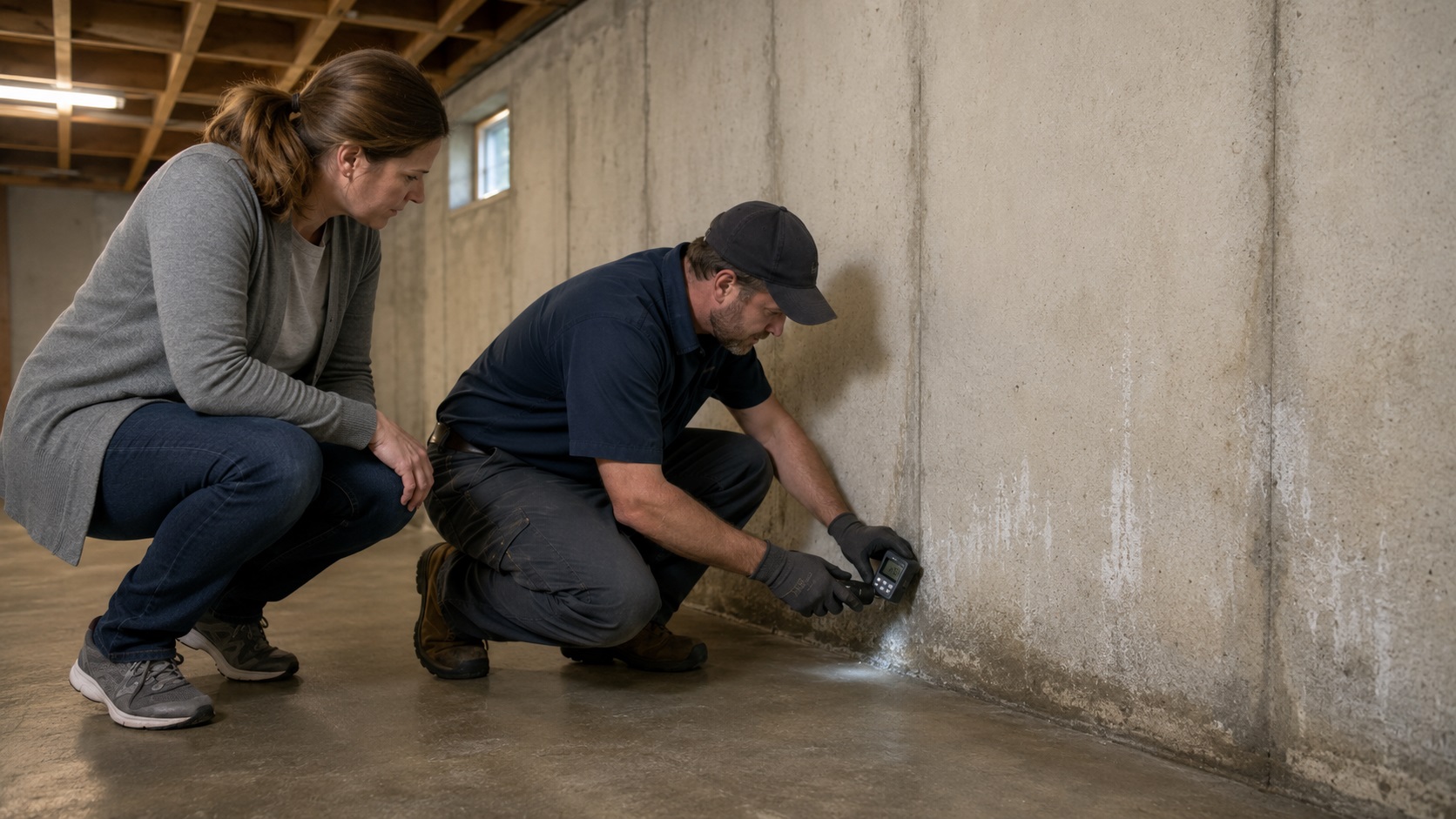
How to Choose a Basement Waterproofing Company
Choosing a basement waterproofing company is not just about finding the lowest estimate. The right company should identify where water is entering, explain why its recommended solution fits that specific problem, provide a clear written scope, and help you understand what is included before you sign.
That matters because basement water problems do not all have the same cause. Poor grading, short downspouts, wall seepage, hydrostatic pressure, foundation cracks, sump pump failure, clogged drain tile, and window well problems can require different repairs. A company that recommends the same system for every basement may not be diagnosing the actual water path.
This guide explains what to check before hiring, what questions to ask, and how to avoid choosing a contractor based only on price or pressure. For a broader overview of basement water-control methods, see How to Waterproof Basements and Control Water Intrusion.
Start by Confirming You Need a Waterproofing Company
Before comparing basement waterproofing companies, make sure the problem actually requires professional waterproofing help. Some basement moisture problems come from humidity, condensation, poor airflow, clogged gutters, short downspouts, or minor exterior maintenance issues rather than a failed waterproofing system.
A basement waterproofing company becomes more relevant when the problem involves active or recurring water intrusion. That includes water entering after rain, seepage through walls, water at the wall-floor joint, floor leaks, leaking cracks, recurring flooding, sump pump problems, or wet finished basement materials.
If you are still unsure whether the problem is serious enough for professional help, review When to Hire a Basement Waterproofing Contractor before comparing companies. That decision should come first because a minor humidity issue and a recurring basement leak require very different solutions.
Once you know the problem likely needs a contractor, the next step is not simply asking, “How much will this cost?” The better question is, “Can this company explain where the water is coming from, what it plans to fix, and why this solution fits?”
Choose a Company That Diagnoses the Water Source First
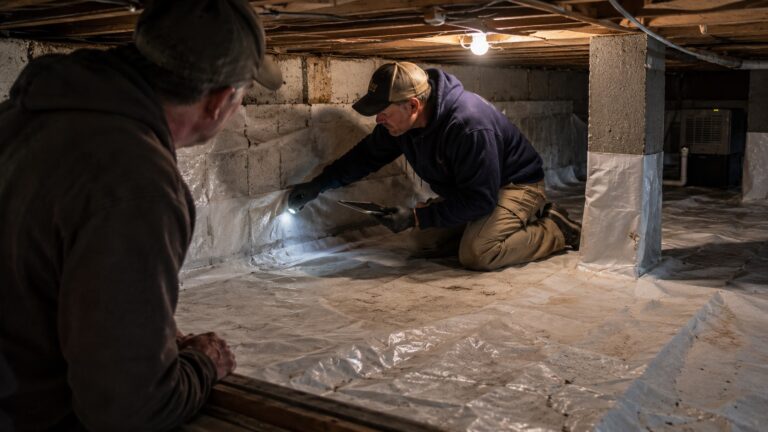
A good basement waterproofing company should start with diagnosis. It should look at the pattern of water entry, the location of stains or puddles, the timing of leaks, exterior drainage conditions, sump pump behavior, foundation cracks, and any finished materials that may be hiding moisture.
The company should ask or evaluate questions such as:
- Does water appear during rain, after rain, snowmelt, or humid weather?
- Does the water come through walls, floors, cracks, window wells, or the wall-floor joint?
- Are gutters and downspouts moving water away from the foundation?
- Does the yard slope toward the house?
- Are there signs of hydrostatic pressure or water rising through the slab?
- Is the sump pump working, and where does it discharge?
- Are existing drain tile, waterproofing coatings, or membranes failing?
- Are finished walls, carpet, flooring, insulation, or trim wet?
This diagnostic step matters because the best solution depends on the water source. A sump pump upgrade will not solve every wall seepage problem. Waterproof paint will not fix exterior drainage failure. Interior drainage may collect water that reaches the basement, but it does not correct every exterior runoff issue.
The company should be able to explain the likely source in plain language. For example, it may say water is collecting near one foundation wall because of poor grading and short downspouts. It may identify seepage through block walls after rain. It may suspect pressure beneath the slab when water appears at floor cracks or the cove joint. It may point to a sump discharge problem when water is being pumped out and then returning toward the foundation.
If the company cannot explain the water source, be cautious about approving a major system. Basement waterproofing should be based on the moisture pattern, not a generic sales pitch. For a basement-specific overview of water-control methods, see How to Waterproof Basements and Control Water Intrusion.
Be Cautious With One-Size-Fits-All Solutions
Be cautious if a basement waterproofing company recommends the same solution before fully inspecting the problem. Some companies specialize in one type of system, and that is not automatically bad. But the recommendation should still match the water source, basement structure, drainage conditions, and severity of the problem.
Watch for companies that jump immediately to:
- A full interior drainage system without explaining the water-entry pattern
- Exterior excavation without explaining whether it is necessary
- Wall coatings without addressing active water pressure
- A sump pump replacement without checking drainage and discharge
- Crack repair without considering exterior water load
- A large package system when the source may be simpler
The right solution may still involve a major system. The warning sign is not a large recommendation by itself; it is a large recommendation with no clear explanation of the water source, affected area, system limits, or simpler issues that were ruled out.
Make Sure the Recommended System Matches the Problem
A good basement waterproofing company should connect the recommended system to the water path. You do not need to become a waterproofing expert, but you should understand whether the problem appears to involve wall seepage, floor pressure, drainage failure, sump pump failure, window well leakage, exterior runoff, foundation cracks, condensation, or a combination of factors.
Wall seepage and foundation cracks
If water is entering through basement walls, mortar joints, block cores, poured concrete cracks, pipe penetrations, or wall stains after rain, the company should explain why the wall is getting wet. The source may be water collecting outside the foundation, cracks acting as pathways, porous masonry, failed exterior waterproofing, or poor drainage around the home.
Ask how the proposed work addresses the water reaching the wall. Does it manage water from the interior? Does it reduce exterior water load? Does it repair a crack? Does it improve drainage? Does it only cover the visible wall surface?
If the answer is mostly about hiding stains, sealing the visible surface, or making the wall look better, ask how the repair will handle the water that is still reaching the foundation.
Be cautious with any recommendation that treats active wall seepage as only a cosmetic coating problem. Paints and coatings may improve appearance in some cases, but they do not solve exterior water buildup, recurring seepage, or leaking cracks by themselves.
Floor water, cove joint leaks, and pressure problems
If water appears through basement floor cracks, low spots, or the cove joint where the wall meets the floor, the company should explain whether pressure beneath or beside the slab may be involved. Water at the floor level often points to drainage and pressure conditions that are different from simple wall dampness.
In these situations, ask whether the recommendation addresses water below the slab, water beside the footing, drain tile performance, sump capacity, or discharge problems. For a deeper explanation of pressure-driven leaks, see Why Hydrostatic Pressure Causes Basement Leaks.
A surface patch may not last if water pressure continues to push through the same crack or joint. The company should explain how the proposed system manages that pressure instead of only covering the symptom.
Sump pump, drainage, and exterior water issues
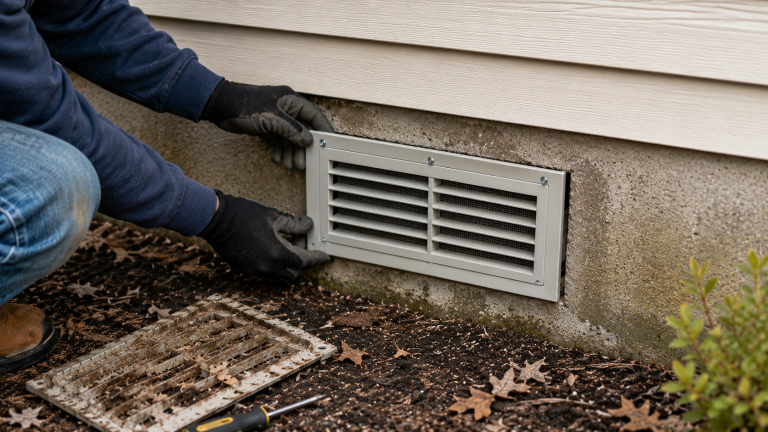
If the recommendation involves a sump pump, drain tile, discharge line, exterior drainage, window wells, grading, or downspouts, the company should explain exactly what problem that work solves. Drainage systems are only helpful when they are matched to the water path.
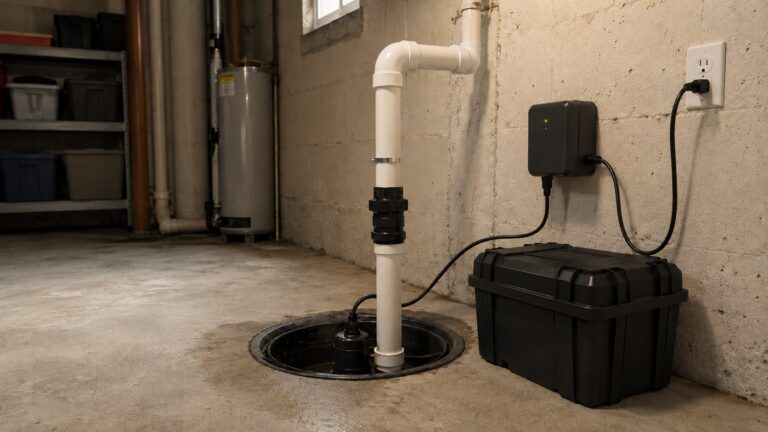
For sump pump recommendations, ask whether the pump is undersized, old, short cycling, failing to activate, discharging too close to the foundation, or lacking backup protection. If you are seeing pump-related symptoms, see Signs Your Basement Sump Pump Is Not Working.
For drainage recommendations, ask whether water is pooling near the foundation, whether downspouts are too short, whether grading slopes toward the home, whether window wells are filling, or whether exterior drains are clogged. For more warning signs, see Signs of Poor Basement Drainage.
The best company will explain why the system fits your basement’s water behavior, not just what it wants to install.
Ask for a Clear Written Scope of Work
A basement waterproofing estimate should do more than list a total price. It should explain what the company is going to do, where the work will happen, what system or repair is being installed, what materials are included, what is excluded, and who is responsible for cleanup or restoration.
This matters because two waterproofing companies may use the same general words while proposing very different work. One estimate may include interior drainage, sump pump upgrades, discharge correction, crack repair, wall treatment, demolition, debris removal, and a warranty. Another may include only a coating or limited crack repair.
A useful written scope may include:
- The affected basement areas
- The likely water source or water-entry pattern
- The recommended waterproofing system or repair
- The length, location, or limits of drainage work
- Whether sump pump work, discharge lines, or backup systems are included
- Whether crack repair, wall treatment, or floor work is included
- Whether demolition, debris removal, or restoration is included
- What permits, if any, are included or excluded
- Warranty terms and limitations
- Maintenance requirements
- Payment schedule and project timing
If the scope is vague, you cannot compare companies fairly. One company may be solving the water source while another is only treating the visible symptom. For a deeper estimate-review process, see How to Compare Basement Waterproofing Quotes.
Check Experience With Your Type of Basement Problem
Basement waterproofing experience should match the problem you actually have. A company that mostly installs sump pumps may not be the best fit for exterior foundation waterproofing. A company that specializes in crack repair may not be the right choice for recurring water at the cove joint. A company that handles unfinished basements may not fully account for hidden moisture in finished walls and flooring.
Ask whether the company has experience with your specific situation, such as:
- Water entering after rain
- Wall seepage through block or poured concrete
- Water coming through floor cracks or cove joints
- Leaking foundation cracks
- Sump pump or drain tile failure
- Finished basement water damage
- Window well leaks
- Existing waterproofing systems that no longer work
Finished basement water damage
Finished basement water problems require extra care because moisture can hide behind drywall, baseboards, flooring, insulation, and built-in features. A contractor should consider what materials may be wet before recommending cosmetic repairs or replacement.
If a company only looks at visible puddles but ignores wet carpet padding, damp drywall, swollen baseboards, or musty finished walls, the scope may be incomplete. Waterproofing should address the water source before damaged finished materials are rebuilt.
Existing waterproofing system failure
If your basement already has a sump pump, drain tile, wall coating, membrane, crack repair, or previous waterproofing system, the company should evaluate whether that system is working before recommending replacement or expansion.
Existing systems can fail because of clogged drainage, poor discharge, pump failure, installation defects, wall movement, exterior water overload, or incomplete coverage. If you suspect the current system is no longer controlling water, see Signs of Failed Basement Waterproofing.
A good company should explain whether the existing system can be repaired, supplemented, or whether a larger correction is needed. It should not automatically assume every older system must be replaced without explaining why.
Verify Insurance, Applicable Licensing, and Warranty Terms
Before hiring a basement waterproofing company, ask for proof of insurance, applicable licensing, and warranty terms in writing. Requirements vary by location, so use careful wording: ask what licenses, permits, or registrations are required in your area and whether the company meets those requirements.
At minimum, the company should be willing to provide proof of business insurance and explain who is responsible for damage, worker safety, permits, cleanup, and any subcontracted work. If excavation, structural repair, electrical sump pump work, or plumbing-related work is involved, additional licensing or subcontractors may be relevant depending on local rules.
If the project includes a new sump pump circuit, battery backup, exterior excavation, structural crack repair, or major discharge changes, ask whether permits or licensed trade work are required in your area.
Warranty terms also deserve careful review. A lifetime warranty does not always mean every future basement water problem is covered. Ask what the warranty covers, what it excludes, whether it transfers to a new owner, whether maintenance is required, and whether sump pumps, discharge lines, exterior drainage, plumbing leaks, condensation, or structural movement are excluded.
A strong warranty can be valuable, but it should not replace good diagnosis. A warranty on the wrong system may still leave you with recurring water from an unaddressed source.
Do Not Choose Based on Price Alone
Price matters, but it should not be the only factor when choosing a basement waterproofing company. A low estimate may be reasonable if the problem is limited and the scope is complete, but it may also be low because drainage correction, sump work, crack repair, warranty protection, cleanup, or restoration is missing.
The highest estimate is not automatically the best either. A higher price should be supported by a clearer diagnosis, more complete scope, better system fit, stronger warranty, more difficult access, higher-quality materials, or more extensive work. If the company cannot explain why the price is higher, the extra cost may not be justified.
When comparing prices, ask:
- Are the companies solving the same water source?
- Are they treating the same areas?
- Are sump pump, drainage, discharge, crack repair, or restoration items included?
- Is the warranty comparable?
- Are exclusions clearly stated?
- Is the estimate based on inspection or a generic package?
For broader budget planning, see How Much Does Basement Waterproofing Cost?. If two estimates use different systems, warranties, cleanup responsibilities, or drainage assumptions, compare the scope before comparing the price. For a fuller breakdown, see How to Compare Basement Waterproofing Quotes.
Watch for Red Flags Before Signing
A basement waterproofing company should be able to explain the problem, the recommended system, and the written scope clearly. Slow down before signing if the sales pitch depends more on urgency, vague promises, or fear than on diagnosis.
Red flags include:
- Recommending a system before inspecting the water source
- Using the same solution for every basement problem
- Refusing to explain why the proposed system fits your basement
- Offering only a vague verbal estimate
- Ignoring gutters, grading, drainage, window wells, sump discharge, or exterior water patterns
- Promising that waterproof paint or coating will solve active water intrusion
- Not providing proof of insurance or applicable licensing
- Using high-pressure discounts that require signing immediately
- Offering a warranty without explaining exclusions
- Blaming every problem on one cause without evidence
Red flags do not always prove a company is dishonest, but they do mean you need more clarity before approving expensive work. For a deeper consumer-protection guide, see How to Avoid Basement Waterproofing Scams.
Ask the Right Questions Before Hiring
Before you hire a basement waterproofing company, ask enough questions to confirm that the company understands your water problem and can explain the proposed solution clearly. You do not need to become a waterproofing expert, but you should understand why the company is recommending a specific system.
Good questions include:
- Where do you believe the water is entering?
- What evidence supports that diagnosis?
- Is the problem related to walls, floors, cracks, cove joints, sump pump issues, drainage, window wells, or exterior runoff?
- Why are you recommending this specific waterproofing method?
- What areas of the basement are included in the scope?
- What work is excluded?
- Will this require demolition, excavation, sump pump work, discharge changes, or restoration?
- What warranty is included, and what does it exclude?
- What maintenance will I be responsible for after the work is complete?
The answers should be specific to your basement. If the company gives only generic answers or avoids explaining the water source, you may not have enough information to hire confidently. For a more complete interview list before signing, see Questions to Ask Before Hiring a Basement Waterproofing Contractor.
Final Checklist for Choosing a Basement Waterproofing Company
Use this checklist before signing a basement waterproofing contract. The proposed work should be based on your water-entry pattern, not a generic sales package.
- The company inspected the basement and asked when water appears.
- The company considered exterior drainage, gutters, downspouts, grading, and window wells.
- The company evaluated walls, floors, cracks, cove joints, and sump pump behavior.
- The recommended system matches the likely water source.
- The company explained why other solutions may or may not be appropriate.
- The written scope clearly states what is included and excluded.
- The estimate explains sump pump, drainage, crack repair, demolition, restoration, and warranty items if relevant.
- The company provided proof of insurance and applicable licensing.
- The warranty terms are written and understandable.
- The company did not pressure you to sign before you understood the work.
If a company meets these standards, it is usually a stronger candidate than one that only offers a low price, fast start date, or broad promise to “waterproof the basement.”
FAQ
How do I know if a basement waterproofing company is trustworthy?
A trustworthy basement waterproofing company should inspect the water-entry pattern, explain the likely source, recommend a system that fits the problem, provide a clear written scope, show proof of insurance and applicable licensing, and explain warranty terms before asking you to sign. Be cautious if the company cannot explain why its solution fits your basement.
Should I get more than one basement waterproofing estimate?
For non-emergency situations, it is usually wise to get more than one estimate, especially if the work is expensive or invasive. Multiple estimates can help you compare whether companies agree on the water source and whether their proposed scopes are similar. If estimates vary widely, focus on what each company included and excluded.
What should be included in a basement waterproofing estimate?
A basement waterproofing estimate should describe the affected areas, likely water source, recommended system, materials, sump pump or drainage work if included, demolition or restoration responsibilities, warranty terms, exclusions, payment schedule, and any maintenance requirements. A vague estimate that only lists a total price is difficult to compare.
Should I choose interior or exterior basement waterproofing?
It depends on the water source, foundation type, access, budget, severity, and goals of the repair. Exterior waterproofing may reduce water load against the foundation, while interior drainage systems can collect and redirect water that reaches the basement. Be cautious if a company recommends either option without explaining the water-entry pattern it is trying to solve.
Is the cheapest basement waterproofing company a bad choice?
Not automatically. A lower quote may be reasonable if the scope is complete and the problem is limited. The concern is when the lowest price leaves out important work such as drainage correction, sump pump upgrades, crack repair, demolition, discharge changes, permits, restoration, or warranty coverage. Compare the scope before comparing the price.
What is a red flag when hiring a basement waterproofing company?
A major red flag is a company that recommends a system before diagnosing the water source. Other warning signs include vague verbal estimates, high-pressure sales tactics, unclear warranty terms, refusal to show proof of insurance, one-size-fits-all solutions, and promises that coatings alone will solve active water intrusion.
Should a basement waterproofing company offer a warranty?
Most homeowners should ask about warranty terms, but the warranty should be reviewed carefully. Ask what is covered, what is excluded, whether the warranty transfers, what maintenance is required, and whether the warranty applies to the full basement, the installed system, or only the specific repaired area. A warranty is only useful if you understand its limits.
Key Takeaways
- Choose a basement waterproofing company that diagnoses the water source before recommending a system.
- Be cautious with one-size-fits-all solutions that are not tied to your basement’s water-entry pattern.
- The recommended system should match the problem, whether it involves walls, floors, cracks, cove joints, drainage, sump pumps, or exterior runoff.
- Always ask for a written scope of work that explains what is included and excluded.
- Verify insurance, applicable licensing, and warranty terms before signing.
- Do not choose based on price alone; compare the scope behind each estimate.
Conclusion
The best basement waterproofing company is the one that can explain the problem, the proposed work, what is included, and what limitations remain. Before hiring, require a clear written scope, review warranty terms, verify insurance and applicable licensing, and compare the work behind each estimate.
Choosing carefully gives you a better chance of solving the water problem instead of paying for a system that does not match your basement.