

Signs of Slow Hidden Water Leaks
Slow hidden water leaks are often harder to recognize than sudden water damage because they do not always create a puddle, dripping sound, or obvious wet spot right away. In many homes, the first warning sign is something indirect: a stain that slowly spreads, a musty smell that keeps returning, paint that starts to bubble, trim that swells, or flooring that begins to warp near a wall, cabinet, window, appliance, or plumbing fixture.
These early clues matter because hidden leaks usually show up as patterns before they show up as visible water. A small drip behind a wall, a slow leak under a sink, a window frame that takes in rain, a roof penetration that only leaks during storms, or a drain line that seeps after use can all leave behind moisture in materials that absorb water before the surface looks wet.
This guide explains the most common signs of slow hidden water leaks, how to recognize leak patterns over time, where these signs usually appear, and when the problem may point to a deeper moisture issue. For broader room-by-room moisture inspection, see how to find hidden moisture in different areas of your home; for the full site framework, see how to find, fix, and prevent moisture problems in homes.
Why Slow Hidden Leaks Are Hard to Notice Early
A slow hidden leak can stay unnoticed for a long time because the water may not collect where the leak actually starts. Water follows gravity, framing, pipe paths, insulation, sheathing, trim gaps, flooring layers, and wall cavities. By the time a stain appears, the original leak may be above, beside, behind, or even several feet away from the visible damage.
Another reason hidden leaks are difficult to identify is that building materials can absorb moisture before showing clear surface damage. Drywall, wood trim, subflooring, cabinets, insulation, and framing can hold moisture internally. The surface may look mostly normal while the deeper material is damp, swollen, softened, or beginning to support musty odors.
Slow leaks also tend to create intermittent symptoms. A plumbing leak may only appear after a fixture is used. A roof leak may only show up during wind-driven rain. A window leak may leave stains after storms but look dry on sunny days. A bathroom leak may worsen after showers, while an appliance leak may only appear during a cycle. That timing makes the problem easier to dismiss unless you start noticing patterns.
Hidden leaks often show symptoms before visible water
Visible water is not always the first sign of a leak. In many cases, the first clue is a change in the material around the leak path. Paint may blister, drywall may feel slightly soft, trim may swell, flooring may separate, or a cabinet base may darken. These signs suggest moisture may be moving through or collecting inside materials, even if the surface is not actively wet when you check it.
That does not mean every stain or odor proves there is an active leak. Some marks come from old damage, condensation, humidity, or one-time spills. The key is whether the symptom changes over time, returns after cleaning, appears after certain events, or affects materials in a way that suggests moisture is still present.
Small leaks can create delayed signs
A small leak does not always cause immediate visible damage. A tiny drip inside a vanity, behind a washing machine, near a refrigerator line, above a ceiling, or inside a wall cavity can wet the same area repeatedly before the surface changes. Over time, repeated wetting and drying can leave stains, swelling, odor, or mold-prone conditions.
This is why a minor leak should not be judged only by how much water you see on the surface. If you already know a small leak happened, the next question is whether moisture remained in nearby materials. For that situation, use a more focused guide on how to detect moisture after small leaks instead of relying only on what looks dry from the outside.
The source may be far from the visible damage
One of the most misleading parts of hidden leak detection is that the visible sign may not appear directly under the source. Water can travel along pipes, framing members, ceiling joists, insulation, roof decking, trim edges, or flooring layers. A ceiling stain may come from a roof leak, an upstairs bathroom, an HVAC drain issue, or a plumbing line. A damp baseboard may come from a wall leak, floor leak, window leak, exterior wall issue, or nearby fixture.
That is why hidden leak signs should be interpreted as clues, not final diagnoses. The visible symptom tells you where moisture is showing up. It does not always tell you where the leak began.
The Most Common Signs of a Slow Hidden Water Leak
The most useful way to recognize a slow hidden leak is to look for changes that develop gradually, return repeatedly, or appear in moisture-prone areas. One sign by itself may not prove an active leak, but several signs together can make the pattern much stronger.

Stains that slowly grow or return
A water stain that expands over days, weeks, or months is one of the clearest signs that moisture may still be entering the area. The stain may appear yellow, brown, gray, tan, or darker than the surrounding surface. On ceilings, it may form a ring or uneven patch. On walls, it may run downward, appear near corners, or show up along baseboards and trim.
Stains that return after cleaning or painting are especially important. If the surface was cleaned but the discoloration came back, the visible mark may not be the real problem. Moisture could still be moving through the material from behind, above, or below. When moisture returns after cleanup, the issue often needs deeper source investigation rather than another surface treatment. For that specific pattern, see why moisture returns after cleanup.
Bubbling, peeling, or blistering paint
Paint can bubble, blister, peel, or separate when moisture gets behind the painted surface. This often happens on drywall, plaster, trim, ceilings, window areas, and bathroom walls. The paint may look stretched, raised, cracked, or loose. In some cases, the wall still feels dry to the touch because the moisture is behind the paint layer or inside the material.
Bubbling paint is not always caused by a leak. It can also come from poor surface preparation, humidity, vapor movement, or condensation. But if the bubbling is localized, growing, near plumbing, near exterior openings, below bathrooms, or recurring after repainting, a hidden leak should be considered.
Soft drywall or weak wall surfaces
Drywall that feels soft, crumbly, swollen, or slightly sunken may have absorbed moisture. A slow leak behind drywall can weaken the gypsum core and paper facing before the wall looks severely damaged. You may notice a spongy feel, a dent that forms too easily, loose joint compound, or a section that no longer feels as firm as nearby drywall.
Do not press hard into suspected wet drywall, especially if the area is near electrical components, ceiling damage, or visible mold. The goal is not to damage the wall further. The goal is to recognize that softness is a warning sign that moisture may have affected the material behind the surface.
Swollen trim, baseboards, or cabinet materials
Wood and wood-based materials often reveal hidden leaks before open water appears. Baseboards may swell, separate from the wall, cup outward, or show dark staining along the bottom edge. Door casing and window trim may warp or pull away. Cabinet bottoms may sag, darken, bubble, or feel soft under sinks, near dishwashers, near refrigerators, or in laundry areas.
Trim and cabinets are important because they often sit near leak paths. Baseboards collect clues from wall leaks, floor leaks, exterior wall moisture, and plumbing issues. Cabinet bases collect clues from sink drains, supply lines, shutoff valves, dishwasher lines, refrigerator lines, and water filtration systems.
Warped, cupped, or separating flooring
Flooring changes can point to moisture below or beside the finished surface. Hardwood may cup or crown. Laminate may swell at the seams. Vinyl plank may lift or separate. Tile may loosen if the substrate is affected. Carpet may feel damp, musty, or uneven. These signs can appear near bathrooms, kitchens, laundry rooms, water heaters, exterior doors, windows, basement walls, or appliances.
Flooring problems do not always start with the floor itself. Water may enter from a wall, cabinet, appliance, door threshold, foundation edge, or plumbing fixture and then spread into the flooring layers. When flooring changes are localized and continue to worsen, hidden moisture should be investigated before assuming the issue is only cosmetic.
Musty smells without visible water
A persistent musty smell can be an early clue that materials are staying damp somewhere nearby. The smell may be stronger in a closed room, under a sink, near a wall, around a window, in a basement, inside a cabinet, near flooring, or after the HVAC system has been off for a while.
A musty odor does not automatically prove there is mold or an active leak, but it does suggest moisture may be present or may have been present long enough to affect materials. If the smell is localized and keeps returning, it should not be ignored simply because the surface looks dry.
Localized mold or mildew-like spots
Small dark, gray, greenish, or speckled spots can appear where moisture repeatedly affects a surface. These spots often show up around windows, bathroom walls, baseboards, ceilings, cabinets, closets, and poorly ventilated areas. They may also appear near hidden leak paths where the surface receives repeated moisture but does not stay visibly wet.
Surface spots can come from condensation, humidity, poor airflow, or an active leak. The pattern matters. If spots appear in one localized area, return after cleaning, spread outward, or appear near a likely water source, the moisture source needs to be identified before the surface is cleaned again.
Dampness that comes and goes
Intermittent dampness is a common slow-leak pattern. A wall, cabinet, floor, or trim area may feel damp after rain, after a shower, after running a dishwasher, after doing laundry, or after using a sink. Later, the surface may dry enough that the problem seems to disappear.
This on-and-off behavior can make hidden leaks easy to dismiss. But recurring dampness is often more important than one-time wetness because it suggests the same area is being exposed repeatedly. The repeated cycle can weaken materials even if each individual episode looks minor.
Higher humidity in one area
If one room, cabinet, basement corner, closet, or wall-adjacent area feels noticeably more humid than nearby spaces, there may be a hidden moisture source. This is especially true when the humidity difference is localized rather than whole-house. A leak inside a cabinet, behind a wall, near a foundation edge, or around a window can create a small damp microclimate before visible water appears.
Widespread humidity is different. If the entire home feels damp, the issue may be ventilation, indoor humidity, crawl space moisture, basement moisture, or general moisture control rather than a single leak. In that case, it may help to review how to test indoor humidity levels before assuming every symptom is leak-related.
Water marks after rain or plumbing use
One of the strongest clues is timing. If a stain, odor, damp spot, or soft area appears after rain, the source may be related to the roof, flashing, siding, exterior walls, windows, doors, foundation, or another exterior entry point. If the sign appears after using a sink, shower, toilet, tub, washing machine, dishwasher, refrigerator water line, or water heater, the source may be plumbing or appliance related.
Timing does not prove the exact source, but it helps narrow the investigation. A ceiling stain that darkens after rain points in a different direction than a ceiling stain that appears after an upstairs shower. A damp cabinet after running the sink points in a different direction than a damp cabinet after heavy rain against an exterior wall.
Unexpected increases in water bills
An unexplained increase in your water bill can also support the possibility of a hidden plumbing leak, especially if household water use has not changed. A higher bill by itself does not prove there is a leak, but when it appears along with stains, damp cabinets, musty odors, soft drywall, or flooring changes, it becomes another clue worth checking.
This sign is most useful for hidden plumbing leaks, appliance supply-line leaks, toilet leaks, or water line problems. It is less useful for rain-related leaks, roof leaks, window leaks, or exterior wall leaks because those do not usually affect water usage.
How to Recognize Leak Patterns Over Time
Slow hidden leaks are often easier to recognize by pattern than by a single moment. A one-time stain may be old. A temporary damp spot may come from a spill. A musty smell may come from poor airflow. But when symptoms repeat, grow, return, or match a certain trigger, the pattern becomes more meaningful.
Instead of asking only, “Is this wet right now?” ask better questions:
- Does the sign appear after rain?
- Does it appear after using a fixture or appliance?
- Does it return after cleaning or drying?
- Is the affected area slowly expanding?
- Is there odor, staining, softness, swelling, or material movement together?
- Is the problem localized to one wall, cabinet, ceiling area, corner, window, or floor section?
These questions help separate a random surface mark from a recurring moisture pattern.

Signs that appear after rain
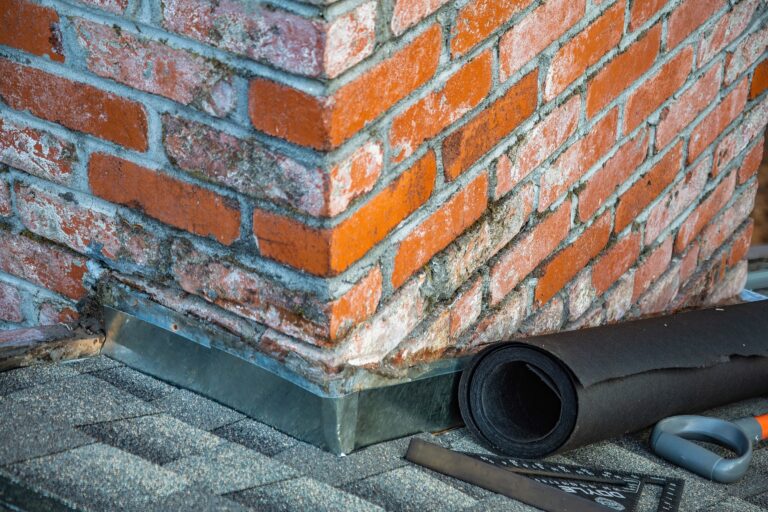
When hidden leak signs appear after rain, the source may be outside the home envelope. Common possibilities include roof leaks, flashing problems, chimney leaks, siding gaps, window frame leaks, door leaks, foundation seepage, or exterior wall penetrations. The visible damage may appear inside on a ceiling, wall, floor edge, baseboard, window trim, or basement wall.
Rain-related leaks can be especially inconsistent. A light rain may not show anything, while wind-driven rain from one direction may push water into a weak spot. A storm may create a stain that dries before the homeowner notices it. This is why rain timing should be tracked over several events instead of judged from one storm.
If the warning signs seem tied to exterior gaps, flashing, siding, chimneys, or penetrations, the broader guide on how water enters homes through structural gaps is the better next step.
Signs that appear after showers or bathroom use
Bathrooms create several hidden leak possibilities because they combine plumbing, drains, fixture seals, wall penetrations, tile systems, caulk joints, shower doors, tubs, toilets, and high humidity. A slow leak may show up below the bathroom, behind a wall, near baseboards, beside the tub, around the toilet, under the vanity, or in the ceiling below.
The timing matters. If a stain appears only after long showers, the issue may involve shower enclosure leakage, tub overflow paths, cracked grout, failed caulk, drain leakage, or moisture escaping behind the wall system. If a cabinet is damp after sink use, the problem may be the drain, supply line, shutoff valve, faucet connection, or trap area.
Do not assume every bathroom moisture sign is a plumbing leak. Bathrooms also produce condensation and humidity. But if the symptom is localized, recurring, or affecting materials below or behind the fixture, a hidden leak should be investigated.
Signs that appear after running appliances
Appliance leaks can be slow, hidden, and intermittent. Dishwashers, washing machines, refrigerators with water lines, ice makers, water heaters, and water filtration systems can leak only during certain cycles or pressure changes. The floor may look dry most of the time, but swelling, staining, soft flooring, or musty odors may appear nearby.
Appliance-related leaks often affect flooring, cabinet sides, baseboards, wall backs, and nearby trim. They may also travel under flooring before becoming visible. A small leak behind a refrigerator or under a dishwasher can remain hidden until the flooring begins to cup, seams swell, or odor develops.
When symptoms appear near appliance water lines or plumbing connections, use the pattern as a clue rather than trying to diagnose every appliance from one surface sign. Appliance-related warning signs should lead to a focused inspection of the nearby supply line, drain path, cabinet base, flooring edge, or wall behind the appliance.
Signs that appear under sinks or near plumbing walls
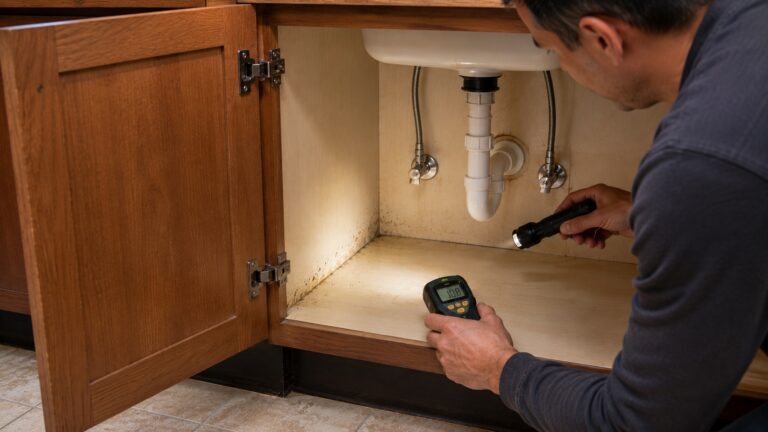
Under-sink leaks are common because supply lines, shutoff valves, faucet connections, drain assemblies, garbage disposals, traps, and dishwasher connections may all be present in a small space. A slow leak may darken the cabinet floor, create bubbling laminate, soften particleboard, cause odors, or leave mineral marks around fittings.
Plumbing wall leaks can be harder to see. A supply or drain line behind drywall may create a stain, damp baseboard, soft wall, peeling paint, or musty smell on the room side of the wall. The visible sign may be in a nearby room, closet, hallway, ceiling below, or floor edge instead of directly at the fixture.
For the broader structural consequences of pipe, fixture, hose, and appliance leaks, see how plumbing leaks cause structural damage. This article focuses on recognizing the warning pattern before the damage becomes obvious.
Signs that return after cleaning or painting
When a stain, odor, or dark spot comes back after cleaning or painting, the problem may not be on the surface. Moisture may still be coming from behind the wall, above the ceiling, under the floor, around a window, or through a material joint. Paint and cleaners can temporarily hide the symptom, but they do not stop the source of moisture.
This pattern is especially important with recurring stains, musty odors, and mold-like spots. If the same area keeps changing after the surface has been treated, the next step is not usually another surface treatment. The next step is to ask why the material is becoming damp again.
For that exact problem, the deeper explanation belongs in why moisture returns after cleanup.
Signs that keep coming back after repairs
A leak that appears to be fixed can still leave warning signs behind if the source was only partly corrected, the wrong source was repaired, wet materials were not dried, or a second moisture path exists nearby. Returning stains, odors, softness, swelling, or dampness after repair work should be treated as a warning sign, not as normal aging.
There are two separate issues to consider after a repair. First, did the repair actually stop the water source? Second, did the affected material dry properly afterward? If one of those steps failed, moisture symptoms can return even though some repair work was done.
If the main issue is repeated symptoms after a repair, use signs of moisture returning after repairs. If the repair is already complete and the concern is how to keep checking the area, use how to monitor areas after leak repairs.
Where Slow Hidden Leaks Commonly Show Up
Slow hidden leaks can appear almost anywhere water lines, drainage, rain exposure, condensation, or moisture-prone materials exist. Still, some areas deserve extra attention because they often hide water long enough for damage to develop before the source is obvious.
This section gives a broad overview of common locations. It should not replace a full location-based inspection guide. For a deeper room-by-room and material-by-material approach, use how to find hidden moisture in different areas of your home.
Walls and wall cavities
Walls can hide plumbing lines, roof leak paths, window leaks, exterior wall moisture, condensation issues, and water traveling from nearby rooms. Signs may include stains, bubbling paint, soft drywall, musty odors, baseboard swelling, or discoloration near corners and seams.
A wall leak does not always appear where the water entered. Moisture may travel down framing, along insulation, behind trim, or across the back of drywall before it becomes visible. If the wall contains plumbing, is below a bathroom, sits near an exterior opening, or borders a wet area, the pattern should be taken seriously.
Ceilings and attic-adjacent areas
Ceiling stains can come from roof leaks, plumbing leaks, HVAC drain problems, bathroom leaks, condensation, or attic moisture. The pattern can help narrow the source. A stain that appears after rain may point toward roof or exterior water entry. A stain below a bathroom may point toward plumbing or fixture leakage. A stain near HVAC equipment or ducts may involve condensation or drainage.
Ceiling leaks can spread before they drip. Water may collect above the drywall, run along joists, or soak insulation before a visible mark appears. Sagging, cracking, spreading stains, or active dripping should be handled more urgently than a stable old stain.
Bathrooms and showers
Bathrooms are high-risk areas for hidden leaks because water is used frequently and many water-control details must work together. Shower walls, tub edges, toilet bases, vanity plumbing, supply lines, drains, grout, caulk, and penetrations can all create slow hidden moisture problems.
Warning signs may include damp flooring near the tub, staining on the ceiling below, swelling baseboards, musty smells behind walls, bubbling paint near showers, loose tiles, or cabinet damage under sinks. Because bathrooms also create humidity, not every bathroom moisture issue is a leak. Localized, recurring, or material-damaging symptoms are the stronger clues.
Kitchens and sink cabinets
Kitchens often hide slow leaks under sinks, behind dishwashers, behind refrigerators, around ice maker lines, under water filters, and near supply or drain connections. Cabinet materials may darken, swell, bubble, sag, or smell musty before water becomes visible on the floor.
Flooring changes near dishwashers, refrigerators, and sink cabinets are especially important. Water may travel under finished flooring or soak into the subfloor while the surface looks mostly normal. If seams swell, boards cup, or cabinet bases soften, the source should be investigated instead of treated as normal wear.
Windows and doors
Window and door leaks often appear as stains, peeling paint, swollen trim, soft drywall, damp sills, or mold-like spots around the frame. These signs may be worse after rain, especially wind-driven rain. They may also be confused with condensation if the moisture appears on or near glass.
The distinction matters. Condensation usually forms on cooler surfaces when indoor humidity is high. A leak may show staining, swelling, softness, or repeated wetting around the frame, trim, or wall opening. For a deeper explanation of this system, use how windows and doors cause hidden moisture problems.
Basements and foundation areas
Basement moisture can come from foundation seepage, wall cracks, floor-wall joints, hydrostatic pressure, exterior drainage problems, plumbing leaks, condensation, or humidity. Slow hidden leak signs may include damp baseboards, musty smells, staining near the lower wall, efflorescence, peeling coatings, soft stored materials, or recurring damp spots.
Basement symptoms can be misleading because water may enter through the foundation, collect from indoor humidity, drip from plumbing, or migrate through stored items and wall finishes. For this article, the key is to recognize basement warning signs broadly without treating every damp basement symptom as a full waterproofing problem.
Laundry rooms and water heaters
Laundry rooms and water heater areas contain supply lines, valves, hoses, drain paths, pans, and appliances that may leak slowly. A washing machine hose may seep near the connection. A drain issue may only show during a cycle. A water heater may leak around fittings, valves, or the tank area before a large puddle appears.
Signs may include damp flooring, staining around the appliance, swollen baseboards, musty odors, rust marks, mineral residue, or flooring changes. Because these areas can produce both sudden and slow water damage, recurring small signs should be checked early.
Exterior walls, siding, flashing, and roof-related paths
Some hidden leaks begin outside the plumbing system entirely. Water may enter through siding gaps, failed flashing, roof penetrations, chimney details, wall penetrations, vents, trim joints, or exterior wall transitions. Inside, this can look like a wall stain, ceiling mark, damp corner, musty odor, swollen trim, or recurring paint failure.
These leaks are often weather-dependent. The area may stay dry for weeks, then show symptoms after a storm. If signs follow rain patterns or appear near exterior-facing walls, windows, doors, chimneys, rooflines, or siding transitions, the source may be part of the home’s exterior water-shedding system.
Hidden Leak Signs vs Humidity or Condensation
Not every moisture sign comes from a hidden leak. Some symptoms are caused by high indoor humidity, poor ventilation, condensation, or temperature differences between indoor air and colder surfaces. This matters because fixing the wrong problem wastes time and can allow the real moisture source to continue.
A hidden leak usually creates a more localized pattern. A humidity or condensation problem is often more widespread, seasonal, or connected to airflow and temperature. There can be overlap, so the goal is not to guess from one clue. The goal is to compare the location, timing, material changes, and recurrence pattern.

When moisture is localized
Localized moisture is more suspicious for a hidden leak, especially when it appears near a fixture, appliance, window, door, exterior wall, roof path, foundation edge, cabinet, ceiling area, or plumbing wall. A single stain, one swollen baseboard, one damp cabinet, or one soft wall section usually deserves a closer look because the problem is concentrated in one area.
Localized symptoms may include:
- a stain in one ceiling area
- soft drywall in one wall section
- swollen trim near one window or door
- cabinet damage under one sink
- flooring changes near one appliance
- a musty smell from one closet, room, or wall area
- dampness near one foundation wall or basement corner
These signs do not prove the exact source, but they make a hidden leak more likely than a general whole-house humidity issue.
When symptoms are widespread
Widespread moisture symptoms may point more toward indoor humidity, ventilation, insulation, air sealing, crawl space moisture, basement dampness, or general moisture control. Examples include condensation on many windows, a clammy feeling throughout the home, musty odors in multiple rooms, surface mildew in several poorly ventilated areas, or high humidity readings across the house.
That does not mean leaks are impossible. A home can have both high humidity and hidden leaks. But widespread symptoms should make you step back and evaluate the whole moisture environment instead of assuming one hidden pipe or one exterior opening is responsible for everything.
When the symptoms appear throughout the home, the better first step may be measuring humidity and looking for broad moisture sources. That is where how to test indoor humidity levels can support the leak investigation.
When condensation mimics a leak
Condensation can look like leakage because it leaves moisture on surfaces, stains paint, encourages mildew-like spots, and makes materials feel damp. It often appears on cold windows, poorly insulated walls, bathroom surfaces, closets, exterior corners, duct surfaces, or areas with poor airflow.
The difference is that condensation usually forms when warm, moist air meets a cooler surface. A leak usually involves water entering from a specific plumbing, exterior, roof, appliance, foundation, or fixture source. Condensation may be worse during cold weather, after showers, during cooking, or when indoor humidity is high. Leak symptoms may be more tied to rain, plumbing use, appliance cycles, or a specific wet location.
One useful clue is material damage. Light condensation may leave surface dampness, but repeated swelling, soft drywall, expanding stains, and recurring water marks in one location may suggest more than ordinary condensation.
When humidity testing should come before leak assumptions
If the home feels damp overall, many windows collect condensation, closets smell musty, or several rooms show surface moisture at the same time, testing humidity can prevent a wrong diagnosis. A simple hygrometer can show whether the indoor air is consistently humid enough to create condensation or support moisture problems.
Humidity testing should not replace leak investigation when signs are localized or worsening. But it can help separate a whole-house moisture issue from a single hidden leak. The strongest diagnosis usually comes from combining humidity readings with location, timing, visible material changes, and whether the symptom returns after cleaning or drying.
When a Slow Hidden Leak Can Lead to Mold or Structural Damage
A slow hidden leak becomes more concerning when moisture stays in absorbent materials long enough to create secondary problems. The leak itself may be small, but the repeated wetting can affect drywall, wood, insulation, subflooring, cabinets, trim, ceiling materials, and enclosed cavities.
This does not mean every small leak immediately causes mold or structural damage. Risk depends on how long the area stays damp, what materials are affected, whether airflow allows drying, and whether the water source continues. Still, hidden leaks deserve attention because they often remain active longer than obvious leaks.
Why musty odors matter
A musty odor is one of the most common warning signs that moisture may be affecting hidden materials. The smell may come from a wall cavity, cabinet, closet, basement corner, flooring layer, ceiling cavity, or enclosed space where air movement is limited. Even if the surface looks dry, the odor can suggest that materials nearby have been damp or are still damp.
Odor alone does not identify the source. A musty smell can come from mold, damp materials, old water damage, poor ventilation, wet stored items, or humidity. But a recurring odor in one specific area should be treated as a clue that moisture conditions need to be checked.
Why repeated dampness is more concerning than one-time moisture
One-time moisture can still matter, but repeated dampness is usually more concerning because it means the material may not be getting a real chance to dry. A wall that gets damp every time it rains, a cabinet that darkens every time the sink is used, or flooring that swells after appliance cycles may be going through repeated wetting and drying.
This cycle can weaken materials over time. Drywall can soften, paint can fail, wood-based products can swell, adhesives can loosen, flooring can separate, and enclosed areas can begin to smell musty. The damage may develop slowly, which is why the early pattern matters.
Why concealed materials can stay damp longer
Moisture inside a wall, under flooring, behind trim, inside insulation, or under cabinet bases may dry much more slowly than moisture on an open surface. Enclosed materials receive less airflow, and some materials absorb water internally. The surface may feel dry while deeper layers remain damp.
This is one reason slow hidden leaks can create delayed problems. A homeowner may wipe the visible surface, run a fan briefly, or repaint the area, but the hidden material may still hold moisture. If the source continues, the same signs can return.
When the concern is mold after a small leak, use how to prevent mold after minor water leaks for the focused next steps. This article should stay centered on recognizing the slow-leak warning signs.
When to investigate mold risk further
Mold risk becomes more important when hidden leak signs are combined with musty odor, recurring dampness, visible spotting, soft materials, or damage that has likely been wet for more than a short period. A small stain that is old and dry is different from a stain that keeps expanding or smells musty.
Investigate further when:
- the odor returns after cleaning
- the stain keeps growing
- the same area becomes damp repeatedly
- paint or drywall is failing in one location
- mold-like spots keep returning
- materials feel soft, swollen, or crumbly
- the affected area is inside a wall, ceiling, floor, or cabinet cavity
For the deeper cause-and-effect explanation, see why hidden leaks cause mold growth. The important point here is that recurring hidden leak signs should be investigated before damp materials have time to support mold growth.
What to Check Before Assuming the Source
Hidden leak signs should be investigated carefully because the visible symptom may not reveal the actual source. A ceiling stain does not automatically mean the roof is leaking. A damp baseboard does not automatically mean the wall pipe is leaking. A musty cabinet does not always mean the sink drain is the only possible source.
The goal is to gather clues before jumping to a repair conclusion. That means tracking timing, comparing nearby materials, checking related systems, and looking for recurrence.
Track timing and recurrence
Timing is one of the most useful clues. Write down when the symptom appears, when it worsens, and what happened shortly before it changed. Did it rain? Was the shower used? Did the dishwasher run? Was laundry done? Did the stain darken after a storm? Did the cabinet smell mustier after sink use?
Photos can help because slow leaks change gradually. Take pictures from the same angle over time. Mark the edge of a stain lightly with painter’s tape or a pencil mark nearby if appropriate. Compare whether the area expands after specific events.
Recurring symptoms are stronger than one-time symptoms. If the same area changes repeatedly, the source is more likely still active or the affected material is not drying properly.
Compare nearby materials
Compare the affected material with nearby unaffected material. Does one section of drywall feel softer? Is one baseboard swollen while the rest are normal? Is one cabinet darker? Is one floor seam raised? Does one corner smell mustier than the rest of the room?
This comparison helps separate normal wear from moisture damage. Old trim, paint, or flooring may have cosmetic defects, but moisture-related defects are often localized, progressive, or connected to a water source.
Look above, below, and behind the visible sign
Water can travel before it becomes visible. If you see a ceiling stain, think about what is above it: a roof area, attic, bathroom, HVAC system, plumbing line, or exterior wall. If a baseboard is swollen, think about what is behind it, below it, and nearby: plumbing, windows, exterior walls, foundation edges, flooring layers, or cabinets.
Do not assume the leak is directly behind the stain. The visible damage may be the low point where moisture collected, not the point where water entered.
Check related fixtures, windows, exterior walls, and roof paths
Use the location and timing to decide what to check first. If the sign appears after plumbing use, look near fixtures, drains, supply lines, shutoff valves, appliance hoses, and nearby plumbing walls. If the sign appears after rain, look near rooflines, flashing, exterior walls, siding transitions, windows, doors, chimneys, vents, and foundation areas.
This is not the same as making a final diagnosis. It is a way to narrow the likely system. A hidden leak investigation should move from broad clues to specific sources, not from one symptom to a rushed repair.
Use moisture testing carefully
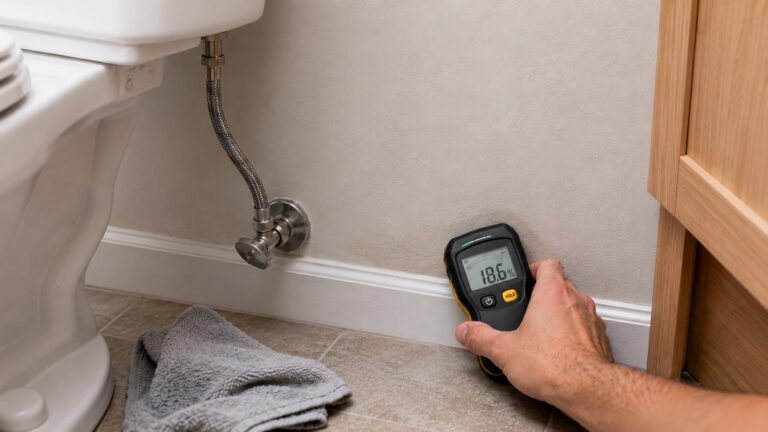
A moisture meter can help confirm that a material is wetter than surrounding areas, but it should be used carefully. Readings can vary by material, surface conditions, salts, metal behind the surface, and meter type. A moisture meter can support an investigation, but it should not be treated as the only proof of source or severity.
In this guide, moisture testing works best as a supporting clue. More specific testing and detection articles cover detailed readings and thresholds, while this article focuses on the visible and behavioral signs of slow, hidden leaks.
Know when DIY inspection is not enough
Some warning signs should move beyond casual observation. Call a qualified professional when the affected area is spreading, the ceiling is sagging, electrical components may be involved, mold is suspected inside enclosed cavities, flooring is soft, structural wood may be affected, or the source cannot be identified after basic checks.
Also escalate when a leak involves supply plumbing, roof systems, foundation seepage, repeated exterior intrusion, or damage that returns after prior repair work. Hidden water can move through building assemblies in ways that are not obvious from the surface.
What to Do If You Suspect a Slow Hidden Leak
Once you suspect a slow hidden leak, the first goal is not to tear open walls or guess at repairs. The first goal is to reduce active water exposure where possible, document the pattern, protect materials from additional moisture, and decide whether the source can be safely checked or needs professional help.
Hidden leaks can involve plumbing, roofing, exterior walls, windows, doors, foundations, appliances, or enclosed cavities. Because the visible sign may not reveal the source, the safest approach is to move from observation to confirmation instead of jumping straight to cosmetic repairs.
Stop adding water to the suspected source when possible
If the sign seems connected to a fixture or appliance, reduce use until the source is checked. For example, avoid running a leaking dishwasher, stop using a sink cabinet that becomes damp after use, avoid long showers if the ceiling below darkens afterward, or shut off an appliance water supply if the connection appears to be leaking.
If the sign appears after rain, you may not be able to stop the water immediately, but you can protect the interior area, move stored items away, and watch how the symptom changes during the next storm. If water is actively entering, spreading, or affecting electrical areas, treat the situation as more urgent.
Document changes with photos and dates
Slow leaks are easier to understand when you document how the area changes. Take photos from the same angle and distance. Note the date, weather, fixture use, appliance cycles, humidity conditions, and whether the area felt damp, smelled musty, or changed color.
This documentation helps you identify patterns and can also help a plumber, roofer, waterproofing contractor, remediation company, or home inspector understand what has been happening. A photo history can show whether a stain is stable, expanding, or recurring after certain events.
Dry what is safely accessible
If the surface is damp and safe to access, dry it promptly. Remove standing water, improve airflow, and avoid leaving wet items against walls, floors, cabinets, or trim. Do not seal, paint, or cover the area until you understand whether moisture is still present or returning.
Surface drying does not always dry hidden materials. Water inside wall cavities, under flooring, behind cabinets, or inside insulation may remain even after the surface looks better. If the area smells musty, feels soft, or keeps returning, deeper moisture may still be present.
Monitor the area after the first sign
Monitoring is especially important when the leak was small, intermittent, or already repaired. Check whether the stain expands, whether odor returns, whether material feels softer, whether trim continues to swell, or whether dampness appears after the same trigger.
If the area was recently repaired, do not assume the problem is solved just because the visible leak stopped once. Some repairs fix the immediate drip but leave wet materials behind. Others fix one source while a second moisture path continues. A dedicated monitoring process is covered in how to monitor areas after leak repairs.
Escalate when signs spread, return, smell musty, or involve structural materials
Some slow hidden leak signs should not be handled with repeated cleaning or waiting. Escalate when the damage grows, the same spot keeps returning, the area smells musty, the drywall feels soft, flooring is swelling, cabinet materials are deteriorating, ceiling material is sagging, or the leak may involve structural wood, electrical areas, or enclosed cavities.
Recurring symptoms after a repair deserve special attention because they may mean the source was not fully corrected or the affected materials did not dry. For that specific pattern, see signs of moisture returning after repairs.
Where to Go Next Based on the Leak Pattern
This article helps you recognize broad hidden-leak warning signs. Once the pattern is clear, use the sign you are seeing to choose the more specific guide that matches the situation: a known small leak, possible mold risk, post-repair monitoring, failed cleanup, location-specific moisture, plumbing leaks, window leaks, or structural water entry.
If moisture warnings keep appearing across more than one area, return after several cleanups, or seem connected to a larger home moisture cycle, use how to detect repeated moisture problems to evaluate the broader pattern.
If the problem followed a small leak
If you already know a small leak happened, the next question is whether moisture stayed behind in nearby materials. A small supply leak, drain leak, appliance leak, toilet leak, or fixture overflow can leave moisture inside cabinets, walls, floors, or trim even after the visible water is gone.
In that case, move from general warning signs to how to detect moisture after small leaks.
If mold risk is the concern
If the area smells musty, has recurring dark spots, stays damp, or involves enclosed materials, the concern may shift from leak detection to mold-risk conditions. This article can help you recognize the warning signs, but it should not replace a focused explanation of how hidden moisture supports mold growth.
For that next step, read why hidden leaks cause mold growth.
If the signs returned after repair
If a plumber, roofer, contractor, or homeowner already repaired the suspected leak but the stain, odor, dampness, or material damage came back, treat the return as important. Either the original source may still be active, another source may exist, or the affected material may not have dried properly.
Use signs of moisture returning after repairs for the symptom pattern and how to monitor areas after leak repairs for the follow-up process.
If the signs came back after cleanup
If you cleaned a stain, wiped away moisture, removed odor temporarily, or painted over a mark and the same problem returned, the surface treatment probably did not solve the source. The area may still be receiving moisture, or deeper materials may still be damp.
For that deeper recurrence explanation, use why moisture returns after cleanup.
If the location matters more than the symptom
Sometimes the best next step is not based on the type of sign but on where the sign appears. Moisture under kitchen floors, around bathroom walls, inside attics, near baseboards, around windows, in cabinets, or behind wall trim may need a location-specific inspection path.
For that broader location-based approach, use how to find hidden moisture in different areas of your home.
If the source may be plumbing, roof, window, door, or exterior-wall related
If the pattern points toward a specific system, move into the matching system guide instead of staying with general symptoms. Plumbing-related leaks should be separated from roof leaks, window leaks, door leaks, exterior wall moisture, and structural water-entry paths.
For plumbing-related moisture paths, see how plumbing leaks cause structural damage. For window and door issues, see how windows and doors cause hidden moisture problems. For rain-driven structural entry points, see how water enters homes through structural gaps. If the pattern points to siding or exterior wall systems, see how exterior walls allow moisture into homes.
Frequently Asked Questions About Slow Hidden Water Leaks
Can you have a hidden leak without visible water?
Yes. A hidden leak can affect drywall, wood, insulation, cabinets, flooring, or trim before visible water appears. The first sign may be staining, swelling, softness, odor, bubbling paint, or recurring dampness rather than an obvious puddle.
What is the first sign of a slow hidden water leak?
The first sign is often a subtle material change. Common early signs include a faint stain, musty odor, bubbling paint, soft drywall, swollen trim, damp cabinet base, warped flooring, or a spot that feels different from surrounding materials.
Can a musty smell mean there is a hidden leak?
A musty smell can suggest that moisture is affecting hidden materials, especially when the odor is localized or keeps returning. It does not prove the exact source, but it is a strong reason to check for damp materials, poor airflow, old water damage, or an active hidden leak.
How do I know if a stain is old or from an active leak?
Track whether the stain changes. An old stain usually stays the same size, color, and texture. A sign of an active or recurring moisture problem may grow, darken after rain or plumbing use, feel damp, smell musty, soften nearby material, or return after cleaning or painting.
Can a small hidden leak cause mold?
A small hidden leak can increase mold risk if it keeps materials damp long enough and the area does not dry properly. Mold risk depends on moisture duration, material type, airflow, temperature, and whether the leak continues. For a focused explanation, read why hidden leaks cause mold growth.
Should I use a moisture meter if I suspect a hidden leak?
A moisture meter can help compare a suspicious area with nearby dry materials, but it should not be the only clue. Readings can vary by material and conditions. Use it as one part of the investigation along with timing, location, odor, staining, swelling, softness, and recurrence.
When should I call a professional for a hidden leak?
Call a professional when the sign is spreading, the source is unclear, the ceiling is sagging, electrical components may be involved, flooring or drywall is soft, mold is suspected inside enclosed areas, or the problem returns after repair. You should also get help for roof leaks, plumbing leaks, foundation seepage, or structural moisture concerns you cannot safely inspect.
What should I do if moisture returns after cleanup?
If moisture returns after cleanup, do not keep treating only the surface. The source may still be active, or hidden materials may still be damp. Track when it returns, check nearby moisture sources, and read why moisture returns after cleanup for the deeper causes.
Conclusion
Slow hidden water leaks rarely announce themselves all at once. They usually leave small clues first: stains, odors, swelling, softness, bubbling paint, warped flooring, damp cabinets, or moisture that keeps returning. These signs are easy to dismiss when there is no visible dripping water, but the pattern matters more than the drama of the leak.
The most important thing is to watch how the sign behaves over time. A stable old mark is different from a stain that grows after rain. A one-time spill is different from a cabinet that smells musty every time the sink is used. A damp room caused by humidity is different from one soft wall section near a plumbing or exterior leak path.
Use this guide as the starting point for recognizing hidden leak patterns. Once you know what kind of sign you are dealing with, move into the more specific guide that matches the situation: small-leak moisture detection, mold risk, post-repair monitoring, recurring moisture, location-based inspection, plumbing leaks, window leaks, or structural water entry.
The sooner you recognize the pattern, the easier it is to stop the source, protect the materials, and prevent a small hidden leak from turning into a larger moisture problem.
2 Comments
Comments are closed.