
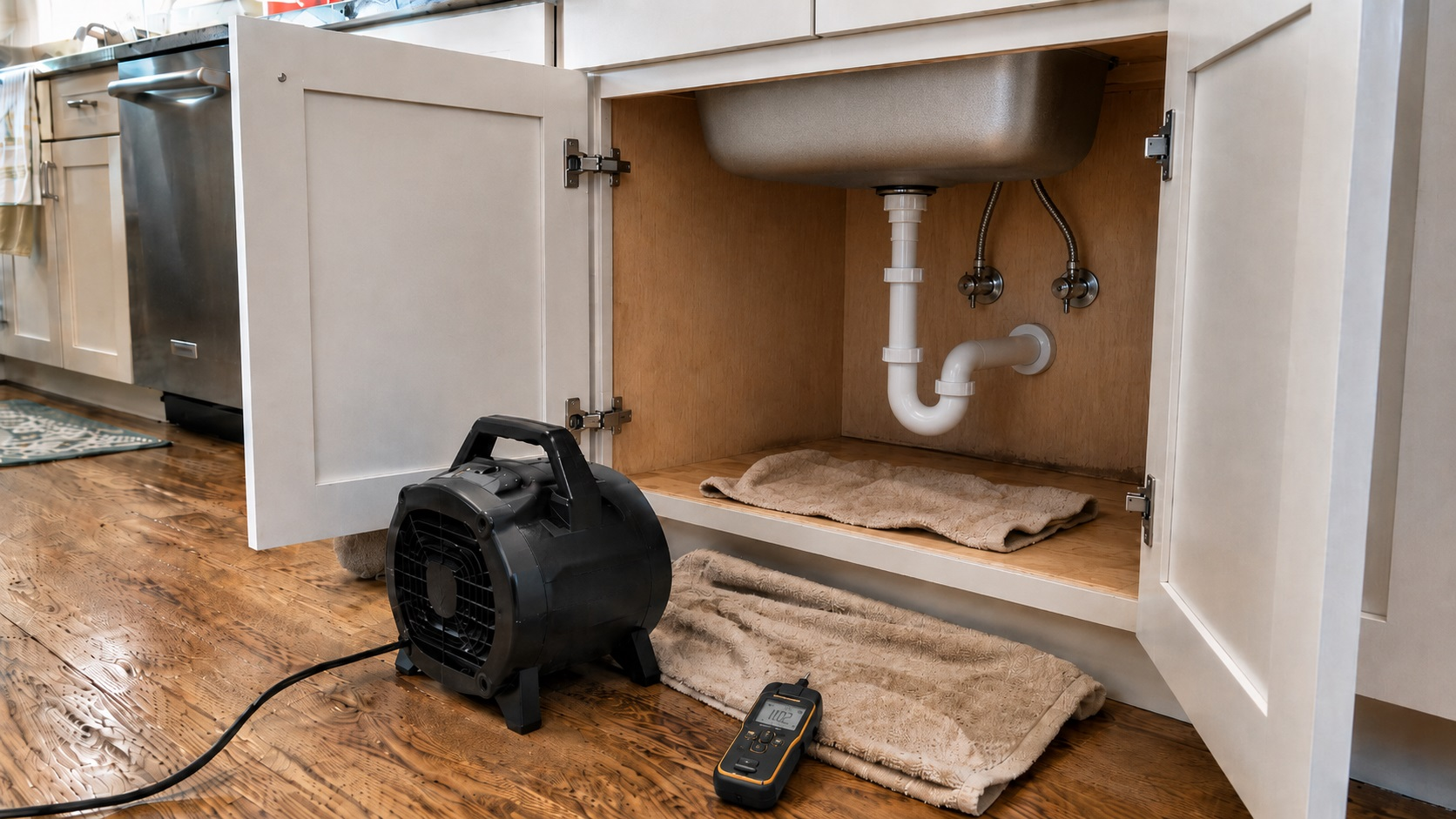
How to Dry Cabinets After Kitchen Leaks (Safe Steps to Remove Moisture and Prevent Damage)
After a kitchen leak, dry cabinets by stopping the water source, removing standing water, emptying the cabinet, opening doors and drawers, using fans for airflow, lowering indoor humidity, and checking for hidden dampness before putting items back. Even small leaks from sink pipes, dishwashers, or refrigerator lines can soak into cabinet materials and surrounding flooring. If moisture remains trapped inside cabinet structures, swelling, odor problems, mold growth, and long-term damage may develop.
The goal is to remove both visible water and trapped moisture before cabinet materials swell, weaken, or develop odors. If you are still confirming whether moisture reached hidden cabinet areas, signs of water damage behind kitchen cabinets can help you decide whether drying should begin immediately.
This article focuses on safe, practical steps to remove moisture from cabinets after a kitchen leak. It explains how to dry cabinet interiors, improve airflow, and monitor moisture so materials can recover as much as possible. Repair procedures are not covered here—instead, this guide helps stop moisture damage from getting worse.
Why Immediate Drying After Cabinet Leaks Matters
When cabinets become wet, moisture begins affecting materials almost immediately. Cabinet bases are often made from particleboard or medium-density fiberboard, which absorb water quickly. Once moisture enters these materials, swelling and weakening can begin within hours.
Even when water appears to be removed from visible surfaces, hidden moisture may remain trapped inside cabinet panels, seams, and subfloor materials. Because cabinets restrict airflow, drying naturally without intervention is often slow and incomplete.
Immediate drying matters for several reasons:
- Prevents cabinet swelling and distortion
- Reduces the risk of persistent odors
- Limits moisture spread into flooring and walls
- Helps preserve structural strength
- Reduces the chance of mold development
Water spreads easily along seams, edges, and joints. In many kitchens, moisture travels beneath cabinet bases into subflooring, where it may remain undetected. If moisture is not removed quickly, damage can expand into surrounding materials such as trim and lower wall sections. Similar spreading patterns are discussed in signs of water damage behind baseboards, which explains how moisture travels through concealed lower-wall areas.
Timing plays a critical role in determining whether cabinets can recover after exposure to water. Drying within the first 24 hours significantly improves the chance of preventing permanent material damage. Delayed drying increases the likelihood of swelling, separation, and structural weakening.
Many homeowners assume that cabinets will dry naturally once visible water disappears. However, enclosed cabinet structures often trap moisture, slowing evaporation. Without proper airflow and humidity control, moisture may remain hidden even when surfaces feel dry to the touch.
How to Dry Cabinets After a Kitchen Leak Step by Step
Drying cabinets after a kitchen leak requires more than simply wiping away visible water. Moisture often spreads into seams, base materials, and nearby flooring where it cannot be seen. Following a structured drying process helps remove both surface moisture and hidden dampness before damage worsens.
The steps below reflect realistic drying practices used after common kitchen leaks. These actions help remove moisture safely while reducing the risk of swelling, odor development, and long-term cabinet deterioration.
Step 1 — Stop the Leak and Remove Standing Water
Before beginning the drying process, the leak must be stopped completely. Continuing moisture exposure prevents materials from drying and allows water to spread further into cabinets and surrounding structures.
Safety note: If water reached electrical outlets, appliance wiring, a garbage disposal, dishwasher wiring, or any energized component, shut off power to the affected area before drying and do not use fans or tools near electrical hazards until the area is safe. If the leak involves sewage, floodwater, or contaminated water, avoid DIY cabinet drying and contact a qualified restoration professional.
Once the leak has been stopped, remove any standing water immediately. Use absorbent towels, cloths, or mops to remove pooled water from cabinet floors and surrounding areas.
Focus on removing water from:
- Cabinet floors and lower panels
- Toe-kick areas along cabinet bases
- Flooring directly in front of cabinets
- Inside corners where water tends to collect
Standing water left inside cabinets increases the chance of material absorption. Removing it quickly reduces the amount of moisture that enters cabinet fibers.
Step 2 — Empty Cabinet Contents Completely
Cabinet interiors must be cleared to allow airflow and prevent stored items from trapping moisture. Leaving contents inside slows evaporation and allows damp conditions to persist.
Remove all stored items, including:
- Cleaning supplies
- Dishware and containers
- Food storage items
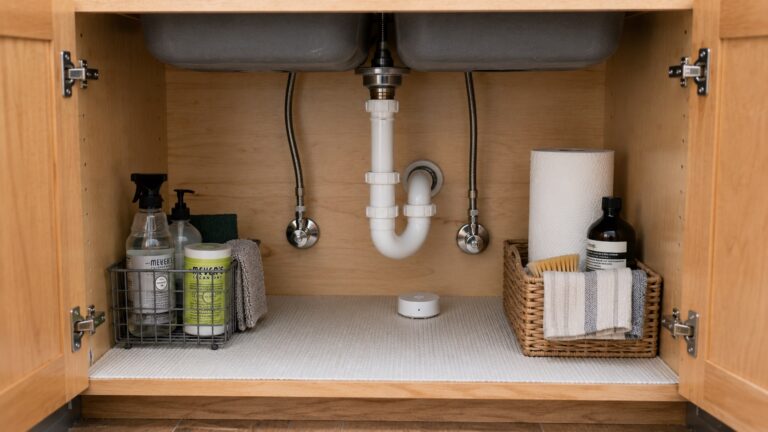
- Shelf liners and mats
Items stored inside wet cabinets may absorb moisture and should be inspected carefully. If surfaces remain damp, allow items to dry separately before returning them to the cabinet.
Do not return shelf liners, mats, cardboard packaging, stored items, or other coverings until the cabinet has fully dried. These materials can trap moisture against the cabinet floor and restart odor, mold, or swelling problems even after the surface looks dry.
Clearing the cabinet interior improves visibility and allows drying efforts to reach hidden areas that would otherwise remain damp.
Step 3 — Improve Airflow Inside the Cabinet
Air movement is one of the most important factors in drying cabinets. Without airflow, moisture remains trapped and evaporates slowly.
To improve airflow:
- Leave cabinet doors fully open
- Remove drawers if possible
- Position portable fans so air moves across the cabinet floor, back panel, seams, and toe-kick area rather than only blowing at the front opening
- Shift fan angles periodically so air reaches corners, seams, and lower cabinet areas
Fans help remove humid air and replace it with drier air. This exchange speeds evaporation and reduces the chance of lingering moisture.
In kitchens with limited ventilation, additional airflow may be necessary to dry enclosed spaces effectively.
Step 4 — Dry Interior Surfaces Thoroughly
After standing water is removed and airflow begins, interior surfaces should be dried manually to remove remaining surface moisture. Towels or absorbent cloths work well for wiping interior surfaces.
Pay close attention to:
- Cabinet floors
- Interior side panels
- Cabinet backs near plumbing lines
- Seams and corners where moisture collects
These areas often retain moisture longer than flat surfaces. Repeated wiping may be necessary if surfaces continue to feel damp.
If cabinet surfaces remain wet after initial drying, additional airflow may be required to prevent moisture from soaking deeper into materials.
Step 5 — Continue Drying the Surrounding Flooring
Water from cabinet leaks often spreads beyond the cabinet itself. Flooring near cabinets may hold hidden moisture even after cabinet interiors appear dry.
Check surrounding flooring for:
- Damp edges near cabinet bases
- Soft or swollen seams
- Moisture spreading outward from leak location
Flooring moisture can prolong overall drying time. If moisture spreads into subfloor materials, drying may require extended airflow and humidity control.
Similar moisture movement patterns are discussed in signs of moisture under hardwood floors, which explains how hidden water spreads beneath finished surfaces.
Step 6 — Monitor Moisture Levels During Drying
Drying should continue until materials feel dry, stable, and odor-free, and until hidden areas such as seams, back corners, toe-kicks, and nearby flooring are no longer showing signs of dampness. Stopping too early can leave hidden moisture trapped inside cabinet structures.
Watch for signs that moisture remains:
- Persistent damp feeling on surfaces
- Lingering musty odors
- Slow-drying flooring near cabinets
- Visible swelling that continues to worsen
If moisture symptoms continue after several days of drying, additional drying methods or professional evaluation may be necessary. Monitoring progress carefully helps prevent moisture from remaining unnoticed.
How Different Cabinet Materials Respond to Moisture
Not all cabinets respond to water exposure in the same way. The material used in cabinet construction plays a major role in how quickly moisture is absorbed and how effectively drying can prevent long-term damage. Understanding how different materials behave helps set realistic expectations during the drying process.
Particleboard Cabinets
Particleboard is one of the most common cabinet base materials, especially in budget-friendly kitchens. Unfortunately, it is also one of the most vulnerable to water damage.
When exposed to moisture, particleboard:
- Absorbs water rapidly through exposed edges
- Swells noticeably after repeated damp exposure
- Weakens structurally if moisture persists
- Rarely returns to its original shape once swollen
Quick drying is especially important for particleboard cabinets. Removing moisture early helps prevent permanent swelling and structural weakening.
Medium-Density Fiberboard (MDF)
MDF cabinets behave similarly to particleboard but may show even faster swelling under prolonged moisture exposure. This material is made from fine wood fibers that absorb water easily.
Moisture exposure in MDF cabinets may cause:
- Rapid edge swelling
- Surface bubbling beneath laminate finishes
- Loss of structural strength
- Permanent warping
Because MDF materials deteriorate quickly once saturated, early drying significantly improves the chance of limiting permanent damage.
Plywood Cabinets
Plywood cabinets typically perform better during moisture exposure. The layered construction helps resist swelling and allows materials to recover more effectively if dried quickly.
Plywood behavior during drying:
- Slower moisture absorption
- Better resistance to distortion
- Improved recovery after drying
- Less permanent damage when dried early
Although plywood cabinets tolerate moisture better than particleboard or MDF, prolonged exposure can still cause internal damage if drying is delayed.
Laminate Cabinet Surfaces
Laminate cabinet finishes provide temporary resistance to water exposure, but moisture can still enter through seams, edges, and screw penetrations.
Laminate cabinets may show:
- Delayed visible damage
- Hidden moisture beneath surface layers
- Edge separation after prolonged exposure
- Surface bubbling in severe cases
Because laminate surfaces may hide internal moisture, continued airflow and monitoring are essential even when surfaces appear dry.
Tools That Help Cabinets Dry Faster and More Safely
Using the right tools can significantly reduce drying time after a kitchen leak. While basic drying methods may work in mild situations, moderate moisture exposure often requires additional airflow and humidity control.
Portable Fans
Fans are one of the most effective tools for increasing airflow during cabinet drying. Moving air across wet surfaces helps moisture evaporate more quickly.
To use fans effectively:
- Position fans to blow air directly into cabinet openings
- Use multiple fans if several cabinets are affected
- Adjust airflow to reach cabinet floors and back panels
- Allow continuous airflow during drying periods
Fans should remain in operation for extended periods to maintain consistent airflow throughout the drying process.
Dehumidifiers
Dehumidifiers remove moisture from the surrounding air, making it easier for wet materials to release trapped water. This tool is particularly useful in enclosed kitchens or humid environments.
Dehumidifiers help by:
- Lowering indoor humidity levels
- Reducing moisture reabsorption
- Speeding evaporation from wet surfaces
- Supporting long-term drying effectiveness
Humidity control is especially important when drying continues for several days. Without it, moisture may linger even when airflow is present.
For broader prevention after drying, how to prevent recurring moisture damage explains how to keep repaired or dried areas from becoming damp again.
Absorbent Towels and Cloths
Absorbent materials remain essential during the early stages of drying. Towels help remove standing water and reduce surface moisture before airflow methods begin.
Use absorbent materials to:
- Remove visible water from cabinet interiors
- Dry seams and corners
- Wipe surfaces repeatedly during early drying stages
- Prevent water from spreading to nearby areas
Although towels alone cannot remove deep moisture, they remain an important first step in the drying process.
Optional Moisture Monitoring Tools
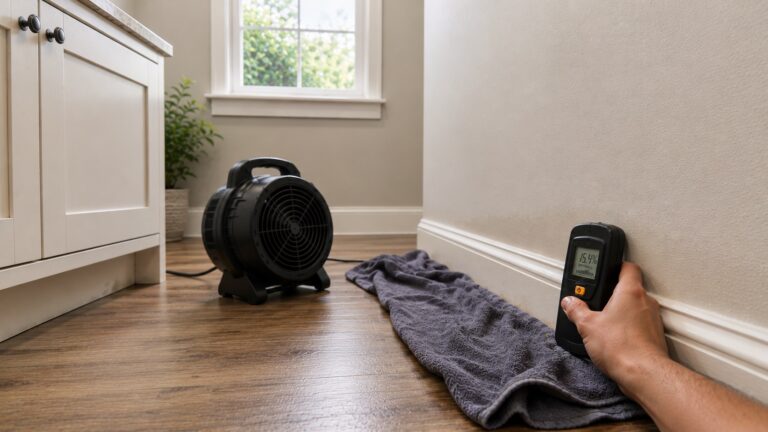
In some situations, homeowners may use moisture monitoring tools to confirm drying progress. These tools help identify hidden moisture that may remain inside cabinet materials.
Monitoring moisture levels can help prevent stopping the drying process too early. Similar moisture detection methods are explained in how to detect moisture under cabinets, which describes how hidden dampness can persist even when surfaces appear dry.
How Long Cabinets Take to Fully Dry
Drying time varies depending on how much water entered the cabinets and how quickly drying begins. Some cabinets dry within a day, while others require several days of airflow and humidity control.
Several factors influence drying time:
- Amount of water exposure
- Cabinet material type
- Presence of subfloor moisture
- Indoor humidity levels
- Airflow consistency
Light Moisture Exposure
If only a small amount of water entered the cabinet and drying begins quickly, materials may dry within 24 to 48 hours. This typically occurs when leaks are discovered early and water does not spread beyond cabinet surfaces.
Moderate Moisture Exposure
Moderate leaks that allow water to soak into cabinet bases or nearby flooring usually require 2 to 5 days of continuous drying. This is one of the most common drying scenarios after plumbing leaks beneath sinks.
Heavy Moisture Exposure
Large leaks or long-duration water exposure may require 5 to 10 days or longer to dry completely. In these cases, moisture often spreads into walls or flooring materials.
If drying takes longer than expected, additional moisture may remain hidden in surrounding structures. In some cases, this leads to ongoing moisture problems that require further investigation. These situations are explored in how to fix persistent moisture behind kitchen cabinets, which explains how long-term moisture issues are identified and corrected.
Signs That Cabinets Are Not Drying Properly
Even when drying steps are followed, some cabinets may retain hidden moisture. Recognizing early warning signs helps prevent damage from continuing unnoticed.
Watch for these signs that drying may be incomplete:
- Cabinet floors remain soft or spongy
- Swelling continues to increase after drying begins
- Musty odors develop or persist
- Visible stains expand over time
- Moisture spreads into adjacent flooring
If these symptoms appear, moisture may still be trapped inside cabinet materials or surrounding structures. Persistent moisture often leads to mold formation if not corrected quickly. Why mold forms behind kitchen cabinets explains how lingering moisture creates favorable conditions for growth.
When Professional Drying May Be Needed
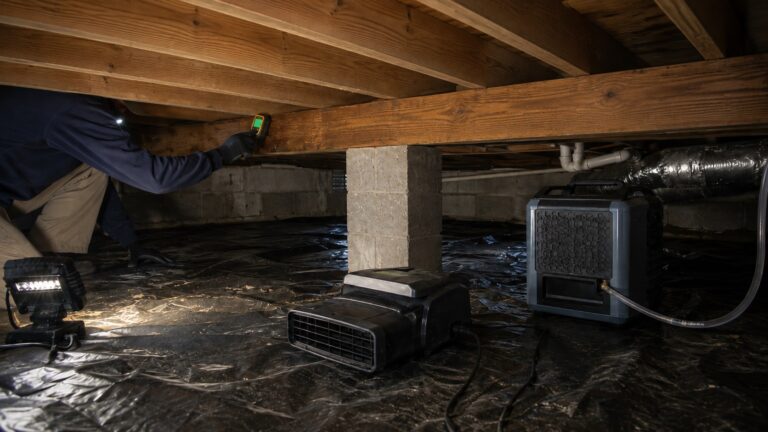
Some kitchen leaks create conditions that exceed typical household drying methods. In these situations, professional drying equipment may be required to remove moisture safely.
Consider professional assistance if:
- Cabinets remain damp, musty, or unstable after 48 hours of active drying
- Multiple cabinets were exposed to water
- Subflooring feels soft or unstable
- Water spread into walls or surrounding structures
- Strong musty odors develop during drying
- Cabinet material feels soft, crumbly, swollen, delaminated, or structurally weak
Professional drying services use specialized equipment designed to remove moisture from concealed areas. These tools help prevent hidden water from causing long-term structural damage.
Ignoring persistent moisture increases the risk of repeated mold problems. If moisture continues to return after drying attempts, long-term prevention strategies become necessary. These strategies are explained in how to prevent recurring mold behind kitchen cabinets, which focuses on stopping repeated moisture cycles after the drying phase is complete.
Preventing Mold After Cabinets Have Been Dried
Once cabinets are dry, maintaining dry conditions becomes the next priority. Moisture that returns to previously wet areas can quickly restart damage and increase the risk of mold growth.
Preventive actions include:
- Inspect plumbing connections regularly
- Monitor cabinet interiors for new moisture
- Maintain good kitchen ventilation
- Repair leaks immediately when detected
- Keep cabinet interiors clean and dry
These steps help reduce the likelihood of moisture returning to previously affected areas.
Frequently Asked Questions
How long should cabinets dry after a kitchen leak?
Most cabinets require between 24 hours and several days to dry completely. Light moisture may dry within one to two days, while moderate exposure typically requires two to five days. Heavy water exposure may take longer, especially if flooring or walls are involved.
Can cabinets dry without removing them?
In many cases, cabinets can dry without removal if moisture exposure is limited. However, severe saturation or prolonged moisture may require partial removal to allow proper airflow and structural drying.
Is it safe to use heat to dry cabinets?
Moderate warmth combined with airflow can assist drying, but high heat without ventilation may warp finishes, loosen adhesives, or damage cabinet materials. Air movement and humidity control are more important than heat alone.
What happens if cabinets stay wet too long?
Prolonged moisture exposure increases the risk of swelling, structural weakening, and mold growth. Drying delays allow moisture to penetrate deeper into materials, making recovery more difficult.
How can I prevent mold after drying cabinets?
Preventing mold requires removing moisture quickly, maintaining airflow, and monitoring cabinet interiors for recurring dampness. Consistent inspection helps identify small moisture issues before they become larger problems.
Final Cabinet Drying Checklist
Before closing the cabinet, reinstalling liners, or returning stored items, confirm that the leak has stopped, cabinet surfaces are dry, airflow has reached the back corners and toe-kick area, nearby flooring is not staying damp, and no musty odor or swelling is developing. If moisture symptoms continue after 48 hours, or if the cabinet base feels soft, crumbly, or unstable, stop the DIY drying process and get a professional moisture evaluation.
One Comment
Comments are closed.