Why Kitchen Sink Plumbing Develops Hidden Leaks (Common Causes Explained)
Kitchen sink plumbing develops hidden leaks when seals harden, compression fittings loosen, drain connections shift, supply lines fatigue, or pressure changes stress weak joints. These failures usually start as tiny drips around washers, threaded fittings, disposal connections, dishwasher hoses, shutoff valves, or the sink drain assembly.
Because the leak often happens inside a dark cabinet, small amounts of water can soak into cabinet floors before a puddle appears. If moisture is already present and you need to confirm whether water is still escaping, use the steps in how to detect slow leaks under kitchen sinks.
This article focuses on the causes of hidden kitchen sink leaks: seal wear, vibration, pressure stress, installation flaws, mineral buildup, chemical exposure, and long-term material deterioration.
Because under-sink leaks can eventually affect cabinet bases, flooring, and nearby framing, the broader process is explained in how plumbing leaks cause structural damage.
Why Hidden Leaks Are So Common Under Kitchen Sinks
Kitchen sink plumbing contains multiple connection points that must remain sealed under pressure. Each connection relies on compression fittings, threaded joints, or rubber seals to maintain watertight conditions. Over time, these sealing systems weaken due to repeated stress and environmental exposure.
Kitchen sinks are especially prone to hidden leaks because they experience heavy daily use. Water flow, temperature changes, and mechanical movement all contribute to long-term wear. Unlike exposed plumbing, the enclosed cabinet environment hides early warning signs, allowing moisture damage to develop unnoticed.
Several conditions make hidden leaks particularly common under kitchen sinks:
- Frequent daily use: Kitchen sinks operate more often than most household plumbing fixtures.
- Multiple mechanical connections: Each joint introduces a potential failure point.
- Temperature fluctuations: Hot and cold water cycles stress materials.
- Vibration from appliances: Garbage disposals and dishwashers transfer movement into plumbing.
- Enclosed cabinet conditions: Limited airflow slows drying and hides moisture buildup.
Even properly installed plumbing can begin leaking years later because these stresses continue every time the sink, disposal, or dishwasher is used.
When moisture exposure continues unnoticed, cabinet materials may begin to show swelling, staining, softening, or musty odor. If those symptoms are already present, compare them with the indicators in signs of water damage under kitchen sinks instead of relying on leak causes alone.
Seal Degradation Is the Most Common Cause of Hidden Leaks
Seal degradation is responsible for a large percentage of hidden leaks under kitchen sinks. Most plumbing systems rely on flexible sealing components such as rubber washers, O-rings, and compression gaskets. These materials maintain watertight connections by filling microscopic gaps between plumbing components.
Over time, these seals gradually lose elasticity. When flexibility decreases, the seal can no longer maintain tight compression. This change allows water to escape through tiny openings that grow larger with continued use.
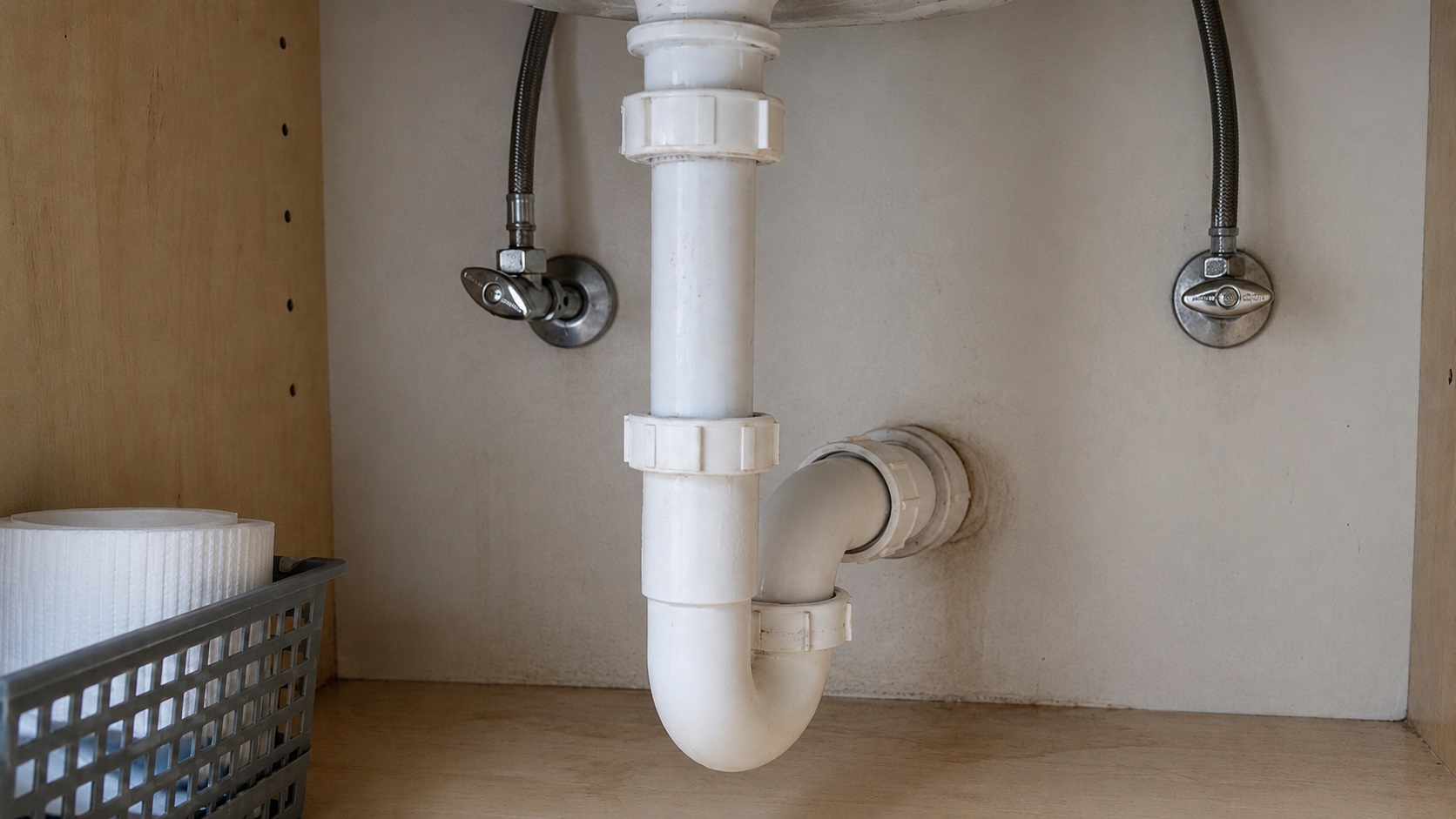
The highest-risk places to check are the basket strainer under the sink basin, the P-trap slip nuts, disposal mounting connections, faucet supply line connections, shutoff valves, dishwasher hose connections, and any threaded drain fittings that have been disturbed during cleaning or repairs.
For a more detailed fixture-by-fixture walkthrough, use how to inspect kitchen sink pipes for hidden leaks to check these vulnerable connection points more carefully.
How Rubber Seals Break Down Over Time
Rubber components are designed to remain flexible under pressure, but repeated exposure to heat, water, and mechanical stress causes gradual deterioration. This breakdown process occurs slowly and often without visible warning.
Common contributors to rubber seal degradation include:
- Repeated hot water exposure
- Natural aging of materials
- Constant compression under pressure
- Exposure to cleaning chemicals
- Mineral buildup from hard water
As seals harden and shrink, microscopic gaps form between surfaces. These gaps allow tiny amounts of water to escape during normal sink operation. Because the leak volume is small, moisture often spreads silently before noticeable dripping occurs.
Mineral Buildup That Weakens Seal Performance
Hard water minerals play a major role in seal failure. Calcium and magnesium deposits accumulate on seal surfaces and inside threaded connections. Over time, these deposits prevent seals from compressing evenly.
Mineral buildup contributes to hidden leaks by:
- Creating uneven sealing surfaces
- Reducing seal flexibility
- Blocking full compression during tightening
- Increasing friction inside fittings
In homes with hard water, seal degradation may occur faster than expected. This accelerated wear increases the likelihood of hidden leaks developing within standard plumbing lifespans.
Loss of Seal Compression Over Time
Compression seals rely on constant pressure to remain effective. Over time, vibration and temperature cycling reduce compression strength. Once compression weakens, water begins escaping through small openings.
Typical compression loss occurs due to:
- Thermal expansion and contraction cycles
- Mechanical movement from faucet use
- Natural settling of threaded components
- Material fatigue caused by long-term use
Even small compression losses can create leak pathways that allow moisture to escape gradually over weeks or months.
Mechanical Movement and Vibration That Loosen Plumbing Connections
Mechanical movement is one of the most underestimated causes of hidden leaks under kitchen sinks. Garbage disposals, dishwasher hoses, faucet use, and items bumped inside the cabinet can all transfer small forces into fittings. Over months or years, that movement can reduce alignment and compression strength at connection points.
Garbage Disposal Vibration and Its Long-Term Effects
Garbage disposals produce significant vibration during operation. While this vibration is normal, it transfers directly into surrounding plumbing connections. Over time, vibration loosens threaded joints and reduces seal pressure.
Long-term disposal vibration may cause:
- Drain fittings to loosen slightly
- Mounting hardware to shift position
- Rubber seals to weaken from repeated movement
- Threaded joints to lose alignment
Because these changes happen gradually, homeowners rarely notice them until moisture begins appearing beneath connections.
Dishwasher Operation and Hose Movement
Dishwasher hoses connected beneath kitchen sinks experience expansion and contraction during each wash cycle. Warm water increases internal pressure, causing slight movement in hose materials.
Over time, this movement contributes to:
- Clamp loosening
- Hose fatigue and cracking
- Seal wear at connection points
- Joint misalignment from repeated stress
Leaks caused by dishwasher movement often appear intermittently, making them difficult to diagnose without repeated inspection.
Faucet Use and Supply Line Movement
Every time a faucet is turned on or off, small forces are transferred into supply lines and shutoff valves. While each movement is minor, thousands of cycles accumulate over time.
These repeated actions may lead to:
- Gradual loosening of compression fittings
- Reduced sealing pressure
- Minor joint shifts
- Seal fatigue from repeated stress
Over extended periods, these small changes increase the likelihood of micro-leaks forming around supply line connections.
Water Pressure and Thermal Stress That Damage Plumbing Components
Water pressure affects how long under-sink fittings and seals remain reliable. When pressure is too high or fluctuates rapidly, weak washers, threaded joints, supply connections, and shutoff valves experience extra stress that can turn minor wear into an active leak.
High Water Pressure and Seal Fatigue
Water pressure that remains above recommended levels increases stress on seals and joints. This added force accelerates material fatigue and increases the chance of hidden leaks developing.
High-pressure conditions may result from:
- Municipal supply pressure changes
- Faulty pressure regulators
- Water heater expansion effects
- Improper plumbing design
When pressure remains elevated, even minor seal defects can become active leak points. If several fixtures in the home also bang, spit, or shut off with a thud, pressure stress may be affecting more than the kitchen sink connection.
Water Hammer and Pressure Shock Effects
Water hammer occurs when flowing water stops suddenly, creating shockwaves that travel through plumbing pipes. These shockwaves transfer force into connection points, gradually weakening threaded joints.
Repeated pressure shock may cause:
- Thread loosening
- Seal distortion
- Joint misalignment
- Micro-cracking in vulnerable materials
Although a single water hammer event may not cause visible damage, repeated shock exposure increases long-term leak risk.
Thermal Expansion and Temperature Cycling
Temperature cycling is another major contributor to hidden leaks. Hot water expands pipes slightly, while cold water causes contraction. These repeated cycles stress seals and joints.
Thermal cycling contributes to:
- Seal fatigue
- Joint movement
- Connection loosening
- Material deformation
Homes with frequent hot water use experience more rapid temperature cycling, which increases the likelihood of seal degradation over time.
Installation Problems That Lead to Hidden Leaks Later
Improper installation is a major cause of leaks that develop months or years after plumbing work is completed. Small installation errors often remain hidden until normal system use gradually exposes weak points.
Many hidden leaks originate from connections that were incorrectly assembled during original installation or later repairs.
Overtightened Fittings That Damage Threads
Overtightening plumbing connections is a common mistake that can damage both threads and seals. Excessive force compresses seals unevenly and weakens plastic components.
Overtightening may cause:
- Cracked plastic threads
- Deformed rubber seals
- Reduced sealing performance
- Delayed leak development
Leaks caused by overtightening often appear gradually rather than immediately.
Undertightened Connections That Leave Micro Gaps
Connections that are not tightened sufficiently leave small gaps between surfaces. These gaps allow moisture to escape slowly under pressure.
Undertightening often occurs due to:
- Limited access during installation
- Improper tool use
- Rushed repairs
- Incomplete tightening procedures
Even minor gaps can produce slow leaks that remain hidden until visible damage appears.
Incorrect Washer or Seal Placement
Many plumbing systems rely on correctly positioned washers or sealing rings. If these components are missing or misaligned, the connection may appear secure while allowing water to escape internally.
Common seal placement errors include:
- Missing washers
- Misaligned seals
- Using incorrect seal sizes
- Installing damaged components
These installation errors often lead to persistent slow leaks that worsen gradually over time.
Environmental Conditions That Accelerate Hidden Leak Development
Environmental conditions inside kitchen sink cabinets can significantly increase the likelihood of hidden leaks. Even when plumbing components are properly installed, surrounding conditions such as humidity, temperature fluctuations, and chemical exposure gradually weaken materials and increase failure risk.
Under-sink cabinets create a unique environment where moisture, limited airflow, and temperature variation combine to accelerate deterioration. These environmental factors often work alongside mechanical stress, making leak formation more likely over time.
High Humidity Inside Sink Cabinets
Humidity is one of the most overlooked contributors to plumbing deterioration. Moisture inside cabinets may come from condensation, minor splashes, or nearby water exposure. Over time, this humidity accelerates corrosion and seal degradation.
Common sources of humidity inside sink cabinets include:
- Condensation on cold pipes
- Minor sink splashes
- Dishwasher steam release
- Slow evaporation from past moisture exposure
High humidity contributes to hidden leak formation by:
- Speeding up metal corrosion
- Weakening rubber seals
- Encouraging mineral buildup
- Increasing long-term material fatigue
Temperature Changes That Stress Plumbing Materials
Temperature fluctuations occur frequently in kitchen plumbing systems. Hot water use raises pipe temperature, while cold water lowers it rapidly. These repeated cycles place mechanical stress on seals and joints.
Temperature-related stress contributes to:
- Expansion and contraction of pipes
- Seal compression loss
- Thread movement over time
- Material fatigue from repeated cycles
In households that use hot water frequently, temperature cycling occurs many times each day. Over months or years, this repetitive movement weakens sealing systems and increases leak probability.
Chemical Exposure That Weakens Materials
Many households store cleaning chemicals beneath kitchen sinks. While convenient, chemical vapors may slowly degrade rubber and plastic plumbing components.
Common chemical contributors include:
- Bleach-based cleaners
- Ammonia solutions
- Drain cleaning chemicals
- Multipurpose cleaning sprays
Long-term exposure to these vapors may cause:
- Seal hardening
- Plastic brittleness
- Surface corrosion
- Reduced material flexibility
These changes often occur gradually and without visible warning, making chemical exposure an underestimated contributor to hidden leaks.
Avoid storing harsh cleaners directly against supply lines, rubber hoses, or plastic drain parts. Leaks are not caused by storage alone, but repeated chemical exposure can speed up wear on materials that are already aging.
How Small Plumbing Weaknesses Become Hidden Leaks
Most hidden under-sink leaks begin with a small weakness at one connection point. A washer may flatten, a drain nut may loosen, a hose clamp may shift, or mineral buildup may keep a seal from compressing evenly. At first, the leak may only appear while the sink, disposal, or dishwasher is running.
Once moisture reaches the cabinet floor, wood-based materials can absorb water faster than they dry. That is why a small intermittent drip can eventually leave swelling, staining, soft spots, musty odor, or mold growth even if no standing water is visible.
Why Hidden Leaks Often Go Undetected for Long Periods
Hidden leaks often go unnoticed because moisture escapes behind stored items, under fittings, or along cabinet floors where early dampness is easy to miss. Instead of forming an obvious puddle, a small leak may soak into wood-based cabinet materials or appear only when the sink, dishwasher, or disposal is running.
Limited Visibility Inside Cabinets
Under-sink cabinets are often crowded with cleaning supplies, storage containers, and household items. These stored items block visibility and hide early signs of moisture exposure.
Visibility problems contribute to delayed detection by:
- Covering moisture stains
- Blocking airflow around plumbing
- Preventing regular inspection
- Hiding early structural damage
Because leaks usually develop at connection points near the back of cabinets, stored items often conceal the most vulnerable areas.
Slow Moisture Release That Produces No Immediate Puddles
Most hidden leaks release very small amounts of water over time. Instead of forming visible puddles, this moisture is absorbed into cabinet materials or evaporates gradually.
Slow-release leaks typically:
- Produce dampness instead of standing water
- Spread moisture through porous materials
- Create subtle stains rather than dripping water
- Develop damage long before visible water appears
This behavior explains why homeowners often discover leaks only after noticing material swelling or softening.
Intermittent Leak Behavior
Some leaks occur only under certain conditions, making them even more difficult to detect. These intermittent leaks may appear only when water is flowing or when appliances are operating.
Intermittent leak triggers include:
- Running hot water
- Using the dishwasher
- Operating garbage disposals
- Changes in water pressure
Because moisture may not appear continuously, intermittent leaks often go unnoticed during routine inspections.
When Leak Causes Require Professional Attention
While many hidden leaks result from normal wear, certain conditions suggest more serious system problems. Identifying these high-risk situations helps determine when professional inspection may be necessary.
Stop using the affected fixture and call a plumber if water is reaching electrical outlets, disposal wiring, swollen cabinet materials, soft subflooring, corroded shutoff valves, or multiple active leak points. Do not cover stains, install new cabinet liners, or seal the cabinet floor until the leak source has been confirmed and corrected.
Multiple Leak Points Developing at Once
If several connections begin leaking within a short period, this may indicate underlying system stress rather than isolated component failure.
Possible causes include:
- Excessive water pressure
- System-wide vibration issues
- Advanced plumbing age
- Improper previous repairs
When multiple components fail simultaneously, the risk of widespread damage increases.
Repeated Leaks After Previous Repairs
Leaks that return repeatedly after repair attempts often indicate unresolved root causes. This pattern suggests deeper system problems rather than simple connection failure.
Common contributing factors include:
- Incorrect installation procedures
- Unstable pipe alignment
- Hidden structural movement
- Persistent pressure imbalance
Persistent leak recurrence should not be ignored, as repeated failures increase long-term moisture exposure risks.
If repeated leaks continue to occur after fittings, seals, or hoses have already been adjusted, use how to fix persistent leaks under kitchen sinks to decide whether the problem has moved beyond simple maintenance and needs professional repair.
FAQ: Why Kitchen Sink Plumbing Develops Hidden Leaks
Why do kitchen sink pipes suddenly start leaking?
Leaks often appear suddenly even though underlying damage developed gradually. Seal wear, vibration, and pressure changes weaken connections over time until moisture finally escapes.
Do plumbing connections loosen naturally over time?
Yes. Mechanical movement, temperature changes, and vibration gradually reduce connection tightness. Over extended periods, these small shifts create conditions that allow moisture to escape.
Why do rubber seals fail in plumbing systems?
Rubber seals lose flexibility due to aging, heat exposure, and mineral buildup. As elasticity declines, seals cannot maintain tight compression, allowing water to leak through small openings.
Can vibration from appliances cause plumbing leaks?
Yes. Garbage disposals and dishwashers create vibration that transfers into plumbing connections. Repeated vibration weakens seals and loosens threaded joints over time.
Why do older homes experience more hidden leaks?
Older plumbing systems contain materials that have experienced years of wear. Aging seals, corrosion, and repeated mechanical stress increase the likelihood of hidden leak formation.
What These Leak Causes Mean for Homeowners
Hidden leaks under kitchen sinks usually come from ordinary wear: aging seals, loose fittings, vibration, pressure stress, installation mistakes, or cabinet conditions that keep moisture from drying quickly. The important point is that these causes often create very small leaks before obvious puddles appear.
If the cabinet base smells musty, feels soft, shows staining, or becomes damp only after certain fixtures run, treat the area as an active leak risk. Confirm the source before covering stains, replacing cabinet materials, or assuming the surface has dried.
Key Takeaways
- Hidden leaks usually develop gradually rather than suddenly.
- Seal degradation is the most common cause of under-sink leaks.
- Vibration and mechanical movement weaken plumbing connections.
- High pressure and temperature changes accelerate seal failure.
- Environmental conditions inside cabinets increase leak risk.
- Checking high-risk connections helps catch cause-related wear before it turns into cabinet damage.