
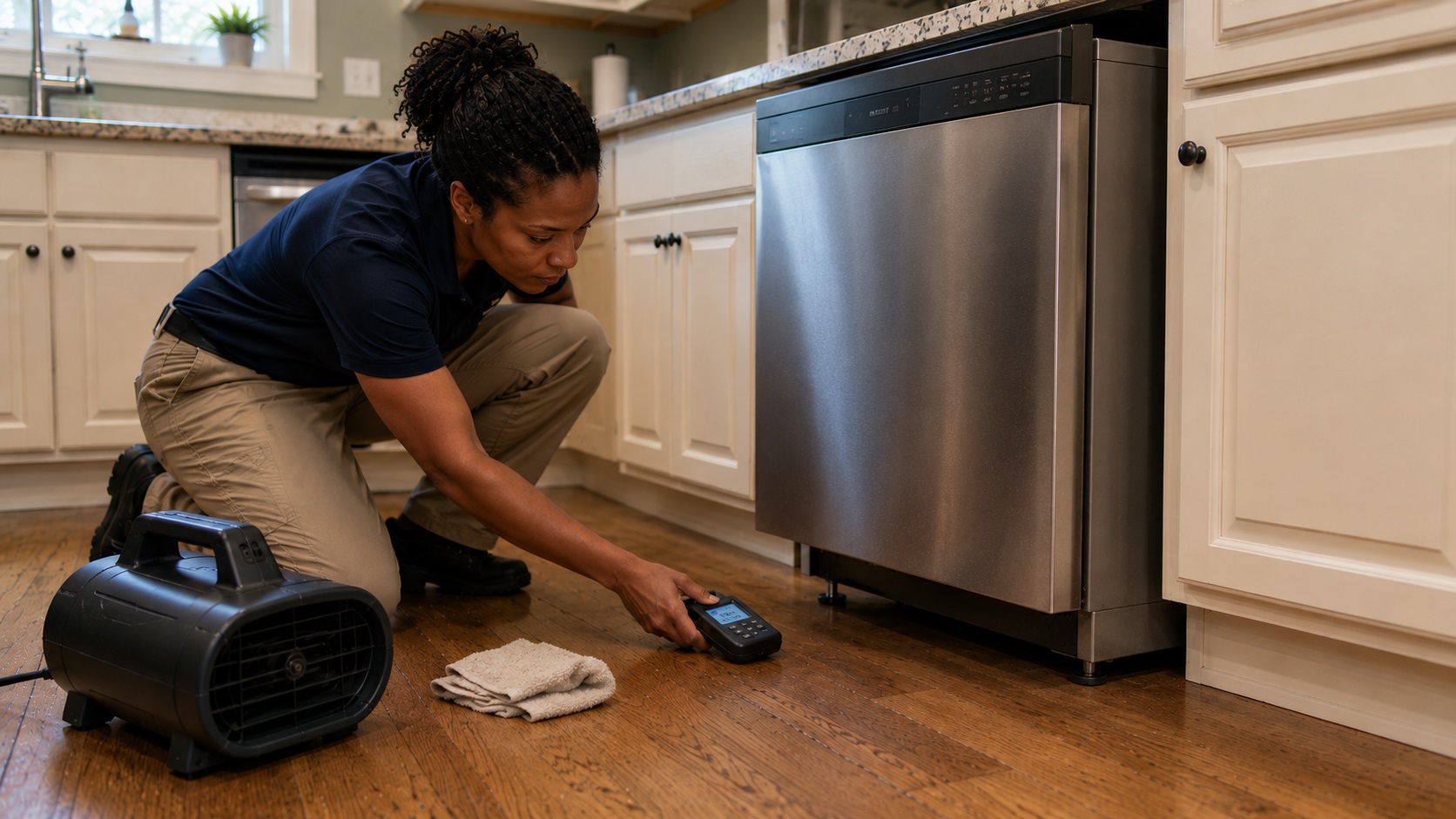
How to Dry Flooring After Dishwasher Leaks
A dishwasher leak can send water under kitchen flooring faster than most homeowners expect. Even small leaks can spread moisture beneath laminate seams, vinyl edges, hardwood joints, and tile grout lines. Once water moves below the surface, drying becomes more difficult and mold risk increases quickly.
To dry flooring after a dishwasher leak, stop the water source, remove standing water, direct airflow into seams and floor edges, lower indoor humidity, and keep checking the subfloor area until moisture no longer returns. Acting quickly can prevent long-term structural damage and reduce the chance of mold growth.
If you are still unsure whether your dishwasher is actively leaking, start with how to detect hidden dishwasher leaks. If you notice musty odors, staining, or visible growth around the appliance, review signs of mold behind dishwashers before covering the area back up.
How Dishwasher Water Spreads Under Kitchen Flooring
When a dishwasher leaks, water rarely stays in one place. Instead, it moves along seams, joints, and low points in the flooring. Many homeowners expect to see standing water, but in reality, much of the moisture travels beneath the surface where it becomes harder to detect.
How Moisture Moves Under Flooring
Water from dishwasher leaks typically spreads outward from the appliance opening. Once it reaches flooring seams or edges, it begins moving beneath the surface. Floating floors such as laminate or vinyl plank systems are especially vulnerable because water can travel between layers.
Common moisture movement patterns include:
- Water flowing under laminate seams
- Moisture entering vinyl plank edges
- Water moving beneath cabinet bases
- Moisture soaking into plywood or OSB subfloor
- Water spreading into adjacent kitchen areas
In many kitchens, the visible water you see represents only part of the total moisture present. Hidden moisture beneath flooring materials often causes the most serious long-term damage.
If your leak involved standing water in front of the appliance, compare your symptoms with signs of water leaks under dishwashers to determine whether additional moisture sources may still be active.
Why Some Floors Dry More Slowly Than Others
Different flooring materials react to moisture in different ways. Some allow water to evaporate easily, while others trap moisture underneath the surface.
Flooring that typically dries faster:
- Tile flooring with good ventilation
- Exposed concrete subfloors
- Open flooring surfaces without trapped seams
Flooring that usually dries slowly:
- Laminate flooring
- Vinyl plank flooring
- Hardwood flooring
- Flooring installed over vapor barriers
Slow-drying materials increase mold risk because trapped moisture remains in place long enough for mold growth to begin. For broader prevention steps after leaks, see how to prevent recurring moisture damage, which explains how to keep moisture problems from returning after cleanup.
Immediate Steps to Take After a Dishwasher Leak
The first few hours after discovering a dishwasher leak are critical. Quick action during this period can prevent water from spreading deeper into flooring materials and subfloor structures.
Step 1: Stop the Water Source
Before drying can begin, the leak must be stopped. If water continues entering the area, drying efforts will fail and moisture damage will worsen.
Safety note: Do not touch dishwasher wiring, outlets, or plugs while standing water is present. If water has reached electrical components, shut power off at the breaker and call a qualified professional before continuing.
Actions to stop water exposure:
- Turn off the dishwasher immediately
- Shut off the water supply valve if leakage continues
- Disconnect power if standing water is present
- Avoid running additional wash cycles until the problem is identified
If the source of water is unclear, identifying it becomes the first priority. The methods described in detect hidden dishwasher leaks can help confirm whether moisture is still entering the area.
Step 2: Remove Standing Water Quickly
Standing water should be removed as soon as possible. The longer water remains on the floor, the greater the chance that it will move beneath flooring layers.
Effective ways to remove standing water include:
- Using absorbent towels to soak up visible water
- Using a wet/dry vacuum to remove pooled water
- Pressing towels into seams and floor joints
- Repeating removal until no visible moisture remains
After visible water is removed, continue drying seams, edges, and nearby cabinet bases because these areas often stay damp longer than the open floor surface.
Step 3: Protect Cabinets and Walls From Further Moisture
Cabinets and nearby walls are often exposed to moisture during dishwasher leaks. Protecting these areas reduces the chance of mold developing behind cabinetry or inside wall cavities.
Steps to protect surrounding materials include:
- Dry cabinet bases and toe-kick areas with towels before placing fans.
- Remove wet floor mats, rugs, cardboard, or stored items near the dishwasher.
- Check toe-kick panels for swelling, softness, dark staining, or musty odor.
- Inspect wall edges and cabinet sides near the appliance before closing the area.
If cabinet swelling or mold symptoms appear, review signs of mold behind dishwashers to understand how moisture damage progresses in enclosed kitchen areas.
How to Dry Different Types of Flooring After a Dishwasher Leak
Drying methods vary by flooring type because laminate, vinyl plank, hardwood, and tile trap moisture in different ways.
Drying Laminate Flooring After a Dishwasher Leak
Laminate flooring is one of the most vulnerable materials during a dishwasher leak. The fiberboard core absorbs water quickly, and once swelling begins, permanent damage often follows. Moisture also spreads easily under laminate planks because the flooring floats above the subfloor.
Steps to dry laminate flooring:
- Remove all visible surface water immediately using towels or a wet/dry vacuum.
- Place fans so airflow moves directly across the floor surface and into seams.
- Lift nearby floor trim or baseboards if moisture may have spread underneath.
- Allow airflow to continue for multiple days rather than stopping after the surface feels dry.
- Monitor seams closely for swelling or lifting.
If laminate edges begin swelling or lifting, drying alone may not restore the material. However, early drying can still prevent mold from forming beneath the flooring.
Drying Vinyl Plank Flooring After a Dishwasher Leak
Vinyl plank flooring resists water on the surface, but moisture can still seep through seams and become trapped below the planks. Because vinyl creates a barrier above the subfloor, hidden moisture may remain even after the surface appears dry.
Steps to dry vinyl plank flooring:
- Remove visible water quickly before it enters seams.
- Use fans to move air across flooring edges and seams.
- Maintain airflow for extended periods to allow moisture to escape from below.
- Check nearby floor edges, transitions, and toe-kick gaps for trapped moisture.
- Watch for lifting or movement along plank joints.
Vinyl plank flooring often survives minor leaks when drying begins quickly. However, moisture trapped beneath the planks increases the risk of hidden mold development if drying is incomplete.
Drying Hardwood Flooring After a Dishwasher Leak
Hardwood flooring reacts strongly to moisture exposure. Water absorbed into wood fibers causes expansion and movement across the grain. If drying begins early, hardwood flooring may recover without permanent distortion.
Steps to dry hardwood flooring:
- Remove standing water immediately.
- Position fans to move air across the surface continuously.
- Allow steady airflow for several days rather than short drying periods.
- Watch for cupping or raised edges along boards.
- Check surrounding cabinet bases for hidden moisture.
Hardwood drying requires patience. Surface dryness may occur quickly, but moisture inside wood fibers takes longer to evaporate. Monitoring conditions over several days improves recovery outcomes.
Avoid using intense heat directly on hardwood flooring. Drying wood too aggressively can worsen cupping, cracking, or board movement.
Drying Around Tile Flooring After a Dishwasher Leak
Tile flooring appears water-resistant, but moisture can still pass through grout lines and reach the subfloor beneath. In many kitchens, tile surfaces dry quickly while hidden moisture remains below.
Steps to dry tile flooring:
- Remove standing water from grout lines and tile surfaces.
- Direct airflow across grout seams.
- Allow extended drying time even after the surface appears dry.
- Inspect adjacent materials such as cabinet bases for moisture exposure.
- Monitor for musty odors that indicate hidden dampness.
Tile floors often appear unaffected even when grout lines, floor edges, or the subfloor have absorbed water. If musty odor or edge dampness remains, keep drying the surrounding area and check whether moisture has moved beyond the visible leak zone.
How to Dry the Subfloor Near a Dishwasher Leak
Drying the subfloor is one of the most important steps after a dishwasher leak. Subfloors absorb water quickly and release moisture slowly. If moisture remains trapped beneath the finished flooring, mold growth becomes more likely.
For a broader material-specific guide, see how to dry subfloors after water damage.
When Moisture Is Trapped Beneath Flooring
Moisture trapped below flooring is common after dishwasher leaks. Signs that subfloor moisture may be present include:
- Floor feels cool or damp despite surface drying
- Musty odors remain after cleanup
- Floor seams remain raised
- Moisture appears along cabinet edges
- Water stains spread outward from the appliance
If these symptoms appear, additional drying time is usually necessary. Rushing the drying process increases the risk of mold formation.
Airflow and Ventilation Strategies for Subfloor Drying
Effective subfloor drying depends on airflow reaching hidden moisture zones. Simply placing fans in the room may not be enough if air cannot circulate beneath flooring edges.
Effective airflow strategies include:
- Directing airflow toward seams and floor edges
- Maintaining airflow continuously for several days
- Keeping the room warm to encourage evaporation
- Using a dehumidifier or HVAC drying mode if the kitchen air feels humid or drying progress stalls
- Monitoring moisture changes over time
If drying progress slows or moisture symptoms persist, additional moisture checks may be necessary. Tools such as moisture meters can help identify hidden dampness beneath flooring materials. For equipment guidance, see best moisture meters for hidden water damage.
How Long Flooring Takes to Dry After a Dishwasher Leak
Drying time is one of the most misunderstood parts of recovering from a dishwasher leak. Many homeowners assume flooring dries within a few hours, especially once the surface looks dry. In reality, moisture trapped beneath flooring can take several days—or even weeks—to fully evaporate.
Drying time depends on several factors, including how much water entered the floor, how long it remained, the type of flooring installed, and the humidity level in the home.
Typical Drying Time Ranges
The following ranges reflect realistic drying expectations for common dishwasher leak situations:
- Minor surface wetting: 12–24 hours
- Moderate moisture exposure: 2–5 days
- Moisture trapped beneath flooring: 5–10 days
- Subfloor saturation: 7–14 days or longer
These timelines assume proper airflow and moisture removal began quickly after the leak was discovered. Delays in drying significantly extend recovery time and increase the risk of mold growth.
If musty odors, staining, or visible growth appear during the drying process, compare them with signs of mold behind dishwashers to determine whether mold conditions may already be developing.
Factors That Affect Drying Speed
- Humidity levels: High humidity slows evaporation.
- Airflow: Strong, directed airflow speeds drying.
- Temperature: Warmer air supports faster evaporation.
- Flooring material: Dense materials dry more slowly.
- Leak duration: Longer leaks cause deeper moisture spread.
In kitchens where humidity remains high, drying may stall even when fans are running. Reducing humidity improves drying efficiency and lowers mold risk.
Signs That Flooring Is Not Drying Properly
Some flooring does not dry as expected, even when surface moisture disappears. Recognizing failed drying early allows homeowners to correct the problem before mold begins forming beneath flooring materials.
Persistent Moisture Indicators
- Floor remains cool to the touch after several days
- Musty odor develops near the dishwasher
- Floor seams remain raised or uneven
- Dampness returns after appearing dry
- Moisture spreads beyond the original leak area
These signs suggest moisture may still be trapped beneath the finished flooring. When moisture persists below the surface, mold growth becomes more likely.
If repeated moisture appears even after drying efforts, the leak source may not be fully resolved. In that case, reviewing how to detect hidden dishwasher leaks can help identify whether water is still entering the area.
Structural Warning Signs
Structural symptoms often indicate more serious moisture damage beneath the floor.
- Soft or spongy flooring develops
- Cabinet bases begin swelling
- Floor sections begin separating
- Warping spreads across multiple boards
- Visible mold appears along floor edges
Stop drying and get help if the floor feels unsafe to walk on, the subfloor feels soft, visible mold is spreading, or moisture keeps returning after the dishwasher has been shut off and dried.
When these signs appear, flooring materials may already be compromised. Additional drying alone may not fully restore damaged materials.
When Flooring Cannot Be Saved
In some situations, drying efforts cannot restore flooring to its original condition. Recognizing when flooring is beyond recovery prevents repeated drying attempts that waste time and allow mold risk to increase.
Irreversible Flooring Damage Indicators
- Laminate planks remain swollen after drying
- Hardwood boards remain permanently warped
- Vinyl planks detach or lift significantly
- Tile grout shows widespread cracking
- Subfloor materials feel weak or unstable
These conditions often indicate that moisture has already damaged the flooring material or the layer beneath it. Continued drying may reduce moisture levels, but swollen, warped, loose, or unstable materials may still need removal or replacement.
If persistent moisture continues despite drying, further evaluation may be needed. How to fix persistent dishwasher moisture problems covers the repair-readiness decision without turning this drying guide into a full repair article.
How to Prevent Mold After a Dishwasher Flooring Leak
Drying flooring after a dishwasher leak is only the first stage of recovery. Preventing mold growth requires ensuring that moisture does not return and that surrounding materials remain dry over time.
Post-Drying Mold Prevention Steps
- Continue airflow for several days after visible drying
- Inspect flooring regularly for new swelling or odors
- Confirm that the leak source has been repaired
- Keep humidity levels controlled in the kitchen
- Clean and maintain dishwasher components regularly
Moisture control remains the most effective method for preventing mold growth. For detailed prevention methods specific to dishwasher environments, review how to prevent mold under dishwashers.
Frequently Asked Questions About Drying Flooring After Dishwasher Leaks
How long before mold starts forming under flooring after a dishwasher leak?
Mold may begin forming within 24 to 48 hours if moisture remains trapped beneath flooring materials. Warm kitchen temperatures and limited airflow increase the risk. Even if the surface looks dry, hidden moisture under laminate, vinyl, or hardwood can support mold growth. This is why rapid drying is critical after any dishwasher leak.
Can laminate flooring be saved after a dishwasher leak?
Laminate flooring can sometimes be saved if drying begins quickly and swelling has not started. Once laminate planks absorb water and expand, they usually do not return to their original shape. Early drying improves the chances of preventing permanent damage, but swollen laminate often requires replacement.
Do I need to remove flooring to dry it properly?
Not always. Minor leaks may dry without removing flooring if moisture has not spread underneath. However, if flooring becomes soft, smells musty, or remains damp after several days, moisture may be trapped below the surface. In those cases, partial removal may be necessary to allow airflow and complete drying.
Will fans alone dry water trapped under flooring?
Fans help move moisture away from surfaces, but they may not fully dry water trapped beneath flooring layers. Directed airflow, extended drying time, and reduced humidity are often needed to remove hidden moisture. If moisture persists despite airflow, further evaluation may be necessary.
How do I know when flooring is completely dry?
Flooring is likely dry when seams flatten, odors disappear, and surfaces no longer feel cool or damp. However, hidden moisture may remain even when the surface feels dry. Tools such as moisture meters can confirm when subfloor materials have reached safe moisture levels. For equipment guidance, review best moisture meters for hidden water damage.
Final Check Before You Cover the Floor Back Up
Before reinstalling trim, pushing the dishwasher back into place, or covering the floor edge, confirm that the leak has stopped, odors are gone, seams are flat, cabinet bases are dry, and moisture is not returning near the dishwasher or subfloor edge.
If drying becomes difficult or moisture continues returning, review how to fix persistent dishwasher moisture problems to decide whether the issue is still an active leak, trapped subfloor moisture, or damage that needs repair.
Key Takeaways
- Water from dishwasher leaks often spreads beneath flooring, even when little water is visible.
- Immediate drying significantly reduces the risk of mold and structural damage.
- Different flooring materials require different drying approaches.
- Subfloor drying is often the most important step in preventing long-term problems.
- Persistent dampness, odors, or swelling indicate incomplete drying.
- Fast action during the first 24 hours improves the chances of saving flooring, but trapped subfloor moisture may still need several days of drying.
3 Comments
Comments are closed.