
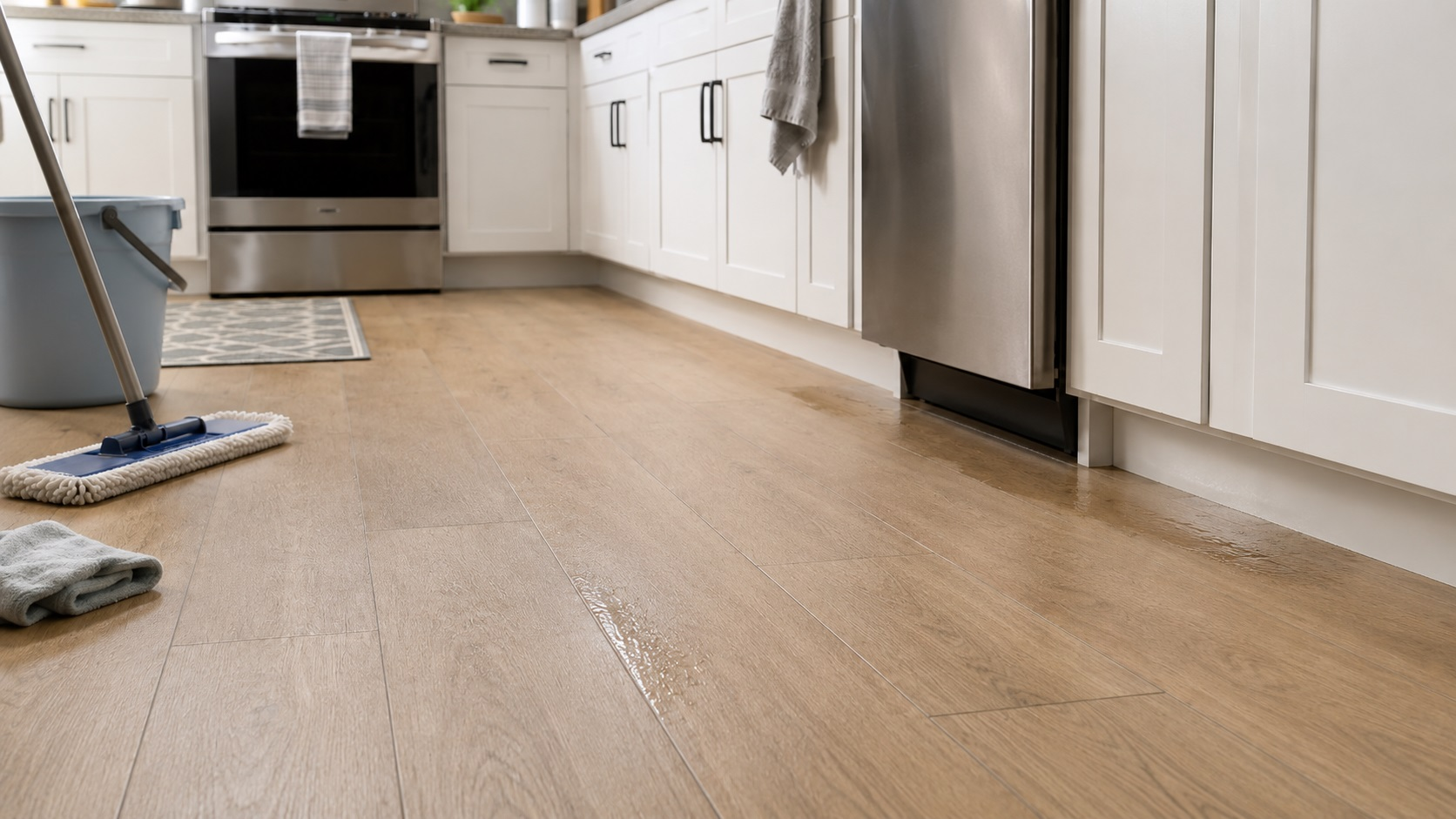
Why Kitchen Floors Stay Wet After Cleaning
Kitchen floors usually stay wet after cleaning because too much water was used, airflow is poor, indoor humidity is high, cleaning residue is holding moisture on the surface, or moisture is returning from beneath the flooring. In most homes, a lightly damp-cleaned kitchen floor should dry within a few hours under normal conditions.
The first step is to separate normal slow drying from a recurring moisture pattern. A floor that dries slowly after a heavy mop is different from a floor that becomes damp again in the same spot after it was already dry.
If wet areas keep returning after the floor should already be dry, it may also help to review why moisture problems keep returning, because repeated dampness often points to more than leftover cleaning water.
Why Kitchen Floors Should Dry Quickly
Kitchen flooring dries when surface moisture evaporates into the surrounding air. That process depends mainly on airflow, humidity, flooring material, and how much water was left on the floor after cleaning.
Most kitchen floors can tolerate routine damp cleaning, but they are not meant to sit wet for long periods. Prolonged moisture can move into seams, grout lines, edges, and porous materials beneath the visible surface.
Normal Drying Times After Cleaning
Typical drying time depends on several factors, including floor material and environmental conditions. However, most kitchen floors follow predictable drying patterns when cleaned properly.
- Tile floors: Often dry within 30 minutes to 2 hours.
- Vinyl flooring: Usually dries within 1 to 3 hours.
- Laminate flooring: May require 2 to 4 hours.
- Hardwood flooring: Typically dries within 2 to 4 hours under normal conditions.
If drying takes significantly longer than these ranges, first look at how wet the floor was after cleaning, whether air is moving across the surface, and whether the room feels humid. If the floor remains damp after repeated drying attempts or after a known leak, review methods for drying kitchen flooring after leaks before assuming the surface is the only problem.
Why Kitchen Floors Stay Wet After Mopping or Cleaning
The most common causes fall into five groups: cleaning method, airflow, humidity, flooring material, cleaning residue, and moisture returning from below.
A quick way to narrow the cause is to ask what changed: if the whole floor dries slowly, the problem is usually water use, airflow, humidity, or residue; if one spot keeps getting damp again, the problem is more likely hidden moisture beneath the flooring.
Using Too Much Water During Cleaning
One of the most common reasons kitchen floors stay wet is excessive water use during cleaning. Many homeowners believe using more water improves cleaning performance, but this approach often slows drying significantly.
Excess water spreads into seams and joints, increasing the chance of moisture becoming trapped beneath flooring materials.
Common mistakes include:
- Using overly soaked mops
- Failing to wring mop heads properly
- Pouring water directly onto the floor
- Reusing dirty mop water that leaves residue
- Allowing puddles to remain after cleaning
A better test is to clean a small area with a barely damp mop, then dry it with a towel. If that area dries normally but the rest of the floor stays wet, the problem is likely cleaning method, airflow, humidity, or residue rather than a hidden leak.
Poor Airflow Slows Drying
Airflow plays a major role in how quickly floors dry. Without moving air, moisture lingers near the surface, slowing evaporation and extending drying time.
Poor airflow conditions often occur when:
- Windows remain closed
- Kitchen ventilation systems are not used
- Air circulation is blocked by furniture or appliances
- Fans are not available to move air
When airflow is limited, even small amounts of water may take much longer to evaporate.
High Humidity Inside the Kitchen
Indoor humidity levels strongly influence drying speed. Kitchens often produce moisture through cooking, dishwashing, and steam generation, raising humidity levels inside the room.
High humidity prevents air from absorbing additional moisture, slowing evaporation and leaving surfaces damp.
Humidity increases during:
- Cooking large meals
- Running dishwashers frequently
- Using boiling water
- Operating without ventilation fans
- Rainy or humid weather conditions
When humidity remains elevated, even lightly cleaned floors may stay wet longer than expected.
Flooring Materials That Hold Moisture
Flooring material affects drying because some surfaces shed water quickly while others absorb moisture at seams, edges, grout lines, or wood-based cores. When that happens, wetness may linger even when the cleaning method is reasonable.
Common moisture-holding flooring materials include:
- Laminate flooring: Contains compressed wood fibers that absorb moisture quickly and dry slowly.
- Engineered wood: Designed for durability but still vulnerable to moisture absorption.
- Hardwood flooring: Absorbs water into natural wood fibers, slowing evaporation.
- Older vinyl flooring: May allow moisture to enter through seams or worn edges.
Even flooring designed to resist water can trap moisture when seams allow water to move beneath the surface. If moisture becomes trapped below, drying may take longer than expected and may require further inspection.
Cleaning Product Residue Can Slow Drying
Another overlooked reason floors stay wet after cleaning involves residue left behind by cleaning solutions. Many products contain soaps or surfactants that leave a thin film on the surface.
This residue traps moisture, preventing water from evaporating efficiently. It may also attract dirt, creating a dull or sticky appearance on the floor.
Common signs of cleaning residue include:
- Sticky or tacky floor surfaces
- Dull or hazy floor appearance
- Streaking patterns after drying
- Slow drying despite minimal water use
- Reappearance of moisture patterns after cleaning
Residue buildup becomes more likely when cleaning products are used too often, mixed too strong, or applied without a clean-water rinse when the product directions call for one. If the floor feels tacky, hazy, or slick after it is dry, residue is more likely than hidden moisture. Clean a small test area with plain water and dry it with a towel; if that spot dries normally, product buildup may be part of the problem.
Hidden Moisture Sources Beneath Flooring
In some situations, wet floors after cleaning are not caused by cleaning at all. Instead, hidden moisture beneath the flooring system may slowly migrate upward, making the surface appear damp even when no additional water has been applied.
Hidden moisture sources may include:
- Slow leaks beneath sinks
- Dishwasher supply or drain leaks
- Refrigerator water line leaks
- Moisture trapped beneath cabinets
- Subfloor moisture from earlier leaks
These hidden sources often produce damp spots that return after the surface dries. If wet areas repeatedly appear in the same location, it may be necessary to inspect kitchen flooring for hidden moisture to determine whether a leak, trapped water, or subfloor moisture is involved.
How Flooring Type Affects Drying Speed
Each flooring type reacts differently to moisture exposure. Understanding how your specific flooring material behaves helps determine whether slow drying is normal or a sign of underlying moisture problems.
Tile Flooring Drying Behavior
Tile floors typically dry faster than other materials because tile surfaces resist water absorption. However, grout lines between tiles allow moisture to enter beneath the surface.
Tile floors may dry slowly when:
- Grout lines absorb moisture
- Airflow is limited
- Water pools near baseboards
- Cleaning solutions leave residue
If grout lines stay dark or damp after the tile surface is dry, moisture may be lingering below the surface.
Vinyl Flooring Drying Behavior
Vinyl flooring usually resists water penetration on the surface. However, seams, edges, and damaged sections allow moisture to move beneath the flooring.
Vinyl floors may remain wet longer when:
- Water enters seams between panels
- Edges become worn or lifted
- Moisture spreads beneath appliances
- Subfloor moisture migrates upward
Persistent dampness near vinyl seams, lifted corners, or appliance edges should be monitored carefully, especially if the same area becomes damp again after drying.
Laminate Flooring Drying Behavior
Laminate flooring absorbs moisture quickly due to its wood-based core. Even small amounts of water may cause swelling or slow drying.
Laminate floors often remain wet longer when:
- Water enters panel seams
- Humidity remains high
- Cleaning uses excessive water
- Moisture becomes trapped beneath the surface
Swelling along laminate seams is a strong indication that moisture has entered the flooring structure.
Hardwood Flooring Drying Behavior
Hardwood flooring absorbs moisture naturally because wood fibers expand when exposed to water. Drying times often increase when humidity remains elevated or airflow is limited.
Hardwood floors may remain wet longer when:
- Water exposure lasts several minutes
- Boards absorb moisture beneath the surface
- Ventilation remains limited
- Subfloor moisture remains present
Repeated moisture exposure can cause permanent warping if drying conditions remain inadequate.
When Slow Drying Becomes Abnormal
Slow drying becomes abnormal when the floor stays damp after light cleaning, when one spot remains wet while the rest of the floor dries, or when dampness returns after the surface was already dry.
- Usually normal: The whole floor dries slowly after a very wet mop, poor airflow, or humid weather.
- Worth watching: Seams, grout lines, or edges stay damp after the main surface dries.
- Needs closer inspection: The same spot becomes damp again after drying or appears wet without recent cleaning.
Signs the Wetness Is Not Just From Cleaning
While slow drying after cleaning is sometimes normal, certain warning signs suggest that wet floors may be linked to hidden moisture problems rather than simple cleaning conditions. Recognizing these signals early helps prevent long-term damage beneath kitchen flooring.
Persistent wetness that occurs repeatedly in the same location often indicates moisture movement from beneath the surface rather than leftover cleaning water.
Wet Areas Keep Reappearing in the Same Spot
If damp areas appear repeatedly in the same location after cleaning, moisture may be rising from below the flooring. This behavior often suggests hidden leaks or trapped moisture beneath cabinets or appliances.
Recurring wet spots commonly occur near:
- Dishwashers
- Refrigerators with water lines
- Sink plumbing areas
- Cabinet bases
- Floor transitions near plumbing connections
When moisture returns to the same area after drying, further investigation is often necessary to determine the true source.
Musty Odors Develop After Cleaning
Musty smells that appear after cleaning often indicate moisture buildup beneath the flooring surface, especially when the odor returns in the same area after the floor looks dry. If the smell continues, review signs of mold under kitchen floors instead of expanding the mold diagnosis here.
Flooring Feels Soft or Spongy
Soft or flexible flooring often indicates that moisture has weakened materials beneath the visible surface. Subfloor damage may occur when water remains trapped for extended periods.
Common warning signs include:
- Floor sections that flex when stepped on
- Raised or uneven flooring areas
- Seams that separate over time
- Boards that feel unstable under pressure
Structural changes often indicate that drying alone may not resolve the problem.
Discoloration or Staining Appears
Stains that develop after cleaning may signal moisture movement beneath the floor. These discolorations often appear as darker patches or irregular shapes that persist even after drying attempts.
New stains should be monitored carefully, especially if they continue spreading over time.
When Persistent Moisture Requires Inspection
Some wet floor conditions cannot be resolved through cleaning adjustments alone. When moisture persists beyond normal drying periods, inspection becomes necessary to determine whether hidden problems exist beneath the flooring.
Inspection helps identify trapped moisture, leaking plumbing, or structural damage that may not be visible from the surface.
Safety note: If wet flooring is near outlets, appliance cords, dishwasher wiring, or refrigerator connections, avoid standing water and do not keep using nearby appliances until the source is understood. Shut off power to the affected area only if it can be done safely.
Wetness Lasts Longer Than Expected
If floors remain damp for more than several hours after routine cleaning, environmental factors or hidden moisture may be interfering with normal drying.
Situations requiring closer evaluation include:
- Wet floors lasting longer than 24 hours
- Persistent damp areas after repeated cleaning cycles
- Slow drying despite improved airflow
- Moisture appearing without visible spills
In these situations, learning how to detect moisture under kitchen floors can help confirm whether the problem is surface drying, trapped moisture, or moisture returning from below.
Moisture Patterns Continue After Drying
Recurring damp patterns often indicate that moisture is moving upward from beneath the flooring rather than remaining from recent cleaning.
Moisture patterns that suggest hidden problems include:
- Dampness appearing overnight
- Wet patches forming without cleaning
- Uneven drying across the floor
- Moisture appearing near plumbing fixtures
Persistent moisture patterns typically require deeper inspection to determine the source of the problem.
Frequently Asked Questions About Why Kitchen Floors Stay Wet After Cleaning
Why Does My Floor Stay Wet After Mopping?
Floors often stay wet after mopping when too much water is used or airflow is limited. High humidity and cleaning product residue may also slow drying. If wetness continues repeatedly, hidden moisture may be present beneath the floor.
How Long Should a Kitchen Floor Take to Dry?
Most kitchen floors dry within 30 minutes to 4 hours depending on material type and environmental conditions. Floors that remain wet longer than this range may indicate airflow problems or hidden moisture.
Why Does My Kitchen Floor Stay Wet on Humid Days?
Kitchen floors stay wet longer on humid days because the air is already holding more moisture. Cooking, dishwashing, boiling water, and closed windows can make the problem worse by slowing evaporation near the floor.
Can Floor Cleaner Residue Make a Kitchen Floor Feel Wet?
Yes. Floor cleaner residue can leave a tacky or slick film that makes the surface feel damp even when most water has evaporated. This is more likely when cleaner is mixed too strong, used too often, or not rinsed when the product directions require it.
When Is a Wet Kitchen Floor More Than a Cleaning Problem?
A wet kitchen floor is more than a cleaning problem when the same damp spot returns after drying, wetness appears near appliances or sink plumbing, the floor feels soft, or musty odors develop after cleaning.
What to Check First
Start with the simplest causes before assuming the floor has a hidden leak. Use less water, improve airflow, check for sticky residue, and watch whether the entire floor dries slowly or one area keeps getting damp again. A whole-floor drying problem usually points to cleaning conditions, while a recurring wet spot deserves closer inspection.
Key Takeaways
- Kitchen floors should normally dry within a few hours after cleaning.
- Excess water use, poor airflow, and high humidity are common causes of slow drying.
- Laminate, hardwood, grout lines, seams, and worn vinyl edges can hold moisture longer than smooth sealed surfaces.
- Recurring damp spots often indicate hidden moisture beneath flooring.
- Musty odors and soft flooring suggest deeper moisture problems.
- Persistent wetness lasting more than 24 hours usually requires inspection.
One Comment
Comments are closed.