Signs of Failed Crawl Space Encapsulation
The clearest signs of failed crawl space encapsulation are returning musty odors, rising humidity, condensation on ducts or framing, torn vapor barriers, separated seams, standing water, mold returning, or a dehumidifier or drainage system that no longer works correctly.
A sealed crawl space should stay dry, controlled, and stable. If conditions improve after encapsulation but then odors, damp air, moisture, or visible material damage return, the system may no longer be blocking ground moisture, outside air, active water intrusion, or mechanical failure.
This article focuses on warning signs that an existing encapsulation system is failing. For broader structural moisture risks below a home, see the structural moisture problems in homes: causes, risks, and repair guide.
What Crawl Space Encapsulation Is Supposed to Do
A failed encapsulation system is easier to recognize when you know what the system should be doing: blocking ground moisture, limiting outside air movement, controlling humidity, and protecting wood framing from repeated dampness.
Moisture Control Expectations in a Sealed Crawl Space
A well-functioning encapsulated crawl space should prevent moisture from entering through exposed soil and outside air pathways. Ground surfaces are sealed with heavy vapor barriers, walls are lined, and openings are controlled to limit uncontrolled airflow.
When encapsulation performs correctly, several conditions typically remain stable:
- Humidity levels remain within controlled ranges
- Soil moisture does not evaporate into the air
- Condensation does not form on structural materials
- Standing water does not accumulate
- Musty odors are reduced or eliminated
When checking for failure, start with the easiest clues first: compare current humidity readings to past readings, look for torn or loose liner sections, check seams and wall attachments, confirm the dehumidifier has power and drains correctly, and look for any new standing water after rain.
If you’re unfamiliar with the structure and components involved, reviewing what crawl space encapsulation is and how it works can help clarify how these systems are designed to function.
Humidity is one of the most useful performance checks because it can rise before mold, rot, or visible water appears. For more on how a sealed crawl space affects living-area air, see how crawl space encapsulation improves indoor air quality.
Early Warning Signs of Encapsulation Failure
Encapsulation failure rarely happens suddenly. Most systems show subtle warning signs before major moisture problems develop, especially through odor changes, rising humidity, condensation, liner damage, or equipment problems.
Musty Odors Returning After Encapsulation
One of the earliest signs of encapsulation failure is the return of musty smells inside the home or crawl space. These odors usually indicate that moisture levels are rising again, allowing microbial activity to resume.
Musty odors often appear before visible mold develops. Even minor increases in humidity can support microbial growth that produces odor-causing gases. If odors begin returning after a period of improvement, it is a strong indicator that moisture is re-entering the crawl space environment.
Persistent odors may also indicate hidden mold growth. If visible mold signs accompany returning odors, reviewing signs of mold growth in crawl spaces can help determine whether contamination is developing below the home.
Humidity Levels Rising Again
Another early warning sign is humidity rising above the range the crawl space normally maintained after encapsulation. The pattern matters: a steady increase, frequent dehumidifier cycling, or higher readings after rain can signal that moisture control measures are no longer effective.
Common indicators of rising humidity include:
- Condensation forming on windows or pipes
- Indoor air feeling damp or sticky
- Dehumidifiers running more frequently
- Visible moisture collecting on surfaces
Humidity changes are often subtle at first, so compare readings over time instead of relying on one measurement. A crawl space that used to stay stable but now repeatedly climbs after rain, during humid weather, or while the dehumidifier is running deserves closer inspection.
Condensation Forming on Ducts or Structural Surfaces
Condensation inside a sealed crawl space should not occur under normal conditions. When condensation forms on metal ducts, pipes, or wood framing, it indicates that humidity has exceeded safe levels.
Condensation is often one of the earliest visible signs that moisture levels are rising again. It typically appears in areas where warm, humid air contacts cooler surfaces.
If condensation continues without correction, moisture accumulation can lead to mold growth, insulation damage, and structural deterioration.
Visible Damage to Encapsulation Materials
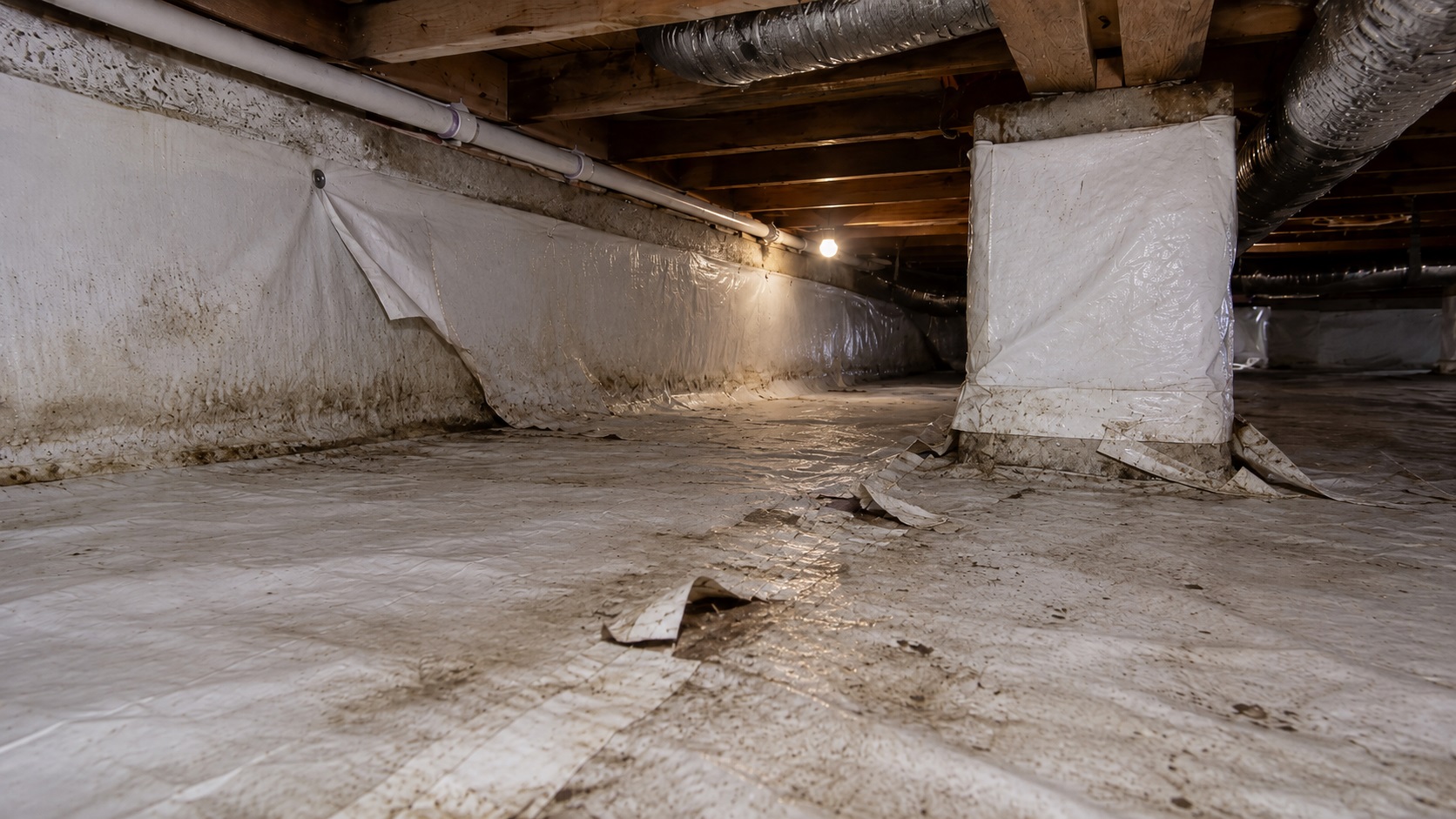
Encapsulation systems rely on physical barriers to control moisture. When those materials become damaged, loose, or improperly sealed, the system can no longer perform as intended. Visible material problems are among the clearest signs that encapsulation is failing.
Routine visual inspection of crawl space materials helps identify problems early. Many failures begin with small defects that allow moisture to slowly re-enter the environment.
If the system was recently installed and these defects appeared early, they may also relate to installation conditions or workmanship issues. For those scenarios, see common problems found during crawl space encapsulation.
Torn or Punctured Vapor Barriers
The vapor barrier covering the crawl space floor is one of the most important components of an encapsulation system. It prevents moisture from evaporating from the soil into the air above.
When the vapor barrier becomes torn or punctured, moisture vapor can pass through exposed areas and gradually increase humidity levels.
Common causes of vapor barrier damage include:
- Foot traffic during maintenance or repairs
- Rodent activity chewing through materials
- Improper installation causing tension or stress
- Sharp objects left beneath the liner
Even small tears can create significant moisture problems over time. Exposed soil allows continuous vapor release, which gradually increases humidity and supports mold growth. Damaged areas should be documented, sealed, or repaired before exposed soil continues feeding moisture into the crawl space.
Loose or Detached Wall Liners
Wall liners are designed to seal foundation walls and prevent moisture from entering through porous materials. When liners become loose or detached, gaps allow humid air or moisture to bypass the protective barrier.
Common signs of liner failure include:
- Wall liners pulling away from foundation surfaces
- Visible gaps along edges or seams
- Wrinkled or sagging plastic surfaces
- Moisture collecting behind wall coverings
Detached liners reduce the effectiveness of the entire encapsulation system. Moisture entering through wall gaps can spread into insulation and wood framing, increasing the risk of long-term damage.
Separated or Failing Seams
Encapsulation liners are installed in sections that are sealed together with specialized tape or bonding materials. These seams create a continuous moisture barrier across large surfaces.
When seams begin separating, moisture and air can enter through narrow gaps. Seam failure often develops gradually and may not be obvious at first.
Typical indicators of seam failure include:
- Tape peeling away from liner surfaces
- Visible gaps between liner sections
- Loose edges along floor or wall intersections
- Air movement beneath liner materials
Seam failure is particularly important to address because small openings allow vapor to enter continuously. Over time, moisture accumulation can lead to widespread humidity problems throughout the crawl space.
Standing Water Inside the Encapsulated Area
Standing water inside an encapsulated crawl space is one of the most serious warning signs of system failure. Encapsulation is designed to control moisture vapor — not manage active water intrusion.
Water pooling inside a sealed crawl space usually indicates:
- Exterior drainage failure
- Groundwater intrusion
- Plumbing leaks
- Blocked drainage systems
If standing water appears, the source must be identified immediately. Allowing water to remain trapped inside a sealed crawl space increases the risk of mold growth and structural damage.
Air Quality Changes That Suggest Encapsulation Failure
Encapsulation problems are often first detected through changes in indoor air conditions. Because crawl space air moves into living areas, moisture and contamination problems frequently become noticeable indoors before visible crawl space damage develops.
Musty Air Returning Inside the Home
If musty air returns inside rooms above or near the crawl space, treat it as an indoor clue that crawl space conditions may have changed. Odors are especially concerning when they appear together with rising humidity, condensation, liner damage, or visible mold.
For broader patterns behind recurring moisture, see why moisture problems keep returning.
Mold Reappearing After Encapsulation
Mold growth after encapsulation is a strong indication that moisture levels have increased again. When encapsulation works properly, mold-supporting conditions are greatly reduced.
Reappearing mold may be visible in:
- Crawl space framing
- Insulation surfaces
- Subfloor materials
- Lower-level living areas
When mold returns, it typically means moisture sources have not been fully controlled. Addressing the moisture source quickly helps limit further mold growth and contamination.
Increased Allergy or Irritation Symptoms
Indoor symptoms do not prove crawl space encapsulation failure by themselves, but they can become a useful clue when they appear with musty odors, visible moisture, mold growth, or rising crawl space humidity.
Possible indicators include:
- Persistent musty air complaints
- Increased irritation in enclosed spaces
- Recurring air quality concerns despite cleaning
These symptoms alone do not confirm encapsulation failure, but when combined with visible moisture indicators, they strengthen the likelihood that crawl space conditions have changed.
Mechanical System Warning Signs That Encapsulation Is Failing
Many encapsulated crawl spaces depend on mechanical systems to maintain stable humidity levels. These systems often include dehumidifiers, drainage pumps, or controlled airflow components. When these systems stop working correctly, humidity can rise even if the vapor barrier and liners remain intact.
Mechanical failure is one of the most common reasons encapsulation systems stop performing as expected. Unlike visible liner damage, mechanical problems may develop silently, allowing humidity to increase without obvious warning signs.
Dehumidifier Malfunction or Shutdown
Dehumidifiers play an important role in many encapsulated crawl spaces. They remove excess moisture from the air and help maintain consistent humidity levels.
When a dehumidifier fails, is undersized, loses power, freezes up, or cannot drain, moisture levels may rise even though the vapor barrier still looks intact.
Common signs of dehumidifier malfunction include:
- Humidity levels rising despite sealed surfaces
- Water not draining properly from the unit
- Unexpected shutdowns or loss of power
- Excess condensation forming nearby
- The unit runs constantly but humidity readings do not fall
- Unusual noise or vibration from the unit
If humidity remains elevated for extended periods, mold-supporting conditions may return. Long-term moisture exposure increases the risk of recurring contamination and structural deterioration.
Drainage System Blockage or Failure
Some encapsulated crawl spaces include drainage systems designed to remove collected water. These systems often connect to sump pumps or exterior discharge points.
When drainage systems become blocked or fail, water may accumulate inside the sealed space. Even small amounts of trapped water can increase humidity levels significantly.
Warning signs of drainage failure include:
- Water pooling in low areas
- Moisture accumulation near drainage lines
- Unexpected increases in humidity readings
- Water stains along liner surfaces
Drainage failure is particularly serious because trapped moisture may remain hidden beneath liners or structural components.
Loss of Power or System Monitoring
Encapsulation systems that rely on powered equipment require consistent electrical supply. Power outages, disconnected wiring, or failed outlets can prevent equipment from operating as intended.
When systems lose power, humidity may begin rising within hours or days. In many homes, humidity increases are not immediately noticeable until moisture-related symptoms appear.
Routine checks help confirm that equipment remains operational. Monitoring humidity levels regularly helps identify failures before serious problems develop.
Do not handle wet electrical cords, outlets, pumps, or dehumidifiers inside a damp crawl space. If equipment is wet, damaged, or repeatedly tripping a circuit, shut off power if it is safe to do so and have the electrical issue evaluated before reusing the system.
Structural Warning Signs That Require Immediate Attention
Structural warning signs usually mean the crawl space has been damp long enough for moisture to affect wood, insulation, or subfloor materials. These signs are more advanced than a loose seam or a brief humidity spike and should be taken seriously.
Wood Rot or Soft Structural Components
Wood rot is one of the most serious indicators of long-term moisture exposure. Structural wood that remains damp for extended periods begins to weaken, soften, and deteriorate.
Common signs of wood rot include:
- Darkened or discolored wood surfaces
- Soft or crumbling wood when pressed
- Visible fungal growth on structural components
- Strong musty odors near damaged areas
Rotting wood compromises the strength of floor framing and support systems. If these signs are present, professional evaluation is strongly recommended.
Sagging or Wet Insulation
Insulation inside crawl spaces helps regulate temperature and moisture movement. When insulation becomes wet, it loses effectiveness and may trap moisture against structural materials.
Sagging insulation often indicates repeated moisture exposure. Typical signs include:
- Insulation hanging away from floor joists
- Wet or compressed insulation batts
- Visible mold growth on insulation surfaces
- Strong odors near insulation areas
Wet insulation should not be ignored. Moisture trapped in insulation can accelerate mold growth and contribute to ongoing humidity problems.
Water Returning After Cleanup or Rain
Persistent standing water is more than a liner problem; it usually means active water intrusion is overwhelming the encapsulated space. If water remains after rain, appears beneath the liner, or returns repeatedly after removal, identifying the source becomes the highest priority.
For a deeper look at the failure pathways behind repeated water entry, see why crawl space encapsulation systems fail.
When to Call a Professional for Encapsulation Failure
Minor liner damage may be simple to document and repair, but active water, mold growth, electrical problems, soft wood, or repeated humidity spikes call for professional evaluation.
Multiple Warning Signs Occurring Together
If several symptoms appear together — such as returning odor, rising humidity, condensation, liner damage, or equipment failure — treat the issue as a system problem rather than an isolated nuisance.
Professional inspections can measure humidity levels, identify hidden moisture pathways, and evaluate structural conditions.
Rapid Changes in Moisture Conditions
Sudden increases in humidity or visible moisture often indicate new water entry or mechanical failure. Rapid changes should never be ignored, especially if they occur after years of stable conditions.
Early inspection reduces the risk of structural damage and helps determine whether repairs are necessary.
Visible Mold or Structural Damage
Mold growth or wood deterioration indicates that moisture has persisted long enough to affect building materials. At this stage, professional evaluation helps determine the scope of repairs needed.
If persistent moisture remains after encapsulation, homeowners may need to review corrective strategies such as those discussed in how to fix persistent moisture after encapsulation, which explains steps used when moisture problems continue.
Frequently Asked Questions About Failed Crawl Space Encapsulation
How long should crawl space encapsulation last?
A properly installed crawl space encapsulation system can last many years, often 15–25 years or longer, depending on material quality and maintenance. However, individual components such as dehumidifiers, drainage systems, and seam tape may require service or replacement sooner.
Regular inspections help extend system life and prevent small defects from becoming major failures. Ongoing maintenance is discussed in more detail in how to maintain a crawl space after encapsulation, which explains how routine checks protect long-term system performance.
Is condensation normal after crawl space encapsulation?
Brief condensation can occur while a newly encapsulated crawl space stabilizes, especially if the area was very damp before installation. Persistent condensation, recurring condensation after the system had already stabilized, or condensation that appears with rising humidity is not normal.
If condensation continues, check humidity readings, dehumidifier operation, drainage, and liner seams to determine whether moisture is re-entering the crawl space.
Why does humidity return after encapsulation?
Humidity can return when encapsulation components become damaged or when moisture enters from new sources. Common causes include liner tears, drainage failures, mechanical malfunctions, or groundwater intrusion.
Humidity increases are rarely random. Most cases involve specific failure pathways that develop gradually. Understanding these pathways is covered in why crawl space encapsulation systems fail, which explains the most common root causes.
Can crawl space encapsulation fail without visible damage?
Yes, encapsulation systems can fail without obvious physical damage. Mechanical system failures — such as dehumidifier malfunctions — may allow humidity to increase without visible liner problems.
Because of this, monitoring humidity levels regularly is one of the most effective ways to detect early failure.
What is the most common sign of encapsulation failure?
The most common early sign of encapsulation failure is the return of musty odors. These smells often develop before visible mold or standing water appears. Odor changes typically signal that moisture levels are increasing inside the crawl space.
Recognizing odor changes early helps prevent more serious moisture problems from developing.
Conclusion: Failed Encapsulation Usually Shows Warning Signs First
Failed crawl space encapsulation usually does not begin with major structural damage. It often starts with returning odors, rising humidity, condensation, liner damage, equipment failure, or water appearing where the space used to stay dry.
If those signs appear, the next step is to find whether the problem is coming from damaged liner materials, active water intrusion, drainage failure, mechanical failure, or a broader moisture source. For wider moisture patterns across the home, review the complete guide to finding, fixing, and preventing moisture problems.
Key Takeaways
- Encapsulation failure usually develops gradually rather than suddenly.
- Returning musty odors are often the earliest sign of moisture returning.
- Torn vapor barriers, separated seams, and standing water indicate serious system problems.
- Mechanical failures such as dehumidifier shutdowns can allow humidity to rise silently.
- Structural warning signs such as wood rot or sagging insulation require immediate attention.
- Regular inspection and maintenance help prevent small issues from becoming major repairs.