
Why Window Flashing Failures Cause Leaks (Understanding Hidden Water Entry)
Window flashing failures cause leaks because they interrupt the drainage path that is supposed to move rainwater around the window opening and back outside. When flashing is missing, reversed, poorly overlapped, or disconnected from the weather barrier, water can slip behind siding and trim instead of draining away.
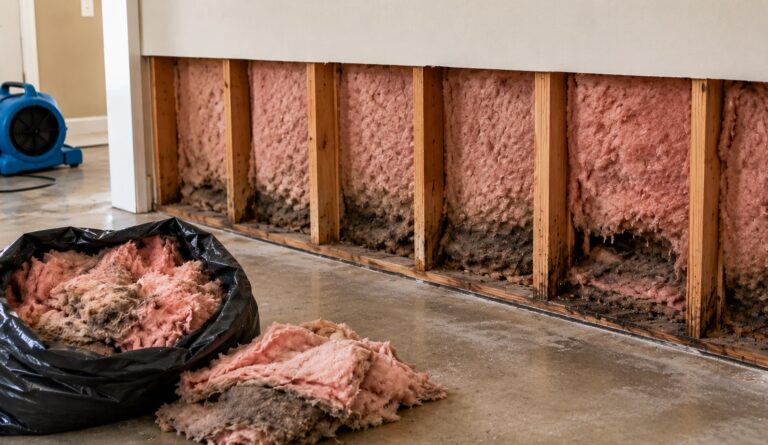
These leaks are often hidden at first. Water may soak sheathing, framing, insulation, or drywall edges before stains appear inside the room. That is why homeowners may see damp drywall, peeling paint, soft trim, or mold near a window long after the flashing defect began.
This article explains why flashing failures allow hidden water entry. For the broader window and door moisture system, see how windows and doors cause hidden moisture problems. If damage is already visible, compare it with signs of water damage around windows.
What Window Flashing Does and Why It Matters
Window flashing is one of the most important structural defenses against water intrusion. It protects the vulnerable areas where window frames meet exterior walls — locations that naturally collect water during rain.
Flashing is not just a bead of caulk around the window. It is a layered drainage system that directs water over the next lower layer and away from the rough opening.
Flashing Is Designed to Manage Water, Not Stop It
Rainwater constantly contacts exterior walls during storms. In many wall assemblies, small amounts of wind-driven rain can get behind siding, so the flashing and drainage plane must guide that water back out before it reaches sensitive interior materials.
Proper flashing installation follows a layered design that allows gravity to move water safely away from the window opening.
Without this layered protection, water entering small gaps around windows can travel into wall cavities. Once inside, moisture may remain hidden for long periods before visible damage appears.
The Layered Protection System Around Windows
Most modern window flashing systems use multiple overlapping components. These layers work together to move water away from the structure.
Typical flashing components include:
- Sill flashing or sill pan: Protects the bottom of the rough opening and directs water outward instead of into the wall.
- Side flashing: Covers the vertical edges where water can track along the window frame.
- Head flashing or drip cap: Deflects water above the window before it can run behind the top flange or trim.
- Weather barrier integration: Connects the flashing to house wrap or another water-resistive barrier so water drains over the layers, not behind them.
- Sealant joints: Support the system at selected seams but should not replace missing flashing.
Each component plays a specific role in preventing moisture from entering wall assemblies.
If any layer fails or is installed incorrectly, water may bypass the system and enter hidden spaces behind the window.
Why Window Openings Are Naturally Vulnerable
Every window creates an opening in the exterior wall system. These openings interrupt the protective layers that normally shield walls from weather exposure.
Because windows penetrate the wall surface, they introduce several vulnerability points:
- Frame-to-wall seams
- Horizontal sill connections
- Vertical frame joints
- Exterior siding transitions
- Sealant and flashing intersections
Water naturally moves toward these joints during storms. Wind pressure, gravity, and surface tension push water into small openings, increasing the importance of proper flashing design.
If flashing systems fail, moisture often spreads into surrounding materials before becoming visible inside the home.
How Window Flashing Is Designed to Prevent Leaks
Understanding how flashing works helps explain why small installation errors can lead to major water intrusion problems. Flashing relies on directional flow and layered protection rather than sealed barriers.
This design allows moisture to escape safely without trapping water inside the wall.
Layer Overlap Directs Water Safely Downward
Flashing components are installed in a specific sequence that allows water to move downward across overlapping layers. This technique is sometimes described as a “shingle-style” installation.
Proper overlap ensures that:
- Sill flashing is installed first so the bottom of the opening can drain outward.
- Side flashing overlaps the sill flashing instead of dumping water behind it.
- Head flashing laps over the side flashing so water above the window sheds outward.
- The weather barrier laps over the head flashing so rain running down the wall stays on the drainage side of the system.
If layers are installed in the wrong direction, water can travel behind flashing instead of over it. This creates hidden moisture pathways that eventually lead to leaks.
This is why a flashing leak may not show at the window glass or sash. The failure can be outside the visible frame, behind trim, behind siding, or at the connection between flashing and the water-resistive barrier.
Drainage Principles Prevent Moisture Buildup
Flashing systems rely on drainage rather than sealing alone. Even small amounts of water reaching behind siding must have a safe path to escape.
Effective drainage systems include:
- A sill pan or sloped sill detail that sends water outward
- A clear drainage path at the bottom of the opening
- Flashing edges that are not trapped behind the wrong layer
- Siding and trim details that do not force water back toward the rough opening
Without proper drainage, water remains trapped inside wall assemblies. Trapped moisture increases the risk of mold development and structural deterioration.
If water begins accumulating inside walls, drying procedures described in how to dry walls after window leaks help reduce long-term damage after intrusion occurs.
Common Causes of Window Flashing Failure
Window flashing rarely fails without a reason. In most cases, leaks develop because one or more flashing components were installed incorrectly, omitted entirely, or damaged over time. Understanding these failure causes helps explain why water leaks often appear long after construction or remodeling work is completed.
Many flashing failures remain hidden until repeated rain has wet the same area enough to cause stains, soft trim, mold, or drywall damage.
Improper Installation Is the Most Common Cause
Installation mistakes are responsible for many flashing-related leaks. Even small errors made during construction can create long-term moisture pathways.
Flashing installation must follow precise layering rules. When these rules are ignored or misunderstood, water can move behind protective materials instead of draining outward.
Common installation errors include:
- Reverse-lapped flashing that directs water behind the system
- Side flashing that does not overlap the sill flashing correctly
- Head flashing installed without proper overlap from the weather barrier above
- Fasteners, cuts, or wrinkles that create openings in flashing membranes
- Bottom edges sealed in a way that traps water instead of letting it drain
Incorrect installation often produces slow leaks that worsen over time. These leaks may not appear immediately, making the connection between installation errors and later damage difficult to recognize.
Missing Flashing Components
Some flashing failures occur because necessary components were never installed. Missing flashing leaves certain areas completely unprotected from water intrusion.
The most frequently missing components include:
- Sill pan or sill flashing: Without bottom protection, water can collect beneath the window and soak the rough opening.
- Head flashing or drip cap: Without top protection, water running down the wall can enter above the window.
- Side flashing: Without vertical coverage, water can track along the frame edges and reach the wall cavity.
- Weather barrier tie-in: Without proper integration, even good flashing pieces may fail because water can run behind them.
Missing components create predictable leak pathways. Water entering these areas often travels behind siding and into wall cavities, where damage develops gradually.
If water damage becomes visible inside the home, reviewing signs of water damage around windows helps identify patterns linked to flashing defects.
Improper Integration With Weather Barriers
Flashing must connect properly to the water-resistive barrier, such as house wrap or a wall membrane. When this connection is wrong, water can run behind the flashing even if the flashing pieces themselves are present.
Improper integration commonly occurs when:
- House wrap laps behind the head flashing instead of over it
- The top flap of the weather barrier is not taped or integrated correctly
- Flashing tape is wrinkled, stretched, or poorly adhered at corners
- Siding, trim, or J-channel details direct water toward the window opening
These integration errors allow water to move behind protective systems, often leading to hidden moisture accumulation.
Sealant Misuse Creates False Protection
Sealants play an important supporting role in flashing systems, but they are not designed to function as primary water barriers. Over-reliance on caulking instead of proper flashing often leads to long-term leak problems.
Sealant misuse commonly occurs when installers attempt to compensate for missing flashing components by applying extra caulk.
Problems associated with sealant misuse include:
- Cracked sealant allowing water entry
- Sealant shrinking over time
- Separation between sealant and surfaces
- False sense of protection masking deeper issues
Once sealant fails, water can enter areas that were never properly protected by flashing.
A new bead of caulk may stop wind-driven water at one visible seam, but it will not correct reverse-lapped flashing, a missing sill pan, or a failed weather-barrier connection behind the trim.
Material Aging and Wear Over Time
Even properly installed flashing systems eventually experience wear. Exposure to sunlight, moisture, and temperature changes gradually weakens protective materials.
Common aging-related flashing problems include:
- Brittle flashing materials
- Loose fasteners
- Deteriorated protective coatings
- Cracked sealant joints
Older homes often develop flashing failures due to long-term environmental exposure. In these situations, leaks may appear without any recent changes to the building.
How Flashing Failures Allow Water Into Walls
Once flashing fails, water begins moving into wall assemblies through small openings. This process rarely happens all at once. Instead, moisture enters gradually and accumulates over time.
Understanding how water moves inside walls helps explain why leaks often remain hidden until significant damage occurs.
Water Travels Behind Siding Materials
When flashing fails, water frequently enters behind siding rather than directly through visible openings. Siding materials are designed to shed water, but they do not provide complete waterproof protection.
Water moving behind siding typically:
- Travels downward along surfaces
- Follows seams and joints
- Collects near window openings
- Remains hidden until saturation occurs
This hidden movement explains why interior damage may appear far below the original entry point.
Gravity Drives Water Movement Inside Walls
Gravity is one of the primary forces that moves water through structural assemblies. Once moisture enters behind flashing, it naturally travels downward through available pathways.
As water moves downward, it may:
- Reach insulation layers
- Spread across horizontal framing members
- Collect at lower sections of walls
- Create visible stains beneath windows
These gravity-driven patterns often explain why drywall damage appears below windows even when entry occurs near the top.
Capillary Action Spreads Moisture Sideways
Water does not always travel straight downward. Capillary action allows moisture to move sideways or upward through narrow spaces.
This behavior occurs when:
- Water enters small gaps between materials
- Surface tension pulls moisture along seams
- Absorbent materials draw water inward
Capillary movement spreads moisture beyond the original entry point, increasing the size of affected areas.
Why Flashing Leaks May Stay Hidden
Flashing leaks often stay hidden because the first wet materials are usually behind the exterior finish. Water may move behind siding, trim, sheathing, or insulation before it reaches the painted drywall surface.
Delayed symptoms often include stains below the window, bubbling paint, soft drywall, damp trim, musty odor, or mold near the frame. These signs usually mean the wall has been wet repeatedly, not just once.
If mold appears near the window, reviewing why mold forms around window frames can help explain how repeated hidden moisture supports growth.
How Small Flashing Failures Become Major Leaks
Many serious leaks begin as minor defects that seem insignificant at first. Over time, repeated moisture exposure allows these small failures to develop into major water intrusion problems.
This progression explains why a small flashing defect can eventually damage drywall, trim, insulation, sheathing, or framing if the drainage path is not corrected.
Repeated Rain Exposure Gradually Increases Moisture Levels
Each rainfall event introduces new moisture into areas where flashing has failed. Even small amounts of water entering repeatedly can accumulate inside wall materials.
This gradual accumulation produces several effects:
- Insulation becomes increasingly damp
- Wood framing absorbs moisture
- Drywall edges weaken
- Mold risk increases
As moisture accumulates, materials lose their ability to dry fully between rain events. This creates a cycle where damage becomes more severe with each storm.
Structural Materials Eventually Reach Saturation
Once materials become saturated, moisture spreads more rapidly through surrounding areas. At this stage, water movement increases significantly, and damage may become visible inside the home.
Saturation typically leads to:
- Visible water stains
- Mold growth near windows
- Soft or weakened drywall
- Persistent damp odors
Conditions That Make Flashing Leaks More Likely
Some homes place more stress on window flashing than others. Wind-driven rain, repeated storms, strong sun exposure, and freeze-thaw cycles can all make small flashing defects worse over time.
These conditions matter most when the flashing system already has a weak point. Heavy rain may reveal a reverse-lap problem, UV exposure may weaken sealant joints, and freeze-thaw movement may widen small gaps around trim or flashing edges.
When Flashing Failure Needs Professional Evaluation
Professional evaluation becomes important when a leak returns after caulking, stains spread below the window, drywall stays soft, trim begins to rot, or mold appears around more than one window. These patterns suggest that water may be entering behind the visible surface.
A contractor may need to remove trim or siding to confirm whether the sill flashing, head flashing, side flashing, or weather-barrier connection has failed. Surface repairs may slow the leak, but they usually do not solve a hidden flashing defect.
If the leak has already saturated drywall or insulation, follow recovery guidance in how to dry walls after window leaks while arranging the needed repair.
Do not seal or repaint stained areas until the water entry path has been corrected and affected materials have been confirmed dry.
How Flashing Problems Connect to Other Window Leak Issues
Flashing failure often explains why a window leak keeps returning after surface repairs. The visible stain may be near the window, but the failed detail may be behind siding, trim, or the weather barrier. That is why recurring window leaks should be evaluated as part of the whole wall opening, not only the visible frame or caulk joint.
Flashing Failures Often Lead to Mold Growth
Once water enters wall assemblies through flashing defects, moisture remains trapped inside materials where mold can develop. Because this moisture often remains hidden, mold growth may begin before visible damage appears.
If mold begins forming near window areas, reviewing why mold forms around window frames helps explain how moisture supports repeated mold development.
Persistent Leaks Often Require Structural Repair
When flashing fails, water intrusion may continue even after minor repairs are completed. Persistent leaks usually indicate that underlying structural components require attention.
Long-term repair strategies are explained in how to fix persistent window leak problems, which outlines common structural solutions for recurring window leaks.
Frequently Asked Questions About Window Flashing Failures
What happens when window flashing fails?
When flashing fails, water can enter behind siding and travel into wall assemblies. This moisture often remains hidden until drywall damage or mold becomes visible.
Can window flashing leak even if the caulk looks good?
Yes. Caulk can look intact while water is entering behind siding, trim, the head flashing, the sill pan, or the weather-barrier connection. Flashing leaks often happen behind the visible surface.
Why do flashing problems take time to appear?
Flashing failures usually allow small amounts of water to enter gradually. Damage accumulates over time until materials become saturated enough to produce visible symptoms.
Can caulking replace flashing?
No. Caulking supports flashing systems but cannot replace proper flashing installation. Sealant alone eventually fails and allows water entry.
What is reverse-lapped window flashing?
Reverse-lapped flashing means an upper layer is placed behind a lower layer, so water runs behind the flashing instead of over it. This is one of the most common ways a flashing system creates a hidden leak path.
Why do leaks appear only during heavy rain?
Heavy rain increases water volume and pressure, forcing moisture into small gaps that remain sealed during lighter rainfall.
Where do flashing leaks usually show up inside?
Flashing leaks often show up as stains below the window, bubbling paint near lower corners, soft drywall under the sill, damp trim, or musty odor near the wall opening. The visible damage may be lower than the actual entry point.
Can poor installation cause leaks years later?
Yes. Installation errors may remain hidden for years before producing visible leaks. Over time, repeated exposure weakens materials and allows moisture entry.
Conclusion: Flashing Failures Often Begin Small but Lead to Major Leaks
Window flashing failures are one of the most common structural causes of persistent window leaks. A small reverse-lap, missing sill pan, failed head flashing detail, or poor weather-barrier connection can let water enter behind siding and move through the wall before the leak becomes visible.
Repeated stains below a window, soft trim, damp drywall, or recurring mold should be treated as possible signs of hidden drainage failure, not just a caulking problem. The lasting fix is to correct the water entry path, confirm affected materials are dry, and repair damaged materials before sealing or repainting.
Key Takeaways
- Window flashing directs water away from vulnerable wall openings.
- Improper installation is the most common cause of flashing failure.
- Missing flashing components create predictable leak pathways.
- Water entering behind siding often remains hidden for long periods.
- Repeated moisture exposure gradually increases structural damage risk.
- Wind-driven rain, sun exposure, and freeze-thaw movement can make small flashing defects worse.
- Persistent leaks often indicate underlying flashing defects.
2 Comments
Comments are closed.