
Signs of Failed Exterior Flashing
Failed exterior flashing often shows up as stains, peeling paint, soft trim, musty odors, warped siding, recurring leaks after rain, or damage concentrated around roof edges, windows, doors, chimneys, deck ledgers, and siding transitions. Because flashing is usually hidden behind exterior materials, the first warning signs often appear in the surrounding wall, trim, ceiling, or siding instead of on the flashing itself.
The most important clue is pattern. If moisture symptoms appear near an exterior seam, worsen after rain, return after caulking or repainting, or show up on the inside surface near a roof-wall joint or wall opening, failed flashing should be considered a possible source.
If you are trying to understand how moisture enters homes through exterior gaps, it helps to review the broader pathways explained in how water enters homes through structural gaps. This article focuses specifically on the signs that exterior flashing may already be failing.
What Failed Exterior Flashing Usually Looks Like
Flashing may be metal, flexible membrane, or composite material installed at joints where water would otherwise enter. When it fails, homeowners often see indirect symptoms first because the flashing itself is usually hidden beneath siding, roofing, trim, or exterior cladding.
Visible Deterioration Around Exterior Seams
One of the most recognizable signs of flashing failure is deterioration at seams where building materials meet. This includes areas such as:
- Roof-to-wall intersections
- Window and door edges
- Siding transitions
- Chimney bases
- Deck ledger connections
- Exterior vents and utility penetrations
These areas rely on flashing to redirect water out and away from the joint. When flashing shifts, corrodes, separates, or loses its proper overlap, water may enter behind the exterior surface.
Common visual symptoms include:
- Rust stains around metal flashing edges
- Loose or lifted flashing pieces
- Visible gaps between flashing and adjacent materials
- Warped or bent flashing edges
- Cracked or deteriorated sealant lines
These symptoms are often early-stage warning signs. If left unaddressed, water can bypass the flashing and reach sheathing, framing, or insulation.
A cracked sealant line by itself may only mean the caulk has aged. Cracked sealant combined with stains, swelling, rot, recurring leaks, or damage below the joint is a stronger warning that the flashing assembly may not be draining water correctly.
Paint Peeling Near Flashing Locations
Peeling paint near flashing zones is another common indicator. When water leaks behind exterior trim or siding, moisture pushes outward and weakens paint adhesion.
This peeling typically appears:
- Directly beneath roof flashing areas
- Around window and door perimeters
- Near roof valleys or dormers
- Below horizontal siding joints
Paint failure alone does not confirm flashing damage, but when it appears near known flashing locations—especially after heavy rain—it strongly suggests moisture intrusion behind the exterior surface.
Common Signs Exterior Flashing Is Letting Water In
Many flashing failures first become obvious inside the home. Water can travel behind siding, sheathing, insulation, drywall, or framing before it stains the visible surface, so the interior symptom may not line up perfectly with the exterior entry point.
Interior Wall Stains Near Exterior Surfaces
Water stains appearing on interior walls are among the most common signs of flashing failure. These stains usually develop after repeated moisture exposure rather than a single leak event.
Typical characteristics include:
- Yellow or brown discoloration on drywall
- Stains near ceilings along exterior walls
- Vertical streaking patterns below window lines
- Irregular shapes that grow over time
Stains that darken after wind-driven rain, appear below a roof-wall joint, run down from a window line, or return in the same place after repainting are more suspicious than one-time discoloration with no weather pattern.
When interior staining develops without an obvious plumbing leak, compare the stain location with nearby exterior seams, roof-wall intersections, windows, doors, chimneys, or siding transitions. If you need a more focused diagnostic process, see how to detect water intrusion from flashing failures.
Soft or Swollen Wall Materials
Another warning sign of failed flashing is soft or swollen wall materials. This occurs when water repeatedly enters the wall assembly and saturates drywall or wood components.
Homeowners may notice:
- Drywall that feels soft when pressed
- Bulging sections of interior walls
- Baseboards separating from walls
- Warped trim around windows or doors
- Uneven or bubbled paint surfaces
These symptoms indicate prolonged moisture exposure rather than a single leak. Flashing failures frequently cause slow, repeated water entry that leads to gradual structural deterioration.
Musty Odors Near Exterior Walls
Musty smells often develop when moisture becomes trapped behind walls. While odor alone does not confirm flashing failure, it frequently accompanies hidden water intrusion.
Common odor patterns include:
- Musty smells after rainfall
- Odors strongest near exterior walls
- Persistent damp smells in specific rooms
- Odors near window frames or door trim
A musty odor is not proof of failed flashing, but a smell that gets stronger after rain or stays concentrated near an exterior wall, window, door, or roof-wall joint deserves closer investigation.
Where Flashing Failures Usually Show Up
Exterior flashing failures usually appear at transitions where materials meet, water collects, or runoff changes direction. These areas are worth checking first when stains, swelling, odors, or recurring leaks appear near an exterior wall.
Roof-to-Wall Intersections
One of the most common locations for flashing failure is where a roof meets a vertical wall. This area typically relies on step flashing combined with counter flashing to direct water away from the joint.
When this flashing system fails, symptoms often include:
- Water stains on interior walls near the ceiling
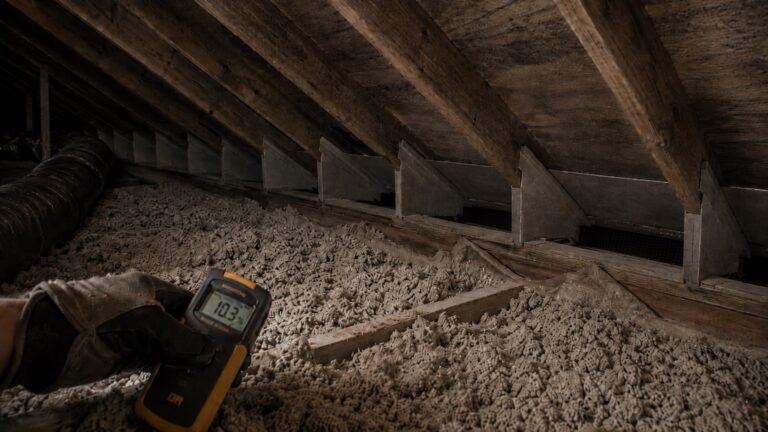
- Damp insulation in attic areas along the wall line
- Staining or rot behind exterior siding
- Recurring leaks during heavy or wind-driven rain
This is especially suspicious when the leak appears during wind-driven rain or when staining follows the line where a lower roof meets an upper wall.
Window and Door Perimeters
Windows and doors depend heavily on properly layered flashing, sealant, trim details, and drainage paths to prevent water intrusion. Flashing around these openings is designed to direct water away from the frame and back onto the exterior surface.
When flashing fails in these areas, homeowners may notice:
- Water stains below window sills
- Soft drywall or trim beneath windows
- Warped or rotting window frames
- Drafts combined with moisture issues
- Peeling paint around window or door edges
These symptoms often worsen gradually, especially during rainy seasons. Water can enter above the window and travel downward before becoming visible.
If you are trying to confirm whether water is entering through flashing or another hidden pathway, see how to detect water intrusion from flashing failures for more focused diagnostic guidance.
Chimneys and Roof Penetrations
Chimneys, vent pipes, skylights, and other roof penetrations are common flashing trouble spots because they interrupt the roof surface and concentrate runoff around a joint.
Common signs of failure in these areas include:
- Leaks appearing after heavy rainfall
- Stains on ceilings near the chimney or vent location
- Water entering attic spaces
- Deterioration of roofing materials around penetrations
Because these areas are exposed to direct rainfall and runoff, flashing failures here often lead to more noticeable leaks compared to wall-based failures.
For chimney-specific warning signs, see signs of chimney flashing failure.
Siding Transitions and Horizontal Joints
Flashing is also used where siding changes direction, meets another material, or terminates above horizontal surfaces. When these transitions are poorly flashed or deteriorate over time, water can enter behind the siding.
Warning signs may include:
- Staining beneath siding joints
- Bulging or warped siding panels
- Soft sheathing behind siding
- Moisture stains along interior walls opposite the siding area
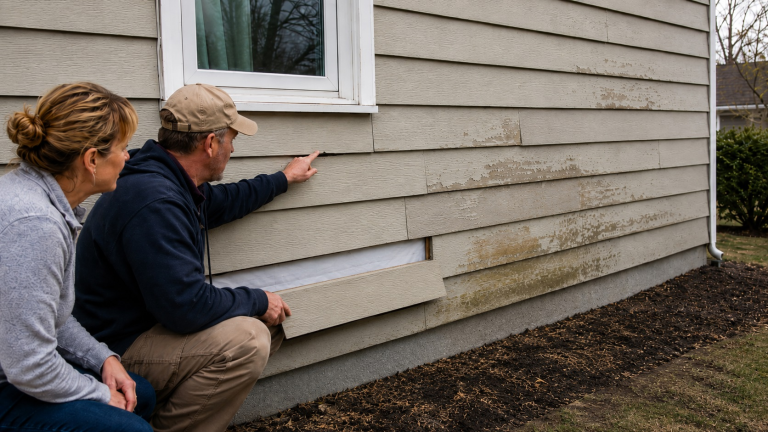
These failures are easy to miss because siding may look mostly intact while sheathing, framing, or insulation behind it stays damp.
Exterior Warning Signs of Failed Flashing
Exterior clues are often the first indication that flashing may no longer be working correctly. They may appear subtle at first, especially if water is entering behind materials rather than flowing visibly across the surface.
Rust, Corrosion, or Staining
Metal flashing can corrode over time, especially when exposed to repeated moisture, incompatible materials, or trapped debris. Rust stains may appear on siding, masonry, roofing materials, or trim below the flashing area.
Rust does not always mean active leakage, but it does indicate that the flashing material or nearby fasteners may be deteriorating. If corrosion is combined with staining, soft materials, or interior leaks, the risk of flashing failure increases.
Loose, Lifted, or Missing Flashing Pieces
Flashing that appears loose, lifted, bent, or missing is a clear warning sign. Wind, age, poor fastening, and roof movement can all cause flashing to shift out of position.
When flashing no longer overlaps correctly, water can enter behind the exterior surface instead of being directed outward. This is especially concerning around roofs, chimneys, windows, and siding intersections.
Cracked Sealant or Gaps at Joints
Sealant is often used around flashing edges, but it should not be the only protection against water intrusion. Cracked, missing, or separated sealant may expose weaknesses in the flashing system.
Warning signs include:
- Open gaps between flashing and siding
- Cracked caulk along roof-wall joints
- Sealant pulling away from masonry or trim
- Repeated caulk repairs that fail quickly
These signs suggest that water may be entering through or around the flashing assembly rather than being directed away from the joint.
Interior Warning Signs of Failed Flashing
Interior warning signs can be more serious because they often mean water has already entered behind the exterior surface. By the time moisture appears indoors, concealed materials may have been exposed for some time.
Ceiling Stains Near Exterior Walls
Ceiling stains near exterior walls often point to water entering at roof-to-wall intersections, roof edges, dormers, or upper-level flashing transitions. These stains may appear as yellow, brown, or gray marks.
The location of the stain matters. If the stain appears close to an exterior wall rather than near the center of a room, flashing failure becomes more likely than a plumbing leak.
Wall Stains Below Windows or Doors
Water stains beneath windows or doors may indicate failed head flashing, sill flashing, or side flashing. Water can enter around the upper portion of the opening, travel downward inside the wall, and appear below the frame.
This is especially common when stains appear repeatedly after storms or when trim feels soft around the opening.
Bubbling Paint or Wallpaper
Bubbling paint or wallpaper can occur when moisture pushes outward from behind the wall surface. If this appears near exterior walls, windows, doors, or ceiling lines, flashing failure may be involved.
This symptom often develops slowly. At first, the surface may look slightly uneven. Over time, bubbling, peeling, or soft spots may become more obvious.
Pattern-Based Signs That Point to Flashing Failure
Individual symptoms can have multiple causes, but patterns often reveal whether flashing failure is likely. The timing, location, and recurrence of symptoms are important clues.
Leaks That Appear After Wind-Driven Rain
Wind-driven rain is one of the strongest indicators of flashing weakness. Water that falls straight down may drain correctly, while wind can push rain sideways into joints, gaps, and transitions.
If leaks appear only during storms with strong wind, failed or poorly lapped flashing should be considered.
Recurring Damage in the Same Location
Recurring damage in the same location is another important clue. If staining, peeling paint, soft drywall, or musty odors return after repairs, the underlying flashing problem may still be present.
Surface repairs such as repainting, patching drywall, or adding caulk may temporarily hide symptoms, but they will not correct water entry caused by failed flashing.
Damage That Aligns With Exterior Seams
Flashing problems often align with exterior seams even if the symptom appears indoors. For example, a wall stain may line up with a window head, roof-wall intersection, or siding transition outside.
Comparing interior damage with exterior features can help narrow down whether flashing failure is likely.
Caulk Failure Combined With Moisture Damage
Failed caulk can contribute to water entry, but caulk should not be the only thing keeping water out of a flashing joint. If cracked sealant appears together with staining, soft trim, peeling paint, or recurring leaks after rain, the problem may be deeper than a surface reseal.
For the construction reasons flashing starts leaking, see why exterior flashing develops leaks.
How Flashing Failure Symptoms Differ From Other Types of Leaks
Flashing failure can resemble a roof leak, plumbing leak, condensation issue, or siding problem. The difference is usually the pattern: symptoms often appear after rain, near exterior transitions, and in the same location repeatedly.
Leaks That Appear Only During Rainfall
Flashing-related leaks usually appear during rain or shortly afterward, especially during wind-driven rain that pushes water sideways into joints.
If moisture appears during dry weather, plumbing, condensation, or humidity may be more likely. If it appears only after rain, exterior water entry becomes more likely.
Leaks Near Exterior Transitions
Flashing failures usually occur where materials meet. This makes the location of the leak especially important.
For example, staining near a roof-wall intersection, window frame, chimney base, or siding transition is more consistent with flashing failure than a stain in the middle of an interior wall with no exterior feature nearby.
Leaks That Return After Surface Repairs
If a leak returns after caulking, painting, or patching drywall, the repair may have addressed the symptom rather than the source. This is common with flashing failures because the actual water entry point is hidden behind exterior materials.
Recurring leaks are one of the strongest signs that a deeper flashing or drainage problem may be present.
Why Failed Flashing Signs Should Not Be Ignored
Failed flashing signs often begin as minor surface symptoms, but they can lead to serious moisture-related issues. Because the water intrusion occurs inside concealed areas, damage can spread without immediate detection.
Hidden Structural Damage
One of the biggest risks of flashing failure is hidden structural deterioration. Water entering behind exterior materials can saturate wood framing, sheathing, and insulation.
Over time, this may cause:
- Wood rot within wall assemblies
- Loss of structural integrity in framing components
- Fastener corrosion and weakening connections
- Deterioration of sheathing materials
Because this damage occurs behind walls or siding, it may not become visible until repairs are more complex and expensive.
Mold Growth in Concealed Areas
Persistent flashing leaks can also create concealed mold risk, especially inside wall cavities where damp materials dry slowly.
Possible warning signs include:
- Musty odors near affected areas
- Recurring moisture problems in the same location
- Damp drywall, trim, or insulation that does not dry between rain events
Although this article focuses on flashing symptoms, it is important to recognize that untreated moisture can escalate into mold problems. Related warning signs are covered in signs of mold growth caused by flashing failures.
Recurring Leaks That Seem to Return After Repairs
A common misconception is that resealing or repainting will permanently fix a leak. In many cases, these solutions only address surface symptoms while the underlying flashing failure remains.
This often results in:
- Leaks that reappear after temporary repairs
- Repeated patching of the same area
- Increasing damage despite multiple attempts to fix the problem
Understanding the root cause of flashing failure is critical to preventing these recurring issues. Preventive strategies are covered in how to prevent flashing failures.
When to Get a Professional Inspection
While some signs of flashing failure are easy to spot, confirming the exact source of water intrusion often requires a more detailed inspection. Because flashing is hidden behind exterior materials, the true failure point may not be visible without partial disassembly or specialized tools.
You should consider a professional inspection if you notice:
- Recurring leaks that appear after rainfall
- Interior wall damage near exterior transitions
- Signs of structural deterioration such as soft walls or trim
- Moisture issues that persist after basic repairs
- Multiple symptoms appearing in the same area over time
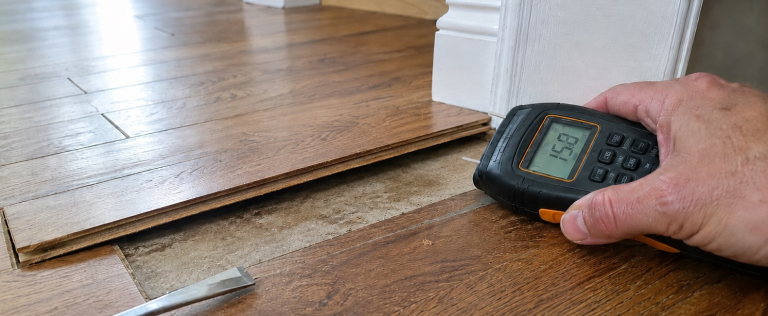
Professionals may use controlled water testing, moisture meters, thermal imaging, attic inspection, or limited removal of trim or siding to confirm whether flashing is the source. If you want to perform a preliminary exterior check first, start with how to inspect exterior flashing for damage.
Frequently Asked Questions About Signs of Failed Exterior Flashing
Can failed flashing cause leaks even if the siding looks fine?
Yes. Flashing is installed behind siding and trim, so it can fail without any visible exterior damage. Water may enter behind the surface and only become noticeable inside the home.
Does replacing caulk fix flashing problems?
Usually no. Caulk may slow surface water, but it cannot replace missing, reversed, corroded, or poorly lapped flashing. If staining or leaks return after resealing, the flashing assembly needs closer inspection.
How long does flashing typically last?
Properly installed flashing can last for decades, but lifespan depends on material, exposure, installation quality, sealant condition, and movement in the surrounding structure. Early staining, rust, gaps, or repeated leaks matter more than age alone.
Are flashing leaks always visible inside the home?
No. Many flashing leaks remain hidden for long periods, especially if water is absorbed into materials or evaporates before reaching interior surfaces. This is why early exterior signs are important.
Can flashing failure lead to major structural damage?
Yes. Long-term water intrusion can weaken framing, cause rot, and damage sheathing. If left unresolved, it can require extensive structural repairs.
Key Takeaways
- Exterior flashing failure allows water to enter at structural transition points such as roofs, windows, and siding joints.
- Common signs include staining, soft walls, peeling paint, musty odors, and recurring leaks after rainfall.
- Symptoms often appear away from the entry point due to how water travels through building materials.
- Flashing failures usually cause slow, repeated moisture exposure rather than sudden flooding.
- Ignoring repeated rain-related symptoms can allow moisture to reach sheathing, framing, insulation, and concealed wall cavities.
- Professional inspection is most important when leaks return after caulking, stains grow after storms, or soft trim suggests concealed damage.
2 Comments
Comments are closed.