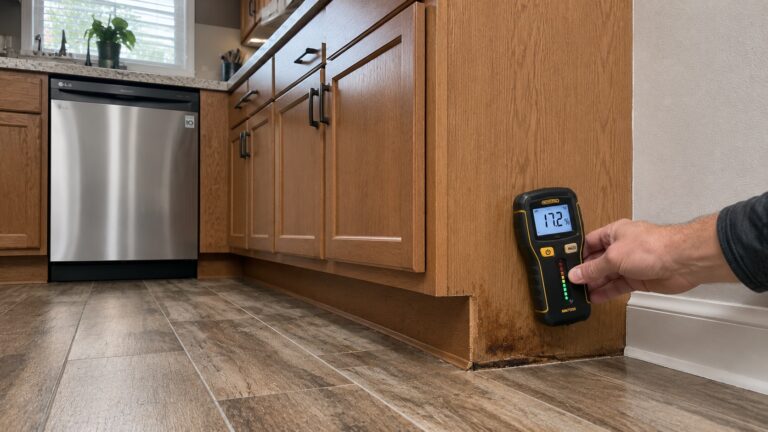
How to Inspect Basements for Moisture Damage
To inspect a basement for moisture damage, start at the lowest wall sections, check wall-to-floor joints, corners, windows, storage areas, exposed framing, insulation, and humidity levels, then document any staining, dampness, musty odor, efflorescence, mold spotting, rust, or soft materials. Basement moisture inspections work best when you follow the same route each time instead of only checking the most obvious wet area.
If the basement already has musty odors, wall stains, or damp surfaces, compare those findings with signs of moisture problems in basements. This article focuses on the inspection process itself: where to look, what tools help, how to judge severity, and when the finding is serious enough to call a professional.
For broader location-based inspection guidance, the parent guide on how to find hidden moisture in different areas of your home explains how basement inspections fit into a whole-house moisture check.
Why Regular Basement Inspections Are Important
Regular basement inspections matter because most moisture damage starts as small, repeatable clues: a damp lower wall after rain, white residue near a crack, rust on metal hardware, or a musty corner behind storage. Checking these areas before the damage spreads helps you separate a minor moisture condition from a developing basement water problem.
Basements are especially vulnerable because foundation walls sit against damp soil, humidity often collects in cooler below-grade spaces, and airflow is usually limited. If moisture appears repeatedly after storms, seasonal humidity changes, or snowmelt, reviewing why basements develop moisture problems can help explain the conditions behind what you are seeing.
A consistent basement inspection routine helps you:
- Notice whether wall stains, damp edges, or musty odors are new or recurring
- Check high-risk areas after storms, snowmelt, or humidity spikes
- Document moisture patterns before structural materials are affected
- Decide when a condition can be monitored and when it needs professional evaluation
Routine inspections are especially valuable after significant weather events. Heavy rainfall, snowmelt, and temperature changes often increase moisture risks, making inspection timing critical.
Because moisture conditions change throughout the year, inspections should not be performed only once. Consistent monitoring improves awareness and helps prevent unexpected moisture-related damage.
Tools Needed for Basement Moisture Inspection
Although many moisture signs can be detected visually, simple inspection tools improve accuracy and make hidden moisture easier to identify. These tools do not require professional training but help homeowners gather more reliable information during inspections.
Use these tools to compare suspicious areas with nearby dry areas, not just to confirm what already looks wet.
Flashlight for Detailed Surface Inspection
A bright flashlight is one of the most useful tools for basement inspections. Strong lighting makes it easier to detect small surface irregularities that may indicate moisture exposure.
Flashlights help reveal:
- Hairline cracks in wall surfaces
- Subtle discoloration patterns
- Surface texture changes
- Efflorescence buildup
Using angled lighting allows shadows to highlight surface details that are difficult to see under normal room lighting.
Moisture Meters for Material Testing
Moisture meters help compare suspected damp areas with dry reference areas in the same basement. They are most useful on drywall, wood, trim, and exposed framing; concrete readings can be harder to interpret and should be treated as comparison readings rather than proof of exact moisture content.
Moisture meters are particularly useful for:
- Testing suspected damp wall areas
- Comparing readings across multiple locations
- Identifying hidden moisture zones
- Monitoring moisture trends over time
Structured testing methods described in how to detect hidden moisture in basement walls help maximize the effectiveness of moisture meter use.
Hygrometers for Measuring Humidity
Hygrometers measure relative humidity levels inside basement air. High humidity increases the likelihood of condensation and moisture buildup inside materials.
Monitoring humidity helps identify conditions that support condensation and mold growth. Basement humidity that stays above 60% is a warning sign, while readings in the 50–60% range should be watched closely if the basement has odors, stains, or previous moisture history.
Tracking humidity over time also helps evaluate whether prevention methods described in how to prevent moisture build-up in basements are working effectively.
Notebook or Digital Device for Documentation
Recording inspection findings improves long-term monitoring and helps identify recurring patterns. Documentation allows homeowners to track changes and compare conditions across different inspection dates.
Important information to record includes:
- Inspection date and time
- Location of observed moisture signs
- Description of symptoms
- Changes compared to previous inspections
Keeping consistent records helps reveal patterns that may otherwise go unnoticed.
Phone Camera for Photo Tracking
A phone camera helps document stains, cracks, rust, mold spotting, and damp areas so you can compare the same location during later inspections. Take photos from the same angle when possible, and include a nearby reference point such as a corner, outlet, pipe, or floor joint.
Step-by-Step Basement Inspection Checklist
Use the same inspection route each time: walls, floor edges, corners, windows, storage areas, structural components, insulation, humidity, and airflow. This makes it easier to notice whether a stain is new, whether a damp area is spreading, or whether moisture appears only after certain weather conditions.
Inspect Basement Walls First
Basement walls are the most common entry point for moisture because they remain in constant contact with surrounding soil. Wall inspections should always begin at the lower sections, where moisture typically appears first.
Carefully examine wall surfaces from bottom to top using a flashlight to highlight subtle changes.
Pay special attention to the first 12–24 inches above the floor, wall-to-floor joints, pipe penetrations, old patch areas, and any vertical crack that becomes darker after rain.
Key wall areas to inspect include:
- Lower wall sections near the floor
- Foundation seams and joints
- Wall surfaces showing discoloration
- Painted or finished wall sections
- Areas previously affected by moisture
During wall inspections, look for these warning signs:
- Darkened or damp-looking patches
- White powder residue (efflorescence)
- Peeling or bubbling paint
- Surface mold spotting
- Hairline cracks or surface damage
If staining, efflorescence, or dampness appears on foundation walls, compare the pattern with signs of water seepage through basement walls and then test the area with a moisture meter if accessible.
Wall inspection findings often provide the first clues about how moisture is entering the basement.
Inspect Basement Floors and Floor Edges
After inspecting walls, examine basement floors carefully. Floor inspections help identify moisture movement patterns and reveal areas where water may be accumulating.
Moisture often collects along floor edges rather than in central areas, making these locations especially important to inspect.
Important floor inspection areas include:
- Wall-to-floor joints
- Floor cracks or seams
- Low areas where water may collect
- Surfaces near floor drains
- Areas beneath appliances or equipment
Look for warning signs such as:
- Damp or discolored flooring
- Persistent wet spots
- Cracks showing signs of moisture
- Staining along floor edges
- Musty odors near floor surfaces
Do not judge floor moisture from appearance alone. A cool concrete floor may look slightly darker in some lighting, so compare suspicious areas with nearby dry-looking areas and check whether the spot changes after rain, humidity changes, or appliance use.
Floor inspection findings often indicate whether moisture is spreading across surfaces or entering through structural joints.
Inspect Basement Corners Carefully
Basement corners are among the most common locations for hidden moisture buildup. Limited airflow allows moisture to accumulate more easily in these areas, making corner inspections essential.
Corner inspections should include both lower and upper sections where moisture may collect.
Important corner areas include:
- Wall-to-wall corners
- Floor-to-wall corner joints
- Corners behind stored items
- Finished basement corners
- Corners near exterior walls
Warning signs in basement corners may include:
- Dark staining
- Musty odors
- Mold spotting
- Damp trim or baseboards
- Condensation on nearby surfaces
Because corners often receive less airflow, moisture found there may indicate both water entry and poor drying conditions.
Inspect Basement Windows and Surrounding Areas
Basement windows and window wells are common moisture entry points. Water can collect near window openings, leak through gaps, or create damp conditions around frames and trim.
Window inspections should include both interior and accessible exterior areas.
Inspect these window areas:
- Window frames
- Window sills
- Trim around window openings
- Window well drainage areas
- Wall surfaces below windows
Look for signs such as:
- Water staining below windows
- Soft or swollen trim
- Rust on metal window components
- Mold near frames or sills
- Dampness after rain
Moisture around basement windows may indicate poor drainage, failed seals, or water collecting outside the foundation opening.
Inspect Storage Areas and Hidden Spaces
Stored items often hide moisture damage. Boxes, furniture, shelving, and stored materials can block airflow and conceal damp surfaces behind them.
Move stored items carefully when inspecting basement areas. Avoid dragging wet or moldy materials across clean surfaces.
Inspect behind and beneath:
- Cardboard boxes
- Shelving units
- Stored furniture
- Plastic bins
- Appliances or equipment
Warning signs behind stored items include:
- Damp cardboard
- Mold on stored materials
- Condensation on plastic bins
- Musty odors when items are moved
- Hidden staining on walls or floors
Storage areas are important because moisture may develop behind items long before it becomes visible in open areas.
Inspect Structural Components for Signs of Moisture Damage
Moisture can affect structural materials inside basements, especially where wood framing, beams, supports, or insulation are exposed. Inspecting these materials helps determine whether moisture has moved beyond surface-level staining.
Structural inspections should be cautious. If materials appear weakened, sagging, heavily decayed, or unsafe, avoid disturbing them and contact a professional.
Inspect Wood Framing and Support Beams
Wood framing and support materials can absorb moisture and deteriorate over time. Basement framing is especially vulnerable when moisture remains trapped behind finished surfaces or around foundation walls.
Inspect accessible wood components for visible moisture damage.
Important wood components to inspect include:
- Exposed studs
- Floor joists above the basement
- Support beams
- Wood plates near foundation walls
- Framing around finished basement walls
Warning signs in wood materials include:
- Darkened wood
- Soft or crumbly areas
- Mold growth
- Warping or swelling
- Musty odors near framing
If wood appears weakened or damaged, professional evaluation may be needed to determine whether structural repair is required.
Inspect Metal Components for Rust and Corrosion
Rust and corrosion often indicate ongoing moisture exposure. Metal components may show signs of damage even when nearby walls or floors appear dry.
Inspecting metal components helps identify areas where condensation or hidden dampness may be present.
Do not touch electrical boxes, wiring, conduit, or wet metal components during inspection. If moisture appears near electrical equipment, stop the inspection in that area and contact a qualified professional.
Important metal components to inspect include:
- Fasteners
- Metal brackets
- Support hardware
- Window hardware
- Pipe supports
Rust patterns may point to localized condensation, leaks, or elevated humidity.
Metal corrosion is especially important when it appears repeatedly in the same area or near structural connections.
Inspect Insulation and Hidden Wall Cavities
Basement insulation can hide moisture behind finished walls, rim joists, and framed sections. Inspect only areas that are safely accessible, and do not pull apart moldy, wet, or contaminated insulation without proper protection.
When insulation is visible, inspect for:
- Discoloration
- Compression or sagging
- Musty odors
- Mold spotting
- Dampness near foundation walls
If insulation appears wet or moldy, avoid disturbing it until the moisture source is understood and proper cleanup precautions are in place.
Check Environmental Conditions Inside the Basement
After checking surfaces and materials, measure the basement environment. High humidity, blocked airflow, and stale air can explain why a basement feels damp even when no active leak is visible.
Measure Humidity Levels
Humidity readings are an important part of basement moisture inspection. Elevated humidity may indicate moisture sources that are not yet visible on surfaces.
Use a hygrometer to measure relative humidity in different basement areas. Take readings near walls, corners, storage areas, and open central spaces.
Important humidity inspection steps include:
- Record humidity readings in multiple locations
- Compare readings across different times of day
- Check humidity after rainfall or seasonal changes
- Watch for readings that remain above 60 percent
Consistently high humidity may require improved moisture control, ventilation changes, or dehumidification.
Observe Airflow and Ventilation
Poor airflow allows moisture to remain trapped in basement areas. Even without active leaks, stagnant air can increase condensation risk and slow drying.
Inspect airflow conditions by checking:
- Blocked vents
- Closed-off rooms
- Stored items against walls
- Areas with stale or musty air
- Spaces where condensation appears repeatedly
If airflow appears limited, moisture may remain trapped even after visible dampness disappears.
How to Document Basement Inspection Findings
Document each finding clearly enough that you can return to the same spot later and compare conditions. Good records help show whether a stain is stable, spreading, or tied to storms, humidity, or appliance use.
Record Inspection Locations and Observations
Each inspection record should identify where moisture signs were found and what conditions were observed. Clear location notes make future inspections more accurate.
Useful details to record include:
- Exact location of the finding
- Type of moisture sign observed
- Humidity readings
- Weather conditions before inspection
- Whether the condition is new or recurring
Detailed records help determine whether moisture problems are improving, worsening, or staying stable.
Take Photographs for Visual Reference
Photographs provide a visual record of moisture conditions. Taking pictures during each inspection makes it easier to compare changes over time.
Photograph these conditions when present:
- Wall stains
- Cracks or seams
- Mold spotting
- Rust or corrosion
- Damaged materials
Photos should be labeled by location and date for accurate comparison.
How to Evaluate Moisture Severity Levels
After the inspection, sort findings by severity so you know what to monitor, what to correct soon, and what needs professional evaluation. The goal is not only to find moisture, but to decide how urgent the next step should be.
Low-Severity Moisture Conditions
Low-severity moisture conditions may include minor staining, brief condensation, or isolated dampness that does not spread. These issues should still be documented and monitored.
Low-severity signs include:
- Small isolated stains
- Temporary condensation
- Slight musty odor without visible damage
- Humidity that rises occasionally but returns to normal
Low-severity conditions usually require monitoring, documentation, and a follow-up check after the next rain or humidity spike rather than immediate repair.
Moderate-Severity Moisture Conditions
Moderate-severity moisture conditions involve repeated dampness, spreading stains, or moisture affecting multiple surfaces. These signs suggest moisture is more than a minor seasonal issue.
Moderate-severity signs include:
- Recurring damp areas
- Stains that increase over time
- Persistent musty odors
- Moisture affecting trim or flooring
Moderate conditions require corrective action, closer monitoring, and source investigation, especially if the same area becomes damp repeatedly.
High-Severity Moisture Conditions
High-severity moisture conditions involve widespread damage, active water entry, mold growth, or structural deterioration. These findings should not be ignored.
High-severity signs include:
- Standing water
- Large mold growth areas
- Soft or damaged structural materials
- Multiple wet areas throughout the basement
- Persistent moisture after repeated attempts to correct it
High-severity findings typically require professional evaluation. Avoid disturbing large mold areas, wet insulation, electrical components, or structurally weakened materials during a homeowner inspection.
When to Perform Basement Inspections
Inspection timing affects how accurately moisture problems are detected. Some basement moisture issues are most visible after rain, while others appear during periods of high humidity or seasonal temperature changes.
A good inspection schedule includes both routine checks and event-based inspections.
Seasonal Inspection Timing
Basements should be inspected at least twice per year. Seasonal inspections help detect moisture changes that occur as weather and ground conditions shift.
Recommended seasonal inspection times include:
- Spring: After snowmelt or seasonal rains increase groundwater levels
- Summer: During periods of high humidity and condensation risk
- Fall: After heavy rainfall that saturates surrounding soil
- Winter: Following freeze-thaw cycles that may create cracks
Seasonal inspections help identify moisture patterns that repeat under similar environmental conditions.
Inspect After Major Weather Events
Significant weather events often increase the risk of moisture entry. Inspecting the basement shortly after these events helps identify problems before they worsen.
Important weather-related inspection triggers include:
- Heavy rainfall or storms
- Flooding or rising groundwater
- Rapid temperature changes
- Extended periods of high humidity
These inspections provide valuable information about how your basement responds to environmental stress.
Inspect When Moisture Symptoms Appear
Inspections should also be performed whenever new moisture symptoms develop. Even minor changes may indicate developing moisture problems that require attention.
Symptoms that should trigger immediate inspection include:
- New musty odors
- Wall discoloration or staining
- Unexpected damp surfaces
- Mold growth appearing in isolated areas
When Professional Basement Inspection Is Needed
While many inspections can be performed by homeowners, certain situations require professional expertise. Professional inspections use advanced tools and experience to identify moisture problems that may not be visible during routine checks.
Professional inspection becomes necessary when moisture keeps returning, spreads across multiple areas, affects structural materials, or appears near electrical components.
Situations That Require Professional Inspection
Professional evaluation is recommended when:
- Moisture persists despite preventive efforts
- Large mold growth areas develop
- Structural materials show signs of deterioration
- Moisture affects multiple basement areas
- Standing water returns repeatedly
Professionals often use specialized equipment such as thermal imaging cameras and advanced moisture detection tools to locate hidden moisture inside structural components.
Frequently Asked Questions About Basement Inspections
How often should basements be inspected for moisture damage?
Basements should be inspected at least twice per year, typically during spring and fall. Additional inspections are recommended after major storms or whenever new moisture symptoms appear.
After heavy rain, snowmelt, or long humid periods, recheck the same wall bases, floor edges, corners, and window areas so new changes are easier to spot.
What areas are most important to inspect?
The most important areas include basement walls, floor edges, corners, windows, storage areas, and structural components. These locations are most vulnerable to moisture entry and accumulation.
The most useful pattern is to check the same spots each time, especially after rain or humidity changes, so new staining, dampness, or odor changes stand out.
Can moisture damage remain hidden during inspections?
Yes, moisture damage can remain hidden inside wall cavities or insulation materials. This is why inspections should include both visible surfaces and environmental checks.
Using detection methods described in how to detect hidden moisture in basement walls improves the chances of finding concealed moisture problems.
Do I need special tools to inspect basements?
Basic tools such as flashlights, moisture meters, and hygrometers improve inspection accuracy but are not always required. Many early warning signs can be identified through careful visual inspection.
A flashlight, hygrometer, phone camera, and moisture meter are usually enough for a homeowner-level inspection before deciding whether professional testing is needed.
When should a professional inspection be scheduled?
Professional inspections should be scheduled when moisture conditions worsen, spread across multiple areas, or affect structural materials. Persistent problems often require advanced evaluation methods that go beyond routine inspections.
Professional inspections help determine the full extent of moisture damage and guide corrective action.
Conclusion: Inspect the Same Basement Areas Consistently
Basement moisture inspections are most useful when they are consistent. Check the same walls, floor edges, corners, windows, storage areas, structural components, and humidity levels each time so changes are easier to recognize.
Small findings such as new staining, damp lower walls, rising humidity, rust, or musty odors should be documented and rechecked after rain or seasonal humidity changes. If moisture keeps returning, spreads across multiple areas, or affects structural materials, move from routine inspection to professional evaluation.
Key Takeaways
- Inspect the same basement walls, floor edges, corners, windows, storage areas, and structural materials each time.
- Use photos, notes, humidity readings, and moisture meter comparisons to track whether conditions are changing.
- Pay close attention to damp lower walls, efflorescence, musty odors, rust, mold spotting, wet insulation, and soft wood.
- Recheck the basement after heavy rain, snowmelt, humidity spikes, or new moisture symptoms.
- Call a professional if moisture spreads, keeps returning, affects structural materials, appears near electrical components, or involves large mold areas.