Why Poor Airflow Causes Moisture Problems
Poor airflow causes moisture problems because humid air stops moving, surfaces dry more slowly, and cool areas stay in contact with damp air for too long. Even when no water is leaking into the home, weak circulation can allow humidity pockets, condensation, musty odors, and damp materials to develop in certain rooms or corners.
This matters because many moisture problems are not caused by a single obvious leak. A bathroom that stays humid after showers, a bedroom that feels damp with the door closed, or a basement that smells stale while the HVAC system is running may all point to an airflow problem.
If you’ve already noticed weak vents, uneven temperatures, or rooms that feel stale, reviewing signs of poor airflow in HVAC systems can help confirm whether airflow is part of the problem. If moisture keeps returning after cleaning or drying, the broader patterns explained in why moisture problems keep returning can help connect airflow with other recurring moisture causes.
How Airflow Controls Moisture in a Home
Airflow plays a central role in maintaining balanced humidity levels and preventing moisture buildup. In a healthy indoor environment, air is constantly moving—entering rooms through supply vents, circulating throughout the space, and returning to the HVAC system to be conditioned again.
This continuous movement allows moisture to disperse evenly and be removed through cooling cycles, ventilation, or natural evaporation. When airflow is strong and consistent, humidity levels remain stable, and surfaces dry quickly after exposure to moisture.
Air movement directly affects how quickly moisture evaporates. For example, a damp bathroom surface dries faster when air is circulating compared to when the air is still. This same principle applies throughout the home. Moving air helps carry moisture away from surfaces and prevents it from lingering in one place.
Airflow also helps maintain temperature balance. When air is evenly distributed, temperature differences between rooms and surfaces are minimized. This reduces the likelihood of condensation forming on cooler surfaces.
In addition, airflow supports the HVAC system’s ability to remove humidity. During cooling cycles, air passes over components that reduce both temperature and moisture. Without adequate airflow, this process becomes less effective, allowing humidity to remain higher than intended.
If you want to understand how humidity behaves in different areas of your home, using the methods described in how to test indoor humidity levels can help reveal where airflow may not be distributing moisture evenly.
When airflow is restricted, moisture is more likely to stay near the source instead of dispersing through the home.
What Happens When Airflow Slows Down
When airflow slows down or becomes uneven, the entire moisture control process begins to break down. Air is no longer moving efficiently between rooms, and the exchange of air within the home becomes limited.
One of the first effects is the formation of stagnant air. Instead of circulating, air remains trapped in certain areas, allowing humidity to accumulate. This is especially common in rooms with closed doors, poor return airflow, or limited ventilation.
As airflow decreases, moisture that would normally evaporate and disperse begins to linger. Surfaces such as walls, floors, and ceilings may stay slightly damp for longer periods, even if they do not appear visibly wet.
This slower drying process creates conditions where humidity levels remain elevated in localized areas. Over time, these pockets of higher humidity can spread or intensify, affecting comfort and increasing moisture-related risks.
Stagnant air also reduces the system’s ability to balance temperature. Some areas may become cooler than others, while warm, humid air remains concentrated elsewhere. These differences can contribute to condensation and uneven moisture distribution.
In many homes, this problem develops gradually. Homeowners may not immediately notice airflow slowing down, but they may begin to feel changes in comfort, humidity, or air freshness. These early changes often signal that airflow is no longer functioning as it should.
That is why a low-airflow area can feel damp even when nearby rooms feel normal and no active leak is visible.
Why Humidity Builds Up With Poor Airflow
Humidity builds up when moisture is added to the air faster than it can be removed or distributed. Poor airflow makes this problem worse because humid air stays concentrated in certain areas instead of moving through the home.
Everyday activities add moisture to indoor air. Showering, cooking, laundry, dishwashing, breathing, and basement dampness all contribute to indoor humidity. In a home with good airflow, this moisture is diluted and moved toward areas where it can be removed or balanced.
When airflow is weak, moisture stays closer to the source. A bathroom may remain humid long after a shower, a kitchen may feel damp after cooking, or a basement may hold a heavy, stale feeling even when the HVAC system is running.
This is why one room can feel humid while another room feels normal. The moisture source may not be unusual, but the airflow pattern is not moving that moisture away effectively.
Humidity pockets are especially common in closed rooms, closets, basements, laundry areas, and rooms far from return vents. These spaces often have limited air exchange, which allows humid air to linger.
Poor airflow can also make the HVAC system less effective at managing humidity. The system may run, but rooms with weak circulation may not receive enough conditioned air to dry evenly.
This is one reason a house can feel damp even when the thermostat shows a comfortable temperature. Temperature and humidity are related, but they are not the same. A room can be cool and still feel damp if moisture is trapped in the air.
If your home feels humid without an obvious leak, the explanation may be related to airflow, ventilation, or hidden moisture behavior. The article on why indoor air feels damp even without leaks is a helpful supporting resource for understanding this pattern.
How Poor Airflow Leads to Condensation
Condensation forms when humid air contacts a surface that is cool enough for moisture in the air to turn into liquid water. Poor airflow increases this risk because it allows humid air and cool surfaces to remain in contact for longer periods.
In a well-circulated room, air mixes more evenly. This reduces sharp temperature differences between surfaces and surrounding air. When airflow is weak, cool spots remain cooler, humid air remains concentrated, and condensation becomes more likely.
This is common near supply vents, exterior walls, windows, basement surfaces, duct areas, and corners where air movement is limited. These areas may not be wet from a leak, but they can still collect moisture because humid air is not circulating properly.
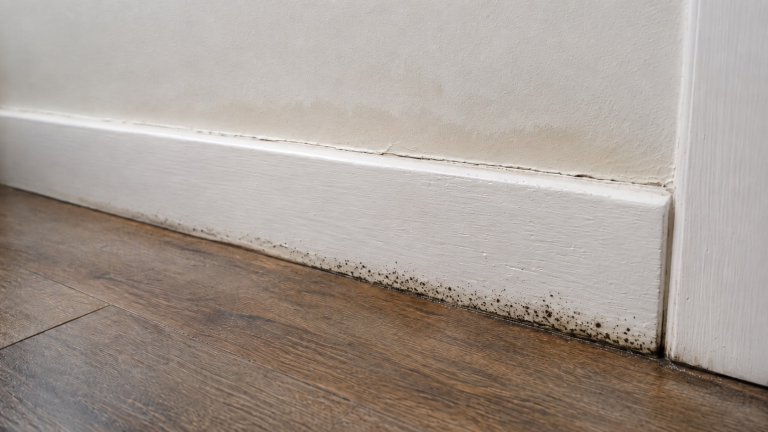
Poor airflow also slows surface drying. If condensation forms once, it may take longer to evaporate. Repeated cycles of condensation and slow drying can eventually lead to stains, peeling paint, musty odors, or mold-supporting conditions.
Homeowners often mistake airflow-related condensation for a roof leak, plumbing leak, or appliance leak. Those sources should be ruled out when moisture is persistent, but condensation can develop entirely from indoor humidity and poor circulation.
Lowering the thermostat does not always solve this problem. In some cases, colder surfaces can make condensation more likely if airflow and humidity remain unbalanced. The goal is not simply colder air; it is balanced air movement and controlled humidity.
Condensation is one of the clearest examples of how airflow affects moisture behavior. The problem is often not just how much moisture is in the home, but where that moisture collects and how long it stays there.
Why Some Rooms Stay Damp Longer Than Others
Some rooms stay damp longer because airflow is not distributed evenly throughout the home. Even if the HVAC system is working, certain spaces may receive less air movement or have weaker return pathways.
Bathrooms are a common example. A bathroom produces a large amount of moisture in a short period of time. If airflow is weak, humidity stays trapped after showers and surfaces take longer to dry.
Basements are also vulnerable. Basement air is often cooler, and cool surfaces are more likely to hold moisture. If airflow is limited, dampness can linger and create a persistent musty feeling.
Bedrooms can develop airflow-related moisture problems when doors are kept closed for long periods. If the room does not have adequate return airflow, conditioned air may not circulate properly, allowing humidity and stale air to build up.
Kitchens and laundry rooms may also stay damp after moisture-producing activities. Cooking, washing, and drying clothes all release moisture into the air. Without steady circulation, that moisture remains concentrated in the room.
Closets and storage areas are another common low-airflow zone. These spaces often have little air movement, and stored items can further block circulation. This allows humidity to stay trapped around walls, floors, boxes, clothing, and stored materials.
The reason these rooms stay damp is not always that they have more moisture entering them. In many cases, they simply have less airflow removing or redistributing moisture.
A simple first check is to compare damp rooms with nearby dry rooms. Notice whether the damp room has a weak supply vent, no clear return path, a closed door most of the day, blocked furniture near vents, or a stale feeling after the HVAC system runs. Those clues do not prove airflow is the only cause, but they help show whether moisture is staying in place because air is not moving through the room.
If certain rooms consistently stay damp, it helps to confirm whether airflow is weak in those areas. The practical checks in how to detect HVAC airflow problems can help separate airflow imbalance from other moisture sources.
How Poor Airflow Increases Mold Risk
Poor airflow does not create mold by itself, but it can create the moisture conditions that allow mold to grow. Mold needs moisture, a food source, and suitable conditions. When airflow is weak, moisture remains available longer, which increases the risk.
In many homes, mold begins in areas where air movement is limited. Corners, closets, basements, bathrooms, duct areas, and rooms with closed doors often retain humidity longer than open, well-circulated spaces.
When surfaces dry slowly, dust and organic particles can remain slightly damp. These materials can support mold growth if moisture persists long enough. This is why airflow problems often appear alongside musty odors, surface discoloration, or recurring dampness.
Low-airflow areas are especially vulnerable after small moisture events, such as a shower, minor spill, appliance humidity, or condensation cycle. The visible moisture may disappear, but if the area keeps drying slowly, the same damp conditions can return after cleaning.
If you see or smell signs of mold near vents, damp rooms, or low-circulation areas, the issue may involve both moisture and airflow. The warning signs covered in signs of high indoor humidity problems can help determine whether the indoor environment is supporting mold-friendly conditions.
Poor airflow should not be treated as the only possible cause. Leaks, condensation, high indoor humidity, and damp materials can all contribute, but airflow often determines whether moisture dries quickly or remains long enough to become a larger problem.
Airflow vs. Ventilation vs. Dehumidification
Airflow, ventilation, and dehumidification are related, but they are not the same thing. Understanding the difference helps explain why one solution does not always fix every moisture problem.
Airflow refers to how air moves through and within the home. It includes air moving through HVAC ducts, supply vents, return vents, rooms, hallways, and open pathways. Good airflow helps distribute conditioned air and prevent stagnant humidity pockets.
Ventilation refers to the exchange of indoor air with outdoor air or exhaust air. Bathroom fans, kitchen exhaust fans, fresh-air systems, and attic ventilation all perform ventilation roles. Ventilation removes moisture-laden air from specific spaces or introduces controlled outdoor air.
Dehumidification refers to removing moisture from the air. Air conditioners can remove some humidity during cooling cycles, while dehumidifiers are designed specifically to lower indoor humidity levels.
A home can have airflow but poor ventilation. It can also have ventilation but poor room-to-room circulation. Likewise, a dehumidifier may reduce humidity in one area but fail to solve moisture problems in rooms where air does not circulate well.
This distinction matters because one fix may improve part of the moisture problem without correcting the whole pattern. A dehumidifier may lower humidity in the room where it sits, but a closed bedroom, packed closet, or blocked corner can still stay damp if air does not circulate through that area.
Airflow helps distribute and dry. Ventilation helps remove and replace air. Dehumidification lowers moisture content. Long-term moisture control often requires all three working together in the right way.
Why HVAC Systems Can Run Without Fixing Moisture
One of the most confusing moisture problems is when an HVAC system runs normally, but the house still feels damp. This happens because running equipment does not automatically mean air is moving effectively through every area.
An HVAC system may cool the air near the thermostat while failing to move enough air through distant rooms, closed bedrooms, basements, or low-circulation spaces. As a result, the system appears to be working, but moisture remains unevenly distributed.
Poor airflow can also reduce the system’s humidity removal. Some areas may cool slightly while still feeling humid because not enough air is moving through the system or through the affected rooms.
This is why turning the thermostat lower is not always a good solution. Colder air may reduce temperature, but it does not guarantee better moisture control. In some cases, colder surfaces can increase condensation risk if humidity remains high.
Another issue is short or ineffective circulation. The system may cycle on and off without running long enough or moving enough air to stabilize humidity throughout the house. This can leave certain rooms damp even though the main living area feels comfortable.
When HVAC operation does not fix dampness, the issue may involve airflow imbalance, humidity sources, ventilation problems, or a combination of all three. The broader guide on finding and preventing whole-home moisture problems can help place HVAC airflow in the larger moisture-control system.
If the system runs frequently but moisture keeps returning, airflow should be evaluated as part of the diagnosis instead of assuming the problem is only with the thermostat or cooling equipment.
When Airflow Problems Become Structural Moisture Risks
Poor airflow becomes more serious when moisture begins affecting building materials instead of only indoor comfort. At first, the signs may be limited to damp air, uneven room comfort, or mild condensation. Over time, however, repeated moisture exposure can begin to affect drywall, trim, insulation, flooring, and wood framing.
This progression usually happens gradually. A low-airflow room may stay humid every day, surfaces may dry slowly, and condensation may appear repeatedly on cool materials. If those conditions continue, moisture can begin to soak into porous surfaces.
Drywall, wood trim, subfloors, and insulation are especially vulnerable because they can hold moisture after repeated exposure. Once these materials remain damp for extended periods, the risk of staining, swelling, odor, and mold growth increases.
Airflow-related moisture problems are often most concerning in hidden or enclosed areas. Wall corners, closets, basement edges, duct chases, and rooms with limited return airflow can hold moisture without obvious standing water. This makes the damage easy to miss until symptoms become more visible.
Structural risk increases when several warning signs appear together. Persistent humidity, musty odors, condensation, weak airflow, and visible staining suggest that moisture is no longer just a comfort issue.
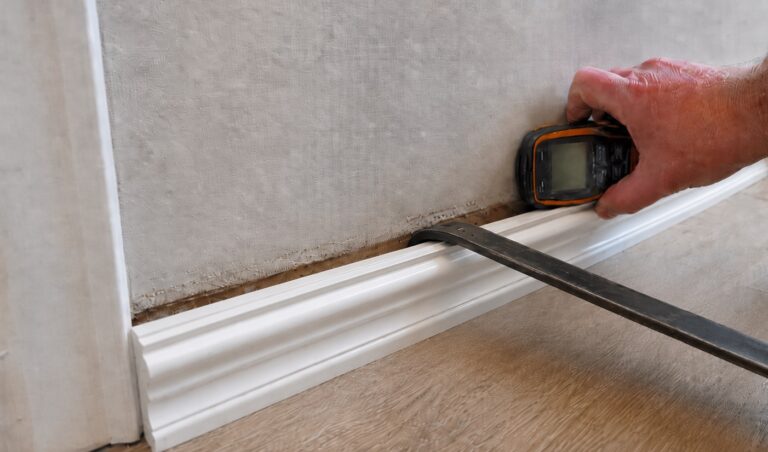
Do not cover stained, damp, or musty materials with paint, caulk, or new finishes until the moisture source and drying conditions are understood. A surface can look dry while drywall edges, insulation, trim backs, or enclosed cavities still hold moisture.
When airflow problems contribute to moisture accumulation inside building materials, the issue should be treated as part of a larger home moisture-control problem. In these cases, improving airflow may help, but the affected materials may also need drying, monitoring, or professional evaluation.
If airflow problems are widespread or moisture continues after basic improvements, the next step is usually a more complete airflow and moisture assessment. The guidance on improving HVAC airflow can help identify practical next steps without jumping immediately to unnecessary repairs.
FAQ About Poor Airflow and Moisture Problems
Can poor airflow cause moisture problems without a leak?
Yes. Moisture problems can develop without a leak if humid air remains trapped and surfaces dry too slowly. Poor airflow allows humidity to persist, which can lead to condensation, musty odors, and damp materials.
Can poor airflow cause mold?
Poor airflow does not directly create mold, but it can support mold growth by allowing moisture to remain available longer. Mold risk increases when damp surfaces, dust, and stagnant air remain in the same area over time.
Why does my house feel humid even when the AC is on?
Your HVAC system may be cooling some areas without circulating air evenly through the whole house. If airflow is restricted, certain rooms can remain humid even while the thermostat shows a comfortable temperature.
Does more airflow always fix moisture problems?
Not always. Better airflow helps moisture evaporate and move, but it will not fix an active leak, oversized humidity load, blocked exhaust fan, wet insulation, or materials that are already holding moisture.
Can lowering the thermostat reduce indoor moisture?
Sometimes, but it is not a complete solution. Lower temperatures do not guarantee better humidity control, and colder surfaces may increase condensation risk if airflow remains poor.
Conclusion
Poor airflow causes moisture problems by allowing humid air to stagnate, slowing surface drying, and increasing condensation risk. Even without an obvious leak, weak circulation can leave rooms, corners, basements, closets, and enclosed areas damp longer than they should.
If moisture keeps returning in the same areas, look beyond the thermostat. Check whether air is actually reaching the damp room, whether it has a return path, whether vents are blocked, and whether humidity is being removed instead of simply moved around.