How to Reduce Indoor Humidity Levels
To reduce indoor humidity, start by removing moisture at the source, exhausting damp air outdoors, running a properly sized dehumidifier where readings stay high, and checking humidity with a hygrometer instead of guessing. Most homes need a combination of ventilation, source control, dehumidification, and regular monitoring.
Indoor humidity becomes a problem when moisture remains trapped long enough to cause discomfort, condensation, musty odors, mold risk, or material damage. If you are not sure whether your home actually has a humidity problem, begin with how to test indoor humidity levels with reliable tools and methods before making major changes.
Start by Confirming Indoor Humidity Levels
Before trying to reduce humidity, confirm whether indoor relative humidity is actually high. Some homes feel damp because of poor airflow, warm indoor temperatures, or room-specific conditions, but readings show whether you are dealing with a true humidity problem.
A basic hygrometer can help you confirm whether humidity is high in one room or throughout the home. For whole-home monitoring, smart hygrometers or multi-room humidity monitors can help identify patterns over time.
As a general rule, indoor relative humidity is usually most comfortable and least likely to damage materials when kept around 30% to 50%. Readings that stay above 60% increase the risk of condensation, mold growth, musty odors, and moisture damage.
If readings are only slightly high, start with ventilation and moisture source control. If readings stay above 60% for hours or days, especially in basements or closed rooms, use dehumidification while you look for the cause.
A simple order of action is: measure first, remove obvious moisture sources, exhaust damp air outdoors, run a dehumidifier where readings stay high, then investigate leaks or structural moisture if humidity keeps returning.
Check More Than One Room
Humidity can vary significantly from room to room. A bathroom, basement, bedroom, or laundry room may have much higher humidity than the main living area.
Testing several locations helps you avoid treating the entire house when only one area is causing the problem. It also helps identify whether moisture is spreading from a specific room into surrounding spaces.
If one room consistently has higher readings than the rest of the home, the underlying reasons may involve ventilation, room usage, exterior walls, or hidden moisture sources. Those differences are explained further in why some rooms have higher humidity than others.
Look for Matching Warning Signs
Humidity readings are most useful when compared with visible and sensory warning signs. If high readings appear alongside condensation, musty smells, sticky air, peeling paint, or slow-drying surfaces, the problem is more likely to require action.
Common warning signs are covered in detail in signs of high indoor humidity problems, which can help you separate normal seasonal moisture from a more persistent indoor humidity issue.
Quick Ways to Reduce Indoor Humidity
If humidity is already high, use quick moisture-removal steps while you look for the cause. These steps are most useful after showering, cooking, laundry, wet cleaning, rainy weather, or visible indoor condensation.
Use Exhaust Fans Immediately
Bathroom and kitchen exhaust fans are designed to remove moisture-heavy air before it spreads through the home. Turn them on during showers, cooking, dishwashing, or any activity that produces steam.
For bathrooms, let the exhaust fan run for at least 15–20 minutes after showering. For kitchens, use an exterior-vented range hood while boiling, steaming, simmering food, or running the dishwasher if it releases noticeable steam.
A fan that only recirculates air does not remove humidity from the home. It may move moist air around, but it does not exhaust water vapor outdoors.
Run a Dehumidifier in Damp Areas
A dehumidifier is one of the fastest ways to remove moisture from indoor air. It is especially helpful in basements, laundry rooms, bathrooms without strong ventilation, and rooms where humidity stays above 60%.
Place the unit where airflow is open and unobstructed. Avoid pushing it tightly against walls, furniture, curtains, or storage boxes because restricted airflow reduces performance.
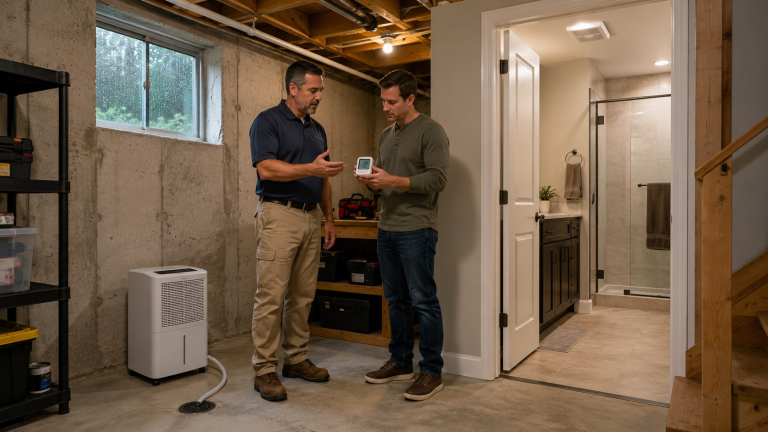
For damp basements or recurring moisture-prone spaces, a dedicated unit may be more effective than moving one small dehumidifier from room to room. Choosing the right equipment is especially important in below-grade areas, where moisture can enter continuously through concrete and foundation materials.
For help with sizing, placement, drainage, and ongoing use, see how to choose and use a dehumidifier effectively.
Remove Wet Items From Indoor Spaces
Wet towels, damp clothing, soaked rugs, and recently cleaned carpets can continue releasing moisture into the air for hours. Removing or drying these items quickly helps reduce humidity faster.
This is especially important in bathrooms, laundry rooms, basements, and rooms with limited airflow. If damp items remain indoors, they can keep humidity elevated even while fans or dehumidifiers are running.
Ventilate Only When Outdoor Air Is Drier
Opening windows can lower humidity, but only when outdoor air is drier than indoor air. If the outdoor air is humid, rainy, or muggy, opening windows may make indoor humidity worse.
Use ventilation strategically. Open windows during dry weather or cooler parts of the day when outdoor humidity is lower. Avoid relying on open windows during storms, humid summer afternoons, or damp weather patterns.
Improve Ventilation to Remove Moisture
Ventilation lowers humidity only when moist indoor air is actually exhausted outdoors or replaced with drier outdoor air. Bathroom fans, exterior-vented range hoods, dryer vents, and controlled window use all work best when they move moisture out instead of just moving air around indoors.
Use Bathroom Ventilation Consistently
Bathrooms generate some of the highest moisture levels in a home. Running the exhaust fan during showers and for several minutes afterward helps remove steam before it spreads into other areas.
For best results:
- Turn the fan on before or at the start of a shower
- Keep it running after the shower until mirrors, walls, and ceiling surfaces begin to clear
- Make sure the fan vents outside, not into an attic
If moisture lingers in mirrors, ceilings, or walls long after use, the fan may be undersized or ineffective.
Vent Kitchens Properly While Cooking
Cooking releases a significant amount of moisture, especially when boiling or steaming. Using a range hood that vents outdoors helps remove that moisture before it spreads.
If your kitchen uses a recirculating fan instead of an exterior vent, it will not remove humidity effectively. In that case, opening a window during cooking (when outdoor air is dry) can help reduce buildup.
Improve Airflow Throughout the Home
Good airflow allows moisture to move toward areas where it can be removed. Without airflow, humidity becomes trapped in enclosed spaces.
To improve circulation:
- Keep interior doors open when possible
- Ensure vents are not blocked by furniture or rugs
- Allow air to move freely between rooms
Balanced airflow helps prevent isolated pockets of high humidity from developing in bedrooms, closets, and basements.
Use Dehumidifiers Effectively
Dehumidifiers are one of the most direct ways to lower indoor humidity because they remove water vapor from the air and collect or drain it away. They work best when matched to the space, placed where air can circulate, and used alongside source control.
Choose the Right Size for the Space
A unit that is too small may run constantly without bringing humidity down. Before choosing one, consider:
- Room size or square footage
- How damp the space feels
- Whether moisture is entering continuously (such as in basements)
Larger or more humid areas require higher-capacity units to keep humidity under control.
Place the Unit Where It Works Best
Placement affects performance. For best results:
- Keep the unit in the dampest area of the home
- Allow space around it for proper airflow
- Avoid placing it in tight corners or against walls
- Use continuous drainage when possible, and make sure the hose drains to a safe location instead of onto flooring or stored items
In multi-room homes, one unit may not be enough to control humidity everywhere. In those cases, focus on the areas with the highest readings.
Understand What Dehumidifiers Can and Cannot Do
While dehumidifiers are effective, they are not a complete solution on their own. If moisture sources remain active, humidity may return quickly after the unit is turned off.
For best results, combine dehumidification with ventilation improvements and source control. If humidity continues to return despite using equipment, it may be necessary to address underlying causes explained in why indoor humidity levels become too high.
Reduce Moisture at the Source
Reducing humidity is easier when less moisture enters the air in the first place. Daily habits matter most in bathrooms, kitchens, laundry areas, basements, and closed rooms.
Adjust Shower and Bath Habits
Long, hot showers release large amounts of steam. Reducing shower time slightly and using exhaust fans consistently can help control humidity in bathrooms.
Additional steps include:
- Keeping the bathroom door closed during showers to contain moisture
- Wiping down wet surfaces after use
- Allowing air to circulate once the room begins to dry
Control Moisture During Cooking
Cooking with lids on pots reduces the amount of steam released into the air. Using exhaust ventilation during cooking also prevents moisture from spreading into nearby rooms.
After cooking, allow the kitchen to air out if conditions are dry outside.
Avoid Indoor Clothes Drying
Drying clothes indoors can release a surprising amount of moisture into the air. If indoor humidity is already high, avoid drying laundry on racks inside bedrooms, bathrooms, basements, or closets.
If indoor drying is unavoidable, use a dehumidifier in the same area, keep air moving, and monitor readings until the clothes and surrounding surfaces are dry.
Fix Small Moisture Sources Quickly
Minor leaks, damp surfaces, and wet materials can contribute to ongoing humidity problems. Fixing small moisture sources early helps prevent them from becoming larger issues.
This includes:
- Repairing dripping faucets or pipes
- Drying wet floors promptly
- Addressing minor water intrusion before it spreads
Control Humidity in Problem Areas
Some areas of a home naturally experience higher humidity than others. Even if overall indoor humidity seems moderate, these spaces can act as ongoing moisture sources that affect surrounding rooms.
Focusing on these problem areas often produces the fastest and most noticeable improvements.
Basements and Below-Grade Spaces
Basements are one of the most common sources of persistent humidity. Moisture can move through concrete, enter around foundation gaps, or collect from poor drainage even when there is no obvious standing water.
To reduce humidity in basements:
- Use a dedicated dehumidifier sized for the space
- Keep air circulating to avoid stagnant pockets
- Limit storage directly against walls to improve airflow
- Monitor humidity regularly to track changes
Basement humidity often requires continuous management because moisture can enter slowly over time from surrounding soil.
Bathrooms
Bathrooms need fast moisture removal because steam settles on mirrors, ceilings, walls, trim, and towels. If surfaces stay damp long after use, the issue is usually weak exhaust, poor airflow, long hot showers, or moisture being trapped behind closed doors.
Consistent bathroom humidity control helps prevent mold growth on ceilings, grout, and fixtures.
Bedrooms and Enclosed Spaces
Bedrooms can become humid overnight, especially when doors are closed and airflow is limited. People release moisture while breathing, which can gradually increase humidity in enclosed spaces.
To improve conditions:
- Allow air to circulate by opening doors when possible
- Ensure vents are unobstructed
- Use a small dehumidifier if humidity remains high
Closets and storage areas can also trap moisture, especially if they are located along exterior walls.
Laundry Rooms
Laundry areas often contribute to humidity when dryers are not properly vented or when clothes are dried indoors.
To reduce moisture in these areas:
- Confirm dryer vents are connected and exhausting outdoors
- Avoid drying clothes indoors when possible
- Use ventilation or a dehumidifier when moisture levels rise
Addressing humidity in these spaces helps prevent moisture from spreading throughout the home.
Avoid Common Humidity Reduction Mistakes
Many homeowners attempt to reduce humidity but unknowingly rely on methods that are ineffective or incomplete. Understanding these common mistakes helps prevent wasted effort and recurring problems.
Relying Only on Fans
Standard fans move air but do not remove moisture. While they can help surfaces dry faster by improving airflow, they do not reduce overall humidity unless they are part of a system that exhausts air outdoors.
Fans are most effective when used alongside ventilation or dehumidification.
Opening Windows at the Wrong Time
Opening windows can increase humidity when outdoor air is more humid than indoor air. This is common during summer afternoons, rainy weather, or in humid climates.
Ventilation should be used strategically, based on outdoor conditions.
Using a Dehumidifier Without Addressing Sources
A dehumidifier can remove moisture from the air, but if moisture sources remain active, humidity may return quickly. For example, running a dehumidifier while continuing to dry clothes indoors or leaving bathroom moisture unvented will limit its effectiveness.
Combining dehumidification with source control provides better long-term results.
Ignoring Hidden Moisture Areas
High humidity can sometimes be a symptom of a hidden moisture source rather than the main problem. If one area stays humid despite ventilation and dehumidification, check nearby plumbing, exterior walls, window areas, basement walls, crawl spaces, and stored materials before assuming the air itself is the only issue.
When Simple Fixes Are Not Enough
In some homes, humidity remains high even after improving ventilation, reducing moisture sources, and using dehumidifiers. This often indicates that multiple causes are contributing to the problem or that moisture is entering through structural pathways.
Signs that simple fixes may not be enough include:
- Humidity consistently above recommended levels
- Condensation appearing daily on windows or surfaces
- Musty odors that return quickly after cleaning
- Visible mold growth in multiple areas
Stop relying on humidity control alone if you find active leaks, sewage or floodwater contamination, widespread mold, wet electrical areas, or soft structural materials. Those conditions need direct repair or professional evaluation, not just drier air.
When these conditions occur, a more structured approach may be needed. This includes identifying underlying causes and addressing persistent moisture problems in a targeted way, as explained in how to fix persistent indoor humidity problems.
If humidity has already contributed to mold growth, proper cleanup and prevention strategies become important. These are covered in how to remove mold permanently and prevent it from returning.
Frequently Asked Questions About Reducing Indoor Humidity
How quickly can indoor humidity be reduced?
Humidity can begin dropping within a few hours if strong measures are used, such as running a properly sized dehumidifier or improving ventilation. However, full stabilization may take longer if building materials have absorbed moisture or if humidity sources remain active.
Why is my dehumidifier running but humidity staying high?
A dehumidifier may run without lowering humidity enough if it is too small, placed where airflow is blocked, set too high, not draining properly, or fighting an active moisture source such as a basement seepage problem, indoor clothes drying, weak bathroom ventilation, or a hidden leak.
Can fans reduce indoor humidity?
Fans alone do not reduce humidity because they do not remove moisture from the air. However, they can improve airflow, which helps moisture move toward areas where it can be removed through ventilation or dehumidification.
Is opening windows always helpful for lowering humidity?
No, opening windows only helps when outdoor air is drier than indoor air. In humid or rainy conditions, opening windows can increase indoor humidity instead of reducing it.
What is the best humidity level for a home?
Most homes are most comfortable and protected from moisture problems when indoor humidity stays between 30% and 50%. Levels above 60% increase the risk of condensation, mold growth, and material damage.
Key Takeaways
- Reduce humidity by removing moisture at the source and exhausting damp air outdoors
- Use a hygrometer to confirm whether humidity is high before making major changes
- Run bathroom fans, kitchen exhaust, and dehumidifiers where moisture is being produced or trapped
- Open windows only when outdoor air is drier than indoor air
- Basements, bathrooms, laundry rooms, bedrooms, and closets often need targeted humidity control
- Persistent humidity may point to hidden leaks, poor drainage, weak ventilation, or moisture-damaged materials