
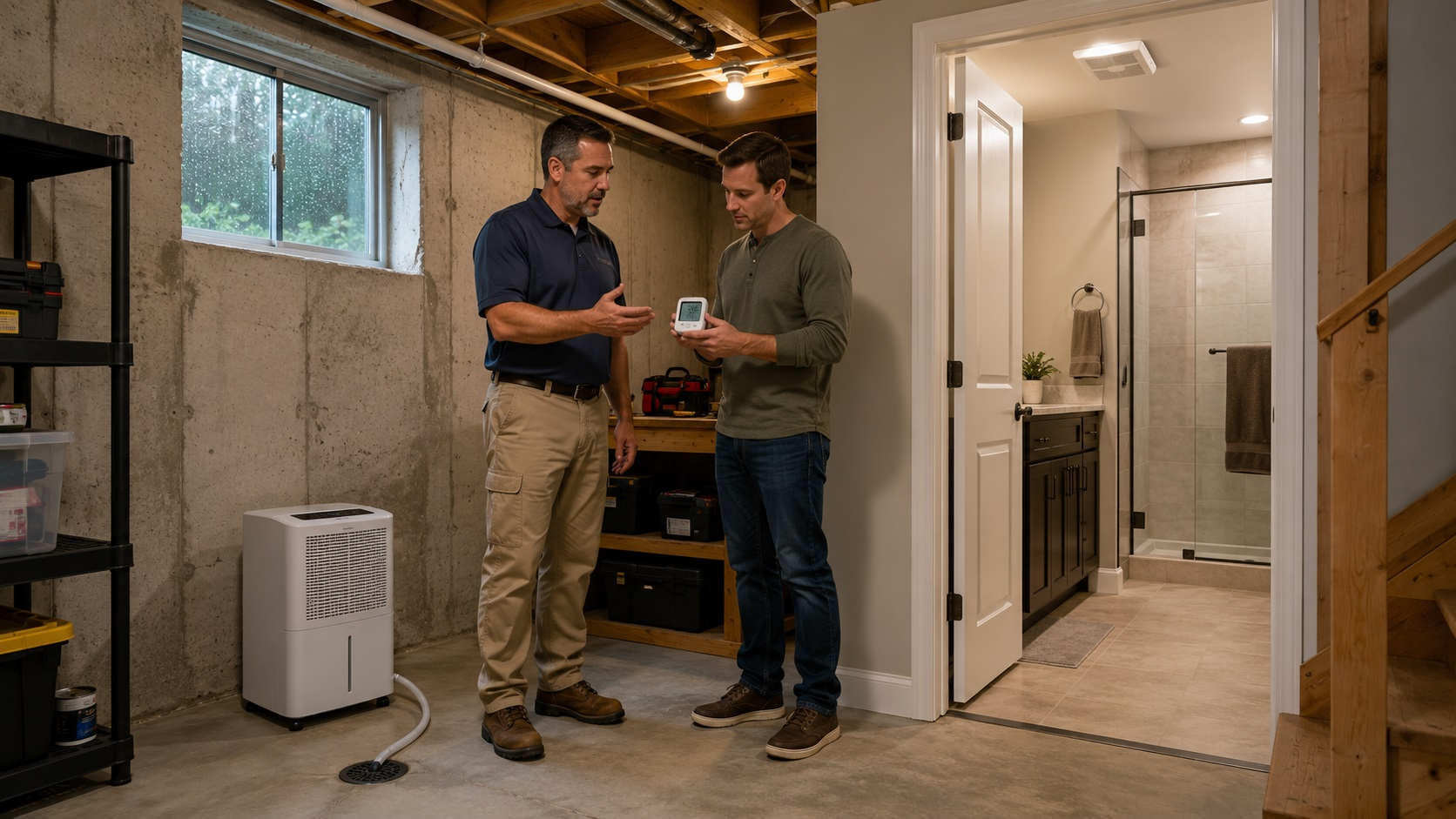
How Outdoor Conditions Affect Indoor Moisture
Outdoor conditions affect indoor moisture because outside air, temperature, wind pressure, rain, and ground moisture all interact with the home. Even with doors and windows closed, moisture can move indoors through air leaks, ventilation paths, crawlspaces, basements, attic connections, and small gaps in the building shell.
This is why indoor humidity may rise on humid days, basements may feel damp after rain, and some rooms may react more strongly to outdoor conditions than others. A short-term change is often normal. A repeated pattern, persistent dampness, musty odor, or condensation usually points to a weakness in ventilation, sealing, insulation, drainage, or moisture control.
Understanding this connection helps you tell the difference between normal outdoor influence and a deeper indoor moisture problem. For accurate tracking, start with how to test indoor humidity levels.
Why Indoor Moisture Is Connected to Outdoor Conditions
Indoor moisture is connected to outdoor conditions because every home exchanges some air with the outside. This exchange happens through small gaps, vents, structural openings, HVAC pathways, attic spaces, crawlspaces, and normal daily use.
Even a well-built home allows some air movement. When outdoor air enters, it brings its temperature and moisture content with it. If that air is humid, indoor moisture can increase. If the outdoor air is dry, indoor air may become drier.
This exchange is not always obvious. You may not feel a draft or see an open gap, but moisture can still move through:
- Small openings around windows and doors
- Attic and crawlspace connections
- Ventilation and exhaust systems
- Wall penetrations for wiring, plumbing, or vents
- Foundation and basement pathways
Because moisture moves with air, outdoor conditions can affect indoor humidity even when there is no visible leak. This is one reason homeowners sometimes notice humidity changes without finding an obvious water source.
The connection between outdoor and indoor moisture is especially important in homes with poor air sealing, weak ventilation control, damp foundations, or uneven airflow. In these homes, outdoor moisture changes may show up indoors more quickly and more noticeably.
How Outdoor Humidity Influences Indoor Air
Outdoor humidity is one of the strongest influences on indoor moisture. When outdoor air contains a lot of water vapor, any air that enters the home can raise indoor humidity levels.
This is most noticeable during humid weather. Even if windows are closed, humid air can enter through small gaps and normal ventilation pathways. Once inside, that moisture mixes with indoor air and can make the home feel damp, heavy, or sticky.
Outdoor humidity can also slow drying inside the home. When the surrounding air is already moisture-heavy, damp surfaces and materials release moisture more slowly. This can make bathrooms, laundry rooms, basements, and enclosed spaces feel damp for longer periods.
A useful clue is timing. If the whole home feels slightly damper during humid weather and returns to normal afterward, outdoor humidity is probably the main influence. If one room stays damp after the weather changes, that area may have a local airflow, leak, insulation, or ventilation problem.
On dry days, the opposite effect can occur. Outdoor air with low moisture content may reduce indoor humidity, especially when ventilation increases. This can make the home feel drier and may lower readings on a hygrometer.
Because outdoor humidity changes throughout the day and across different weather conditions, indoor humidity often changes too. If those changes are temporary and affect the home broadly, they are usually part of normal environmental behavior. If humidity remains high or causes visible symptoms, it may be useful to compare conditions with why humidity levels change during weather shifts.
How Temperature Differences Affect Indoor Moisture
Temperature differences between indoor and outdoor environments play a major role in how moisture behaves inside a home. Temperature does not just affect comfort—it directly influences how much moisture the air can hold and where that moisture ends up.
Warm air can hold more moisture than cool air. When warm, humid air enters a cooler indoor space, it may lose its ability to hold that moisture. This can lead to condensation forming on cooler surfaces.
This is especially common in areas such as:
- Basements, where surfaces are naturally cooler
- Air-conditioned rooms during hot weather
- Floors and walls that are below the temperature of incoming air
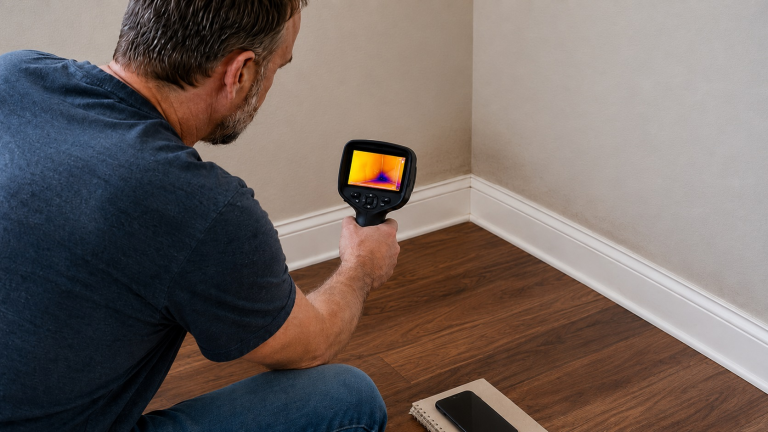
In these situations, moisture in the air can condense into liquid when it contacts a cooler surface. Watch for light surface dampness, fogged glass, damp concrete, cool wall corners, or musty smells that appear when warm humid air meets colder materials.
Temperature differences can also affect how humidity is measured. A change in temperature can make relative humidity readings rise or fall, even if the amount of moisture in the air has not changed significantly.
Understanding this relationship helps explain why some rooms feel more humid than others and why moisture problems often appear in specific locations rather than throughout the entire home.
How Wind Drives Moisture Into the Home
Wind has a direct impact on how air and moisture move in and out of a home. When wind blows against a structure, it creates pressure on one side and reduces pressure on the opposite side. This pressure difference forces air to move through any available openings.
On the side of the home facing the wind, air is pushed inward. If the outdoor air is humid, this movement brings moisture into the home. On the opposite side, air is pulled outward, creating a continuous flow.
This process is known as infiltration and exfiltration. It occurs even in well-built homes and becomes more noticeable when wind speeds increase.
Wind-driven moisture movement can lead to:
- Sudden increases in indoor humidity
- Uneven moisture levels between rooms
- Localized dampness near exterior walls
Because wind patterns change throughout the day, the effect on indoor moisture can feel inconsistent. A room on the wind-facing side of the home may feel different from an interior room or a room on the sheltered side.
How Rain and Ground Moisture Affect Indoor Conditions
Rain and ground moisture influence indoor conditions in ways that are not always obvious. While water entering directly through leaks is one possibility, most moisture effects come from changes in humidity and evaporation.
Rain increases outdoor humidity, which reduces the ability of indoor surfaces to dry. This can make floors, walls, and materials feel damp even when no water is entering the home.
Ground moisture also plays an important role. After rain, soil surrounding the home becomes saturated. This moisture can release water vapor into nearby air, especially in basements and crawlspaces.
When humid air from these areas enters the home, it can raise indoor moisture levels and create a damp environment. This is often why basements feel more humid after rain, even without visible water intrusion. If the home feels damp but you cannot find an obvious leak, compare the pattern with why indoor air feels damp even without leaks.
Over time, repeated exposure to these conditions can lead to persistent moisture problems if the home does not have proper drainage, sealing, or ventilation.
How Pressure Changes Influence Moisture Movement
Air pressure differences between the inside and outside of a home play a major role in how moisture moves. These pressure differences are constantly changing due to wind, temperature, and mechanical systems such as HVAC units and exhaust fans.
When indoor pressure is lower than outdoor pressure, the home pulls air inward. This is called negative pressure. If the outdoor air is humid, moisture is pulled into the home along with that air.
When indoor pressure is higher than outdoor pressure, air is pushed outward. This is called positive pressure. While this can reduce moisture entering from outside, it may also push indoor moisture into walls, ceilings, or attic spaces.
Pressure differences are often created by:
- Exhaust fans in bathrooms and kitchens
- Dryers venting air outside
- HVAC systems moving air unevenly
- Wind interacting with the structure
Because pressure conditions are constantly changing, moisture movement can vary throughout the day. This can make indoor humidity feel unpredictable, especially when combined with outdoor humidity changes.
Understanding pressure helps explain why moisture may enter the home even when there are no visible openings. It also shows why controlling airflow is an important part of managing indoor humidity.
Why Some Homes Are More Affected Than Others
Not all homes respond to outdoor conditions in the same way. Some homes experience noticeable humidity changes, while others remain relatively stable. This difference is usually due to how the home is built and maintained.
Key factors that influence how a home responds include:
- Air sealing: Homes with more gaps allow more moisture to enter
- Insulation quality: Poor insulation creates more temperature differences and condensation risk
- Ventilation design: Proper airflow helps regulate moisture levels
- Foundation type: Basements and crawlspaces are more sensitive to ground moisture
Older homes or homes with structural gaps tend to be more affected by outdoor humidity. Newer or well-sealed homes may experience fewer changes, but they can still be affected if ventilation is not properly managed.
Location also plays a role. Homes in humid climates experience stronger outdoor moisture influence than homes in dry regions. However, even in drier climates, certain conditions such as rain or temperature changes can still affect indoor moisture.
If your home reacts strongly to outdoor conditions, it may be helpful to take steps to reduce indoor humidity levels and make the home less sensitive to environmental changes.
When Outdoor Moisture Impact Is Normal vs a Problem
It is normal for outdoor conditions to influence indoor moisture to some degree. The important question is whether the change follows outdoor conditions and then returns to normal, or whether the home stays damp after the outdoor trigger has passed.
Normal environmental effects:
- Gradual humidity changes that match humid or dry outdoor conditions
- A temporary damp feeling during rainy or humid weather
- Humidity that returns to normal after weather conditions improve
- Minor room-to-room differences that do not create odors, stains, or condensation
Potential problems:
- Humidity remains high after outdoor conditions improve
- Condensation appears repeatedly on windows, walls, ducts, or cool surfaces
- Musty odors develop and persist in one area
- One room, basement, crawlspace, closet, or exterior wall stays damp while the rest of the home stabilizes
- Moisture returns after ventilation, drying, or dehumidifier use
These signs suggest that the home may not be managing moisture effectively. In these cases, it may be necessary to understand why indoor humidity levels become too high and address the underlying causes.
How to Monitor and Respond to Outdoor-Driven Moisture
Monitoring how outdoor conditions affect indoor moisture helps you identify patterns and respond appropriately. Without tracking, it can be difficult to tell whether humidity changes are normal or part of a larger problem.
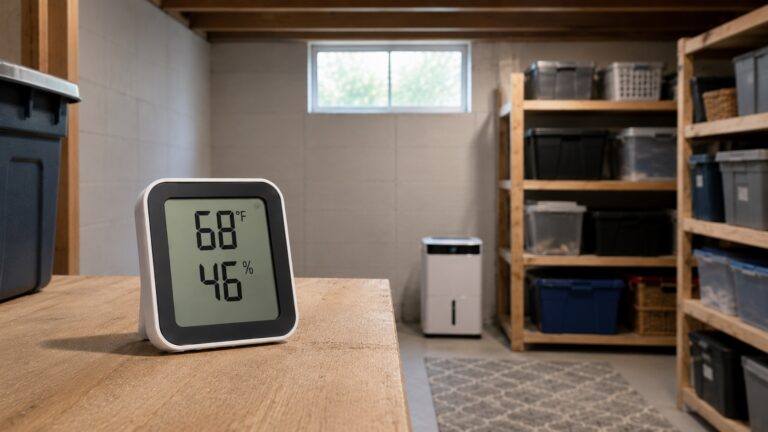
Start by using a hygrometer to measure indoor humidity in the same locations each day. Compare the readings with outdoor humidity, temperature, recent rain, strong winds, and whether the HVAC system or exhaust fans were running.
Pay attention to:
- Humidity changes during humid or dry weather
- Differences between rooms
- Conditions after rain or strong winds
- How long it takes for humidity to return to normal
A simple pattern log for three to seven days is often enough to show whether indoor moisture rises and falls with outdoor conditions or stays elevated in the same area regardless of the weather.
If readings rise during humid weather and drop again afterward, the pattern is probably outdoor-driven. If one area stays high for several days, investigate that room, wall, basement, crawlspace, or ventilation path more closely.
If indoor humidity remains high or unstable, it may be necessary to take steps to reduce indoor humidity levels and improve airflow, sealing, or ventilation.
FAQ: Outdoor Conditions and Indoor Moisture
Can outdoor humidity affect indoor air even when windows are closed?
Yes. Outdoor humidity can still affect indoor air through small gaps, ventilation paths, attic connections, crawlspaces, basements, and normal air exchange. Closed windows reduce the effect, but they do not completely separate the home from outdoor conditions.
Why does my house feel humid after rain if I do not see a leak?
Rain raises outdoor humidity and increases moisture in the soil around the home. Basements, crawlspaces, lower walls, and enclosed rooms may feel damp after rain even when there is no visible water entry.
Can wind make indoor humidity worse?
Yes. Wind creates pressure differences around the home and can push humid outdoor air through small openings. This may make some rooms feel more humid than others, especially on the wind-facing side of the house.
How can I tell if outdoor moisture is normal or a problem?
Outdoor influence is usually normal when indoor humidity rises temporarily and then returns to normal. It is more concerning when one area stays damp, musty odors persist, condensation repeats, or humidity remains high after outdoor conditions improve.
What should I check first when outdoor humidity keeps affecting my home?
Start with indoor humidity readings, room-to-room differences, basement or crawlspace dampness, window and door gaps, exhaust fan use, HVAC airflow, and whether humidity returns to normal after the weather changes.
Key Takeaways
- Outdoor conditions influence indoor moisture through air exchange and environmental interaction.
- Humidity, temperature, wind, and pressure all affect how moisture moves into the home.
- Rain and ground moisture can increase indoor humidity without direct water entry.
- Some homes are more affected due to air sealing, insulation, and ventilation differences.
- Normal changes usually rise and fall with outdoor conditions, while problem moisture lingers after the weather changes.
- Monitoring indoor humidity helps distinguish between temporary effects and ongoing issues.
- Improving air sealing, drainage, ventilation, and humidity control can reduce the impact of outdoor moisture.
One Comment
Comments are closed.