
Signs of Hidden Shower Plumbing Leaks
Hidden shower plumbing leaks often show up as stains, musty odors, soft drywall, loose tile, damaged flooring, or ceiling marks below the bathroom before visible water appears. Because the leak may start behind tile, inside a wall cavity, beneath a shower pan, or around concealed plumbing connections, the first warning sign is often away from the actual leak source.
The key difference between normal bathroom humidity and a hidden shower leak is the pattern. Humidity usually affects broad surfaces and dries with ventilation, while a concealed leak creates localized damage that returns, spreads, or worsens after shower use.
Hidden shower leaks matter because water can spread into walls, floors, and framing before the source is obvious. Understanding how plumbing leaks cause structural damage helps explain why even small shower leaks should be taken seriously.
Why Shower Leaks Often Stay Hidden
Shower leaks often stay hidden because most of the important plumbing components are located behind finished surfaces. Shower valves, supply lines, drain connections, and wall cavities are usually covered by tile, fiberglass panels, acrylic surrounds, drywall, or flooring materials.
When a leak occurs behind those surfaces, water may not appear directly where the problem starts. Instead, it travels downward or sideways through hidden spaces until it reaches a visible surface.
Hidden shower leak symptoms may appear in places such as:
- The wall beside or behind the shower
- The ceiling below an upstairs bathroom
- The floor outside the shower base
- The room on the opposite side of the shower wall
- Baseboards or trim near the bathroom
This delayed visibility makes shower leaks especially difficult to recognize early. By the time damage appears, moisture may already have affected drywall, subflooring, insulation, or framing.
Early Signs of Hidden Shower Plumbing Leaks
The earliest signs usually appear as small, repeated changes near the shower rather than obvious dripping. A smell, stain, soft spot, or bubbling patch that returns in the same area deserves more attention than general bathroom dampness.
Musty Odors Near the Shower
A musty or damp smell near the shower is one of the earliest signs of hidden moisture. This odor often develops when water remains trapped behind finished surfaces or inside enclosed wall cavities.
You may notice the smell:
- After using the shower
- When the bathroom door has been closed
- Near the shower wall or base
- In a nearby room that shares the shower wall
Odor alone does not confirm a hidden plumbing leak, but a recurring musty smell near the shower valve wall, shower base, drain area, or the room behind the shower should not be ignored. If the smell returns after cleaning and ventilation, trapped moisture may be present behind the surface.
Minor Wall Discoloration
Small discoloration marks near a shower can indicate that moisture is reaching drywall or painted surfaces. These marks may appear as yellow, brown, gray, or darker patches that gradually become more noticeable over time.
Common locations include:
- Next to the shower enclosure
- Behind the shower valve wall
- Below plumbing fixtures
- On the opposite side of a shared wall
Discoloration close to the shower handle, shower arm, escutcheon plate, or the wall directly behind the valve is especially important because those areas sit near concealed plumbing connections.
Discoloration caused by hidden leaks usually appears in a repeated or localized pattern. Unlike general humidity, which tends to affect broad bathroom surfaces, plumbing leak stains often begin in one area and slowly expand.
If the main damage appears on or directly behind the shower wall, the warning signs may overlap with water damage behind shower walls, especially when stains, softened drywall, or recurring discoloration stay close to the shower enclosure.
Subtle Paint or Surface Changes
Paint and wall finishes often react before deeper damage becomes visible. When moisture reaches the back side of drywall or penetrates painted surfaces, the finish may begin to change texture.
Warning signs include:
- Paint bubbling near the shower
- Peeling edges along trim or corners
- Soft or raised wall texture
- Blistering on painted surfaces
These changes occur because moisture interferes with adhesion between the wall surface and the paint layer. If the same area continues to bubble or peel after repainting or cleaning, the problem is likely deeper than surface humidity.
Signs of Water Damage Around the Shower Area
As a hidden shower leak progresses, the signs become more visible and begin affecting materials directly around the shower. At this stage, moisture has likely moved beyond the initial leak point and started impacting surrounding surfaces.
These symptoms are more noticeable than early-stage indicators and often signal that water exposure has been ongoing.
Wall Swelling or Softness
Drywall near a leaking shower will eventually absorb enough moisture to change shape and texture. This can result in swelling, soft spots, or areas that feel weak when pressed.
Common signs include:
- Walls that feel soft or spongy near the shower
- Slight bulging or uneven surfaces
- Indentation when lightly pressed
- Visible distortion along seams or corners
These changes occur because drywall absorbs water and loses its structural integrity over time. Softness near a shower is rarely caused by humidity alone and usually points to ongoing moisture exposure.
Tile or Grout Changes
Tile surfaces can hide moisture problems for a long time, but changes in grout or tile stability can reveal hidden issues behind the surface.
Look for:
- Cracked or crumbling grout lines
- Grout that appears darker than surrounding areas
- Loose or shifting tiles
- Gaps forming between tiles or at edges
Tile and grout can shed surface water, but they do not prove the wall system behind them is dry. When grout fails, tiles loosen, or gaps open at corners and edges, moisture may be weakening the setting materials or wall backing underneath.
Moisture at Floor Edges or Baseboards
Hidden shower leaks often show up where walls meet the floor. Water traveling downward inside the wall can exit at the base, creating damp areas along baseboards or flooring edges.
Signs include:
- Damp or discolored baseboards near the shower
- Water marks along the edge of the floor
- Swelling or warping of trim
- Persistent moisture in corners of the room
Because water follows gravity, these lower-level symptoms often indicate that moisture has traveled from a higher leak point inside the wall.
Signs the Leak Has Spread Beyond the Shower
If a hidden shower leak continues over time, the damage may extend into other areas of the home. These signs indicate that moisture is no longer confined to the immediate shower area and may be affecting structural components.
Ceiling Stains Below the Shower
In multi-level homes, a hidden shower leak may eventually show up as staining on the ceiling below the bathroom. This is one of the most common ways hidden plumbing leaks are discovered.
Typical signs include:
- Yellow or brown ceiling stains
- Paint bubbling or peeling overhead
- Soft or sagging ceiling areas
- Stains that worsen after shower use
These symptoms suggest that water is traveling downward through the floor assembly and collecting before becoming visible.
If the ceiling is sagging, soft, actively dripping, or close to a light fixture or electrical device, stop using the shower until the source is checked.
Floor Damage Near or Outside the Shower
Moisture can also affect flooring materials near the shower. Depending on the flooring type, the damage may appear as warping, lifting, or softening.
Common indicators include:
- Vinyl or laminate flooring that bubbles or lifts
- Tile that becomes loose or uneven
- Wood flooring that warps or darkens
- Soft or unstable areas near the shower base
These symptoms often indicate prolonged moisture exposure, especially when the damage starts at the shower curb, outside corner, drain side, or the wall where the shower plumbing is located.
Moisture in Adjacent Rooms
Hidden shower leaks do not always stay within the bathroom. Water can travel through wall cavities and appear in nearby rooms, especially along shared walls.
Signs in adjacent areas include:
- Discoloration on walls next to the bathroom
- Musty odors outside the bathroom
- Soft drywall in nearby rooms
- Baseboard swelling along shared walls
When moisture appears outside the bathroom, it is a strong indication that water is moving through hidden structural spaces rather than staying localized.
How to Tell the Difference Between Humidity and a Hidden Shower Leak
Bathrooms naturally produce moisture, especially during showers. This makes it easy to mistake normal humidity for a plumbing leak. However, hidden shower leaks behave differently from general bathroom dampness, and recognizing these differences is critical.
How Humidity Typically Appears
Humidity-related moisture tends to affect the entire bathroom evenly rather than one specific area. It usually forms as condensation on surfaces such as mirrors, walls, ceilings, and pipes.
Common characteristics of humidity include:
- Moisture appears after hot showers
- Condensation forms across multiple surfaces
- No specific starting point for dampness
- Moisture disappears after ventilation or drying
- No progressive structural damage in one location
Humidity can cause temporary surface changes, but it rarely creates localized or repeating damage patterns.
How Hidden Leaks Behave Differently
Hidden plumbing leaks produce more focused and persistent symptoms. Because water is entering from a specific source, the resulting damage usually follows a pattern.
Signs that indicate a hidden leak instead of humidity include:
- Damage appearing in the same location repeatedly
- Stains that grow or spread over time
- Soft or weakened materials near the shower
- Moisture that returns even after drying and ventilation
- Symptoms that worsen with shower use
Unlike humidity, which affects broad areas, hidden leaks create localized problems that continue to develop until the source is addressed.
If moisture patterns suggest a concealed issue, a more detailed approach to detecting plumbing leaks inside walls may be needed to confirm the source.
When Hidden Shower Leaks Become Serious
Hidden shower leaks often go unnoticed in their early stages, but they rarely stay minor. As water continues to escape behind walls or beneath surfaces, damage can spread into structural components.
Damage Becomes Persistent
When stains, odors, or soft areas do not go away after cleaning or drying, it usually indicates that moisture is still entering the structure. Persistent symptoms are one of the clearest signs that the issue is active and ongoing.
Materials Begin to Break Down
As moisture exposure continues, materials lose strength and stability. This may include drywall crumbling, flooring weakening, or tile systems loosening.
Warning signs include:
- Wall surfaces becoming fragile or damaged
- Flooring losing its original shape or firmness
- Tile or grout deteriorating noticeably
These changes indicate that the leak has progressed beyond early stages and is now affecting the structure itself.
Moisture Spreads to Structural Areas
When water moves into framing, subflooring, or ceiling structures, the problem becomes more complex. At this stage, the damage may extend beyond what is visible on the surface.
This is why hidden shower leaks should be addressed before surface symptoms turn into subfloor, framing, or ceiling damage.
Signs of structural involvement include:
- Ceiling damage below the shower
- Widespread wall discoloration
- Soft flooring extending beyond the shower area
- Persistent moisture patterns across multiple surfaces
These conditions often require more extensive investigation and repair to fully resolve.
When to Call a Professional for Hidden Shower Leaks
Because hidden shower plumbing leaks occur behind walls and beneath finished surfaces, there are limits to what can be confirmed through visual observation alone. When symptoms persist or begin to spread, professional evaluation becomes the safest and most reliable next step.
Consider calling a professional if you notice:
- Recurring stains, odors, or soft areas that do not improve
- Damage spreading beyond the immediate shower area
- Ceiling stains below the bathroom
- Moisture appearing in adjacent rooms
- Unclear source of water despite repeated observation
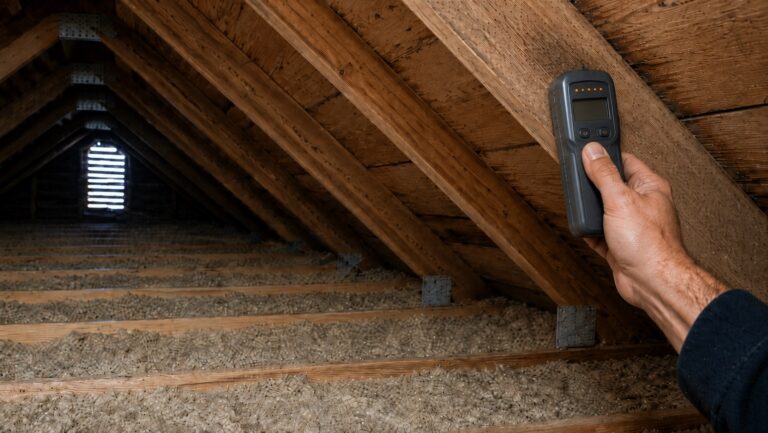
Plumbers and moisture specialists can use targeted inspection methods to identify hidden leak sources without unnecessary demolition. In some cases, tools such as moisture meters or inspection cameras are used to locate the exact origin of the leak.
If the source is unclear, a broader inspection for hidden bathroom leaks can help separate shower plumbing problems from toilet, sink, drain, or wall-cavity moisture sources.
Frequently Asked Questions About Hidden Shower Plumbing Leaks
How do I know if my shower is leaking behind the wall?
Signs include recurring stains, soft drywall, musty odors, and damage that appears outside the shower area. If these symptoms continue or worsen over time, a hidden leak is likely.
Can a shower leak without visible water?
Yes. Hidden leaks often do not produce visible water at the source. Instead, moisture travels through walls or floors before becoming visible elsewhere.
Why does my bathroom smell musty near the shower?
A musty smell usually indicates trapped moisture. If the odor persists even after cleaning and ventilation, it may suggest a hidden plumbing leak rather than normal humidity.
Can humidity cause the same damage as a leak?
Humidity can cause condensation and temporary surface moisture, but it rarely creates localized or progressive structural damage. Repeating damage in one area is more likely caused by a leak.
Do ceiling stains below a shower always mean the shower plumbing is leaking?
Not always. Ceiling stains below a shower can come from a shower drain, valve, supply line, shower pan, toilet, sink, or another nearby bathroom source. If the stain grows after shower use, the shower plumbing or drain area becomes a stronger suspect.
Key Takeaways
- Hidden shower plumbing leaks often show stains, odors, soft materials, or ceiling marks before visible water appears
- Early indicators include musty odors, discoloration, and surface changes
- Damage patterns usually appear in specific, repeating locations
- Moisture can spread to walls, floors, ceilings, and adjacent rooms
- Humidity affects broad areas, while leaks create localized damage
- Persistent or worsening symptoms indicate a need for further investigation
- Professional evaluation may be required to locate hidden leak sources
One Comment
Comments are closed.