
Long-Term Effects of Mold Exposure in Homes
Long-term mold exposure in a home usually means repeated exposure from an unresolved moisture problem, not a one-time encounter with a small spot of mildew. When mold keeps growing, returning after cleaning, or affecting indoor air over weeks or months, sensitive people may notice repeated irritation, allergy-like symptoms, asthma flare-ups, musty odors, or recurring indoor air quality concerns.
The most important thing to understand is that mold exposure is not the same for everyone. One person may have mild nasal irritation while another person with asthma, mold allergies, chronic lung disease, or a weakened immune system may react much more strongly. Children, older adults, and people with existing respiratory conditions may also be more sensitive to damp and moldy indoor environments.
This article explains the realistic long-term effects of mold exposure in homes, what mold exposure does and does not prove, who is more vulnerable, and when the problem should be taken more seriously. For a broader overview of mold, symptoms, testing, and indoor air, start with the Mold Exposure and Indoor Air Quality: Complete Home Guide.
What Long-Term Mold Exposure Means in a Home
Long-term mold exposure usually happens when a home has an unresolved moisture problem. Mold needs moisture to grow, so chronic exposure is often a sign that water, humidity, condensation, or damp materials are still present somewhere in the house.
This can happen after a roof leak, plumbing leak, basement seepage, crawl space moisture problem, HVAC condensation issue, bathroom ventilation failure, hidden wall leak, or long periods of high indoor humidity. In many homes, the exposure is not caused by one dramatic event. It comes from repeated contact with damp, moldy materials in basements, bathrooms, crawl spaces, closets, attics, HVAC areas, or rooms with poor airflow.
Short-Term Exposure vs. Long-Term Exposure
Short-term exposure might happen when someone spends a few hours cleaning a moldy surface, opens a damp storage box, or enters a musty room briefly. Long-term exposure is different because the source stays in the home. The person may breathe air from that environment every day, sleep near affected materials, or live above a damp basement or crawl space that continues contributing to indoor air problems.
That does not mean every long-term mold exposure situation causes severe illness. It means the home has an ongoing condition that should not be ignored. Repeated exposure can be more concerning than a one-time encounter because the body may be irritated again and again before it has a chance to recover fully.
Why Moisture Is the Main Clue
When homeowners focus only on visible mold, they often miss the reason exposure continues. Mold on drywall, trim, insulation, flooring, cabinets, or basement walls usually points back to moisture. If the source remains active, surface cleaning may improve appearance while the exposure risk continues. For the larger moisture pattern behind mold, leaks, humidity, and structural dampness, use the sitewide guide on how to find, fix, and prevent moisture problems in homes.
The Most Common Long-Term Effects of Mold Exposure
The most common long-term effects of mold exposure are usually related to irritation, allergies, and the respiratory system. Mold exposure can affect the nose, throat, eyes, skin, sinuses, and lungs, especially when a person is sensitive to mold or already has asthma or allergies.
The CDC notes that mold may cause symptoms such as stuffy nose, sore throat, coughing or wheezing, burning eyes, and skin rash, while people with asthma, mold allergies, chronic lung disease, or weakened immune systems may face greater risk.
These effects can be frustrating because they may come and go. Symptoms may feel worse in certain rooms, after sleeping, during humid weather, after running the HVAC system, or when spending time in a basement, bathroom, or other damp area. In some homes, people do not connect the symptoms to mold until they notice that they feel better away from the house.
Ongoing Allergy-Like Symptoms
One of the most common long-term mold exposure patterns is repeated allergy-like irritation. A person may deal with a stuffy nose, sneezing, throat irritation, itchy eyes, watery eyes, or a runny nose that seems to linger without a clear seasonal trigger.
This does not prove mold is the cause. Dust, pollen, pets, smoke, cleaning products, and other indoor air problems can cause similar symptoms. However, when allergy-like symptoms appear alongside musty odors, visible mold, damp materials, high humidity, or a known leak history, mold exposure becomes a reasonable concern to investigate.
Recurring Coughing or Throat Irritation
Long-term mold exposure can also contribute to repeated coughing or throat irritation in sensitive people. This may feel like a dry cough, a tickle in the throat, or irritation that worsens in certain parts of the home.
For some homeowners, the cough seems worse at night or in the morning. That can happen when a bedroom has poor airflow, nearby mold, damp carpet, condensation, or air being pulled from a moldy crawl space, basement, or HVAC system. Persistent coughing should not be assumed to be mold, but it should be taken seriously when it continues or is paired with visible dampness or mold growth.
Wheezing and Asthma Flare-Ups
Mold exposure is especially important for people with asthma. Damp and moldy indoor environments can aggravate asthma symptoms in some people, including wheezing, chest tightness, coughing, and shortness of breath.
For a person with asthma, a mold problem that seems minor to someone else may still be significant. A small visible patch may not represent the full exposure if moisture is hidden behind a wall, inside an HVAC system, beneath flooring, or in a crawl space. If asthma symptoms worsen in the home, improve away from the home, or become harder to control during damp conditions, the indoor environment should be evaluated more carefully.
Sinus and Upper-Airway Irritation
Some people experience repeated sinus pressure, nasal congestion, postnasal drip, or upper-airway irritation in damp or moldy homes. These symptoms can be difficult to interpret because they overlap with allergies, colds, dry air, pollutants, and other irritants.
The pattern matters. If sinus irritation keeps returning in a home with a musty odor, damp basement, moldy bathroom, recurring condensation, or a history of water damage, mold and moisture should be considered part of the indoor air quality picture. The goal is not to self-diagnose the cause, but to identify whether the home has conditions that should be corrected.
Eye and Skin Irritation
Long-term mold exposure can also irritate the eyes or skin in some people. This may show up as burning eyes, itchy eyes, watery eyes, redness, dry patches, itching, or rash-like irritation. These symptoms are not specific to mold, but they may become more suspicious when they happen in a home with visible mold, damp materials, or a persistent musty smell.
Because cleaning chemicals, dust, pet dander, personal care products, laundry detergents, dry air, pollen, and pests can also cause irritation, mold should be considered one possible indoor trigger rather than the automatic cause.
Symptoms That Seem to Improve Away From the Home
One pattern homeowners often notice is that symptoms feel worse at home and better away from home. Someone may feel congested after sleeping, cough more in a certain room, or notice headaches and irritation during humid weather. This pattern does not prove mold exposure, but it does suggest the indoor environment deserves closer attention.
If symptoms repeatedly improve when you leave the home and return when you come back, look for environmental clues in the rooms where symptoms are worst. Check for musty odors, condensation, damp drywall, stained ceilings, soft flooring, mold around windows, wet basement walls, crawl space odors, or HVAC moisture issues. These signs can help you decide whether to investigate further or compare your situation with the guide on how dangerous mold exposure may be in a home.
Who Is More Likely to Be Affected by Long-Term Mold Exposure?
Mold exposure does not affect every person the same way. The same home environment may cause obvious symptoms in one person and few noticeable symptoms in another. Risk depends on the person’s sensitivity, health history, age, immune status, exposure level, and how long the moisture problem has been active.
People With Asthma
People with asthma are one of the most important groups to protect from long-term mold exposure. Damp and moldy conditions can aggravate breathing symptoms in some people with asthma, especially when mold exposure combines with dust, humidity, poor ventilation, or other indoor irritants.
Warning signs include more frequent coughing, wheezing, chest tightness, nighttime symptoms, or increased need for asthma medication while at home. These symptoms should be discussed with a healthcare provider, especially if they are persistent, worsening, or affecting a child.
People With Mold Allergies or Other Allergies
People with mold allergies may react more strongly than people without mold sensitivity, with repeated sneezing, congestion, itchy eyes, throat irritation, or sinus symptoms. Because those symptoms can also overlap with pollen, dust mites, pets, and seasonal changes, mold becomes more suspicious when symptoms appear year-round or worsen in damp rooms, basements, bathrooms, or homes with musty odors.
Children and Older Adults
Children and older adults may be more vulnerable to indoor air problems because of developing or aging respiratory systems, existing health conditions, or longer time spent indoors. Mold exposure in a child’s bedroom, playroom, bathroom, or basement recreation area deserves prompt attention, especially if the child has asthma, allergies, frequent coughing, or recurring congestion.
For older adults, mold exposure may be more concerning when combined with chronic lung conditions, weakened immunity, or difficulty avoiding affected areas of the home. The goal is not to create panic, but to reduce exposure before a long-term moisture problem becomes a larger health and repair issue.
People With Weakened Immune Systems or Chronic Lung Disease
Most healthy people are not at high risk for mold-related lung infections, but people with weakened immune systems or chronic lung disease may face greater risk from certain mold exposures. This is one reason persistent mold should be taken seriously in homes with medically vulnerable occupants.
If someone in the home has a serious immune condition, chronic lung disease, or unexplained breathing symptoms, do not rely only on DIY cleaning or internet research. The home environment and the person’s symptoms should both be discussed with qualified professionals. For a deeper breakdown of vulnerability by person and condition, use the guide on who is most sensitive to mold exposure.
What Long-Term Mold Exposure Does Not Automatically Mean
Long-term mold exposure should be taken seriously, but it should not be exaggerated. Not every mold problem causes severe illness. Not every symptom in a damp home is caused by mold. Not every visible mold patch means the entire house is unsafe. A careful, realistic approach is more useful than panic.
It Does Not Mean Every Symptom Is Caused by Mold
Many symptoms associated with mold exposure can also come from other causes. Coughing, fatigue, headaches, congestion, skin irritation, and eye irritation may be related to allergies, infections, dust, poor ventilation, dry air, cleaning products, pets, pests, smoke, or outdoor air pollution.
This article should be read as environmental guidance, not a medical diagnosis. If symptoms are persistent, severe, unusual, or affecting breathing, a healthcare provider should be involved. At the same time, a home with visible mold or chronic dampness should still be corrected because damp indoor conditions are not healthy to ignore.
It Does Not Mean Mold Color Proves the Health Risk
Many homeowners worry most about “black mold,” but color alone does not tell you how dangerous a mold problem is. Mold can appear black, green, gray, brown, white, orange, or other colors depending on the species, material, age, and moisture conditions.
The more useful questions are: how much mold is present, where is it growing, why is it growing, whether it is being disturbed, whether it is connected to HVAC airflow, whether damp materials remain in place, and whether sensitive people live in the home. A small dark spot on bathroom caulk is different from hidden mold inside wet wall cavities, damp insulation, or an HVAC system.
It Does Not Mean Permanent Health Damage Has Occurred
Long-term exposure can be concerning, especially for sensitive people, but it does not automatically mean permanent health damage has occurred. Many mold-related symptoms are irritant or allergy-like symptoms that may improve when exposure is reduced and the moisture source is corrected.
The permanent-health question is more specific and should be handled carefully. Some people with asthma, chronic lung disease, immune compromise, or prolonged severe exposure may need medical evaluation, but homeowners should avoid assuming the worst without evidence. For the narrower question, the related article Can Mold Exposure Cause Permanent Health Problems? covers that topic directly.
Why Long-Term Mold Exposure Often Continues for Months
Long-term mold exposure usually continues because the home still has a moisture problem. If water keeps entering, humidity stays high, or damp materials never fully dry, mold can return even after the surface looks clean. That is why chronic exposure is often tied to leaks, condensation, damp air, poor airflow, or unfinished drying rather than mold growth alone.
Hidden Leaks
Slow leaks can keep materials damp for weeks or months without causing an obvious flood. A pipe inside a wall, a loose supply line under a sink, a leaking shower valve, or a refrigerator water line can feed mold behind finished surfaces long before the homeowner sees major damage.
Hidden leaks are especially important because they can create mold exposure without a large visible patch. A musty smell, soft drywall, warped trim, peeling paint, swollen cabinet bases, or staining near fixtures may be the first clues. If you suspect a concealed water source, the guide on how to confirm mold exposure risks inside your home can help separate visible clues from situations that may need testing or inspection.
Damp Basements and Crawl Spaces
Basements and crawl spaces are common sources of long-term mold exposure because they are often cooler, darker, less ventilated, and more likely to collect moisture from soil, foundation walls, condensation, drainage problems, or plumbing leaks.
A damp basement or crawl space may affect more than the area where mold is growing. Air can move upward through gaps, floor penetrations, duct leaks, stairwells, and pressure differences in the home. That means moldy or musty air from lower areas may contribute to indoor air quality problems in living spaces above.
Condensation and High Indoor Humidity
Not every mold problem starts with a leak. Long-term exposure can also come from condensation and high humidity. Bathrooms, laundry rooms, closets, window areas, exterior walls, and poorly ventilated rooms can stay damp enough for mold to grow even when no pipe or roof leak is present.
Condensation often appears on cold surfaces first, such as windows, exterior wall corners, ceilings, ducts, or poorly insulated areas. If the surface stays damp repeatedly, mold may develop on paint, drywall paper, trim, dust, fabric, stored items, or insulation. In these cases, reducing exposure means controlling humidity and airflow, not just cleaning the visible mold.
HVAC and Airflow Problems
HVAC systems can contribute to long-term exposure when they collect moisture, spread musty odors, or move air through contaminated areas. A clogged condensate drain, damp duct liner, dirty evaporator coil area, or return leak near a damp crawl space can create ongoing indoor air concerns.
Because HVAC systems move air through the home, mold or moisture problems connected to ductwork deserve extra caution. Homeowners should avoid spraying chemicals into ducts, opening contaminated components, or disturbing suspected mold inside HVAC equipment without proper evaluation. In many cases, an HVAC professional or qualified indoor air specialist is more appropriate than casual DIY cleaning.
Common Misconceptions About Long-Term Mold Exposure
Mold exposure is easy to misunderstand because it sits between home repair, indoor air quality, and health. Some homeowners ignore obvious mold because it looks minor, while others assume every symptom or stain means the worst possible scenario.
Misconception: Only Black Mold Is a Problem
Mold color does not reliably tell you how serious the exposure is. Some dark molds may be concerning, but lighter-colored mold can still trigger allergies or irritation in sensitive people. The real concern is not just color. It is the amount of growth, the moisture source, the location, whether mold is hidden, whether it is spreading into indoor air, and who is being exposed.
For example, a small dark spot on a shower seal is not the same situation as mold growing behind wet drywall in a child’s bedroom. A green or gray mold patch near an HVAC return may matter more than a black stain on an exterior storage item that is not affecting indoor air. Context matters more than color.
Misconception: If You Cannot See Mold, Exposure Is Impossible
Visible mold is only one clue. Mold can grow behind baseboards, under flooring, behind cabinets, inside wall cavities, above ceiling drywall, in attic insulation, around window frames, or in crawl spaces. In some cases, a musty odor appears before visible mold is found.
That does not mean every musty smell proves dangerous mold exposure. But it does mean hidden moisture should be considered when odor, dampness, symptoms, and building clues line up. A home can have an indoor air quality concern even when the most obvious mold growth is not in plain sight.
Misconception: Bleach or Spray Cleaner Ends the Exposure
Surface cleaning can help with small, non-porous areas, but it does not fix the reason mold grew. If drywall, wood, insulation, carpet padding, subflooring, or cabinet materials remain damp, mold may continue below the surface or return after cleaning.
If mold keeps returning after the visible stain is cleaned, the problem is usually not the cleaner. It is the moisture condition behind the mold.
Misconception: An Air Purifier Fixes the Mold Problem
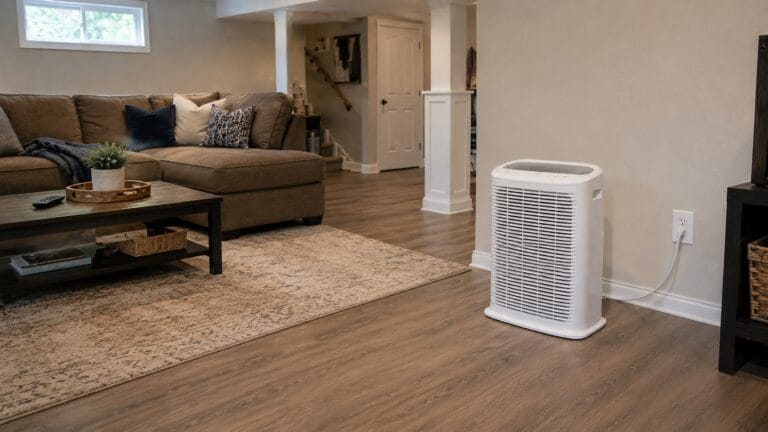
A good air purifier may help reduce some airborne particles while the source is being addressed, but it does not remove mold from damp drywall, insulation, framing, carpet, cabinets, or HVAC components. It also does not repair leaks, lower moisture inside walls, or stop condensation.
Air cleaning can be a support step, not the main fix. If airborne exposure is a concern, the guide to air purifiers for mold spores can help explain what these devices can and cannot do. The larger priority is still to correct moisture and remove or remediate affected materials safely.
When Long-Term Mold Exposure Becomes More Serious
Long-term mold exposure becomes more serious when the exposure is ongoing, the affected area is large, symptoms are persistent, or a higher-risk person lives in the home. The concern also increases when mold is hidden in building materials or connected to airflow systems that can spread particles through the house.
Homeowners should not wait months to address a recurring mold problem just because the visible area seems small. A small patch may be the visible edge of a larger damp area, especially if the mold is near plumbing, exterior walls, basement surfaces, roof leaks, or HVAC equipment.
For a narrower decision guide on escalation, see when mold exposure becomes a serious health risk.
Persistent or Worsening Symptoms
If coughing, wheezing, congestion, eye irritation, throat irritation, or skin irritation continues for weeks and appears linked to time spent in the home, the situation deserves attention. Mold may not be the only possible cause, but the home should be checked for dampness, visible growth, hidden leaks, and poor ventilation.
Breathing symptoms should be treated more seriously than mild odor complaints. Shortness of breath, asthma flare-ups, chest tightness, or worsening respiratory symptoms should be discussed with a healthcare provider, especially for children, older adults, and people with asthma or lung disease.
Recurring Mold After Cleaning
Mold that returns after cleaning is a warning sign that the moisture source has not been solved. This is especially true when mold returns in the same location, spreads to nearby surfaces, or comes back during humid weather or after rain.
Recurring mold often points to a hidden leak, condensation pattern, drainage issue, insulation problem, or humidity problem. It may also mean porous materials have absorbed moisture deeply enough that surface cleaning is not enough.
Mold in HVAC Systems or Airflow Paths
Mold near returns, supply vents, air handlers, duct interiors, or damp HVAC components is more concerning because the system may move air throughout the home. This does not mean every dusty vent is a mold emergency, but visible mold growth or persistent musty odor from HVAC airflow should not be ignored.
HVAC-related mold concerns often need professional inspection because improper cleaning can spread contamination or damage system components. Homeowners should avoid spraying chemicals into ducts or air handlers without proper guidance.
Large, Hidden, or Structural Mold Problems
Mold becomes more serious when it involves large areas, hidden cavities, insulation, subflooring, framing, attic sheathing, crawl space wood, or other structural materials. These situations often require more than wiping a surface.
If the affected area is widespread, the material is porous, or the moisture source is unclear, professional assessment may be safer and more effective. Long-term exposure is not only a health concern; it can also signal ongoing damage to materials that may become more expensive to repair if ignored.
What to Do If You Suspect Long-Term Mold Exposure
If you suspect long-term mold exposure, the goal is not to panic or guess the mold species. The goal is to reduce exposure, find the moisture source, correct the condition that allowed mold to grow, and decide whether the situation is small enough for safe homeowner cleanup or serious enough for professional help.
Reduce Direct Exposure First
If mold is visible or the room smells strongly musty, reduce unnecessary time in that area until the source is understood. Keep children, older adults, people with asthma, and medically vulnerable people away from visibly moldy or heavily musty areas when possible.
Avoid disturbing large mold areas, pulling apart moldy materials, or using fans that blow across contaminated surfaces. Disturbing mold can release more particles into the air. If mold is on porous materials, inside wall cavities, in HVAC systems, caused by contaminated water, or spread across a large area, professional guidance may be safer than aggressive DIY cleaning.
Find and Correct the Moisture Source
Long-term mold exposure will not truly end until the moisture source is corrected. Look for roof leaks, plumbing leaks, condensation, damp crawl spaces, basement seepage, poor ventilation, blocked HVAC drains, window leaks, high indoor humidity, and wet building materials that never fully dried.
A simple first pass is to check the wettest or mustiest area first, then trace outward: nearby plumbing, exterior walls, ceiling stains, flooring edges, HVAC returns, crawl space access points, and humidity readings.
If mold keeps returning after cleaning, treat that as a moisture investigation problem. The related guide on how to reduce mold exposure risks in your home can help organize exposure control, moisture correction, cleaning, and professional help when needed.
Use Testing Only When It Helps the Decision
Mold testing is not always the first step. If you can see mold and you know the moisture source, the home usually needs moisture correction and safe cleanup whether or not a test is performed. Testing becomes more useful when the source is hidden, symptoms continue without obvious visible mold, documentation is needed, or you are comparing several possible sources.
For homeowners who need a simple starting point, home mold test kits may help document a concern, but they should not replace a full inspection when the problem is hidden, recurring, widespread, or connected to HVAC systems. A test result does not repair the leak, dry the wall, remove contaminated materials, or prevent mold from returning.
Talk to a Healthcare Provider When Symptoms Persist
If symptoms are persistent, severe, worsening, or affecting breathing, talk to a healthcare provider. This is especially important for asthma symptoms, shortness of breath, chest tightness, chronic coughing, repeated wheezing, or symptoms affecting a child, older adult, immunocompromised person, or someone with chronic lung disease.
A healthcare provider can evaluate the person’s symptoms, while a qualified home inspector, remediation professional, HVAC professional, or moisture specialist can evaluate the home. Both sides matter. Medical symptoms and home conditions should not be treated as the same problem, but they may need to be addressed at the same time.
Know When Professional Mold Help Is Needed
Professional help may be needed when mold is widespread, hidden, recurring, inside HVAC systems, caused by sewage or contaminated water, affecting porous materials, or linked to structural moisture damage. Professional help may also be wise when sensitive occupants are reacting strongly or when the homeowner cannot safely access the affected area.
A serious mold problem is not defined only by how frightening it looks. It is defined by exposure, moisture source, material type, occupant vulnerability, and whether the problem can be corrected safely. If the mold keeps returning or the source is unclear, the situation should be treated as a building moisture problem, not just a cleaning task.
Frequently Asked Questions About Long-Term Mold Exposure
Can living in a moldy house for months make you sick?
Living in a moldy or damp home for months can contribute to symptoms in some people, especially allergy-like symptoms, coughing, wheezing, throat irritation, eye irritation, skin irritation, sinus problems, or asthma flare-ups. Not everyone reacts the same way, and similar symptoms can have many causes, but a home with ongoing mold or dampness should be corrected.
Do long-term mold symptoms go away after leaving the home?
Some mold-related irritation or allergy-like symptoms may improve when exposure is reduced, especially if the symptoms were being triggered by damp indoor air. However, symptoms that are persistent, severe, or respiratory should be discussed with a healthcare provider. Leaving the home may reduce exposure, but the moisture and mold source still needs to be fixed before the home environment is healthy again.
Is long-term mold exposure worse for people with asthma?
Yes, mold exposure can be more concerning for people with asthma. Damp and moldy environments may aggravate asthma symptoms in some people, including coughing, wheezing, chest tightness, or shortness of breath. If asthma symptoms worsen at home or during damp conditions, the home should be checked for mold and moisture problems, and the symptoms should be discussed with a healthcare provider.
Is black mold worse than other indoor mold?
Black mold gets a lot of attention, but mold color alone does not prove how risky a mold problem is. A dark mold patch is not automatically more dangerous than every other mold, and lighter-colored mold can still bother sensitive people. The amount of mold, location, moisture source, material affected, airflow connection, and occupant sensitivity matter more than color alone.
Should I test my home after long-term mold exposure?
Testing can help when mold is suspected but not visible, symptoms continue without a clear source, documentation is needed, or a professional is evaluating hidden contamination. But if mold is visible and the moisture source is obvious, testing is not always necessary before taking action. The mold and moisture problem still need to be corrected.
When should I see a doctor about mold exposure?
See a healthcare provider if symptoms are persistent, severe, worsening, or affecting breathing. This is especially important for asthma symptoms, wheezing, shortness of breath, chest tightness, chronic coughing, repeated sinus problems, or symptoms in children, older adults, immunocompromised people, or people with chronic lung disease.
What Long-Term Mold Exposure Means for Your Next Step
The long-term effects of mold exposure in homes are usually tied to repeated irritation, allergies, asthma aggravation, and respiratory discomfort rather than one simple diagnosis. The risk is higher for sensitive people and medically vulnerable occupants, but any home with recurring mold, musty odors, damp materials, or unresolved moisture should be taken seriously.
The most effective response is practical: reduce exposure, identify the moisture source, correct the condition that allowed mold to grow, clean or remediate affected materials safely, and seek medical advice when symptoms are persistent or serious. Mold is not just a surface stain. In many homes, it is a sign that moisture control, ventilation, drying, or repair needs to improve.
- Long-term mold exposure usually means moisture has continued long enough for mold to keep affecting indoor air.
- The most common concerns involve allergy-like symptoms, irritation, coughing, wheezing, sinus issues, and asthma aggravation.
- Risk is higher for people with asthma, mold allergies, chronic lung disease, weakened immune systems, children, and older adults.
- Mold color does not reliably determine risk; moisture source, location, amount of growth, airflow, and occupant sensitivity matter more.
- Surface cleaning, air purifiers, and test kits may support the process, but they do not replace moisture correction or safe remediation.

One Comment
Comments are closed.