Why Garage Moisture Problems Keep Returning
Garage moisture problems keep returning when the source, pathway, or damp material was never fully corrected. Cleaning the floor, opening the garage door, running a fan, or using a dehumidifier can make the garage feel better temporarily, but the problem will come back if water, humidity, condensation, or moisture-holding storage keeps feeding the space.
This is especially common in attached garages because the garage is exposed to outdoor weather while also sharing walls, ceilings, doors, or utility penetrations with the house. A garage can dry out for a few days, then become damp again after rain, a humid weather shift, a wet vehicle, or another cycle of condensation. If the same smell, damp corner, wet slab, or high humidity reading keeps returning, the garage needs diagnosis instead of another round of surface drying.
The fastest way to narrow the cause is to match the return pattern to the trigger. Moisture that returns after storms usually points to outdoor water entry or drainage. Moisture that returns after humid weather often involves ventilation, condensation, or slab temperature. Moisture that returns near stored boxes usually means absorbent materials never fully dried. Moisture near the shared wall of an attached garage deserves closer attention because damp air or odor may affect nearby indoor spaces.
Why Garage Moisture Comes Back After Temporary Fixes
Most temporary fixes only remove the visible symptom. They do not always remove the condition that created the moisture. A fan may dry the surface of the slab. A dehumidifier may lower the air humidity for a while. Cleaning may remove odor from one area. But if the moisture source is still present, the garage will begin the same cycle again.
Recurring moisture usually falls into one of three categories. First, new moisture may keep entering the garage. This can happen through garage door gaps, driveway slope, exterior drainage problems, wet vehicles, humid outdoor air, or water entering near side doors and slab edges. Second, moisture may still be trapped in materials. Concrete, cardboard, wood shelving, drywall edges, trim, fabric, and stored items can hold moisture after the visible surface looks dry. Third, the garage conditions may keep recreating moisture through condensation, poor airflow, temperature swings, or repeated humidity spikes.
This is why drying the garage once does not always solve the problem. A dry-looking floor may still have moisture in the slab or slab edge. A clean-smelling garage may still contain damp cardboard, shelving, or wall edges. A lower humidity reading after running a dehumidifier only proves the air was drier at that moment, not that the source was removed.
Recurring moisture should be treated as a pattern, not a one-time event. Track when the garage gets damp, where it appears, what the weather was like, whether a vehicle was parked inside, whether the garage door was open, and whether the same materials become damp again. This kind of pattern tracking is the same logic used to understand why moisture problems keep returning in other parts of a home.
The Original Moisture Source Was Never Removed
The most common reason garage moisture returns is simple: the original source is still active. The garage was dried or cleaned, but the moisture pathway was never corrected. Once conditions repeat, the dampness comes back.
For example, if water enters under the garage door during wind-driven rain, drying the slab will only help until the next storm. If downspouts discharge near the garage, the slab edge may keep absorbing or receiving moisture. If wet vehicles are parked inside every evening, the garage may keep gaining moisture even when there is no leak. If humid outdoor air enters through gaps around the door, ventilation may not solve the problem because the replacement air is also damp.
Some sources are easy to overlook because they do not look like dramatic leaks. A utility sink may have a slow drip. A water heater may release small amounts of water near the base or discharge line. A refrigerator or freezer in the garage may create condensation or drain-related moisture. A washer hose, hose bib, or plumbing penetration may dampen a small area repeatedly. These small sources can keep the garage humid or musty even when the rest of the space appears normal.
Moisture sources can also be behavioral. A garage used for wet sports gear, damp tools, laundry overflow, pet supplies, stored rugs, or garden equipment may keep receiving moisture from normal use. If those items are stored on concrete or packed tightly against walls, they can stay damp long after the floor is swept or the door is opened.
To identify the source, start with timing and location:
Take one humidity reading near the garage door, one near the shared wall, and one near the dampest corner so you can compare actual conditions instead of relying only on how the garage feels.
- If moisture returns after rain, check the garage door, slab edge, exterior wall, driveway slope, and drainage.
- If moisture returns after humid weather, check ventilation timing, condensation, and garage humidity readings.
- If moisture returns after parking vehicles, check floor mats, tires, wheel wells, and standing water on the slab.
- If odor returns near stored items, check cardboard, fabric, wood, and belongings sitting directly on concrete.
- If moisture returns near appliances or plumbing, check for slow leaks, condensate discharge, or damp materials nearby.
- If moisture returns near the shared wall with the house, check for air gaps, damp trim, and signs in adjacent rooms.
If the garage is mainly humid rather than visibly wet, the first step may be to reduce humidity in an attached garage with better measurement, source control, storage changes, ventilation timing, and dehumidification. But if moisture returns in the same physical spot again and again, the issue is more likely a recurring source or pathway that needs correction.
Water Is Still Entering Around the Garage Door or Slab Edge
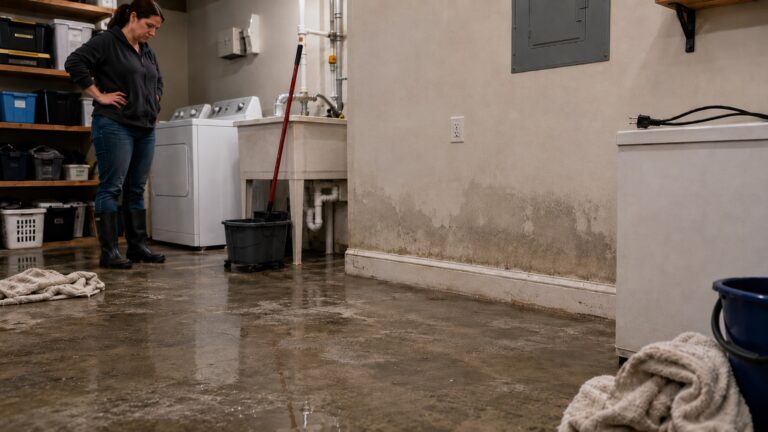
If garage moisture returns after rain, start at the garage door and slab edge. The garage door is the largest opening in the room, and even small gaps can let water, damp air, and wind-driven rain enter. A garage can look dry during normal weather but re-wet in the same area every time a storm hits.
Look for darkened concrete near the threshold, water trails, dirt lines, staining along the bottom seal, or damp storage near the front of the garage. These signs often mean water is entering at the door instead of moisture simply forming from indoor humidity.
A simple test is to check the threshold immediately after rain and compare it with the same area after several dry days. If the problem appears along the same slab edge after storms, the source may be the door seal, driveway slope, exterior grading, or water collecting against the garage.
A worn bottom seal is a common reason moisture keeps coming back. The rubber may be cracked, flattened, uneven, or no longer touching the floor. Side weatherstripping can also fail, especially during wind-driven rain. If the slab is uneven or the driveway slopes toward the door, even a good seal may struggle to keep water out.
This type of recurrence is easy to misread. The homeowner dries the floor, runs a fan, and assumes the garage is fixed. Then the next rainstorm brings moisture back through the same weak point. If the pattern is strongest near the threshold, compare it with the warning signs of water entering under garage doors so the issue is not mistaken for normal humidity.
Outdoor Drainage Keeps Re-Wetting the Garage
Garage moisture can also return because outdoor water keeps collecting near the structure. Even when water does not visibly pour into the garage, wet soil, poor driveway slope, downspouts, or surface runoff can keep the slab edge and lower wall areas damp. That moisture can then evaporate into the garage air, darken the concrete, or keep one side of the garage more humid than the rest.
Drainage-related garage moisture often follows a predictable pattern. The garage improves during dry weather, then becomes damp again after rain. One corner may smell musty. The concrete near an exterior wall may darken. Stored items along that wall may soften, rust, or smell damp. If the same area reacts to storms repeatedly, the problem is probably not just indoor air humidity.
Check the exterior conditions around the garage:
- Do downspouts discharge near the garage slab?
- Does the driveway slope toward the garage door?
- Does water pool near one side of the garage after rain?
- Are soil, mulch, leaves, or debris piled against the wall?
- Are exterior drains clogged or too slow to clear water?
- Does splashback wet the lower wall during heavy rain?
These problems keep moisture cycling back into the garage. Drying the inside helps temporarily, but outdoor water re-wets the edge during the next storm. If the garage is attached to the house, drainage near the garage can also matter because the garage wall, slab edge, and shared structural areas may connect to other parts of the home’s moisture system.
The solution usually starts outside. Move downspout discharge away from the garage, keep soil and mulch below siding or wall edges, clear drains, and correct obvious low spots where water collects. If the driveway slope directs water into the garage, the fix may require a threshold improvement, trench drain, surface drainage correction, or professional grading evaluation.
Ventilation Is Bringing Moisture Back Instead of Removing It
Ventilation can help a damp garage, but it can also bring moisture back. This is one of the most common reasons homeowners feel like they are doing the right thing but still losing ground. Opening the garage door, running fans, or leaving windows open only helps when the air entering the garage is drier than the air inside.
If the outdoor air is humid, rainy, or warm and damp, ventilation may raise garage humidity instead of lowering it. A cool concrete slab can make the problem worse. When humid outdoor air enters and contacts the cooler slab, tools, metal door, or stored objects, condensation can form. The garage may then feel damp even though no leak is visible.
Fans can also be misunderstood. A fan moves air, but it does not remove moisture unless that moisture can leave the garage or be collected by a dehumidifier. If a fan evaporates water from a wet floor while the garage stays closed and humid, the moisture may simply move from the slab into the air and later settle back onto cold surfaces or stored materials.
In an attached garage, the airflow path matters even more. Do not use the interior door to the house as a drying method. That can move humid garage air, odors, and contaminants toward the living space. Garage ventilation should move damp air outdoors when outdoor conditions are favorable, not into the home.
Ventilation may be part of the recurring moisture problem when:
- The garage gets damp after being opened during humid weather.
- Condensation forms after warm outdoor air enters a cool garage.
- Fans dry surfaces temporarily but humidity readings climb again.
- One corner stays damp because air does not circulate behind storage.
- The garage smells musty after long periods with little airflow.
- The interior door to the house is used to “air out” the garage.
If airflow seems connected to the problem, look more closely at poor garage ventilation problems. The goal is not always more air. The goal is the right airflow at the right time, combined with source control, storage changes, and humidity measurement.
Weather patterns can also explain why the problem seems inconsistent. A garage may stay dry during one week and become damp the next because outdoor humidity, temperature swings, rain, and slab temperature changed. When the garage reacts strongly to seasonal or storm conditions, compare the pattern with how outdoor weather affects garage moisture.
Stored Items Are Holding Moisture and Odor
Sometimes garage moisture keeps returning because the garage itself is not the only thing that is damp. Cardboard boxes, paper files, fabric, cushions, rugs, untreated wood, seasonal decorations, and items stored directly on concrete can absorb moisture, hold odors, and slowly release humidity back into the air.
Cardboard is especially prone to this cycle because it can absorb moisture from humid air, damp concrete, or small leaks near the garage door. If the garage was cleaned but the same damp boxes were put back against the wall, the odor and humidity may return quickly.
Dense storage piles can also hide moisture. Shelving that sits tight against exterior walls can trap cool, stagnant air behind boxes. Stored items placed directly on the slab can wick moisture from the floor or collect condensation underneath. If only one wall or corner keeps smelling musty, remove the stored items from that area and inspect both the belongings and the wall or floor behind them.
This pattern is common when homeowners clean the visible garage surfaces but do not remove the moisture-holding materials. The garage may look organized, but damp boxes, rugs, fabric, or wood may keep feeding the same humidity cycle. If this sounds familiar, review how stored items increase garage humidity so the storage itself does not keep reintroducing moisture.
Storage-related recurrence is more likely when:
- Musty odor returns after cleaning.
- Cardboard boxes feel soft or warped.
- Stored fabric, rugs, or cushions smell damp.
- Items near exterior walls become musty first.
- Belongings stored on the slab feel damp underneath.
- Mold or mildew-like spots appear on boxes or stored items.
- The garage improves after decluttering but worsens when items are put back.
The best diagnostic step is to remove suspect storage from the garage temporarily. If humidity and odor improve after the items are removed, the storage was part of the problem. Replace cardboard with sealed plastic bins, keep belongings off the slab, leave airflow gaps behind shelves, and avoid storing absorbent materials against exterior walls.
The Concrete Slab or Floor Materials Never Fully Dried
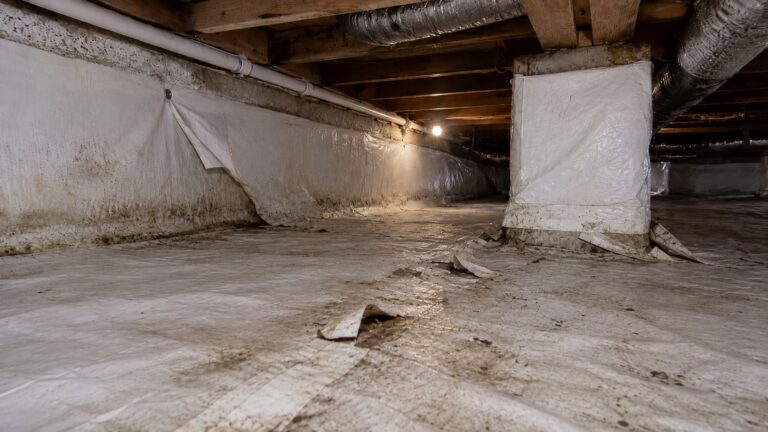
A garage floor can look dry on the surface while still contributing to recurring moisture. Concrete is porous, stays cool, and can hold or transmit moisture depending on weather, drainage, slab conditions, and surface coatings. If the floor keeps darkening, sweating, or feeling damp after rain or humidity swings, treat the slab as one possible part of the recurrence pattern rather than the only cause.
Surface drying is not the same as deep drying. A fan may remove visible water from the top of the slab, but moisture can remain in concrete pores, slab edges, cracks, expansion joints, or areas under stored items. Later, that moisture can move back to the surface or evaporate into the garage air. This is why the floor may seem dry one day and damp again the next.
Concrete also changes temperature more slowly than air. During weather shifts, warm humid air may enter the garage and contact the cooler slab. When that happens, condensation can make the floor appear to “sweat.” This is different from water leaking upward, but both can create repeated dampness. The timing matters. Dampness after rain near a slab edge may suggest water entry or drainage. Dampness during warm humid weather on a cool slab may suggest condensation.
Floor coatings can complicate the issue. Paint, sealers, mats, or flooring placed over a damp slab may trap moisture or hide early signs. If moisture keeps appearing under mats, shelving, or stored items, remove those materials and inspect the slab directly.
Mark the edge of the damp area with painter’s tape or a removable note so you can see whether the same spot grows, shrinks, or returns after the next weather change.
A recurring damp floor needs closer diagnosis when:
- The same floor area darkens after rain.
- The slab feels damp even when the air seems dry.
- Moisture appears under mats, boxes, or storage shelves.
- The floor sweats during humid weather.
- Cracks or joints show repeated dampness.
- Efflorescence or powdery mineral residue appears on concrete.
- A dehumidifier lowers air humidity but the floor keeps returning to damp conditions.
If the floor is the main recurring symptom, the issue belongs in a more floor-specific diagnosis. A guide on why garage floors stay damp can help separate slab moisture, condensation, drainage, and surface water patterns.
Condensation Keeps Returning During Temperature Swings
Condensation can make garage moisture return even when there is no active leak. It happens when humid air contacts a colder surface and water vapor turns into liquid water. In garages, this often shows up on concrete floors, metal doors, windows, pipes, tools, appliances, and cold wall surfaces.
This problem often feels confusing because it comes and goes. The garage may be dry during stable weather, then suddenly damp when warm humid air moves into a cool garage. A storm front, seasonal change, humid afternoon, or rapid temperature swing can create enough moisture for surfaces to sweat. If the homeowner only dries the surface, condensation may return whenever the same temperature and humidity conditions repeat.
Condensation recurrence is common near cold surfaces and stagnant areas. A metal garage door may collect moisture before drywall does. A cool slab may sweat while the walls look dry. Tools or metal shelving may rust even if no visible water entered. Stored items pushed against cold exterior walls may become musty because air cannot move behind them.
The way to diagnose condensation is to compare moisture timing with weather and surface temperature. If dampness appears during humid weather, after the garage door has been open, or when warm air enters a cooler garage, condensation is likely involved. If dampness appears only after rain in the same threshold or wall area, water entry is more likely.
Recurring condensation is a condition problem, not just a cleanup problem. Lowering garage humidity, improving air circulation, keeping storage away from cold surfaces, and avoiding humid-air ventilation at the wrong time can all help. If condensation is followed by mold-prone storage or musty odor, connect the issue to how to prevent mold in garages instead of only cleaning the same surfaces again.
Hidden Leaks, Appliances, or Mechanical Systems Are Adding Moisture
Some recurring garage moisture comes from equipment or plumbing rather than weather. This is easy to miss because the leak may be slow, intermittent, or hidden behind stored items. A garage may contain water heaters, utility sinks, washing machines, refrigerators, freezers, hose bibs, irrigation lines, HVAC equipment, condensate lines, or plumbing penetrations. Any of these can add moisture if something leaks, drains poorly, sweats, or overflows.
Look carefully around anything connected to water or condensate. A small drip near a water heater, a leaking utility sink trap, a damp washer hose connection, or a condensate line problem may not flood the garage, but it can keep one area damp. Over time, that small source can create recurring odor, high humidity, rust, staining, or mold on nearby storage.
Appliances can also create localized condensation. A freezer or refrigerator in a humid garage may sweat on exterior surfaces, create drain issues, or dampen nearby materials. If the same area around an appliance keeps smelling musty or the slab beneath it stays dark, move stored items away and inspect the area directly.
Do not ignore moisture near electrical panels, outlets, extension cords, appliances, or mechanical equipment. Avoid opening equipment panels, touching electrical components, or standing in water near energized devices. If you suspect a leak near electrical equipment, shut off power only if it is safe to do so and call a qualified professional.
Mechanical or plumbing-related recurrence is more likely when:
- Moisture returns in one localized area regardless of weather.
- The damp area is near a water heater, sink, washer, freezer, refrigerator, or HVAC component.
- Rust or staining appears below a pipe, valve, hose, or appliance.
- The floor is damp behind stored items near mechanical equipment.
- Musty odor is strongest around a utility area.
- Moisture returns even when outdoor weather has been dry.
If wall surfaces near equipment are damp, stained, or soft, the problem may have moved beyond surface humidity. At that point, it may be necessary to detect moisture on garage walls and determine whether water has reached drywall, trim, framing, or the shared wall with the house.
Attached Garage Moisture May Be Moving Toward the House
Recurring moisture in an attached garage deserves extra attention because the garage is not fully separate from the home. It may share a wall with a hallway, kitchen, laundry room, bedroom, or living area. It may also sit below a finished room. If damp air, musty odor, or repeated moisture collects near the shared boundary, the problem can become more than a garage storage issue.
This does not mean every damp garage is damaging the house. It means the pattern should be checked carefully. The house-side wall, the door into the home, ceiling penetrations, utility openings, outlets, pipe chases, and unfinished framing connections can all become pathways for damp air or odor.
Look for warning signs near the attached side of the garage:
- Musty odor near the interior door into the house
- Damp or swollen trim along the shared wall
- Peeling paint or staining on lower wall areas
- High humidity in the room next to or above the garage
- Recurring dampness behind storage placed against the house-side wall
- Gaps around pipes, wiring, outlets, or wall penetrations
- Condensation or odor that seems strongest near the shared boundary
The interior door should stay closed and seal well. Do not use the house as a drying path for the garage. Opening the interior door may make the garage feel less damp for a short time, but it can move humid garage air and odors toward the living space. The better approach is to dry the garage toward the outdoors when outdoor air is favorable, use dehumidification when needed, and keep the garage-to-house boundary sealed.
If recurring moisture appears near the shared wall, do not stack damp boxes, fabric, or wood directly against that area. Pull storage away, check the wall and floor line, and monitor humidity near the boundary. If the adjacent room inside the house also feels damp or smells musty, the garage may be part of a larger moisture pattern that needs more complete inspection.
When Recurring Garage Moisture Needs Professional Diagnosis
Some garage moisture problems can be improved with better storage, door seals, ventilation timing, drainage changes, and humidity control. But recurring moisture should not be ignored when it reaches building materials, appears after every storm, or keeps returning in the same wall, corner, or slab area. At that point, the issue may require more than cleaning and drying.
Professional diagnosis is especially important when moisture may involve structural materials, electrical components, plumbing, exterior drainage, or hidden wall cavities. A homeowner can safely observe patterns, move storage, monitor humidity, and check for visible water entry. Cutting into walls, diagnosing electrical risks, correcting serious drainage problems, or evaluating repeated mold growth may require a qualified contractor or specialist.
Call a professional if you notice:
- Water entering the garage during rainstorms
- A slab area that stays damp for days
- Recurring mold growth on walls, trim, shelving, or stored items, especially if the affected area is spreading or larger than a small isolated patch
- Soft drywall, swollen trim, or rotting wood
- Dampness near electrical panels, outlets, appliances, or extension cords
- Moisture returning near plumbing, water heaters, laundry equipment, or HVAC components
- Musty odor spreading toward finished rooms
- Humidity that remains high even after source control and dehumidification
- Repeated moisture in the same corner, wall edge, or slab joint
The goal is not to overreact to every humid day. Garages naturally experience more weather exposure than living spaces. The concern is repetition. If the same dampness keeps coming back after reasonable correction steps, the source has not been controlled. A deeper inspection can separate water entry, poor exterior drainage, slab moisture, condensation, hidden leaks, and moisture-damaged materials.
FAQ: Why Garage Moisture Problems Keep Returning
Why does my garage keep getting damp after I dry it?
Your garage keeps getting damp after drying because the source or condition that caused the moisture is still active. Water may be entering under the garage door, humid air may be condensing on a cool slab, stored items may still be damp, or outdoor drainage may be re-wetting the slab edge. Drying removes moisture temporarily, but it does not correct the source.
Why does my garage smell musty again after cleaning?
A musty garage smell often returns when moisture remains in porous materials such as cardboard, wood shelving, fabric, drywall edges, or stored belongings. Cleaning the visible surface may not remove damp materials behind boxes, under storage, or along walls. If odor returns quickly, remove moisture-holding items and inspect the areas where the smell is strongest.
Why does garage moisture return even with a dehumidifier running?
Garage moisture can return with a dehumidifier running when the unit is only removing moisture from the air while water entry, damp storage, slab moisture, condensation, or a hidden leak keeps adding more. If the dehumidifier runs constantly, fills quickly, or humidity rises again as soon as it shuts off, look for an active source instead of assuming the unit is too small.
Why does my garage floor get damp after rain?
A garage floor that gets damp after rain may be affected by water entering under the garage door, driveway slope, downspouts, poor exterior drainage, slab-edge moisture, or water pooling near the garage. If the same area darkens after storms, the problem is probably not just indoor humidity. The rain pattern is an important clue.
Is recurring garage moisture a sign of mold?
Recurring garage moisture is not always a sign of mold, but it can create conditions where mold is more likely to grow. Mold risk increases when cardboard, wood, drywall, fabric, or stored items stay damp for extended periods. If visible mold keeps returning after cleaning, the garage still has an active moisture source that needs to be corrected.
When should I call a professional for recurring garage moisture?
Call a professional when moisture keeps returning in the same place, appears after every storm, reaches drywall or wood, causes visible mold, stays near electrical or mechanical equipment, or spreads toward finished living space. Professional help is also wise when the garage stays humid despite source control, ventilation adjustments, and dehumidification.
How to Stop the Recurring Garage Moisture Cycle
Garage moisture problems keep returning because something is still feeding the moisture cycle. The cause may be water entering around the garage door, drainage that re-wets the slab edge, humid air entering at the wrong time, damp storage, slab moisture, condensation, or a hidden leak. Cleaning and drying can improve the garage temporarily, but recurrence means the source, pathway, or damp material still needs attention.
The best way to diagnose recurring garage moisture is to track timing and location. Notice whether the problem returns after rain, after humid weather, after parking wet vehicles, near storage, near appliances, or along the shared wall with the house. Once the pattern is clear, you can stop repeating temporary fixes and focus on the condition that keeps bringing moisture back.