Signs of Poor Drainage Near Foundations
Poor drainage near a foundation is usually visible before it becomes a serious indoor moisture problem. The warning signs often appear as water pooling beside the house, soil that stays soft after rain, washed-out mulch, downspouts dumping water too close to the wall, or damp basement conditions that show up after storms.
Not every puddle means your foundation is in trouble. Heavy rain can temporarily overwhelm a yard, especially if the soil is clay-heavy or the ground is already saturated. The concern starts when water repeatedly collects near the same foundation areas, the soil stays wet long after the rest of the yard dries, or outdoor drainage symptoms line up with basement or crawl space moisture.
Foundation drainage problems matter because water should move away from the home instead of sitting against it. When roof runoff, surface water, or yard slope keeps directing moisture toward the foundation, the surrounding soil can stay wet for long periods. Over time, that can contribute to damp basement walls, musty odors, efflorescence, seepage, mold-supporting humidity, and recurring moisture problems.
Below are the most common foundation drainage warning signs, plus a simple way to tell temporary wet ground from a repeated drainage pattern that deserves closer attention.
Why Poor Drainage Near a Foundation Matters
The soil beside a foundation should not stay saturated after ordinary rainfall. When water repeatedly collects near the base of the house, it can increase moisture exposure along basement walls, crawl space walls, slab edges, and below-grade foundation materials.
This is one reason exterior drainage is closely connected to why basement walls leak during rain. Rainwater that should move away from the house can instead collect against the foundation. If the wall has cracks, porous masonry, weak joints, failed exterior drainage, or high soil moisture, that water may eventually show up indoors as dampness, staining, seepage, or musty air.
Poor drainage also creates repeat problems. A basement can be dried once, a wall can be cleaned once, and a musty odor can be temporarily reduced, but if the same exterior area keeps sending water toward the foundation, the moisture pattern may return after the next rain. That is why drainage signs outside the home should be treated as part of broader moisture problem prevention throughout the home.
The pattern matters most. A single puddle after an unusual storm is not the same as water collecting beside the same foundation wall after every moderate rain. Repeated wet soil, erosion, basement odor, or wall staining is more meaningful than one isolated event.
Water Pools Near the House After Rain
One of the clearest signs of poor drainage near a foundation is water pooling close to the house after rain. This may appear as shallow puddles along the foundation wall, standing water in mulch beds, water collecting near basement window wells, or low spots that stay wet beside porches, patios, or foundation corners.
Pooling becomes more concerning when it happens repeatedly. If the same area fills with water after most storms, the yard is not moving water away from the structure effectively. The cause may be poor grading, compacted soil, clogged gutters, short downspouts, settled backfill, hardscaping that slopes toward the house, or a combination of several drainage issues.
The location of the pooling matters. Water sitting several feet out in the yard may be a yard drainage issue. Water sitting directly beside the foundation is more concerning because it keeps moisture in contact with the house. Water that collects near basement walls, crawl space vents, foundation cracks, stairwells, or exterior doors should be watched closely.
Homeowners often notice this first after a heavy storm, but the real clue is whether the water disappears quickly. If the rest of the yard dries while the foundation edge stays wet, that area may have a drainage restriction or low spot. For a deeper explanation of the pooling behavior itself, see why water pools around houses after rain.
The Soil Beside the Foundation Stays Wet or Soft
Wet soil after rain is normal. Soil that stays soft, muddy, or saturated near the foundation long after surrounding areas have dried is a stronger warning sign. This usually means water is collecting in that area instead of draining away evenly.
You may notice the ground feels spongy underfoot, shoes sink into the soil near the foundation, mulch beds remain damp for days, or weeds grow more aggressively in one wet strip beside the house. In some cases, the soil may look dark and waterlogged even when nearby areas look dry.
This kind of persistent wetness can happen when roof runoff is being dumped too close to the foundation, when the yard slopes toward the home, when soil has settled beside the wall, or when dense clay soil traps water near the house. It can also happen where landscaping borders, edging, patios, or walkways prevent water from spreading and draining naturally.
Soft soil near the foundation should not be ignored, especially if it appears after ordinary rain rather than only after major storms. Repeated saturation can keep basement walls or crawl space walls exposed to moisture and may contribute to recurring dampness indoors.
Mulch, Gravel, or Soil Washes Away Near the Foundation
Washed-out mulch, displaced gravel, and exposed soil channels are practical signs that water is moving too aggressively near the foundation. These symptoms often show where runoff is traveling during rain, even if you do not see the water moving in real time.
Look for mulch pushed away from the house, gravel scattered across walkways, soil grooves running toward the foundation, bare patches under downspouts, or muddy streaks on nearby concrete. These patterns can reveal that rainwater is not spreading evenly across the yard. Instead, it may be concentrating in narrow paths that carry water toward the foundation wall.
Erosion near the foundation is especially important because it can change drainage over time. As soil washes away, low areas may form. Those low areas can then hold more water during future storms, making the drainage problem worse. What begins as a small washout near a downspout or garden bed can become a repeated wet zone beside the house.
This is also where surface water behavior becomes important. Water does not always move in a straight line. It follows slope, soil channels, hardscape edges, compacted paths, and low spots. If you see repeated erosion near the house, it may help to understand how surface water moves toward foundations so you can identify where the water is coming from before it reaches the wall.
Downspouts Discharge Water Too Close to the House
Downspouts are one of the most common reasons water collects near a foundation. Gutters may be working correctly at the roofline, but if the downspout releases water right beside the house, the system is still concentrating roof runoff near the foundation.
Signs of downspout-related drainage problems include bare soil under the outlet, mulch that repeatedly washes away, splash marks on the lower siding or foundation, a wet strip beside the wall, or a puddle forming where the downspout ends. You may also see short extensions that have shifted, disconnected elbows, crushed drain lines, or splash blocks pointed in the wrong direction.
Roof runoff can involve a large amount of water. During a storm, water from a wide roof area may be funneled into only a few downspouts. If that water empties next to the foundation, the soil beside the house may become saturated quickly, even when the rest of the yard seems to drain well.
A working downspout should move water away from the foundation, not simply move water out of the gutter. If the outlet ends too close to the wall, points backward, drains into a low spot, or empties onto hardscaping that slopes toward the house, the downspout may be contributing to foundation-area moisture. For a closer look at roof runoff behavior, see how downspouts affect foundation moisture.
The Yard Slopes Toward the Foundation
Another major sign of poor drainage is ground that slopes toward the house. The yard does not need to look dramatically tilted for this to matter. Even a subtle slope toward the foundation can send runoff to the wall during repeated rain.
You may notice this when water flows toward the house instead of away from it, when puddles form along the foundation line, or when soil near the wall stays wetter than soil farther out in the yard. Sometimes the problem appears after backfilled soil settles around the foundation. A yard that once drained well can develop low areas as soil compacts over time.
Negative slope is especially common near foundation plantings, patios, sidewalks, and older homes where landscaping has been changed repeatedly. Mulch, topsoil, decorative stone, and edging can also alter the way water moves. If new landscape materials create a raised border that traps water beside the wall, the visible result may look like poor drainage even if the original grade was acceptable.
For a deeper cause-and-effect explanation, see how improper yard grading causes moisture. For this article, the main point is simple: water should not be directed toward the foundation by the shape of the ground.
Water Collects Along Walkways, Patios, or Driveways Beside the House
Hard surfaces can make drainage problems worse because they move water faster than soil. A driveway, patio, walkway, porch slab, or concrete landing can direct runoff toward the foundation if it slopes the wrong way or has settled over time.
Common signs include water running along the edge of a walkway toward the house, puddles forming where a patio meets the foundation, driveway runoff draining toward a basement wall, or water collecting beside exterior steps. You may also see staining, algae, or repeated dampness where concrete touches the foundation.
This matters because hardscape drainage can bypass the slower warning signs you might notice in soil. Instead of soaking gradually into the yard, water can travel quickly across concrete or pavers and collect at the foundation edge. During heavy rain, this can create a concentrated wet zone even if the surrounding lawn does not look especially saturated.
Pay close attention to areas where concrete has settled toward the house. A small gap between a walkway and the foundation can also collect water, especially if the surface slopes inward. These areas often become hidden moisture pathways because the water appears to disappear into a joint or crack instead of forming a large visible puddle.
The Basement or Crawl Space Smells Damp After Rain
A damp or musty smell after rain can be an indoor clue that poor drainage is affecting the foundation area. The odor may appear in a basement, crawl space, lower-level storage room, utility area, or finished room along an exterior wall.
This does not always mean water is visibly leaking inside. Sometimes the first symptom is humid air, a musty smell, damp cardboard boxes, condensation on cool surfaces, or a stale odor that gets stronger after storms. These signs suggest that moisture conditions are changing after rain, even if you cannot see active seepage.
The timing is important. If the space smells normal during dry weather but becomes damp or musty after rain, the source may be outside drainage, wall seepage, high soil moisture, or water collecting around the foundation. The connection between rainfall and indoor odor is often more useful than the odor alone.
When indoor symptoms begin after rain, the problem may be moving beyond simple outdoor drainage. At that point, it helps to compare the exterior signs with signs water is entering from outside drainage. That deeper check can help separate surface drainage issues from water that may already be affecting the interior.
Basement Walls Show Stains, Efflorescence, or Peeling Paint
Foundation drainage problems can also show up as staining or surface changes on basement walls. These signs do not prove that poor drainage is the only cause, but they can support the pattern when they appear after rain or along walls where exterior water collects.
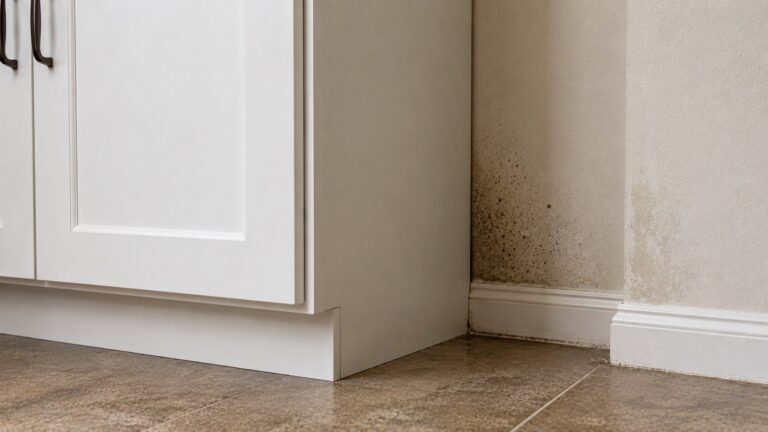
Common wall symptoms include damp patches, darker masonry, peeling paint, bubbling coatings, mineral deposits, or white powdery residue known as efflorescence. Efflorescence can appear when moisture moves through masonry and leaves mineral salts behind as it evaporates from the surface.
These clues are especially important when they show up on the inside of a wall that corresponds with outdoor pooling, short downspouts, bad slope, or wet landscaping. The outdoor symptom and indoor wall symptom together create a stronger drainage warning than either one by itself.
Be careful not to treat paint failure or efflorescence as a complete diagnosis. Basement wall moisture can come from several sources, including exterior drainage, hydrostatic pressure, wall cracks, condensation, or past moisture that was never fully corrected. The useful takeaway is that repeated wall staining after rain should prompt a closer look at the drainage outside that wall.
Plants or Landscaping Near the Foundation Stay Too Wet
Landscaping can hide poor foundation drainage. Mulch beds, shrubs, decorative stone, edging, and dense plantings may look neat while trapping water against the house.
One warning sign is landscaping that stays wet longer than the rest of the yard. Mulch may feel soaked for days, plants may sit in muddy soil, or weeds that prefer wet conditions may appear in a narrow strip beside the foundation. You may also notice algae, moss, or dark staining on edging, pavers, or lower foundation surfaces.
Irrigation can make the problem worse. Sprinklers that hit the wall, drip lines that run too close to the foundation, or overwatered foundation plants can keep the soil wet even when rainfall is not the main issue. This can make drainage problems harder to recognize because the area may stay damp during dry weather too.
Raised landscape beds can also create trouble if they hold water beside the foundation. A bed that is built higher than the surrounding yard may trap runoff instead of letting it move away. Decorative edging can act like a small dam, especially when soil or mulch is piled against the house.
How to Tell the Difference Between Normal Wet Ground and Poor Drainage
The difference between normal wet ground and poor drainage is usually repetition, location, and drying behavior. A yard can be wet after heavy rain without having a serious foundation drainage problem. The concern grows when the same foundation areas stay wet after ordinary storms.
Normal wet ground usually dries along with the rest of the yard. Small puddles disappear, soil firms up, and there are no repeated indoor symptoms. The wetness is temporary and does not stay concentrated against the foundation wall.
Poor drainage is more likely when water collects in the same place repeatedly, soil near the house stays soft after nearby areas dry, mulch keeps washing away, or basement odors and wall stains appear after rain. These patterns show that the foundation area is receiving or holding more water than it should.
A simple observation routine can help. After the next rain, look at the yard while water is still moving, then check again several hours later and the next day. Note where water collects, where soil stays soft, where downspouts discharge, whether hard surfaces drain toward the house, and whether the basement or crawl space smells or feels different. Repeated patterns are more useful than one quick glance during a storm.
Common Misconceptions About Drainage Near Foundations
If Water Is Not Inside Yet, Drainage Is Fine
Outdoor drainage symptoms can appear before obvious indoor leaks. Water pooling near the foundation, saturated soil, and erosion are still worth correcting because they show that moisture is being directed toward the house.
A Downspout Is Working as Long as Water Leaves the Gutter
A downspout can carry water out of the gutter and still create a drainage problem. If it releases water beside the foundation, into a low spot, or onto a surface that slopes back toward the house, it may still be contributing to foundation moisture.
Mulch Beds Always Mean Better Drainage
Mulch can protect soil from direct impact, but it can also hide saturated ground. Thick mulch, raised beds, or edging near the foundation may trap moisture if water cannot move away from the wall.
Basement Waterproofing Alone Solves Exterior Drainage
Waterproofing systems can help manage water, but they do not automatically correct poor exterior drainage. If water keeps collecting beside the foundation, exterior drainage still needs to be evaluated. When symptoms have progressed beyond outdoor pooling, it may be time to compare drainage issues with broader basement waterproofing and water intrusion control options.
One Puddle Means the Foundation Is Failing
One puddle after an unusually heavy storm does not prove foundation failure. Repeated pooling, repeated saturation, erosion, indoor dampness after rain, or worsening wall symptoms are more meaningful than one isolated event.
When Poor Drainage Needs Professional Attention
Poor drainage near a foundation does not always require major repair, but some symptoms should be taken seriously. If the same area beside the house stays wet after most storms, first identify whether the warning signs point to downspouts, yard slope, hardscaping, irrigation, or low soil near the foundation.
Professional attention becomes more important when outdoor drainage signs are paired with indoor moisture. If basement walls become damp after rain, a crawl space has standing water, finished rooms smell musty, or wall stains keep returning, the drainage issue may already be affecting the building envelope.
You should also be more cautious if water is collecting near foundation cracks, basement windows, exterior stairwells, crawl space vents, or areas where the soil has eroded. If water is entering near electrical equipment, finished living areas, structural cracks, sewage-contaminated water, or standing crawl space water, stop treating it as a simple yard-drainage observation and get qualified help.
A drainage, waterproofing, or foundation professional may be needed when simple observations show a repeated pattern that does not improve. This is especially true if water keeps reaching the foundation after downspout extensions are corrected, if the yard clearly slopes toward the house, if basement seepage appears during rain, or if moisture symptoms are getting worse over time.
Long-term moisture control is usually more effective when the source of water is addressed instead of only drying the affected area after each storm. If the same symptoms keep returning, use the drainage signs as part of a larger recurring moisture damage prevention plan.
FAQs About Poor Drainage Near Foundations
Is standing water near a foundation always a problem?
Standing water near a foundation is not always an emergency, especially after an unusually heavy storm. However, repeated standing water beside the house is a drainage warning sign. The concern is not just that water is visible, but that it is collecting in the same place near the foundation instead of moving away from the home.
How long should soil stay wet around a foundation after rain?
There is no single drying time that applies to every yard because soil type, shade, rainfall amount, and slope all matter. The better comparison is how the soil near the foundation behaves compared with the rest of the yard. If the foundation edge stays soft, muddy, or saturated long after nearby areas have dried, drainage may be poor.
Can poor drainage cause basement leaks?
Yes, poor drainage can contribute to basement leaks. When water collects beside the foundation, it can increase moisture exposure along basement walls and may worsen seepage through cracks, porous masonry, weak joints, or other vulnerable areas. Poor drainage is not the only possible cause of basement leaks, but it is one of the first exterior conditions to check.
Are gutters or yard grading more important for foundation drainage?
Both matter. Gutters and downspouts control roof runoff, while grading controls how surface water moves across the yard. A home can have clean gutters but still have poor drainage if the downspouts empty beside the foundation or the ground slopes back toward the house.
Can poor drainage cause mold?
Poor drainage does not create mold by itself, but it can keep foundation areas, basements, crawl spaces, or lower walls damp enough to support mold growth if the moisture problem continues.
Should I waterproof my basement before fixing outside drainage?
Visible exterior drainage problems should usually be evaluated before relying only on basement waterproofing. Waterproofing may be necessary in some homes, but if water is still being directed toward the foundation, the source of moisture pressure may remain. Exterior drainage and interior waterproofing often need to work together.
What These Drainage Signs Usually Mean
The main sign of poor drainage near a foundation is not one wet spot after one storm. It is a repeated pattern of water collecting, soil staying saturated, mulch washing away, downspouts dumping too close to the wall, or indoor dampness appearing after rain.
Watch how water behaves around the home after rain. If water moves away from the foundation and the soil dries normally, the drainage may be functioning well. If water repeatedly collects beside the house, the foundation area stays wet, or indoor moisture symptoms follow storms, the drainage pattern deserves attention before it becomes a larger moisture problem.