
Why Mold Returns in the Same Locations
Mold that keeps returning in the same location is rarely random. If the same bathroom corner, basement wall, window trim, cabinet seam, ceiling spot, or baseboard line grows mold again after cleaning, that location is telling you something. The area may be getting wet repeatedly, drying too slowly, staying colder than nearby surfaces, or hiding moisture behind the visible finish.
Same-location mold recurrence does not always mean the cleaner failed. It usually means the local conditions that allowed mold to grow are still active. Mold needs moisture, suitable material, and enough time. When one specific spot keeps providing those conditions, mold can return even after the visible surface was wiped, sprayed, painted, or scrubbed.
This article explains how to read the repeated location as a clue: what the spot touches, when it returns, whether it follows rain or humidity, and whether the surrounding material may still be damp. For the broader recurring moisture pattern behind many of these problems, see Why Moisture Problems Keep Returning.
Why Mold Comes Back in the Same Spot
Mold returns in the same spot because that exact area is different from the surrounding area. It may be wetter, colder, more enclosed, less ventilated, more absorbent, or more exposed to a repeating moisture trigger. The rest of the room may seem dry, but a small corner, seam, cavity, or material edge can have its own moisture condition.
This local condition is sometimes called a microclimate. A bathroom ceiling corner may stay damp longer than the center of the ceiling. A closet wall may have less airflow than the bedroom. A window corner may be colder than the surrounding wall. A cabinet base may stay damp after a slow leak even when the kitchen feels dry.
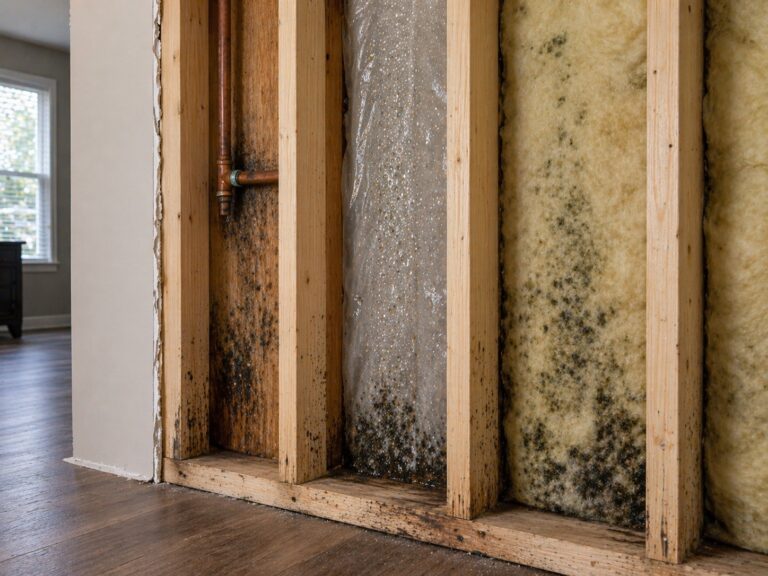
The visible mold spot may also be the exit point rather than the starting point. Water can travel behind drywall, along framing, under flooring, behind trim, or through a cabinet seam before mold appears where you can see it. That is why the same visible area can fail repeatedly even when the surface is cleaned well.
Repeated mold in one spot should be treated as a diagnostic clue. The location, timing, material, and trigger often reveal more than the mold spot itself. A lasting solution usually requires correcting the local condition, not just cleaning the visible growth. For the broader mold cleanup framework, see How To Remove Mold Permanently.
The Same Area Keeps Getting Wet
The most common reason mold returns in the same location is that the same area keeps getting wet. This can happen from a leak, condensation, shower humidity, rainwater entry, HVAC moisture, basement seepage, or repeated damp air exposure.
When the same area is re-wetted, cleaning only resets the surface temporarily. The next moisture event recreates the same mold-friendly conditions.
Rain, plumbing, showers, humidity, and HVAC triggers
The trigger often explains why one location keeps failing. If mold returns after rain, look for exterior water entry, roof leaks, window leaks, door leaks, siding gaps, flashing problems, foundation seepage, gutters, downspouts, or grading issues. The interior mold may be the visible symptom of water entering from outside.
If mold returns after plumbing use, the cause may be a slow leak near a sink, toilet, shower valve, refrigerator water line, dishwasher connection, washing machine hose, or drain line. Some leaks only happen when water is running, so the area may dry partially between uses and then become damp again.
If mold returns after showers, cooking, laundry, or humid weather, the problem may be moisture in the air rather than a liquid leak. Bathroom corners, laundry rooms, basements, closets, and cold exterior walls can develop repeated dampness when humidity rises and airflow is weak.
HVAC systems can also create repeated moisture in one area. Mold near vents, ducts, air handlers, condensate lines, or cold surfaces may be related to condensation, poor drainage, blocked airflow, or damp air movement. Notice whether the spot returns after the system runs, during cooling season, or during humid weather.
Hidden Moisture Is Still Behind the Surface
Mold may return in the same location because the visible surface was cleaned while moisture remained behind it. This is common around drywall, trim, cabinets, flooring, ceilings, windows, and enclosed wall cavities. The surface may look clean and dry, but the material behind it may still be damp.
Hidden moisture is especially likely when mold returns along the same seam, baseboard, corner, cabinet joint, window trim, or floor edge. Those areas often reveal moisture that is moving from behind the surface toward the room side.
Why the visible spot may not be the true source
The location where mold appears is not always the location where moisture begins. A mold spot on a ceiling may come from a roof leak, plumbing above, wet insulation, or attic condensation. Mold along a baseboard may come from a wall cavity, slab edge, flooring layer, or exterior wall condition. Mold around a window may come from condensation, frame leakage, or moisture trapped behind trim.
This is why same-location mold should not be judged by appearance alone. The surface may be only the point where hidden moisture becomes visible. If the material behind the surface stays damp, mold may keep returning even after the visible spot is cleaned.
Hidden moisture is covered more directly in How Hidden Moisture Causes Recurring Mold. For this article, the key point is that same-location mold often means the repeated spot is connected to a local hidden moisture path.
Warning signs include musty odor near the same area, stains that bleed through paint, soft drywall, swollen trim, bubbling paint, lifted flooring edges, or mold returning at seams and corners. If the repeated spot is on or near a wall, compare those clues with Signs of Mold Behind Walls.
The Location Has Poor Airflow
Mold can return in the same location when the area does not dry as quickly as the rest of the room. Airflow matters because moving air helps moisture evaporate from surfaces and materials. When air is blocked or stagnant, moisture can linger long enough for mold to return.
Low-airflow areas are often small and easy to overlook. A corner behind furniture, a closet wall, a cabinet interior, a basement storage area, or a garage corner may stay damp even when the main room feels dry.
Corners, closets, cabinets, and furniture-blocked walls
Room corners often have less air movement than open wall surfaces. If the corner is also near an exterior wall, a bathroom, a basement, or a cold surface, it may stay damp longer after humidity rises. This is why mold often returns in the same upper bathroom corner or lower exterior-wall corner.
Closets can develop the same pattern. Packed clothing, cardboard boxes, shoes, stored items, and closed doors reduce airflow. If the closet shares an exterior wall or sits over a damp area, mold may return in the same back corner or along the same wall section.
Cabinet interiors also trap moisture. Under-sink cabinets, bathroom vanities, kitchen toe kicks, and cabinet backs may have limited airflow plus plumbing or appliance moisture nearby. If mold keeps returning inside the same cabinet, the issue may be a damp material, small leak, or enclosed-air problem rather than only a dirty surface.
Furniture-blocked walls can behave like hidden cavities. A bed, sofa, bookshelf, storage bin, or dresser placed tightly against a wall can reduce airflow and keep the wall cooler. If mold returns behind the same piece of furniture, move the item away from the wall and check for condensation, dampness, or a musty odor.
The Surface Is Colder Than Nearby Areas
Mold can return in one location because that surface gets colder than the surrounding surfaces. When warm, moist indoor air touches a cold surface, condensation can form. If this happens repeatedly, the same cold area may become damp often enough for mold to grow.
This is common on exterior wall corners, window trim, uninsulated wall sections, ceiling edges, basement walls, duct surfaces, and areas affected by thermal bridging. The homeowner may not see a leak at all. The moisture may be forming directly on the surface from humid air.
Condensation, exterior walls, windows, and ducts
Window areas are a common example. The glass, frame, sill, or trim may be colder than the surrounding wall. If indoor humidity is high, condensation can collect repeatedly in the same corners. Mold may then return around the same trim line, sill edge, or lower window corner.
Exterior wall corners can behave the same way, especially in cold weather or poorly insulated areas. The corner may stay cooler and receive less airflow, so condensation forms there first. This can make mold return in the same corner even when no pipe or roof leak is present.
HVAC ducts and vents can also create cold-surface moisture. If humid air reaches a cold duct, vent cover, or nearby wall surface, condensation may form in the same area during system operation. Mold near HVAC components should be evaluated carefully because the source may be condensation, drain problems, airflow imbalance, or damp dust accumulation.
The Material Itself Is Holding Moisture
Mold can also return in the same location because the material itself is holding moisture. Some surfaces dry quickly and clean easily. Others absorb moisture, hold it internally, and release it slowly. If the same material stays damp below the surface, mold can return again and again.
This is especially important when mold appears on or near drywall, MDF trim, wood, carpet padding, insulation, cabinets, or flooring edges. These materials can absorb moisture through seams, cut edges, unfinished backs, fibers, paper layers, or small gaps. A cleaned surface may look better while the inside of the material remains damp.
Drywall, trim, cabinets, flooring, insulation, and porous surfaces
Drywall is one of the most common materials involved in same-location mold recurrence. The painted face may look clean, but the paper layer, backside, lower edge, or nearby cavity may still contain moisture. If mold keeps returning in the same wall area, the drywall may be damp from behind or contaminated below the surface.
Trim and baseboards can also hold moisture along edges and backs. MDF and wood trim often absorb water where they meet floors, walls, cabinets, or windows. Mold that returns along the same baseboard line or trim joint may mean the material is still damp or the wall-floor joint behind it is not drying.
Cabinets can hold moisture in base panels, toe kicks, backs, shelves, and unfinished cut edges. Flooring can hide dampness under finished surfaces, especially when moisture reaches carpet padding, underlayment, adhesive, or subflooring. Insulation can hold moisture inside walls, ceilings, crawl spaces, and attic areas, keeping nearby materials damp long after the surface appears normal.
When the material itself is the moisture reservoir, repeated surface cleaning usually gives temporary results. The surface improves, but the same spot remains favorable for mold because the material is still damp, absorbent, or damaged.
The Area Was Cleaned but Not Corrected
Mold often returns in the same location because the visible area was cleaned but the local cause was not corrected. This is different from saying the cleaning was useless. The cleaning may have removed visible growth, but the location became damp again because the reason for mold growth remained.
For example, a bathroom ceiling corner may be cleaned repeatedly, but if the fan is weak and the corner stays damp after showers, mold can return. A cabinet may be wiped clean, but if a slow plumbing leak continues, the same seam can grow mold again. A basement wall may be scrubbed, but if water pressure or humidity continues, the same area may discolor again.
Paint, caulk, primer, and sealers can create the same problem when used too early. They may cover a spot, but they do not correct hidden moisture, poor airflow, condensation, or damp porous materials. If stains bleed through paint or mold returns around the edges of a sealed area, the local condition may still be active.
If mold returned after cleanup and you are trying to understand whether the cleanup missed something, see Signs Mold Was Not Fully Removed. In this article, the more important clue is the repeated location: the same spot keeps recreating the conditions that allowed mold to grow.
How the Location Helps Identify the Cause
The exact location of recurring mold can help narrow the cause. The goal is not to diagnose the home from one spot alone, but to use location as a clue. Same-location mold becomes easier to understand when you ask what makes that spot different from the nearby surfaces.
A simple pattern helps: top corners often point to humidity or condensation, lower wall lines often point to hidden dampness or floor-wall moisture, window edges often point to condensation or exterior leakage, and cabinet seams often point to trapped moisture or slow plumbing leaks.
Bathroom corners
Mold returning in the same bathroom corner often points to repeated humidity, poor exhaust ventilation, cold surfaces, or damp paint. If the spot appears after showers or gets worse when the fan is not used long enough, the cause may be condensation and poor drying.
If the same bathroom mold appears near a fixture wall, tub edge, shower surround, toilet base, or vanity, a leak should also be considered. The timing matters. Mold that worsens after showers may be humidity, a shower leak, or both.
Window trim
Mold returning around the same window often points to condensation, frame leakage, failed caulk, poor flashing, or moisture trapped behind trim. If the mold appears during cold weather, condensation may be the main issue. If it appears after rain, exterior water entry should be considered.
Look closely at the lower corners, sill, trim joints, and wall below the window. These areas often collect water or reveal moisture that has moved from behind the frame.
Basement walls
Mold returning on the same basement wall section often points to foundation seepage, poor drainage, cool masonry, high humidity, or moisture trapped behind finished basement materials. If the spot returns after rain, exterior water pressure or drainage conditions may be involved.
If the same mold appears behind finished walls, near baseboards, or in lower corners, the visible mold may be connected to hidden dampness behind the finished surface rather than only room humidity.
Cabinets and toe kicks
Mold that returns in the same cabinet or toe-kick area often points to trapped moisture, slow plumbing seepage, appliance leaks, or poor airflow. Under-sink cabinets, kitchen base cabinets, bathroom vanities, dishwasher spaces, and refrigerator water line areas are especially vulnerable because small leaks can stay hidden for a long time.
If mold keeps returning along a cabinet seam, back panel, bottom shelf, or toe-kick edge, look for swelling, discoloration, musty odor, soft material, or dampness near nearby pipes and appliance connections. The visible mold may be only the sign of moisture inside the cabinet material or behind the cabinet.
Closets and furniture-blocked walls
Mold returning in the same closet or behind the same piece of furniture is often caused by weak airflow. When boxes, clothing, shelves, beds, sofas, or dressers block air movement, the wall behind them may stay cooler and damp longer than open wall areas.
This problem is more likely on exterior walls, in humid homes, in basements, and in rooms with poor ventilation. If the mold returns where stored items touch the wall, move items away, increase airflow, and check whether the wall feels cool, damp, or musty compared with nearby areas.
Ceilings and HVAC areas
Mold returning in the same ceiling spot may point to a roof leak, plumbing above, attic condensation, wet insulation, or HVAC condensate issue. The visible mold may appear below the actual source because water can travel before it reaches the finished ceiling.
Mold near HVAC vents, ducts, drain lines, or air handlers may be related to condensation, clogged drains, damp dust, poor airflow, or cold surfaces. Because HVAC-related mold can involve hidden components and air movement, repeated mold near mechanical equipment deserves careful inspection.
What to Do When Mold Returns in the Same Location
When mold returns in the same location, do not treat it as only a cleaning problem. Cleaning may remove what you can see, but the recurrence means that the location is still receiving moisture, holding moisture, staying too cold, lacking airflow, or hiding damp material.
Start by matching the spot to its trigger: rain suggests exterior entry, plumbing use suggests a leak, showers or laundry suggest humidity, cold weather suggests condensation, and HVAC operation suggests airflow, drainage, or cold-surface moisture.
- Mark the exact location. Note whether mold returns at a corner, seam, baseboard, cabinet joint, window trim, ceiling stain, or floor edge.
- Track the timing. Record whether the mold returns after rain, showers, humid weather, cold weather, HVAC use, plumbing use, or appliance cycles.
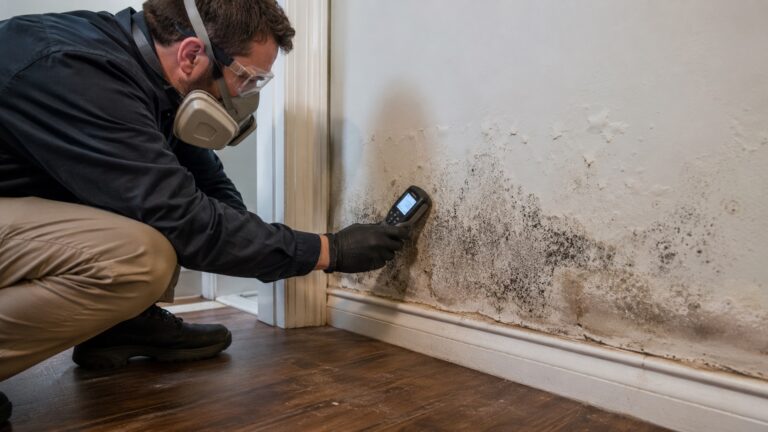
- Compare the same spot to nearby surfaces. Check whether it feels colder, smells mustier, stains faster, or shows higher moisture readings than surrounding areas.
- Check the nearby material. Look for soft drywall, swollen trim, bubbling paint, warped cabinets, lifted flooring, damp insulation clues, or musty odor.
- Look for a repeated moisture trigger. Same-location mold often follows the same moisture event again and again.
- Improve airflow if the spot is enclosed. Move furniture, open closets, reduce stored items, and allow air to reach walls and corners.
- Check humidity and condensation patterns. If the spot is cold, near a window, on an exterior wall, or near HVAC equipment, condensation may be part of the problem.
- Avoid painting or sealing over the spot too soon. Paint, primer, caulk, or sealer can hide the problem temporarily, but they do not solve damp material, repeated moisture, or hidden growth.
- Use non-invasive checks before destructive work. Moisture readings, comparison checks, odor patterns, and visual inspection can help narrow the issue before opening surfaces.
- Escalate if it keeps returning. Repeated same-location mold may require professional inspection, especially when hidden cavities, soft materials, insulation, or structural wood may be involved.
If you need to understand whether this is part of a repeated moisture pattern, see How to Detect Repeated Moisture Problems. If the area may be damp behind the surface, How to Detect Moisture Without Opening Walls can help you start with less invasive checks before opening materials.
If the same location keeps failing after cleaning, drying, and basic source checks, professional evaluation may be the safer next step. This is especially true when the area is soft, spreading, hidden, connected to a leak, near HVAC equipment, or producing persistent odor. For escalation guidance, see When to Hire a Mold Remediation Professional.
FAQ
Why does mold keep coming back in the same spot?
Mold usually keeps coming back in the same spot because that location still has moisture, poor airflow, condensation, hidden damp material, or a repeated water trigger. The cleaner may remove visible growth, but the spot can grow mold again if the local condition remains active.
Does mold in the same place mean there is a leak?
Not always. A leak is possible, especially if the mold returns after rain, plumbing use, or appliance cycles. However, same-location mold can also come from condensation, high humidity, cold surfaces, poor airflow, damp porous material, or hidden moisture from a previous event.
Can condensation cause mold to return in one area?
Yes. Condensation often affects the coldest or least ventilated surface first. That is why mold may return in the same window corner, bathroom ceiling corner, exterior wall section, basement wall, or HVAC-adjacent area even when there is no obvious leak.
Why does the same mold spot come back faster than nearby areas?
The same spot may come back faster because it has a local condition the nearby areas do not have. It may be colder, wetter, more absorbent, blocked from airflow, connected to a hidden moisture path, or repeatedly exposed to the same trigger.
Does mold returning in the same location mean it is behind the wall?
It can, but not always. Same-location mold may be caused by hidden wall moisture, but it may also come from surface condensation, poor airflow, damp trim, a local leak, or porous material that was not fully dried. Look for soft drywall, musty odor, staining, bubbling paint, or edge growth before assuming the wall must be opened.
Should I paint over a recurring mold spot?
No. Do not paint over a recurring mold spot until the moisture source, airflow issue, condensation pattern, or damp material has been corrected. Paint may hide the mold temporarily, but stains, bubbling, odor, or regrowth can return if the local condition is still active.
Why does mold come back in bathroom corners?
Bathroom corners often stay damp because of shower humidity, weak exhaust ventilation, cold exterior surfaces, and limited airflow. If the same bathroom corner keeps growing mold, the issue is often repeated condensation or poor drying, though nearby fixture leaks should also be considered.
When is same-location mold more than a surface problem?
Same-location mold is more than a surface problem when it returns after cleaning, spreads from the same edge or seam, produces persistent odor, affects soft or swollen materials, appears near HVAC equipment, or lines up with a recurring leak, ceiling stain, baseboard line, cabinet joint, or exterior wall area.
What the Repeated Mold Location Tells You
- Mold returns in the same location because that exact spot still has conditions that support mold growth.
- The repeated location is a clue that the area may be damp, cold, enclosed, poorly ventilated, absorbent, or repeatedly re-wetted.
- Same-location mold does not always mean a leak; condensation, humidity, airflow, and material moisture can also cause it.
- Mold often returns at seams, corners, baseboards, cabinet joints, window trim, ceiling edges, and flooring transitions because those areas collect or reveal moisture.
- Cleaning alone rarely solves recurring mold if the local moisture trigger remains active.
- The timing of recurrence after rain, showers, HVAC use, humid weather, or cold weather helps identify the likely cause.
- Repeated same-location mold should be investigated before painting, sealing, or replacing finishes.

One Comment
Comments are closed.