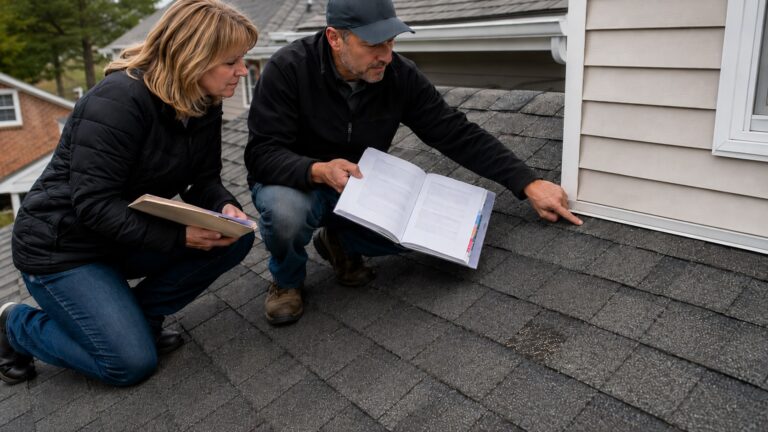
Metal Roof vs Asphalt Shingles: Which Is Better for Your Home?
Metal roofing is usually the better long-term choice if you want maximum lifespan, strong water shedding, and fewer replacement cycles. Asphalt shingles are usually the better practical choice if you need a lower upfront price, easier repairs, and broad contractor availability.
The right choice still depends on more than material. Roof slope, flashing, attic ventilation, underlayment, climate, contractor skill, and budget can all change the outcome. A poorly installed metal roof can still leak, while a well-installed asphalt shingle roof can protect a home for many years.
If your current roof is aging, leaking, losing granules, or showing signs of storm damage, it helps to compare both materials through the lens of cost, lifespan, leak risk, maintenance, repair complexity, and long-term value. For a broader look at how different roof systems fail over time, see this guide to common roofing material failures.
Metal Roof vs Asphalt Shingles: The Short Answer
A metal roof is usually better if you plan to stay in the home long term, want a longer service life, and can afford the higher upfront cost. Asphalt shingles are usually better if the main priority is lower installation cost, easier repairs, and a roof that fits a standard residential budget.
Metal roofing has the stronger long-term durability potential, especially in areas with heavy rain, high sun exposure, wildfire risk, or repeated storm exposure. Asphalt shingles are more affordable and easier to repair, but they age faster as heat, UV exposure, wind, hail, and granule loss wear down the surface.
For many homeowners, the decision comes down to this: asphalt shingles make sense when upfront affordability matters most, while metal roofing makes sense when long-term durability and fewer replacement cycles matter more.
| Factor | Metal roof | Asphalt shingles |
|---|---|---|
| Upfront cost | Usually higher | Usually lower |
| Expected lifespan | Usually longer | Usually shorter |
| Small repairs | Can require a specialist | Usually easier and cheaper |
| Leak resistance | Strong when seams, flashing, and fasteners are correct | Strong when shingles, flashing, and underlayment are correct |
| Best fit | Long-term owners and demanding climates | Budget-focused replacements and standard homes |
Best Choice by Homeowner Situation
| Situation | Usually better choice | Why |
|---|---|---|
| You need the lowest upfront cost | Asphalt shingles | Lower material and labor cost on most standard homes |
| You plan to stay 20+ years | Metal roof | Longer service life can offset the higher initial price |
| You may sell within a few years | Asphalt shingles | A premium metal roof may not return enough value before resale |
| Your roof has many dormers, valleys, and transitions | Depends on installer skill and quote details | Complex details can raise metal cost and leak risk if poorly installed |
| You live in a hot, wet, storm-prone area | Often metal, if properly installed | Metal can shed water well and handle long-term weather exposure |
| You want the simplest future repairs | Asphalt shingles | Small shingle repairs are usually easier to source and complete |
How Metal Roofs and Asphalt Shingles Differ
Metal roofs and asphalt shingles both shed water, but they do it in different ways. Understanding that difference helps explain why they age differently, fail differently, and require different maintenance.
How asphalt shingles work
Asphalt shingles are installed in overlapping rows so water flows from one shingle layer to the next until it reaches the gutters. The shingles are not meant to act like one continuous waterproof sheet. Instead, they form a layered water-shedding surface over underlayment, decking, flashing, vents, valleys, and roof edges.
Most residential asphalt shingles have a fiberglass mat, asphalt coating, and mineral granules on the surface. The granules protect the shingle from sun exposure and help the roof resist weathering. As shingles age, those granules loosen, the asphalt dries out, and the shingle becomes more brittle. That is why older asphalt roofs often show curling, cracking, bald patches, lifted tabs, and granules in gutters.
Asphalt shingles are popular because they are affordable, familiar, and flexible enough for many roof shapes. They work well on typical sloped residential roofs when properly installed. Their weakness is that they have a shorter replacement cycle than many premium roofing materials, especially in climates with high heat, frequent storms, or strong sun exposure.
How metal roofs work
Metal roofing uses panels or metal shingles that shed water over a larger continuous surface. Common residential metal roofs include standing seam panels, exposed-fastener panels, metal shingles, and stamped metal profiles. The exact performance depends heavily on the type of metal roof system used.
Standing seam metal roofs use raised seams and concealed fasteners, which helps reduce the number of exposed penetration points on the main roof surface. Exposed-fastener metal roofs are usually more affordable, but the fasteners and washers remain part of the long-term maintenance picture. Metal shingles and stamped panels can mimic other materials while still offering metal’s durability advantages. If you are comparing metal systems, the difference between standing seam and corrugated metal roofing matters almost as much as the difference between metal and asphalt.
Metal roofs are strong water-shedding systems when the seams, flashing, fasteners, and penetrations are detailed correctly. They are often chosen for long service life, durability, and reduced replacement frequency. However, the material alone does not guarantee a dry roof. Poor flashing, incorrect fastener placement, bad underlayment, improper slope use, or careless installation can still lead to leaks.
The roof system matters more than the surface material alone
One of the biggest mistakes homeowners make is comparing only the visible roof surface. A roof protects the home as a system: decking, underlayment, flashing, ventilation, penetrations, drip edge, valleys, ridge details, gutters, attic airflow, and installation quality all matter.
This matters because many roof leaks start at weak points such as chimneys, skylights, plumbing vents, roof valleys, dormers, wall intersections, ridge details, and old flashing. A metal roof can fail at these points if the details are wrong. An asphalt shingle roof can perform well if these details are correct and the shingles are still within their service life.
Roofing also affects the rest of the home’s moisture system. A roof leak can wet attic insulation, roof sheathing, ceiling drywall, wall cavities, and framing, so the material decision should fit into a broader whole-home moisture prevention strategy.
Cost Comparison: Which Roof Is Cheaper?
Asphalt shingles are usually cheaper than metal roofing upfront. The material is widely available, many contractors install it, and the installation process is familiar on standard sloped roofs.
Metal roofing usually costs more because the material is more expensive and the installation often requires more specialized training, tools, layout work, trim, and flashing details. Standing seam metal roofs, in particular, can cost significantly more than standard asphalt shingles.
The long-term comparison is less simple. A lower-cost asphalt roof may need to be replaced sooner, while a properly installed metal roof may last through multiple asphalt replacement cycles. That does not make metal automatically better financially, but it means the decision should include both upfront cost and expected replacement timing.
Asphalt shingles usually win on upfront price
If the homeowner needs the most affordable roof replacement now, asphalt shingles usually have the advantage. They are often the practical choice when the roof needs replacement soon, the budget is limited, or the home will likely be sold before a premium roof has time to deliver long-term value.
Asphalt shingles also tend to be easier to repair in small areas. If a section is damaged by wind, a fallen branch, or localized wear, a roofer may be able to replace individual shingles or a limited roof area without replacing the entire roof. Color matching can still be imperfect on an older roof, but the material is generally easier to source than specialty metal panels.
Metal roofing may win on long-term value
Metal roofing becomes more attractive when the homeowner plans to stay in the home long term. The higher upfront cost may be easier to justify if the roof lasts much longer, reduces replacement frequency, and improves durability in a demanding climate.
This is especially important for homeowners who want to avoid repeated tear-offs, labor costs, disruption, and roof-aging problems. If you are comparing options beyond basic asphalt, review the broader guide to major roofing material types.
The financial question is not simply “Which roof is cheaper?” A better question is: “Which roof gives this home the best balance of upfront cost, expected lifespan, leak protection, repairability, and resale value?”
Lifespan Comparison: Which Roof Lasts Longer?
Metal roofs usually last longer than asphalt shingles, which is one of the strongest reasons homeowners consider upgrading. Asphalt shingles can still perform well for many years, but they are more affected by sun exposure, heat, granule loss, wind, and storm wear.
The important comparison is not only “Which material lasts longer?” It is whether the added lifespan of metal is worth the higher upfront cost for this specific home and ownership timeline.
Why asphalt shingles age faster
Asphalt shingles are exposed directly to sunlight, heat, rain, wind, and freeze-thaw cycles. Their protective granules help slow deterioration, but they do not stop it forever. As the surface wears, the shingles can become brittle and less able to resist movement, impact, and uplift.
Common asphalt shingle aging signs include:
- Curling or cupping edges
- Cracked shingles
- Granule loss in gutters or downspouts
- Bare-looking patches on the roof surface
- Lifted tabs after wind
- Loose or missing shingles
- Dark streaking or uneven weathering
These symptoms do not always mean the roof is leaking immediately, but they do mean the roof is losing its protective margin. If you are trying to judge whether an asphalt roof is nearing the end of its useful life, the guide on how long asphalt shingles last can support that decision.
Why metal roofs tend to last longer
Metal roofs do not rely on mineral granules in the same way asphalt shingles do. They resist many forms of surface breakdown that shorten the life of shingles. A well-installed metal roof can handle repeated rain, sun, wind, and seasonal movement for a long time when its coating, seams, fasteners, and flashing are maintained.
That said, “metal roof” is not one single product. A standing seam steel roof, aluminum roof, copper roof, exposed-fastener panel roof, and metal shingle roof can all perform differently. Coating quality, panel thickness, fastener type, seam design, roof slope, and installer skill all affect lifespan.
The long life of metal roofing is one of its major advantages, but it should not be treated as automatic. A poorly installed metal roof can create expensive problems early. A properly installed asphalt shingle roof can outperform a poorly installed metal roof in the short term. For homeowners comparing long-term replacement cycles, the article on how long metal roofs last is a natural follow-up.
Leak Risk and Moisture Protection
Metal roofs and asphalt shingles can both protect a home from water when they are installed correctly. They can also both leak when the system around the material fails. The biggest difference is how each material tends to fail over time.
Asphalt shingles usually become more leak-prone as they age, lose granules, crack, curl, or lift. Metal roofs often remain durable longer, but leaks can occur at fasteners, seams, flashing, penetrations, roof transitions, and installation defects. In both cases, the most vulnerable areas are usually not the open roof field. They are the details.
Where asphalt shingle roofs often leak
Asphalt shingle roofs often leak when aging or damage allows wind-driven rain to get past the water-shedding layers. Common leak points include valleys, pipe boots, chimneys, skylights, dormers, roof-wall intersections, ridge areas, and areas with missing or lifted shingles.
Older asphalt shingles can also become brittle enough that wind breaks the seal between tabs. Once shingles lift, water can move underneath the surface more easily. The underlayment may provide temporary protection, but it is not meant to carry long-term water exposure by itself.
When an asphalt roof starts leaking, damage may not stay limited to the roof surface. Water can reach roof decking, attic insulation, ceiling drywall, wall cavities, and structural framing. If you are already seeing stains or dampness indoors, it may be worth understanding possible roof leak repair costs before the damage spreads.
Where metal roofs often leak
Metal roof leaks are often tied to detailing rather than the panel surface itself. Exposed fasteners can loosen or wear around washers. Seams can be installed incorrectly. Flashing can fail around chimneys, skylights, walls, valleys, and roof penetrations. Expansion and contraction can also stress poorly detailed areas over time.
Standing seam metal roofs reduce some exposed-fastener concerns because the fasteners are concealed, but they still require correct flashing, seams, clips, underlayment, and transitions. Metal roofing is highly water-shedding, but that advantage only works when the system is installed as a complete roof assembly.
Which roof is better for moisture protection?
Metal roofing usually has the stronger long-term moisture-protection potential because it lasts longer and sheds water efficiently. But it is not automatically safer from leaks in every situation. A high-quality asphalt shingle roof with proper flashing can be more reliable than a poorly installed metal roof.
Before choosing either material, look closely at the leak-prone details: chimney flashing, valleys, pipe boots, skylights, roof-wall intersections, drip edges, and any areas where previous repairs have been patched.
The best moisture protection comes from matching the material to the roof design, using proper underlayment, installing flashing correctly, maintaining attic ventilation, and repairing damage before water reaches the roof deck. If there are already interior stains, attic dampness, recurring ceiling spots, or suspected roof-origin moisture, that is no longer just a material comparison. It may be time to understand when roofing moisture problems need a contractor.
Storm, Wind, Fire, and Hail Performance
Storm performance is a major reason homeowners compare metal roofing with asphalt shingles because wind, hail, fire exposure, and heavy rain affect each material differently.
Storm resistance depends on the full assembly: roof deck, fasteners, underlayment, flashing, installation pattern, slope, edge details, and local wind exposure.
Wind performance
Metal roofing can perform very well in high-wind areas when the panel system is rated for the conditions and installed according to manufacturer requirements. Standing seam metal roofs are especially valued because the panels lock together and fasteners are not exposed across the main roof surface.
Asphalt shingles can also be rated for high wind, but they depend heavily on proper nailing, starter strips, edge details, and adhesive strip bonding. If shingles are under-nailed, over-nailed, installed in cold conditions without sealing properly, or already aged and brittle, wind can lift tabs and expose the roof to water intrusion.
Wind damage to shingles is not always obvious from the ground. A roof can look mostly intact while adhesive seals are weakened or tabs are lifted slightly. That matters because small wind damage can turn into later leaks during heavy rain.
Hail performance
Metal roofing and asphalt shingles can both be damaged by hail, but the damage looks different. Metal may dent, especially on thinner panels or softer metals. Asphalt shingles may lose granules, bruise, crack, or suffer hidden impact damage that shortens their life.
This is where product quality matters. Impact-rated shingles may perform better than basic shingles. Heavier-gauge or textured metal panels may hide dents better than smooth, thinner panels. The roof slope, hail size, storm intensity, and age of the roof all affect the outcome.
Homeowners should avoid the assumption that metal roofing is automatically hail-proof. It may resist some types of deterioration better than asphalt, but it can still be cosmetically or functionally damaged. Asphalt shingles are also not automatically weak; some higher-quality shingles are designed for improved impact resistance.
Fire resistance
Metal roofing has a strong advantage in fire-prone areas because the material itself is noncombustible. However, the overall roof assembly still matters. Decking, underlayment, insulation, nearby vegetation, gutters, debris, vents, and local building requirements can all influence fire risk.
Asphalt shingles can also carry fire ratings, and many modern asphalt roofing products are designed to meet residential fire-resistance requirements. Still, when fire exposure is a major concern, metal roofing often becomes more attractive as part of a broader fire-conscious exterior design.
Heavy rain and water shedding
Metal roofs shed water quickly, which can be a major advantage during heavy rain. Their smoother surface allows water to move down the roof efficiently, especially on properly sloped roof planes. This can help reduce the time water sits on the roof surface.
Asphalt shingles also shed water well when they are in good condition. Problems usually develop when shingles curl, crack, lift, lose granules, or allow wind-driven rain to reach vulnerable seams and edges. Valleys, roof-wall intersections, chimneys, skylights, and pipe penetrations remain critical on both systems.
In wet climates, the better roof is not just the one with the most durable surface. It is the one with the best complete drainage path: roof slope, flashing, underlayment, gutter performance, attic ventilation, and clean water discharge away from the home.
Maintenance and Repair Differences
Asphalt shingles are usually easier and cheaper to repair in small areas. Metal roofs usually require less frequent replacement, but repairs can be more specialized when something does go wrong.
A roof that lasts longer is valuable, but future repairs still depend on contractors who know that specific system.
Asphalt shingle maintenance
Asphalt shingle maintenance usually involves watching for missing shingles, lifted tabs, exposed nails, damaged pipe boots, cracked sealant, loose flashing, granule loss, clogged gutters, and storm damage. Many small repairs are familiar to roofing contractors and can often be handled without replacing the entire roof.
The downside is that asphalt roofs usually need more attention as they age. A roof that looked acceptable five years ago may begin showing widespread granule loss, brittle shingles, curled edges, or repeated storm damage. Once deterioration becomes broad, repairs may only buy time rather than solve the underlying aging problem.
Metal roof maintenance
Metal roofs generally need less frequent surface maintenance, but they should still be inspected. Homeowners should watch for loose fasteners on exposed-fastener systems, damaged sealant at penetrations, scratches in protective coatings, debris buildup in valleys, damaged flashing, bent trim, and signs of movement around transitions.
Standing seam systems reduce some fastener-related concerns, but they are not maintenance-free. Any roof with penetrations, flashing, valleys, vents, and transitions still needs periodic inspection. Metal roofs also expand and contract with temperature changes, so proper installation details are important for long-term performance.
Repair complexity
Asphalt shingles are often easier to patch because individual shingles can be replaced. Matching the color of older shingles can be difficult, but the repair process is familiar.
Metal repairs can be more complex. Matching the panel profile, coating, fastener type, and trim details may require a contractor with specific metal roofing experience. On some systems, repairing a small area can involve more careful disassembly than replacing a few shingles.
This does not mean metal is a bad repair choice. It means homeowners should make sure the installer and future repair contractor understand the exact system being used. If leak repair or replacement is already being considered, it is also wise to understand the process of choosing a roofing contractor for leak repairs.
Energy Efficiency and Attic Moisture Considerations
Metal roofing can offer energy advantages, especially when it uses reflective coatings that reduce heat absorption. This can be useful in hot, sunny climates where roof heat contributes to attic temperature and cooling load. However, energy performance depends on the full roof and attic assembly, not just the visible roofing material.
Asphalt shingles tend to absorb more heat than many reflective metal roof systems, especially darker shingles. That can make attic ventilation and insulation especially important. But asphalt shingles are also available in lighter or cool-roof versions, so the comparison is not always as simple as “metal is cool and shingles are hot.”
Roof color and reflectivity matter
A dark metal roof can absorb more heat than a light-colored reflective metal roof. A light-colored asphalt shingle can perform better than a dark asphalt shingle. The coating, color, solar reflectance, attic insulation, ventilation, and local climate all affect the final result.
For hot climates, reflective roofing can help reduce heat gain. For colder climates, the benefit may be less important, and other factors such as snow shedding, ice dam risk, insulation, and attic air sealing may matter more.
Attic moisture is not solved by roof material alone
A common mistake is assuming that changing from asphalt shingles to metal roofing will automatically solve attic moisture or condensation. It may help with durability and water shedding, but attic moisture usually depends on ventilation, air leaks from the living space, insulation levels, bathroom exhaust routing, and roof deck temperature.
If warm indoor air leaks into a cold attic, condensation can form on the underside of the roof deck regardless of whether the exterior surface is metal or asphalt. If bathroom fans vent into the attic, if soffit vents are blocked, or if ridge ventilation is inadequate, roof material alone will not fix the moisture problem.
This is especially important when roof leaks are being confused with condensation. A homeowner may replace the roof and still see damp sheathing, moldy attic framing, or wet insulation if the true issue is attic airflow or indoor humidity migration.
Metal roofs and condensation concerns
Metal roofing sometimes gets blamed for condensation because metal surfaces can change temperature quickly. In a properly designed residential roof assembly, underlayment, decking, insulation, ventilation, and air sealing control condensation risk. The concern is not simply that the roof is metal; the concern is whether the system below it manages temperature and moisture correctly.
Asphalt shingle roofs can also have condensation problems beneath the roof deck if attic ventilation or air sealing is poor. The visible roofing material is only one part of the moisture equation.
When comparing metal and asphalt, ask whether the roof replacement will also include ventilation review, flashing correction, deck inspection, and moisture-risk evaluation. That is the difference between replacing a roof surface and improving the home’s long-term roof system.
Appearance, Resale, and Home Style
Roofing material affects curb appeal, buyer perception, neighborhood fit, and sometimes local rules. Asphalt shingles and metal roofing can both look good, but they create different visual impressions.
Asphalt shingles have a familiar residential look. They work with many home styles and are accepted in most neighborhoods. Architectural shingles can add texture and dimension without making the roof look unusual. For many homeowners, shingles feel like the safest visual choice because buyers already understand them.
Metal roofing can create a more distinctive appearance. Standing seam metal roofs often look clean, modern, and high-end. Metal shingles or stamped metal profiles can be designed to look more traditional. On the right home, metal can improve curb appeal and signal durability. On the wrong home, or in a neighborhood where most roofs are shingle, it may stand out more than the homeowner wants.
Resale value depends on the buyer and market
A metal roof may help resale value when buyers understand the long-term durability advantage and appreciate the reduced replacement concern. It can be especially appealing if the roof is newer, attractive, professionally installed, and appropriate for the home’s style.
However, not every buyer will pay a large premium for a metal roof. Some buyers care more about the total home price than long-term roof economics. Others may prefer the familiar look of shingles. In some markets, a high-quality asphalt shingle roof may be more than enough to satisfy buyers, inspectors, and lenders.
If resale is the main concern, the better choice is usually the material that fits the home, neighborhood, climate, and price point. An expensive metal roof may not pay back fully if the homeowner sells shortly after installation. A clean, properly installed asphalt shingle roof may be more financially practical in that situation.
What to Compare in Metal and Asphalt Roofing Quotes
Do not compare a metal roof quote and an asphalt shingle quote by price alone. The cheaper quote may exclude important details, and the more expensive quote may not automatically include better moisture protection. Before choosing, compare what each contractor includes in the full roof system.
For both materials, ask whether the quote includes:
- Old roof tear-off or overlay installation
- Roof deck inspection and damaged decking replacement
- Underlayment type
- Ice and water protection where needed
- Drip edge and roof edge details
- New flashing at chimneys, walls, valleys, skylights, and penetrations
- Pipe boot replacement
- Attic ventilation review
- Manufacturer material warranty
- Contractor workmanship warranty
- Cleanup, disposal, and permit handling
For metal roofing, also ask what panel type, gauge, coating, fastener system, trim package, and flashing method will be used. For asphalt shingles, ask what shingle grade, underlayment, starter strip, ridge cap, nailing pattern, and ventilation corrections are included. A roof quote that ignores these details may look cheaper upfront but create higher leak risk later.
When Asphalt Shingles Are the Better Choice
Asphalt shingles are often the better choice when budget, simplicity, and repair availability matter more than maximum lifespan. They are not the most durable roofing material, but they are practical for many homes.
Asphalt shingles may be the better choice when:
- You need the lowest reasonable upfront roof replacement cost.
- You plan to sell the home before a metal roof would deliver long-term value.
- The roof has a complex shape with many valleys, dormers, or transitions that would make metal installation more expensive.
- You want easier localized repairs in the future.
- Your neighborhood or HOA favors a traditional shingle appearance.
- You live in a mild climate where standard shingles perform well.
- You are replacing a roof on a rental property or lower-price-point home where premium roofing may not return enough value.
Asphalt shingles also make sense when the current roof problem is straightforward and the home does not need a premium roof system. If the roof deck is sound, the slope is standard, ventilation is adequate, and the budget is tight, a well-installed asphalt shingle roof can be a smart and realistic choice.
The key is not to choose the cheapest possible shingle job. Low-quality installation, poor flashing, bad ventilation, and rushed workmanship can turn an affordable roof into an expensive moisture problem. If you are deciding between asphalt grades, metal, or other materials, this broader guide to choosing the right roofing material can help frame the decision.
When a Metal Roof Is Worth the Upgrade
A metal roof is often worth the upgrade when the homeowner wants long-term durability and plans to stay in the home long enough to benefit from it. The higher upfront cost is easier to justify when it reduces the chance of another full replacement in the near future.
Metal roofing may be worth it when:
- You plan to stay in the home for many years.
- You want a roof with a longer expected service life.
- The home is in an area with heavy rain, strong sun, wildfire exposure, or frequent storms.
- You want a material that sheds water efficiently.
- You want to reduce future tear-off and replacement cycles.
- You prefer the appearance of standing seam or metal roofing profiles.
- You are already investing in a major exterior upgrade.
- You can hire a contractor with real metal roofing experience.
Metal roofing is not worth the upgrade if the quote cuts corners on flashing, trim, underlayment, deck inspection, or installer experience. A premium material installed as a budget shortcut can be worse than a simpler asphalt roof installed correctly.
Metal roofing is especially appealing when the homeowner is thinking beyond the next few years. If the roof is part of a long-term plan to improve durability, moisture resistance, energy performance, and exterior protection, the upgrade can make sense.
When to Talk to a Roofing Contractor
It is smart to talk to a roofing contractor before choosing between metal and asphalt shingles if the roof already has leaks, structural concerns, storm damage, sagging areas, repeated repairs, or attic moisture symptoms. At that point, the decision is not only about material preference. It is about the condition of the full roof system.
A contractor should inspect:
- Roof decking condition
- Existing leaks or water stains
- Flashing around chimneys, walls, skylights, and vents
- Attic ventilation and blocked intake areas
- Soft or deteriorated sheathing
- Number of existing roof layers
- Gutter drainage and roof edge details
- Storm damage or wind-lifted areas
- Whether the roof slope, shape, valleys, dormers, and transitions are suitable for the material being considered
This is especially important if you are considering installing metal roofing over existing shingles. That approach may be possible in some situations, but it is not always appropriate. The roof deck, local code, number of existing layers, ventilation, weight, trapped moisture risk, and condition of the old roof all matter.
Do not assume an overlay is safe just because it is cheaper. Covering old shingles can hide soft decking, trapped moisture, previous leak paths, or flashing problems that should be corrected before the new roof goes on.
You should also involve a contractor if interior moisture has already appeared. Ceiling stains, damp attic insulation, moldy roof framing, recurring leaks, or water marks near roof penetrations mean water may already be inside the assembly. In those cases, the material comparison should happen alongside a real moisture investigation, not instead of one.
FAQ: Metal Roof vs Asphalt Shingles
Is a metal roof better than asphalt shingles?
A metal roof is usually better for long-term durability, lifespan, fire resistance, and water shedding. Asphalt shingles are usually better for upfront affordability, easy repairs, and standard residential budgets. The better choice depends on how long you plan to stay in the home, your climate, roof design, and budget.
Does a metal roof leak less than asphalt shingles?
A properly installed metal roof can have strong long-term leak resistance, but it can still leak at seams, fasteners, flashing, and penetrations. Asphalt shingles can also protect a home well when they are newer and installed correctly. Most roof leaks come from weak details, aging, storm damage, or poor installation rather than material alone.
Is a metal roof worth the extra money?
A metal roof is often worth the extra money if you plan to stay in the home long term and want fewer replacement cycles. It may not be worth the added cost if you need the lowest upfront price, plan to sell soon, or have a roof design that makes metal installation unusually expensive.
Are metal roofs noisy in rain?
Metal roofs are not necessarily noisy when installed over solid decking, underlayment, insulation, and an attic assembly. A metal roof over an open barn or patio cover may sound loud, but a residential metal roof over a properly built house is usually much quieter than many homeowners expect.
Can a metal roof be installed over asphalt shingles?
Sometimes, but not always. It depends on local code, the number of existing layers, roof deck condition, ventilation, trapped moisture risk, and the metal system being installed. A contractor should inspect the roof before deciding whether overlay installation is appropriate.
Which roof is better for heavy rain?
Metal roofing often sheds heavy rain very efficiently, but asphalt shingles can also perform well when properly installed and maintained. In heavy-rain areas, flashing, valleys, gutters, underlayment, slope, and roof-wall transitions are just as important as the surface material.
Is metal roofing always better than asphalt shingles in hot climates?
Reflective metal roofing can be a strong option in hot climates because it can reduce heat absorption. However, color, coating, attic insulation, and ventilation matter. Light-colored or cool-roof asphalt shingles may also help compared with dark standard shingles.
Do metal roofs dent from hail?
Metal roofs can dent from hail, especially thinner or smoother panels. Asphalt shingles can lose granules, crack, or suffer impact bruising. Hail resistance depends on product quality, impact rating, metal thickness, panel profile, roof slope, and storm severity.
Final Verdict: Metal Roof or Asphalt Shingles?
Metal roofing is usually the stronger long-term choice, while asphalt shingles are usually the more affordable and practical short-term choice. Metal offers longer service life, strong water shedding, and excellent durability when installed correctly. Asphalt shingles offer lower upfront cost, broad availability, easier repairs, and a familiar appearance that works well on many homes.
The best roof is the one that fits the home’s climate, structure, budget, appearance, moisture risk, and ownership timeline. If the home already has leaks, attic moisture, damaged decking, or repeated roof repairs, inspect the underlying roof system before choosing the material. Proper installation, flashing, ventilation, and maintenance are what turn either material into a reliable roof.