How to Inspect Soffit Vents for Blockages
Soffit vents are easy to overlook because they sit under the roof overhang, but they play an important role in attic moisture control. They allow outside air to enter low along the eaves so warmer, moisture-laden attic air can move upward and out through higher roof vents. When soffit vents are blocked, attic airflow can become weak or uneven, which may contribute to heat buildup, condensation, damp roof sheathing, musty attic odors, and moisture problems around insulation.
Inspecting soffit vents does not mean redesigning the entire roof ventilation system. It means checking whether the intake path is actually open. A soffit can look normal from the ground while insulation, dust, paint, insect nests, or missing baffles are blocking airflow from inside the attic. That is why a good inspection looks at both sides of the vent: the exterior soffit surface and the attic-side eave area.
The fastest inspection sequence is simple: check the soffit openings from outside, compare each side of the house, then check the attic-side eaves for insulation, missing baffles, nesting material, or debris blocking the air channel.
This guide focuses specifically on how to inspect soffit vents for blockages. For broader roof moisture issues, soffit blockage is one part of the larger system covered in common roofing material failures that lead to moisture problems. If moisture is showing up in multiple parts of the house, use this inspection alongside a broader plan to find and prevent moisture problems throughout the home.
Why Soffit Vent Blockages Matter
Soffit vents are attic intake vents. They let outdoor air enter low along the eaves so warmer attic air can exit through higher vents, such as ridge vents, roof vents, or sometimes gable vents. When that intake path is restricted, exhaust vents may still exist, but the attic cannot exchange air as effectively.
That matters because moist indoor air can leak into the attic through ceiling gaps, attic hatches, recessed lights, plumbing chases, bath fans, or wiring penetrations. If intake airflow is weak, that moisture can linger near roof sheathing and insulation instead of being carried out of the attic.
Blocked soffit vents are not the only cause of attic moisture. Roof leaks, poor air sealing, disconnected bath fans, inadequate exhaust ventilation, and insulation problems can all contribute. But blocked soffit intake is common enough that it should be one of the first things checked when a homeowner notices signs of poor attic ventilation.
The main inspection goal is simple: confirm whether air has a clear path from the soffit opening into the attic. If the exterior vent holes are clogged, airflow can be restricted before it enters the eave. If insulation is packed tightly against the underside of the roof deck, airflow can be blocked after it passes through the soffit. If baffles are missing, crushed, or buried, the intake path may be unreliable even if the soffit panels themselves look open.
A complete inspection checks the outside surface, the attic-side eaves, the insulation position, and the air channel between the soffit and the attic space.
Before You Inspect: Safety and Access
Start with the safest inspection method first. In many homes, you can learn a lot by walking around the exterior and looking up at the soffits from the ground. Use daylight, binoculars, or a camera zoom to check for obvious blocked perforations, painted-over vents, sagging panels, insect nests, or debris caught in the vent openings.
If you need a ladder to see the soffit more clearly, treat that as a separate safety decision. Do not climb during rain, wind, ice, or poor lighting. Do not lean a ladder against gutters that may not support the load. Do not overreach under the eaves. If the soffit is high, the ground is uneven, or the roofline is difficult to access, it is better to leave close-up exterior inspection to a professional.
Attic inspection also requires caution. Many attics do not have safe walking surfaces. Ceiling drywall will not support body weight, and loose insulation can hide joists, wiring, ductwork, nails, and other hazards. If there is no stable platform or clear path, inspect only from the attic access area or hire someone who can move safely through the space.
Before entering the attic, wear basic protection for dust and insulation exposure. A flashlight or headlamp is essential. Gloves, long sleeves, eye protection, and a properly fitted dust mask or respirator are helpful in dusty spaces. If you see heavy mold-like growth, animal droppings, nesting material, wet insulation, exposed electrical hazards, or strong odors, stop the inspection and get professional help instead of disturbing the material.
It is also important not to damage the airflow path while inspecting it. Do not push insulation deeper into the eaves. Do not crush baffles. Do not pull soffit panels apart just to check behind them. The purpose of this first inspection is to identify likely blockage points, not to start demolition or repairs.
If the soffit vents appear blocked, compare your findings with a broader guide on how to detect inadequate roof ventilation before assuming the intake vents are the only issue.
How to Inspect Soffit Vents From the Outside
The outside inspection shows whether the visible soffit openings are blocked before air ever reaches the attic. It can reveal surface-level blockage, damaged panels, painted-over perforations, and debris, but it cannot always confirm that the attic-side air channel is open.
Check the vent openings from the ground first
Walk around the house and look up at the underside of the roof overhang. Identify where the soffit vents are located. Some homes have continuous vent strips running along the eaves. Others have individual rectangular or round vents spaced along solid soffit panels. Some modern soffit panels have small perforations built into the panel itself.
Look for sections where the vent pattern changes. One side of the house may have open perforated soffit panels while another side has solid panels with few or no vent openings. That difference matters because attic ventilation depends on balanced intake. If only small portions of the soffit are vented, the attic may not be receiving enough low intake air even if the visible vents are not technically clogged.
You are not trying to calculate exact ventilation area during this inspection. You are looking for obvious restrictions: blocked holes, sealed vents, missing vented sections, damaged soffit material, or vent openings that are present but no longer open.
A simple note-taking method helps: mark each side of the house as open, partly blocked, unclear, or missing visible intake. That makes it easier to compare exterior findings with attic-side moisture signs later.
Look for paint, caulk, dust, lint, insects, and debris
Paint is one of the most common exterior soffit vent problems. If soffit panels were painted heavily, small perforations can become partially or fully sealed. This is especially common on older homes where several layers of paint have built up over time. From the ground, painted-over perforations may look like normal vent holes, but close inspection may show that many openings are filled.
Also look for caulk, overspray, dust mats, lint, cobwebs, leaves, seeds, and insect nesting material. Vented soffits are exposed to outdoor air, so some surface dirt is normal. The concern is not ordinary dust. The concern is a layer thick enough to cover the openings and reduce intake airflow across a meaningful section of the eave.
Pay special attention to corners, porch roof intersections, areas near trees, and sections below gutters that overflow. These areas often collect more debris than straight, open roof edges. If you see staining, sagging, or moisture marks near the soffit, make a note of it, but do not assume the soffit vent itself is the only problem. Water may also be coming from gutter overflow, roof-edge issues, or flashing problems.
Compare different sides of the house
Soffit vent blockage is often uneven. One side of the house may be open while another side is restricted by debris, paint, insulation, or past repairs. Walk the entire perimeter if possible and compare each roof edge. Look for sides where the soffit vents appear darker, dirtier, sealed, or less open than the others.
This comparison is useful because attic airflow problems sometimes show up in specific roof sections. If one eave is blocked, the rafter bays above that area may receive very little intake air, which can contribute to localized moisture patterns.
If your concern started because of attic dampness, roof sheathing stains, or musty attic air, take note of whether the affected attic area lines up with a blocked or poorly vented soffit section. This does not prove cause by itself, but it gives you a useful clue for the attic-side inspection.
Check whether the soffit material has enough open intake area
Some soffits look vented but provide very little actual intake. For example, a few small vents spaced far apart may not move air the same way as continuous vented soffit material. A perforated vinyl or aluminum soffit panel may also have alternating vented and solid panels, depending on how it was installed.
This article does not cover full ventilation design, but during inspection you should notice whether intake appears continuous, limited, or missing in large areas. If the attic has ridge vents or other exhaust vents but very little visible intake at the eaves, the issue may be bigger than a simple blockage.
For a related roof-level check, especially if the intake side appears open but airflow still seems weak, you may also need to inspect roof vents for blockages. Intake and exhaust need to work together. Open soffits cannot move attic air effectively if the upper vents are clogged, undersized, or poorly placed.
Do not rely only on exterior appearance
A soffit vent can look open from outside and still be blocked inside the attic. This is especially common when blown-in insulation has drifted into the eaves or when batt insulation has been pushed tightly against the roof deck. In those cases, air may pass through the exterior holes but stop almost immediately because the rafter bay is packed shut.
If you see obvious exterior blockage, you have found a likely airflow restriction. If the soffits look clean, check the attic-side eave area before deciding the intake path is open.
How to Inspect Soffit Vents From Inside the Attic
The attic-side inspection is where many soffit vent blockages are actually found. From outside, the soffit openings may look clean, but the air path can still be blocked by insulation, missing baffles, construction debris, or nesting material near the eaves. The goal is to confirm whether air entering through the soffit has a clear path into the attic.
Start from a safe attic access point. Use a strong flashlight or headlamp and look toward the roof edges where the rafters meet the exterior walls. Do not step onto ceiling drywall or move across loose insulation unless there is a safe walking platform. If the eaves are too difficult to inspect safely, stop and have the area checked by a roofing or insulation professional.
Look into the eave area
The eave area is the narrow space where the roof slopes down toward the soffit. In an open intake path, air should be able to enter through the soffit and move upward along the underside of the roof deck into the attic. You may not see bright daylight through every vent, but you should be able to identify an air channel rather than a packed, sealed, or buried edge.
Use your flashlight to inspect several rafter bays, not just one. One bay may be open while the next one is blocked. Check different sides of the attic, especially the side where exterior soffit vents looked dirty, painted, limited, or uneven. If attic moisture signs appear in one section, inspect the soffit intake path below that same area.
Look for obvious restrictions such as insulation pushed tightly into the eave, loose debris, old roofing material, dead leaves, insect nests, bird nesting material, or construction scraps. Anything that fills the space between the soffit opening and the attic can reduce intake airflow.
Check whether insulation is blocking the airflow path
Insulation blockage is one of the most common soffit vent problems. Blown-in insulation can drift into the eaves over time. Batt insulation can be installed too far into the rafter bay. In some homes, insulation was added without leaving a proper air channel from the soffit into the attic.
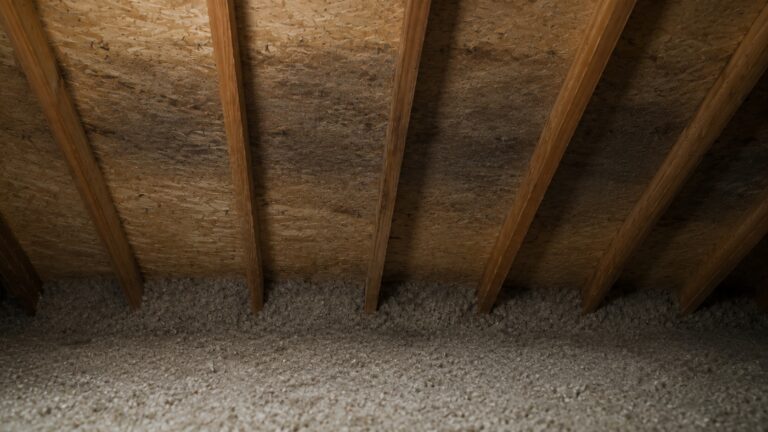
From inside the attic, look for insulation packed against the underside of the roof sheathing at the outer edge of the attic. If the insulation fills the eave area completely, air entering through the soffit may not be able to move into the attic. This is different from insulation simply being near the eaves. The concern is insulation that blocks the air path.
Do not fix this by shoving insulation around blindly. Moving insulation carelessly can create thin spots over the living space, reduce energy performance, expose wiring, or push material deeper into the soffit. For inspection purposes, identify the blockage, take photos if possible, and decide whether the correction is simple cleaning, baffle installation, insulation adjustment, or professional work.
Look for missing, crushed, or displaced baffles
Baffles, also called rafter vents or insulation baffles, are installed between rafters to keep an air channel open above the insulation. They help air move from the soffit into the attic without being blocked by insulation. In many attics, baffles are the easiest visual clue that the intake path was intentionally protected.
Inspect the baffles near the eaves. Look for sections where baffles are missing, crushed, bent, buried under insulation, or pulled away from their intended position. A baffle that is folded flat or packed full of insulation will not keep the channel open. A missing baffle is not always proof of blockage, but it increases the chance that insulation has moved into the intake path.
If some rafter bays have baffles and others do not, compare the airflow path. Uneven baffle coverage can create uneven ventilation. One part of the attic may receive intake air while another part stays stagnant. This is one reason moisture problems can appear in one roof area rather than across the entire attic.
Watch for moisture signs near the roof deck
While you are inspecting the soffit intake path, also look at the nearby roof sheathing and framing. Blocked soffit vents can contribute to weak airflow, but the moisture signs themselves may show how far the problem has progressed.
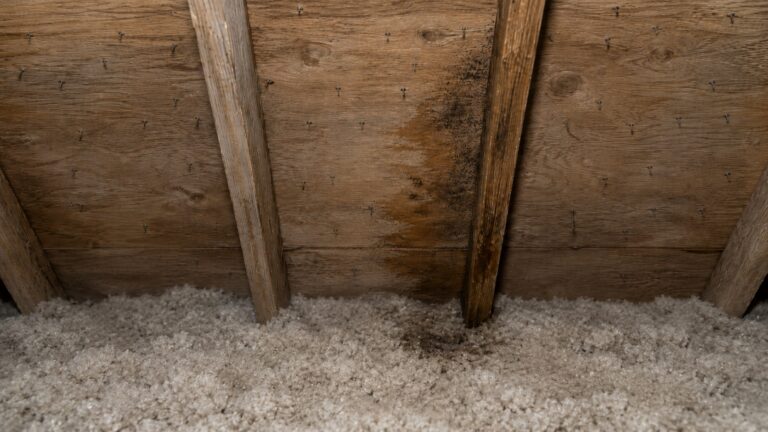
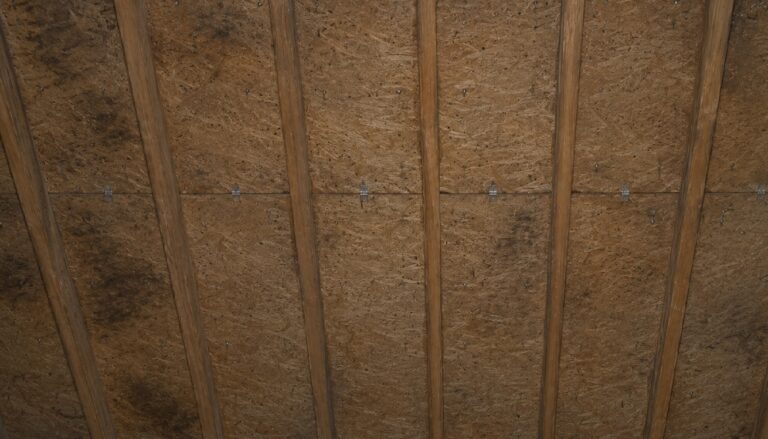
Look for dark staining on the underside of the roof deck, damp-looking sheathing, rusty roofing nails, musty odors, wet or matted insulation, frost marks in cold weather, or mold-like spotting near the eaves. These signs do not prove that the soffit vents are the only cause. They do mean the ventilation issue may be part of a larger attic moisture problem.
If you see moisture signs, do not scrape, sand, or disturb suspected mold-like growth during a ventilation inspection. The better next step is to document what you see and evaluate the entire attic moisture pattern. A soffit blockage may be contributing to the problem, but roof leaks, indoor air leaks, bath fans exhausting into the attic, and poor upper ventilation can also be involved. For a deeper explanation of the moisture connection, review why poor roof ventilation causes moisture problems.
Common Things That Block Soffit Vents
After checking both the exterior soffit surface and the attic-side eave area, identify the type of blockage you found. A light layer of exterior debris is very different from insulation packed across every rafter bay.
Blown-in insulation
Blown-in insulation is a common cause of hidden soffit blockage. It can drift into the eaves, especially if baffles are missing or poorly installed. From inside the attic, this often appears as loose insulation piled tightly against the roof edge with no visible air channel above it.
Batt insulation pushed too far into the eaves
Batt insulation can also block soffit airflow when it is stuffed too tightly into the outer attic edge. This may happen during original construction, during later insulation upgrades, or when someone tries to improve attic insulation without understanding the ventilation path.
Missing or damaged baffles
Without baffles, insulation can slide, settle, or be blown into the intake path. Damaged baffles may look present at first glance but fail to hold the air channel open. Crushed or displaced baffles should be treated as a potential airflow restriction.
Painted-over vent perforations
Exterior repainting can seal small soffit perforations. One coat may only reduce airflow slightly, but repeated heavy coats can close many openings. This is especially important on older vented metal, wood, or fiber cement soffit materials.
Insect, bird, or rodent nesting material
Nesting material can block soffit vents from the outside or inside. If you see active pests, droppings, chewed material, or large nests, avoid disturbing the area. Pest-related blockage may require cleanup and exclusion before ventilation can be restored.
Dust, lint, and exterior debris
Fine dust, cobwebs, leaves, seeds, and lint can collect over vent openings. This is usually less serious than insulation blockage, but it can still reduce intake if it covers long sections of soffit. This type of finding is better handled in a dedicated maintenance process, such as learning how to clean soffit vents safely.
Past remodeling or repair work
Sometimes soffit vents are blocked because of earlier repairs. Solid soffit panels may have replaced vented panels. New insulation may have been added without baffles. Exterior trim, caulk, or paint may have covered intake openings. If blockage appears after a remodel, roof replacement, insulation upgrade, or repainting project, the timing can help identify the likely cause.
How to Tell Whether the Blockage Is Minor or Serious
Not every soffit vent blockage has the same level of risk. After the inspection, sort what you found by scope, location, and whether moisture signs are present.
Minor blockage
A minor blockage usually affects a small, accessible area. Examples include light dust on the vent surface, a few clogged perforations, cobwebs, a small amount of loose debris, or one isolated vent panel that looks dirtier than the others. These issues may reduce airflow slightly, but they usually do not indicate a major attic moisture problem by themselves.
Minor blockage is still worth correcting because soffit vents work best when intake is open along the eaves. Small restrictions can become larger over time, especially near trees, gutters, porch roofs, or areas where insects commonly nest.
Moderate blockage
A moderate blockage affects multiple vents, multiple rafter bays, or a noticeable section of the intake path. This may include several painted-over soffit panels, insulation covering part of the eave line, missing baffles in several bays, or debris that blocks airflow along one side of the house.
Moderate blockage deserves more attention because it can create uneven attic airflow. One area of the attic may ventilate normally while another area stays stagnant. If the blocked side lines up with musty odors, damp insulation, or dark roof sheathing stains, the issue may already be affecting moisture behavior.
Serious blockage
A serious blockage is widespread or connected to visible moisture damage. Examples include insulation packed tightly across most of the eaves, no visible intake path along large attic sections, crushed or missing baffles throughout the attic, pest nesting material in multiple vent areas, or soffit openings sealed by heavy paint across long sections.
Serious blockage becomes more concerning when you also see damp roof sheathing, rusty nails, wet insulation, mold-like growth, or recurring condensation. At that point, the issue should be treated as part of a larger attic moisture diagnosis.
What to Do After You Find a Blockage
Once you identify a blockage, do not assume the same fix applies to every situation. The right next step depends on where the blockage is and what is causing it.
If the blockage is on the exterior surface, such as dust, cobwebs, or light debris on vent perforations, the next step may be careful cleaning. If the blockage is inside the attic, such as insulation packed into the eaves, the next step may involve restoring the air channel with proper baffles or insulation adjustment. Avoid pushing insulation around blindly, because that can create thin spots, bury wiring, or make the blockage worse.
If the blockage involves pests, droppings, nesting material, or chewed soffit material, address the pest issue before disturbing the area. Cleaning vent openings without solving the pest entry point may lead to repeat blockage.
If the soffit vents appear open but the attic still has weak airflow, the problem may be on the exhaust side of the ventilation system. Ridge vents, roof vents, or gable vents may be blocked, poorly installed, or insufficient for the attic.
If you found moisture stains or mold-like growth while inspecting the soffits, document the location and pattern. Take photos from a safe position. Note whether the staining is concentrated near one eave, spread across the roof deck, or located around roof penetrations. This pattern can help separate blocked intake from roof leaks, air leakage, bath fan problems, or other moisture sources.
For long-term prevention, the goal is not only to clear one visible vent. The goal is to keep the intake path open so attic air can move properly. If you are building a broader prevention plan, connect this inspection to how to prevent moisture problems with proper roof ventilation.
When to Call a Professional
Call a professional if you cannot inspect the soffit vents safely from the ground, ladder, or attic access point. High soffits, steep rooflines, unstable attic surfaces, and limited access can make inspection risky. A small ventilation problem is not worth a fall or ceiling damage.
You should also get professional help if the attic-side blockage is widespread. Insulation packed across long eave sections, missing baffles across most of the attic, or blocked rafter bays throughout the roofline may require careful correction. The work may involve insulation adjustment, baffle installation, soffit repair, or a broader ventilation evaluation.
Professional inspection is especially important if you see signs of moisture damage. Damp sheathing, mold-like growth, rusty fasteners, wet insulation, or recurring condensation suggest that airflow restriction may already be affecting the attic. In that case, the soffit blockage should be evaluated along with air sealing, roof leaks, exhaust vents, bath fan discharge, and insulation condition.
Call the professional who matches the finding. A roofer may be best for exterior soffit, roof vent, or roof leak concerns. An insulation contractor may be better for blocked eaves, missing baffles, and attic air channels. A mold professional may be needed if growth is extensive or contaminated materials must be handled safely.
FAQ
Can blocked soffit vents cause attic moisture?
Yes. Blocked soffit vents can contribute to attic moisture by limiting intake airflow at the eaves. They are not the only possible cause, though. Roof leaks, indoor air leaks, disconnected bath fans, poor exhaust ventilation, and insulation problems can also create attic moisture.
Can I inspect soffit vents without entering the attic?
You can inspect the exterior surface without entering the attic, and that may reveal painted-over vents, dust, debris, nests, or damaged soffit panels. But exterior inspection cannot always show whether insulation is blocking the vent path from inside. A complete inspection usually includes the attic-side eave area when it is safe to access.
How do I know if insulation is blocking soffit vents?
From inside the attic, look toward the eaves. If insulation is packed tightly against the roof deck or fills the outer rafter bay with no visible air channel, it may be blocking intake airflow. Missing or buried baffles are another clue. Do not move insulation carelessly if wiring, mold, pests, or unsafe access are present.
Should I see daylight through soffit vents from the attic?
Sometimes you may see light near the soffit area, but not always clearly. The better question is whether there is an open air channel from the soffit into the attic. Some vent styles, baffles, roof angles, and insulation layouts make daylight difficult to see even when the intake path is partly open.
Are painted-over soffit vents a problem?
Painted-over soffit vents can be a problem if the paint seals the small perforations that allow air to enter. A light coat may not fully block airflow, but repeated heavy painting can reduce intake across large sections. If many openings appear sealed, the vented soffit may no longer function as intended.
What is the difference between inspecting and cleaning soffit vents?
Inspecting identifies whether the soffit vents are blocked and where the blockage is located. Cleaning removes accessible debris after you understand the problem. Inspection comes first because the visible dirt may not be the main blockage; insulation, missing baffles, or attic-side debris may be stopping airflow inside the eave.
Soffit Vent Inspection Checklist
- Soffit vents are attic intake vents, not exhaust vents.
- A complete inspection checks both the exterior soffit surface and the attic-side eave area.
- Compare each side of the house instead of judging the soffits from one easy-to-see section.
- Insulation, missing baffles, paint, debris, and pest nesting material can all block soffit airflow.
- Soffit vents can look open from outside while still being blocked inside the attic.
- Moisture stains, damp insulation, rusty nails, or mold-like growth mean the issue may be larger than a simple vent blockage.
- If soffit blockage appears with damp sheathing, rusty nails, wet insulation, or mold-like growth, treat it as part of a larger attic moisture diagnosis.
What Your Soffit Vent Inspection Should Confirm
Inspecting soffit vents for blockages is a focused way to check whether your attic has the intake airflow it needs. Start outside by looking for clogged perforations, painted-over openings, debris, and damaged soffit sections. Then, if attic access is safe, inspect the eave area from inside to see whether insulation, missing baffles, pests, or construction debris are blocking the air path.
Exterior appearance is not enough. A soffit vent can look open from the ground while airflow is blocked just inside the attic. Minor debris may call for simple maintenance, while widespread blockage or moisture damage should be treated as part of a broader roof ventilation and attic moisture issue.
By inspecting soffit vents early, you can catch restricted airflow before it contributes to attic moisture problems, roof sheathing damage, or recurring mold-supporting conditions.