How Window Flashing Is Supposed to Work
Window flashing is one of the most important water-control details around an exterior window. Its job is not simply to seal a gap or make the window look finished. Flashing is supposed to redirect water away from the window opening before that water can enter the wall cavity, rough framing, insulation, drywall, or interior trim.
This matters because exterior windows interrupt the wall’s drainage system. Rainwater does not always stay on the outside surface of siding or trim. Some moisture can get behind exterior cladding, especially during wind-driven rain, aging sealant, poor siding details, or repeated storm exposure. Window flashing is designed to manage that water and move it back toward the exterior.
When flashing works correctly, water that reaches the window area is routed back toward the exterior. When flashing is missing, reversed, poorly integrated, or blocked, the same water can be directed into the rough opening instead. That is when homeowners may notice damp trim, lower-corner stains, swollen drywall, or recurring moisture near a window.
This article explains how window flashing is supposed to work, why it must connect to the wall’s drainage layer, and why caulk is only a supporting seal, not the main water-control system. For the broader window and door moisture system, see how windows and doors cause hidden moisture problems.
What Window Flashing Is Designed to Do
Window flashing is designed to control water movement around the window opening. A window is not simply placed into a hole and sealed around the edges. The opening must be detailed so rainwater is directed away from vulnerable materials and back to the outside of the wall.
The rough opening around a window usually contains wood framing, sheathing, insulation, and interior finishes. These materials are not meant to stay wet. Flashing helps protect them by creating a water-management path around the top, sides, and bottom of the window.
Good flashing does three basic things. First, it blocks water from entering the most vulnerable parts of the opening. Second, it redirects water that reaches the window area. Third, it works with the wall’s drainage layer so water keeps moving outward instead of becoming trapped inside the wall.
This is different from surface sealing. Sealant may close an exposed joint, but flashing manages water that gets behind the surface. In a real exterior wall, that difference matters. Siding, trim, and caulk reduce water entry, but they are not the only protection. Flashing is there because the wall system should still be able to manage incidental moisture that gets past the outer surface.
The easiest way to understand flashing is to think of it as a routing system. If that routing is wrong, water can be sent behind the trim, into the rough opening, or down into hidden wall materials.
Why Window Openings Need Flashing
An exterior wall is meant to shed rain in layers. The siding or cladding takes the first impact. Behind that, a weather-resistive barrier or drainage layer helps handle water that gets past the surface. Around uninterrupted wall sections, water can usually continue moving downward until it drains out or dries.
A window changes that pattern. Instead of a continuous wall, there is an opening with edges, corners, trim, fasteners, frame joints, and changes in material. These interruptions create places where water can collect, change direction, or slip behind the surface.
Without flashing, the wall has no reliable way to redirect water around the opening. Rain running down the wall can reach the top of the window and move behind the trim. Water behind siding can reach the sides of the rough opening. Moisture at the bottom of the window can sit against the sill area instead of draining outward.
This is why window leaks are often not caused by the glass or sash. Water may be entering around the assembly, through the exterior wall layers, or behind the trim. For a broader explanation of those leak paths, see how water enters around exterior windows.
Flashing is needed because a window opening must be protected from water moving from several directions. Water can come from above, from the sides, from behind the siding, or from the bottom of the frame if drainage is poor. A proper flashing system gives that water a controlled path away from the opening.
The Main Parts of a Window Flashing System
A window flashing system is not just one piece of material. It usually includes several related parts that work together. The exact materials and details can vary by wall type, window type, climate, and construction method, but the purpose is the same: protect the opening and direct water outward.
Head Flashing Above the Window
Head flashing protects the top of the window opening. This area is important because water naturally runs down the wall above the window. Without a proper water-shedding detail at the top, rain can slip behind exterior trim or enter the rough opening.
Head flashing is meant to catch or deflect water coming from above and direct it out over the exterior face of the assembly. It should not send water behind the window or behind the drainage layer. When integrated correctly, it helps move water away before it can soak the top of the opening.
When head flashing is missing or poorly integrated, the leak may not appear at the top of the window. Water can travel down the sides of the rough opening and show up at the bottom corners, along interior trim, or below the sill. This is one reason window leaks can be misleading.
Side Flashing Along the Jambs
Side flashing helps protect the vertical edges of the window opening. These edges are sometimes called the jamb areas. They are vulnerable because they include several transitions: the window frame, the rough opening, the weather barrier, exterior trim, and siding or cladding.
When side flashing works correctly, it helps keep water from moving sideways into the rough opening. It also helps connect the window opening to the surrounding drainage layer so water does not bypass the frame and soak into the wall.
The sides of a window are especially exposed during wind-driven rain. Water that would normally run downward can be pushed sideways into small gaps around trim, siding, or frame edges. Side flashing helps reduce the chance that this water reaches the hidden wall materials around the window.
Side flashing does not work alone. It must work with the sill flashing below and the head flashing above. If the side layers are poorly connected to the other flashing parts, water can still find a path behind the system.
Sill Flashing or Sill Pan Below the Window
Sill flashing protects the bottom of the window opening. This area is critical because water naturally moves downward and often collects at the lower corners of a window. If moisture reaches the bottom of the rough opening, it needs a way to drain outward instead of sitting against framing or moving indoors.
A sill pan or sill flashing detail helps manage that risk. Its purpose is to protect the bottom of the opening and direct incidental moisture back toward the exterior. This does not mean the sill should be expected to hold large amounts of water. It means the lower part of the window assembly should not trap small amounts of water that reach it during normal exposure.
When the bottom of the opening is not protected, water can soak into the sill framing, move under the window, or appear at the lower interior corners. This is why sill flashing is often one of the most important details in preventing long-term window moisture problems.
Sill flashing also works closely with slope. Water should be encouraged to drain away from the wall, not sit flat under the window or run back toward the interior. For a deeper explanation of this specific problem, see how poor window slope causes water intrusion.
Drainage Plane and Weather Barrier Integration
Window flashing only works properly when it is connected to the wall’s larger drainage system. Behind siding or cladding, many walls have a weather-resistive barrier, housewrap, building paper, or another drainage layer. This layer helps manage water that gets behind the exterior surface.
The flashing around the window must tie into that drainage layer in a way that keeps water moving outward. If the wall drainage layer sends water behind the flashing, the flashing may not protect the opening. If the flashing sends water behind the wall barrier, it can become a hidden leak path.
This is where overlap direction matters. Water should move from upper layers onto lower layers and toward the exterior. If one layer is tucked behind the wrong material, water can slip behind the system. The wall may look finished from the outside, but hidden water can still reach the rough opening.
A simple way to picture the order is sill protection first, side flashing lapped over the sill protection, and head flashing arranged so water from above sheds over the exterior face of the system. The exact product may vary, but the direction of overlap should always favor drainage toward the outside.
Good flashing integration is less about one visible strip and more about the relationship between layers. The window, flashing, weather barrier, trim, and siding all need to work together so water is directed away from the opening.
How Flashing Redirects Water Away From the Window
The basic principle behind window flashing is simple: water should be directed outward and downward, not inward. Because gravity pulls water down the wall, each layer should shed water over the layer below it. This is sometimes called the shingle principle because it works like roof shingles: upper layers overlap lower layers so water stays on the outside face.
A properly detailed window opening uses this same logic. Water above the window should be directed over the head flashing. Water along the sides should not be allowed to slip behind the jamb area. Water that reaches the sill area should have a protected path out instead of collecting under the frame.
If the layers are reversed, flashing can fail even if flashing material is present. For example, if the drainage layer above the window is tucked behind the head flashing in the wrong way, water may move behind the flashing instead of over it. If side flashing is not connected correctly, water can bypass the edges. If the sill area has no drainage path, water may collect at the bottom of the opening.
This is why simply seeing flashing material around a window does not always prove the window is protected. Flashing has to be arranged so water naturally flows out of the assembly. A piece of flashing installed in the wrong order can redirect water toward the wall instead of away from it.
The goal is layered protection, not dependence on one perfect surface seal. If water gets past the siding or trim, the drainage layer and flashing should still guide it away from the rough opening before it reaches absorbent materials.
When this system works, small amounts of incidental moisture can be managed before they become interior leaks. When it fails, water may enter behind the trim, travel down the rough opening, and appear inside as staining or dampness.
Why Caulk Is Not a Substitute for Window Flashing
Caulk and flashing are often confused because both are used around exterior windows. But they do different jobs. Caulk seals specific exposed joints. Flashing redirects water through the wall’s drainage system. A sealed joint may help reduce water entry at the surface, but it does not replace the need for a protected drainage path around the opening.
Caulk can also fail over time. It can crack, shrink, pull away from the frame, or lose adhesion as materials move with temperature and moisture changes. When a window depends mainly on caulk to stay dry, that window is vulnerable once the sealant begins to age or separate.
Flashing is different because it is meant to manage water even when some moisture gets behind the exterior surface. It does not rely only on a visible bead of sealant. It works behind the trim and cladding to guide water away from the rough opening before that water reaches sensitive materials.
Another problem is that caulk can trap water if it is placed in the wrong location. Some parts of a window assembly need a way for incidental moisture to escape. If every gap is sealed without understanding the drainage path, water can remain hidden behind the trim or beneath the sill. This is why more caulk is not always a better repair.
For more detail on sealant deterioration, see why window sealant fails over time. The important distinction is that sealant supports a water-control system, while flashing helps create the water-control path itself.
What Goes Wrong When Flashing Does Not Drain Correctly
When window flashing is missing, incomplete, reversed, or poorly integrated, water can enter the wall in places that are difficult to see. The exterior may look finished, but rainwater may still be able to move behind trim, into the rough opening, or along the drainage layer in the wrong direction.
One common result is a leak that appears at the lower corners of the window. This can happen even when the original entry point is above the window. Water may enter near the head flashing area, travel down the side of the rough opening, and collect at the bottom before it becomes visible indoors.
Another result is hidden moisture inside the wall. Instead of dripping immediately, water may soak into framing, sheathing, insulation, or drywall edges. The first clues may be bubbling paint, soft trim, staining below the window, or a musty smell rather than an obvious stream of water.
Incorrect flashing can also make other materials look like the problem. A window may be blamed when the issue is actually the way the flashing connects to the siding, trim, or drainage layer. A caulk joint may be blamed when the real issue is water traveling behind the visible surface.
If the concern is that the flashing was installed incorrectly during window work, see how improper window installation causes leaks. If the first clue is staining, swelling, or recurring dampness indoors, review signs of water damage around windows before assuming the window unit itself has failed.
What Homeowners Should Ask Before Window or Siding Work
Homeowners do not need to become window installers, but they should ask about flashing before window replacement, siding work, or exterior repairs. Flashing is easiest to correct while the opening is exposed. Once trim and siding are installed, mistakes may stay hidden until leaks appear.
Before work begins, ask how the top of the window will be flashed. The answer should involve more than caulk. The contractor should be able to explain how water above the window will be redirected outward instead of behind the trim or into the rough opening.
Ask how the sill area will drain. The lower part of the window is a common collection point, so it should not depend only on a surface seal. Water that reaches the sill area needs a way to move outward rather than sit against framing.
Ask how the flashing will connect to the wall’s drainage layer. This is especially important during siding replacement, window replacement, or repairs after leaks. Flashing that is not tied into the surrounding wall system may not protect the opening, even if flashing material is present.
A useful follow-up question is: “If water gets behind the siding above this window, where will it drain?” A clear answer should describe a drainage path, not just a bead of caulk around the trim.
It is also wise to ask whether old damage will be corrected before a new window is installed. If hidden rot, damaged sheathing, old leak paths, or poor cladding details are covered up, the new window may inherit the same moisture problem.
If the existing window area has soft framing, active leakage, mold-like growth, or electrical components nearby, avoid opening the wall casually. Have the damaged area evaluated before covering it with new trim, siding, or sealant.
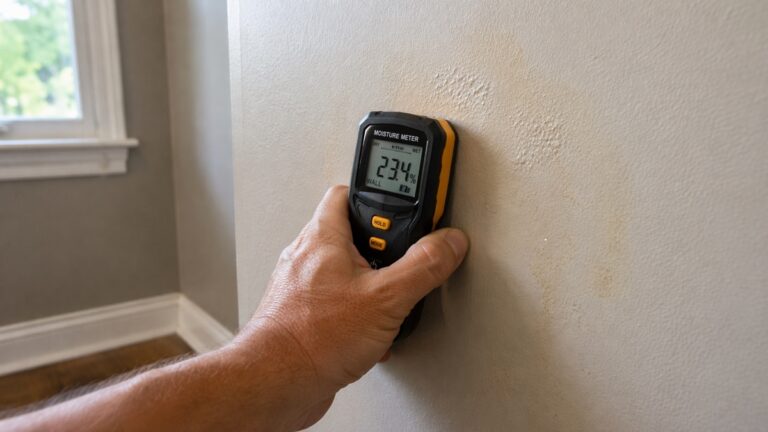
If there are already stains, damp trim, or recurring leak patterns, review signs of water damage around windows before assuming the issue is only cosmetic. If moisture may have spread behind the trim or frame, detecting moisture around window frames can help clarify whether the problem is limited to the surface or has moved into hidden materials.
For a whole-home approach to preventing repeated moisture damage, see how to find, fix, and prevent moisture problems in homes. Window flashing is one small part of a larger moisture-control strategy, but it is a critical part because wall openings are naturally vulnerable.
FAQ About How Window Flashing Works
Is window flashing the same as caulk?
No. Caulk seals specific exposed joints, while flashing redirects water through the wall’s drainage system. Caulk can support a flashing system in the right locations, but it cannot replace head flashing, side flashing, sill flashing, or proper drainage-plane integration.
Does every exterior window need flashing?
Exterior windows need some form of water-management detailing around the opening. The exact flashing materials and methods vary by wall type, window type, and construction method, but the purpose is the same: keep rainwater from entering the rough opening and surrounding wall materials.
Can missing flashing cause hidden wall moisture?
Yes. Missing or poorly integrated flashing can allow water to enter behind trim or into the rough opening. That moisture may soak into framing, insulation, sheathing, or drywall edges before visible staining appears inside the home.
Can you see window flashing after the window is installed?
Sometimes part of the flashing may be visible, but much of it is often hidden behind siding, trim, or other exterior materials. A finished window can look clean from the outside even if the hidden layers are missing, incomplete, or lapped in the wrong direction.
Why can a window leak at the bottom if the flashing problem is above the window?
Water can enter near the top of the window, travel down the side of the rough opening, and collect at the lower corners before it becomes visible indoors. This is why bottom-corner stains do not always mean the leak started at the sill.
Final Thoughts on How Window Flashing Works
Window flashing is supposed to protect the rough opening by controlling where water goes after it reaches the window area. Head flashing, side flashing, sill flashing, and the surrounding drainage layer should work together so moisture moves outward and downward instead of into framing, insulation, drywall, or trim.
The most important principle is simple: flashing should create a drainage path, not just a sealed-looking edge. Caulk, trim, siding, and paint may help reduce surface water entry, but they are not substitutes for correctly lapped and integrated flashing. If a window repeatedly stains, swells, or feels damp near the lower corners, the hidden flashing and drainage path deserve attention before the problem is treated as cosmetic.