
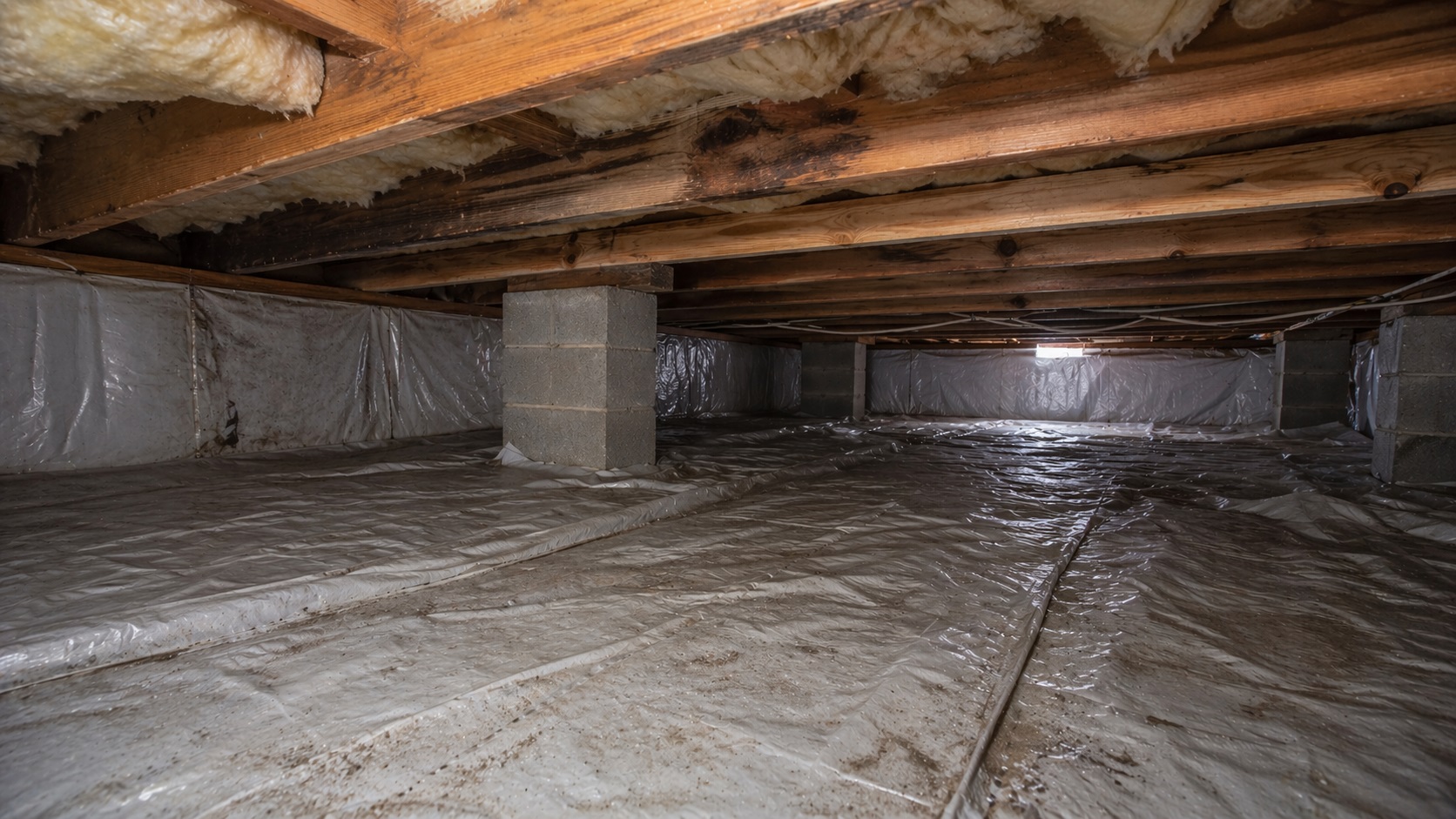
Best Crawl Space Dehumidifiers for Mold Prevention and Humidity Control
Excess moisture in crawl spaces can lead to mold growth, wood rot, musty odors, and structural moisture problems. If your crawl space smells musty, has condensation on ductwork, or stays humid for long periods, a dedicated crawl space dehumidifier can help control the air moisture.
This guide reviews the best crawl space dehumidifiers for mold prevention, humidity control, and long-term protection of crawl space materials. Each model is selected for crawl-space suitability, drainage capability, durability, capacity, and real-world usability.
For the broader guide to choosing, sizing, placing, setting, and maintaining dehumidifiers, start with how to choose and use a dehumidifier effectively. For moisture problems beyond dehumidifier selection, see how to find, fix, and prevent moisture problems in homes.
Disclosure: As an Amazon Associate, this site earns from qualifying purchases. This does not affect the price you pay. Our recommendations are based on research, product reliability, and real-world usability in moisture-prone environments.
Quick Picks: Best Crawl Space Dehumidifiers
- Best Overall: ALORAIR Sentinel HD55S — Ideal for most mid-size crawl spaces
- Best for Large Crawl Spaces: ALORAIR Sentinel HD90 — High capacity for larger areas
- Best Budget Option: ALORAIR Sentinel HS35 — Compact solution for smaller crawl spaces
- Best Premium Option: AprilAire E070 — Professional-grade moisture control
- Best Smart Alternative: GoveeLife 4500 With Pump — Flexible installation option
Quick Recommendation:
Most homes with crawl spaces between 800–1,300 sq ft perform best with the ALORAIR Sentinel HD55S. Larger crawl spaces or heavy moisture problems typically require higher-capacity units such as the ALORAIR Sentinel HD90.
Best Crawl Space Dehumidifiers Reviewed
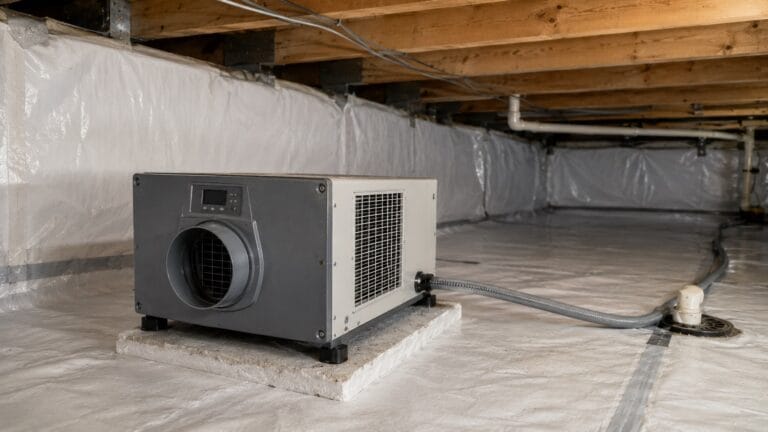
Standard upright dehumidifiers often fail in crawl spaces because they are too tall, rely on removable buckets, or are not built for low-clearance installations. Crawl space dehumidifiers use horizontal housings and continuous drainage so they can operate reliably in tight spaces.
If your crawl space has limited clearance, difficult access, or constant humidity, a dedicated crawl space unit is usually the better choice. For broader setup rules, see where to place a dehumidifier in your home.
ALORAIR Sentinel HD55S — Best Overall Crawl Space Dehumidifier
The ALORAIR Sentinel HD55S is one of the most reliable crawl space dehumidifiers for typical residential installations. Its low-profile horizontal design allows it to fit into tight crawl spaces where upright units would not function properly.
With a removal capacity of approximately 55 pints per day, this unit is well suited for crawl spaces up to about 1,300 square feet. That makes it a strong match for the majority of homes dealing with crawl space humidity.
Unlike standard residential units, this model uses continuous drainage instead of a removable bucket. That allows it to operate automatically without requiring regular maintenance.
Check the ALORAIR Sentinel HD55S on Amazon to see current availability.
Key Features
- Low-profile horizontal crawl space design
- Approximately 55 pints/day moisture removal
- Continuous drainage operation
- Automatic defrost system
- Memory restart after power interruptions
- Durable metal construction
Pros
- ✔ Designed specifically for crawl spaces
- ✔ Reliable long-term operation
- ✔ Fits low-clearance installations
- ✔ Balanced capacity for most homes
- ✔ Continuous drainage reduces maintenance
Cons
- ✖ Requires gravity drainage setup
- ✖ Not ideal for very large crawl spaces
- ✖ Higher upfront investment than portable units
Best For
- Mid-size crawl spaces (800–1,300 sq ft)
- Encapsulated crawl spaces
- Homes with moderate humidity issues
- Low-clearance crawl space installations
ALORAIR Sentinel HD90 — Best for Large Crawl Spaces
Larger crawl spaces require higher-capacity equipment to maintain stable humidity levels. The ALORAIR Sentinel HD90 is designed specifically for crawl spaces that exceed average size or experience heavy moisture buildup.
With a removal capacity of approximately 90 pints per day, this model provides the extra power needed for crawl spaces up to about 2,600 square feet. This makes it particularly useful in larger homes or regions with consistently high humidity levels.
One of the most common mistakes homeowners make is choosing a unit that is too small. Undersized units often run continuously without properly controlling humidity, leading to premature wear and poor performance.
Check the ALORAIR Sentinel HD90 on Amazon to see current availability.
Key Features
- High-capacity 90 pint moisture removal
- Designed for large crawl spaces
- Horizontal low-profile housing
- Continuous drainage capability
- Automatic defrost protection
- Heavy-duty metal casing
Pros
- ✔ Ideal for large crawl spaces
- ✔ Handles heavy moisture loads
- ✔ Prevents undersizing problems
- ✔ Durable construction
- ✔ Reliable long-term performance
Cons
- ✖ Larger size than smaller models
- ✖ Higher power usage than mid-size units
- ✖ Requires adequate drainage planning
Best For
- Large crawl spaces (1,500–2,600 sq ft)
- Homes with persistent humidity problems
- Regions with high humidity levels
- Situations where smaller units struggled to keep up
If your moisture problem also affects a basement area, compare the best basement dehumidifiers to prevent mold and moisture. Some homes need separate moisture control in more than one area.
ALORAIR Sentinel HS35 — Best Budget Crawl Space Dehumidifier
Not every crawl space requires a high-capacity dehumidifier. Smaller crawl spaces or moderately damp environments often benefit from a compact solution that still delivers reliable moisture control. The ALORAIR Sentinel HS35 fills that role as a budget-friendly crawl space dehumidifier designed specifically for smaller areas.
With a removal capacity of approximately 35 pints per day, this unit works well in crawl spaces up to about 1,000 square feet. It uses the same low-profile horizontal design found in larger crawl space units, allowing installation in tight spaces without requiring upright clearance.
For homeowners looking to prevent humidity problems before they become severe, this model offers a practical entry-level solution without sacrificing crawl space-specific functionality.
Check the ALORAIR Sentinel HS35 on Amazon to see current availability.
Key Features
- Compact horizontal crawl space design
- Approximately 35 pints/day moisture removal
- Continuous drainage capability
- Automatic defrost function
- Memory restart after power interruption
- Energy-efficient operation
Pros
- ✔ Budget-friendly crawl space solution
- ✔ Suitable for smaller crawl spaces
- ✔ True crawl space form factor
- ✔ Efficient operation for moderate humidity
- ✔ Continuous drainage support
Cons
- ✖ Limited capacity for larger crawl spaces
- ✖ Not designed for heavy moisture loads
- ✖ Requires gravity drainage setup
Best For
- Small crawl spaces (under 1,000 sq ft)
- Moderate humidity conditions
- Budget-conscious homeowners
- Preventative moisture control
AprilAire E070 — Best Premium Crawl Space Dehumidifier
The AprilAire E070 is widely recognized as a professional-grade crawl space dehumidifier designed for long-term reliability. This model is often used in encapsulated crawl spaces and whole-home humidity control systems where consistent performance is essential.
With a removal capacity of approximately 70 pints per day, the E070 can manage medium to large crawl spaces up to roughly 2,200–2,800 square feet. Its design emphasizes durability and efficiency, making it a strong option for homeowners seeking dependable long-term moisture management.
AprilAire has a long-standing reputation in indoor air quality and humidity control, which makes this model appealing to homeowners looking for professional-level performance.
Check the AprilAire E070 on Amazon to see current availability.
Key Features
- Approximately 70 pints/day moisture removal
- Designed for encapsulated crawl spaces
- Energy Star certified efficiency
- Continuous drainage operation
- Built-in digital humidity controls
- Trusted professional-grade brand
Pros
- ✔ Professional-grade reliability
- ✔ Strong performance for medium and large crawl spaces
- ✔ Energy-efficient long-term operation
- ✔ Trusted brand reputation
- ✔ Suitable for encapsulated crawl spaces
Cons
- ✖ Higher upfront investment
- ✖ May be oversized for small crawl spaces
- ✖ Requires careful installation planning
Best For
- Encapsulated crawl spaces
- Medium to large crawl spaces
- Long-term moisture control needs
- Homeowners seeking premium durability
GoveeLife Smart Dehumidifier 4,500 Sq Ft With Pump — Best Smart Alternative
While most crawl spaces benefit from horizontal units, some installations allow upright alternatives. The GoveeLife Smart Dehumidifier 4,500 Sq Ft With Pump provides a flexible solution for accessible crawl spaces or adjacent basement areas where horizontal installation is not required.
This model includes smart Wi-Fi controls and a built-in pump, allowing moisture to be discharged upward when gravity drainage is not available. That added flexibility makes installation easier in certain layouts.
Although it is not a dedicated crawl space unit, it can be a useful alternative when space conditions allow.
Check the GoveeLife Smart Dehumidifier on Amazon to see current availability.
Key Features
- Smart Wi-Fi monitoring capability
- Built-in pump for flexible drainage
- Multiple drainage options
- Approximately 50 pint/day removal capacity
- Digital humidity controls
- Automatic shut-off protection
Pros
- ✔ Built-in pump simplifies installation
- ✔ Smart monitoring features
- ✔ Flexible drainage setup
- ✔ Useful alternative in accessible crawl spaces
- ✔ Convenient remote controls
Cons
- ✖ Not designed specifically for crawl spaces
- ✖ Requires sufficient clearance height
- ✖ Less durable than crawl-specific units
Best For
- Accessible crawl spaces
- Adjacent basement installations
- Situations requiring pump drainage
- Homeowners wanting smart controls
Crawl Space Dehumidifier Comparison Table
| Model | Best For | Capacity | Coverage Area | Form Factor | Drain Type |
|---|---|---|---|---|---|
| ALORAIR Sentinel HD55S | Most homes | 55 pints/day | Up to ~1,300 sq ft | Horizontal | Continuous |
| ALORAIR Sentinel HD90 | Large crawl spaces | 90 pints/day | Up to ~2,600 sq ft | Horizontal | Continuous |
| ALORAIR Sentinel HS35 | Small crawl spaces | 35 pints/day | Up to ~1,000 sq ft | Horizontal | Continuous |
| AprilAire E070 | Premium installations | 70 pints/day | Up to ~2,800 sq ft | Horizontal | Continuous |
| GoveeLife 4500 | Accessible crawl spaces | 50 pints/day | Up to ~4,500 sq ft | Upright | Pump or hose |
After choosing a crawl space dehumidifier, verify that the unit is actually lowering humidity in the space. For measurement methods, see how to test indoor humidity levels. If you need a monitoring device, compare the best hygrometers for home humidity monitoring.
Signs a Crawl Space Dehumidifier May Help
A crawl space dehumidifier may help when the main problem is high air humidity rather than active water entry. Common signs include musty odors, condensation on ductwork, damp insulation, rust on pipes or fasteners, and humidity readings that stay high.
If you see standing water, saturated soil, soft wood, widespread mold, or water entering after storms, the crawl space likely needs drainage, vapor barrier, or structural moisture correction in addition to dehumidification.
How to Choose a Crawl Space Dehumidifier
Choosing a crawl space dehumidifier depends on size, moisture load, clearance height, drainage, and whether the crawl space is sealed or exposed to outdoor air. The best choice is not always the largest model, but undersizing is one of the most common reasons crawl space humidity stays high.
Capacity
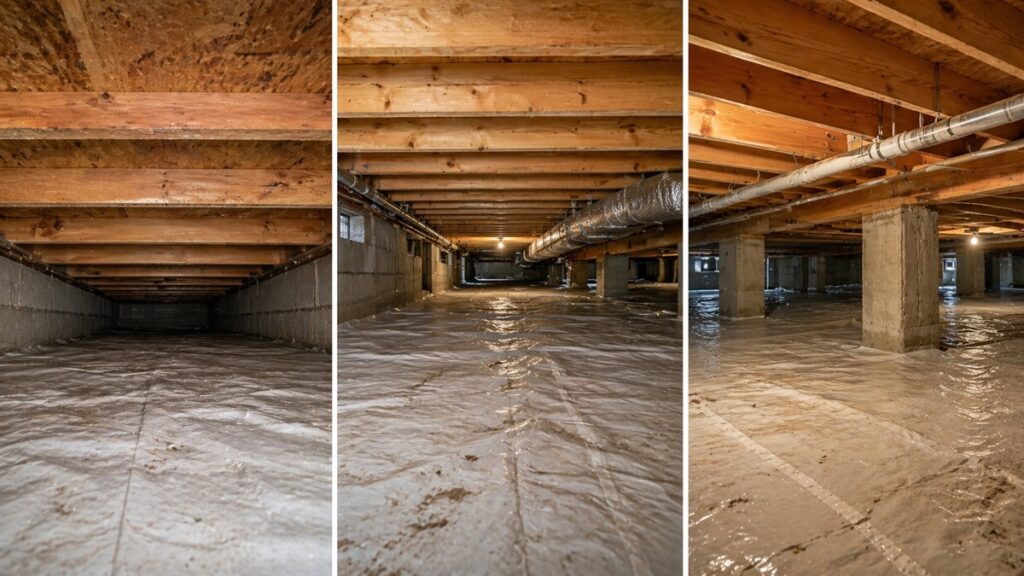
Small crawl spaces may only need a compact unit such as the ALORAIR Sentinel HS35, while larger or more humid spaces may need a mid-size or high-capacity model such as the HD55S, HD90, or AprilAire E070. For a fuller sizing framework, see how to choose the right size dehumidifier.
Clearance and Form Factor
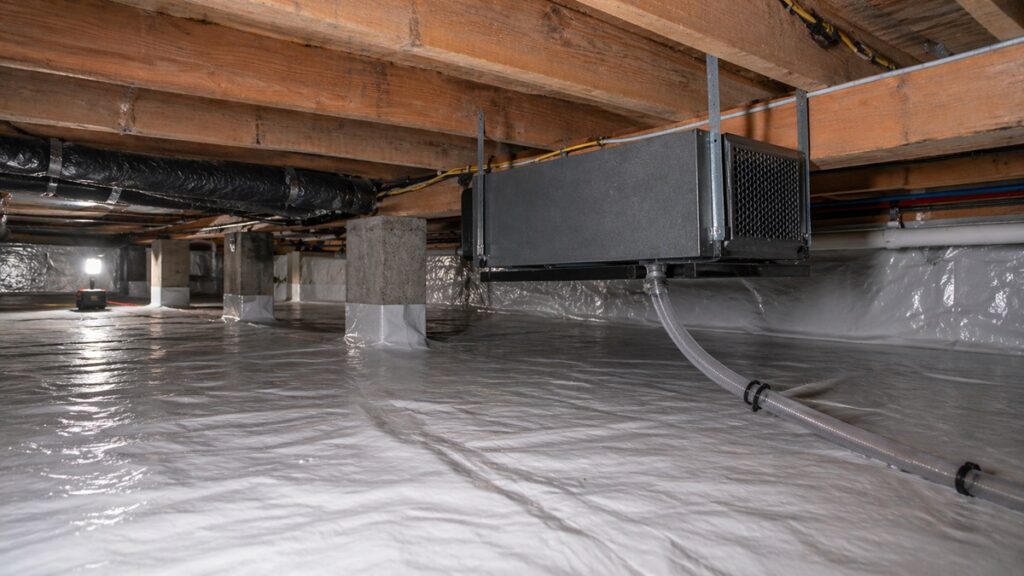
Most crawl spaces need a horizontal low-profile unit because upright models may be too tall or hard to service. If the crawl space is accessible and has enough clearance, an upright unit may work, but a dedicated horizontal model is usually the safer long-term choice.
Drainage
Most crawl space dehumidifiers rely on continuous drainage. Before choosing a unit, confirm whether gravity drainage is possible or whether you need a pump. A poor drain setup can make even a strong dehumidifier unreliable.
Moisture Source Control
A crawl space dehumidifier works best when soil moisture, standing water, damaged vapor barriers, and drainage problems are also addressed. If moisture keeps returning, use the broader guide to how to find, fix, and prevent moisture problems in homes.on signs of hidden moisture before serious damage starts .
Crawl Space Dehumidifier Setup Tips
Install the dehumidifier where air can circulate through the crawl space and where the unit can drain safely. Avoid tight corners, blocked intake areas, and locations where the drain hose must run uphill without a pump. For broader placement guidance, see where to place a dehumidifier in your home.
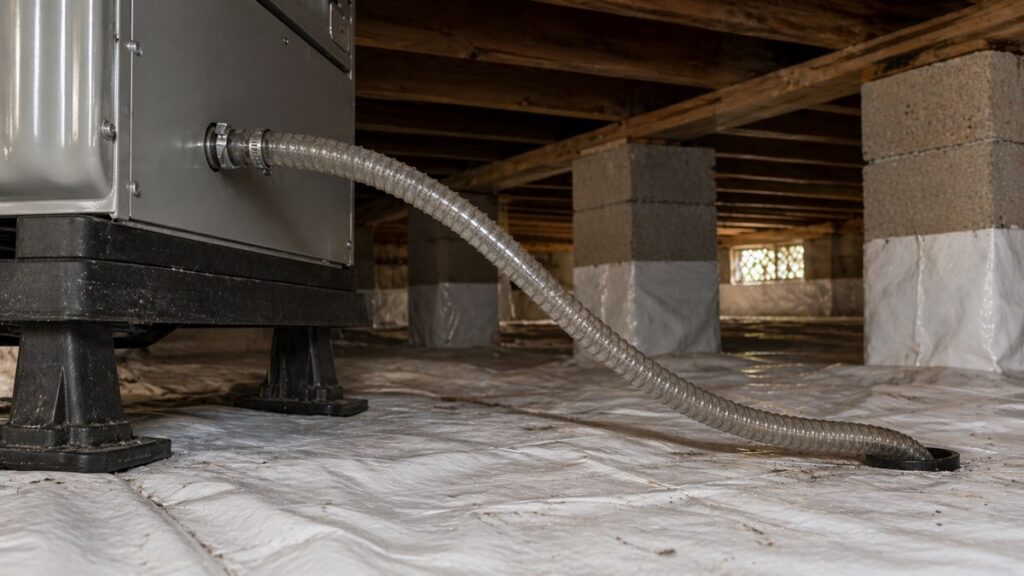
For gravity drainage, the hose should slope downward without kinks, sharp bends, or a discharge point that can freeze or back up. If gravity drainage is not available, choose a unit with a pump or plan a separate condensate pump setup.
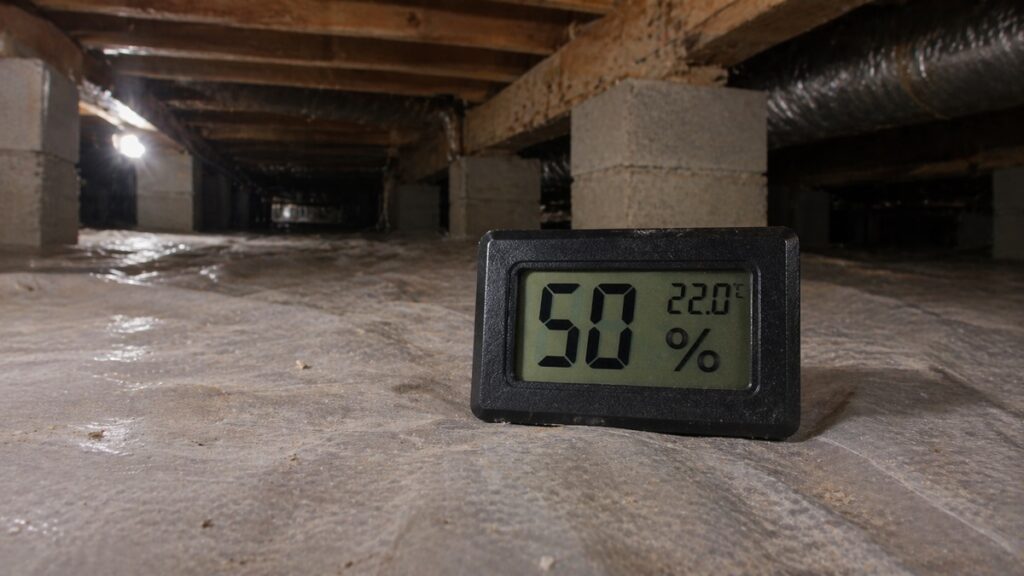
After installation, verify humidity with a separate monitor instead of relying only on the unit’s built-in reading. For target setpoints, see best dehumidifier settings to prevent mold. For runtime expectations, see how long to run a dehumidifier each day.may require costly repairs. Monitoring levels regularly helps prevent long-term moisture damage.
Signs Your Crawl Space Dehumidifier Is Working Correctly
After installing a crawl space dehumidifier, it’s important to confirm that humidity levels are actually improving. Many homeowners assume the unit is working simply because it turns on, but proper performance should be verified.
- Humidity readings steadily drop: Within 24–72 hours, humidity should begin moving toward the 45–55% target range.
- Musty odors begin to fade: Persistent damp smells usually improve once moisture levels stabilize.
- Condensation decreases: Water droplets on ducts, pipes, or vapor barriers should become less noticeable.
- The unit cycles instead of running nonstop: After humidity stabilizes, the system should turn on and off periodically rather than running continuously.
- No standing water collects near the unit: Proper drainage should remove moisture without pooling or leaks.
Performance Tip: Use a reliable hygrometer to verify humidity levels in multiple areas of the crawl space. Measurements near ducts, corners, and soil surfaces provide the most accurate performance feedback.
If humidity levels do not improve after several days, inspect the crawl space for hidden moisture sources such as plumbing leaks, foundation seepage, or damaged vapor barriers.
How Long It Takes for a Crawl Space to Dry Out
Most crawl spaces do not dry out immediately after installing a dehumidifier. The time required depends on moisture severity, crawl space size, and whether underlying problems are present.
- Mild humidity problems: 1–3 days to reach stable humidity levels
- Moderate moisture buildup: 3–7 days to noticeably reduce damp odors and condensation
- Severe moisture conditions: 1–3 weeks or longer if standing water, soil moisture, or damaged vapor barriers are present
Important: If humidity remains above 60% after one week of continuous operation, inspect the crawl space for drainage problems, leaks, or undersized equipment. If water continues to collect under the home after rainfall, a drainage or grading problem may be overwhelming the dehumidifier’s capacity.
Common Crawl Space Dehumidifier Mistakes to Avoid
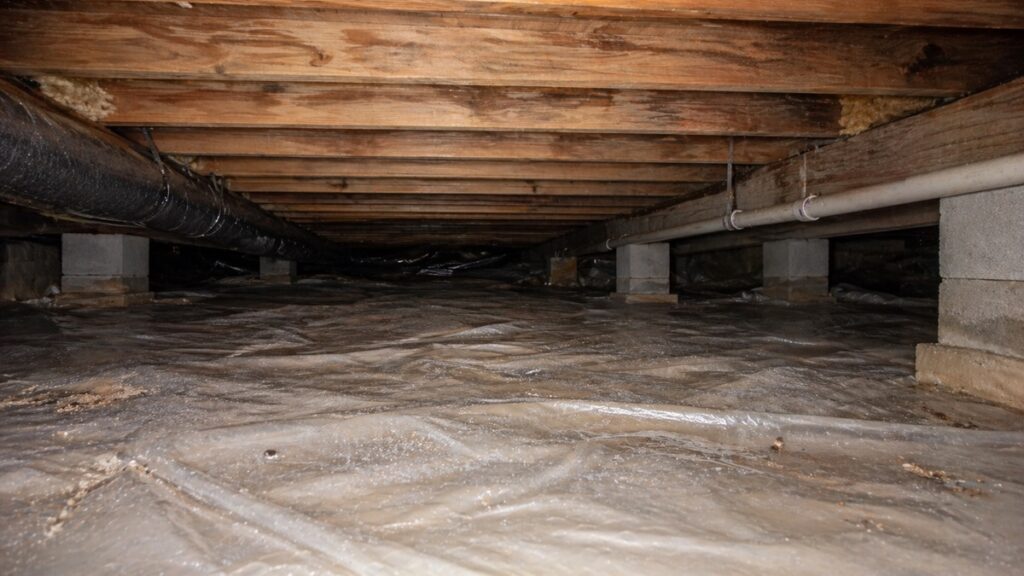
The biggest mistake is using a dehumidifier to compensate for a moisture source that has not been fixed. A dehumidifier can control air humidity, but it cannot fix standing water, groundwater intrusion, foundation cracks, damaged vapor barriers, or poor exterior drainage.
Other common mistakes include choosing a unit that is too small, blocking airflow around the intake or exhaust, installing the drain hose without proper slope, and neglecting filters or drain lines. For routine care, see how to maintain a dehumidifier.
If water enters the crawl space after storms, fix the water source before relying on dehumidification alone. Large mold areas, wood rot, soft floors, standing water, or foundation cracks may require professional inspection.
Frequently Asked Questions About Crawl Space Dehumidifiers
Do crawl spaces really need a dehumidifier?
Many crawl spaces benefit from a dehumidifier, especially in humid climates or homes with moisture intrusion. Crawl spaces sit close to the ground, which allows moisture from soil and outside air to accumulate over time.
Without proper humidity control, crawl spaces often develop mold, wood rot, and structural damage. Installing a dedicated crawl space dehumidifier helps stabilize humidity and protect building materials.
What humidity level should a crawl space be kept at?
Most crawl spaces should stay around 45%–55% relative humidity. This range helps reduce mold-friendly conditions without forcing the unit to run unnecessarily low.
For detailed setpoint guidance, see best dehumidifier settings to prevent mold. To verify the space, use indoor humidity testing.
How long should a crawl space dehumidifier run each day?
Most crawl space dehumidifiers run automatically based on humidity readings. During humid seasons, a unit may run continuously until the crawl space stabilizes, then cycle on and off as needed.
If the unit runs constantly without lowering humidity, it may be undersized or the crawl space may have unresolved moisture sources. For more detail, see how long to run a dehumidifier each day.
Can I use a regular basement dehumidifier in a crawl space?
Standard basement dehumidifiers are typically not ideal for crawl spaces due to height limitations and airflow restrictions. Crawl space units are designed with low-profile housings that allow operation in tight environments.
If your crawl space has adequate height or accessibility, some upright models may still work effectively. However, horizontal crawl space units usually provide better long-term reliability. If you’re comparing upright units, you may want to review our guide to basement dehumidifiers designed for moisture control .
Is crawl space encapsulation required?
Encapsulation is not always required, but it significantly improves moisture control in many homes. Sealing the crawl space helps reduce moisture intrusion from soil and outside air.
Encapsulation often improves the performance of crawl space dehumidifiers and reduces runtime. Homes in humid regions frequently benefit from this approach.
How often should crawl space dehumidifier filters be cleaned?
Most filters should be inspected every 3–6 months, but dusty or damp crawl spaces may need more frequent cleaning. Keeping filters, intake areas, and drain lines clear helps the unit maintain airflow and moisture removal.
For a full checklist, see how to maintain a dehumidifier.
What size crawl space dehumidifier do I need?
Sizing depends on crawl space area, moisture load, clearance, drainage, and whether the space is sealed or exposed to outdoor air. Smaller crawl spaces may use compact units, while larger or wetter spaces need higher-capacity models.
For a full sizing framework, see how to choose the right size dehumidifier.
Final Thoughts
The best crawl space dehumidifier is the one that matches your crawl space size, clearance, drainage setup, and moisture load. For most mid-size crawl spaces, the ALORAIR Sentinel HD55S is the strongest all-around starting point, while larger or wetter spaces may need a higher-capacity unit such as the ALORAIR Sentinel HD90.
A dehumidifier can help control crawl space humidity, but it should not be used as a substitute for fixing standing water, damaged vapor barriers, foundation drainage problems, or widespread mold. Choose the right unit, set up drainage correctly, and verify humidity so the crawl space stays stable over time.
2 Comments
Comments are closed.