How to Fix Persistent Moisture Behind Baseboards
Persistent moisture behind baseboards usually means that moisture has not been fully removed or that a hidden source of water is still present. While minor dampness may dry naturally, moisture that repeatedly returns or fails to disappear often signals a deeper issue inside walls, flooring, trim, or framing materials.
Fixing persistent moisture begins with identifying why the problem continues. Moisture that returns after drying attempts typically points to trapped water, incomplete drying, or an ongoing leak. The right next step depends on whether the area only needs monitoring, closer inspection, trim removal, or professional evaluation.
If you are unsure whether symptoms indicate hidden moisture, reviewing signs of moisture behind wall trim can help confirm early warning signs. For broader explanation of how mold develops after water exposure, see why baseboards become moldy after leaks to understand the conditions that lead to persistent moisture problems.
Key Takeaways
- Persistent moisture indicates that water remains trapped or continues entering the structure.
- Recurring dampness after drying often signals hidden moisture problems.
- Severity levels help determine whether monitoring, trim removal, or professional help is needed.
- Baseboards may need removal when moisture persists, swelling continues, or mold becomes visible.
- Structural symptoms indicate that moisture has progressed beyond surface damage.
- Repairs should wait until the source is identified and affected materials are dry.
- Prompt response reduces the likelihood of long-term damage and mold growth.
What to Do First When Moisture Keeps Returning Behind Baseboards
When moisture keeps returning behind baseboards, the first goal is not cosmetic repair. The first goal is to decide whether the moisture is residual, trapped, or actively entering the structure. Repairs should wait until the source is identified and affected materials have had enough time to dry.
Start with these basic decision steps:
- Stop any obvious water source, such as a plumbing drip, appliance leak, or exterior water entry point.
- Dry the visible area with airflow, ventilation, and dehumidification when appropriate.
- Watch whether dampness, odor, swelling, or staining returns within the next several days.
- Check whether the problem appears only after rain, appliance use, shower use, or plumbing activity.
- Consider trim removal or professional inspection if moisture persists, spreads, or affects wall and floor materials.
This early decision process helps avoid two common mistakes: sealing moisture inside the wall too soon or repeatedly drying the surface while the hidden source remains active.
| What You Notice | What It Usually Means | Best Next Step |
|---|---|---|
| Dampness fades and does not return | Residual surface moisture | Keep monitoring before repainting or sealing |
| Dampness returns in the same spot | Trapped moisture or hidden source | Check nearby plumbing, appliances, exterior walls, and floor edges |
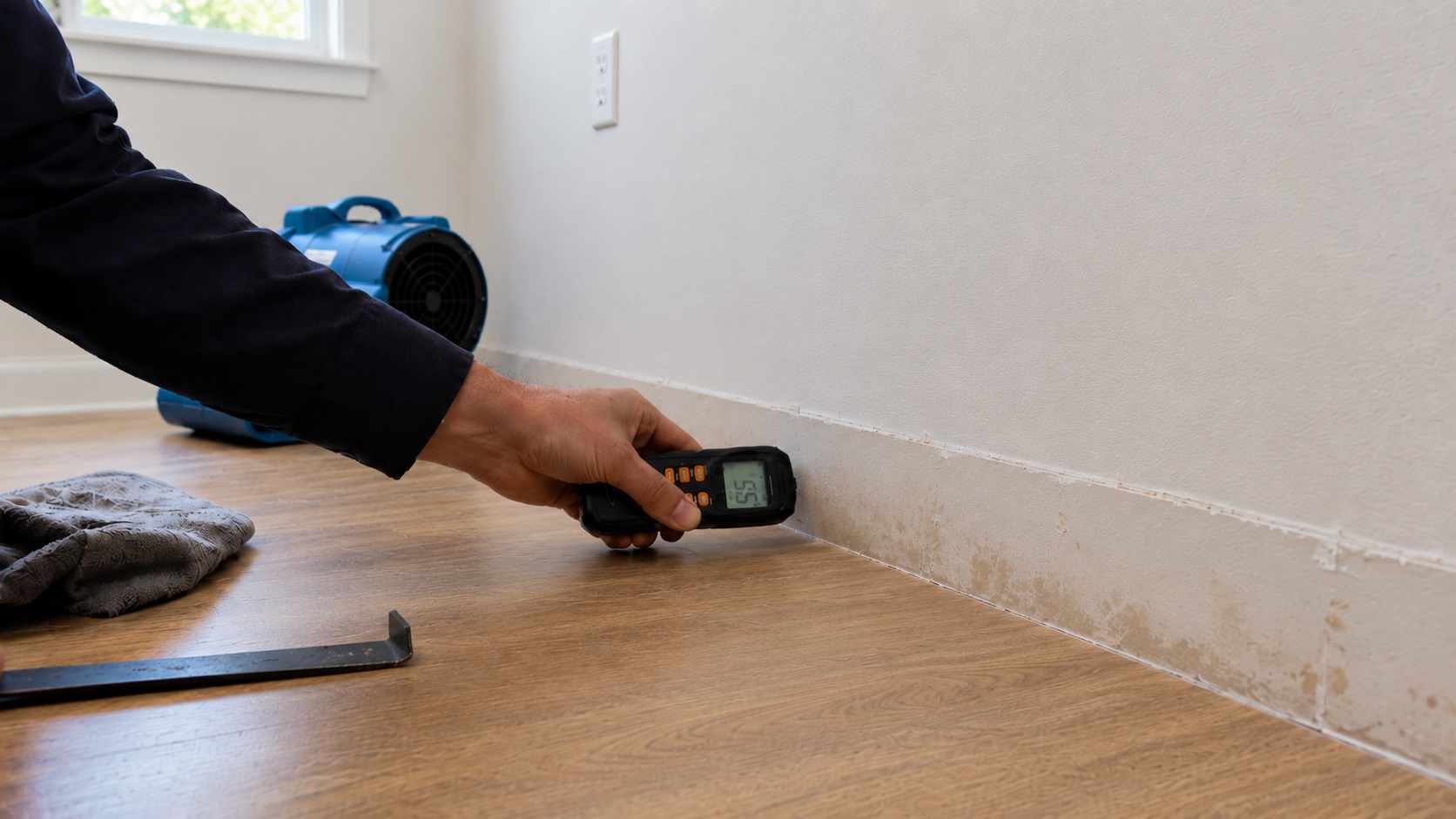
| Swelling, odor, or staining continues | Moisture may be behind trim or inside materials | Consider trim removal or moisture inspection |
| Soft drywall, visible mold, or spreading damage | Possible material deterioration or active intrusion | Stop cosmetic repairs and seek professional evaluation |
What Persistent Moisture Behind Baseboards Means
Persistent moisture occurs when damp conditions remain after normal drying should have taken place. In many cases, moisture appears to disappear temporarily but returns days or weeks later. This repeating pattern usually means that water remains hidden inside materials or continues entering the structure.
Moisture That Returns After Drying Attempts
One of the clearest signs of persistent moisture is recurrence after initial cleanup. Even when visible water is removed, hidden materials may still contain moisture that slowly migrates back toward the surface.
Recurring moisture patterns include:
- Dampness returning after drying efforts
- Musty odors reappearing days later
- Trim swelling after appearing normal
- Stains forming again in the same location
- Moisture symptoms increasing over time
These patterns suggest that initial drying did not remove moisture from the deeper materials behind or below the trim.
Moisture That Never Fully Disappears
In some cases, moisture remains visible or detectable for extended periods. This usually indicates that a moisture source remains active, drying conditions are insufficient, or water has reached materials that dry slowly.
Continuous moisture signs include:
- Persistent dampness along trim edges
- Ongoing musty odors
- Visible discoloration that does not fade
- Walls that remain cool or damp to the touch
- Repeated swelling of trim materials
Moisture that does not fully disappear should be treated as a warning sign of deeper moisture retention, not just a surface drying problem.
Why Moisture Keeps Coming Back
Persistent moisture usually has an identifiable cause. The most common causes are slow leaks, trapped moisture inside building materials, or external water entering during rain or seasonal conditions.
Hidden Leaks That Continue Releasing Moisture
Slow leaks inside walls are among the most common causes of recurring moisture. These leaks may release small amounts of water continuously, making detection difficult until trim, drywall, or flooring begins to show symptoms.
Possible hidden leak sources include:
- Pipes located inside wall cavities
- Loose plumbing connections
- Cracked supply lines
- Appliance drain failures
- Fixture seal deterioration
Even small leaks can create ongoing moisture problems when water accumulates behind trim over time.
Moisture Trapped Inside Structural Materials
Water that enters porous materials can remain trapped long after visible surfaces appear dry. This trapped moisture may later move back toward the baseboard area, making it seem as though the problem has returned.
Common moisture-trapping materials include:
- Drywall and joint compounds
- Wood framing components
- Insulation materials
- Subfloor structures
- Carpet padding near walls
Moisture trapped inside these materials may require extended drying, removal of obstructing trim, or professional moisture assessment before repairs begin.
External Moisture Entering the Structure
Moisture problems do not always originate from plumbing leaks. External water intrusion can produce recurring moisture symptoms, especially when the same area becomes damp after rain.
External moisture sources may include:
- Window leaks during heavy rain
- Foundation seepage from saturated soil
- Roof drainage problems
- Exterior wall cracks
- Poor grading around the home
Moisture that appears during rainfall or seasonal weather changes should be evaluated as a possible exterior water-entry problem.
How to Evaluate the Severity of Persistent Moisture
Not all persistent moisture problems carry the same level of risk. Some situations involve minor dampness that can be monitored while drying improves. Others show signs that hidden materials are already affected. Evaluating severity helps determine whether to monitor, inspect behind trim, or seek professional help.
Low-Severity Persistent Moisture
Low-severity moisture problems usually involve mild symptoms that appear occasionally but do not worsen significantly. These cases may involve residual moisture, short-term humidity, or a small area that needs better airflow.
Common low-severity signs include:
- Slight dampness that appears occasionally
- Minor discoloration that does not spread
- Temporary odors that fade with ventilation
- No visible structural damage
- No soft or weakened materials
Recommended response: improve airflow, reduce humidity, monitor the area for several days, and avoid repainting or caulking until the dampness stops returning.
Moderate-Severity Persistent Moisture
Moderate severity indicates that moisture problems are becoming more established. Symptoms may appear repeatedly, show gradual worsening, or affect more than the surface of the trim.
Moderate-severity warning signs include:
- Repeated swelling of trim
- Persistent musty odors
- Paint bubbling or cracking
- Visible material distortion
- Localized flooring changes near walls
Recommended response: identify the moisture source, consider removing a small section of trim for inspection, and confirm that the wall or floor materials are drying before repairs begin.
High-Severity Persistent Moisture
High-severity conditions involve clear evidence of structural impact, mold growth, or ongoing moisture intrusion. These situations typically require prompt attention to prevent further damage.
High-severity indicators include:
- Soft drywall or weakened walls
- Loose or separating trim
- Visible mold growth
- Significant staining or spreading damage
- Flooring warping near walls
Recommended response: stop cosmetic repairs, avoid covering the area, and seek professional evaluation if materials are soft, mold is visible, the source is unknown, or moisture keeps spreading.
Do not paint, caulk, reinstall trim, or seal the area while odors, swelling, softness, visible mold, or recurring dampness remain. Covering the area too soon can trap moisture and make hidden damage harder to evaluate.
When Baseboards May Need Removal
In some persistent moisture situations, removing baseboards becomes necessary to evaluate hidden conditions. Baseboards cover the seam between walls and floors, which often hides moisture damage that cannot be seen from the surface.
Signs That Baseboards May Require Removal
Baseboards may need to be removed when symptoms continue despite drying efforts. Removal allows inspection of hidden spaces and helps determine whether moisture remains trapped behind trim.
Removal may be considered when:
- Moisture persists for several days after drying
- Swelling continues despite cleanup
- Odors remain after ventilation
- Water has entered wall cavities
- Visible mold develops along trim
These signs indicate that moisture may be hidden behind trim and requires closer evaluation.
Repeated Swelling Indicates Material Saturation
When baseboards swell repeatedly, it often means that materials remain saturated internally. Swelling that returns after drying attempts usually signals ongoing moisture retention.
Repeated swelling patterns include:
- Trim that expands again after appearing dry
- New cracks forming along trim edges
- Paint separating repeatedly
- Gaps reopening after repair
These symptoms suggest that deeper moisture problems exist behind the visible surface.
Visible Mold Along Trim Edges
Visible mold near baseboards strongly suggests that moisture has persisted long enough to support growth. In these cases, hidden areas behind trim may contain additional mold or moisture.
If visible mold appears, reviewing why baseboards become moldy after leaks can help clarify how moisture conditions lead to recurring mold development.
When Professional Help Is Necessary
Some persistent moisture problems can be monitored or managed with improved drying conditions, but others require professional attention. Knowing when to seek help prevents small moisture problems from turning into structural damage or widespread mold growth.
Moisture That Lasts Longer Than Several Days
Most materials begin drying within the first few days after moisture exposure. When moisture remains present beyond this window, it often signals hidden moisture retention or an ongoing water source.
Professional evaluation may be necessary when:
- Dampness remains after three to five days
- Odors continue despite ventilation
- Moisture spreads to new areas
- Drying efforts fail to reduce symptoms
- Conditions worsen instead of improving
Moisture that persists beyond expected drying time often indicates deeper problems that require specialized tools or inspection methods.
Structural Materials Show Signs of Weakness
Structural changes suggest that moisture has affected internal materials. These symptoms should not be ignored, as weakened materials can deteriorate quickly once saturation occurs.
Signs of structural weakening include:
- Walls that feel soft near the floor
- Trim that loosens or separates
- Flooring that shifts when stepped on
- Drywall that crumbles or dents easily
- Persistent bulging near trim edges
Structural symptoms indicate that moisture has progressed beyond surface damage.
The Moisture Source Cannot Be Identified
When moisture appears repeatedly without an obvious cause, locating the source becomes critical. Hidden leaks or external moisture pathways often require specialized inspection techniques.
Situations that may require professional help include:
- Moisture recurring without visible leaks
- Symptoms appearing during rainfall
- Recurring dampness in the same location
- Moisture spreading without explanation
- Odors persisting after cleanup
If the source remains unknown, reviewing signs of moisture behind wall trim can help identify patterns that support further investigation.
What Should Happen Before Repairs Begin
Repairs should not begin just because the visible surface looks dry. Before reinstalling trim, repainting, caulking, or replacing damaged materials, confirm that the moisture source has been addressed and that the affected area is no longer showing signs of active dampness.
Before repairs begin, make sure:
- Dampness, odor, swelling, and staining are no longer returning.
- The likely moisture source has been identified or professionally investigated.
- Hidden wall, trim, and floor materials have had enough time to dry.
- Soft, crumbling, moldy, or structurally weakened materials have been evaluated before being covered.
If drying challenges persist, reviewing how to dry baseboards after water damage helps clarify how drying conditions influence repair success.
How to Prevent Persistent Moisture From Returning
Once persistent moisture problems are addressed, preventing recurrence becomes the next priority. Moisture often returns when underlying conditions remain unchanged. Long-term prevention focuses on reducing moisture exposure and improving drying conditions around baseboards.
Improve Airflow Around Wall and Floor Edges
Airflow plays a major role in keeping trim and wall materials dry. Poor airflow allows moisture to remain trapped in enclosed areas, increasing the likelihood of recurring problems.
Helpful airflow practices include:
- Keeping furniture slightly away from walls
- Ensuring vents remain unobstructed
- Allowing air circulation along exterior walls
- Using ventilation in moisture-prone rooms
- Checking enclosed spaces periodically
Consistent airflow reduces moisture retention and supports long-term drying stability.
Monitor High-Risk Areas Regularly
Regular observation helps detect recurring moisture before it becomes severe. Areas that have previously experienced moisture problems should receive ongoing attention.
High-risk monitoring areas include:
- Rooms with past water damage
- Exterior wall sections
- Bathrooms and kitchens
- Laundry rooms and basements
- Areas near plumbing fixtures
Routine checks help identify changes early and prevent moisture from developing unnoticed.
Maintain Stable Indoor Conditions
Environmental stability plays a key role in preventing moisture recurrence. Fluctuations in humidity and temperature often allow moisture to persist inside structural materials.
Preventive environmental practices include:
- Maintaining moderate indoor humidity levels
- Addressing condensation quickly
- Ensuring proper drainage outside the home
- Managing seasonal humidity changes
- Keeping moisture-prone rooms well ventilated
Stable environmental conditions reduce the likelihood of moisture returning after repairs.
Frequently Asked Questions About Persistent Moisture Behind Baseboards
Why does moisture keep coming back behind baseboards?
Moisture typically returns when hidden water sources remain active or trapped moisture was not fully removed. Persistent dampness often indicates that drying was incomplete or that external moisture continues entering the structure.
Can persistent moisture fix itself over time?
Persistent moisture rarely resolves on its own. While some minor dampness may dry naturally, recurring moisture usually indicates an underlying issue that requires attention. Ignoring persistent moisture often allows damage to worsen.
When should baseboards be removed due to moisture?
Baseboards may need removal when moisture persists for several days, swelling continues, odors remain, or visible mold appears. Removal allows inspection of hidden areas and helps determine whether moisture remains trapped behind trim.
Is persistent moisture dangerous to building materials?
Yes, persistent moisture weakens materials over time. Continued exposure can lead to structural deterioration, mold growth, and damage to drywall, framing, and flooring components.
How long is too long for moisture to remain behind baseboards?
Moisture that remains beyond several days after drying attempts should be considered a warning sign. If dampness persists beyond one week, further investigation is usually necessary to identify hidden moisture sources.
Conclusion: Persistent Moisture Requires Prompt and Informed Action
Persistent moisture behind baseboards should be treated as a repair-readiness warning, not just a surface stain or drying inconvenience. The safest next step is to identify the source, confirm whether hidden materials are still damp, and avoid covering the area until moisture conditions are stable.
For broader guidance on moisture that affects walls, trim, framing, and other building materials, review structural moisture problems in homes to understand when persistent moisture becomes a repair-readiness or structural concern.