
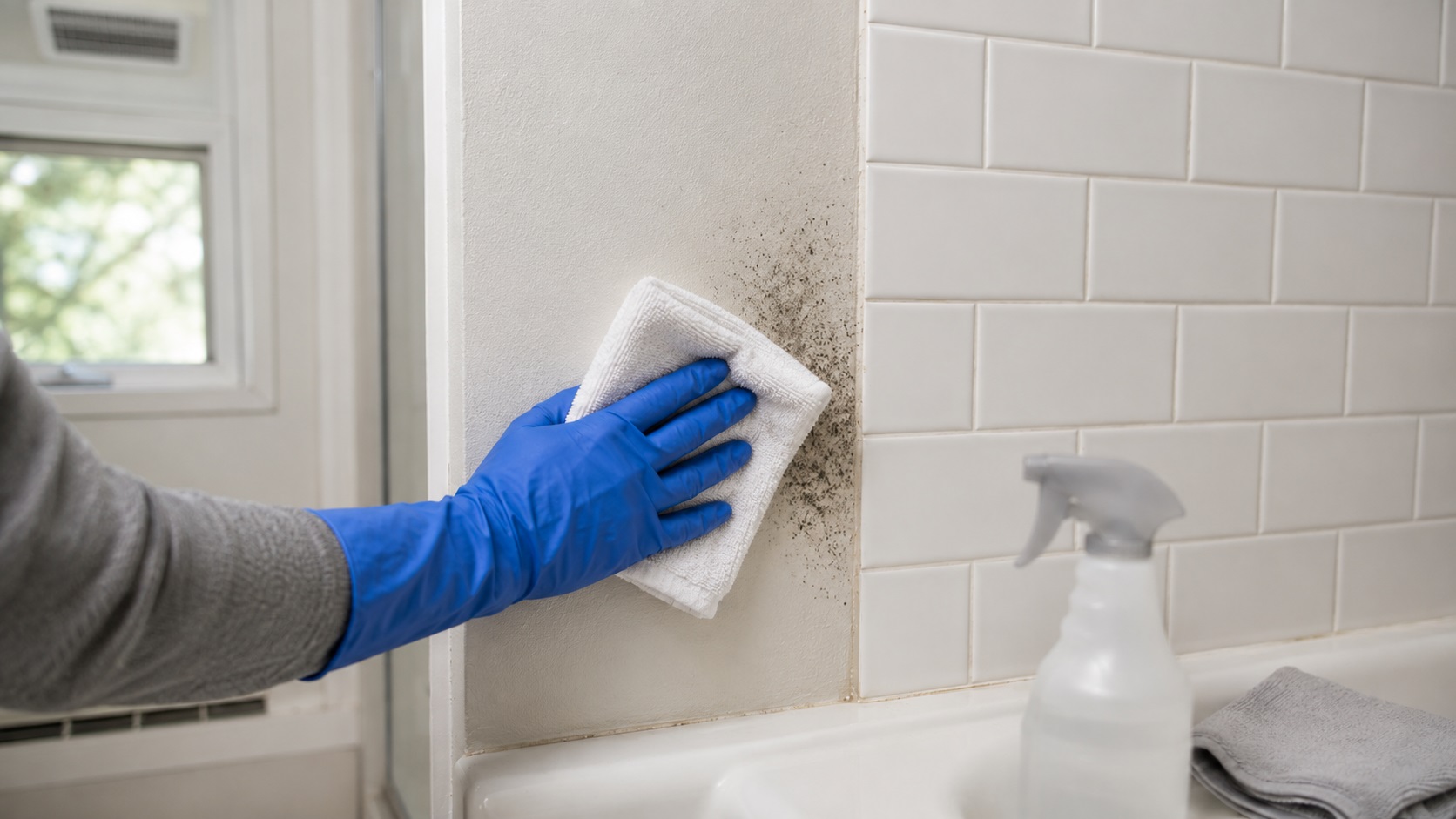
The Best Way to Clean Mold From Bathroom Walls
The best way to clean mold from bathroom walls is to use a surface-safe cleaner, give it enough contact time, wipe gently, and dry the wall completely afterward. For most light bathroom wall mold, 3% hydrogen peroxide, white vinegar, or a bathroom-safe mold cleaner can remove visible growth without damaging painted walls, tile, or grout.
Mold on bathroom walls is common because warm steam, frequent moisture, and limited airflow create ideal conditions for growth. Simply wiping the surface is rarely enough. Effective cleaning means removing the visible mold, avoiding wall damage, and preventing extra moisture from soaking into the surface during cleanup.
This guide explains how to clean mold safely from painted bathroom walls, tile, grout, and ceiling corners. For broader mold cleanup principles beyond bathroom surfaces, see how to remove mold permanently.
If mold continues to return after cleaning, it may indicate an unresolved moisture problem. In those cases, reviewing why mold keeps coming back after cleaning can help identify underlying causes.
Why Mold Forms on Bathroom Walls
Bathrooms create the perfect environment for mold growth because they combine moisture, warmth, and organic materials. Every time hot water is used, humidity rises sharply and moisture settles on nearby surfaces.
When moisture remains on surfaces long enough, mold spores begin growing within days. Over time, repeated moisture exposure allows mold colonies to expand across walls and ceilings.
Steam and Condensation Are the Primary Causes
Hot showers release large amounts of steam into the air. As steam cools, it condenses on nearby surfaces such as walls, ceilings, and tile. These repeated condensation cycles provide the moisture mold needs to grow.
Common condensation areas include:
- Upper wall corners
- Ceiling edges above showers
- Around windows
- Tile and grout lines
- Behind bathroom fixtures
When these areas stay damp for extended periods, mold growth becomes increasingly likely.
Poor Ventilation Makes Mold Growth Worse
Bathrooms without proper ventilation trap moisture inside the room. Without airflow, humid air remains suspended and repeatedly settles on surfaces.
Ventilation problems commonly occur when:
- Exhaust fans are missing or not used
- Windows remain closed during showers
- Air circulation inside the bathroom is limited
- Moisture levels remain elevated for long periods
If mold repeatedly forms on bathroom walls, identifying moisture patterns early — such as those described in signs of high humidity in a house — can help determine whether humidity is contributing to the problem.
Safety Precautions Before Cleaning Bathroom Mold
Before cleaning mold from bathroom walls, protect yourself from exposure. Mold spores can become airborne during cleaning, especially when scrubbing or wiping affected surfaces.
Using proper safety precautions reduces exposure and makes cleaning safer.
Wear Basic Protective Equipment
At minimum, protective gear should be used whenever cleaning mold. This prevents direct contact with mold and reduces irritation caused by cleaning solutions.
Recommended protective equipment includes:
- Rubber gloves
- Safety glasses or eye protection
- An N95 mask or respirator, especially for larger mold areas
- Clothing that covers exposed skin
Even small mold patches can release spores during cleaning, making protection important for safety.
Ventilate the Bathroom During Cleaning
Proper ventilation helps remove airborne spores and reduces moisture buildup during cleaning. Running ventilation equipment improves air quality and speeds drying after mold removal.
Effective ventilation methods include:
- Turning on the bathroom exhaust fan
- Opening windows when possible
- Using a portable fan to increase airflow
- Keeping the door open during cleaning
Improved airflow not only protects air quality but also helps prevent moisture from settling back onto cleaned surfaces.
Never Mix Cleaning Products
Do not mix bleach, vinegar, hydrogen peroxide, ammonia, or commercial mold cleaners together. Combining cleaning chemicals can create irritating or dangerous fumes. Choose one cleaning method, follow the label directions, and rinse or dry the surface as directed before using any other product.
Test Cleaning Solutions on a Small Area First
Before applying any cleaning solution to large areas, testing it on a small, hidden section helps prevent accidental damage. Some cleaning products can discolor paint or weaken surfaces.
Testing allows you to confirm:
- The solution does not remove paint
- Surfaces remain intact
- No discoloration occurs
- The cleaner is safe for the specific material
This step is especially important when cleaning painted drywall or decorative finishes.
Best Cleaning Methods for Bathroom Wall Mold
The most effective bathroom mold cleaning methods combine proper cleaning solutions with careful application techniques. The goal is to remove visible mold while preventing damage to surfaces.
Choosing the correct method depends on the surface type and severity of mold growth.
Use Hydrogen Peroxide for Effective Mold Removal
Hydrogen peroxide (3%) is a useful option for cleaning bathroom mold because it can work on many painted and porous surfaces when used carefully.
Advantages of hydrogen peroxide include:
- Strong mold removal capability
- Good penetration into some porous surfaces
- Minimal residue after drying
- Suitable for many painted walls and grout lines when tested first
Hydrogen peroxide is especially useful for early-stage mold growth on painted bathroom walls, but it should still be tested first because some paints and finishes can discolor.
Vinegar Is a Safer Alternative for Many Surfaces
White vinegar is commonly used for light bathroom mold because it is widely available and safe for many surfaces. Vinegar helps loosen surface growth and reduce contamination without the harshness of some stronger cleaners.
Benefits of vinegar include:
- Safe for most bathroom materials
- Non-toxic when used properly
- Effective for light to moderate mold growth
- Affordable and easy to apply
Although vinegar may require repeated applications, it is often suitable for small bathroom wall patches when the surface is not damaged.
Commercial Mold Cleaners Provide Fast Results
Commercial mold cleaners are specifically designed for bathroom environments. Many help the cleaner spread across tile, grout, and textured surfaces so the mold is easier to wipe away.
These cleaners are commonly used for:
- Tile walls
- Grout lines
- Heavily stained surfaces
- Stubborn mold buildup
When using commercial products, always follow label instructions carefully to prevent surface damage and avoid unsafe chemical exposure.
Allow Proper Contact Time for Cleaning Solutions
One of the most common mistakes during mold removal is wiping surfaces too quickly. Cleaning solutions require time to loosen and break down mold on the surface.
Typical contact time ranges from:
- 5 to 15 minutes, depending on the cleaner and label directions
Allowing sufficient contact time improves cleaning results and reduces the need for aggressive scrubbing.
Once the cleaning solution has had time to work, surfaces can be wiped gently using soft cloths or sponges. Avoid aggressive scrubbing, which can damage painted surfaces.
How to Clean Mold From Painted Bathroom Walls
Painted bathroom walls are one of the most common places for mold to develop. Steam and condensation frequently collect on upper wall areas, especially above showers and along ceiling edges. Cleaning painted surfaces requires careful technique to remove mold without damaging paint.
Step-by-Step Cleaning Process for Painted Walls
Use the following method to safely remove mold from painted bathroom walls:
- Put on gloves, eye protection, and a mask before beginning.
- Turn on the bathroom exhaust fan or open a window to improve airflow.
- Test the cleaner on a small hidden area first.
- Apply hydrogen peroxide (3%), vinegar, or a bathroom-safe mold cleaner in a controlled amount.
- Allow the solution to sit for 5 to 15 minutes, or follow the product label.
- Gently wipe the area using a soft cloth or sponge.
- Repeat application if mold staining remains.
- Dry the surface completely using ventilation or airflow.
This method removes most light to moderate mold growth without damaging paint. If mold continues returning to the same location, underlying moisture may be present. In those cases, identifying deeper causes — such as those explained in why mold keeps coming back after cleaning — becomes important.
Avoid Over-Scrubbing Painted Surfaces
Scrubbing painted walls too aggressively can remove paint or create small surface scratches. These damaged areas absorb moisture more easily and can allow mold to return faster in the future.
To prevent surface damage:
- Use soft cloths instead of abrasive pads
- Avoid wire brushes or hard scrubbers
- Apply gentle pressure when wiping surfaces
- Allow cleaning solutions to work before wiping
Using gentle techniques protects painted surfaces while still removing mold effectively.
How to Clean Mold From Tile and Grout
Tile walls are naturally resistant to mold, but grout lines between tiles often trap moisture and organic residue. Mold commonly forms inside grout because it absorbs water and dries slowly.
Cleaning tile and grout requires slightly stronger techniques than painted surfaces.
Cleaning Mold From Tile Surfaces
Tile surfaces are typically non-porous, making mold removal easier. Mold usually remains on the surface rather than penetrating deeply.
To clean mold from tile:
- Apply hydrogen peroxide, vinegar, or a commercial mold cleaner.
- Allow the cleaner to sit for 10 to 15 minutes, or follow the label.
- Wipe the surface using a sponge or soft cloth.
- Rinse with clean water if the product requires it.
- Dry the area thoroughly.
Tile surfaces generally tolerate moderate scrubbing, but avoid excessive force that could damage grout lines.
Cleaning Mold From Grout Lines
Grout is porous and holds moisture, making it one of the most common locations for bathroom mold. Mold in grout may require repeated applications to fully remove.
Effective grout cleaning steps include:
- Apply hydrogen peroxide or a commercial grout cleaner.
- Allow the cleaner to penetrate for at least 10 minutes.
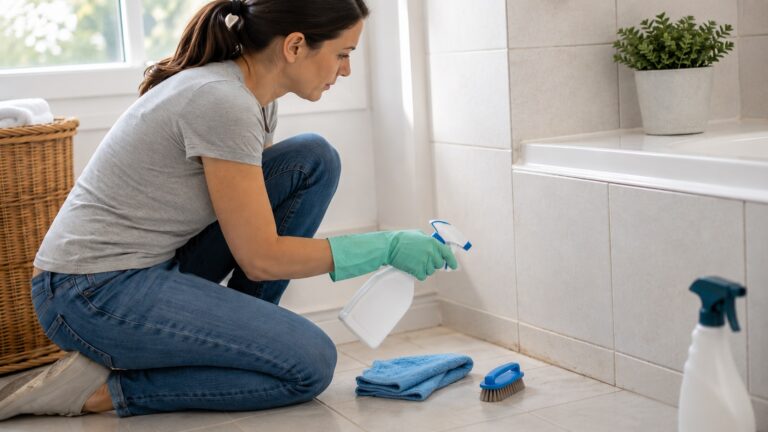
- Use a soft brush to gently scrub grout lines.
- Rinse with clean water if needed.
- Dry grout completely using airflow.
If mold continues returning inside grout lines, moisture may be trapped beneath tile surfaces or behind nearby wall materials. In that case, a bathroom-specific inspection may be needed, such as the checks described in how to inspect for hidden bathroom leaks.
How to Remove Mold From Bathroom Ceiling Corners
Ceiling corners are among the most common locations for bathroom mold. Warm steam rises and collects at the ceiling, creating condensation that supports mold growth.
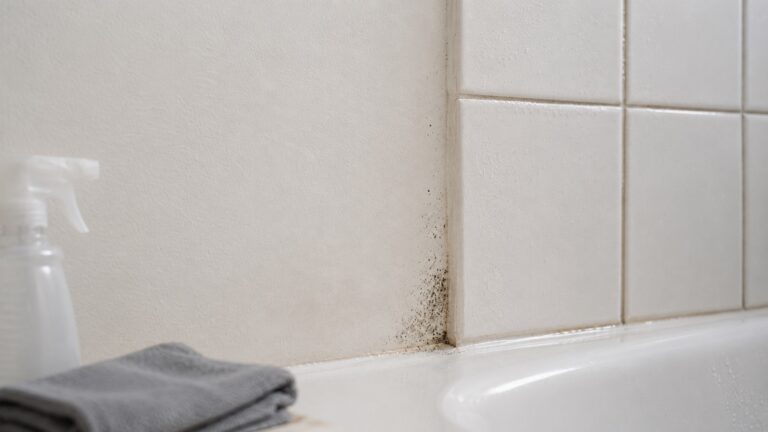
Mold in ceiling corners often appears as dark patches or discoloration near the upper edges of the room.
Safe Cleaning Method for Ceiling Mold
Cleaning ceiling mold requires careful handling to avoid dripping cleaning solutions and damaging surrounding materials.
- Use a stable step stool or ladder to safely reach the affected area.
- Apply cleaning solution to a cloth instead of spraying directly overhead.
- Press the cloth gently against the moldy area.
- Allow the cleaner to remain in place for several minutes.
- Wipe the surface gently to remove mold.
- Repeat if necessary.
- Allow the ceiling to dry completely.
This technique reduces dripping and prevents unnecessary moisture from soaking into ceiling materials.
Watch for Signs of Deeper Moisture Damage
If ceiling mold continues returning after cleaning, it may indicate moisture intrusion from above. Roof leaks or trapped condensation inside ceiling cavities can contribute to recurring mold growth.
Early warning signs — such as discoloration, soft ceiling materials, or musty odor near the ceiling — may suggest deeper moisture conditions. These symptoms are often associated with conditions described in signs of mold inside ceiling cavities.
How to Clean Mold Safely Without Damaging Bathroom Walls
Cleaning mold from bathroom walls requires more than simply applying a cleaner. Using incorrect methods can damage paint, weaken drywall, or introduce excess moisture that makes mold problems worse. Safe cleaning techniques protect wall surfaces while removing mold effectively.
Avoid Using Abrasive Tools
One of the most common mistakes when cleaning bathroom mold is using abrasive tools. While scrubbing may seem effective, harsh materials can damage surfaces and create new areas where mold can grow.
Tools to avoid include:
- Wire brushes
- Steel wool
- Hard scouring pads
- Abrasive cleaning tools
These tools can scratch paint, damage grout, and weaken protective surface coatings. Once damaged, surfaces absorb moisture more easily and become more vulnerable to future mold growth.
Do Not Oversaturate Bathroom Walls
Using too much liquid during cleaning can introduce moisture into wall materials. Excess liquid can soak into drywall or wood, creating new moisture problems that lead to recurring mold growth.
To prevent oversaturation:
- Apply cleaners in controlled amounts
- Use damp cloths instead of excessive spraying
- Avoid soaking surfaces
- Wipe away excess liquid promptly
Keeping moisture levels controlled during cleaning reduces the risk of mold returning after treatment.
Dry Surfaces Thoroughly After Cleaning
Drying is one of the most important steps after mold cleaning because damp surfaces allow mold to regrow quickly.
Effective drying methods include:
- Running the bathroom exhaust fan
- Opening windows when possible
- Using portable fans to increase airflow
- Allowing sufficient drying time before reuse
Proper drying removes residual moisture and reduces the chance of immediate mold regrowth. For long-term bathroom moisture control, see how to prevent mold on bathroom walls.
When Cleaning Bathroom Mold Is Not Enough
While many bathroom mold problems can be resolved through proper cleaning, some situations require deeper investigation. If mold continues to return after cleaning, it usually indicates that moisture remains present somewhere in the structure.
Mold Returns Quickly After Cleaning
If mold reappears within days or weeks, it often signals ongoing moisture exposure. Cleaning alone may temporarily improve the appearance, but the underlying moisture source remains active.
This situation commonly occurs when:
- Humidity levels remain elevated
- Condensation forms repeatedly
- Leaks exist behind walls or ceilings
- Moisture becomes trapped inside materials
If mold keeps returning despite cleaning, identifying underlying causes — such as those explained in why mold keeps coming back after cleaning — becomes essential.
Wall Materials Show Signs of Damage
Visible damage to wall materials may indicate that moisture has penetrated beyond the surface. These conditions often require more than routine cleaning.
Warning signs include:
- Bubbling or peeling paint
- Soft or crumbling drywall
- Persistent discoloration
- Warped or swollen surfaces
- Musty odors that remain after cleaning
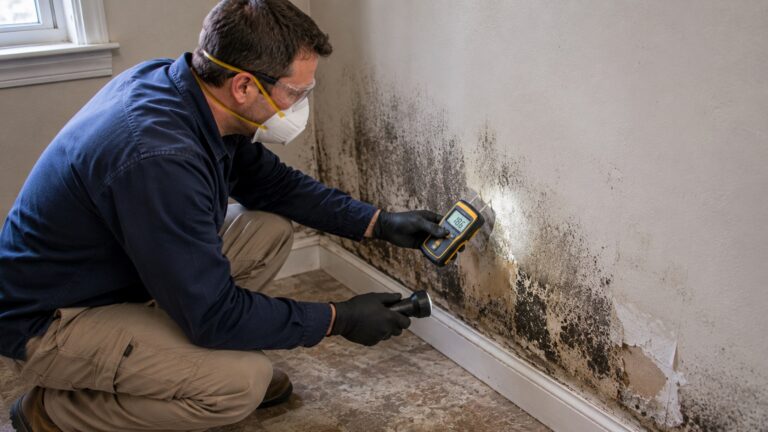
Stop cleaning and avoid covering the area with paint or caulk if the wall feels soft, crumbling, swollen, or damp. These symptoms suggest that moisture may exist behind visible surfaces. In such cases, identifying hidden damage patterns — such as those described in signs of mold behind walls — helps determine whether deeper inspection is needed.
Mold Covers Large Areas
Small patches of mold are typically manageable with careful cleaning. However, large mold areas may require specialized removal methods.
Larger infestations increase exposure risk and may indicate significant moisture problems. If mold covers a broad area, appears inside damaged drywall, spreads beyond the surface, or returns immediately after cleaning, stop treating it as a simple surface-cleaning job and consider professional evaluation.
Frequently Asked Questions
What is the best cleaner for mold on bathroom walls?
Hydrogen peroxide (3%), white vinegar, and commercial mold cleaners are commonly used for removing mold from bathroom walls. The best choice depends on the surface type and severity of mold growth.
Can bleach be used to clean bathroom mold?
Bleach can remove mold from non-porous surfaces such as tile. However, it may not penetrate porous materials like drywall or grout, making it less effective for long-term removal. Never mix bleach with vinegar, ammonia, hydrogen peroxide, or other cleaning products.
How long should mold cleaner sit before wiping?
Most cleaning solutions should remain on the surface for 5 to 15 minutes, or according to the product label. Allowing proper contact time improves cleaning effectiveness and reduces the need for aggressive scrubbing.
Is mold on bathroom walls dangerous?
Mold exposure can cause irritation or discomfort, especially in enclosed spaces. Prompt cleaning, ventilation, and protective gear reduce exposure while cleaning bathroom mold.
How do I prevent mold from coming back after cleaning?
Mold often returns when moisture remains present. Drying the wall completely, improving ventilation, and correcting recurring condensation reduce the risk of regrowth. Persistent recurrence may indicate deeper moisture issues.
Conclusion: Cleaning Bathroom Mold Safely Improves Long-Term Results
Cleaning mold from bathroom walls requires careful technique, proper cleaning solutions, and thorough drying. When handled correctly, most surface mold can be removed safely without damaging walls or surrounding materials.
Successful mold cleaning depends on removing visible growth without leaving the wall damp. If the same area keeps growing mold again, the issue is usually ongoing moisture rather than cleaning failure alone.
For long-term mold control, the broader cleanup principles outlined in how to remove mold permanently provide additional guidance on safe mold removal and reducing the chance of mold returning.
One Comment
Comments are closed.