Should You Repair or Replace Basement Waterproofing?
You should repair basement waterproofing when the existing system is mostly sound and the problem is isolated, such as one leaking crack, a failed sump pump, a clogged discharge line, a loose drain detail, or a small sealant failure. You should consider replacement or redesign when water keeps returning, the system was poorly designed, drainage has collapsed or become overwhelmed, hydrostatic pressure is forcing water through multiple areas, or the original waterproofing never addressed the real source of water.
A leaking basement after waterproofing does not automatically mean the entire system needs to be replaced. Basement waterproofing is not one product. It is a combination of drainage, pumps, membranes, crack repairs, coatings, exterior water control, and foundation details. One failed component may be repairable. A failed design may not be.
Do not enter standing basement water if electrical outlets, panels, appliances, extension cords, or unknown contamination may be involved. Shut off power only if you can do so safely from a dry location, and call a qualified professional when electrical, sewage, floodwater, or structural risks are possible.
This article focuses on the repair-or-replace decision. For the broader system-level guide, see How to Waterproof Basements and Control Water Intrusion. If basement moisture is part of a larger whole-home pattern, the guide to how to find, fix, and prevent moisture problems in homes explains how leaks, drainage, humidity, drying, and prevention work together.
Can Basement Waterproofing Be Repaired?
Yes, basement waterproofing can often be repaired when the problem is limited to one part of the system. A sump pump can fail while the perimeter drain is still working. A discharge line can freeze or clog while the waterproofing system itself remains sound. A new foundation crack can leak even though the rest of the basement drainage is still functioning. A window well can overflow without meaning the entire basement needs a new waterproofing system.
The key is to identify what actually failed. Homeowners often see water on the floor and assume the waterproofing failed as a whole. Contractors may also recommend a large replacement project before the homeowner fully understands whether the issue is a pump, a drain, a crack, exterior grading, a wall coating, or pressure under the slab.
Before approving replacement, trace the water pattern: where it appears first, whether it happens only after rain, whether the sump pit receives water, whether the discharge line is working, and whether exterior water is being directed toward the same wall.
Repair may be enough when:
- The leak is limited to one crack, one wall section, or one corner.
- The sump pump failed but the drainage system still directs water to the pit.
- The discharge line is blocked, frozen, crushed, or poorly extended.
- A window well is filling because of poor drainage or a missing cover.
- Water is entering through a new crack rather than the original repaired area.
- A small section of interior drain needs cleaning, repair, or reconnection.
- The issue is caused by gutters, downspouts, grading, or surface water outside.
Replacement becomes more likely when the system itself is not capable of controlling the water. That can happen when interior drains are missing, collapsed, or undersized; when exterior waterproofing has failed across a larger area; when hydrostatic pressure is pushing water through multiple paths; or when the original work was only a surface coating instead of a true drainage strategy.
Why One Leak Does Not Always Mean Full Replacement
One basement leak can come from many sources. It may be related to the waterproofing system, but it may also be caused by exterior drainage, a plumbing leak, condensation, a window well, a new foundation crack, or a sump discharge problem. Replacing the entire waterproofing system before identifying the water path can lead to unnecessary cost and missed causes.
For example, water near a basement wall after rain may come from clogged gutters or short downspouts that dump water beside the foundation. Water near a window may come from a window well drain failure. Water near the sump pit may come from a pump, float switch, check valve, or discharge issue. Water along the floor-wall joint may point to pressure around the foundation and drainage capacity.
This is why diagnosis matters before replacement. The visible puddle is the result, not the cause. A good repair decision starts by finding where the water entered, why it entered, and whether the existing system should have handled it.
Basement leaks during storms often involve exterior water movement and foundation pressure. If water appears mainly after rain, the guide to why basement walls leak during rain can help clarify whether the issue is wall seepage, drainage, soil saturation, or pressure against the foundation.
What Basement Waterproofing Actually Includes
Basement waterproofing is not just a coating on the wall. When water returns, the repair-or-replace decision depends on which component failed and whether the overall system still matches the home’s water problem.
Common components include interior drains, exterior footing drains, sump pumps, backup pumps, foundation crack repairs, exterior membranes, wall coatings, floor-wall joint details, window well drains, gutters, downspouts, grading, and surface drainage.
Because these parts work together, one weak point can make the whole basement look like it has failed. A strong pump cannot fix a collapsed drain line, a wall coating cannot stop groundwater pressure under the slab, and a crack repair cannot solve poor grading outside.
The decision should be based on system performance, not just the presence of water. Repair fixes a specific weak point. Replacement makes sense when the system design, capacity, age, or installation no longer matches the basement’s water problem.
Signs Basement Waterproofing Can Usually Be Repaired
Basement waterproofing can usually be repaired when the failure is narrow, traceable, and limited to one component. In these situations, the system may still be doing most of its job, but one part needs maintenance, repair, replacement, or adjustment.
Repair is more likely than full replacement when:
- Only one foundation crack is leaking.
- Water appears in one corner instead of around the whole basement.
- The sump pump stopped working but water is still reaching the pit.
- The sump discharge line is blocked, frozen, crushed, or too short.
- A check valve, float switch, pump cover, or backup pump has failed.
- A window well is filling with water because of poor drainage.
- A small section of interior drain is clogged or disconnected.
- Exterior grading or downspout discharge is sending water toward one wall.
- A previous sealant or patch failed only at one detail.
In these cases, replacing the entire waterproofing system may be unnecessary unless inspection shows a wider failure. A good contractor should be able to explain whether the issue is isolated or connected to a larger design problem.
Single Crack Leaks
A single leaking crack does not automatically mean the basement waterproofing system failed. Foundations can develop new cracks after the original work was completed. If the rest of the basement remains dry and the crack is isolated, targeted crack repair may be enough.
However, cracks need more caution when they are widening, shifting, leaking repeatedly, or appearing with wall movement. In those cases, the issue may be more than a waterproofing detail.
Sump Pump Problems
A failed sump pump can make a good waterproofing system look broken. If the drain system is still moving water to the sump pit but the pump cannot discharge it, the repair may involve pump replacement, a new float switch, a better check valve, a backup system, or a corrected discharge line.
This is different from a drainage system that never gets water to the pit. If water is entering the basement but the sump pit stays dry, the problem may be the drainage layout, drain connection, or system design rather than the pump alone.
Discharge Line Issues
Sump discharge problems are often repairable. A line that is frozen, clogged, crushed, too short, or draining back toward the foundation can cause recurring basement moisture even when the pump works. Extending, clearing, redirecting, or protecting the discharge line may solve the issue without replacing the entire waterproofing system.
Window Well Leaks
Water around one basement window often points to a window well problem. A clogged window well drain, missing cover, poor grading, or deteriorated window frame can cause water entry in a localized area. That does not necessarily mean the basement needs a new perimeter waterproofing system.
Signs Basement Waterproofing May Need Replacement
Basement waterproofing may need replacement or redesign when water problems are repeated, widespread, pressure-driven, or caused by a system that was never built to handle the actual moisture load. In these cases, patching one spot may only move the water somewhere else.
Replacement or major redesign becomes more likely when:
- Water enters along multiple walls or large sections of the floor-wall joint.
- The basement leaks after most heavy rains despite previous repairs.
- The interior drainage system is collapsed, inaccessible, undersized, or poorly pitched.
- The sump pit cannot receive or discharge water fast enough.
- Hydrostatic pressure is forcing water through floor cracks, wall cracks, or cove joints.
- Exterior waterproofing is missing, damaged, aged, or bypassed by poor drainage.
- The original system was only waterproofing paint or surface coating.
- Water is bypassing the existing system entirely.
- The same sections have been repaired multiple times and still leak.
- Finished basement materials are hiding repeated water paths.
Repeated failures are especially important. If the same contractor or homeowner has patched the same area several times and water keeps returning, the problem is probably not the patch. It may be water pressure, drainage capacity, exterior saturation, poor system design, or a missing component.
If you want to understand why systems fail in the first place, see Why Basement Waterproofing Systems Fail. That article owns the deeper failure-cause discussion, while this article uses those failure patterns to support the repair-or-replace decision.
Which Waterproofing Component Failed?
To decide between repair and replacement, break the waterproofing system into parts. A basement may not need a completely new system if one component failed. On the other hand, replacing one part will not help if the larger system is missing or overwhelmed.
Interior Drain Systems
Interior perimeter drains collect water near the inside edge of the foundation and direct it to a sump pit or drainage point. Repair may be enough if one section is blocked, disconnected, or obstructed. Replacement or redesign becomes more likely if the system was installed without proper pitch, does not reach the problem area, has collapsed, or cannot handle the amount of water entering the basement.
Exterior Waterproofing Membranes
Exterior waterproofing membranes and drainage boards help keep water from entering through the outside of foundation walls. Repairing exterior waterproofing is harder because the foundation wall is buried. Replacement may be needed if the membrane is missing, damaged, aged, poorly installed, or bypassed by saturated soil and failed exterior drainage.
Exterior waterproofing work should be evaluated carefully because excavation is disruptive and expensive. A contractor should be able to explain why exterior work is necessary and whether less invasive drainage or interior repairs would solve the problem.
Sump Pump Systems
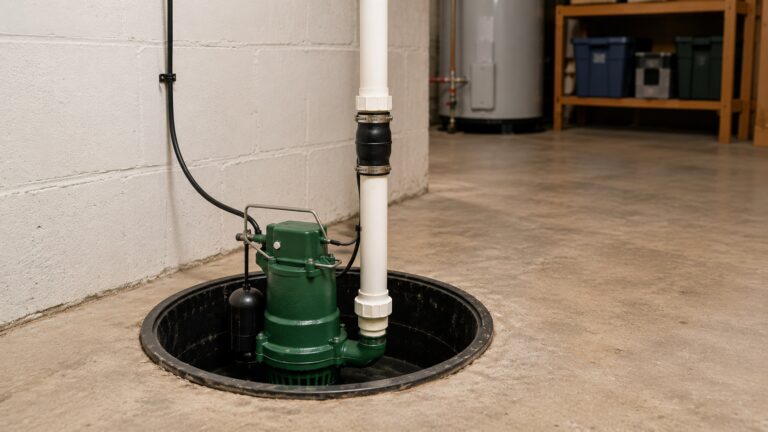
The sump system includes the pit, pump, float switch, check valve, discharge line, power source, and any backup pump. Many sump problems are repairable without replacing the whole waterproofing system. If the pump is too small, old, clogged, jammed, or not cycling correctly, pump service or replacement may be enough.
However, a larger pump does not fix every basement water issue. The pump can only remove water that reaches the pit. If drainage is missing, blocked, or poorly designed, pump replacement alone may not solve the leak.
For homes with frequent storms, outages, or high groundwater, a backup system may be part of prevention rather than full waterproofing replacement. The guide to why sump pump backup systems are important can support that decision when pump failure risk is the weak point.
Foundation Crack Repairs
Crack repairs are often targeted repairs. One leaking crack may not justify replacing a whole waterproofing system. But repeated cracks, widening cracks, stair-step cracking, bowing walls, or cracks combined with heavy seepage may require broader evaluation.
Wall Coatings and Sealants
Waterproofing paint, coatings, and sealants can help with minor dampness or specific surface details, but they should not be treated as full basement waterproofing for active water pressure. If paint is peeling, bubbling, or flaking from moisture, that may show water pressure behind the coating rather than a simple paint failure.
Sealants can still be useful for limited situations, such as minor cracks, gaps, or detail repairs. For product-level context, see best basement waterproofing sealants. But active seepage, hydrostatic pressure, and repeated basement flooding usually require drainage and water-control strategy, not surface coating alone.
Exterior Drainage and Grading
Sometimes the waterproofing system appears to fail because too much water is being directed toward the foundation. Clogged gutters, short downspouts, negative grading, saturated soil, and poor surface drainage can overwhelm a basement that would otherwise stay dry.
In these cases, exterior drainage correction may be a better first repair than replacing interior waterproofing. If water volume around the foundation is reduced, the existing system may perform better.
Repair vs. Replacement Decision Checklist
Use this checklist to separate isolated waterproofing repairs from larger system replacement decisions. A basement leak should be diagnosed by water path, pressure, drainage, and system performance instead of by visible water alone.
Repair May Be Enough If:
- The leak is limited to one crack, corner, wall section, or window well.
- The sump pump failed but the drain system still moves water to the pit.
- The discharge line is blocked, frozen, crushed, or draining too close to the foundation.
- The issue appears after gutter overflow or poor downspout discharge.
- A small section of interior drain needs cleaning or reconnection.
- The basement stays dry except during one specific failure condition.
- The waterproofing system previously worked well and recently developed one clear problem.
- The contractor can point to a specific failed component rather than only recommending full replacement.
Replacement or Redesign May Be Needed If:
- Water enters along multiple walls or repeated floor-wall joints.
- The basement leaks after most heavy rains even after repairs.
- Water is bypassing the existing drainage system.
- The interior drain is collapsed, inaccessible, poorly pitched, or undersized.
- The sump pit cannot keep up with incoming water.
- The system was never designed to handle hydrostatic pressure.
- The original waterproofing was mainly paint, coating, or surface patching.
- Exterior foundation waterproofing is missing, damaged, or no longer connected to working drainage.
- Finished basement materials are hiding repeated seepage behind walls or under flooring.
- The same area has been patched several times and keeps leaking.
The more signs that appear in the second list, the more likely the basement needs a system-level correction instead of another patch. That does not always mean the most expensive replacement quote is automatically correct, but it does mean the problem should be evaluated as a drainage and water-pressure issue.
If you are still trying to confirm whether the existing system is actually failing, see Signs of Failed Basement Waterproofing before deciding whether repair or replacement is the better next step.
Common Reasons Repairs Fail Again
Repeated basement waterproofing repairs usually fail for one of five reasons: the system was undersized, it was poorly installed, the water source changed, maintenance was neglected, or hydrostatic pressure overwhelmed surface patches. The pattern matters because each cause points to a different decision.
- Undersized system: repair may not be enough if the drain, pit, pump, or discharge route cannot handle heavy rain or saturated soil.
- Poor installation: replacement or redesign may be needed if drains lack proper pitch, membranes were poorly protected, or discharge was routed incorrectly.
- Changed water source: targeted repair may work if a new crack, gutter change, grading issue, or window well problem created a new entry path.
- Neglected maintenance: cleaning a line, testing a pump, clearing a window well, or redirecting discharge may solve the problem without full replacement.
- Hydrostatic pressure: drainage correction is usually more important than another surface patch when water appears at floor-wall joints, floor cracks, or multiple basement edges after rain.
For a deeper explanation of pressure-driven leaks, see Why Hydrostatic Pressure Causes Basement Leaks. For a broader failure-cause guide, see Why Basement Waterproofing Systems Fail.
When a New Leak Does Not Mean the Whole System Failed
A new leak after waterproofing can be frustrating, but it does not always mean the previous system failed. Basements can develop new water-entry points as soil conditions change, cracks form, exterior drainage shifts, or storms overwhelm surface drainage. A good repair decision separates a new water source from a failed system.
A new leak may be separate from the existing waterproofing when:
- It appears in a different area than previous leaks.
- It happens near a window well, exterior door, plumbing line, or new crack.
- It began after grading, landscaping, gutter changes, or foundation work.
- The sump system still works and the original drainage area remains dry.
- The leak appears only during unusual storms or snowmelt.
- The water path lines up with an exterior surface drainage problem.
In these cases, targeted repair may solve the new problem. The existing system may still be useful, but it may need an added component, exterior drainage correction, crack repair, or a pump upgrade.
Questions to Ask Before Approving Waterproofing Replacement
Basement waterproofing replacement can be expensive and disruptive, so it is reasonable to ask detailed questions before approving the work. A trustworthy recommendation should explain what failed, why repair is not enough, and how the proposed system will address the real water source.
Ask the contractor these questions:
- Where exactly is the water entering?
- Is the issue caused by wall seepage, floor seepage, cracks, sump failure, exterior drainage, or hydrostatic pressure?
- Which part of the existing waterproofing system failed, and how did you verify that?
- Can that component be repaired instead of replaced, and what would make repair unreliable?
- Is the problem isolated or system-wide?
- Has the sump pump and discharge line been tested?
- Have gutters, downspouts, grading, and window wells been checked?
- Will the proposed replacement handle the cause of the current leak?
- What happens if water enters from a different path later?
- What maintenance will the new system require?
- What warranty applies, and what conditions are excluded?
If a contractor recommends full replacement but cannot explain why targeted repair is not enough, get another opinion. A second quote is especially important when the recommendation involves excavation, full interior perimeter drains, major sump upgrades, or removing finished basement materials.
Before approving major work, it can also help to compare the scope, warranty, materials, drainage plan, and exclusions between bids. The guide on how to compare basement waterproofing quotes is a better place for detailed quote evaluation, while this article focuses on whether repair or replacement is the right direction.
When Waterproofing Paint Is Only a Patch
Waterproofing paint can be useful in limited situations, but it is not a complete waterproofing system for active seepage, foundation pressure, or repeated basement leaks. If a basement is leaking because water is building up outside the foundation, paint on the inside wall is only a surface barrier. It does not remove the water pressure behind the wall.
Peeling, bubbling, or flaking waterproofing paint often means moisture is pushing from behind the coating. Adding another coat may temporarily improve appearance, but it does not solve clogged drains, poor exterior grading, hydrostatic pressure, wall cracks, or missing foundation drainage.
Surface products may help with minor dampness, small details, or temporary control, but they should not be used as the main solution for a basement that repeatedly leaks after rain. When water pressure is active, drainage strategy matters more than coating thickness.
When to Call a Basement Waterproofing Contractor
You should call a basement waterproofing contractor when water keeps returning, the source is unclear, the system appears overwhelmed, or the repair may involve drainage, sump systems, foundation cracks, exterior excavation, or finished basement demolition. Small maintenance issues may be simple, but repeated basement water intrusion usually needs proper diagnosis before repair or replacement.
Professional help is especially important when:
- Water enters after most heavy rains.
- Several wall sections or floor-wall joints leak at once.
- The sump pump runs often but the basement still gets wet.
- The sump pit overflows or cannot keep up.
- Interior drains may be clogged, collapsed, or disconnected.
- Exterior grading, footing drains, or foundation membranes may be failing.
- Water is entering behind finished walls or under finished flooring.
- Mold, musty odor, or wet baseboards keep returning.
- Previous waterproofing repairs have failed more than once.
- You have received a large replacement quote and want a second opinion.
A qualified contractor should inspect the water path, drainage conditions, sump system, exterior grading, foundation cracks, and previous waterproofing work before recommending full replacement. For hiring guidance, see when to hire a basement waterproofing contractor. If you are comparing a major proposal, review how much basement waterproofing costs so the size of the project matches the seriousness of the failure.
How to Keep the Next Repair From Failing
After repair or replacement, the goal is to reduce the water load on the system and keep the weak points maintained. Clean gutters, extend downspouts, correct grading that slopes toward the foundation, keep window wells clear, test sump pumps, maintain backup systems where flooding risk is high, and keep discharge lines clear and routed away from the foundation.
For a broader prevention strategy, see how to prevent basement water intrusion. Preventing water from collecting around the foundation is often just as important as repairing the waterproofing components inside the basement.
Common Mistakes to Avoid
Relying on Waterproofing Paint for Active Leaks
Waterproofing paint is not a full drainage system. It cannot remove hydrostatic pressure, fix exterior grading, repair collapsed drains, or pump water away from the foundation. If water is actively entering after rain, the solution usually needs to address drainage or pressure.
Replacing the Sump Pump Without Checking the Drainage System
A new sump pump helps only if water reaches the pit and can be discharged safely. If the interior drain is clogged, disconnected, undersized, or bypassed, replacing the pump alone may not stop basement leaks.
Ignoring Exterior Water Control
Interior waterproofing can be overwhelmed when gutters, downspouts, grading, and window wells keep sending water toward the foundation. Exterior water control should be part of the decision before repair or replacement.
Choosing the Cheapest Patch for a Pressure Problem
A low-cost patch may fail quickly if water pressure remains behind the wall or under the slab. Repeated patching in the same location is often a sign that the waterproofing strategy needs to change.
FAQ: Repairing or Replacing Basement Waterproofing
Can failed basement waterproofing be repaired without replacing everything?
Yes, failed basement waterproofing can often be repaired when the problem is isolated. A failed sump pump, blocked discharge line, single leaking crack, clogged drain section, or window well issue may not require full system replacement. Replacement becomes more likely when the failure is repeated, widespread, or caused by poor system design.
How do I know if basement waterproofing needs replacement?
Basement waterproofing may need replacement when water enters through multiple areas, the system repeatedly fails after repairs, drainage is collapsed or undersized, hydrostatic pressure is overwhelming the basement, or the original waterproofing does not address the actual water source.
Why is my basement leaking after waterproofing?
Your basement may leak after waterproofing because one component failed, a new water path developed, the sump pump or discharge line stopped working, exterior drainage is sending water toward the foundation, or the original system was not designed for the current water pressure. The leak should be diagnosed before assuming the whole system failed.
Is waterproofing paint enough to stop basement leaks?
Waterproofing paint may help with minor surface dampness, but it is not enough for active leaks, repeated seepage, hydrostatic pressure, clogged drainage, or foundation water intrusion. If water is pushing through cracks, joints, or basement walls after rain, drainage and water control are usually more important than paint.
Should I replace my sump pump or the whole waterproofing system?
You may only need to replace the sump pump if water is reaching the pit but the pump cannot remove it. You may need broader waterproofing repair or replacement if water is not reaching the pit, the drainage system is failing, the pump is overwhelmed, or water is bypassing the system entirely.
Does one leaking crack mean the waterproofing system failed?
No. One leaking crack may be an isolated repair, especially if the rest of the basement remains dry. However, multiple cracks, widening cracks, wall movement, or repeated leakage after crack repair may point to pressure or structural conditions that need broader evaluation.
When should I get a second opinion on basement waterproofing?
Get a second opinion when a contractor recommends full replacement without clearly explaining what failed, why repair is not enough, and how the new system will solve the water source. A second opinion is especially useful for excavation, full interior perimeter drains, major sump upgrades, or repeated failed repairs.
Is exterior waterproofing replacement always necessary?
No. Exterior waterproofing replacement is not always necessary. Some leaks are caused by sump problems, interior drainage failure, window wells, cracks, gutters, downspouts, grading, or localized water paths. Exterior replacement may be justified when the outside foundation protection or footing drainage has failed, but it should be recommended after diagnosis.
What is the biggest sign that repair will not be enough?
The biggest warning sign is repeated water in the same area after targeted repairs. If a crack, drain section, coating, or pump detail has already been repaired and the basement still leaks, the real problem may be pressure, drainage capacity, poor design, or water bypassing the system.
Final Repair-or-Replace Rule
You should repair basement waterproofing when the system is mostly sound and the failure is isolated. A crack repair, sump pump replacement, discharge correction, drain cleaning, window well repair, or exterior drainage adjustment may solve the problem without replacing the entire system.
You should consider replacement or redesign when water keeps returning, the system cannot handle hydrostatic pressure, drainage has failed, the sump system is undersized, exterior waterproofing is missing or damaged, or the original work was never a true basement waterproofing system. Repeated leaks after patch repairs usually mean the cause has not been addressed.
The best decision starts with diagnosis. Find where the water enters, why it enters, whether the system should have handled it, and which component failed. Repair the weak point when the system still works. Replace or redesign the system when the water problem is bigger than one failed part.