
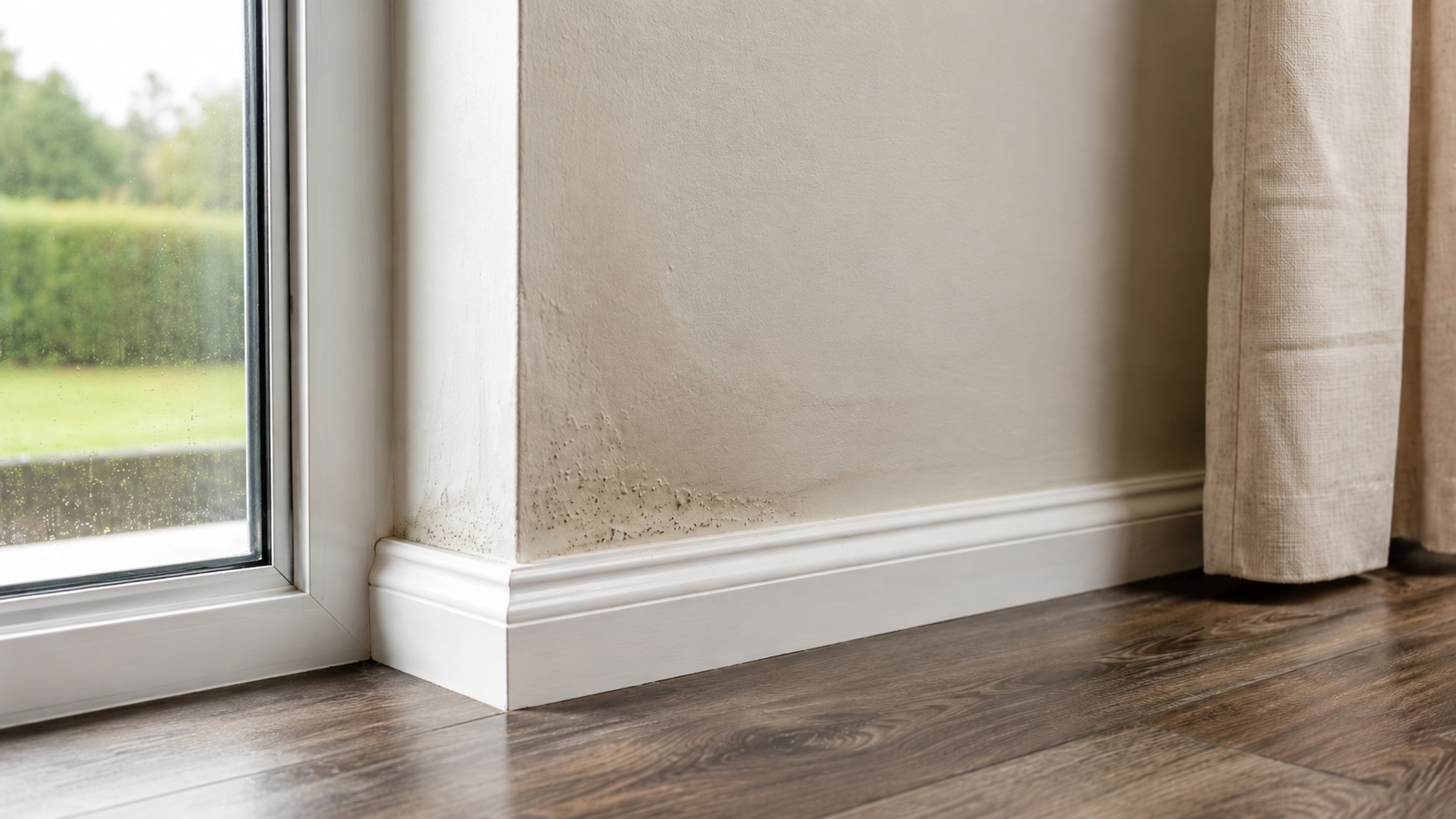
Signs of Water Damage Behind Baseboards
Signs of water damage behind baseboards include swelling, warping, paint bubbling, staining, musty odors, soft trim, cracked caulk, flooring-edge discoloration, and gaps between the baseboard and wall. Because baseboards sit at the wall-floor junction, they often show hidden moisture before larger wall or floor damage becomes obvious.
Recognizing early warning signs can prevent expensive repairs and reduce the risk of mold growth. If you suspect moisture near baseboards, start by looking for swelling, staining, soft trim, musty odors, cracked caulk, and changes along the floor-wall joint. For broader location-based moisture checks around walls, floors, cabinets, and trim, see how to find hidden moisture in different areas of your home.
This guide focuses on visible, physical, and odor-based warning signs. It does not cover moisture-meter testing, baseboard removal, drying, or repair methods; those belong to separate inspection and recovery guides.
Start with the most likely signs: look along the bottom edge of the trim, press gently for soft spots, check whether caulk has separated, smell near corners and fixtures, and compare the affected baseboard with an undamaged section in a dry room.
Why Water Damage Often Starts Behind Baseboards
Baseboards are vulnerable because they sit where walls, flooring, trim, and hidden water movement meet. Water from leaks, spills, condensation, or exterior intrusion can collect at this low point and stay trapped behind trim long after the visible floor looks dry.
How Baseboards Absorb Moisture
Most baseboards are made from porous materials such as MDF (medium-density fiberboard) or wood. These materials readily absorb moisture through a process called capillary action, where water travels upward through tiny pores in the material.
Once water reaches the bottom edge of the baseboard, it may continue spreading into the drywall edge behind it. This hidden absorption often explains why baseboard swelling appears before major wall damage becomes visible.
In many homes, the earliest symptoms develop in areas exposed to frequent moisture, such as bathrooms and kitchens. For example, if water leaks under a cabinet or along a wall, it may travel unseen until baseboard damage begins to appear. Similar warning signs can develop below nearby fixtures, as explained in signs of water damage under sink cabinets.
Why Moisture Stays Hidden Behind Trim
The space behind baseboards creates an enclosed pocket where air movement is minimal. Without airflow, evaporation slows significantly. Even after visible water dries from flooring surfaces, trapped moisture may remain behind the trim for days or weeks.
This delayed drying creates ideal conditions for progressive material damage. Drywall edges soften, trim expands, and paint layers begin separating. In many cases, homeowners do not realize a problem exists until visible symptoms begin forming along the baseboard surface.
If moisture remains trapped long enough, mold growth becomes possible. This article focuses on water-damage symptoms, while signs of mold behind baseboards explains the separate mold-warning patterns that may appear after moisture has stayed hidden.
Early Signs of Water Damage Behind Baseboards
Early-stage water damage behind baseboards can be subtle. Symptoms may appear minor at first, but they often indicate hidden moisture beginning to affect nearby materials. Catching these early warning signs is one of the most effective ways to prevent widespread damage.
Slight Swelling or Warping Along the Bottom Edge
One of the earliest and most reliable signs of hidden moisture is slight swelling along the lower edge of a baseboard. This swelling usually appears uneven, with one section expanding more than others.
Swelling occurs when the baseboard material absorbs moisture and expands. Because moisture rarely spreads evenly, affected sections often appear irregular or slightly distorted.
Common indicators include:
- A baseboard that looks thicker in certain areas
- Small outward bulges along the trim
- Uneven edges when viewed from the side
- Subtle changes in alignment between trim sections
This swelling is especially common in areas exposed to repeated moisture exposure, such as bathrooms, kitchens, and exterior walls.
Small Paint Bubbles or Surface Blistering
Paint bubbling is another early sign that moisture is affecting materials behind baseboards. When water penetrates the baseboard surface, it disrupts the bond between paint layers and the underlying material.
This separation creates small bubbles that may appear near the bottom edge of the trim. At first, these bubbles may be barely noticeable, but they often expand as moisture exposure continues.
Typical signs include:
- Tiny raised paint spots
- Localized bubbling near seams
- Paint that feels loose or fragile
- Peeling along the bottom edge
Paint bubbling should never be ignored. It usually indicates ongoing moisture exposure rather than isolated cosmetic wear.
Hairline Gaps Between Baseboard and Wall
As baseboards absorb moisture, they expand and shift slightly away from the wall surface. This movement often creates thin gaps along the top edge of the trim.
These gaps are easy to overlook, especially if they appear gradually. However, even small separations can signal internal material stress caused by moisture.
Look for:
- Narrow openings between trim and drywall
- Visible cracks in caulk lines
- Trim sections that appear loose
- Movement when lightly pressed
These small changes often develop before more obvious structural symptoms appear. When observed early, they provide valuable warning that moisture may be accumulating behind the baseboard.
In situations where these early signs appear alongside unexplained moisture smells, it may be helpful to review how to detect slow plumbing leaks, since hidden leaks are one of the most common underlying causes.
Warning Signs That Moisture Is Building Behind Baseboards
As hidden moisture remains trapped behind baseboards, materials begin to deteriorate more noticeably. Moderate-stage symptoms are typically easier to recognize than early signs and often indicate that moisture exposure has continued for days or weeks.
At this stage, moisture may already be affecting drywall edges, flooring edges, or nearby subfloor materials.
Persistent Musty Odors Near Baseboards
A musty smell near baseboards is one of the most common indicators of hidden moisture. Even when no visible damage is present, trapped moisture creates conditions that allow damp materials and organic debris to produce noticeable odors.
This smell often becomes more noticeable in enclosed spaces such as:
- Bathrooms with limited ventilation
- Kitchens near plumbing fixtures
- Basement walls
- Laundry rooms
- Closets along exterior walls
Musty odors typically develop because moisture becomes trapped behind the trim, where airflow is limited. Over time, damp drywall and dust particles create odor-producing conditions—even before mold becomes visible.
If odors continue for several days or weeks, it may indicate ongoing moisture exposure that requires investigation. In many cases, these odors develop alongside slow plumbing leaks or hidden moisture movement within walls.
Visible Staining Along the Baseboard Surface
Moisture that remains trapped behind baseboards often creates visible discoloration along the trim surface. These stains typically appear darker than surrounding areas and may develop gradually.
Common staining patterns include:
- Yellowish or brown discoloration
- Darkened edges near the bottom of the trim
- Uneven color patches along seams
- Shadow-like lines forming along the baseboard
Staining occurs when water carries dissolved particles into porous materials. As moisture evaporates, these particles remain behind, leaving visible marks on painted surfaces.
In many homes, staining appears before more serious structural damage becomes obvious. Recognizing these visual patterns early helps prevent worsening deterioration.
Soft or Spongy Sections in the Baseboard
When moisture exposure continues, baseboard materials begin losing their structural strength. This often results in sections that feel soft or spongy when lightly pressed.
This symptom typically indicates prolonged moisture exposure and may suggest that damage has spread into surrounding materials.
Signs of softening include:
- Indentation when pressing lightly on the trim
- Cracking sounds during pressure
- Loose trim sections
- Surface areas that crumble easily
Soft baseboards are rarely just cosmetic. Press gently rather than forcing the material; if the trim dents, crumbles, or flexes, moisture may have weakened the board or the drywall edge behind it.
Baseboard Warping or Misalignment
Warping occurs when absorbed moisture causes uneven expansion within baseboard materials. This expansion alters the shape of the trim, causing it to bow outward or twist slightly.
Warped baseboards often appear:
- Curved along their length
- Detached from the wall surface
- Visibly misaligned at joints
- Separated from adjacent trim pieces
Warping typically worsens over time if moisture remains present. Even minor distortion can indicate internal moisture accumulation that requires attention.
Similar structural distortion patterns may also occur in ceiling materials when moisture accumulates from above. These patterns are explained further in signs of ceiling water damage, where staining, softening, sagging, and surface distortion can follow a similar moisture progression.
Serious Signs of Long-Term Baseboard Moisture
Severe symptoms usually develop when moisture remains trapped behind baseboards for extended periods. At this stage, structural damage is often underway, and repairs may become necessary.
These signs usually mean the problem is no longer limited to the surface of the trim.
Significant Warping or Separation from the Wall
Large gaps between baseboards and walls typically indicate advanced moisture damage. These separations occur when swelling forces trim materials outward or when adhesive bonds weaken over time.
Look for:
- Wide visible gaps along the top edge
- Baseboards pulling away from the wall
- Sections that appear loose or unstable
- Misalignment between trim segments
This level of separation usually suggests that moisture has affected the drywall edge behind the trim. In many cases, underlying materials may already be compromised.
Rotting or Crumbling Baseboard Material
Rotting occurs when moisture remains present long enough to break down organic materials such as wood or fiberboard. This process weakens the structure of the trim and often produces visible deterioration.
Common signs of rot include:
- Cracked or broken trim sections
- Material that flakes or crumbles
- Dark, softened areas along the baseboard
- Persistent damp odors
Rotting trim typically indicates long-term moisture exposure. At this stage, hidden damage behind the wall may also be present.
Avoid pulling apart heavily damaged trim if you suspect electrical wiring, widespread mold, sewage-contaminated water, or structural damage behind the wall. In those cases, stop and get professional help before opening the area further.
Damage Along Flooring Edges
When moisture spreads beyond the baseboard, flooring materials often begin showing visible damage. This occurs because water travels beneath flooring surfaces and accumulates at material edges.
Signs of flooring involvement include:
- Raised or buckled flooring edges
- Discoloration near walls
- Soft or unstable flooring sections
- Gaps forming between floorboards
Flooring damage typically signals that moisture has extended beyond the baseboard area. This condition increases the risk of structural deterioration if not addressed promptly.
Visible Wall Surface Distortion
Advanced moisture exposure often affects drywall surfaces above the baseboard. This occurs when water travels upward through porous materials, weakening internal structure.
Common wall distortion symptoms include:
- Bubbling paint above trim
- Soft wall sections near the floor
- Uneven drywall surfaces
- Persistent staining patterns
These symptoms often indicate that moisture has spread deeper into wall cavities. If left unresolved, this condition may lead to mold development and structural damage.
When severe symptoms appear, the next step is inspection rather than guessing. How to detect moisture behind baseboards explains the testing and inspection methods that go beyond visible warning signs.
Hidden Clues Around the Floor-Wall Junction
Not all signs appear directly on the baseboard. Caulk lines, flooring edges, carpet tack strips, and nearby fasteners can also show whether moisture is spreading at the floor-wall junction.
Cracked or Separating Caulk Lines
Caulk lines along baseboards are designed to seal small gaps and improve the finished appearance of trim installations. However, when moisture enters behind the baseboard, it often causes expansion that weakens the bond between the caulk and surrounding materials.
Over time, this stress creates visible separation along the caulk line.
Common signs include:
- Fine cracks running along the top of the baseboard
- Sections of caulk pulling away from the wall
- Irregular or uneven caulk surfaces
- Repeated cracking after previous repairs
Cracked caulk is often dismissed as normal aging, but repeated separation in the same location typically indicates ongoing material movement caused by hidden moisture.
Flooring Edge Expansion or Discoloration
Moisture trapped behind baseboards frequently spreads beneath flooring surfaces. As water travels into the subfloor or flooring edges, materials may begin expanding or changing color.
These symptoms are especially common with laminate, vinyl, and hardwood flooring systems that are sensitive to moisture exposure.
Watch for:
- Slight lifting along flooring edges
- Color changes near walls
- Raised seams between planks
- Unusual floor texture changes
In many homes, these flooring symptoms appear before baseboards show obvious deterioration. When combined with other warning signs, they strongly suggest that moisture is migrating along the floor-wall junction.
Carpet Tack Strip Corrosion or Loosening
In carpeted rooms, hidden moisture may affect tack strips that hold the carpet in place. These strips are typically made from wood and fastened with small metal pins, making them vulnerable to moisture exposure.
When moisture reaches the tack strip area, the wood weakens and metal components may corrode.
Possible signs include:
- Loose carpet edges near walls
- Rust-colored stains near carpet edges
- Reduced grip along perimeter edges
- Unusual odors near floor corners
Although carpet damage may appear minor at first, it often indicates deeper moisture problems affecting nearby structural materials.
Common Places Where Baseboard Moisture Starts
Water damage behind baseboards rarely occurs randomly. Instead, it typically begins in predictable areas where moisture exposure is frequent or airflow is limited. Recognizing these high-risk zones helps homeowners focus inspections where problems are most likely to develop.
Bathrooms and Shower Walls
Bathrooms are one of the most common locations for baseboard moisture damage. Frequent water exposure from showers, sinks, and condensation creates repeated opportunities for moisture intrusion.
Common causes in bathrooms include:
- Shower splash reaching baseboards
- Toilet leaks or seal failures
- Condensation buildup on exterior walls
- Water spills during cleaning
Even small amounts of repeated moisture exposure can gradually lead to hidden damage behind bathroom trim.
Bathroom-related leaks are especially likely when fixtures develop slow failures. If moisture symptoms appear in these areas, reviewing how to inspect for hidden bathroom leaks can help identify possible sources.
Kitchens Near Plumbing Fixtures
Kitchens present similar moisture risks due to frequent plumbing activity. Water lines, dishwashers, and sink connections create multiple opportunities for hidden leaks.
In many homes, baseboard damage begins behind appliances or cabinets where moisture remains unnoticed.
High-risk kitchen areas include:
- Behind refrigerators with water lines
- Under dishwashers
- Near sink plumbing
- Along exterior kitchen walls
Because kitchen moisture often spreads slowly, damage may remain hidden for long periods before symptoms become visible.
Exterior Walls Exposed to Weather
Exterior walls are especially vulnerable to hidden moisture intrusion caused by rain, snow, or poor sealing. Water may enter through siding gaps, window frames, or roof junctions before settling at the baseboard level.
Unlike plumbing leaks, exterior moisture often spreads gradually and unpredictably. This makes early detection particularly important.
Common signs associated with exterior wall moisture include:
- Recurring baseboard swelling along exterior walls
- Seasonal odor increases during wet weather
- Persistent discoloration near corners
- Damage concentrated near window areas
Laundry Rooms and Utility Spaces
Laundry rooms often experience hidden moisture problems due to appliance leaks and vibration-related hose failures. Washing machines and water heaters are especially common sources of unnoticed water release.
Typical warning conditions include:
- Moisture appearing near appliance bases
- Repeated swelling behind equipment
- Odors developing near wall corners
- Water marks forming along trim sections
Utility spaces should be inspected regularly, especially if appliances are installed against finished walls.
Common Moisture Sources Behind Baseboard Damage
Water damage behind baseboards usually points to a nearby moisture source. Common causes include slow plumbing leaks, appliance leaks, toilet or sink overflows, exterior wall intrusion, damp basement walls, condensation, and water trapped after spills or minor flooding. This article focuses on the signs those sources leave behind, not full leak tracing or repair.
If baseboard symptoms appear near a sink, toilet, dishwasher, washing machine, or water heater, the source should be checked before the trim is repainted or covered.
When Water Damage Behind Baseboards Becomes a Serious Problem
Water damage behind baseboards becomes more serious when the symptoms move beyond the trim and begin affecting drywall, flooring edges, or nearby structural materials.
In many homes, moisture damage spreads gradually from baseboards into drywall, subflooring, and nearby structural components. The longer moisture remains present, the greater the risk of hidden deterioration.
Signs That Moisture Has Spread Into Wall Materials
Once moisture reaches drywall edges, symptoms often become more noticeable above the baseboard line. This upward movement occurs through capillary action, allowing water to travel into porous materials.
Signs that moisture has moved into wall materials include:
- Bubbling paint several inches above baseboards
- Soft drywall near the floor
- Persistent wall discoloration
- Wall surfaces that feel cool or damp
These symptoms usually indicate that moisture has traveled beyond trim materials and into interior wall structures. When left untreated, this condition may lead to hidden mold growth inside wall cavities.
If wall damage symptoms appear alongside baseboard warning signs, it may be helpful to review signs of hidden moisture in walls to understand how moisture spreads internally.
Signs That Flooring Materials Are Involved
Baseboard damage becomes more serious when nearby flooring also begins changing. Flooring-edge symptoms suggest that water may be moving along the floor-wall joint rather than affecting only the surface of the trim.
Watch for raised seams, soft floor edges, cupping, buckling, discoloration near the wall, or a musty odor that becomes stronger near the floor. These symptoms are especially important with wood, laminate, vinyl, and carpeted rooms.
Signs That Mold Risk Is Increasing
Water damage and mold are not the same issue, but persistent baseboard moisture can create mold-friendly conditions. Mold risk increases when musty odors, recurring dampness, dark specks, soft drywall, or repeated staining appear together.
If visible mold symptoms begin appearing along baseboards, additional guidance may be found in signs of mold behind baseboards, which explains how moisture-related mold conditions typically develop.
How to Differentiate Water Damage From Normal Wear
Not all baseboard imperfections indicate hidden moisture. Over time, trim materials naturally develop minor wear caused by cleaning, foot traffic, and general aging. Learning how to distinguish moisture-related damage from normal wear helps prevent unnecessary concern while ensuring real problems are addressed.
Signs That Suggest Normal Aging
Normal wear typically develops slowly and affects trim surfaces evenly. These changes usually occur without signs of moisture involvement.
Typical signs of normal aging include:
- Minor scuff marks from cleaning or movement
- Fading paint due to sunlight exposure
- Small surface scratches
- Stable trim alignment over time
These conditions generally remain cosmetic and do not worsen rapidly.
Signs That Suggest Moisture Damage Instead
Moisture-related damage tends to appear irregular and often worsens over time. Unlike cosmetic wear, water damage usually produces visible distortion or material changes.
Warning signs more consistent with moisture include:
- Rapid swelling or distortion
- Uneven discoloration patterns
- Persistent odors
- Soft or deteriorating material
When multiple symptoms occur together, moisture involvement becomes more likely.
Why Baseboard Water Damage Should Not Be Ignored
Baseboard damage can spread when moisture continues feeding the wall-floor junction. A small swollen section may eventually lead to soft drywall edges, stained flooring, loose trim, mold risk, or subfloor moisture if the source is not corrected.
The main warning pattern is progression. If swelling, staining, odor, or softness grows after cleaning or drying the surface, hidden moisture is probably still present.
Key Takeaways About Water Damage Behind Baseboards
- The most common signs are swelling, warping, staining, bubbling paint, musty odors, soft trim, cracked caulk, and flooring-edge changes.
- Baseboards often show moisture early because they sit at the wall-floor junction where water can collect and stay hidden.
- Damage that appears irregular, worsens over time, or returns after cleaning is more suspicious than normal cosmetic wear.
- Moisture near plumbing fixtures, exterior walls, basements, bathrooms, kitchens, and laundry rooms deserves closer attention.
- If symptoms spread into drywall, flooring, or soft structural materials, the problem needs inspection rather than cosmetic repair.
Frequently Asked Questions About Water Damage Behind Baseboards
Can water damage behind baseboards dry on its own?
Moisture trapped behind baseboards rarely dries completely without proper airflow or intervention. The enclosed space limits evaporation, allowing moisture to remain trapped for extended periods.
Is baseboard swelling always caused by water damage?
Not always, but swelling is commonly associated with moisture exposure. In most cases, uneven swelling indicates that water has been absorbed into the baseboard material.
Can mold grow behind baseboards without visible signs?
Yes. Mold can develop behind baseboards where moisture remains hidden. Visible mold may not appear until growth has already spread behind trim or into nearby wall materials.
Are certain baseboard materials more vulnerable to water damage?
Yes. MDF and particleboard materials absorb moisture more easily than solid wood or PVC-based trim, making them more vulnerable to swelling and deterioration.
How often should baseboards be inspected for moisture signs?
Baseboards in high-risk areas such as bathrooms, kitchens, laundry rooms, basements, and exterior walls should be checked regularly, especially after leaks, spills, or heavy rainfall events.
One Comment
Comments are closed.