Signs of Hidden Mold Behind Bathroom Cabinets

Bathroom cabinets are one of the most common places for hidden mold to develop, yet they are often overlooked during routine cleaning or inspection. Because cabinets sit directly against walls and surround plumbing fixtures, they create enclosed spaces where moisture can linger unnoticed. Over time, trapped humidity or slow leaks can lead to mold growth behind or beneath cabinetry—long before anything obvious appears on visible surfaces.

Many homeowners first suspect hidden mold when they notice a persistent musty smell under the sink or unexplained cabinet damage. Others discover early warning signs such as swelling cabinet bases, peeling finishes, or recurring mildew that returns after cleaning. Recognizing these symptoms early is essential, because mold behind cabinets rarely stays contained. Left unchecked, it can spread into wall cavities, flooring materials, and surrounding structural components.

If you suspect mold may already be present, it helps to understand how moisture behaves in enclosed bathroom spaces. This is why many homeowners benefit from reviewing the fundamentals of moisture control and remediation found in the complete guide to removing mold permanently, which explains how moisture drives mold growth in hidden locations.

Why Bathroom Cabinets Hide Mold So Easily

Bathroom cabinets are uniquely vulnerable to hidden mold because they combine moisture exposure with restricted airflow. Unlike open wall surfaces, the space behind or beneath cabinetry rarely dries quickly after becoming damp. Even small amounts of moisture can remain trapped for days, allowing mold colonies to form without being noticed.

Several structural and environmental factors contribute to this risk. Understanding these factors helps explain why hidden mold behind bathroom cabinets is far more common than many homeowners realize.

Enclosed Spaces Reduce Airflow and Drying

Most bathroom cabinets are installed tightly against walls and floors, leaving little room for air circulation. Once moisture enters the space—whether from a leak, condensation, or humidity—it becomes difficult for trapped air to dry naturally. Closed cabinet doors make the situation worse by limiting evaporation even further.

This reduced airflow creates the ideal conditions for mold development. In many homes, humidity from daily showers builds up repeatedly, especially when ventilation is weak. Over time, moisture cycles accumulate behind cabinet backs, even when the interior appears dry.

If your bathroom often feels humid after use, it may be helpful to understand how moisture behaves in enclosed areas. Learning how to detect hidden moisture in bathrooms can help identify conditions that support mold growth before damage becomes visible.

Plumbing Connections Create Hidden Moisture Sources

Nearly every bathroom cabinet contains plumbing connections. Water supply lines, drain pipes, shutoff valves, and P-traps all pass through the cabinet structure. These connections are common sources of slow leaks, drips, and condensation.

Unlike large plumbing failures, slow leaks often remain unnoticed for long periods. A tiny drip at a valve joint or pipe connection can release small amounts of water repeatedly. Because the leak may only occur during sink use, homeowners may never see standing water—yet moisture gradually accumulates behind cabinet panels.

Common plumbing-related moisture sources include:

  • Loose compression fittings at supply lines
  • Worn seals in drain assemblies
  • Small cracks in plastic pipe joints
  • Condensation forming on cold water lines
  • Overflow spills that seep behind cabinets

These conditions frequently lead to moisture buildup behind the cabinet rather than inside it, making mold growth especially difficult to detect without recognizing early warning signs.

Cabinet Materials Absorb Moisture Quickly

Many bathroom cabinets are constructed from particleboard, MDF, or thin fiberboard panels. These materials absorb moisture easily and tend to retain it internally. Once wet, they may swell or soften long before mold becomes visible.

This moisture absorption creates two major problems. First, the material itself becomes a moisture reservoir that supports mold growth. Second, damage inside the cabinet structure can occur even when external surfaces still look intact.

Typical material-related risk factors include:

  • Particleboard cabinet bases touching damp flooring
  • Unsealed cabinet backs exposed to wall moisture
  • Thin laminate layers separating from swollen surfaces
  • Poor-quality cabinet construction with minimal sealing

These material characteristics explain why cabinet damage often appears before visible mold. Swelling, softening, and surface distortion frequently indicate moisture exposure that may already support hidden mold growth.

Wall-Side Moisture Can Spread Behind Cabinets

Not all hidden mold behind bathroom cabinets originates inside the cabinet itself. In many cases, moisture begins inside the wall cavity and spreads outward. Bathroom walls commonly experience repeated humidity exposure, especially near showers, tubs, and sinks.

When humidity penetrates wall materials or minor leaks occur inside plumbing lines, moisture can collect behind cabinet backs. Because cabinets block visibility, this moisture often remains hidden until odors or structural changes appear.

Homeowners who suspect moisture inside walls should also understand the early indicators of concealed leaks. Reviewing how to inspect hidden bathroom leaks can help identify underlying moisture problems before mold spreads further.

Repeated Humidity Cycles Increase Mold Risk

Bathrooms experience repeated humidity spikes from daily activities such as showering, bathing, and washing. Each time warm, moist air fills the room, condensation can form on cooler surfaces—including pipes, cabinet interiors, and nearby walls.

In poorly ventilated bathrooms, humidity may remain elevated long after use. This repeated exposure allows moisture to accumulate gradually behind cabinets without obvious warning signs.

Over weeks or months, even minor humidity buildup can support mold growth when drying conditions are insufficient. This is especially common in:

  • Windowless bathrooms
  • Small enclosed bathroom layouts
  • Homes with weak or infrequently used exhaust fans
  • Bathrooms shared by multiple occupants

Understanding these risk patterns helps explain why hidden mold often develops slowly and silently. Most homeowners do not realize a problem exists until physical symptoms begin to appear—often well after mold growth has started.

Early Signs of Hidden Mold Behind Bathroom Cabinets

Hidden mold behind bathroom cabinets rarely appears without warning. In most cases, subtle signs develop first, long before visible mold growth becomes obvious. Recognizing these early symptoms can help prevent larger damage to walls, flooring, and cabinetry.

Because bathroom cabinets conceal plumbing and restrict airflow, small moisture problems often go unnoticed. Many homeowners dismiss early warning signs as minor cosmetic issues, when in reality they may indicate trapped moisture supporting mold growth behind the cabinet structure.

A Persistent Musty Smell Under the Sink

One of the most common early warning signs of hidden mold behind bathroom cabinets is a lingering musty odor. This smell is often strongest inside the cabinet but may spread into the surrounding bathroom over time.

Musty odors occur when mold releases microscopic gases as it grows. These odors can travel through small gaps around cabinet edges, pipe openings, and seams. Even when no mold is visible, the smell itself can signal active growth behind surfaces.

Important characteristics of mold-related odors include:

  • A damp or earthy smell that returns shortly after cleaning
  • Odors that intensify after showering or using hot water
  • A stronger smell when cabinet doors are opened
  • Persistent odors despite dry-looking surfaces

If odors continue without a visible source, the problem may involve hidden moisture or mold. In these situations, learning how to detect slow plumbing leaks can help identify underlying causes that allow mold to develop unnoticed.

Recurring Mildew That Keeps Coming Back

Another early warning sign is mildew or mold that repeatedly appears inside the cabinet, even after cleaning. Many homeowners wipe away visible spots only to find them returning weeks later.

This pattern often indicates a deeper moisture problem behind the cabinet. Surface cleaning removes visible growth but does not address mold hidden inside wall cavities or behind cabinet backs.

Recurring mildew growth may appear as:

  • Small dark spots along cabinet seams
  • Light staining near pipe penetrations
  • Repeated mold forming along cabinet corners
  • Surface mildew that returns after each cleaning

When mold returns repeatedly, it typically means moisture is still present. This moisture source must be identified and corrected to prevent further spread.

Staining Along Cabinet Edges or Seams

Staining near cabinet seams often signals moisture migration behind surfaces. These stains may appear as faint discoloration along cabinet backs, edges, or base panels.

Unlike cosmetic stains, moisture-related discoloration tends to grow gradually. Over time, staining may darken or spread outward from hidden moisture sources.

Common staining patterns include:

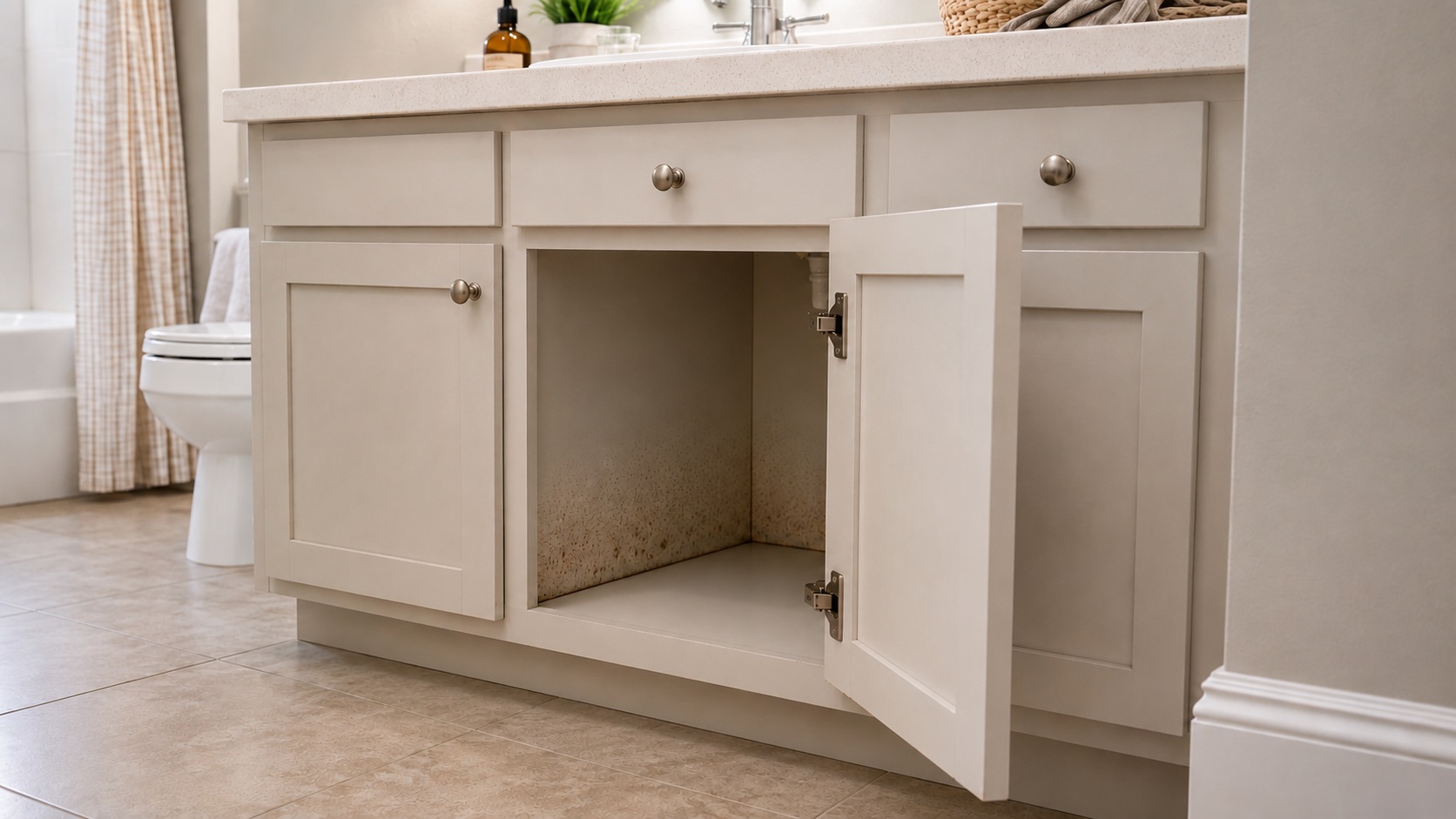
  • Yellow or brown discoloration near cabinet bottoms
  • Dark lines along seams between panels
  • Water streaks near plumbing cutouts
  • Shadow-like discoloration on cabinet backs

These visual changes often indicate prolonged moisture exposure. When staining appears alongside odors or material changes, hidden mold becomes increasingly likely.

Soft or Damp Cabinet Surfaces

Cabinet surfaces that feel damp or soft can indicate internal moisture damage. This is especially common in cabinet bases that sit directly on flooring.

Softening occurs when moisture weakens wood fibers or composite materials. Over time, repeated dampness allows mold to colonize these weakened materials.

Signs of moisture-related surface damage include:

  • Cabinet bottoms that feel spongy under pressure
  • Surface textures that feel rough or uneven
  • Cabinet backs that feel cool or damp to the touch
  • Persistent moisture inside cabinet interiors

Soft surfaces rarely occur without a moisture source. Even if mold is not yet visible, moisture damage at this stage creates ideal conditions for hidden growth.

Cabinet Material Symptoms That Suggest Trapped Moisture

Material damage is often one of the clearest indicators of hidden mold risk behind bathroom cabinets. Because many cabinets use moisture-sensitive materials, physical distortion frequently appears before visible mold growth.

Understanding how cabinet materials respond to moisture helps homeowners identify warning signs early and avoid long-term structural damage.

Swelling at the Cabinet Base

Swelling along the cabinet base is one of the most recognizable signs of moisture exposure. This occurs when particleboard or MDF absorbs water and expands.

Unlike surface stains, swelling indicates internal moisture absorption. Once materials expand, they rarely return to their original shape.

Typical swelling patterns include:

  • Raised cabinet edges along the floor
  • Bulging toe-kick panels
  • Warped base trim
  • Uneven surfaces along cabinet bottoms

These symptoms often develop gradually. Many homeowners assume swelling results from normal wear, when in reality it often signals hidden moisture conditions supporting mold growth.

Peeling or Bubbling Laminate Finishes

Laminate surfaces are commonly used to protect cabinet materials from water exposure. However, when moisture penetrates beneath the laminate layer, it can cause bubbling or peeling.

These changes occur because trapped moisture weakens the adhesive bonding the laminate to the cabinet surface.

Visible signs may include:

  • Bubbles forming under laminate surfaces
  • Edges lifting away from cabinet panels
  • Wrinkled or warped laminate finishes
  • Small cracks forming along laminate seams

Laminate damage frequently indicates hidden moisture behind the cabinet, particularly near plumbing penetrations or wall contact points.

Cabinet Doors That No Longer Close Properly

Door alignment problems may seem unrelated to moisture, but swelling cabinet frames can shift structural alignment. When cabinet frames expand unevenly, doors may begin sticking or failing to close smoothly.

These mechanical changes often indicate moisture exposure behind cabinet walls or along base panels.

Signs of structural distortion include:

  • Doors rubbing against cabinet frames
  • Gaps appearing along cabinet joints
  • Hinges loosening without obvious cause
  • Cabinet frames appearing uneven

While hinge problems can occur independently, persistent alignment changes combined with odors or swelling strongly suggest hidden moisture damage.

Discoloration Around Plumbing Openings

Plumbing openings are common moisture entry points behind cabinets. When water seeps through pipe penetrations, it often creates localized staining or material breakdown.

Carefully inspecting areas around pipes can reveal early warning signs that moisture is spreading behind cabinet backs.

Look for:

  • Dark rings around pipe cutouts
  • Softened material near supply valves
  • Rust staining from metal fittings
  • Water marks near drain pipes

When these symptoms appear together with odors or swelling, the risk of hidden mold becomes significantly higher.

Odor Clues and Recurring Bathroom Smells That Suggest Hidden Mold

Odors are often the earliest reliable indicator of hidden mold behind bathroom cabinets. Even when surfaces look clean and dry, trapped moisture can allow mold to grow out of sight. As mold develops, it releases gases that create the familiar musty smell many homeowners associate with damp spaces.

Unlike temporary smells caused by normal humidity, mold-related odors tend to return repeatedly. They may fade after cleaning or airing out the room, only to reappear after showering or sink use. This cycle usually signals moisture trapped behind surfaces rather than simple surface dampness.

Musty Odors That Return After Cleaning

A common warning sign of hidden mold behind bathroom cabinets is a musty smell that keeps coming back after routine cleaning. Many homeowners assume the odor comes from clutter, cleaning products, or stale air. However, persistent odors often indicate moisture trapped behind cabinet panels or inside wall spaces.

Typical characteristics of mold-related odors include:

  • A damp, earthy smell strongest inside the cabinet
  • Odors that return within days after cleaning
  • Smells that worsen during humid weather
  • A noticeable odor when cabinet doors are first opened

If these patterns continue, hidden moisture may be supporting mold growth behind the cabinet. In many cases, this moisture originates from slow leaks or condensation that is difficult to detect without careful inspection.

Stronger Odors After Showers or Sink Use

Humidity spikes from showers and sink use can intensify mold odors temporarily. When warm moisture fills the bathroom, it can travel into cabinet cavities and activate dormant mold colonies. This often causes odors to become more noticeable immediately after bathing or running hot water.

If odors increase during or after moisture-heavy activities, it suggests mold may already exist in hidden areas. These odor changes help differentiate mold-related smells from general bathroom humidity.

Bathrooms with weak ventilation are especially vulnerable to this problem. Improving humidity control and airflow can reduce odor buildup and help prevent further mold development.

Odors Concentrated Near Cabinet Edges or Floors

The location of the odor can also provide clues about hidden mold. Smells that concentrate near cabinet bases, corners, or seams often indicate moisture damage below or behind the cabinet structure.

These odor patterns may suggest:

  • Water trapped beneath the cabinet base
  • Moisture accumulating along wall contact points
  • Hidden mold growth near plumbing penetrations
  • Damp flooring beneath the cabinet

If odors appear strongest near the floor or cabinet base, the problem may involve moisture migration from below rather than from inside the cabinet alone.

Plumbing-Adjacent Warning Signs of Hidden Mold

Most hidden mold behind bathroom cabinets develops near plumbing components. Even small plumbing defects can allow moisture to collect behind surfaces where it remains undetected for long periods.

Understanding these warning signs helps homeowners identify potential mold risks early—before significant damage spreads into walls or flooring materials.

Slow Drips From Supply Lines or Valves

Slow leaks are one of the most common causes of hidden mold behind bathroom cabinets. Unlike major plumbing failures, these leaks may only release small amounts of water at irregular intervals.

Over time, repeated drips can saturate cabinet materials and surrounding wall surfaces. Because water often flows behind cabinet backs, moisture damage may remain invisible until structural symptoms appear.

Watch for signs such as:

  • Moisture forming around shutoff valves
  • Small droplets appearing at pipe joints
  • Water stains beneath supply lines
  • Rust forming around fittings

If these symptoms appear, further inspection may be necessary. Understanding how to detect slow plumbing leaks can help confirm whether hidden moisture is contributing to mold risk.

Condensation on Cold Water Pipes

Pipe condensation is another overlooked moisture source. When cold water flows through pipes in humid environments, moisture can form on pipe surfaces. These droplets may drip onto cabinet materials or collect behind cabinet backs.

This process is especially common in warm climates or bathrooms with poor ventilation. Over time, repeated condensation can create the same conditions as a slow leak.

Look for:

  • Water droplets forming on cold pipes
  • Damp cabinet surfaces beneath pipes
  • Recurring moisture despite no visible leaks
  • Staining beneath pipe insulation

Even minor condensation can lead to mold growth if it occurs frequently enough.

Loose Drain Connections or Seal Failures

Drain pipes rely on tight seals to prevent water escape. When these seals wear out or loosen, water can leak during sink use. Unlike visible leaks, these failures often release moisture slowly and intermittently.

Symptoms of drain-related moisture include:

  • Water stains around drain connections
  • Damp areas beneath the P-trap
  • Discoloration around pipe joints
  • Recurring odors near the drain area

These issues may indicate moisture spreading behind the cabinet structure, where mold can develop unnoticed.

How to Check Without Removing the Cabinet

Many homeowners worry that inspecting for hidden mold requires tearing out cabinets or opening walls. In most cases, however, several safe inspection methods can help identify warning signs without causing damage.

These visual and sensory checks provide valuable information while preserving the cabinet structure.

Inspect Cabinet Interiors Carefully

Start by removing stored items and examining the cabinet interior thoroughly. Use a flashlight to inspect dark corners and hidden surfaces.

Focus on areas such as:

  • Cabinet bottoms and side panels
  • Pipe openings and seams
  • Edges along the back panel
  • Flooring directly beneath the cabinet

Look for discoloration, moisture stains, or material softening. Even minor changes can signal underlying moisture issues.

Feel for Soft or Damp Materials

Gently press along cabinet bases and lower panels to check for softness. Moisture-weakened materials often feel spongy or unstable compared to dry surfaces.

Pay attention to:

  • Cabinet bases near the floor
  • Lower corners where water collects
  • Areas surrounding plumbing connections
  • Surfaces that feel cooler than surrounding materials

Soft materials rarely occur without moisture exposure, making this a valuable early detection method.

Check Surrounding Walls and Flooring

Hidden mold behind cabinets can spread into nearby materials. Inspect walls and flooring adjacent to the cabinet for signs of moisture migration.

Look for:

  • Paint discoloration near cabinet edges
  • Warping in nearby flooring
  • Baseboards separating from walls
  • Soft drywall near cabinet sides

If these signs appear alongside cabinet symptoms, the moisture problem may extend beyond the cabinet itself. In these cases, understanding how to inspect hidden bathroom leaks can help identify the source before further damage occurs.

Use Odor Patterns as Clues

Odor patterns provide valuable insight into hidden mold locations. If smells intensify when cabinet doors are opened or after plumbing use, the source is likely nearby.

Carefully noting when odors appear can help narrow down moisture sources and determine whether additional inspection is needed.

When Hidden Cabinet Mold May Mean a Larger Wall Problem

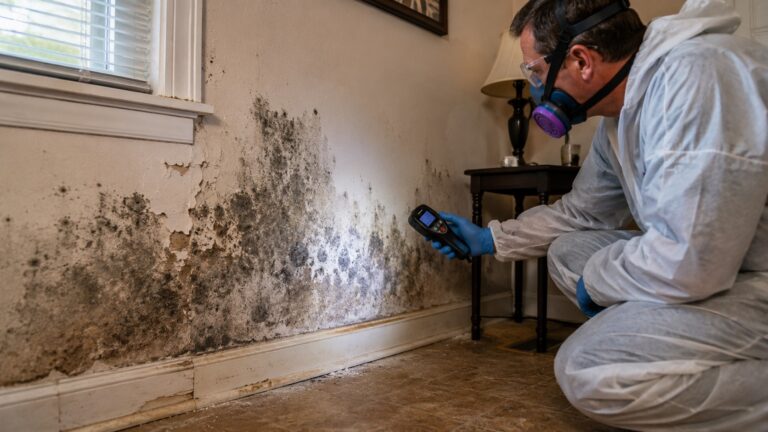
Hidden mold behind bathroom cabinets sometimes indicates more than a localized moisture issue. In many homes, cabinets conceal sections of drywall, plumbing penetrations, and framing that can hold moisture for long periods. When mold symptoms continue despite surface cleaning or minor repairs, the problem may involve deeper wall conditions rather than just cabinet materials.

This is especially important to recognize early. Moisture trapped inside wall cavities can spread laterally and vertically, affecting insulation, wood framing, and adjacent surfaces. In these cases, visible cabinet damage is often just the first sign of a wider moisture problem.

Wall Softness Near Cabinet Edges

One of the strongest indicators of deeper moisture problems is soft drywall near cabinet edges. If pressing lightly against the wall causes noticeable movement or crumbling, moisture has likely penetrated behind the surface.

Wall softness may appear as:

  • Drywall that feels spongy near cabinet sides
  • Small cracks forming along seams
  • Paint bubbling near cabinet contact points
  • Uneven wall surfaces near plumbing locations

These symptoms suggest moisture may be spreading behind cabinets rather than remaining isolated inside them.

Damage Extending Beyond the Cabinet Area

If nearby materials show signs of moisture damage, the problem may not be limited to the cabinet itself. Flooring, baseboards, and surrounding walls often reveal whether moisture has migrated beyond its original source.

Watch for signs such as:

  • Warped flooring adjacent to cabinets
  • Baseboards separating from walls
  • Paint discoloration beyond cabinet edges
  • Persistent dampness along lower wall sections

When damage spreads beyond the cabinet footprint, further investigation is usually necessary. Moisture migration patterns like these are often associated with long-term leaks or persistent humidity conditions.

Understanding the early warning signs of deeper mold activity can help prevent structural deterioration. Homeowners dealing with persistent mold symptoms may benefit from learning about signs of mold behind bathroom fixtures, especially when multiple moisture-prone areas are present.

When to Call a Professional

While many early warning signs can be inspected safely, certain conditions require professional evaluation. Mold hidden behind cabinets can expand into structural areas that are not accessible without specialized tools or removal procedures.

Calling a professional early can prevent costly repairs and reduce long-term damage risks.

Persistent Musty Odors Without Visible Mold

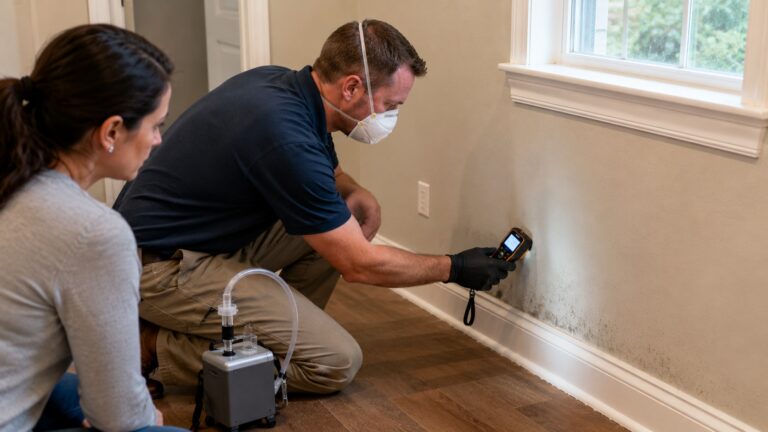
If odors continue despite cleaning and drying efforts, hidden mold may be present inside walls or beneath cabinetry. Professionals can use moisture meters, inspection cameras, and thermal tools to locate moisture sources accurately.

Situations that often require professional inspection include:

  • Odors lasting more than several weeks
  • Recurring mold growth after cleaning
  • Smells that intensify after plumbing use
  • Odors spreading to nearby rooms

Persistent odor problems often indicate moisture sources that cannot be identified visually.

Cabinet or Wall Structural Damage

Structural damage should always be taken seriously. Soft cabinets, collapsing panels, or deteriorating drywall may indicate prolonged moisture exposure.

Professional help is recommended when you notice:

  • Cabinet bases breaking apart
  • Walls that crumble under light pressure
  • Extensive swelling or warping
  • Flooring damage beneath cabinets

These conditions often signal moisture damage beyond simple surface repair.

Repeated Plumbing Failures

If plumbing leaks occur repeatedly in the same location, hidden moisture may already be present behind cabinets. Multiple repairs without lasting results often indicate moisture trapped in surrounding materials.

In these cases, deeper inspection may be required to prevent recurring mold development.

Learning how to manage moisture conditions long-term is essential. Reviewing the guidance in the mold removal category can help homeowners understand broader remediation strategies and risk factors.

FAQ — Signs of Hidden Mold Behind Bathroom Cabinets

Can mold grow behind bathroom cabinets without visible leaks?

Yes. Mold can develop from humidity, condensation, or small plumbing leaks that are not easily visible. Even minor moisture trapped behind cabinet panels can support mold growth over time.

Is a musty smell under the sink always mold?

Not always, but persistent musty odors often indicate moisture problems that can lead to mold growth. If odors continue despite cleaning and drying, further inspection may be necessary.

Should I remove my bathroom cabinet to check for mold?

Cabinet removal is usually not necessary for initial inspection. Many warning signs—such as odors, swelling, and staining—can be identified without dismantling structures. Removal is typically reserved for confirmed damage or professional inspection.

Can hidden cabinet mold spread into walls?

Yes. Mold can spread into drywall, insulation, and surrounding materials if moisture conditions remain unresolved. Early detection is important to prevent wider structural damage.

What is the difference between mildew on surfaces and hidden mold behind cabinets?

Mildew typically forms on visible surfaces and can often be cleaned easily. Hidden mold grows inside materials or behind structures, making it more difficult to detect and remove.

Conclusion

Hidden mold behind bathroom cabinets often develops slowly, beginning with subtle moisture problems that go unnoticed. Early warning signs—such as musty odors, cabinet swelling, and recurring stains—should never be ignored. These symptoms frequently indicate trapped moisture that can lead to mold growth behind cabinet structures.

Understanding how mold forms in concealed spaces helps homeowners recognize problems before they become severe. By paying attention to material changes, odor patterns, and plumbing-related moisture risks, you can identify hidden mold conditions early and reduce the likelihood of costly structural damage.

For homeowners dealing with persistent moisture concerns, reviewing the complete step-by-step mold removal and moisture control guide provides additional strategies for managing long-term moisture risks.

Key Takeaways

  • Bathroom cabinets create enclosed spaces where moisture can remain trapped.
  • Musty odors are often the earliest sign of hidden mold behind cabinets.
  • Swelling, soft materials, and discoloration frequently indicate moisture damage.
  • Plumbing leaks and condensation are major causes of hidden mold growth.
  • Wall or flooring damage near cabinets may signal deeper moisture problems.
  • Professional inspection is recommended when odors or structural damage persist.
  • Early detection significantly reduces the risk of widespread mold damage.

Similar Posts