How to Inspect Kitchen Cabinets for Hidden Mold
Hidden mold inside or behind kitchen cabinets can be difficult to find because cabinet structures block visibility and airflow. Mold may grow on cabinet backs, inside corners, around plumbing openings, or behind panels long before it becomes obvious from the outside. A careful inspection helps you identify suspicious areas before mold spreads into walls, flooring, or adjacent cabinets.
To inspect cabinets for hidden mold, empty the cabinet, check the back panel, base, corners, pipe openings, toe-kick, and wall-contact areas with bright side lighting. Look for stains or fuzzy growth, feel gently for soft or swollen materials, then use a moisture meter or inspection mirror if the area still seems suspicious.
Kitchen cabinets are high-risk areas because they sit near sinks, dishwashers, refrigerators, and exterior walls. These locations often experience slow leaks, condensation, humidity buildup, or past water exposure. If moisture remains trapped, mold can develop in hidden spaces where normal cleaning cannot reach.
This guide focuses on how to inspect kitchen cabinets for hidden mold safely and systematically. It does not replace professional mold remediation, but it can help you decide whether further moisture testing, closer inspection behind panels, or professional evaluation is needed. For a broader room-by-room approach to finding hidden moisture, see how to find hidden moisture in different areas of your home.
If you are still trying to recognize whether mold may be present at all, start with the warning signs explained in signs of mold behind kitchen cabinets. Once those signs appear, a structured inspection can help you narrow down where the problem may be hiding.
When Cabinet Mold Inspection Becomes Necessary
Kitchen cabinet mold inspections become necessary when there are clues that moisture or mold may already be present. Homeowners usually begin inspection after noticing odors, staining, material damage, or a recent water event.
Inspection is especially important when symptoms repeat in the same cabinet area. A one-time spill may not indicate a hidden mold problem, but persistent dampness or odor suggests moisture may be trapped behind surfaces.
You should inspect kitchen cabinets for hidden mold if you notice:
- Musty odors inside cabinets: Persistent earthy or damp smells often indicate hidden microbial growth.
- Past plumbing leaks: Even repaired leaks can leave moisture behind cabinet panels or wall surfaces.
- Cabinet swelling or warping: Distorted materials suggest moisture absorption.
- Visible staining: Brown, yellow, gray, green, or black discoloration may signal moisture or mold.
- Repeated moisture problems: Dampness that returns after cleaning should be investigated.
- Soft cabinet materials: Spongy cabinet bases or backs may indicate prolonged moisture exposure.
Cabinet inspection is also important after water-related incidents. A slow sink leak, dishwasher overflow, refrigerator water line leak, or pipe condensation problem can leave hidden moisture in cabinet materials. If these materials do not dry quickly, mold risk increases.
Not every stain or odor means mold is present, but every repeated moisture clue deserves attention. In many cases, mold inspection and moisture testing work together. If you suspect dampness but do not see visible growth, review this guide on how to detect moisture behind kitchen cabinets before disturbing cabinet materials.
Inspection is most urgent when mold symptoms appear after a known leak. Mold can begin developing when cabinet materials stay damp, especially in warm kitchen environments with limited airflow. The faster you inspect high-risk areas, the easier it is to prevent the problem from spreading.
Where Mold Commonly Hides Inside Kitchen Cabinets
Hidden mold inside kitchen cabinets rarely appears in obvious locations at first. Instead, it develops in concealed areas where moisture remains trapped and airflow is limited. Knowing where to look greatly improves the chances of finding mold early before it spreads into surrounding materials.
Some cabinet areas carry much higher mold risk than others. These locations should always be inspected first, especially after water exposure or recurring moisture problems.
High-risk cabinet locations include:
- Sink base cabinets: Plumbing leaks and condensation make these areas the most common mold locations.
- Cabinet bases touching flooring: Moisture often settles at the lowest points.
- Rear cabinet panels: Hidden wall contact zones trap moisture and slow drying.
- Pipe entry openings: Gaps around plumbing allow moisture movement into cabinet interiors.
- Corner cabinet cavities: Limited airflow increases moisture retention.
- Dishwasher-adjacent cabinets: Heat and humidity increase moisture risk.
- Exterior wall cabinets: Temperature differences create condensation.
Hidden mold frequently forms behind cabinet backs where the cabinet meets the wall. Because this area cannot be seen without partial access, mold may spread unnoticed for extended periods. Understanding how moisture develops in these hidden spaces is explained in why kitchen cabinets trap moisture.
When inspecting cabinets, always begin with the areas most exposed to moisture. This targeted approach increases inspection accuracy and reduces unnecessary cabinet disturbance.
How to Perform a Visual Mold Inspection
Visual inspection is the safest and simplest way to begin checking kitchen cabinets for hidden mold. This step does not require tools or cabinet removal in most cases. Instead, it relies on careful observation of surfaces, materials, and structural components.
Begin by removing all stored items from the cabinet. Clearing the interior provides better visibility and prevents contamination of stored materials during inspection.
Use Bright Lighting to Reveal Hidden Growth
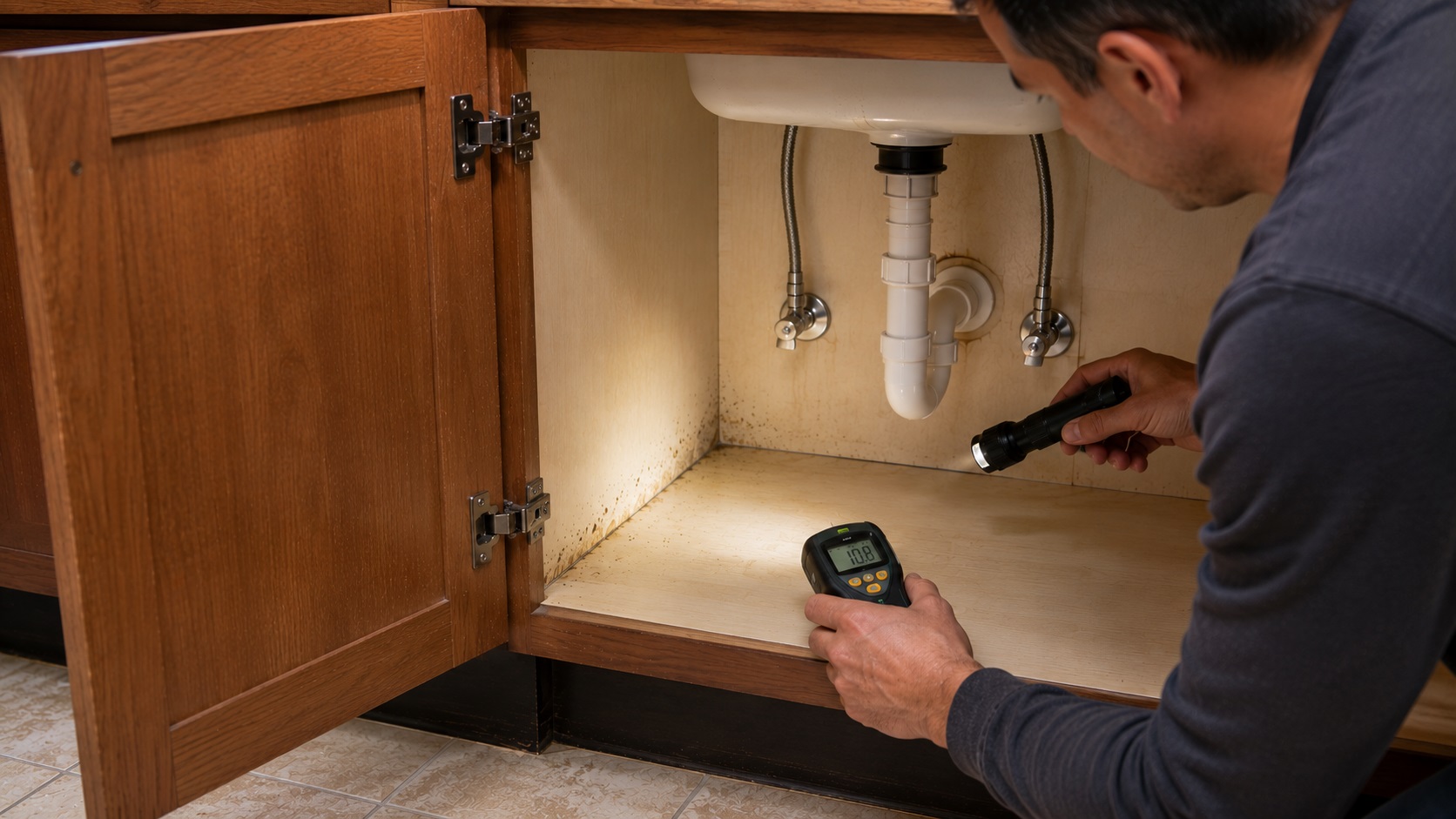
Proper lighting is essential during visual inspection. Mold often develops in dark cabinet corners where normal room lighting cannot reach. Using a high-intensity flashlight helps reveal hidden discoloration and subtle growth patterns.
Focus lighting on:
- Rear cabinet panels: Look for dark spotting or uneven discoloration.
- Lower cabinet edges: Inspect areas where moisture collects.
- Corner joints: Mold frequently develops in tight seams.
- Pipe openings: Moisture often accumulates near plumbing access points.
- Underside surfaces: Check hidden surfaces beneath shelves.
Move the flashlight slowly across surfaces at an angle. Side lighting helps highlight texture differences that may indicate mold growth.
Look for Visible Mold Indicators
Mold does not always appear as large black patches. Early mold growth may be subtle and easy to overlook. Learning to recognize different appearance patterns improves detection accuracy.
Common visible mold indicators include:
- Dark spotting patterns: Small clusters of black, green, or brown dots.
- Fuzzy surface growth: Soft, raised patches on cabinet materials.
- Powdery residue: Light dust-like growth on surfaces.
- Uneven discoloration: Irregular stains with defined edges.
- Bubbling finishes: Paint or laminate lifting from surfaces.
- Shadow-like staining: Subtle darkening behind panels.
If visible staining appears without clear mold growth, moisture damage may still be present. These conditions are often associated with symptoms described in signs of water damage behind kitchen cabinets, which may indicate early-stage moisture exposure.
Check for Indirect Mold Clues
Not all mold growth is immediately visible. In some cases, indirect clues provide the first indication that hidden mold may exist. These clues help guide further inspection into concealed areas.
Indirect mold indicators include:
- Musty odors: Persistent smells often signal microbial activity.
- Material distortion: Warping or swelling suggests moisture exposure.
- Staining patterns: Water marks may indicate mold-prone conditions.
- Rusting hardware: Corrosion often develops in damp environments.
- Recurring dampness: Surfaces that repeatedly feel moist.
Visual inspection alone may not confirm mold in every situation. If suspicious areas appear but mold cannot be clearly identified, physical inspection and limited access techniques provide the next step in the inspection process.
How to Check Cabinet Materials Without Disturbing Mold
After the visual inspection, use gentle touch-based checks to identify moisture damage that may support hidden mold growth, even when mold itself is not visible. Many cabinet mold problems begin beneath surfaces, so the condition of the cabinet base, back panel, and lower seams matters.
Touch-based inspection should always be done carefully to avoid disturbing suspected mold growth. Wear disposable gloves before touching cabinet surfaces, and avoid applying excessive pressure that could damage weakened materials.
Signs of Moisture Damage You Can Feel
Moisture damage often changes the physical texture of cabinet materials. These changes may occur before visible mold appears. Carefully pressing suspected areas can reveal hidden problems.
Common touch-based indicators include:
- Soft cabinet panels: Cabinet backs or bases that feel weaker than surrounding materials.
- Spongy textures: Particleboard or wood that compresses slightly under pressure.
- Warped surfaces: Curved or uneven cabinet panels caused by moisture expansion.
- Loose trim or fasteners: Nails or screws may shift when materials swell.
- Cool damp surfaces: Damp materials often feel colder than surrounding areas.
If any of these conditions are present, further inspection may be required to determine whether mold growth has begun behind cabinet structures.
Touch-based inspection is especially useful in areas that previously experienced water exposure. If cabinets were exposed to moisture during a leak, additional evaluation may be necessary. In these situations, reviewing the procedures outlined in how to dry cabinets after kitchen leaks can help confirm whether drying was completed properly.
How to Safely Access Hidden Cabinet Areas
Some mold growth develops in concealed cabinet spaces that cannot be seen during visual inspection alone. In these cases, limited access methods allow you to inspect hidden areas without removing entire cabinets.
Before accessing hidden areas, always use protective equipment such as gloves and respiratory protection. Disturbing mold growth without protection may release airborne particles.
Removing Toe-Kick Panels
The toe-kick panel is the trim piece located at the bottom front of most cabinets. In many installations, this panel can be removed without damaging the cabinet structure. Removing it allows inspection of the space beneath cabinet bases, where moisture often accumulates.
After removing the toe-kick panel, inspect:
- Cabinet base supports: Look for discoloration or mold growth.
- Flooring beneath cabinets: Check for moisture staining.
- Hidden debris: Organic material can support mold growth.
- Moisture accumulation: Inspect corners and seams.
Inspecting Around Pipe Entry Points
Pipes entering cabinets often create openings where moisture can accumulate. These openings provide access points for inspecting hidden areas without removing cabinet panels.
Use a flashlight to inspect gaps around pipes. Look for discoloration, moisture buildup, or mold growth along surrounding materials.
Using Inspection Mirrors
Small inspection mirrors are useful for viewing hidden areas behind cabinet components. These mirrors allow inspection without removing structural elements.
Angle the mirror behind the lower back panel, around pipe openings, beneath shelf lips, and into rear corners. Use the flashlight from the side rather than straight ahead so raised growth, swollen edges, and uneven staining are easier to see.
Inspection mirrors are particularly helpful for:
- Viewing rear cabinet corners
- Inspecting narrow gaps behind plumbing
- Checking areas beneath fixed shelving
- Examining concealed cabinet seams
Limited access inspection helps identify mold risk while minimizing cabinet disturbance. If suspicious growth is detected, further testing may be required.
Tools That Help Inspect Cabinets for Hidden Mold
Basic inspection tools improve detection accuracy and allow more detailed evaluation of hidden cabinet areas. While visual inspection is important, tools help confirm whether moisture conditions exist that support mold growth.
Flashlights for Detailed Inspection
A high-quality flashlight is one of the most important inspection tools. Bright directional lighting reveals texture differences and hidden discoloration that standard room lighting cannot detect.
Use a flashlight to inspect:
- Cabinet corners and seams
- Rear cabinet panels
- Lower cabinet bases
- Hidden wall contact areas
Move the flashlight slowly across surfaces at an angle to reveal subtle irregularities.
Moisture Meters for Hidden Moisture Detection
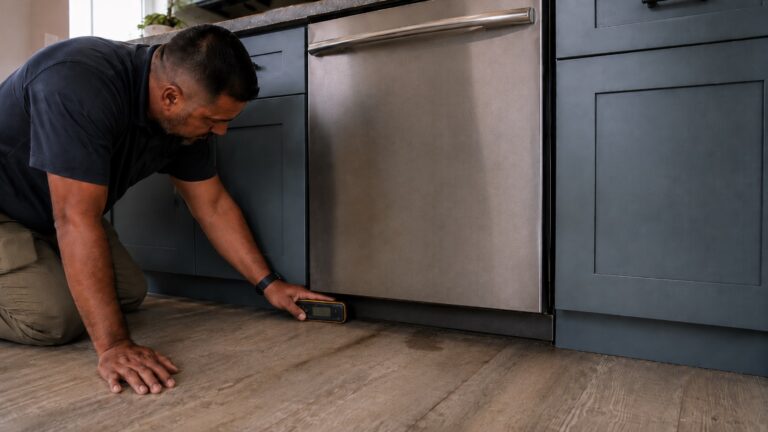
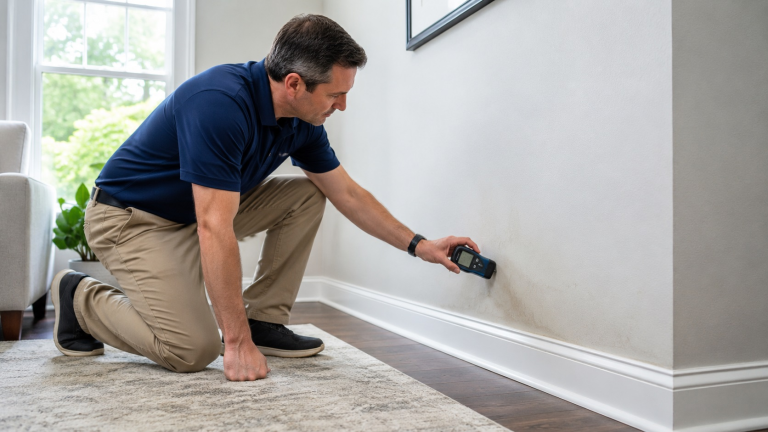
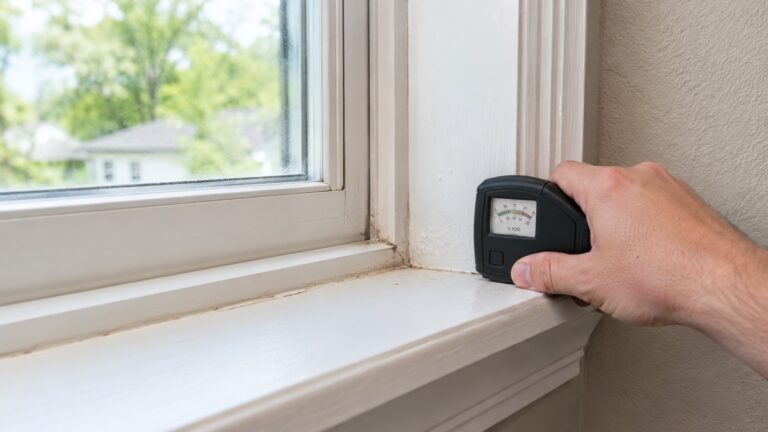
Moisture meters help identify damp conditions that support mold growth. These devices measure moisture levels inside materials without requiring major cabinet removal.
A moisture meter does not confirm mold by itself, but elevated readings show that cabinet materials may still be damp enough to support growth. Compare suspicious areas with a dry cabinet surface of the same material, then investigate the moisture source if readings are noticeably higher.
For detailed moisture testing procedures, refer to how to detect moisture behind kitchen cabinets, which explains how to use these tools effectively.
Borescopes for Advanced Inspection
Borescopes, also called inspection cameras, allow viewing inside enclosed spaces through small openings. These tools are useful when mold is suspected behind cabinet backs or inside wall cavities.
Borescope inspection is particularly valuable when:
- Moisture damage is suspected behind cabinet panels
- Mold odor persists without visible growth
- Previous water damage occurred behind cabinets
- Wall cavities may be affected
Using tools during inspection improves detection accuracy and reduces the need for unnecessary cabinet removal.
How to Inspect Kitchen Cabinets After Water Leaks
Water leaks are one of the most common causes of hidden mold behind kitchen cabinets. Even small leaks can leave moisture trapped inside cabinet materials, especially when airflow is limited. Inspecting cabinets after water exposure is one of the most effective ways to prevent mold from developing unnoticed.
Cabinet inspection should not be performed only once after a leak. Mold may appear later if cabinet backs, bases, or wall-contact areas stayed damp after the surface looked dry. A structured inspection timeline improves the chances of detecting hidden moisture before mold spreads.
Recommended Post-Leak Inspection Timeline
After any plumbing leak, dishwasher overflow, or water line failure, inspections should be scheduled at specific intervals. These repeated checks help confirm that materials remain dry over time.
- Immediately after drying: Confirm visible moisture has been removed.
- 48 hours after the event: Check for new moisture buildup or odor.
- 7 to 14 days later: Inspect for delayed mold growth.
- 30 days after the leak: Perform a final confirmation inspection.
Many mold problems develop because materials appear dry on the surface but remain damp internally. If cabinets were exposed to significant water or still feel damp after initial cleanup, follow how to dry cabinets after kitchen leaks before relying on repeated mold inspections.
How to Inspect Cabinets After Slow Leaks
Slow leaks often cause more hidden mold damage than sudden leaks because moisture accumulates gradually. These leaks may remain unnoticed for weeks or months, allowing mold to develop deep inside cabinet materials.
Signs that slow leaks may have affected cabinets include:
- Persistent musty odors
- Recurring moisture near plumbing
- Gradual cabinet swelling
- Stains that continue spreading
- Soft or weakened cabinet bases
If these signs appear, inspect both the cabinet interior and the surrounding wall area. Slow leaks often create hidden moisture pockets that require careful inspection to identify.
When Cabinet Panels May Need to Be Removed
Most cabinet mold inspections do not require full cabinet removal. However, in some situations, limited panel removal may be necessary to confirm whether mold exists behind cabinet surfaces.
Removing cabinet components should only be done when clear warning signs indicate hidden damage. Unnecessary removal increases repair costs and may spread contamination if mold is present.
Signs That Panel Removal May Be Necessary
Consider limited panel removal when the following conditions appear:
- Persistent musty odors: Odors remain after cleaning and drying.
- Visible mold at edges: Growth appears near seams or corners.
- Severe material damage: Cabinet panels appear swollen or deteriorated.
- Repeated moisture readings: Moisture meters detect elevated readings.
- Wall moisture suspected: Moisture appears to extend beyond cabinet interiors.
Removing a small section of interior paneling may allow inspection of hidden wall surfaces. If mold is discovered behind cabinets, the underlying moisture source must be addressed to prevent recurrence. This process is explained further in how to fix persistent moisture behind kitchen cabinets.
When Professional Mold Inspection Is Required
While many cabinet inspections can be performed safely by homeowners, certain situations require professional evaluation. Mold problems that extend beyond accessible cabinet surfaces may involve hidden wall cavities or structural materials.
Professional inspection becomes necessary when mold risk exceeds safe inspection limits or when health risks increase.
Situations That Require Professional Inspection
- Mold suspected inside wall cavities: Hidden mold may require specialized equipment.
- Large contaminated areas: Extensive mold growth requires professional containment.
- Recurring mold problems: Repeated growth suggests unresolved moisture sources.
- Severe cabinet damage: Structural deterioration increases safety risks.
- Health concerns related to mold: Respiratory symptoms or allergic reactions require caution.
Professional inspectors use advanced tools such as thermal imaging cameras, moisture sensors, and specialized sampling methods. These tools allow deeper evaluation without unnecessary structural damage.
Early homeowner inspection can still help by identifying the cabinet area, moisture pattern, and timeline before a professional evaluates the problem.
How to Decide Whether Further Action Is Needed
Inspection results help determine whether additional steps are required. Some inspections confirm that cabinets remain dry and mold-free, while others reveal early warning signs that require attention.
After completing your inspection, consider the following outcomes:
- No visible mold and dry materials: Continue monitoring periodically.
- Moisture present without mold: Dry the area, improve airflow, and identify why the cabinet is still damp.
- Visible mold growth detected: Avoid disturbing the area and plan safe remediation. If the growth is more than a small surface issue, use how to remove mold permanently as the broader cleanup and remediation reference.
- Repeated moisture problems: Identify the moisture source.
- Severe damage discovered: Seek professional assistance.
Inspection is not the final step in managing hidden mold risks. Instead, it provides the information needed to decide whether drying, repair, or professional remediation is required. The final section explains safety practices during inspection and answers common questions about cabinet mold inspection.
Safety Practices to Follow During Cabinet Mold Inspection
Inspecting kitchen cabinets for hidden mold should always be done carefully to avoid spreading contamination or exposing yourself to airborne particles. Even small mold colonies can release spores when disturbed, especially in enclosed cabinet spaces. Following basic safety practices reduces health risks and prevents mold from spreading to clean areas.
Before beginning any cabinet inspection, prepare the area by clearing stored items and improving general room ventilation. Avoid blowing strong fans directly into suspected mold growth, because direct airflow can disturb particles and spread contamination.
Wear Protective Equipment Before Inspecting
Protective equipment helps prevent exposure to mold particles during inspection. Even when mold is not visible, hidden growth may be disturbed while accessing tight spaces.
Recommended protective equipment includes:
- Disposable gloves: Prevent direct skin contact with contaminated materials.
- Respiratory protection: A properly fitted N95 or better respirator helps reduce inhalation of mold particles during inspection.
- Eye protection: Safety glasses help prevent irritation from airborne debris.
- Long sleeves: Protective clothing reduces skin exposure.
Protective equipment is especially important when inspecting areas with visible mold growth or strong odors. If large mold areas are suspected, avoid disturbing materials until proper containment measures are in place.
Avoid Disturbing Suspected Mold Growth
Disturbing mold without proper containment may release spores into the surrounding air. These spores can spread into other cabinets, walls, or nearby rooms.
To reduce contamination risk:
- Avoid dry brushing suspected mold.
- Do not vacuum mold without specialized equipment.
- Avoid sanding contaminated materials.
- Limit handling of visibly damaged cabinet parts.
- Keep cabinet doors closed when not inspecting.
If mold is clearly visible during inspection, further handling should be limited until safe remediation steps are planned. Identifying early mold formation is explained further in why mold forms behind kitchen cabinets, which outlines the environmental conditions that allow mold to grow.
How to Reduce Mold Risk During Inspection
Inspection itself should not create new moisture problems. Careless handling can introduce moisture into cabinet structures or spread contamination unintentionally.
Use the following practices to minimize risk during inspection:
- Work slowly and carefully: Sudden movement may disturb hidden mold.
- Keep surfaces dry: Avoid introducing water during inspection.
- Use clean tools: Prevent cross-contamination between cabinets.
- Inspect one cabinet at a time: Maintain control over contamination risks.
- Dispose of contaminated materials properly: Seal damaged materials before removal.
Maintaining careful inspection habits improves safety and ensures accurate results.
How Often Kitchen Cabinets Should Be Inspected
Routine inspection helps prevent hidden mold from developing into major structural problems. Even when no visible damage exists, periodic inspection improves long-term moisture control.
Recommended inspection frequency includes:
- After plumbing repairs: Inspect immediately after any leak repair.
- After appliance replacement: New installations may introduce moisture changes.
- During seasonal humidity changes: High humidity increases condensation risk.
- After major spills: Inspect if water enters cabinet areas.
- At least once per year: Check sink bases, dishwasher-adjacent cabinets, toe-kicks, and exterior-wall cabinets for early warning signs.
Regular inspection is one of the most effective ways to prevent recurring mold problems. If repeated moisture issues occur, identifying the underlying moisture source is essential to long-term prevention.
Frequently Asked Questions About Inspecting Kitchen Cabinets for Hidden Mold
How do I inspect cabinets for hidden mold safely?
Start with a visual inspection using bright lighting, followed by touch-based inspection of suspicious areas. Wear protective equipment and avoid disturbing visible mold. If hidden mold is suspected inside walls or behind cabinet panels, consider professional inspection.
Do I need to remove cabinets to check for mold?
In most cases, full cabinet removal is not necessary. Limited access methods such as removing toe-kick panels or using inspection mirrors often provide enough visibility. Cabinet removal is typically required only when significant mold damage is suspected behind cabinet structures.
Where does mold usually hide inside kitchen cabinets?
Mold commonly develops behind cabinet backs, beneath cabinet bases, around plumbing openings, and in corner cavities. These areas trap moisture and limit airflow, creating favorable mold conditions.
What tools help inspect cabinets for hidden mold?
Common inspection tools include flashlights, inspection mirrors, moisture meters, and borescopes. These tools improve visibility and help detect hidden moisture that supports mold growth.
How long after a leak should I inspect cabinets for mold?
Inspection should occur immediately after drying, followed by additional checks 48 hours, 7 to 14 days, and 30 days after the leak. Mold may develop after delayed moisture exposure, making repeated inspection important.
Final Thoughts on Inspecting Kitchen Cabinets for Hidden Mold
Inspecting kitchen cabinets for hidden mold helps catch moisture problems before they spread into walls, flooring, or adjacent cabinets. Mold often develops in concealed cabinet areas where airflow is limited and moisture remains trapped. By following structured inspection methods, you can identify early warning signs before damage becomes severe.
Early inspection improves safety, reduces repair costs, and prevents mold from spreading into surrounding structures. When inspection reveals persistent moisture or visible mold growth, corrective action should be taken quickly to address the underlying moisture source.
Routine inspection, moisture source control, and timely leak repairs remain the most effective strategies for preventing hidden mold problems inside kitchen cabinets. If the same cabinet area keeps developing odor, staining, or dampness, investigate recurrence instead of cleaning the surface again.