
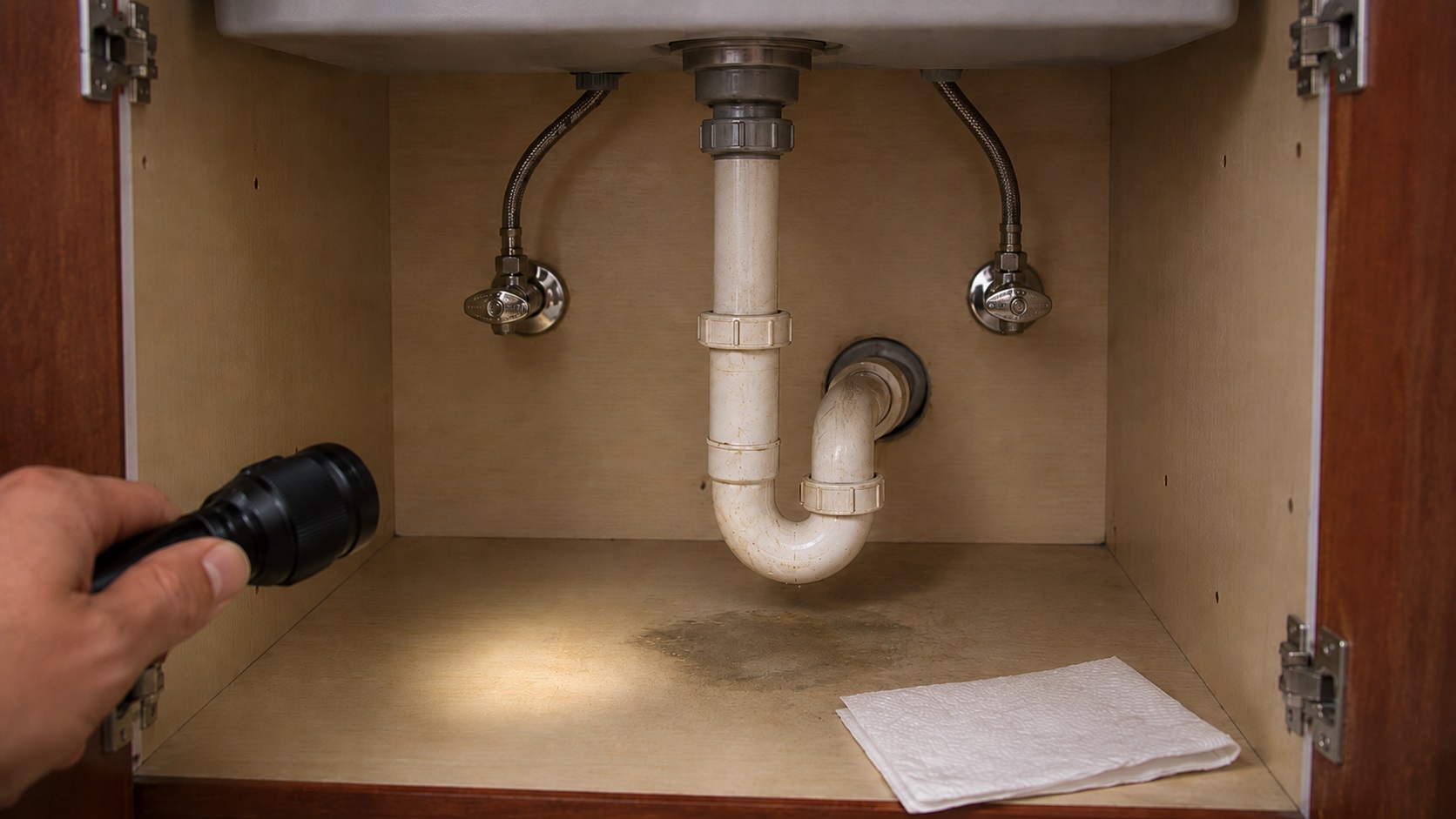
How to Detect Slow Leaks Under Kitchen Sinks Before Major Damage Occurs
To detect slow leaks under a kitchen sink before major damage occurs, clear the cabinet, dry all surfaces, inspect supply lines, shutoff valves, drain joints, dishwasher hoses, and disposal seals, then run water while watching each connection. Use paper towels or a moisture meter to confirm whether dampness returns after the area has been dried.
Slow leaks are damaging because they often begin as tiny drips or seepage around fittings. Instead of forming obvious puddles, the moisture can soak into cabinet materials, collect under stored items, or appear only when the faucet, dishwasher, drain, or garbage disposal is in use.
Early detection helps protect cabinets, flooring, and nearby structural materials. Small under-sink leaks can also become part of a larger plumbing moisture problem, as explained in how plumbing leaks cause structural damage.
Quick Under-Sink Leak Check
- Clear the cabinet completely.
- Dry the cabinet floor and all plumbing connections.
- Place paper towels under each fitting, valve, drain joint, dishwasher hose, and disposal connection.
- Run hot water, cold water, a full drain test, and any connected appliance.
- Check whether any towel becomes damp during testing or after several hours.
Why Slow Leaks Under Kitchen Sinks Are Hard to Notice
Slow leaks are difficult to detect because they rarely produce obvious signs at first. Instead of creating visible water buildup, small leaks often release moisture gradually. This moisture may soak into cabinet materials or evaporate between sink uses, making the problem appear temporary rather than persistent.
Several factors make slow leaks under kitchen sinks especially difficult to detect:
- Small drip size: Tiny leaks may release only a few drops per hour.
- Absorbent cabinet materials: Particleboard and MDF soak up moisture before puddles form.
- Enclosed cabinet spaces: Limited airflow slows drying and hides moisture buildup.
- Stored household items: Cleaning supplies and containers block visibility.
- Intermittent leak behavior: Some leaks occur only during water use.
Because of these conditions, moisture damage often appears before homeowners ever see visible water. In many cases, the first noticeable signs involve staining, swelling, or damp odors. If those symptoms are already present, compare them with signs of water damage under kitchen sinks, which focuses on cabinet-base warning signs rather than leak-tracing methods.
Another challenge with slow leaks is that they often behave inconsistently. Some leaks release water only when pressure increases, such as when running hot water, using the dishwasher, or draining large amounts of water. These intermittent leaks create moisture patterns that appear and disappear, making them easy to dismiss as minor spills or temporary dampness.
Where to Check First for Slow Leaks Under Kitchen Sinks
Knowing where slow leaks are most likely to occur makes inspection faster and more effective. Most under-sink leaks originate at mechanical connections rather than straight pipe sections. These connection points experience movement, vibration, and seal wear over time.
Start with these common leak points:
Supply Line Connections
Supply lines carry pressurized water to the faucet. These flexible lines connect to shutoff valves and faucet fittings using compression nuts. Over time, these connections can loosen or develop seal wear.
Signs of supply line leaks include:
- Moisture forming near compression fittings
- Damp cabinet surfaces beneath supply lines
- Water droplets appearing after sink use
- Mineral buildup around connection points
Because supply lines operate under pressure, even minor leaks can release moisture repeatedly.
Shutoff Valve Areas
Shutoff valves control water flow to the sink and are common leak points due to internal seal wear. These valves are typically located near the back wall of the cabinet.
Potential warning signs include:
- Dampness forming around valve stems
- Water collecting near valve bases
- Corrosion or discoloration on metal components
- Moisture appearing after valve operation
Leaks from shutoff valves may occur slowly and intermittently, especially as seals age.
Drain Trap and Joint Connections
The drain trap is designed to hold water and block sewer gases. This section of pipe includes several joints that rely on tight seals to function properly.
Slow leaks often occur at:
- Slip joint connections
- Trap-to-wall connections
- Garbage disposal drain fittings
- Threaded pipe joints
These leaks commonly release small amounts of water only when the sink drains, making them difficult to detect without careful inspection.
Dishwasher Drain Hose Connections
Many kitchen sinks include dishwasher connections that drain wastewater through a hose attached to the sink plumbing. These connections can loosen or develop cracks over time.
Possible signs include:
- Damp areas near hose attachments
- Moisture appearing after dishwasher cycles
- Water trails along cabinet walls
- Small drips forming after draining
If your sink includes dishwasher plumbing, checking this connection is essential during leak detection.
Garbage Disposal Seals
Garbage disposal units connect directly to sink drains and include internal seals that may wear out over time. Small leaks can develop around these seals without producing obvious dripping.
Look for:
- Moisture around the disposal base
- Water stains beneath disposal units
- Damp cabinet floors after heavy use
- Recurring moisture following disposal operation
These leak points often require repeated observation to confirm moisture presence.
Step-by-Step Method to Detect Slow Leaks Under a Kitchen Sink
Detecting slow leaks requires a careful, methodical inspection rather than a quick glance under the sink. Because slow leaks release moisture gradually, identifying them depends on observing patterns over time rather than looking for obvious dripping.
The following step-by-step method provides a reliable way to confirm whether moisture is coming from an active leak rather than occasional spills or condensation. This process focuses on observation, moisture tracking, and controlled testing.
Step 1: Remove Stored Items and Clear the Cabinet
Before beginning inspection, remove all stored items from beneath the sink. Cleaning supplies, containers, and storage bins often hide moisture damage and prevent airflow.
While removing items, check each container for signs of moisture. Sometimes slow leaks spread dampness onto stored items before cabinet materials show visible damage.
During this step:
- Remove all items from the cabinet
- Inspect stored containers for dampness
- Look for moisture marks beneath storage bins
- Check for hidden stains under removable liners
If mold odors or visible growth appear during this process, compare the area with signs of mold under kitchen sink cabinets; this article should stay focused on leak detection rather than mold diagnosis or cleanup.
Step 2: Inspect the Cabinet Floor and Walls Closely
Once the cabinet is cleared, examine the cabinet floor and walls using a flashlight. Focus on areas near plumbing connections and seams, where moisture is most likely to accumulate.
Look for physical signs such as:
- Darkened staining patterns
- Raised or swollen areas
- Peeling laminate surfaces
- Soft or spongy material
- Uneven cabinet flooring
Press gently on suspicious areas to check for softness. If the surface compresses or feels unstable, moisture has likely been present for an extended period.
Material damage often appears before visible dripping occurs. These early structural changes may match the warning patterns described in signs of water damage under kitchen sinks, which explains how materials respond to repeated dampness.
Step 3: Check Supply Lines and Shutoff Valves
Supply lines carry pressurized water and are among the most common sources of slow leaks. Examine all supply line connections carefully.
Focus on:
- Compression nuts at shutoff valves
- Connections leading into the faucet
- Valve stems and fittings
- Areas where moisture may collect beneath lines
Use a flashlight to detect small droplets or damp areas. Even minor moisture accumulation may indicate a slow leak.
If detailed inspection of plumbing connections is needed, reviewing the procedures in how to inspect kitchen sink pipes for hidden leaks provides additional guidance on identifying problem joints and fittings.
Step 4: Inspect Drain Pipes and Trap Connections
Drain pipes release water only during sink use, making them common sources of intermittent leaks. Examine all drain joints carefully.
Pay special attention to:
- Slip joints connecting drain segments
- Trap-to-wall connections
- Garbage disposal connections
- Pipe-thread joints
Because drain leaks occur during use, running water while observing joints may reveal hidden moisture patterns.
Step 5: Perform the Dry Surface Test
The dry surface test is one of the most reliable ways to confirm slow leaks. This method involves drying all visible surfaces and observing whether moisture returns.
Follow this process:
- Use paper towels to dry the cabinet floor, pipe joints, shutoff valves, supply lines, and drain fittings completely
- Place a fresh dry paper towel under each suspected connection
- Run cold water, hot water, and a full sink drain test while watching the towels
- If a dishwasher or garbage disposal connects under the sink, test those separately
- Leave the cabinet empty and check the towels again after several hours
If moisture returns after drying, an active leak or condensation issue is likely present. Moisture appearing on one paper towel usually points to the connection directly above it, while broad dampness across the cabinet floor may indicate splashback, condensation, or water spreading from another hidden point.
Marking the location of each towel with painter’s tape can make it easier to identify which fitting leaked during overnight monitoring.
Step 6: Monitor Overnight for Recurring Moisture
Some leaks appear only during certain conditions, making overnight monitoring an effective detection method.
To perform overnight monitoring:
- Dry all cabinet surfaces thoroughly
- Leave cabinet doors closed overnight
- Check the cabinet again in the morning
- Look for new damp spots or stains
Moisture that reappears overnight strongly suggests a slow leak rather than a one-time spill.
Signs That Confirm a Slow Leak Is Present
While individual signs may appear harmless on their own, several combined indicators usually confirm the presence of a slow leak. Recognizing these combined patterns helps homeowners avoid delaying necessary repairs.
Repeated Moisture After Cleaning
Moisture that returns after drying surfaces is one of the clearest indicators of an active leak. This pattern demonstrates that water is entering the cabinet repeatedly.
Typical examples include:
- Damp areas appearing after previous drying
- New moisture forming without visible spills
- Stains reappearing in the same location
Repeated dampness should never be ignored, even if it appears minor.
Localized Dampness Beneath Plumbing Components
Moisture concentrated beneath pipes strongly suggests a leak source directly above the affected area.
Common locations include:
- Beneath compression fittings
- Under drain traps
- Around hose connections
- Below valve stems
Localized dampness helps identify the origin of moisture and narrow the inspection area.
Increasing Material Damage Over Time
Progressive cabinet damage often confirms ongoing moisture exposure. If materials continue to swell or deteriorate, the leak has likely persisted for an extended period.
Signs of progression include:
- Expanding water stains
- Increasing softness in cabinet flooring
- New areas of swelling
- Worsening structural weakness
Material damage that continues despite drying efforts signals an unresolved moisture source.
How to Detect Intermittent Leaks That Do Not Leak All the Time
Some of the hardest leaks to identify under kitchen sinks are intermittent leaks. These leaks occur only under certain conditions, such as when the sink is used, when water pressure changes, or when connected appliances operate. Because they do not leak continuously, they can remain hidden for long periods while still causing repeated moisture damage.
Intermittent leaks often leave confusing moisture patterns. The cabinet may appear dry during inspection but become damp again after sink use. Understanding how to trigger these leaks intentionally helps confirm whether a plumbing component is failing.
Run Water Through the Sink While Observing Pipes
Many intermittent leaks occur only when water is flowing. Running both hot and cold water during inspection increases pressure inside the plumbing system and helps expose weak connections.
During this test:
- Run cold water for several minutes
- Switch to hot water and repeat
- Watch all visible joints closely
- Check beneath connections for moisture
Hot water can expand plumbing components slightly, which may cause small leaks to appear temporarily.
Test Drain System Connections
Drain leaks typically occur when water leaves the sink rather than when it enters. Filling the sink basin before draining increases flow volume and helps expose hidden drain leaks.
Follow this process:
- Fill the sink basin with water
- Release the drain while watching the trap
- Observe slip joints and threaded connections
- Check cabinet surfaces beneath drain pipes
If moisture appears during draining, the problem likely involves drain connections rather than supply lines.
Run Dishwasher or Garbage Disposal During Inspection
Some leaks occur only when connected appliances operate. Dishwasher hoses and garbage disposal connections experience movement and vibration, which may loosen fittings over time.
During appliance testing:
- Run a short dishwasher cycle
- Operate the garbage disposal briefly
- Watch hose connections closely
- Inspect for moisture after operation
Leaks that appear only during appliance use are often overlooked during routine inspection.
Simple Tools for Detecting Slow Leaks Under Kitchen Sinks
Visual inspection catches many leaks, but simple tools can confirm small drips, hidden dampness, and moisture that returns after testing.
Flashlights for Improved Visibility
A bright flashlight helps reveal small droplets and reflective moisture patterns that may be invisible under normal lighting conditions.
Using angled lighting improves detection because moisture surfaces reflect light differently than dry materials.
Recommended flashlight use:
- Shine light along cabinet seams
- Inspect pipe undersides
- Check hidden corners
- Look behind hoses and fittings
Paper Towels for Moisture Detection
Paper towels provide a simple and effective way to confirm moisture presence. Wiping around suspected leak points helps detect dampness that may not be visible.
Use paper towels to:
- Wrap around pipe joints temporarily
- Check beneath fittings
- Identify damp surfaces
- Confirm moisture return during monitoring
Moisture transfer onto paper towels confirms that water is escaping somewhere in the system.
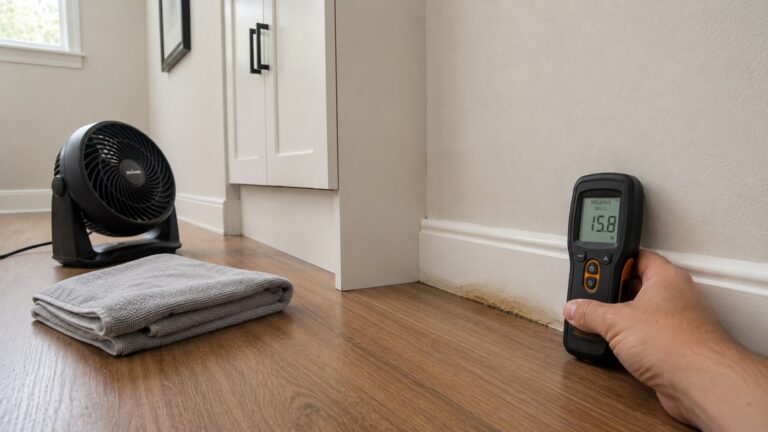
Moisture Meters for Hidden Dampness
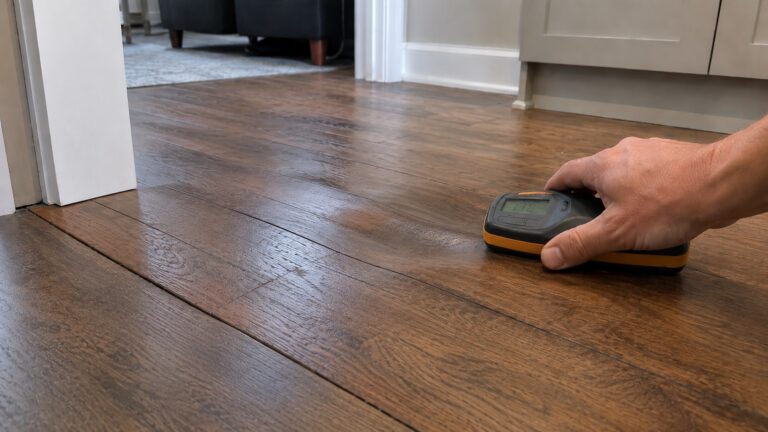
Moisture meters provide a more precise way to detect hidden moisture inside cabinet materials. These tools measure moisture levels within wood-based materials and can identify dampness beneath surface layers.
Moisture meters are particularly useful when:
- Cabinet surfaces appear dry but feel swollen
- Dampness returns without visible leaks
- Hidden moisture is suspected inside panels
- Cabinet materials show early swelling
For homeowners who want more accurate readings, reviewing recommended models in best moisture meters for hidden water damage can help select tools suitable for detecting concealed moisture inside cabinet structures.
Inspection Mirrors for Hard-to-See Areas
Small inspection mirrors help reveal hidden surfaces behind pipes and appliances. These mirrors allow viewing areas that would otherwise remain inaccessible.
Use mirrors to inspect:
- Backside of supply line connections
- Rear cabinet corners
- Hidden pipe joints
- Areas behind garbage disposal units
Mirrors are especially useful when plumbing layout limits direct viewing.
Optional Leak Detection Alarms
A small under-sink water alarm can provide extra protection between inspections. These alarms sit on the cabinet floor and sound when water reaches the sensor, helping catch leaks that begin when no one is checking the cabinet.
When a Slow Leak Requires Immediate Action
Not every slow leak demands emergency repairs, but certain conditions require immediate attention. Shut off water when an active supply leak is present, avoid using affected fixtures when drain leaks are suspected, and call a plumber if the leak source cannot be confirmed safely.
Rapidly Increasing Cabinet Damage
If cabinet materials continue to swell or deteriorate quickly, the leak is likely worsening. Rapid damage indicates that moisture exposure is ongoing and may soon affect surrounding materials.
Warning signs include:
- Softening cabinet flooring
- Expanding water stains
- Warping cabinet panels
- New damage appearing within days
When material damage accelerates, delaying repairs increases the risk of structural failure.
Mold Growth Appears Near Leak Locations
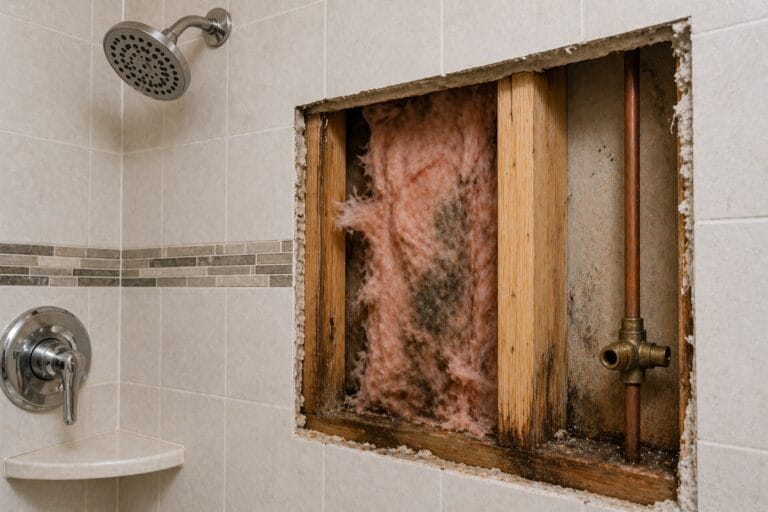
Visible mold near plumbing components indicates that moisture has persisted long enough to support biological growth. Mold development is often a secondary symptom of ongoing leaks.
If mold becomes visible, compare the area with signs of mold under kitchen sink cabinets to understand whether the moisture problem has progressed beyond a simple leak-detection issue.
Moisture Spreads Beyond the Cabinet Area
Moisture that spreads into surrounding materials increases the risk of hidden damage. This spread may affect flooring, nearby cabinets, or wall cavities.
Signs of spreading moisture include:
- Damp flooring outside the cabinet
- Musty odor beyond the cabinet area
- Staining along cabinet edges
- Moisture appearing in adjacent cabinets
These conditions suggest that moisture has moved beyond the original leak location and requires prompt investigation.
What to Do After Finding a Slow Leak Under a Kitchen Sink
Once a slow leak has been confirmed, taking prompt action helps prevent further damage and reduces the risk of mold growth. Even minor leaks can cause significant deterioration if moisture exposure continues over time.
Shut Off Water Supply if the Leak Is Active
If dripping or moisture accumulation continues during inspection, locate the shutoff valves beneath the sink and turn them off. These valves usually control water flow to the faucet supply lines, but they may not stop leaks from drain joints, dishwasher hoses, garbage disposal seals, or water already sitting inside the drain system.
After shutting off the water:
- Check whether dripping stops immediately
- Dry all cabinet surfaces thoroughly
- Inspect surrounding materials for additional moisture
- Confirm that water flow has fully stopped
Stopping the leak early helps prevent damage from spreading into nearby materials.
Dry the Cabinet Interior Quickly
After confirming a leak, drying the cabinet interior becomes essential. Moisture left behind continues to damage materials even after the leak stops.
Initial drying steps include:
- Removing damp items from the cabinet
- Wiping down all visible surfaces
- Allowing airflow into the cabinet
- Monitoring for recurring moisture
For detailed drying procedures, reviewing how to dry kitchen sink cabinets after leaks provides step-by-step methods designed to prevent long-term damage.
Determine Whether Repairs Are Needed
Not all leaks require professional repair, but many do. Small leaks caused by loose connections may be resolved through tightening or replacing fittings. However, persistent leaks often involve worn components or damaged plumbing.
Common repair indicators include:
- Recurring moisture after tightening fittings
- Visible corrosion on metal components
- Cracked hoses or seals
- Leak locations that remain difficult to access
If repairs are required, evaluating the options described in how to fix persistent leaks under kitchen sinks helps determine when professional assistance is necessary.
Inspect for Mold or Hidden Moisture
Even after leaks are stopped, moisture may remain trapped inside cabinet materials. Inspecting for mold or hidden dampness ensures that the problem does not continue developing after repairs.
Areas to inspect include:
- Cabinet floor surfaces
- Cabinet walls and corners
- Undersides of shelving
- Back wall sections near plumbing
If mold is visible or a persistent musty odor remains after the leak is stopped, use signs of mold under kitchen sink cabinets to evaluate the warning signs. Keep this leak-detection process focused on finding and stopping the moisture source before deciding on mold cleanup.
How Often You Should Check Under Kitchen Sinks for Slow Leaks
Routine inspection reduces the chance of long-term hidden moisture problems. Even when no leak is suspected, periodic checks help identify early warning signs before significant damage occurs.
A simple monthly check is usually enough for normal conditions, but inspect sooner after plumbing work, garbage disposal replacement, dishwasher installation, cabinet odors, unexplained staining, or any recent leak.
Recommended Inspection Frequency
The ideal inspection schedule depends on household usage patterns and plumbing conditions.
Recommended intervals include:
- Monthly: Quick visual inspection
- Every three months: Detailed inspection of connections
- After plumbing work: Immediate follow-up inspection
- After appliance installation: Check connected hoses
Homes with older plumbing systems may require more frequent inspections due to increased risk of seal failure.
Situations That Require Immediate Inspection
Some conditions increase the likelihood of slow leaks and should trigger immediate inspection.
These include:
- Recent plumbing repairs
- Installation of new faucets or appliances
- Unusual moisture smells
- Repeated cabinet dampness
- Changes in water pressure
Addressing these conditions early prevents hidden damage from developing into larger problems.
FAQ: Detecting Slow Leaks Under Kitchen Sinks
How do I know if a leak is slow or intermittent?
A slow leak releases moisture consistently but in small amounts. An intermittent leak occurs only under certain conditions, such as during sink use or appliance operation. Monitoring moisture patterns over time helps distinguish between these behaviors.
Can slow leaks stop and restart on their own?
Yes. Some slow leaks appear to stop temporarily when pressure conditions change. However, these leaks often return during normal sink use and should still be investigated.
How long can a slow leak go unnoticed?
Slow leaks can remain hidden for weeks or months, especially if moisture is absorbed into cabinet materials. Regular inspections help prevent long-term hidden damage.
Can slow leaks cause mold even without visible puddles?
Yes. Mold can develop in damp environments even without standing water. Persistent moisture exposure creates conditions that support mold growth over time.
Should I check under my sink regularly?
Yes. Periodic inspection is one of the most effective ways to prevent major moisture problems. Monthly checks help identify leaks early before damage spreads.
Stop Slow Sink Leaks Before Cabinet Damage Spreads
Detecting slow leaks under kitchen sinks requires more than looking for puddles. The most reliable approach is to dry the area, test each connection, and watch for moisture that returns.
By checking supply lines, shutoff valves, drain joints, dishwasher hoses, and disposal seals, homeowners can identify slow leaks before cabinet damage, mold growth, or moisture spread becomes more serious.
Key Takeaways
- Slow leaks often develop quietly around fittings, valves, drain joints, dishwasher hoses, or disposal seals.
- Repeated moisture after drying strongly suggests an active leak.
- Most slow leaks originate at plumbing connections.
- Intermittent leaks require testing during sink use.
- Routine inspection prevents long-term hidden damage.
- Early detection reduces the risk of mold growth and structural damage.
4 Comments
Comments are closed.