
Signs of Water Damage Under Kitchen Flooring
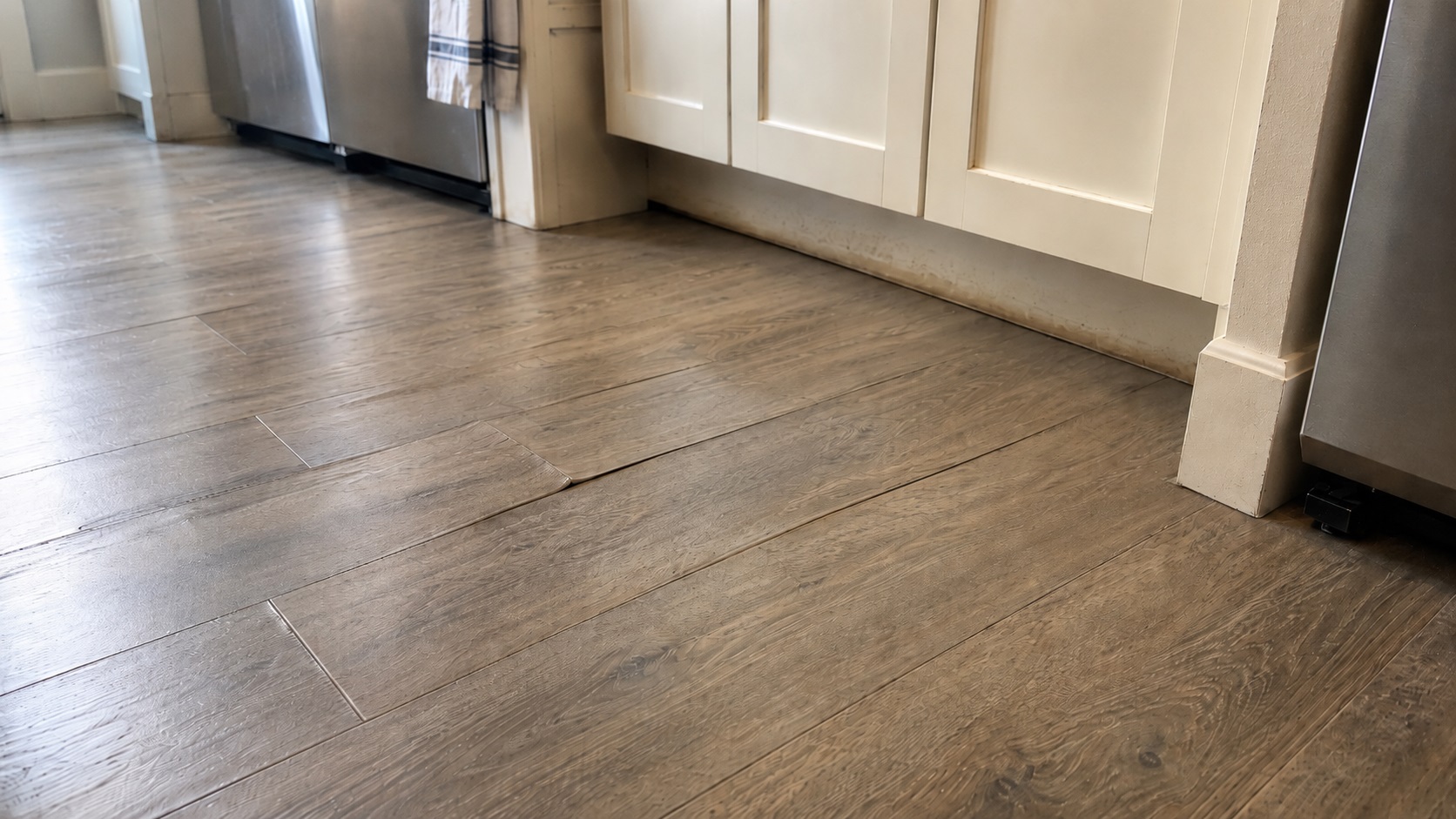
The most common signs of water damage under kitchen flooring are soft or spongy spots, raised seams, swelling, discoloration near cabinets or appliances, loose flooring, recurring damp areas, and musty odors that return after cleaning. These symptoms often appear before you see standing water.
Kitchens are especially vulnerable because sinks, dishwashers, refrigerators, ice maker lines, and plumbing connections all sit near flooring seams and edges. When small leaks or repeated dampness reach the underlayment or subfloor, the visible surface may look mostly normal while damage spreads below.
This guide focuses on the warning signs homeowners can see, feel, or smell when water damage is developing under kitchen flooring, and explains what those signs usually mean.
If you’re investigating hidden moisture in multiple areas of your home, this guide on how to find hidden moisture in different parts of your home provides a broader overview of where problems typically start.
Why Kitchen Floor Water Damage Is Easy to Miss
Kitchen flooring can hide damage because the visible surface, underlayment, and subfloor do not always dry at the same rate. The top layer may look clean while moisture remains trapped below.
In a typical kitchen floor system, water can move through:
- The visible flooring surface (vinyl, laminate, tile, or wood)
- The underlayment beneath the flooring
- The subfloor that supports the structure
- Adjacent cabinet bases and wall framing
Because many flooring materials resist minor spills, homeowners may assume the floor is dry once the surface looks normal. The real risk starts when water enters seams, edges, or joints and remains below the surface long enough to weaken adhesives, swell materials, or affect the subfloor.
Small Leaks Often Cause the Most Hidden Damage
Large floods usually receive immediate attention. Small leaks, on the other hand, may continue unnoticed for months. These slow leaks often originate from:
- Dishwasher supply lines or drain hoses
- Sink plumbing connections or disposal units
- Refrigerator water lines and ice maker tubing
- Worn seals or cracked appliance fittings
- Recurring spills that seep into seams
Because these leaks may release only a small amount of water at a time, visible puddles are rare. Instead, water gradually accumulates beneath the floor, spreading outward from the source.
If you suspect moisture may be developing but cannot see clear signs yet, using tools described in how to detect moisture under kitchen floors can help confirm whether hidden moisture is present.
Kitchen Activity Makes Moisture Problems Worse
Normal kitchen use can make a small flooring problem harder to spot because cleaning water, splashes, and appliance moisture may repeatedly reach the same seams or edges.
Common everyday factors that increase hidden moisture risk include:
- Mopping water entering seams or edges
- Spills near cabinet bases
- Condensation from appliances
- Steam from cooking
- Water splashing near sink areas
Over time, these repeated exposures can weaken flooring systems, even when each individual event seems minor.
Early Signs of Water Damage Under Kitchen Flooring
Early warning signs often appear as small changes in how the floor looks, feels, or smells. Recognizing these signals quickly can help prevent larger structural damage and reduce the risk of mold development.
Soft or Spongy Areas Underfoot
One of the most common early signs of hidden water damage is a soft or slightly springy feeling underfoot. This usually occurs when moisture weakens the materials beneath the flooring surface.
You may notice:
- A slight bounce when stepping in certain spots
- Uneven firmness across the floor
- A floor that feels different near appliances
- Movement or flexing near cabinet edges
This condition often indicates that water has reached the subfloor or underlayment. A single slightly uneven spot may come from installation or normal settling, but softness that appears near a sink, dishwasher, refrigerator, or cabinet edge is more likely to involve moisture.
Soft flooring near sinks or appliances should be checked promptly, especially if the area feels worse after appliance use.
Swelling or Raised Edges Along Seams
Raised seams or swelling along edges are another strong indicator of hidden moisture. Many flooring materials absorb water through exposed seams, causing the material to expand.
You may observe:
- Edges lifting slightly above surrounding areas
- Visible ridges along plank seams
- Difficulty closing gaps between boards
- Raised areas near appliance footprints
Swelling typically starts near the source of moisture and spreads outward as water travels beneath the floor. In laminate flooring, this often appears as enlarged joints or rough, uneven surfaces.
If swelling continues to worsen, the flooring may begin to buckle or separate, indicating more advanced damage beneath the surface.
Discoloration or Staining Near Floor Edges
Changes in color often signal water exposure beneath the flooring surface. Staining may appear subtle at first but gradually becomes more noticeable as moisture accumulates.
Watch for:
- Darkened edges along cabinet bases
- Yellowing or browning around seams
- Shadow-like stains near appliances
- Uneven color patterns spreading outward
Discoloration usually reflects moisture movement beneath the floor rather than surface spills. These stains often indicate that water has reached deeper layers and is affecting structural materials below.
How Different Kitchen Flooring Materials Show Water Damage
Not all kitchen flooring reacts to water in the same way. The visible symptoms you see often depend on the type of flooring installed. Understanding how each material responds to moisture can help you identify problems earlier and avoid misinterpreting warning signs.
Vinyl and Luxury Vinyl Flooring Signs
Vinyl flooring is often marketed as water-resistant or waterproof, but that does not mean moisture cannot reach the layers beneath it. Water commonly enters through seams, edges, or areas where flooring meets cabinets or appliances.
Common signs of hidden water damage under vinyl flooring include:
- Bubbles forming beneath the surface
- Edges lifting away from the floor
- Wrinkles or ripples appearing over time
- Loose or shifting sections of flooring
- Musty odors that linger even after cleaning
These symptoms usually indicate that moisture has weakened adhesives or entered the underlayment beneath the vinyl. Once water reaches those layers, drying becomes more difficult because the surface layer slows evaporation.
Laminate Flooring Warning Signs
Laminate flooring is especially vulnerable to moisture damage because its core materials absorb water quickly. Even small leaks can cause noticeable swelling when moisture enters seams.
Watch for these laminate-specific warning signs:
- Raised seams between boards
- Soft or crumbling edges
- Peeling surface coatings
- Boards separating from each other
- Rough or uneven walking surfaces
Laminate flooring often shows visible damage earlier than other materials. When swelling occurs, it typically means water has already reached deeper layers beneath the surface.
Hardwood and Engineered Wood Symptoms
Wood flooring reacts to moisture by expanding and contracting. This movement creates visible shape changes that signal water exposure beneath the surface.
Common wood flooring warning signs include:
- Cupping, where board edges rise higher than centers
- Crowning, where board centers rise above edges
- Gaps appearing between boards
- Dark stains forming along grain patterns
- Warped or uneven surfaces
Wood movement often occurs gradually. Seasonal humidity usually affects larger areas more evenly, while water damage is more likely to create localized cupping, crowning, or staining near appliances, plumbing, cabinets, or exterior floor edges.
If wood movement continues to worsen, it may indicate long-term moisture exposure. For the mold-growth side of this problem, see why kitchen floors develop mold after leaks.
Tile Flooring and Grout Damage Signals
Tile flooring itself resists water, but grout lines and the materials beneath tile can still absorb moisture. Damage beneath tile floors often appears through changes in grout or tile stability rather than the tile surface itself.
Signs of hidden moisture beneath tile include:
- Cracked or crumbling grout lines
- Dark grout that remains damp-looking
- Loose or shifting tiles
- Hollow sounds when tapping tiles
- Persistent odors despite surface cleaning
These symptoms usually indicate moisture infiltration beneath the tile assembly. Left untreated, this condition can weaken bonding materials and affect the subfloor.
Where Water Damage Usually Starts in Kitchen Floors
Water damage rarely spreads randomly. It typically begins in predictable areas where water is most likely to escape or accumulate. Identifying these high-risk zones can help you locate problems earlier and determine the most likely source.
Under Kitchen Sinks
The area beneath kitchen sinks is one of the most common starting points for water damage. Plumbing connections, disposal units, and supply lines can develop small leaks that slowly saturate nearby flooring materials.
Signs often appear near:
- Cabinet bases directly below the sink
- The floor in front of cabinet doors
- Side panels adjacent to plumbing lines
- Toe-kick areas along cabinet fronts
Water escaping from plumbing connections can travel beneath cabinets before becoming visible in nearby floor sections. If sink-related moisture is suspected, reviewing signs of water damage under kitchen sinks can help identify related symptoms.
Near Dishwashers
Dishwashers create frequent moisture exposure through supply lines, drain hoses, and door seals. Even minor leaks can cause repeated water infiltration beneath flooring.
Common warning signs near dishwashers include:
- Soft flooring directly in front of the unit
- Moisture appearing along cabinet edges
- Musty smells after dishwasher cycles
- Water stains beneath nearby cabinets
Because dishwasher leaks often occur only during fill, drain, or wash cycles, the floor may look dry between uses even though moisture is collecting below the appliance edge.
Behind Refrigerators
Refrigerator water lines and ice maker connections are frequent sources of hidden moisture. Slow leaks in these lines can allow water to spread beneath flooring unnoticed.
Signs of refrigerator-related water damage include:
- Soft flooring behind or beside the refrigerator
- Water stains appearing near rear floor edges
- Persistent damp odors near appliance locations
- Unexplained flooring movement near the appliance footprint
These issues are often discovered only when the refrigerator is moved. If the damage pattern begins behind the appliance or follows the wall line, how to inspect kitchen flooring for hidden moisture explains how to check the area more systematically.
Along Floor Edges and Wall Junctions
Water often travels outward from its source and collects along edges where flooring meets walls or cabinets. These transition areas frequently trap moisture because airflow is limited.
Look for warning signs such as:
- Darkened baseboard areas
- Loose or separating trim pieces
- Swollen cabinet bases
- Persistent dampness near wall intersections
Damage along edges usually indicates that moisture has already traveled beneath the flooring surface.
Signs the Damage May Have Reached the Subfloor
When water damage reaches the subfloor, the warning signs usually become more structural: persistent softness, new movement, sagging, squeaking, or cabinet-base deterioration. At that point, the issue is no longer just cosmetic flooring damage.
Persistent Softness That Does Not Improve
A floor that remains soft over time often indicates deeper structural moisture. Temporary dampness from spills usually dries within a short period. However, ongoing softness suggests moisture trapped beneath the visible surface.
Watch for signs such as:
- Soft areas that feel the same weeks after drying efforts
- Movement that spreads into larger sections of flooring
- Flexing that occurs when walking across specific zones
- Areas that seem to worsen after heavy appliance use
This type of damage usually means the subfloor has absorbed moisture and begun to weaken.
Squeaking or Grinding Sounds When Walking
Changes in sound can reveal structural changes beneath the floor. When moisture weakens subfloor materials, movement between layers can produce noticeable sounds.
Common sound-related warning signs include:
- New squeaks appearing in previously quiet areas
- Grinding or rubbing noises underfoot
- Sounds that worsen over time
- Noises concentrated near appliances or plumbing zones
These sounds often occur when fasteners loosen or materials shift due to swelling and weakening.
Flooring That Begins to Sink or Sag
Sagging areas indicate more advanced moisture damage. As wood-based materials absorb water, they can lose strength and begin to deform.
Signs of sagging may include:
- Low spots forming in specific sections of flooring
- Visible dips along walking paths
- Uneven appliance placement due to shifting floors
- Water pooling in slightly sunken areas
Sagging often signals long-term moisture exposure. In these cases, drying alone may not restore full structural integrity.
Visible Damage to Cabinet Bases
Cabinet bases often sit directly above subflooring, making them vulnerable to moisture movement from below.
Look for:
- Swollen cabinet bottoms
- Peeling finishes near floor level
- Warped toe-kick panels
- Musty odors inside cabinets
Damage to cabinets usually indicates that moisture has spread beyond surface flooring and reached deeper materials.
When Kitchen Floor Damage May Point to Mold Risk
Water damage and mold growth are closely related. When moisture remains trapped beneath flooring for extended periods, mold may begin developing in hidden areas.
Understanding when water damage reaches mold-risk conditions helps homeowners respond before contamination spreads.
Persistent Musty Odors That Return After Cleaning
Musty smells often indicate microbial growth beneath flooring materials. These odors usually return even after surface cleaning because the source lies below the visible surface.
Common odor-related signs include:
- Smells strongest near appliances or cabinets
- Odors returning after mopping or drying
- Musty scent becoming stronger in humid weather
- Lingering smells in enclosed kitchen spaces
Persistent odors are a strong indicator that moisture has remained trapped long enough to create mold risk, even if visible mold is not yet present.
If odors are accompanied by visible staining or recurring dampness, reviewing signs of mold under kitchen floors can help determine whether mold may already be present.
Recurring Damp Spots Without Clear Sources
Repeated dampness in the same location usually indicates hidden moisture below the flooring surface.
You may notice:
- Damp patches appearing after cleaning or appliance use
- Moisture reappearing after drying
- Localized humidity in certain areas
- Changes in floor texture over time
These signs often suggest water trapped beneath flooring layers that continues migrating toward the surface.
Discoloration That Continues to Spread
Gradual expansion of stains or discoloration often signals ongoing moisture exposure. When staining grows beyond its original area, it usually indicates water movement beneath the flooring.
Look for:
- Stains extending outward from appliances
- Darkened grout spreading across tile floors
- Increasing discoloration near seams
- New stain patterns forming without visible spills
Spreading discoloration should always be treated as a warning sign of continued moisture activity.
What to Do When You Notice These Signs
Once signs of water damage appear, early action is critical. Waiting allows moisture to spread further beneath the flooring system.
The first step is confirming whether moisture is still present beneath the floor. Tools such as moisture meters or inspection methods described in how to detect moisture under kitchen floors can help determine the severity of the problem.
If the moisture may involve a dishwasher, refrigerator, disposal, or nearby electrical outlet, avoid pulling appliances or opening wet areas until power and water-supply risks are controlled.
After confirming moisture, consider:
- Identifying nearby appliances or plumbing sources
- Reducing water exposure in affected areas
- Monitoring whether symptoms continue to worsen
- Documenting visible changes for reference
Taking early action reduces the risk of mold growth and structural damage.
If moisture has already affected multiple layers, drying methods outlined in how to dry kitchen flooring after leaks may be necessary to stabilize the area.
When to Call a Professional
Some early signs can be investigated by checking nearby plumbing and appliances, but structural movement, spreading stains, recurring moisture, or strong odors call for a more careful evaluation.
You should strongly consider calling a professional if you notice:
- Large sections of soft or sagging flooring
- Damage that continues spreading over time
- Strong musty odors that do not improve
- Repeated moisture appearing in the same location
- Visible mold growth along edges or seams
- Cabinet bases showing swelling or deterioration
Professional inspections often include specialized tools and methods that identify moisture hidden beneath flooring layers. In many cases, confirming the exact moisture location requires systematic testing and careful inspection, similar to the procedures outlined in how to inspect kitchen flooring for hidden moisture. If the problem keeps returning after cleaning or drying attempts, how to fix persistent moisture under kitchen floors is the better next-step guide.
If mold is suspected or confirmed, preventing future moisture problems becomes critical. Long-term solutions described in how to prevent mold under kitchen flooring can help reduce the risk of recurring damage.
Frequently Asked Questions About Water Damage Under Kitchen Flooring
What does water damage under kitchen flooring look like?
Water damage under kitchen flooring usually appears as swelling, discoloration, soft spots, or lifting seams. In some cases, the surface may look normal while the flooring feels uneven or produces musty odors. The earliest signs often involve changes in texture rather than obvious puddles.
Can water damage happen without visible leaks?
Yes. Many water damage problems in kitchen floors develop from slow leaks, condensation, or repeated dampness. These small amounts of moisture may not create visible standing water but can still accumulate beneath flooring over time.
Why does my kitchen floor feel soft near appliances?
Soft flooring near appliances often indicates moisture beneath the surface, especially if the area feels worse after appliance use. Dishwashers, refrigerators, and sink plumbing systems are common sources of hidden leaks. Continued softness may suggest that the underlayment or subfloor has absorbed water and begun to weaken.
Does a musty smell always mean mold is present?
Musty odors often indicate moisture problems and may signal mold growth, but odor alone does not confirm mold. Moist environments support mold development, so persistent smells should be investigated further to determine the cause.
Can waterproof flooring prevent hidden damage?
Waterproof flooring reduces surface damage but does not protect the subfloor completely. Moisture can still enter through seams, edges, or beneath appliances. Once water reaches lower layers, hidden damage can develop even when the visible surface remains intact.
Key Takeaways
- Water damage under kitchen flooring often develops slowly, especially near sinks, dishwashers, refrigerators, and floor seams.
- Soft or spongy spots are one of the earliest warning signs that moisture may have reached the underlayment or subfloor.
- Different flooring materials show unique damage patterns, including swelling, lifting, or discoloration.
- Most kitchen floor water damage begins near sinks, dishwashers, or refrigerators.
- Persistent odors or spreading stains may indicate moisture reaching deeper structural layers.
- Early detection and response reduce the risk of mold growth and structural damage.
- Professional evaluation is recommended when damage spreads or symptoms worsen over time.
4 Comments
Comments are closed.