How to Inspect Roof Framing for Moisture Damage
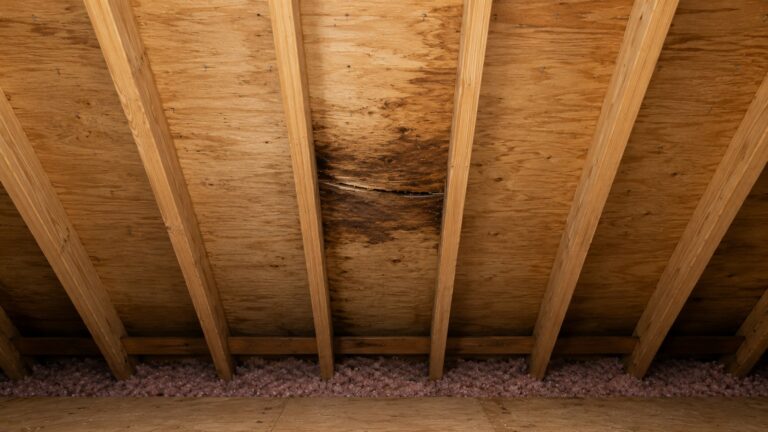
To inspect roof framing for moisture damage, enter the attic safely, scan rafters and roof decking with strong lighting, check high-risk areas such as valleys, penetrations, ridge areas, and eaves, then look for dark staining, rusted nail tips, wet insulation, mold growth, soft wood, or recurring moisture patterns.
Homeowners often begin inspection after noticing staining, mold growth, musty odors, or insulation that looks damp or compressed. If visible symptoms are already present, Signs of Moisture Damage in Roof Rafters explains which rafter changes deserve closer evaluation.
This guide explains how to inspect roof framing safely and systematically. The goal is not to perform structural repairs, but to identify moisture damage, determine its severity, and decide whether professional help is required.
A simple inspection order works best: start from the attic access, scan the whole roof deck, check the ridge, inspect penetrations and valleys, follow suspicious stains along rafters, examine eaves and rafter tails, then document anything damp, soft, stained, mold-covered, or recurring.
Roof framing inspection also fits into the larger roofing damage pattern covered in Most Common Roofing Material Failures, because moisture problems inside the attic often begin with aging materials, flashing defects, roof penetrations, or ventilation failures.
When a Roof Framing Inspection Is Necessary
Roof framing should be inspected after visible moisture symptoms, major weather events, roof repairs, and seasonal changes that increase condensation or leak risk.
After Visible Signs of Moisture Appear
Visible moisture signs mean the inspection should focus on where the symptom begins, where it spreads, and whether nearby wood is still damp or already weakened.
Common visual triggers include:
- Dark stains on rafters or roof decking
- Mold growth on wood surfaces
- Damp or compressed insulation
- Rust forming on nail tips
- Persistent musty odors inside the attic
These symptoms frequently indicate moisture conditions that may require confirmation using the detection methods described in How to Detect Moisture in Roof Framing.
After Major Weather Events
After wind-driven rain, hail, ice, or heavy snow, inspect the attic side of the roof before assuming the exterior survived. A small flashing lift, cracked boot, missing shingle, or backed-up ice condition may show first as staining on rafters or decking.
Inspection is recommended after:
- Severe thunderstorms
- High-wind events
- Heavy snowfall or ice accumulation
- Hailstorms
- Extended rainfall periods
Storm-related inspections help detect damage before moisture spreads into structural framing.
When Roof Repairs Have Been Completed
After roofing work is completed, inspecting roof framing helps confirm that moisture conditions have been corrected. Even well-executed repairs may leave behind hidden moisture that requires monitoring.
Post-repair inspection should focus on:
- Previously damaged areas
- Newly repaired flashing sections
- Nearby rafters and decking
- Insulation adjacent to repaired zones
This step ensures that repairs addressed both visible damage and hidden moisture conditions.
During Routine Preventive Maintenance
Routine attic checks are most useful when the same rafters, valleys, penetrations, and eave areas are compared over time.
Recommended routine inspection timing includes:
- Twice per year under normal conditions
- After seasonal temperature changes
- Before winter weather begins
- After extended humidity periods
Preventive inspection practices support long-term moisture control strategies similar to those outlined in How to Prevent Structural Moisture in Roof Systems.
Safety Steps Before Entering the Attic
Attic environments contain hazards that must be addressed before beginning any inspection. Safety preparation reduces the risk of injury and ensures that inspection activities remain controlled and effective.
Before entering the attic, gather necessary equipment and review safety procedures carefully.
Do not enter the attic during an active leak, near wet electrical wiring, or where framing appears sagged, cracked, or unstable. In those situations, inspect only from a safe access point and call a qualified professional.
Wear Protective Equipment
Protective gear reduces exposure to dust, insulation fibers, and sharp materials commonly found in attic spaces.
Recommended protective equipment includes:
- Protective gloves
- Safety glasses
- N95 mask or respirator, especially where dust, insulation fibers, or mold-like growth are present
- Long-sleeved clothing
- Stable footwear with good traction
These precautions reduce exposure to hazards while improving inspection safety.
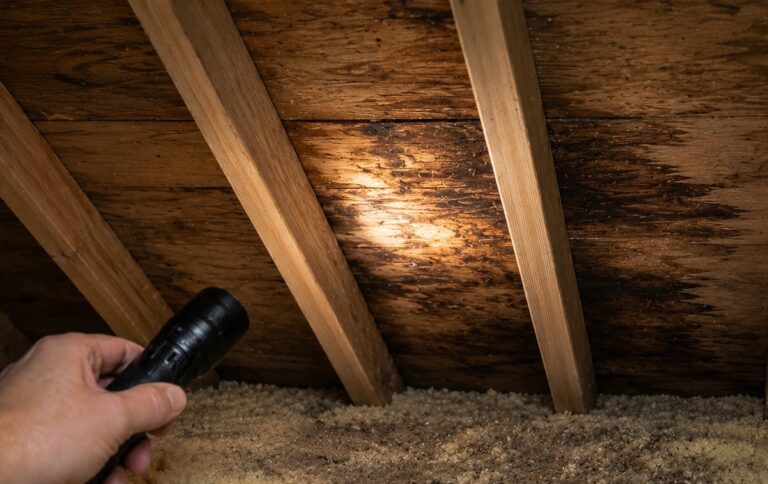
Use Proper Lighting
Attics often contain dark areas that conceal moisture damage. Bright lighting improves visibility and reduces the risk of missing important details.
Lighting tools should include:
- A high-powered flashlight
- A headlamp for hands-free operation
- Backup lighting if possible
Proper illumination allows inspectors to identify subtle signs such as discoloration, mold growth, or damp insulation.
Move Carefully Across Framing
One of the most dangerous mistakes homeowners make is stepping on unsupported surfaces. Attic floors often contain insulation that hides drywall, which cannot support body weight.
Safe movement guidelines include:
- Walk only on visible ceiling joists or properly installed attic walk boards
- Avoid stepping on insulation-covered surfaces or drywall
- Keep your weight centered and move slowly
- Do not crawl onto wet, cracked, sagging, or questionable framing
Following these guidelines reduces the risk of falling through ceilings or damaging structural components.
If you test wood firmness, press gently with a gloved hand or blunt tool only from a safe position. Do not dig into rafters, pry at roof decking, or disturb structural members that already look soft, cracked, sagged, or mold-covered.
Tools That Help With Roof Framing Inspection
Most roof framing inspections only require strong lighting, careful documentation, and a way to compare suspicious areas against dry areas. A moisture meter can help confirm active moisture, but visual patterns still matter because old stains may remain after wood has dried.
Flashlight or Headlamp
A bright flashlight is the most essential tool for attic inspection. Roof framing areas often contain shadows and hidden corners that conceal moisture damage.
Effective lighting helps reveal:
- Discoloration on wood surfaces
- Moisture patterns on rafters
- Mold growth clusters
- Rust on nail tips
- Changes in insulation texture
Headlamps are particularly useful because they allow hands-free movement while maintaining consistent lighting direction.
Moisture Meter
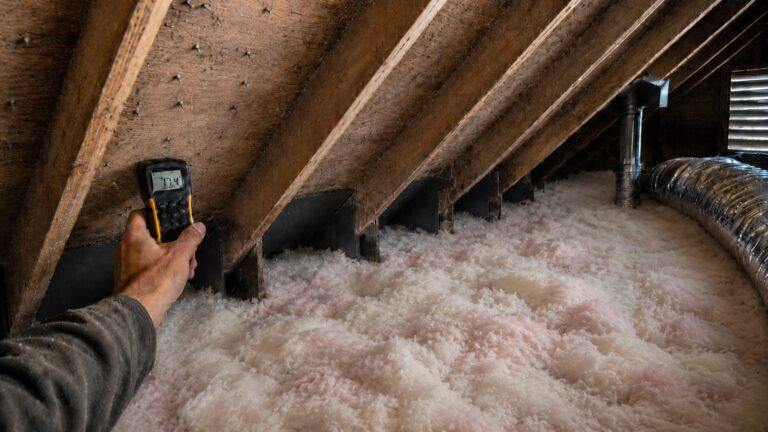
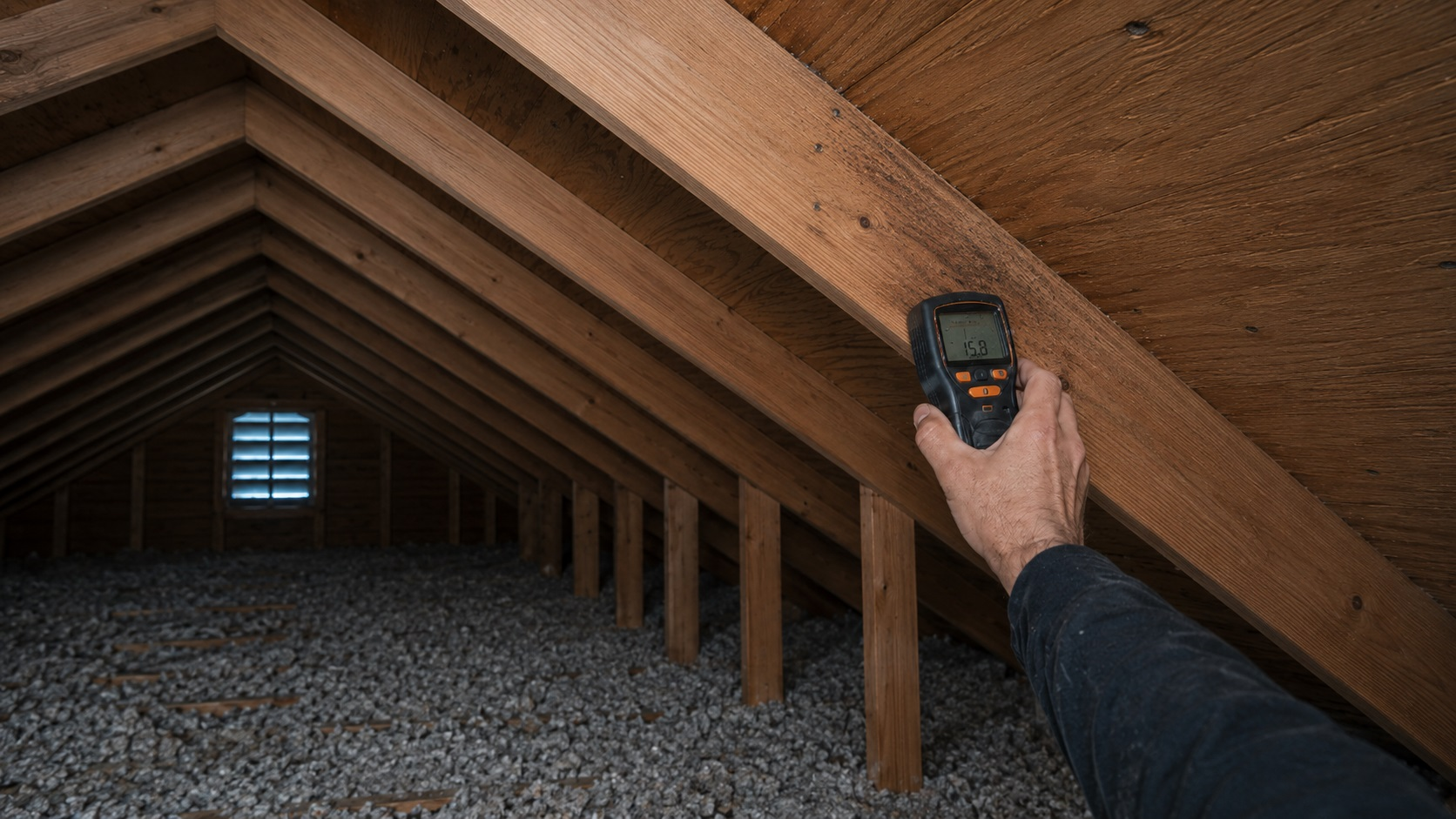
A moisture meter is one of the most valuable tools for checking whether stained roof framing is still damp. Compare suspicious rafters or decking against nearby dry-looking wood, and avoid relying on one reading taken near metal fasteners, wet insulation, or an unusual wood defect.
Moisture meters are especially useful when visual signs are present but the severity of moisture exposure is unclear.
Use moisture meters to:
- Test stained rafters
- Compare dry and suspicious areas
- Confirm hidden moisture conditions
- Track moisture changes over time
One reading is not enough to diagnose the whole roof structure. Compare several spots, note whether readings are higher than nearby dry framing, and use How to Detect Moisture in Roof Framing for fuller guidance on moisture level thresholds.
Inspection Mirror
An inspection mirror allows viewing areas that are difficult to access directly. These mirrors are particularly useful near roof penetrations and tight spaces.
Inspection mirrors help examine:
- Hidden corners behind rafters
- Back sides of flashing areas
- Areas beneath roof decking
- Obstructed sections near insulation
Using mirrors improves visibility without requiring unsafe movement.
Camera, Phone, or Inspection Notes
Photos are often more useful than memory because they show whether stains, mold-like growth, or damp insulation are expanding between inspections.
Recording tools allow inspectors to:
- Log moisture meter readings
- Record locations of visible damage
- Track changes between inspections
- Compare conditions across different areas
Photos and dated notes are especially useful when the same stain looks unchanged for months or suddenly expands after rain, snow, or cold-weather condensation.
Step-by-Step Roof Framing Inspection Process
A structured inspection sequence improves accuracy and reduces the chance of missing hidden moisture damage. Instead of inspecting randomly, follow a consistent pattern that covers all major areas of the roof system.
This step-by-step process moves from general observation to targeted inspection.
Step 1 — Perform a General Visual Survey
Begin by scanning the entire attic from a safe position before moving closer. Look across the roof deck first, then follow rafters downward toward exterior walls so stains, drip paths, and moisture patterns are not judged in isolation.
During the general survey, look for:
- Large areas of discoloration
- Visible mold clusters
- Damp or compressed insulation
- Uneven staining patterns
- Water streaks along rafters
Do not assume every dark mark means active moisture. Old construction stains, aged wood, dust patterns, and past leaks can resemble current damage. The concern rises when staining is paired with dampness, soft wood, wet insulation, rusted nail tips, musty odor, or changes between inspections.
If widespread moisture patterns are visible, underlying causes similar to those explained in Why Roof Framing Develops Mold Problems may be responsible.
Step 2 — Inspect Roof Ridge Areas
The ridge area can reveal condensation, ventilation, or humidity-related moisture because warm indoor air often rises toward the highest part of the attic before it cools against roof materials.
Inspect ridge areas for:
- Condensation on roof decking
- Rust on nail tips
- Dark staining near peak areas
- Mold clusters along ridge boards
Problems found near the ridge often indicate airflow or humidity issues.
Step 3 — Inspect Roof Penetrations
Roof penetrations are among the most common entry points for moisture. These areas interrupt the roofing surface and rely heavily on flashing to prevent leaks.
Check penetrations such as:
- Vent pipes
- Chimneys
- Skylights
- Roof-mounted exhaust fans
Look for:
- Localized staining beneath penetrations
- Wet insulation nearby
- Rusting fasteners
- Water trails along rafters
Localized moisture patterns often match the hidden leak clues described in How to Detect Hidden Roof Leaks, especially when staining begins below a penetration, valley, or flashing area.
High-Risk Roof Framing Areas to Inspect Closely
After inspecting ridge areas and roof penetrations, continue the inspection by moving through remaining sections of the attic in a structured sequence. This ensures that hidden moisture damage is not overlooked and that all critical areas receive attention.
Step 4 — Inspect Roof Valleys
Roof valleys handle large volumes of water during rainfall, making them high-risk areas for leaks and moisture entry. Even minor defects in these areas can allow moisture to enter structural framing.
Focus inspection efforts on:
- Valley intersections where roof slopes meet
- Rafters located beneath valleys
- Insulation directly below valley lines
- Sheathing areas showing discoloration
Typical warning signs in valley areas include:
- Dark streaks running along rafters
- Damp insulation below the valley
- Localized mold growth
- Soft or discolored roof decking
Valley-related moisture patterns frequently resemble those associated with roof entry failures described in Most Common Roofing Material Failures.
Step 5 — Inspect Rafter Spans and Midsections
After checking concentrated risk zones, inspect the full length of rafters across open spans. This helps identify moisture patterns that may not originate from penetrations or valleys.
Follow each suspicious stain along the rafter instead of judging one spot by itself. A narrow vertical streak may point to a drip path from above, while broad, even discoloration across several bays may suggest condensation or humidity exposure rather than one isolated roof leak.
During this step, look for:
- Uneven coloration along wood grain
- Patchy mold growth
- Rust forming on nail tips
- Warped or twisted wood surfaces
- Moisture meter readings above normal levels
Widespread moisture across rafter spans often indicates condensation-related problems rather than localized leaks.
These patterns frequently align with conditions described in Signs of Roof Condensation in Attics, particularly during cold weather.
Step 6 — Inspect Eaves and Rafter Ends
Eave areas are vulnerable to both condensation and wind-driven moisture. These sections frequently experience airflow disruption and temperature differences that promote moisture buildup.
At the eaves, look where rafters meet the exterior wall line and where insulation approaches the roof deck. Blocked soffit airflow, wind-driven rain, ice backup, and hidden edge leaks can all show up first at rafter tails or low roof sheathing.
Check these areas carefully for:
- Moisture accumulation near soffits
- Staining on rafter ends
- Wet insulation near exterior walls
- Mold growth in corners
- Signs of airflow blockage
Eave moisture conditions often indicate ventilation problems that restrict airflow and slow drying.
Step 7 — Inspect Insulation and Hidden Surfaces
Insulation often hides moisture conditions that are not visible from the attic opening. Move insulation only when it is safe to do so, and do not disturb areas with heavy mold-like growth, suspected animal contamination, or wet electrical components.
During this step, look for:
- Damp or compacted insulation
- Discoloration beneath insulation layers
- Cold or wet surfaces behind insulation
- Musty odors concentrated in specific areas
Hidden moisture beneath insulation frequently indicates slow leaks or condensation buildup.
When insulation conditions suggest moisture presence, further confirmation methods described in How to Detect Moisture in Roof Framing help verify moisture levels.
How to Evaluate the Severity of Moisture Damage
After inspection, separate minor staining from active moisture and structural damage. Severity usually depends on whether the wood is dry and firm, currently damp, mold-contaminated, softened, cracked, or visibly deformed.
Level 1 — Minor Moisture Exposure
Minor moisture exposure typically involves limited staining or isolated moisture conditions without structural weakening.
Common characteristics include:
- Light discoloration on wood surfaces
- Dry wood texture
- No mold growth present
- Moisture readings within normal range
- Stable stain patterns
Minor moisture exposure may only require documentation and follow-up inspection, but only if the wood is dry, firm, and the stain pattern does not expand after rain or seasonal humidity changes.
Level 2 — Moderate Moisture Damage
Moderate moisture damage involves active moisture conditions that affect multiple materials but may not yet compromise structural strength.
Typical characteristics include:
- Visible mold growth
- Damp insulation
- Elevated moisture readings
- Spreading stain patterns
- Persistent musty odors
Moderate damage usually means the homeowner should identify whether moisture is coming from a leak, condensation, blocked airflow, or wet insulation before assuming the wood only needs time to dry.
Level 3 — Severe Structural Moisture Damage
Severe moisture damage indicates structural risk and requires immediate professional evaluation.
Signs of severe damage include:
- Soft or crumbly wood fibers
- Sagging or deformed rafters
- Cracking or splitting wood
- Large mold colonies
- Structural movement or instability
Severe damage conditions should never be ignored, as they may compromise the safety of the entire roof structure.
Signs That Require Immediate Professional Help
Stop the inspection and get professional help when the framing appears weakened, moisture is widespread, or the same area keeps getting wet after repairs. At that point, the issue is no longer just inspection—it may involve structural evaluation, leak diagnosis, mold assessment, or roof-system repair.
Structural Warning Signs That Should Never Be Ignored
Certain structural changes signal advanced deterioration and require professional evaluation without delay.
Critical warning signs include:
- Sagging roof lines visible from inside or outside
- Soft or crumbling wood when lightly pressed
- Deep cracks or splits in rafters
- Large sections of mold covering structural wood
- Persistent moisture after repeated drying attempts
- Multiple rafters showing advanced deterioration
These conditions indicate that structural strength may already be compromised.
Widespread Moisture Conditions
Moisture affecting large sections of roof framing requires careful evaluation because it increases the likelihood of long-term structural damage.
Widespread conditions may include:
- Multiple damp rafters across large attic sections
- Wet insulation covering broad areas
- Recurring moisture patterns after rainfall
- Uniform mold growth across roof decking
These patterns often indicate unresolved moisture sources that require professional diagnosis.
Persistent or Recurring Moisture Problems
Moisture that returns in the same rafter bay, below the same penetration, or across the same roof plane usually means the source has not been corrected.
Recurring moisture may indicate:
- Hidden roof leaks
- Ventilation failures
- Air leakage pathways
- Improper insulation placement
Understanding why moisture returns—such as the conditions explained in Why Moisture Problems Keep Returning—helps determine when professional intervention becomes necessary.
Creating an Ongoing Roof Framing Inspection Routine
A simple inspection routine works best when the same areas are checked each time and changes are documented with photos, dates, and moisture readings when available.
Recommended Inspection Frequency
Inspection frequency depends on climate conditions, roof age, and past moisture history.
Typical inspection schedules include:
- Twice per year under normal conditions
- After major storms or heavy rainfall
- Following roof repairs or replacements
- After seasonal humidity changes
Frequent inspection improves early detection and supports long-term moisture prevention.
Documenting Inspection Results
Recording inspection findings allows homeowners to track moisture patterns over time. Documentation helps identify changes that might otherwise go unnoticed.
Important documentation practices include:
- Recording moisture meter readings
- Photographing suspicious areas
- Logging inspection dates
- Tracking changes between inspections
These records become valuable references when evaluating recurring moisture conditions.
Connecting Inspection With Preventive Maintenance
Inspection should lead to a specific next step. If the same area keeps showing moisture, the source needs to be corrected rather than simply monitored.
Maintenance tasks should include:
- Clear blocked ventilation only when it is safely accessible
- Have roof defects, flashing problems, or damaged penetrations repaired promptly
- Recheck previously damp framing after rain, snow, or major humidity changes
- Replace wet or contaminated insulation when drying is not realistic
These combined actions support the long-term prevention strategies outlined in How to Prevent Structural Moisture in Roof Systems.
Frequently Asked Questions About Inspecting Roof Framing For Moisture Damage
Where should I inspect roof framing first?
Start with the safest visible areas, then check high-risk locations such as roof penetrations, valleys, ridge areas, eaves, rafter ends, and any framing below previous stains or repairs.
How can I tell if roof framing moisture damage is old or active?
Old damage is often dry, stable, and limited to staining. Active moisture is more likely when wood feels damp or soft, insulation is wet or compacted, stains expand after rain, or moisture meter readings are higher than nearby dry areas.
Is rust on attic nail tips always a roof leak?
No. Rust on nail tips can come from condensation as well as roof leaks. The surrounding pattern matters: widespread rust near the roof deck often points to humidity or ventilation issues, while localized staining below a penetration or valley may point to a leak path.
Should I move attic insulation during a roof framing inspection?
Only move insulation when it is safe and necessary to check hidden wood or wet areas. Do not disturb insulation near wet wiring, heavy mold-like growth, animal contamination, or unstable framing.
When should I stop inspecting and call a professional?
Stop and call a professional if rafters or decking are soft, cracked, sagging, mold-covered across a large area, repeatedly wet after repairs, or located where safe attic access is not possible.
Conclusion
Inspecting roof framing for moisture damage works best when it follows a consistent pattern: start from a safe attic position, scan the whole roof structure, check high-risk areas, document suspicious changes, and stop when framing appears unsafe or moisture is widespread.
If stains are dry, isolated, and stable, monitoring may be enough. If wood is damp, soft, mold-covered, cracked, sagging, or repeatedly wet after repairs, the next step is professional evaluation rather than continued homeowner inspection.
Key Takeaways
- Start roof framing inspections from a safe attic position before moving closer to suspicious areas.
- Check high-risk areas first, including penetrations, valleys, ridge areas, eaves, rafter tails, and insulation near the roof deck.
- Old staining is not always active damage, so compare stains with dampness, softness, rusted nail tips, mold-like growth, and moisture readings.
- Localized staining below a penetration or valley often suggests a leak path, while broad staining across several bays may suggest condensation or humidity exposure.
- Stop the inspection and call a professional if rafters or decking are soft, cracked, sagging, mold-covered across a large area, or repeatedly wet after repairs.
- Photos, dates, and repeated checks of the same framing areas make it easier to tell whether moisture damage is stable, improving, or spreading.