
Signs of Mold Growth on Crawl Space Wood
Mold growth on crawl space wood usually shows up as white or gray fuzzy patches, black or green speckling, spreading dark stains, or musty odors near floors and vents. Because crawl spaces are dark, enclosed, and difficult to access, these signs can go unnoticed until moisture has already affected joists, beams, sill plates, or subflooring.
This guide explains how to recognize mold-like growth on crawl space wood, how to tell it apart from dirt or old water staining, and when the pattern suggests a larger structural moisture problem.
If you suspect deeper structural issues, reviewing the broader warning patterns described in Signs of Structural Moisture Problems can help you determine whether moisture is affecting critical framing components.
Why Mold on Crawl Space Wood Is Easy to Miss
Crawl space mold often develops gradually and in areas that homeowners rarely inspect. Unlike visible mold inside living spaces, mold on crawl space wood typically forms in hidden locations where airflow is limited and moisture lingers.
Several conditions make crawl space wood especially vulnerable:
- Poor airflow that traps humid air
- Moist soil that releases water vapor
- Minor leaks that go unnoticed
- Cold surfaces that allow condensation to form
- Insulation that holds moisture against wood
Many homeowners do not enter their crawl spaces regularly, which means mold can grow for extended periods before being discovered. In some homes, the first sign of crawl space mold is not visible growth at all—it is a persistent musty odor that enters living areas through vents, ductwork, or floor penetrations.
These hidden growth conditions are why crawl space mold frequently appears alongside other warning patterns covered in Signs of Mold Growth in Crawl Spaces, which examines the larger environmental symptoms that occur beyond individual wood surfaces.
Another reason crawl space mold is overlooked is that many homeowners mistake early growth for harmless staining. Wood exposed to moisture often darkens or shows irregular discoloration, and without close inspection, mold colonies can blend into these marks.
Even small patches of mold can indicate persistent moisture problems. When wood remains damp for extended periods, it becomes vulnerable not only to mold but also to structural deterioration. These patterns are often associated with ongoing moisture exposure similar to the conditions described in Why Crawl Space Joists Stay Damp, which explains why moisture can remain trapped in structural wood long after visible water disappears.
When inspecting, focus first on joists near foundation walls, the underside of subflooring below bathrooms or kitchens, sill plates, and any wood near wet soil, damaged vapor barriers, plumbing penetrations, or insulation that feels damp.
Common Signs of Mold Growth on Crawl Space Wood
Mold rarely appears as a single obvious symptom on crawl space framing. Instead, it usually develops through a combination of visible and environmental changes. Recognizing these early warning signs can help you investigate moisture before structural wood stays damp too long.
Avoid scraping, brushing, or sanding suspicious growth during inspection. Disturbing mold-like material can release particles into the air, especially in a tight crawl space with poor ventilation.
White or Gray Fuzzy Growth
One of the most recognizable signs of mold on crawl space wood is white or gray fuzzy growth. This type of mold often appears as soft, powdery patches on the surface of joists, beams, or subflooring.
These patches may resemble:
- Thin cotton-like material
- Powdery dust that clings to wood grain
- Light-colored patches that spread unevenly
- Small clusters that gradually expand
White or gray mold is often mistaken for construction dust, mineral residue, or efflorescence from nearby masonry. Unlike loose dust, mold-like growth usually clings to the wood grain, appears patchy or fuzzy, and may expand when damp conditions continue.
This type of growth is especially common in crawl spaces with limited airflow or areas where vapor barriers are missing or damaged. When moisture remains trapped beneath flooring, wood surfaces stay damp enough to support mold development.
Black or Green Speckled Patches
Black or green speckled patches can indicate mold growth when they appear in irregular clusters, follow the wood grain, or continue expanding during humid periods.
Common characteristics include:
- Dark speckles clustered along wood grain
- Irregular circular spots
- Patchy discoloration that spreads over time
- Areas that appear darker than surrounding wood
Dark-colored mold growth can sometimes be confused with natural wood stains or mineral deposits. However, mold typically forms uneven patterns and may appear raised or textured when viewed closely.
When black or green patches continue to expand or appear in multiple locations, the problem may be linked to ongoing moisture exposure. In many cases, these patterns occur alongside conditions discussed in Signs of Moisture Damage in Crawl Space Joists, where wood remains wet long enough to support microbial growth.
Musty Odors Near Floors or Vents
Musty odors are often one of the earliest warning signs of mold growth in crawl spaces. Even when visible mold is limited, strong earthy smells can indicate hidden growth on wooden framing.
These odors typically:
- Become stronger during humid weather
- Appear near floor vents or baseboards
- Linger in lower-level rooms
- Return even after cleaning or ventilation
The presence of musty smells usually suggests that mold is growing somewhere within the crawl space environment, even if it has not yet been visually confirmed. Because odors travel through air movement, they often reach living areas before visible mold becomes obvious.
Persistent crawl space odors should be investigated, especially when they appear with visible staining, damp insulation, wet soil, or mold-like growth on framing.
Dark Staining That Keeps Spreading
Dark staining on crawl space wood is common, but when staining continues to expand or reappear after drying periods, it may indicate mold growth rather than simple water exposure. Mold colonies often begin as small dark spots and gradually spread along the grain of the wood.
Typical warning patterns include:
- Stains that become darker over time
- Irregular patches that appear in multiple areas
- Discoloration that spreads along joists or beams
- Areas that remain dark even after conditions seem dry
Unlike temporary water stains, mold-related discoloration tends to grow outward rather than remain confined to a single location. This spreading pattern often signals that moisture is still present somewhere in the crawl space.
If staining continues to expand, it is often helpful to investigate the surrounding framing using methods described in How to Detect Moisture in Crawl Space Framing, which explains how hidden moisture remains trapped inside wood structures.
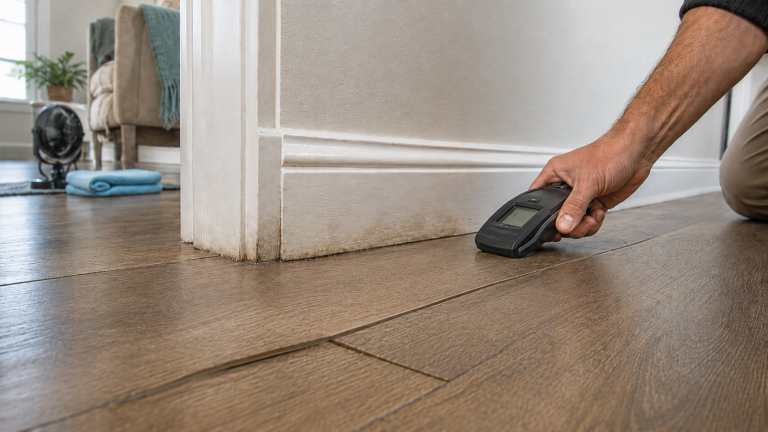
A moisture meter can also help confirm whether the wood is still elevated in moisture. As a general rule, crawl space framing that remains above about 16% to 20% moisture content deserves closer attention, especially when readings appear with spreading stains, musty odor, or visible growth. Stains that look old may still be connected to damp framing if nearby readings remain elevated.
Mold Near Joists, Beams, Subflooring, or Sill Plates
Mold growth on crawl space wood most frequently appears on structural components that remain cool and exposed to moisture. These areas often include joists, beams, sill plates, and the underside of subflooring.
Early growth may be visible in:
- The lower edges of joists near foundation walls
- Beam surfaces where moisture collects from condensation
- Subfloor panels above damp soil
- Sill plates resting directly on masonry
These locations are particularly vulnerable because they often receive less airflow than exposed crawl space surfaces. When air movement is limited, moisture accumulates more easily and remains in contact with wood.
Mold growth in these areas often indicates that humidity levels or moisture conditions are consistently high. Over time, persistent dampness may contribute to structural warning patterns covered in Signs of Structural Moisture Problems, especially when mold appears on joists, beams, sill plates, or subflooring.
How Mold on Wood Differs From Dirt, Stains, and Rot
Not every dark or discolored area on crawl space wood is mold. Understanding how mold differs from dirt, staining, or wood rot is critical to making accurate decisions about inspection and repair.
Dirt vs Mold
Dirt accumulation is common in crawl spaces, especially near entry points or exposed soil. However, dirt typically appears as loose material that brushes off easily, while mold remains attached to the wood surface.
Dirt usually:
- Appears dry and powdery
- Brushes away without leaving residue
- Does not spread outward
- Lacks odor
Mold typically:
- Adheres to wood surfaces
- Appears fuzzy, blotchy, or patchy
- Spreads gradually across wood
- May produce musty odors
If a mark wipes away completely and does not return, it may be dirt. If it remains embedded in the wood or returns after cleaning, mold or moisture-related staining may be involved.
Water Stains vs Mold Growth
Water stains often appear as darkened areas where moisture has contacted wood. These stains may remain after the wood dries and do not always indicate active mold.
Water stains usually have:
- Smooth edges or drip patterns
- No fuzzy texture
- No spreading pattern after drying
- No persistent musty odor
Mold growth is more likely when discoloration appears textured, spreads over time, or appears with odors and damp conditions. Water stains can still indicate a moisture problem, but mold suggests that moisture has remained long enough to support biological growth.
Wood Rot vs Mold
Wood rot is different from surface mold. Mold grows on or near the surface, while rot breaks down the structural fibers of the wood itself.
Signs of rot include:
- Soft or spongy wood
- Wood that crumbles when probed
- Deep cracking or splitting
- Sections that appear sunken or weakened
If crawl space wood shows both mold and softness, the issue may have progressed beyond surface growth. Structural evaluation may be needed to determine whether the wood can still perform its load-bearing function.
Where Mold Usually Appears First in Crawl Space Wood
Mold does not always spread evenly across crawl space wood. It often appears first in locations where moisture collects, airflow is weakest, or wood remains cooler than the surrounding air.
Near Foundation Walls
Joists and sill plates near foundation walls are common starting points for mold growth. These areas may be affected by cool masonry, condensation, damp soil, or water vapor rising from the ground.
Mold near foundation walls may suggest:
- Moisture entering through foundation vents or gaps
- Damp masonry transferring moisture to wood
- Missing or incomplete ground vapor protection
- Condensation caused by temperature differences
Because sill plates and rim areas are important structural components, mold in these locations should be inspected carefully. If moisture continues to affect these areas, structural deterioration may eventually develop.
Below Bathrooms or Kitchens
Mold on crawl space wood below bathrooms, kitchens, or laundry areas may indicate a hidden plumbing leak. Even small leaks can create enough moisture to support mold growth if they continue over time.
Common clues include:
- Mold concentrated below a fixture
- Staining near pipe penetrations
- Damp subflooring below plumbing areas
- Odors strongest near specific rooms above
When mold appears in a concentrated area below plumbing, the problem may be more localized than a whole-crawl-space humidity issue. However, localized leaks can still cause serious damage when they remain hidden.
Above Bare Soil or Damaged Vapor Barriers
Mold often appears on crawl space wood above exposed soil or damaged vapor barriers. Soil moisture releases water vapor into the crawl space, and that vapor can collect on cooler wood surfaces.
Warning signs include:
- Mold spread across wide sections of framing
- Damp or muddy soil below affected wood
- Torn or missing vapor barrier material
- Condensation on insulation, ducts, or wood surfaces
When mold appears broadly above exposed soil, the issue is often environmental rather than isolated. Correcting ground moisture and improving crawl space moisture control may be necessary before mold stops returning.
What Mold on Crawl Space Wood Usually Means
Mold on crawl space wood usually means that moisture has stayed on or inside the wood long enough to support fungal growth. For a deeper explanation of the moisture conditions behind this pattern, see Why Crawl Space Wood Framing Develops Mold.
The Moisture Source Is Still Active or Recently Active
Mold on crawl space wood usually points to one of three moisture patterns: sustained high humidity, a localized plumbing or drain leak, or ground vapor rising from wet soil. The location of the mold often gives the best clue. Widespread growth across many joists usually points to crawl space humidity or ground vapor, while concentrated growth below a bathroom, kitchen, or pipe penetration may point to a leak.
This article only identifies the warning signs. If you need to understand the underlying causes in more detail, use Why Crawl Space Wood Framing Develops Mold as the fuller cause-focused guide.
When Mold on Crawl Space Wood Suggests a Bigger Structural Moisture Problem
Mold on crawl space wood does not always mean structural damage has already occurred. However, certain patterns suggest that moisture has been present long enough to threaten the condition of framing members.
Mold Appears in Multiple Locations
When mold appears on several joists, beams, or sections of subflooring, the issue is more likely related to widespread crawl space moisture than a single isolated stain. Multiple growth areas suggest that humidity or vapor levels may be affecting the entire crawl space environment.
This pattern is especially concerning when mold appears across:
- Several joists in different parts of the crawl space
- Both beams and subfloor panels
- Wood near both foundation walls and interior plumbing areas
- Multiple levels or layers of framing
Widespread mold usually requires a broader moisture investigation because the underlying condition is affecting more than one surface.
Wood Remains Damp for Long Periods
Mold growth becomes more concerning when crawl space wood remains damp over time. Surface moisture may dry after weather changes, but internal wood moisture can persist if airflow is poor or humidity remains high.
Signs that wood is staying damp include:
- Cool or clammy wood surfaces
- Repeated condensation
- Damp insulation touching framing
- Moisture meter readings that remain elevated
If dampness continues, mold may be only the first visible symptom. Prolonged moisture exposure increases the risk of rot, fastener corrosion, and structural weakening.
Visible Mold Appears Along Structural Load Points
Mold along beams, bearing areas, sill plates, or joist ends deserves closer attention because these components transfer loads through the structure. Surface mold alone does not prove structural failure, but it does reveal moisture in an area where deterioration matters more.
Important locations include:
- Joist ends near foundation walls
- Main beams and support girders
- Sill plates along masonry walls
- Subfloor seams above damp areas
When these areas show both mold and moisture, drying and repair decisions become more important. In some cases, methods similar to those outlined in How to Dry Crawl Space Structural Wood may be necessary to remove embedded moisture before deterioration begins.
What Not to Do When You Find Mold-Like Growth
When you find mold-like growth on crawl space wood, the goal is to avoid spreading particles, hiding the stain, or missing the moisture source that allowed it to grow.
Do Not Treat It as a Surface-Only Problem
Do not assume spreading stains are harmless, scrub visible growth without finding the moisture source, or seal mold-covered wood before the framing has been inspected. Surface cleaning or coating can hide the symptom while humidity, leaks, or ground vapor continue feeding the problem.
Do Not Disturb Large Areas of Suspected Mold
Avoid sanding, dry brushing, or aggressively scraping mold-like growth, especially in a tight crawl space. If the affected area is widespread, recurring, or near damaged structural wood, professional evaluation is safer than disturbing the material during DIY inspection.
When to Call a Professional
Professional inspection is usually recommended when mold is widespread, keeps returning after cleaning, appears on major load-bearing components, or occurs with signs of structural damage.
Call a professional if you see soft or crumbling wood, sagging floors above the crawl space, mold across multiple joists or beams, recurring growth in the same areas, or strong musty odors entering living spaces. These patterns suggest that the issue is no longer just a small surface stain.
If the main problem is repeated mold after cleaning, the broader moisture-cycle explanation in Why Moisture Problems Keep Returning can help clarify why cleanup alone does not solve the source.
Frequently Asked Questions About Signs of Mold Growth on Crawl Space Wood
Is white mold on crawl space wood dangerous?
White mold on crawl space wood is a warning sign that moisture conditions are supporting growth. It may not mean the wood is structurally damaged yet, but it should lead to moisture testing, source inspection, and careful evaluation before cleaning or sealing the wood.
Does black staining on crawl space wood always mean mold?
No. Black staining can result from water exposure, dirt accumulation, or natural wood discoloration. However, stains that spread, produce odors, or appear fuzzy may indicate mold growth and should be inspected further.
Can mold grow on crawl space wood even if it feels dry?
Yes. Crawl space wood can feel dry on the surface while still holding elevated moisture inside the fibers or along hidden edges. This is why spreading stains, musty odor, or elevated moisture readings matter more than touch alone.
Is mold on crawl space wood the same as wood rot?
No. Mold grows on the surface of wood, while wood rot occurs when fungi break down structural fibers. Mold often appears before rot develops, making early detection important for preventing structural damage.
How quickly does mold spread on crawl space wood?
Mold growth speed depends on moisture levels, temperature, and airflow conditions. In damp environments, visible growth can expand significantly within weeks, especially when humidity remains high.
Conclusion
Mold growth on crawl space wood is usually a moisture warning, not just a cosmetic mark. White or gray fuzzy patches, black or green speckles, spreading stains, and musty odors should lead to a closer inspection of joists, beams, sill plates, subflooring, nearby plumbing, soil moisture, and vapor barrier condition.
The most important next step is to confirm whether the wood is still getting damp. Cleaning visible growth without correcting humidity, leaks, or ground vapor usually allows the same pattern to return.
Key Takeaways
- Mold on crawl space wood often signals persistent moisture problems.
- White, gray, black, or green patches are common visible indicators.
- Musty odors frequently appear before widespread visible growth.
- Not all stains are mold, but spreading discoloration should be inspected.
- Repeated mold growth usually indicates unresolved moisture sources.
- Early detection helps prevent long-term structural damage to wood framing.
- Professional inspection may be necessary when mold is widespread or recurring.

2 Comments
Comments are closed.