
Signs of Mold Growth Around Windows (How to Recognize Window Mold Early)
Early mold growth around windows usually appears as small dark specks, gray or green discoloration, musty odors, peeling paint, or recurring staining near the trim, sill, corners, tracks, or caulking lines. These signs often start small, but they usually mean moisture is collecting around the window more often than it should.
Window mold is commonly caused by condensation, minor leaks, air leakage, or damp materials hidden behind trim. The most important clue is whether the same area stays damp, smells musty, or grows new spots again after cleaning.
This guide focuses on how to recognize mold growth around windows early and how to tell when visible mold may point to a deeper moisture problem. For broader moisture patterns throughout the home, see how to find, fix, and prevent moisture problems in homes.
Why Mold Often Forms Around Windows
Windows develop mold because they collect moisture in predictable places: cold glass, lower corners, sills, tracks, caulking lines, and the seams where trim meets drywall. Even without a major leak, repeated condensation or small amounts of trapped moisture can keep these surfaces damp long enough for mold to grow.
Condensation Is the Most Common Trigger
In many homes, window mold starts with condensation rather than a leak. Warm indoor air hits cold glass or frame surfaces, water collects along the lower edges, and nearby trim or drywall stays damp.
You may notice condensation forming on windows during:
- Winter heating seasons
- Cold mornings with high indoor humidity
- Cooking or showering without proper ventilation
- Sleeping in closed bedrooms overnight
If condensation appears regularly and remains on surfaces for extended periods, mold can begin forming along window trim, sills, and corners.
For a fuller explanation of this cause, see why windows develop condensation and mold.
If you’re unsure whether condensation is the source, comparing these symptoms with signs of water damage around windows can help determine whether the issue is humidity-related or caused by water intrusion.
Small Leaks Can Create Long-Term Moisture
Small leaks can also support mold growth around windows, especially when moisture dries partially between rain events. If mold appears with peeling paint, soft drywall, damp trim, or stains that worsen after storms, compare the pattern with signs of water damage around windows.
Air Leaks Create Hidden Moisture Zones
Air leakage around windows can create cold spots where condensation forms repeatedly. This type of mold often appears in corners, along seams, or near poorly sealed replacement windows.
Common Signs of Mold Growth Around Windows
Mold around windows often begins with small visual changes that become more noticeable over time. Recognizing these early symptoms can help you stop mold growth before it spreads into walls or structural materials.
The following signs represent the most common and reliable indicators of mold growth near window areas.
Black or Green Spots on Window Trim
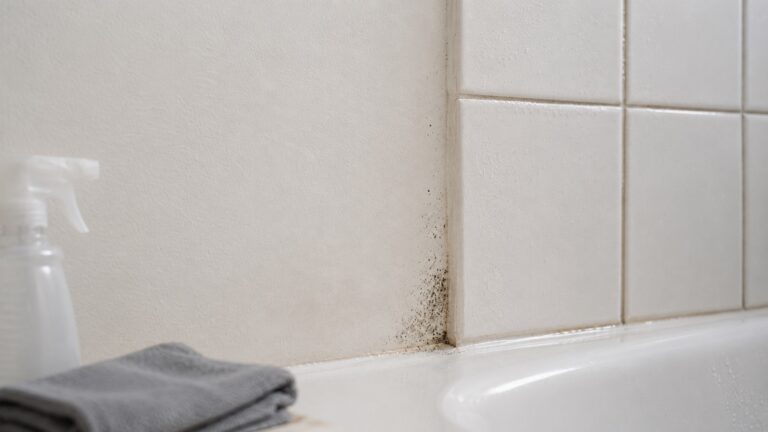
One of the most recognizable signs of mold around windows is the appearance of dark spots on trim surfaces. These spots typically start as tiny dots and gradually grow into clusters.
Mold spots on window trim often appear:
- Along horizontal trim surfaces
- Near corners where moisture collects
- On painted wood or MDF trim
- Along edges where trim meets drywall
In early stages, these spots may look like dust or dirt. However, mold tends to form irregular shapes rather than uniform smudges. If the spots return after cleaning or spread slowly over time, mold growth is likely occurring.
If most of the growth is on painted or decorative trim, compare it with signs of mold around window trim.
Mold Growing Along Window Sills
Window sills are one of the most vulnerable areas for mold growth because they collect moisture easily. Unlike vertical surfaces, horizontal sills allow water from condensation or leaks to sit longer before drying. When this happens repeatedly, mold begins to develop along the edges or corners of the sill.
Typical signs of mold on window sills include:
- Dark staining along the back edge of the sill
- Small clustered spots near corners
- Soft or slightly swollen wood surfaces
- Peeling paint or bubbling finish
- A damp or musty smell near the sill
Mold on window sills often begins in corners because moisture naturally collects in these areas first. If the sill feels damp even hours after condensation appears, it usually indicates repeated moisture exposure rather than a one-time event.
Persistent mold growth on window sills may also suggest hidden moisture within surrounding materials. In those situations, comparing visible symptoms with signs of hidden mold around window frames can help determine whether mold is spreading beneath trim or inside wall cavities.
Mold in Window Corners
Window corners are one of the earliest locations where mold becomes visible. These areas tend to remain cooler than surrounding surfaces, making them ideal locations for condensation to collect.
Corner mold often appears as:
- Tiny dark specks clustered tightly together
- Faint gray or green discoloration
- Gradual spreading outward from the corner
- Moisture stains that reappear after cleaning
Corner mold is frequently associated with airflow problems and cold surface conditions. In bedrooms, it often forms during winter months when warm indoor air meets cold glass surfaces overnight.
If mold appears only in window corners and nowhere else, condensation is usually the primary cause. However, if corner mold spreads along the wall or trim, it may indicate deeper moisture movement within the surrounding structure.
Discoloration Near Caulking Lines
Caulking lines around windows often trap moisture, making them a common starting point for mold growth. Mold along caulking usually appears as thin dark lines or scattered specks embedded within the sealant.
Look for these warning signs:
- Black or dark gray streaks along caulking
- Discoloration that cannot be wiped away easily
- Cracked or separating caulking lines
- Moisture buildup along seal edges
Caulking-related mold is particularly important because damaged seals allow moisture to enter hidden spaces behind trim. If caulking continues to fail, moisture intrusion may worsen over time.
Understanding how moisture enters these areas is essential for preventing recurrence. Structural entry pathways are often explained in detail within how water enters homes through structural gaps, especially when seal failure is suspected.
Musty Odors Around Window Areas
A musty odor near windows is often one of the earliest indicators of mold growth. In some cases, the smell appears before visible mold becomes noticeable.
Odor-related warning signs include:
- A persistent earthy or musty smell near windows
- Odors that worsen when windows are closed
- Smells that return after cleaning
- Musty smells strongest near trim or sills
Musty odors are especially important when they remain after visible surfaces are cleaned. Persistent odor may indicate mold hidden behind trim or inside nearby wall materials.
If odor is the main symptom and no mold is visible, compare the situation with mold smell but no visible mold to decide whether hidden growth should be investigated.
Peeling Paint or Bubbling Finish Near Windows
Paint problems near windows can indicate repeated moisture exposure. When surfaces stay damp, paint may lose adhesion, bubble, peel, or form soft edges around trim and drywall.
Paint-related warning signs include:
- Peeling paint along window trim
- Bubbling finish near the sill
- Flaking paint around corners
- Paint discoloration that returns after repainting
Paint damage does not always mean mold is present, but it often shows where moisture has been lingering. If paint failure appears with dark spots or musty odors, mold growth becomes more likely.
Soft or Deteriorating Window Trim
Soft trim near windows can indicate that moisture has moved beyond the surface. Wood trim may swell, soften, warp, or separate from the wall when it absorbs moisture repeatedly.
Warning signs include:
- Trim that feels soft when pressed gently
- Swollen edges or raised seams
- Loose trim sections near corners
- Dark staining along trim joints
Mold often develops in the same areas where trim begins to deteriorate. When trim damage appears with visible mold, the issue may involve both surface growth and hidden moisture.
Recurring Mold After Cleaning
Mold that returns after cleaning is one of the strongest signs that moisture is still present. Recurring mold around the same window usually points to one of these problems:
- Ongoing condensation
- Hidden water intrusion
- Poor air circulation
- Unresolved leaks around the frame
If mold returns in the same spot repeatedly, the moisture source has not been corrected. Cleaning alone may improve appearance temporarily, but it does not solve the underlying condition.
How to Tell the Difference Between Mold and Dirt Around Windows
Mold, dirt, soot, insect residue, and mineral staining can look similar at first. The difference is usually pattern and behavior: mold tends to grow in damp areas, form irregular clusters, return after cleaning, or appear with musty odors.
Dirt usually wipes away easily and does not return in the exact same damp pattern. Mold often leaves staining behind, spreads gradually, or reappears when moisture conditions remain unchanged.
Signs It Is More Likely Mold
Growth around windows is more likely to be mold when it:
- Appears in damp or humid areas
- Forms irregular spots or clusters
- Returns after cleaning
- Produces a musty odor
- Spreads slowly over time
If the material grows, smells musty, or appears with condensation and dampness, it should be treated as a moisture-related mold concern rather than ordinary dirt.
Signs It May Be Dirt or Staining
Some discoloration around windows is not mold. Dust, soot, oxidation, and mineral deposits can collect around window edges, especially where airflow moves across surfaces.
The material may be dirt or staining when it:
- Wipes away completely with normal cleaning
- Does not return after surfaces stay dry
- Appears evenly along airflow paths
- Has no musty odor
- Does not spread over time
When in doubt, the pattern matters more than one visual clue. Repeating dampness, spreading spots, and musty odor make mold more likely.
Signs Mold Around Windows May Be Caused by Condensation
Condensation-related mold has a different pattern than leak-related mold. It usually appears where warm indoor air meets cold window surfaces, especially in winter or during periods of high indoor humidity.
This type of mold is often visible on glass edges, lower corners, sills, and trim near the coldest parts of the window.
Condensation Patterns to Watch For
Condensation-related mold often appears with:
- Water droplets on glass in the morning
- Damp lower window corners
- Mold appearing during colder months
- Mold worse in bedrooms or bathrooms
- No obvious rain-related staining
When mold follows these patterns, indoor humidity and surface temperature are often the main factors. However, condensation can still cause real damage if it continues for long periods.
Persistent Window Condensation
Persistent condensation means the area is staying wet long enough for mold to become likely. If moisture returns soon after wiping the window dry, the problem is not just a one-time weather event.
Common signs include:
- Water beads on glass every morning
- Damp trim or sill surfaces
- Dark spots forming near condensation trails
- Paint softening near damp areas
Signs Mold Around Windows May Be Caused by Leaks
Leak-related mold usually has a different pattern than condensation-related mold. Instead of appearing mainly where indoor moisture collects, it often appears near exterior water entry paths.
This type of mold may worsen after storms, appear with staining, or spread into drywall and framing around the window opening.
Leak-Related Mold Warning Signs
Possible leak-related warning signs include:
- Mold worsening after rain
- Brown or yellow stains near window corners
- Soft drywall beside or below the window
- Paint bubbling near the frame
- Mold spreading outward from one side of the window
Leak-related mold deserves closer attention because it may indicate water entering the wall system. If signs become worse after storms, the issue should not be treated as simple indoor condensation.
Window water damage symptoms are covered more fully in signs of water damage around windows.
Where Mold Commonly Appears Around Windows
After checking the obvious trim and sill surfaces, inspect the smaller moisture traps around the window. These areas often show early mold before the wall looks damaged.
Window Sills
Sills collect water from condensation, spills, and small leaks. Because they are horizontal, moisture can sit long enough to soak into paint, wood, or MDF.
Watch for:
- Dark spots along the back edge
- Swollen sill material
- Peeling finish
- Recurring dampness after condensation
Lower Window Corners
Lower corners are common mold locations because moisture drains or collects there. Corners also tend to be cooler and less ventilated than open wall surfaces.
Mold in lower corners often appears as tight clusters of black or gray spots.
Caulking and Sealant Lines
Caulking lines can trap surface moisture and organic residue. When caulk cracks or separates, moisture can also move behind it.
Dark streaks in caulking may be difficult to remove because mold can become embedded in the sealant.
Window Tracks and Channels
Window tracks collect dust, condensation, and small amounts of water. Sliding windows are especially prone to mold in track channels because debris holds moisture.
Track mold may appear as black residue, slimy buildup, or musty odor when the window is opened.
How Window Mold Changes Over Time
Mold around windows often develops gradually. Early signs may be subtle, but the pattern usually becomes easier to recognize as moisture continues.
Watching how the area changes over time can help distinguish temporary surface dirt from active mold growth.
Early Stage Window Mold
Early-stage mold may appear as tiny dots or faint discoloration. It often appears first in corners, along caulk lines, or where the sill meets the frame.
At this stage, surfaces may still feel firm, and the mold may cover only a small area.
Developing Mold Growth
As mold develops, spots may become darker, larger, or more clustered. You may notice a stronger odor, more frequent condensation, or staining that spreads away from the original area.
Developing mold often indicates that moisture is not drying quickly enough between events.
Advanced Mold Warning Signs
Advanced warning signs include soft drywall, warped trim, persistent odors, and mold spreading beyond the immediate window area. These symptoms may indicate deeper moisture problems.
If advanced signs appear, surface cleaning should not be the only response. The moisture source needs to be identified before the area is repaired or covered.
Window Mold Warning Signs You Should Not Ignore
Some window mold signs deserve faster attention because they may point to hidden moisture, water intrusion, or material damage.
Mold That Spreads Beyond the Window Area
Mold limited to a small condensation-prone corner may be surface-related. Mold that spreads along drywall, baseboards, nearby trim, or wall surfaces may indicate moisture movement beyond the window itself.
Spreading mold is more concerning when it appears with staining, soft materials, or persistent odors.
Mold That Appears After Rain
Mold or staining that worsens after rain may indicate exterior water intrusion. This is different from mold that appears mainly during cold, humid indoor conditions.
Rain-related patterns should be inspected because they may involve flashing, siding, caulking, or gaps around the window opening.
Mold With Soft Drywall or Trim
Soft materials near mold are a stronger warning sign than discoloration alone. Soft drywall, swollen trim, or crumbly paint may mean moisture has been absorbed into the material.
When mold appears with soft materials, cleaning the surface will not solve the underlying moisture problem.
Mold With Persistent Musty Odors
A persistent musty odor near a window may indicate that mold is growing beyond the visible surface. Odor is especially concerning when it remains after cleaning or becomes stronger during humid weather.
Odor alone does not prove hidden mold, but it is a strong reason to inspect more carefully.
When Visible Window Mold May Point to Hidden Moisture
Visible mold around a window may point to hidden moisture when the same spot keeps returning after cleaning, the area smells musty, trim feels soft, drywall stains spread, or paint continues peeling. These signs do not prove hidden mold by themselves, but they show that moisture may be affecting materials behind the surface.
If these warning signs appear, compare them with signs of hidden mold around window frames before removing trim or opening wall materials.
When to Call a Professional for Window Mold Problems
Small surface patches may be manageable when caught early, but spreading mold, soft materials, persistent odors, or rain-related moisture deserve professional inspection.
Situations That Require Professional Inspection
Professional help is recommended when:
- Mold covers large sections of trim or drywall
- Mold spreads beyond the immediate window area
- Water leaks are visible during rainstorms
- Drywall or wood becomes soft or deteriorated
- Strong odors remain despite cleaning
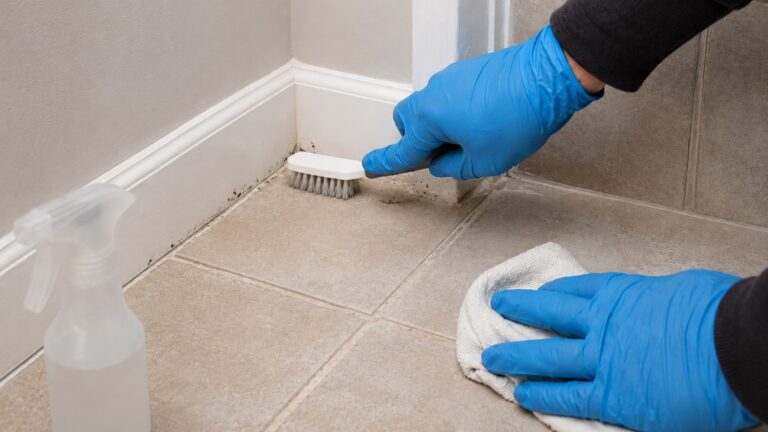
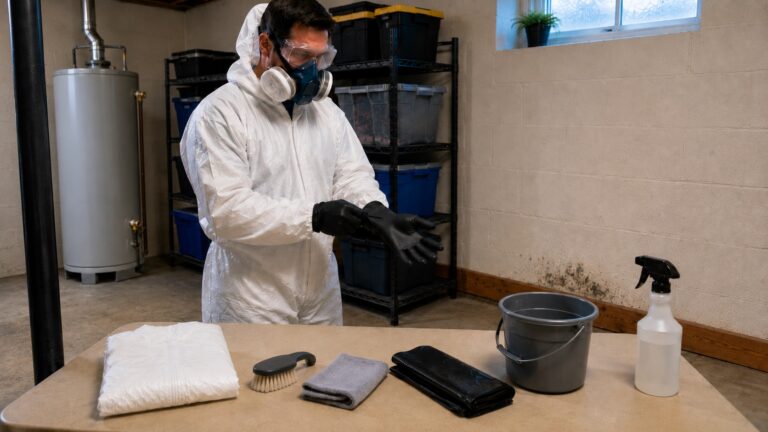
Avoid sanding, scraping, or dry-brushing moldy trim or drywall, because that can release spores and dust into the room. If the material is soft, deteriorated, or larger than a small surface patch, inspection is safer than aggressive DIY cleanup.
Professionals can use moisture meters, thermal imaging, and careful material inspection to check whether moisture has moved behind trim, drywall, or framing.
What to Do After You Notice Mold Around a Window
Once you recognize mold around a window, the next step is to determine whether the area is only experiencing surface condensation or whether moisture is entering deeper materials. Wipe away surface moisture, check whether the same area becomes damp again, look for soft trim or drywall, and watch whether new spots return after cleaning.
Do not paint, caulk, or cover the area until the moisture source is understood. Sealing over damp materials can trap moisture and allow mold to continue growing behind the surface.
For long-term moisture control steps, see how to prevent mold around windows.
Frequently Asked Questions About Mold Around Windows
Is mold around windows dangerous?
Mold around windows is more concerning when it spreads beyond a small surface patch, returns after cleaning, smells musty, or appears with soft trim, peeling paint, or damp drywall. A few isolated spots from condensation may be easier to address, but recurring growth usually means the moisture source has not been corrected.
Why does mold keep growing on my window trim?
Mold keeps growing on window trim when the trim repeatedly absorbs moisture from condensation, air leakage, failed caulking, or small leaks. If the growth is mostly on trim surfaces, compare the pattern with signs of mold around window trim.
Can condensation alone cause mold around windows?
Yes. Condensation is one of the most common causes of mold around windows. When moisture collects frequently on cold surfaces, mold can develop even without structural leaks.
How quickly can mold spread around a window?
Mold can begin developing within days when moisture remains present, but visible growth depends on the material, temperature, humidity, and how often the area gets wet. Around windows, repeated condensation or leaks can make spots noticeable within days to a couple of weeks.
Should I remove window trim if mold keeps returning?
Removing trim may be necessary if hidden moisture is suspected behind surfaces. However, trim removal should be performed carefully to avoid spreading mold spores or damaging surrounding materials.
What does it mean if mold only appears in the lower window corners?
Mold limited to the lower window corners usually points to condensation collecting where glass, trim, and sill surfaces meet. If the same corners also show soft drywall, rain-related staining, or peeling paint that worsens after storms, water intrusion should be investigated.
Conclusion: Recognizing Window Mold Early Prevents Bigger Problems
The earliest signs of mold growth around windows are usually small: dark specks, musty odors, peeling paint, recurring condensation, or discoloration along trim, sills, corners, tracks, and caulking lines. These signs matter because they show where moisture is collecting repeatedly.
If the mold is isolated and the area dries quickly, the problem may be limited to surface condensation. If growth returns, spreads, smells musty, or appears with soft drywall or deteriorating trim, hidden moisture may be present and further inspection is needed.
For cleanup guidance, review how to remove mold permanently.
2 Comments
Comments are closed.