Signs of Mold Growth Around Exterior Doors
Mold growth around exterior doors is usually a sign that moisture is repeatedly reaching the door opening, threshold, trim, or nearby wall materials. The first clues are often dark spots, musty odors, peeling paint, swollen trim, staining near the threshold, or mold that returns after cleaning.
The most important question is whether the mold is only on the surface or whether moisture has moved behind the casing, under the flooring, or into the wall cavity. This guide explains the most reliable signs of mold growth around exterior doors, when those signs point to hidden moisture, and when the problem needs deeper inspection. For broader cleanup and recurrence control, review how to remove mold permanently.
Why Mold Around Exterior Doors Matters
Mold around an exterior door matters because door openings contain many joints where water can enter and stay hidden. The frame, threshold, siding transition, trim, flooring edge, and wall cavity all meet in a small area, so one failed seal can affect several materials at once.
A small patch near the bottom corner of a door frame may be only surface growth, but it can also be the visible edge of moisture behind the trim or under the flooring. That is why recurring mold, musty odor, soft trim, or staining after rain should be treated as moisture clues rather than just cosmetic problems.
Exterior Doors Are High-Risk Moisture Locations
Exterior doors experience constant exposure to outdoor weather. Rainwater hitting siding and door surfaces often flows downward and collects at the base of the frame. Over time, even small sealing failures can allow water to seep inward.
Common high-risk areas include:
- Door thresholds exposed to rain splash
- Lower corners of door frames
- Exterior trim joints and caulk seams
- Weatherstripping gaps
- Door frame-to-siding transitions
- Flooring directly inside entryways
If these areas remain damp repeatedly, the first visible mold often appears at the bottom corners of the door frame or along the threshold seam. Those locations matter because they show where water is collecting before it spreads into trim, flooring, or wall materials.
To understand how water typically enters these areas, review how windows and doors cause hidden moisture problems, which covers common structural gaps around entry points.
Hidden Mold Can Develop Behind Visible Surfaces
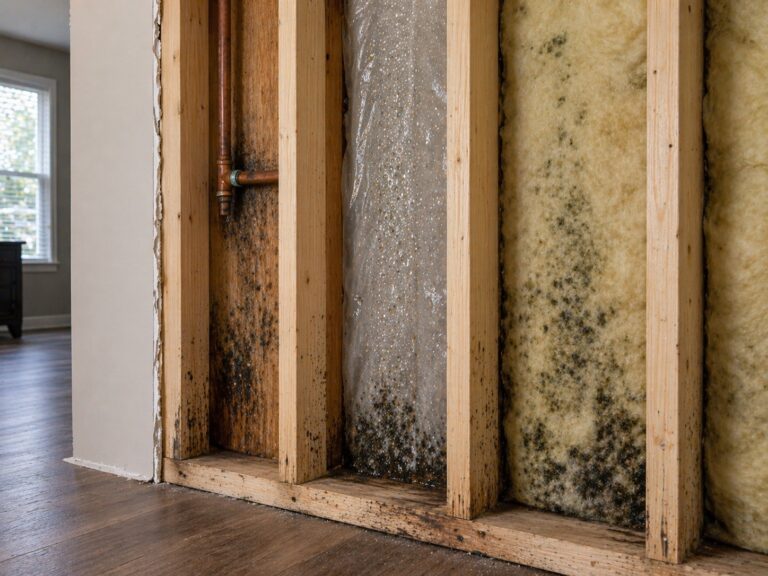
Visible mold around exterior doors is often just the first sign of a deeper problem. Many homeowners clean mold from trim or drywall, only to see it return weeks later. This happens when moisture remains trapped inside hidden spaces behind the visible materials.
Common hidden mold locations near doors include:
- Behind door casing trim
- Inside wall cavities around the frame
- Beneath flooring near the threshold
- Behind baseboards adjacent to entryways
- Inside insulation surrounding the door frame
Because these areas are enclosed, moisture evaporates slowly. Mold may grow behind the surface before stains, odors, swelling, or visible spots appear indoors.
If mold symptoms extend beyond the surface—such as recurring odor, soft materials, or spreading discoloration—it may indicate that moisture intrusion is ongoing. In those cases, visible cleanup should wait until the door area is inspected for hidden dampness behind the trim, flooring, or nearby wall materials.
Common Signs of Mold Growth Around Exterior Doors
The most useful mold signs around exterior doors are the ones that repeat in the same location, worsen after rain, or appear with dampness, odor, swelling, or staining. Inspect the lower frame corners, threshold edge, trim joints, nearby baseboards, and flooring seams first.
Visible Dark Spots or Discoloration Near Door Frames
The most recognizable sign of mold growth around exterior doors is the appearance of dark spots or patches on surfaces near the door frame. These spots may be black, green, gray, brown, or even white depending on the type of mold and the material it grows on.
Common locations where discoloration first appears include:
- Bottom corners of the interior door frame
- Door casing and trim joints
- Drywall edges near the frame
- Baseboards next to the door
- Threshold edges and flooring transitions
These areas tend to trap moisture because water flows downward and collects near the lowest structural points. Even small leaks or condensation buildup can create damp surfaces that allow mold to grow.
If discoloration appears repeatedly after cleaning, it strongly suggests ongoing moisture exposure rather than a one-time event.
A quick clue is whether the spot wipes away like dirt or returns as a fixed stain in the same damp area. Mold-like discoloration that comes back after cleaning, especially near a lower frame corner or threshold, deserves closer moisture inspection.
Musty Odors Near Entry Doors
A persistent musty smell around an exterior door often indicates mold growth, even when no visible mold is present. Mold can produce distinctive odors, especially in enclosed spaces where moisture dries slowly.
Common odor-related warning signs include:
- A stale or earthy smell near the door area
- Stronger odors during humid weather
- Smells that return after cleaning
- Odor noticeable when opening the door
- Lingering smells after rainfall
Musty odors are especially important to investigate because they frequently indicate hidden mold growth behind trim or inside wall cavities. These conditions may require deeper inspection to locate the moisture source.
Peeling Paint or Bubbling Surfaces
Moisture intrusion around exterior doors often causes paint to peel, bubble, or blister. While this damage is sometimes mistaken for normal aging, it commonly indicates water penetration beneath the painted surface.
Signs of moisture-related paint damage include:
- Paint separating from wood trim
- Bubbling paint near door corners
- Uneven paint texture near thresholds
- Paint softening when touched
- Flaking surfaces that expose raw material
These symptoms occur when moisture becomes trapped beneath the paint layer. Mold may then develop on or beneath the affected surface, especially where paint failure exposes damp wood, drywall paper, or trim material.
If peeling paint is combined with musty odors or visible staining, the likelihood of mold growth increases significantly.
Swollen or Warped Door Trim
Wood trim surrounding exterior doors absorbs moisture easily when exposed to leaks or condensation. As moisture builds up, the wood fibers expand, causing visible swelling or distortion.
Common signs of swelling include:
- Trim separating from the wall
- Visible warping along the edges
- Difficulty closing the door properly
- Trim that feels soft when pressed
- Gaps appearing at trim joints
Warped trim not only signals moisture exposure but also creates new openings where water can enter. Over time, this increases the risk of mold spreading deeper into surrounding materials.
Stains or Water Marks Near the Threshold
Water stains near the door threshold are one of the clearest signs that moisture is entering from outside. These stains often appear as darkened areas, streaks, or rings on flooring or baseboards.
Typical threshold-related staining patterns include:
- Darkened wood flooring near entryways
- Discoloration along grout lines in tile
- Water marks spreading outward from the threshold
- Stains on baseboards beside the door
- Damp or darkened flooring seams near the entry
Threshold stains matter because water often settles at the lowest part of the door opening before spreading into nearby flooring or framing. If stains appear after rain, the door assembly should be checked for leaks before mold cleanup is treated as a surface-only job.
Recurring Mold After Cleaning
Mold that returns after cleaning is one of the strongest signs that moisture remains active. Surface cleaning may remove visible growth temporarily, but it does not stop mold from coming back if the area keeps getting damp.
Recurring mold near exterior doors may indicate:
- A leak that has not been repaired
- Moisture trapped behind trim
- Damp flooring near the threshold
- High indoor humidity near a cold door surface
- Water entering during storms
If mold keeps returning in the same spot, do not keep repainting or recaulking the area without finding the source. Repeated growth usually means the moisture path is still present.
Soft or Deteriorating Materials Near the Door
Soft wood, crumbling drywall, swollen baseboards, and damaged flooring can all indicate that mold is part of a larger moisture problem. These materials usually do not deteriorate from brief surface dampness alone. They often point to repeated wetting or long-term trapped moisture.
Warning signs include:
- Trim that dents easily when pressed
- Drywall that feels soft or powdery
- Baseboards pulling away from the wall
- Flooring that cups, swells, or separates near the threshold
- Crumbling material around the lower frame
When mold appears with material deterioration, the problem may extend behind the visible surface. In that case, cleanup alone is not enough.
Condensation Around Door Surfaces
In some homes, mold forms from condensation rather than a direct rain leak. This is more likely when moisture appears during cold weather, collects on glass or metal door parts, and does not clearly follow rainfall.
Condensation-related signs include water droplets on door glass, damp frame surfaces, discoloration near cold corners, or mold that appears during humid indoor conditions. If the mold worsens after storms, however, treat it as a possible leak until proven otherwise.
Where to Look First Around an Exterior Door
Start with the areas where water naturally collects or slows down. The most common inspection points are the lower inside corners of the frame, the threshold-to-flooring seam, the bottom of the casing trim, nearby baseboards, drywall beside the frame, and the hidden edge behind loose or swollen trim.
If one of these areas is stained, musty, soft, or repeatedly damp, inspect the matching exterior side of the door for cracked caulk, failed weatherstripping, poor drainage, or gaps where water may be entering.
Signs the Mold May Be Caused by Hidden Moisture
Not all visible mold around an exterior door means the wall cavity is contaminated, but certain patterns are more concerning. The more the symptoms follow moisture behavior, the more likely hidden dampness is involved.
Mold Appears After Rainstorms
Mold or staining that becomes more noticeable after rain often points to exterior water entry. The moisture may be entering through failed caulk, worn weatherstripping, a leaking threshold, or gaps between the door frame and surrounding wall assembly.
If mold growth seems connected to storms, inspect both the interior and exterior sides of the door. Look for wet trim, staining below the threshold, water tracking along siding, or gaps where wind-driven rain could reach the frame.
Mold Returns to the Same Location
Mold that returns to the same lower corner, trim joint, or threshold edge usually means the same area is being dampened repeatedly. This pattern is more suspicious than a single isolated spot of surface growth.
Repeated growth in one location often points to a consistent moisture path. For example, a lower frame corner may get wet every time rain hits the door from one direction, or a flooring seam may absorb small amounts of water every time the threshold leaks.
Surfaces Feel Damp Without Visible Water
A surface can feel slightly damp even when there is no visible puddle. This is common when moisture is absorbed into wood trim, drywall paper, flooring edges, or baseboards.
Damp-feeling materials near an exterior door should be watched carefully, especially if the dampness appears after rain, during humid weather, or in cold conditions when condensation is more likely.
Mold Spreads Beyond the Door Area
Mold limited to one small surface patch may be easier to investigate. Mold that spreads along baseboards, across drywall, under flooring, or into nearby trim suggests the moisture is moving beyond the immediate door edge.
This type of spreading pattern can indicate that water is traveling through concealed materials. If the affected area continues to expand, the source needs to be found before cosmetic repairs are made.
Common Door Problems That Can Lead to Mold
Mold around an exterior door often starts when small door failures allow repeated dampness. The most common suspects are worn weatherstripping, loose or poorly sealed thresholds, cracked exterior caulking, inward-sloping surfaces near the entry, and gaps where trim meets siding.
This article focuses on mold symptoms, not full leak diagnosis. For the cause side of the problem, review why exterior doors develop water leak problems and why door threshold failures cause leaks.
What to Check Before Cleaning Mold Around Exterior Doors
Before cleaning visible mold, check whether the door area is still getting wet. Cleaning first can hide useful clues such as water staining, damp flooring seams, swollen trim, or the exact point where mold keeps returning.
Avoid sanding, scraping, or aggressively brushing moldy materials without proper protection, because that can spread particles into the air. If the affected area is large, materials are soft or rotten, or mold appears to extend behind trim or flooring, stop and get professional evaluation before disturbing the area.
Look for Visible Water Entry Points
Inspect the exterior side of the door before assuming the mold is only an indoor humidity issue. Look for cracked caulk, open trim joints, loose threshold parts, gaps around the frame, damaged weatherstripping, and areas where water appears to drain toward the door.
If mold appears after storms, check the door during or shortly after rain if it is safe to do so. Small leaks are often easiest to identify while the materials are still damp.
Check Flooring Near the Door
Flooring near exterior doors often shows early moisture clues. Wood may darken, cup, or swell. Laminate may lift at seams. Tile grout may discolor near the threshold. Carpet near an entry may smell musty or feel damp underneath.
If flooring near the door is damp, stained, or soft, the moisture may have moved below the visible surface. For recovery guidance after a door leak, review how to dry flooring after door leaks.
Inspect Surrounding Walls and Trim
Check the casing, baseboards, drywall edges, and lower frame corners around the door. Press gently on suspicious trim or drywall. Softness, swelling, paint failure, or a musty smell can indicate moisture behind the surface.
If the mold pattern suggests hidden water movement, the next step may be a more focused leak inspection. For that process, see how to detect door leaks inside walls.
When to Call a Professional
Call a professional if mold keeps returning after cleaning, spreads beyond the immediate door area, covers a large area, appears with strong musty odor, or occurs with soft drywall, crumbling trim, warped flooring, or an unstable frame.
These signs usually mean the problem is not just surface mold. Hidden moisture may be present behind trim, beneath flooring, or inside the wall cavity. When persistent door moisture remains unresolved, long-term repair decisions may involve the steps outlined in fix persistent door leak problems.
Frequently Asked Questions About Signs of Mold Growth Around Exterior Doors
Is mold around an exterior door always caused by a leak?
Not always. Mold can also form from condensation, especially on cold door glass, metal frames, or poorly insulated entry areas. However, mold that worsens after rain or returns near the same lower frame corner often points to water intrusion.
Why does mold keep coming back around my door frame?
Recurring mold usually means the area is still getting damp. The moisture may be coming from worn weatherstripping, a leaking threshold, cracked exterior caulk, trapped moisture behind trim, or damp flooring near the entry.
Can mold grow behind exterior door trim?
Yes. Door casing can hide small gaps around the rough opening. If water enters behind the trim, mold may grow on the back of the casing, drywall paper, framing, or nearby insulation before it becomes visible indoors.
What does mold near the door threshold usually mean?
Mold near the threshold often means water is collecting at the lowest part of the door opening. Check for staining, damp flooring seams, loose threshold parts, inward slope, or moisture that appears after rain.
Should I clean mold before fixing the door leak?
Do not rely on cleaning alone. The moisture source should be found and corrected first, or at least investigated before cleaning removes the visible clues. Mold commonly returns when the leak, condensation, or trapped dampness remains active.
Key Takeaways
- Mold around exterior doors usually means moisture is repeatedly reaching the door frame, threshold, trim, flooring, or nearby wall materials.
- The most common signs include dark spots, musty odors, peeling paint, swollen trim, threshold stains, soft materials, and mold that returns after cleaning.
- Lower door frame corners, threshold seams, nearby baseboards, flooring edges, and loose trim are the most important areas to inspect first.
- Mold that worsens after rain, returns to the same location, or appears with dampness or odor may indicate hidden moisture behind trim or under flooring.
- Cleaning visible mold without finding the moisture source often allows the problem to return.
- Professional evaluation is recommended when mold spreads, keeps returning, appears with soft or deteriorating materials, or may extend behind trim, flooring, or wall cavities.
The clearest next step is to match the mold location to the likely moisture path: lower frame corners, threshold seams, swollen trim, nearby baseboards, or flooring edges. If the same area stays damp, smells musty, or grows mold again after cleaning, inspect the door assembly for active moisture before repainting, recaulking, or treating it as a simple surface cleanup.