How to Identify Hidden Moisture Problems Throughout a Home
Hidden moisture problems often appear before visible water does. The first clues may be a musty odor, slight discoloration, bubbling paint, swollen trim, soft flooring, condensation, recurring mold, or a room that feels damp even when nothing looks wet.
Moisture can hide behind drywall, under flooring, inside cabinets, behind baseboards, in insulation, below carpet padding, around windows, inside attics, in crawl spaces, near HVAC equipment, or within exterior wall systems. By the time water becomes obvious on the surface, the material behind it may already have been damp for days, weeks, or longer.
This guide explains how to recognize hidden moisture by its warning signs, material changes, location patterns, timing, and basic confirmation tools. If you are checking more than one room, use this as the warning-sign overview and pair it with the room-by-room guide to find hidden moisture in different areas of your home.
Why Hidden Moisture Is Hard to Spot
Hidden moisture is hard to spot because many building materials conceal water before they reveal it. Drywall can absorb moisture from the back side, flooring can trap water underneath, insulation can hold dampness inside cavities, baseboards can cover wet lower drywall, and carpet can feel dry on top while the padding below remains damp.
Another reason hidden moisture is difficult is that the source may be far from the symptom. A roof leak can travel through insulation before staining a ceiling. A plumbing leak can run along framing before reaching a wall or floor. A window leak can wet the wall cavity before the trim looks damaged. Crawl space moisture can affect flooring and indoor odors without any visible water in the room above.
Hidden moisture also changes with conditions. Some symptoms only appear after rain. Others appear after showers, appliance use, HVAC operation, cold weather, high humidity, or long periods with poor airflow. A stain may look dry on one day and darken after the next storm. A closet may smell fine when open but musty after staying closed. A wall may feel normal until humidity rises.
Some clues have harmless explanations, such as an old repaired stain, seasonal window condensation, or minor paint failure. Treat the clue as suspicious when it changes, returns, appears with odor or softness, or connects to rain, plumbing use, humidity, or HVAC operation.
That is why hidden moisture should be identified by patterns, not one clue alone. A musty smell, stain, soft spot, or condensation pattern becomes much more useful when you connect it to location, timing, nearby materials, humidity, and whether the symptom is changing.
Early Warning Signs of Hidden Moisture
Hidden moisture often shows up as small changes before active water is visible. The more clues you see in the same area, especially odor, staining, swelling, softness, or recurring mold, the more seriously that area should be checked.
Musty Odors
A musty odor is one of the most common signs of hidden moisture. The smell may come from damp drywall, wet insulation, carpet padding, crawl space air, basement moisture, HVAC ducts, cabinets, closets, or possible mold growth in enclosed materials, often before staining or visible mold appears.
Pay attention to where the odor is strongest. A musty smell near a bathroom may point toward fixture moisture, wall cavity dampness, or poor ventilation. A musty smell near a basement stairway or floor opening may point toward lower-level moisture. An odor inside a cabinet may point toward a sink leak, appliance leak, or damp cabinet material. A musty closet on an exterior wall may point toward high humidity, condensation, or poor airflow.
Odor timing is also useful. If the smell gets worse after rain, exterior water entry or lower-level moisture may be involved. If it gets worse after showers, bathroom humidity or plumbing should be checked. If it appears when the HVAC system runs, ducts, air handlers, condensate drainage, or humidity control may be part of the problem.
Stains and Discoloration
Stains are common hidden moisture clues because water often moves through materials before the surface becomes wet. Look for yellow, brown, gray, black, or darkened areas on ceilings, walls, baseboards, flooring edges, cabinets, and masonry surfaces.
A ceiling stain may come from roof leakage, plumbing above, attic condensation, wet insulation, or HVAC equipment. A stain low on a wall may come from flooring moisture, baseboard moisture, exterior wall leaks, basement dampness, slab moisture, or water wicking upward. Stains around windows or doors may come from exterior water intrusion, condensation, or flashing problems.
Do not assume a stain is inactive just because it feels dry. Some stains only darken after rain, plumbing use, humidity changes, or HVAC cycles. Take photos from the same angle, note the date and conditions, or mark the outer edge lightly with painter’s tape so you can tell whether the stain is expanding.
Paint, Wallpaper, and Surface Changes
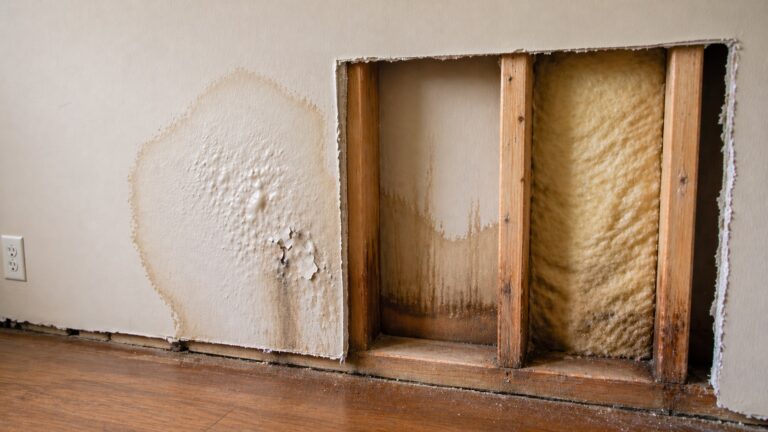
Paint and wallpaper often react when moisture is trapped behind the surface. Bubbling paint, peeling paint, blistering, loose wallpaper seams, cracked joint compound, and separating drywall tape can all suggest moisture behind or within the wall or ceiling.
These clues are especially important in bathrooms, kitchens, basements, laundry rooms, exterior walls, ceilings below plumbing, and walls near windows or doors. Paint may fail because of repeated condensation, hidden leaks, poor drying after water damage, or moisture moving through the material from behind.
Painting over the area before the source is understood can hide useful evidence and may trap dampness. If the paint is bubbling, peeling, or blistering repeatedly, treat it as a moisture clue rather than a cosmetic problem.
Swelling, Softness, and Warping
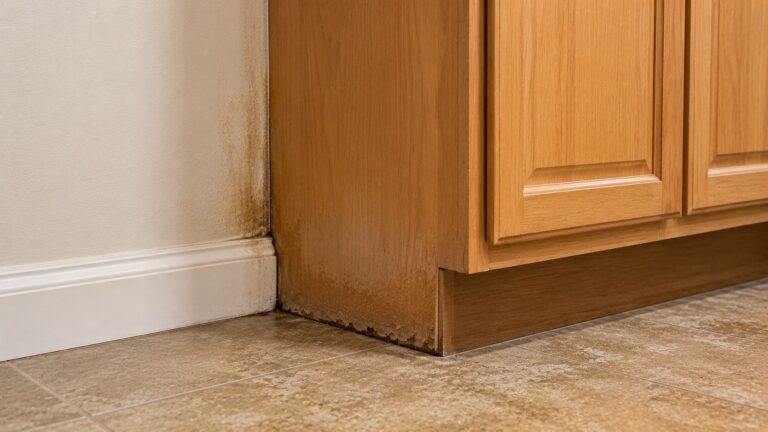
Swelling and softness are stronger warning signs because they suggest the material has absorbed moisture. Baseboards may swell or pull away from the wall. Drywall may feel soft or crumbly. Flooring may cup, lift, ripple, or feel spongy. Cabinet bottoms may warp or darken. Door trim and window trim may expand at the edges.
These material changes often mean moisture is not only on the surface. It may be behind trim, under flooring, inside wall cavities, inside cabinets, or in the subfloor. Soft drywall, sagging ceilings, or spongy flooring should be taken seriously because they can indicate deeper material damage.
If the same area swells again after drying, the source may still be active or the material may not have fully dried the first time.
Condensation and High Humidity
Condensation can be an early sign of hidden moisture conditions, especially when it appears repeatedly. Water on windows, cold pipes, ductwork, basement walls, toilet tanks, exterior wall corners, or attic surfaces may mean warm, moist air is meeting a cold surface.
Condensation is not always harmless. Repeated condensation can keep surrounding materials damp, especially wood trim, drywall, insulation, framing, and painted surfaces. Over time, this can lead to staining, mold, peeling paint, and musty odors.
High indoor humidity can also make hidden moisture harder to detect because it slows drying. A small leak, damp cabinet, wet wall cavity, or moist subfloor may stay damp longer when the air is already humid. If multiple rooms feel damp or condensation appears in several areas, it may be useful to test indoor humidity levels instead of relying on how the air feels.
Recurring Mold or Mildew Spots
Recurring mold or mildew spots often mean moisture is still present or keeps returning. Mold is not the source of the moisture; it is a sign that the surface or nearby material has been damp long enough to support growth.
Watch for mold or mildew that returns in the same place after cleaning. Common areas include bathroom ceilings, window corners, baseboards, closets, exterior wall corners, under sinks, basement walls, crawl space wood, attic sheathing, HVAC areas, and behind furniture.
Recurring growth in one location may point toward a hidden leak, condensation, wet material, or poor airflow in that area. Growth in several rooms may point toward high humidity, ventilation issues, damp lower spaces, or multiple moisture sources. Either way, repeated mold or mildew should be treated as a moisture clue, not just a cleaning issue.
Material Clues That Suggest Hidden Dampness
Different materials react to hidden moisture in different ways. A wall, floor, cabinet, concrete surface, or insulation cavity may not show the same warning signs, but several clues together, such as odor, swelling, staining, and softness in the same area, make hidden dampness more likely.
Drywall and Plaster
Drywall and plaster often show hidden moisture through staining, soft spots, bubbling paint, peeling paint, sagging, cracked joint compound, or tape separation. Drywall can absorb moisture from the back side before the painted surface feels wet. That makes wall and ceiling moisture easy to miss in the early stages.
Hidden moisture in drywall may appear near plumbing walls, bathroom walls, ceilings below fixtures, exterior walls, window areas, basement stairways, laundry rooms, and HVAC spaces. If the surface feels soft, crumbly, swollen, or cool compared with nearby areas, moisture may be present behind the surface.
Wall-specific symptoms can be more subtle than floor or ceiling damage. If the suspicious area is in a wall, compare it with common signs of hidden moisture in walls before assuming the problem is only cosmetic.
Wood Trim, Baseboards, and Framing
Wood often reacts to moisture by swelling, cupping, darkening, separating, softening, or growing surface mold. Baseboards, door trim, window trim, toe kicks, and wood framing can show hidden dampness because they sit next to walls, floors, openings, and cavities where moisture collects.
Baseboards are especially useful clues. Swelling at the bottom edge may indicate moisture in the lower wall, flooring, subfloor, exterior wall cavity, slab edge, or area behind the trim. Window trim that darkens or swells may point toward condensation, exterior water intrusion, or hidden dampness around the frame. Door trim that softens near the threshold may suggest wind-driven rain or poor exterior sealing.
If wood trim repeatedly swells or separates from the wall, moisture may be behind the trim, inside the wall, under the flooring, or entering from the exterior.
Flooring and Carpet Padding
Floors can hide moisture because many finished surfaces slow evaporation. Hardwood can cup, crown, darken, or separate. Laminate can swell at seams. Vinyl can lift, ripple, or bubble. Tile may hide moisture below until grout, trim, or nearby flooring changes. Carpet can feel dry on top while padding underneath remains damp.
Hidden floor moisture is common near bathrooms, kitchens, laundry rooms, exterior doors, basement areas, crawl-space areas, appliances, and plumbing routes. Soft spots are a stronger warning sign than surface discoloration alone because they may indicate moisture in the underlayment, subfloor, or framing.
Pay attention to odor as well as feel. A musty smell from carpet, flooring edges, or floor registers may suggest moisture underneath even if the surface looks normal.
Cabinets and Built-Ins
Cabinets can hide moisture because leaks often begin inside enclosed spaces or behind fixtures. Sink bases, vanities, dishwasher-adjacent cabinets, refrigerator water line areas, laundry cabinets, and built-ins along exterior walls should be checked for odor, staining, swelling, warped panels, darkened edges, and softened material.
Particleboard, MDF, and plywood cabinet materials can swell when they absorb moisture. The surface may dry while edges and joints stay damp. A cabinet may smell musty even when no water is visible because moisture is trapped at the back panel, toe kick, wall connection, or floor below.
If a cabinet has a recurring odor or swollen base, inspect nearby plumbing, drains, appliance hoses, wall cavities, and flooring edges before treating it as surface damage.
Concrete, Masonry, and Basement Surfaces
Concrete and masonry show hidden moisture differently from wood or drywall. Look for darkened patches, damp-feeling surfaces, white powdery deposits, peeling coatings, flaking paint, musty odors, water trails, or moisture along cracks and joints. White powdery deposits, often called efflorescence, can appear when moisture moves through masonry and leaves minerals behind as it evaporates.
Basement and foundation moisture may be active after rain, during snowmelt, or when soil stays saturated. It may also appear during humid weather when warm air condenses on cool masonry surfaces. Because both seepage and condensation can make concrete look damp, timing matters.
If basement walls or floors repeatedly darken, smell musty, or show mineral deposits, the moisture may be moving through the foundation or condensing on cool surfaces. Do not rely only on surface appearance to decide whether the problem is active.
Insulation and Enclosed Cavities
Insulation can hold hidden moisture for a long time. Wet insulation may sag, compress, clump, stain, smell musty, or keep nearby drywall and framing damp. Because insulation is usually hidden inside walls, ceilings, attics, crawl spaces, and floor systems, it can continue feeding odors or mold risk after the surface appears dry.
Attic insulation may become damp from roof leaks, condensation, bathroom exhaust problems, air leaks, or HVAC equipment. Wall insulation may become wet from plumbing leaks, window leaks, exterior water entry, flooding, or condensation inside the wall. Crawl space insulation may become damp from soil moisture, plumbing leaks, humid air, or poor drainage.
Do not disturb wet, moldy, or contaminated insulation without proper precautions. If hidden moisture may involve enclosed cavities, electrical areas, structural wood, or widespread mold, professional inspection is safer than opening materials casually.
Where Hidden Moisture Commonly Appears
Hidden moisture can appear almost anywhere, but some areas are more vulnerable because they contain plumbing, exterior openings, cool surfaces, enclosed cavities, poor airflow, or contact with soil. Instead of checking only the obvious wet spot, think about where moisture is likely to hide before it becomes visible.
The sections below focus on where hidden moisture is most commonly found and what clues usually appear first.
If you want a step-by-step inspection order instead of a warning-sign overview, use the whole-home moisture inspection guide after you identify the areas that look suspicious.
Walls and Ceilings
Walls and ceilings often hide moisture from plumbing leaks, roof leaks, attic condensation, HVAC leaks, exterior water intrusion, window leaks, and wet insulation. The first signs may be stains, bubbling paint, soft drywall, musty odor, sagging, or recurring discoloration.
Ceiling moisture is especially important because water may collect above the visible surface. A small stain may hide wet insulation, roof leak paths, plumbing above, or attic condensation. Sagging or soft ceiling material should not be touched or opened casually, especially near electrical fixtures.
Wall moisture may be hidden behind paint, trim, cabinets, tile, or furniture. If the wall is near plumbing, exterior exposure, bathrooms, kitchens, laundry areas, or windows, hidden moisture should be considered when stains, odors, or swelling appear.
Floors and Lower Wall Areas
Floors and lower walls collect hidden moisture because water often moves downward. Moisture may settle behind baseboards, under flooring, along slab edges, inside subflooring, or near floor-wall joints. This is common after plumbing leaks, appliance leaks, exterior door leaks, basement seepage, crawl space moisture, or flooding.
Look for soft flooring, lifted vinyl, cupped hardwood, swollen baseboards, musty carpet, dark lower drywall, or flooring that feels uneven. Lower wall moisture may be connected to water under the floor rather than a leak in the wall itself.
If the home has a crawl space or basement, check below suspicious floor areas when safe. Moisture under the room can affect flooring long before water appears inside the living space.
Bathrooms, Kitchens, and Laundry Areas
Bathrooms, kitchens, and laundry rooms are common hidden moisture areas because they combine plumbing, fixtures, drains, appliances, cabinets, flooring, and humidity. Water may hide under sinks, behind vanities, under toilets, behind dishwashers, behind refrigerators, around washing machines, or under flooring near wet zones.
In bathrooms, watch for soft flooring around toilets and tubs, musty vanity cabinets, peeling paint, mold near corners, swollen baseboards, and stains below upstairs fixtures. In kitchens, check sink cabinets, dishwasher edges, refrigerator water line areas, toe kicks, and flooring seams. In laundry rooms, inspect hose connections, drain lines, wall boxes, flooring, and nearby baseboards.
These rooms can have both hidden leaks and humidity problems, so do not assume one visible symptom explains everything.
Basements and Crawl Spaces
Basements and crawl spaces can hide moisture because they are close to soil, drainage systems, foundation walls, exposed ground, framing, ducts, and plumbing. Moisture in these areas may affect the rest of the home through humidity, odors, wood moisture, insulation dampness, and floor damage.
Basement clues include damp masonry, dark concrete patches, efflorescence, musty odor, peeling coatings, water near wall-floor joints, and recurring dampness after rain. Crawl space clues include wet soil, standing water, condensation on ducts, sagging insulation, mold-like staining on joists, rusted metal, and musty air.
Hidden moisture in lower areas can explain symptoms upstairs, especially damp floors, musty rooms, or high humidity readings. Do not ignore the basement or crawl space when hidden moisture signs appear in living areas.
Attics, Windows, Exterior Walls, and HVAC Areas
Attics can hide moisture from roof leaks, condensation, wet insulation, air leaks, poor ventilation, bathroom exhaust discharge, and HVAC equipment. Early clues include damp insulation, dark roof sheathing, rusty nail tips, musty attic air, ceiling stains below, or mold-like spotting on framing.
Windows and exterior walls may hide moisture from rain intrusion, flashing problems, siding gaps, condensation, poor insulation, or cold-surface dampness. Watch for swollen trim, stains around lower corners, peeling paint, recurring mold, wet sills, or damp drywall near exterior-facing walls.
HVAC areas may hide moisture around air handlers, condensate lines, drain pans, ducts, registers, and insulation. Condensation on ducts, musty odors from vents, water near equipment, or staining around registers can all point to hidden moisture conditions that need closer attention.
How to Tell If Hidden Moisture May Be Active
Hidden moisture can be old, active, or recurring. Old staining may remain after a past leak was fixed and dried. Active moisture is still affecting the material. Recurring moisture dries temporarily but returns under certain conditions.
The difference matters because active hidden moisture should not be painted over, covered, sealed, or ignored. Look for changes over time. A stain that stays the same may be old. A stain that grows, darkens, smells musty, or changes after rain, plumbing use, or humidity changes is more likely to be active.
It Changes After Rain
Hidden moisture that changes after rain often points toward exterior water entry or groundwater movement. The source may be roof leakage, flashing failure, siding gaps, window leaks, door leaks, chimney leaks, foundation cracks, poor drainage, clogged gutters, basement seepage, or crawl space water intrusion.
Rain-related hidden moisture may appear as ceiling stains, damp exterior walls, swollen window trim, wet basement edges, musty crawl space odors, or stains near doors and lower walls. The moisture may not appear during every storm. Wind direction, rainfall intensity, soil saturation, and drainage conditions can all affect whether water enters.
If a stain, smell, or soft area changes after rain, take photos and compare the area after several storms. A repeatable rain pattern is one of the strongest signs that hidden moisture is still active.
It Changes After Plumbing Use
Hidden moisture that changes after using a sink, toilet, shower, tub, washing machine, dishwasher, refrigerator water line, or water heater may point toward plumbing. The problem may be a supply leak, drain leak, fixture seal, toilet wax ring, appliance hose, valve, trap, or hidden pipe.
Plumbing-related hidden moisture often appears near bathrooms, kitchens, laundry rooms, cabinets, floors, ceilings below fixtures, and walls that contain water lines. A drain leak may show up only when water is running. A supply leak may keep an area damp more consistently because the line is under pressure.
If moisture appears after fixture use, do not assume the surface damage is isolated. Water can travel behind cabinets, under floors, through ceiling cavities, and along framing before it becomes visible.
It Changes With Temperature or Humidity
Moisture that changes with temperature or humidity may involve condensation, indoor humidity, poor ventilation, insulation gaps, HVAC performance, or air leakage. This type of hidden moisture may appear even when there is no obvious leak.
Examples include condensation on windows during cold weather, moisture on ducts during cooling season, damp basement walls in humid weather, mold in closets with poor airflow, or exterior wall corners that become damp during temperature swings.
Because humidity is invisible, readings are important. If several rooms feel damp, windows fog repeatedly, or musty odors appear in closed spaces, compare indoor humidity levels in different rooms. If readings stay elevated, humidity may be part of the hidden moisture problem.
It Spreads, Smells Stronger, or Keeps Returning
Hidden moisture that spreads, smells stronger, or returns after cleaning or drying should be treated as active. A growing stain, stronger odor, expanding mold or mildew spot, repeated swelling, or recurring soft spot usually means moisture is still present or still being added.
Recurring mold or mildew in the same place is especially important. Cleaning the surface may remove visible growth temporarily, but if the damp condition remains, the growth may return. The same is true for paint that bubbles again, baseboards that swell again, or flooring that keeps lifting.
Patterns over time are more useful than one isolated clue. Document the location, date, weather, plumbing use, humidity readings, and changes in appearance so you can see whether the problem is stable or progressing.
Tools That Help Confirm Hidden Moisture
Tools can help confirm hidden moisture, but they should support your observations, not replace them. A reading is most useful when it matches the odor, staining, swelling, condensation, timing, location, and material behavior you already see.
Before using tools, compare the suspicious area with a similar area that appears dry. A moisture meter reading, temperature difference, or humidity reading is easier to interpret when you have a nearby comparison point.
Hygrometers
A hygrometer measures relative humidity in the air. It can help you identify rooms that stay damp, closets with poor airflow, basements with elevated humidity, crawl space influence, or areas where indoor humidity may be slowing drying.
Place the hygrometer in the suspicious room, then compare it with other rooms. A consistently higher reading in one area may point toward a local moisture source, poor ventilation, damp materials, or air movement from a basement, crawl space, bathroom, laundry area, or HVAC system.
A hygrometer does not prove that a wall or floor is wet, but it can show whether the surrounding air is humid enough to support condensation, slow drying, or recurring mold problems.
Moisture Meters
A moisture meter can help compare suspicious materials with nearby dry materials. It may be useful on drywall, wood trim, subfloors, framing, cabinets, and some masonry surfaces, depending on the meter type. Higher readings in one area do not always identify the source, but they can show where moisture may be concentrated.
Pin meters use small probes to measure moisture at the contact points. Pinless meters scan below the surface without puncturing the material, but they can be affected by material density, metal, fasteners, or uneven surfaces. In either case, comparative readings are usually more useful than a single isolated number.
If readings are higher in the suspicious area than in a similar dry area, use a more specific guide to interpret moisture levels that indicate water damage. If you still need a tool, compare homeowner-friendly moisture meters for hidden water damage.
Flashlights, Cameras, and Borescopes
A strong flashlight can reveal stains, sheen, swelling, cracks, surface texture changes, and water trails that are hard to see in normal lighting. Use side lighting along walls, baseboards, cabinets, and flooring edges to make uneven surfaces easier to spot.
A phone camera helps document whether stains or swelling are changing. Take photos from the same angle and distance when possible. For tight spaces, a small inspection camera or borescope may help view behind appliances, inside cabinets, near HVAC equipment, or into limited access openings.
Do not drill holes or open cavities just to insert a camera unless you understand what may be behind the surface. Electrical wiring, plumbing, insulation, vapor barriers, and structural materials may be hidden inside the cavity.
Thermal Imaging
Thermal cameras can show temperature differences that may suggest damp materials, missing insulation, air leaks, or condensation risk. Damp areas may appear cooler or warmer than nearby surfaces depending on conditions, airflow, evaporation, and the material involved.
Thermal imaging does not prove moisture by itself. A cold area may be caused by missing insulation, air leakage, shading, ductwork, or framing rather than water. Thermal patterns should be confirmed with visible clues, moisture readings, timing, or professional inspection.
Thermal imaging is most useful when there is a temperature difference between indoors and outdoors, or when the suspected moisture has created a pattern that stands out from surrounding materials.
What Tools Cannot Tell You
Tools can show suspicious conditions, but they do not always explain the source. A hygrometer may show high humidity without proving whether the cause is a crawl space, basement, HVAC issue, outdoor air, or wet materials. A moisture meter may show damp drywall without proving whether the source is plumbing, condensation, rain intrusion, seepage, or an older leak.
Use tools to narrow the area, then connect the reading to timing, location, nearby systems, and material clues. If the source is unclear, the problem is spreading, or the area involves structural, electrical, or enclosed materials, stop guessing and get a qualified inspection.
When Hidden Moisture Needs Professional Inspection
Some hidden moisture clues can be monitored or checked safely by a homeowner. Others should be inspected professionally because the problem may involve structural damage, electrical hazards, active leaks, contaminated water, mold growth, or inaccessible materials.
Call a qualified professional if moisture signs are spreading, recurring, difficult to reach, or connected to ceilings, structural wood, electrical systems, roof leaks, foundation seepage, crawl spaces, HVAC equipment, or hidden plumbing. Professional tools and experience may be needed to find the source without unnecessary demolition.
Ceilings, Sagging Materials, and Structural Movement
Sagging ceilings, soft drywall overhead, bowed walls, spongy floors, cracked framing, or shifting trim can indicate deeper moisture damage. Do not press, poke, or cut into sagging ceiling materials casually. Water may be pooled above the surface, and electrical fixtures may be nearby.
Structural moisture can affect joists, beams, subfloors, framing, sheathing, and load-bearing components. If the material feels soft, moves under pressure, or appears distorted, professional inspection is safer than guessing from the surface.
Electrical Areas
Electrical areas require caution. Do not touch wet outlets, switches, light fixtures, breaker panels, wiring, appliances, or HVAC components. If hidden moisture appears near electrical equipment, keep people away from the area, turn off power only if it can be done safely from a dry location, and call a qualified professional.
Moisture near electrical systems may come from roof leaks, plumbing leaks, condensation, HVAC drainage problems, or water traveling through wall and ceiling cavities. Even a small stain near a fixture deserves caution.
Large, Recurring, or Mold-Related Problems
Recurring mold, strong musty odors, damp insulation, repeated staining, or moisture that returns after cleaning or drying should be inspected more carefully. Surface cleaning does not solve hidden moisture if the material behind the surface remains damp.
Professional inspection is especially important if mold is widespread, if insulation is wet, if the odor is strong and persistent, if occupants are sensitive to mold exposure, or if the moisture source cannot be identified from accessible areas.
What to Do After You Find Hidden Moisture Signs
Once you identify possible hidden moisture, avoid rushing straight to cosmetic repair. Do not paint, caulk, seal, replace flooring, or cover the area. Those steps may hide evidence or trap moisture if the source is still active.
Document the Signs
Take photos of stains, swelling, mold spots, condensation, soft areas, and moisture readings. Record the date, location, recent weather, recent plumbing use, HVAC operation, and humidity readings if available. Good documentation helps you tell whether the problem is changing or staying the same.
For example, a note such as “musty odor inside lower kitchen sink cabinet after dishwasher use” is more useful than “cabinet smells bad.” A note such as “ceiling stain darkened after two days of rain” is more useful than “ceiling stain.”
Recheck Under the Same Conditions
Hidden moisture often appears only under certain conditions. Recheck the area after rain, after showers, after appliance use, during cooling cycles, during humid weather, or after the room has been closed for several hours. A repeatable pattern tells you the moisture is more likely active.
If the symptom never changes, it may be old damage. If it expands, darkens, smells stronger, or returns repeatedly, treat it as an active moisture concern until the cause is found.
Trace the Source Before Repairing the Surface
After hidden moisture is suspected, the next step is to trace where it is coming from. Look above, below, behind, and outside the affected area. Check nearby plumbing, exterior exposure, roof or attic areas, basement or crawl space conditions, HVAC equipment, humidity patterns, and recent events.
If you are not sure where the moisture began, use this guide to find the source of moisture in your home before making surface repairs. Repairing the visible symptom before identifying the source often leads to recurring dampness, stains, odor, or mold.
Avoid Covering Damp Materials
Do not reinstall trim, replace flooring, close cavities, paint stains, or seal surfaces until the material is dry and the source has been corrected. Covering damp material can trap moisture and make hidden damage worse.
This is especially important with carpet padding, subflooring, cabinets, insulation, drywall, baseboards, and masonry. These materials can hold moisture after the visible surface looks dry.
Know When to Escalate
Call a professional when hidden moisture is active, unsafe, structural, electrical, mold-related, or difficult to access. Professional inspection may be needed for hidden plumbing leaks, roof leaks, wet insulation, crawl space moisture, foundation seepage, HVAC drainage problems, or moisture inside enclosed wall and ceiling cavities.
FAQs About Hidden Moisture Problems
Can a musty smell mean hidden moisture?
Yes. A musty smell can come from damp materials, wet insulation, crawl spaces, basements, cabinets, HVAC systems, carpet padding, or possible hidden mold growth. The smell does not prove visible mold is present, but it does suggest that moisture may be trapped somewhere nearby.
How do I know if moisture is behind drywall?
Possible signs include staining, bubbling paint, peeling paint, soft drywall, cool-feeling areas, musty odor, swollen baseboards, recurring mold, or moisture meter readings that are higher than nearby dry areas. If the wall contains plumbing or faces the exterior, timing after fixture use or rain can help narrow the cause.
Can floors hide moisture underneath?
Yes. Hardwood, laminate, vinyl, tile, and carpet can all hide moisture underneath. Warning signs include cupping, lifting, seam swelling, bubbling, soft spots, musty carpet, damp padding, darkened floor edges, or swollen baseboards. Moisture may be trapped in the underlayment, subfloor, slab, or crawl space below.
Can hidden moisture exist without visible mold?
Yes. Moisture can exist before mold becomes visible. Early signs may be odor, staining, condensation, swelling, soft materials, or elevated readings. Mold usually appears after moisture conditions persist long enough to support growth.
Do I need a moisture meter to find hidden moisture?
A moisture meter is helpful, but it is not required for the first pass. Start with odors, stains, swelling, softness, condensation, humidity readings, and timing patterns. A moisture meter can help confirm whether accessible materials are damp, but it does not identify the source by itself.
When should hidden moisture be professionally inspected?
Professional inspection is recommended when moisture is spreading, recurring, near electrical systems, affecting ceilings or floors, associated with mold, inside enclosed cavities, connected to roof or foundation problems, or difficult to access safely. It is also wise to get help when moisture readings stay elevated after drying or when the source is unclear.
Key Takeaways
- Hidden moisture often appears through indirect clues before visible water shows up.
- Musty odors, stains, bubbling paint, swelling, softness, condensation, and recurring mold can all suggest hidden dampness.
- Different materials reveal moisture differently, so drywall, wood, flooring, cabinets, concrete, insulation, and metal surfaces should be interpreted separately.
- Hidden moisture can exist without visible mold.
- Timing helps determine whether hidden moisture is active, old, or recurring.
- Moisture that changes after rain, plumbing use, HVAC operation, cold weather, or humid conditions deserves closer attention.
- Tools such as hygrometers, moisture meters, flashlights, cameras, and thermal imaging can help confirm patterns, but they do not diagnose the source alone.
- Do not paint, seal, cover, or rebuild over suspected damp materials until the source is understood and the material is dry.
- Hidden moisture near electrical systems, structural materials, wet insulation, mold, ceilings, floors, roofs, foundations, or crawl spaces should be inspected professionally.
Use the clues together instead of relying on one sign alone. When hidden moisture is spreading, recurring, structural, electrical, mold-related, or difficult to access, confirm the source before making surface repairs.