Signs You Need Professional Mold Removal
Not every small mold patch requires a professional mold removal company. A small area of surface mold on a washable bathroom surface may be manageable if the material is intact, the area is dry, and the moisture source has been fixed. But some mold problems show warning signs that the issue is bigger than ordinary cleaning.
Professional mold removal becomes more important when mold is large, hidden, recurring, connected to water damage, growing on porous materials, or located where cleanup could spread contamination. In those situations, wiping the surface may make the area look better temporarily while leaving the real moisture and material problem behind.
This guide explains the signs you need professional mold removal and how to tell when DIY cleanup may no longer be enough. For broader mold cleanup and prevention guidance, see How To Remove Mold Permanently.
The Mold Covers More Than a Small Isolated Area
One of the clearest signs you may need professional mold removal is that the mold covers more than a small isolated patch. A limited area of surface mold is different from mold that spreads across a wall, ceiling, floor, basement surface, crawl space framing, or multiple areas of the home.
The EPA’s mold cleanup guidance uses about 10 square feet as a small cleanup reference point, roughly a patch about 3 feet by 3 feet. But this is only a starting point, not a guarantee that DIY cleanup is safe. Location, material type, water source, health concerns, and hidden moisture can make even a smaller mold area a professional job.
A mold area may need professional attention even if the visible patch is smaller than that when:
- The mold is behind drywall, trim, cabinets, flooring, or ceilings.
- The mold keeps returning after cleaning.
- The mold appeared after a leak, flood, or long-term dampness.
- The material is soft, swollen, crumbling, or water-damaged.
- The mold is on insulation, carpet padding, subflooring, or other porous materials.
- The mold is near HVAC equipment, ductwork, or air returns.
Large visible mold growth is a warning sign because the affected surface may not be the full problem. Mold often follows moisture paths. Water can spread behind drywall, under flooring, into insulation, or along framing before the homeowner sees widespread surface growth.
If the mold covers a broad area or appears in more than one location, it is usually better to stop treating it as a simple cleaning task. At that point, the real question is what moisture source is feeding the growth and how far the affected materials extend.
The Mold Keeps Coming Back After Cleaning
Recurring mold is one of the strongest signs that professional help may be needed. If you clean the same spot repeatedly and the mold returns, the surface is probably not the only issue. Something is continuing to provide moisture.
Mold may keep coming back because of:
- A hidden plumbing leak
- Condensation inside or on nearby surfaces
- High indoor humidity
- Poor ventilation
- Damp drywall, trim, insulation, or subflooring
- Water intrusion from outside
- Incomplete drying after a leak or flood
Cleaning visible mold without correcting moisture is temporary. The area may look clean for a few days or weeks, but if dampness remains, the mold can return. This is why recurring mold is often more of a moisture diagnosis problem than a cleaning product problem.
Recurring mold is especially concerning when it returns near baseboards, bathroom walls, basement walls, ceiling stains, under sinks, around windows, or behind furniture against exterior walls. These locations often trap moisture or hide the source of the problem.
If mold keeps returning, the next step should be identifying the moisture pattern instead of applying stronger cleaners. For a deeper explanation of this issue, see Why Mold Keeps Coming Back After Cleaning.
There Is a Musty Smell Even When You Cannot See Mold
A persistent musty smell can be a sign that mold is hidden behind materials or growing in an area that is not easy to see. Odor alone does not prove the exact location or severity of the problem, but it should not be ignored when it continues after cleaning, ventilation, and basic drying.
Musty odors are often strongest in areas with limited airflow or hidden moisture, such as:
- Behind bathroom walls
- Under sink cabinets
- Inside closets
- Behind baseboards or wall trim
- Under flooring or carpet padding
- In basements or crawl spaces
- Near damp insulation
- Around HVAC returns or vents
A musty odor becomes more concerning when it gets stronger after rain, when the HVAC system runs, when a room is closed up, or when humidity is high. It may also point to mold hidden behind drywall, inside ceiling cavities, under flooring, or near damp structural materials.
Professional evaluation may be needed when the odor is persistent but the source is unclear. This is especially true if the smell appears after a leak, flood, roof problem, plumbing issue, or long-term dampness. For a more focused guide on this situation, see Mold Smell but No Visible Mold.
The Mold May Be Behind Walls, Ceilings, Floors, or Cabinets
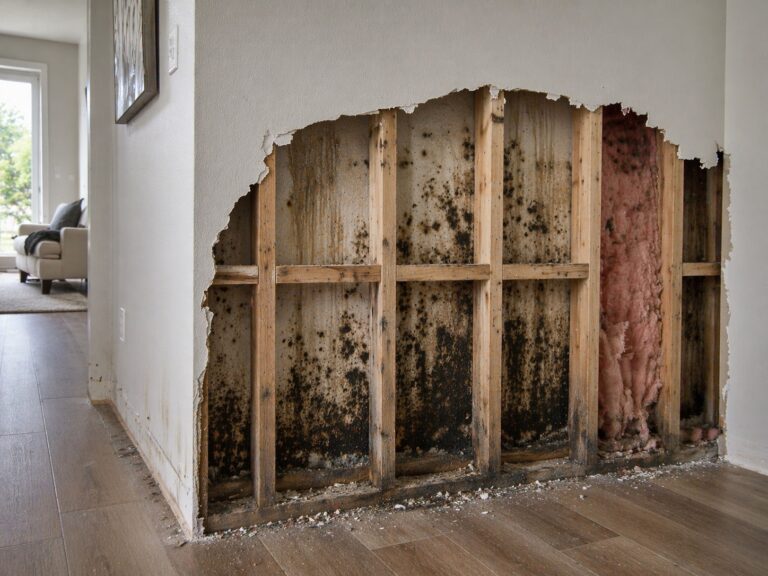
Hidden mold is one of the strongest signs that professional mold removal may be needed because the visible stain may only be the surface clue. Mold behind drywall, ceilings, flooring, cabinets, trim, or insulation is harder to inspect, contain, dry, and remove safely.
This often happens when moisture enters a hidden space and cannot dry quickly. Plumbing leaks, roof leaks, window leaks, shower leaks, appliance leaks, condensation, and basement seepage can all wet materials from the back side before mold becomes visible on the finished surface.
Wall and ceiling warning signs
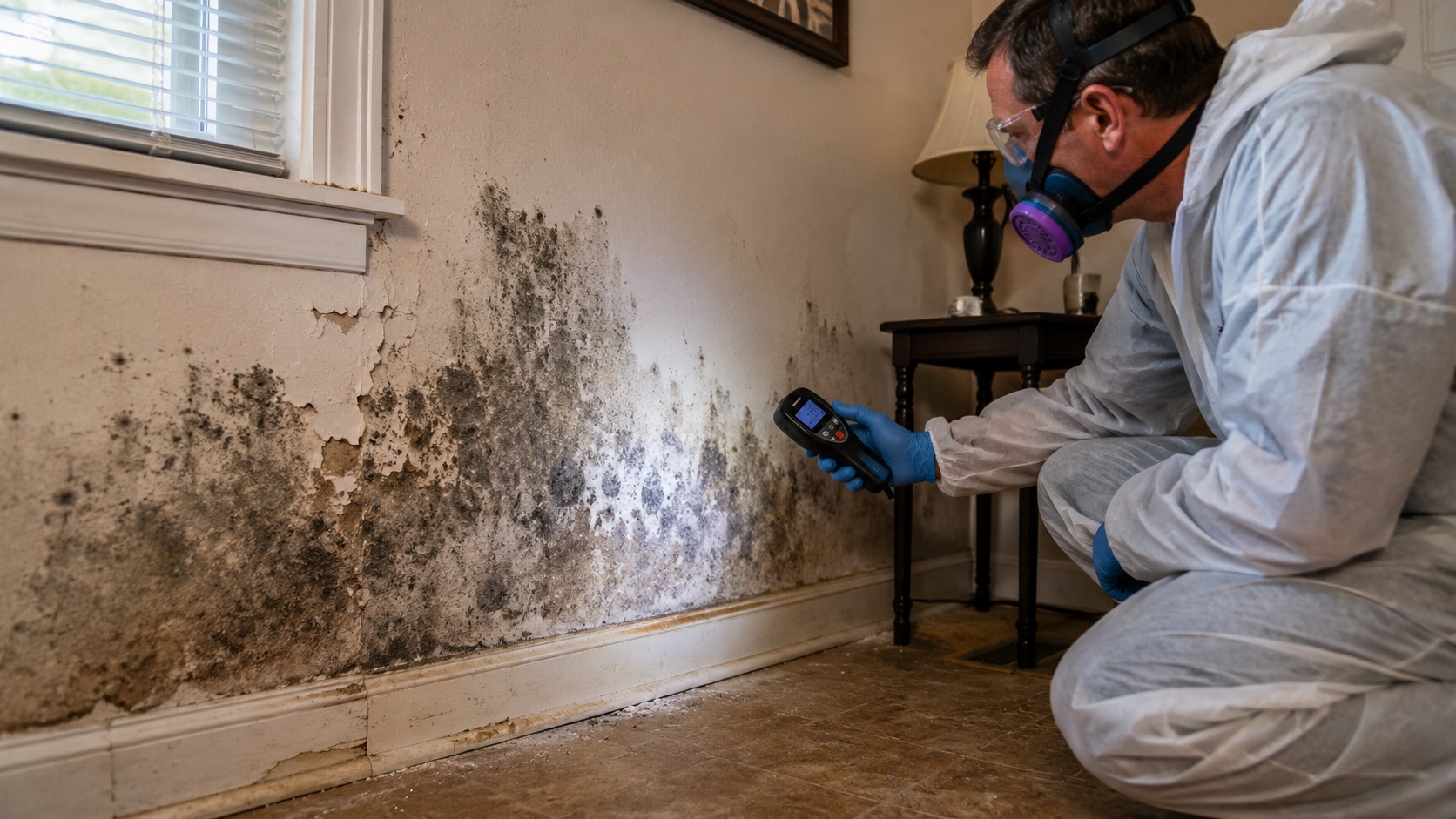
Professional help may be needed when mold appears with signs that the wall or ceiling material is wet, damaged, or contaminated below the surface. Warning signs include:
- Soft or spongy drywall
- Bubbling, peeling, or blistering paint
- Brown, yellow, gray, or dark water stains
- Mold appearing along seams, corners, or trim edges
- Ceiling stains below bathrooms, roofs, or plumbing lines
- Musty odor near one wall or ceiling area
- Mold returning after repainting or surface cleaning
Wall and ceiling mold should be treated carefully because the visible surface may not show what is happening inside the cavity. If mold is suspected behind drywall, avoid cutting into the area casually. Disturbing contaminated materials without containment can spread moldy dust and debris into cleaner rooms.
If the area is wet, soft, musty, or connected to a recent leak, stop before sanding, scraping, drilling, or cutting into the material.
For a more specific guide to this situation, see Signs of Mold Behind Walls.
Flooring, trim, and cabinet warning signs
Mold behind flooring, baseboards, and cabinets can also require professional removal because these areas often trap moisture. Water can run under trim, wick into cabinet bases, soak carpet padding, or collect beneath vinyl, laminate, or hardwood flooring before the homeowner sees the full problem.
Warning signs include:
- Swollen baseboards or trim
- Warped, cupped, or soft flooring
- Musty odors inside cabinets
- Dark staining near floor-wall joints
- Mold near sink cabinets, dishwasher areas, refrigerators, or bathroom vanities
- Flooring that feels soft or uneven after a leak
- Visible mold along flooring edges or under carpet
These signs matter because mold may be growing where air does not circulate and where cleaning products cannot reach. If the mold is under flooring, behind cabinets, or inside trim cavities, professional removal may be safer than repeated surface cleaning.
Mold Appeared After Water Damage or a Leak
Mold that appears after water damage is more concerning than mold caused by brief surface humidity. Leaks and floods can saturate porous materials, spread moisture into hidden cavities, and keep materials damp long enough for mold to grow.
Professional mold removal may be needed if mold appears after:
- A plumbing leak inside a wall
- A roof leak or ceiling leak
- A basement water intrusion event
- A dishwasher, refrigerator, washing machine, or water heater leak
- A toilet overflow or sewage backup
- Flooding from heavy rain or stormwater
- A slow leak that was not discovered right away
The main issue is not only the mold you see. Water may have traveled into drywall, insulation, subflooring, cabinets, framing, or ceiling cavities. If those materials were not dried completely, mold can continue growing even after the visible area is cleaned.
Any mold connected to sewage, floodwater, or contaminated water should be treated with extra caution. Those situations may involve contaminants beyond ordinary household mold and should not be handled like a simple bathroom cleaning task.
When mold follows water damage, the priority is to find and correct the moisture source, dry affected materials, and determine what can be cleaned versus what should be removed. For a broader explanation of home moisture patterns and prevention, see How to Find, Fix, and Prevent Moisture Problems in Homes.
Porous Materials Are Affected
Professional mold removal becomes more likely when mold affects porous or absorbent materials. These materials can hold moisture below the surface and may allow mold growth deeper than what is visible.
Drywall, insulation, carpet, and padding
Drywall, insulation, carpet, and carpet padding are common problem materials after leaks or humidity issues. A surface cleaner may improve the visible appearance, but it may not remove mold or moisture inside the material.
Drywall, insulation, and carpet padding are especially difficult because they can hold moisture below the visible surface. If drywall is soft, swollen, stained from behind, crumbling, or moldy after a leak, or if padding or insulation stayed wet, professional evaluation is usually wise.
Subfloors, framing, and structural materials
Mold on structural materials should be taken seriously because it means moisture has been present long enough to support growth. Mold on wood framing does not automatically mean the wood is structurally unsafe, but it does mean the source and duration of moisture should be investigated.
Professional help is especially important when mold appears with:
- Soft or weakened subflooring
- Dark staining on framing
- Musty odors under floors
- Wood that stays damp
- Visible mold on joists, studs, rafters, or sheathing
- Signs of rot, decay, swelling, or delamination
These materials may need controlled cleaning, drying, moisture correction, or repair. If the affected area is structural or difficult to access, professional removal and assessment are safer than simply spraying the surface.
Mold Is in a Basement, Crawl Space, or Attic
Mold in basements, crawl spaces, and attics often deserves more caution than mold on a small indoor surface. These areas usually involve hidden moisture sources, structural materials, insulation, poor airflow, or water intrusion from outside the living space.
Basement mold may be connected to wall seepage, floor moisture, foundation cracks, hydrostatic pressure, condensation, poor drainage, or high humidity. If mold appears on basement walls, stored items, flooring, framing, or insulation, the problem may be tied to water behavior around the foundation rather than simple surface dirt. For a more focused basement guide, see Signs of Mold Growth in Basements.
Crawl space mold is also a strong professional warning sign because crawl spaces often contain exposed soil, joists, subflooring, insulation, vapor barriers, vents, and drainage issues. Mold on crawl space wood can spread across framing and may be hard to clean safely without disturbing debris or insulation. For more detail, see Signs of Mold Growth in Crawl Spaces.
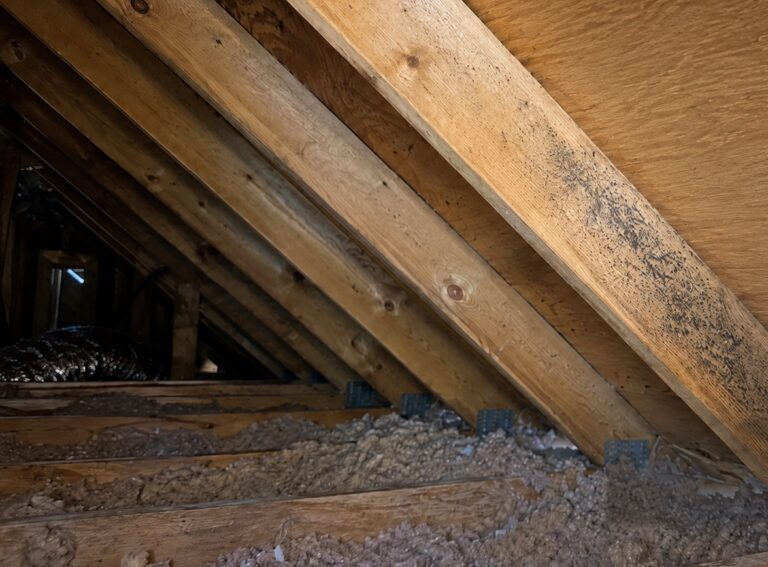
Attic mold may be connected to roof leaks, condensation, bathroom exhaust fans venting into the attic, blocked ventilation, damp insulation, or wet roof sheathing. These issues usually require more than wiping the surface. The moisture source has to be identified, and affected materials may need drying, cleaning, removal, or repair.
Professional mold removal may be needed when growth covers framing, sheathing, insulation, stored materials, or multiple surfaces, especially if the moisture source is still active.
Mold Is Near HVAC Systems or Air Pathways
Mold near HVAC systems, ductwork, returns, vents, air handlers, or condensate components should be handled carefully. HVAC systems move air through the home, so mold near air pathways can raise concerns beyond one isolated surface.
Professional evaluation may be needed if you notice:
- Visible mold around air vents or returns
- Musty odors when the HVAC system runs
- Mold near an air handler, evaporator coil, drain pan, or condensate line
- Damp duct insulation
- Condensation around ductwork
- Mold returning around registers after cleaning
Not every dirty vent is mold, and not every musty HVAC smell proves contamination. But if visible growth, moisture, and odor appear together near air pathways, the problem should not be treated like a small cosmetic stain.
HVAC-related mold can be connected to poor drainage, condensation, clogged lines, high humidity, dirty filters, poor airflow, or damp insulation. A mold professional, HVAC contractor, or both may be needed depending on the source. Avoid brushing, vacuuming, or blowing air across suspected mold near vents, returns, coils, or duct insulation until the moisture source and air pathway have been evaluated.
Materials Are Soft, Swollen, Crumbling, or Structurally Damaged
Soft, swollen, crumbling, or deteriorating materials are major warning signs. Mold on an intact surface is one thing. Mold combined with material damage suggests water has affected the structure or finish layer more deeply.
Watch for signs such as:
- Drywall that feels soft, spongy, or crumbly
- Baseboards that are swollen, separated, or stained
- Flooring that feels soft, warped, cupped, or uneven
- Cabinet bases that are swollen or sagging
- Ceiling material that is stained, sagging, or peeling
- Wood framing that is dark, damp, soft, or decaying
- Insulation that is wet, compacted, or musty
These signs matter because damaged materials may not be cleanable in place. They may need removal, drying, replacement, or structural assessment. If you clean the surface without addressing the damaged material underneath, mold may return and the material may continue to deteriorate.
This is especially important when mold appears after a leak or repeated moisture exposure. A professional can help determine whether the material is only stained, still damp, contaminated below the surface, or too damaged to save.
Someone in the Home Is More Sensitive to Mold or Indoor Air Irritants
Some households should use a lower threshold for professional mold removal. This does not mean every small mold patch is automatically an emergency or that this article replaces medical advice, but cleanup decisions should be more cautious when someone in the home is more sensitive to indoor air irritants.
Use extra caution if the home includes:
- Someone with asthma
- Someone with significant mold allergies
- Infants or very young children
- Older adults with respiratory vulnerability
- Someone with immune system concerns
- Someone whose symptoms seem worse in certain rooms or areas of the home
In these homes, the concern is not just whether the visible mold can be cleaned. The concern is whether the cleanup can be done without disturbing contaminated materials, spreading dust, or leaving hidden moisture behind. If symptoms are part of the concern, the homeowner should also speak with a qualified healthcare professional.
For broader information about mold exposure concerns and indoor air, see Mold Exposure and Indoor Air Quality: Complete Home Guide.
DIY Cleanup Would Require Tearing Out Materials
If removing the mold would require tearing out drywall, insulation, flooring, cabinets, ceiling materials, or duct-related components, the job is usually beyond ordinary DIY cleanup. Disturbing moldy materials can release dust, debris, and spores into nearby rooms if the area is not controlled properly.
This is especially true when the mold is suspected inside a wall cavity, above a ceiling, beneath flooring, behind built-in cabinets, or around insulation. The visible mold may only be one part of the problem, and opening the area without a plan can make cleanup harder.
Professional mold removal may be the safer choice when the job involves:
- Cutting out moldy drywall
- Removing wet or moldy insulation
- Pulling up flooring or carpet padding
- Opening ceiling cavities
- Removing cabinets to access hidden mold
- Cleaning mold from crawl space framing or attic sheathing
- Working near ductwork, air returns, or HVAC equipment
The issue is not only whether the homeowner has tools. It is whether the work can be done without spreading contamination, missing hidden moisture, or leaving affected material behind. If cleanup requires demolition, containment, drying equipment, disposal, or rebuilding decisions, it is usually time to consider professional help.
What to Do If Several Signs Apply
One warning sign may be enough to justify caution, but several signs together make professional mold removal much more likely. For example, a small surface patch in a bathroom may be manageable. But mold that is recurring, musty, near soft drywall, and connected to a previous leak is a different situation.
You should strongly consider professional help if several of these are true:
- The mold covers more than a small isolated area.
- The mold keeps returning after cleaning.
- There is a musty smell but no clear visible source.
- The mold may be behind walls, floors, ceilings, trim, or cabinets.
- The mold appeared after a leak, flood, or long-term dampness.
- Porous materials such as drywall, insulation, carpet padding, or subflooring are affected.
- The mold is in a basement, crawl space, attic, or HVAC-related area.
- Materials are soft, swollen, crumbling, or structurally damaged.
- Someone in the home is more sensitive to mold or indoor air irritants.
- Cleanup would require tearing out materials or disturbing hidden areas.
If you are still weighing limited cleanup against professional help, see When to Hire a Mold Remediation Professional. If the warning signs clearly point toward professional removal, the next step is choosing a qualified company carefully. See How to Choose a Mold Remediation Company.
FAQ
Is a musty smell a sign I need professional mold removal?
A musty smell does not automatically prove that professional mold removal is needed, but it can be a warning sign when the odor is persistent, localized, or connected to damp areas. If you smell mold but cannot find the source, there may be hidden growth behind materials or in a low-airflow space. Professional inspection may be helpful before materials are disturbed.
Does mold behind drywall always need a professional?
Mold suspected behind drywall usually deserves professional evaluation because drywall can hide moisture and mold growth inside the wall cavity. Opening moldy drywall without containment can spread contaminated dust and debris. Professional help is especially important if the drywall is soft, stained, swollen, musty, or affected by a leak.
Should I call a professional if mold keeps coming back?
Yes, recurring mold is one of the strongest signs that the underlying moisture problem has not been solved. Repeated cleaning may temporarily remove visible growth, but mold can return if a leak, humidity problem, condensation issue, or damp material remains. A professional may be needed to identify the source and determine whether hidden materials are affected.
Is basement mold a professional removal job?
Basement mold may require professional removal when it is widespread, recurring, connected to water seepage, growing on porous materials, or affecting framing, insulation, stored items, or finished walls. A small surface patch may not always require full remediation, but basement mold often points to moisture problems that need more than surface cleaning.
Can mold in one room still need professional removal?
Yes. Mold limited to one room may still need professional removal if it is behind walls, under flooring, near HVAC pathways, connected to a leak, or growing on porous or damaged materials. The number of rooms matters less than the size, source, material, and whether cleanup would disturb hidden mold.
What should I do before calling a mold removal company?
Before calling, note where the mold appears, when you first noticed it, whether there was a leak or moisture event, whether the mold keeps returning, and whether there is a musty odor. Do not tear open walls or disturb hidden materials casually. If possible, stop the water source, keep the area dry, and document visible signs with photos.
Key Takeaways
- Small, isolated surface mold may sometimes be handled without professional removal if the moisture source is fixed.
- Mold that is large, spreading, recurring, hidden, or musty is more likely to need professional help.
- Mold after leaks, floods, sewage backups, or long-term dampness should be treated with extra caution.
- Porous materials such as drywall, insulation, carpet padding, and subflooring are harder to clean completely.
- Basement, crawl space, attic, and HVAC-related mold often involve deeper moisture or building-system issues.
- Soft, swollen, crumbling, or structurally damaged materials are warning signs that surface cleaning may not be enough.
- If cleanup requires tearing out materials, professional containment and removal may be safer.
Conclusion
You may need professional mold removal when mold is large, recurring, musty, connected to water damage, growing on porous materials, near HVAC pathways, or suspected behind walls, ceilings, floors, cabinets, or insulation. Small, visible, isolated surface mold may sometimes be manageable after the moisture source is fixed, but multiple warning signs change the decision.
The safest next step is to match the response to the severity of the signs. If cleanup requires containment, removal of affected materials, drying, moisture correction, or careful evaluation of hidden areas, professional mold removal is usually a better choice than repeated surface cleaning.