Signs of Mold Growth Near Water Heaters
Mold growth near a water heater is usually a sign that moisture is staying in the area longer than it should. The moisture may come from a slow water heater leak, a damp utility room, poor airflow, condensation, wet flooring, or stored items that trap humidity around the tank. The important thing is not just whether the surface looks dirty. It is whether the area is staying damp enough for mold to keep growing.
Water heaters are often installed in places where mold can stay hidden for a while: basements, garages, laundry rooms, closets, mechanical rooms, and tight utility spaces. These areas may have limited ventilation, unfinished surfaces, nearby plumbing lines, floor drains, cardboard boxes, wood trim, drywall, or stored fabric. If moisture collects around the heater base or nearby walls, mold can begin developing before the homeowner notices a major leak.
This article focuses on warning signs of mold growth near water heaters, not full leak repair or mold remediation. If you already see active water around the tank, start with the visible warning signs in signs of water leaks around water heaters. If the main concern is visible mold, musty odor, staining, or damp materials near the appliance, the signs below can help you decide what to check next.
Why Mold Grows Near Water Heaters
Mold needs moisture, a surface it can grow on, and enough time for the damp condition to persist. A water heater area can provide all three when a small leak, condensation issue, or damp surrounding environment goes unnoticed. The tank itself is usually metal, so mold is more likely to appear on nearby materials than on the tank shell. Drywall paper, wood trim, baseboards, cardboard, dust, insulation, flooring underlayment, and stored items are more vulnerable than the metal appliance.
The most common reason mold appears near a water heater is repeated dampness. A slow leak may not create a large puddle at first. Instead, it may wet the same small area of flooring, the back side of a baseboard, the edge of nearby drywall, or a piece of cardboard stored next to the heater. Over time, that damp zone can become a mold-prone area.
Water heater locations also matter. A tank in an open garage with good airflow may dry faster than one inside a cramped closet. A heater in a basement corner may be surrounded by cooler surfaces, higher humidity, and less air movement. A tank in a laundry room may sit near other moisture sources, including washer hoses, dryer vent issues, floor drains, or damp stored items. For a broader look at how hidden household moisture develops, the sitewide guide on how to find, fix, and prevent moisture problems in homes gives the larger moisture-control context.
Mold near a water heater does not always mean the tank itself is failing. The source may be a valve, supply connection, drain valve, temperature and pressure relief line, nearby plumbing pipe, floor drain backup, condensation from another appliance, or general room humidity. Because water heaters connect to the broader plumbing system, recurring moisture near the tank can also become part of a larger plumbing leak damage pattern if nearby floors, walls, or trim stay wet.
Visible Signs of Mold Around a Water Heater
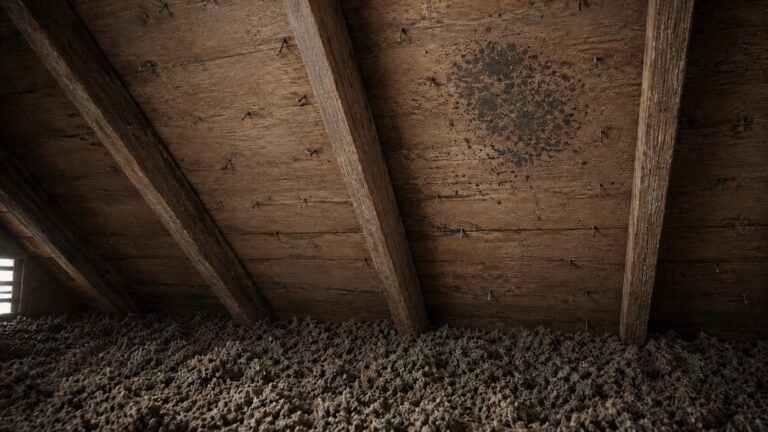
The most obvious sign is visible growth near the water heater or on nearby materials. Mold may appear as small specks, blotchy patches, fuzzy growth, powdery discoloration, or irregular stains. The color can vary. Homeowners often notice black, gray, green, brown, or dark olive spotting, but color alone does not identify the mold type or severity.
Near water heaters, visible mold commonly appears low to the ground because leaks and condensation often collect near the floor first. Look around the base of the tank, along the wall-floor joint, behind the heater, and on any nearby baseboards or trim. If the heater is in a closet, inspect the lower corners of the closet walls and the back wall behind the tank as much as you can see safely.
One warning pattern is staining that starts near the water heater base and spreads outward. This may show up as dark spotting on drywall, discolored flooring, stained trim, or mold on dust that has collected around the appliance. If the stains follow the floor line or appear in areas that stay damp after the rest of the room dries, moisture is likely part of the problem.
Another sign is mold on nearby stored items. Cardboard boxes, paper products, fabric bags, spare towels, wood shelving, and stored clothing can develop mold when they sit near a damp water heater area. Sometimes the first visible mold is not on the wall or floor at all. It appears on a box or stored item touching the damp floor near the tank.
Pay attention to growth behind or beside the water heater. Tight clearances can hide early mold because the most humid area may be where you cannot easily see. If you notice a musty smell, dark staining at the edge of the heater area, or mold on materials near the front, there may be more growth behind the tank or along the back wall.
Musty Odors Near the Water Heater
A musty smell near a water heater can be an early warning sign of mold or damp materials, especially if the odor is strongest close to the appliance. Mold does not always appear in an obvious patch right away. Sometimes the first clue is an earthy, stale, damp, or musty odor that seems to come from the water heater closet, utility corner, or basement mechanical area.
This odor is more concerning when it returns after cleaning or airing out the room, especially when it is strongest near the floor, behind the tank, around nearby trim, or near stored items. A temporary smell from dust or storage may fade, but a recurring musty odor usually deserves a moisture check.
In a small water heater closet, odor can build up quickly because air movement is limited. The smell may be noticeable when the closet door is opened, even if the visible mold is hidden behind the tank or along the lower wall. In basements, the odor may blend with general basement dampness, making it harder to isolate. In that case, the homeowner should compare the water heater area with the rest of the room. If the smell is strongest near the tank, the water heater zone deserves closer inspection.
A musty odor by itself does not prove mold is growing. It can also come from damp dust, wet cardboard, old stored materials, floor drain odors, or general humidity. However, when musty odor appears together with staining, damp flooring, rust, swollen trim, or recurring moisture, mold becomes much more likely.
Moisture Clues That Support a Mold Concern
Mold signs near a water heater matter most when they appear with moisture clues. A single dark spot on dust may not prove much, but dark spotting combined with damp flooring, swollen trim, rust, water staining, or recurring odor suggests the area is staying wet long enough for mold to develop.
The floor around the water heater is one of the first places to check. If the flooring feels damp, looks darker than the surrounding area, or has a ring of staining around the tank base, moisture may be collecting there repeatedly. This is especially important on wood subfloors, laminate, vinyl seams, carpeted platforms, or unfinished basement flooring where moisture can spread beneath the visible surface.
Rust and corrosion can also support the moisture pattern. Rust on the tank base, nearby fittings, the drain valve, or metal pan does not automatically prove mold is present. However, rust next to damp trim, dark spots, or musty odor suggests that water has been active in the area. If the water heater itself shows signs of leaking, corrosion, or recurring moisture, the next step is usually to inspect the appliance and nearby plumbing more carefully. A separate guide on how to detect slow water heater leaks is the better place for a step-by-step leak check.
Baseboards and lower wall trim are also useful warning areas. When moisture spreads outward from a water heater, it often reaches the wall-floor joint. Trim may swell, separate from the wall, stain along the bottom edge, or develop dark spotting where it touches the floor. Painted trim can hide moisture for a while, so bubbling paint or soft wood near the tank should not be ignored.
Drywall near the floor may show early moisture before the homeowner sees widespread mold. Watch for brown water stains, gray shadowing, soft spots, bubbling paint, peeling texture, or dark speckles near the base of the wall. Mold may grow on the paper facing of drywall if the material stays damp. If drywall feels soft, crumbly, or swollen, the issue has moved beyond a simple surface stain.
Stored items can reveal hidden dampness. Cardboard boxes, paper bags, cloth items, wood scraps, or stored household supplies near the water heater may show mold before the wall does. If the side of a box facing the tank is spotted or smells musty, the area may have a localized moisture problem. This is one reason water heater closets and basement utility areas should not be packed tightly with absorbent storage materials.
Recurring cleanup failure is another major clue. If you wipe away dark spots near the water heater and they come back in the same area, the surface is probably being re-wetted. In that situation, the main problem is not the cleaning method. It is the moisture source. This is the same principle behind many recurring moisture problems: visible symptoms keep returning when the damp condition is not corrected. For broader troubleshooting, see why moisture problems keep returning.
Common Places Mold Appears Near Water Heaters
Mold near a water heater usually follows the moisture path. It is not always centered on the front of the tank where the homeowner can see it easily. The most important areas are often behind the heater, beside the tank, along the floor, or on nearby materials that trap moisture.
Behind the Water Heater
The wall behind the water heater is one of the most common hidden areas for mold signs. Air movement is limited, the space is hard to clean, and small leaks or condensation may go unnoticed. If the front of the area smells musty but looks mostly clean, the back wall may still have staining or growth.
Homeowners should not move or disconnect a water heater just to inspect behind it. Water heaters may involve gas, electricity, hot water, venting, and plumbing connections. Instead, inspect only what can be seen safely with a flashlight. If the back side appears stained, damp, or moldy, a plumber, restoration contractor, or mold professional may need to evaluate the area safely.
Around the Tank Base
The base of the water heater is another high-risk area because small amounts of water collect there first. Mold may not grow directly on the metal tank, but it can grow on dust, nearby flooring, wooden platforms, drywall edges, or debris around the base. A drain pan can also hide moisture if it contains standing water or sludge.
If staining around the base appears together with active dampness, the source should be checked before the area is cleaned repeatedly. For visible water symptoms, use signs of water leaks around water heaters to separate mold clues from direct leak clues.
Along Baseboards and Wall-Floor Joints
Water often travels along the lowest edge of a room. That makes baseboards, wall-floor seams, and trim joints important mold inspection points. Mold may appear as dark speckling at the bottom of the baseboard, staining along caulk lines, or a musty smell coming from the lower wall edge.
In finished spaces, this can be more serious than it looks. Trim can conceal damp drywall edges, wet framing, or moisture under flooring. If the baseboard is swollen, pulling away from the wall, or soft to the touch, the moisture may be affecting more than the surface.
On Drywall Near the Heater
Drywall near a water heater can develop mold when moisture wicks upward from the floor or when humid air stays trapped behind the tank. Mold may appear as scattered specks, smudged gray patches, or darker staining near the lower wall. Paint may bubble or peel if the drywall has been wet repeatedly.
Drywall mold should be treated carefully because the visible surface may not show the full extent of moisture. If the drywall is soft, crumbling, swollen, or smells musty even after surface cleaning, the material may be wet inside or on the back side.
On Flooring and Flooring Seams
Flooring around a water heater can hide moisture beneath the surface. Vinyl, laminate, engineered wood, carpet, and underlayment can trap water underneath, especially if the leak is slow and repeated. Mold may appear at seams, edges, transitions, or low spots where moisture remains trapped.
If flooring around the water heater has been wet, cleaning the visible surface is not always enough. The floor may need drying from below or material removal if moisture has reached the subfloor. For that recovery stage, the better supporting article is how to dry floors after water heater leaks.
On Stored Items Near the Water Heater
Cardboard, fabric, paper, wood, and stored household items can grow mold quickly when they sit near damp flooring or humid air. This is common in basements, garages, and utility rooms where the water heater area doubles as storage space.
If boxes near the heater smell musty or show spotting on the bottom, remove dry items from the area and check whether the floor below them is damp. Do not shake, brush, scrape, or disturb moldy materials indoors. If stored items are heavily moldy, they may need to be bagged and discarded rather than cleaned.
How to Tell Mold Signs From Dirt, Rust, or Mineral Stains
Not every dark mark near a water heater is mold. Water heater areas often collect dust, rust flakes, mineral deposits, sediment, old stains, and general utility-room grime. The goal is not to identify mold species by sight. The goal is to recognize when a stain behaves like moisture-related growth instead of ordinary dirt or corrosion.
Mold often appears irregular. It may show up as scattered speckles, patchy clusters, fuzzy growth, or dark spotting that follows damp materials. It may grow on drywall paper, wood trim, cardboard, dust, insulation, or flooring edges. It often appears where moisture lingers rather than where people regularly touch or clean.
Dirt usually looks more uniform and wipes away more predictably. If a dark smudge is only loose dust, it may clean off without odor, dampness, or recurring staining. However, dirt and mold can overlap because dust gives mold something to grow on when moisture is present. That means a dusty water heater closet can become a mold-prone area if it stays damp.
Rust is usually orange, reddish-brown, or brown and is connected to metal parts, corrosion, or old water contact. Rust around the tank base, pipe fittings, or drain pan may point to moisture, but the rust itself is not mold. The concern increases when rust appears together with musty odor, damp drywall, dark spotting on nearby trim, or staining that keeps spreading.
Mineral stains are often chalky, crusty, white, tan, or hard-edged. They may appear where water evaporates and leaves deposits behind. These stains can occur near fittings, drain lines, or areas where hard water has repeatedly dried. Like rust, mineral staining does not prove mold, but it can show that water has been present.
Texture can help, but it is not foolproof. Mold may look fuzzy, velvety, powdery, smeared, or spotted. Rust may look crusty or flaky. Mineral deposits may feel hard or chalky. Dirt may smear or wipe away. But homeowners should avoid aggressive scraping, sanding, or brushing suspected mold, especially in enclosed spaces, because disturbing growth can spread particles into the air.
Odor is another clue. A musty smell near a stained water heater area makes mold more likely, especially when the odor returns after cleaning. Rust and mineral deposits may indicate past water, but they do not usually create a strong musty smell by themselves. If the area smells damp, earthy, or stale, look for moisture behind the visible stain.
The strongest clue is recurrence. If a stain is cleaned and comes back in the same spot, moisture is probably still present. That does not prove the water heater tank is failing, but it does mean the area needs a moisture-source check rather than repeated surface cleaning.
When Mold Near a Water Heater Suggests a Bigger Problem
A small amount of surface mold on a removable item near a water heater is one level of concern. Mold that keeps returning, spreads onto building materials, or appears with active dampness is more serious. The location matters because water heaters sit near plumbing, utilities, flooring, walls, and sometimes finished living spaces.
One warning sign is active water. If the floor is wet, the drain pan contains water, a fitting is dripping, or the tank base is damp, the moisture source should be addressed before focusing on cleanup. Mold control will not last if the water heater area keeps getting wet. If the leak is slow or hard to confirm, the article on why water heater leaks keep returning can help explain why repeated leak symptoms may continue after partial repairs.
Another warning sign is soft or damaged building material. Mold on removable dust or a cardboard box is different from mold on wet drywall, swollen baseboards, softened flooring, or water-damaged wood. Once moisture enters porous materials, the visible surface may not show the full problem. The mold may be on the back side of drywall, under flooring, behind trim, or inside a wall-floor joint.
Growth that spreads beyond the immediate water heater area also deserves attention. If mold appears on multiple walls, across a large section of flooring, on nearby shelving, or throughout a utility closet, the issue may involve more than a small localized drip. Poor ventilation, chronic humidity, previous flooding, or hidden moisture behind materials may be contributing.
Repeated mold after cleaning is another sign of a bigger issue. If the same spot keeps returning, the source may be a slow leak, damp subfloor, concealed wall moisture, poor airflow, or wet storage materials. The pattern matters more than the stain itself: growth that returns in the same place usually means the area is being re-wetted.
Tank corrosion can also raise the concern level. Rust, staining, or moisture around the bottom of the tank may indicate age-related deterioration, a drain valve issue, or another water heater problem. Mold near the heater does not automatically mean the tank must be replaced, but corrosion plus moisture plus mold should trigger a closer plumbing or water heater evaluation.
Pay attention to nearby flooring. Flooring can trap water beneath the surface, especially around seams, edges, and transitions. If the floor feels soft, buckled, spongy, swollen, or unusually cold and damp, the moisture may have moved below the visible surface. At that point, the issue is no longer just mold on the surface near the tank.
The size of the moldy area also matters. Small, localized surface growth may be manageable after the moisture source is corrected, depending on the material and the homeowner’s comfort level. Larger areas, recurring mold, mold on porous building materials, or mold that appears near gas or electrical water heater components should be evaluated more carefully.
What Homeowners Should Do Next
The first step is to avoid treating the mold as only a cosmetic issue. Mold near a water heater is a clue that moisture has been present. Before repeated cleaning, look for the condition that allowed the growth to appear.
Start with a safe visual check. Look around the tank base, drain pan, nearby valves, pipe connections, wall-floor joints, baseboards, and flooring. Use a flashlight if needed, but do not disconnect pipes, move the water heater, open sealed appliance components, or disturb gas, electrical, or venting parts. If the water heater is gas-fired and you smell gas, hear hissing, or suspect venting problems, leave the area and contact the gas utility, emergency service, or a qualified professional rather than continuing the inspection. If there is active leaking, corrosion, or a suspected tank problem, call a plumber.
Move dry stored items away from the water heater area. Cardboard, fabric, paper, wood scraps, and storage bins can block airflow and hide moisture. Keep the heater area accessible so future leaks, odors, or stains are easier to spot. If stored items are already moldy, avoid shaking or brushing them indoors.
Check whether nearby materials are still damp. A basic visual inspection may be enough for obvious wet spots, but hidden moisture can remain inside trim, drywall, or flooring. If you use a moisture meter, compare the suspected area with a dry area of the same material nearby instead of relying on one isolated reading. A guide to moisture meters for hidden water damage can help you understand what these tools are useful for and where their limits are.
Document the area before cleanup. Take photos of staining, visible growth, damp flooring, rust, swollen trim, and any suspected leak source. This helps you compare whether the problem is spreading or returning. Documentation is also useful if you later need a plumber, mold professional, water damage contractor, landlord, property manager, or insurance discussion.
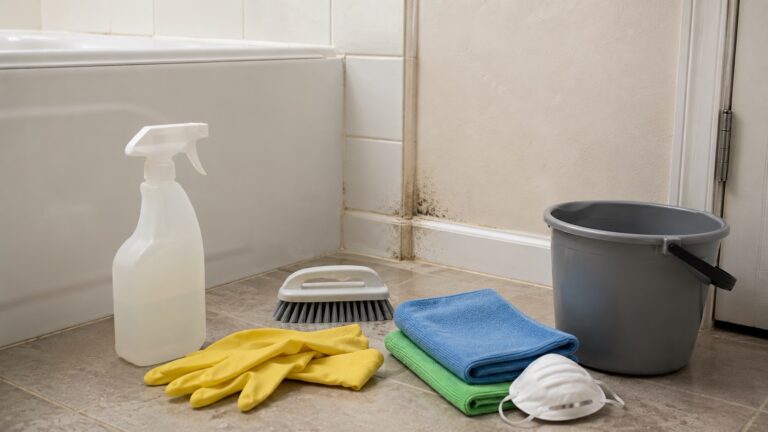
If the mold is small and limited to a nonporous surface, some homeowners may be comfortable cleaning after the moisture source is corrected. Wear appropriate protection, avoid mixing cleaning chemicals, avoid harsh scrubbing in enclosed spaces, and do not assume the problem is solved if nearby materials remain damp. Mold on porous materials such as drywall, insulation, carpet padding, cardboard, or wood may require removal or professional evaluation depending on the extent of moisture and growth.
Call a professional when the mold covers a larger area, keeps returning, appears on wet drywall or flooring, gives off a strong musty odor, or is located where the water heater cannot be safely inspected. A plumber should handle suspected water heater leaks or failing components. A mold remediation or water damage professional may be needed when mold has spread into building materials. For the broader mold cleanup framework, use how to remove mold permanently as the parent guide.
After the immediate issue is addressed, think about prevention. Keep the area clear, improve airflow where possible, avoid storing absorbent items next to the tank, and monitor the floor and wall edges after repairs. If the moisture came from a small leak, the guide on how to prevent mold after minor water leaks can help with the next stage of prevention.
Frequently Asked Questions About Mold Near Water Heaters
Is mold near a water heater always caused by a leak?
No. A leak is one of the most common reasons mold appears near a water heater, but it is not the only possible cause. Mold can also develop because of poor airflow, high humidity, condensation, damp stored items, nearby plumbing leaks, floor drain issues, or old water damage that never fully dried. The water heater area should still be inspected carefully because recurring mold usually means moisture is staying in the area.
Can a slow water heater leak cause mold without visible standing water?
Yes. A slow leak may dampen the same small area repeatedly without leaving an obvious puddle. Moisture can soak into drywall edges, baseboards, wood platforms, flooring seams, dust, cardboard, or stored materials before visible mold appears.
What does a musty smell near a water heater mean?
A musty smell near a water heater often means something nearby is damp, such as cardboard, dust, trim, drywall, flooring, or the wall behind the tank. The smell is more concerning when it is strongest near the heater, returns after cleaning, or appears with staining, rust, damp flooring, or visible dark spots.
Is black staining around a water heater always mold?
No. Black or dark staining can come from mold, dirt, dust, old water stains, corrosion residue, or other debris. Color alone does not identify mold. Mold is more likely when the dark area has an irregular or fuzzy appearance, appears on damp materials, smells musty, spreads over time, or returns after cleaning.
Can mold grow behind a water heater where I cannot see it?
Yes. The space behind a water heater often has limited airflow and may be difficult to inspect. If moisture collects behind the tank or along the back wall, mold can grow on drywall, trim, dust, wood, or nearby stored items. Homeowners should not move or disconnect a water heater just to inspect behind it. If there are strong odor, visible edge stains, active dampness, or suspected hidden growth, professional inspection may be safer.
Should I replace my water heater if mold is growing nearby?
Not automatically. Mold near a water heater means there is a moisture problem, but the moisture may come from the tank, a valve, a pipe connection, nearby plumbing, condensation, or the surrounding room. Replacement becomes more likely when the tank is actively leaking, badly corroded, old, or repeatedly causing moisture problems. A plumber can determine whether the appliance itself is the source.
When should I call a professional for mold near a water heater?
Call a professional if the mold covers a larger area, keeps returning, appears on wet drywall or flooring, is behind the tank where you cannot safely inspect it, or appears with active leaking or tank corrosion. Call a plumber for suspected water heater leaks. Call a mold remediation or water damage professional if porous building materials are wet, moldy, or deteriorating.
What the Signs Usually Mean
- Mold near a water heater usually points to lingering moisture, not just a dirty surface.
- The most common signs include dark spotting, musty odor, damp flooring, stained trim, and mold on nearby stored items.
- A water heater leak can cause mold even when there is no obvious standing water.
- Black staining is not always mold, but staining with odor, dampness, or recurrence should be taken seriously.
- Mold that returns after cleaning usually means the moisture source has not been corrected.
- Do not disconnect, move, or alter a water heater to inspect hidden areas yourself.
- Professional help is appropriate when mold is widespread, materials are wet, or the appliance may be leaking.
Final Check Before You Clean
Before cleaning, confirm whether the area is still damp. Look for active water, recurring odor, stained trim, soft drywall, damp flooring, moldy storage items, or rust near fittings and the tank base. If those signs are present, cleaning the surface without correcting the moisture source will not solve the problem.
Keep the water heater area accessible, avoid storing absorbent materials against the tank, monitor the floor and wall edges after cleanup, and call the right professional when leaks, wet building materials, gas or electrical concerns, or widespread mold are present.