
Why Roof Leaks Return After Repairs
A roof leak that returns after a repair is frustrating because it makes the first repair feel pointless. The ceiling stain comes back, the drip appears during the next storm, or the attic insulation gets wet again even though the roof was supposedly fixed. In many cases, the problem is not that every repair was useless. It is that the true water path was not fully identified, the repair only covered a surface symptom, or another nearby roof weakness was missed.
Recurring roof leaks are part of a larger pattern of moisture problems that keep returning. Water rarely follows the simple path homeowners expect. It can enter at one roof detail, move along decking or rafters, soak insulation, and finally appear on the ceiling several feet away. If the repair targets the visible stain instead of the actual entry point, the leak can return as soon as the right storm conditions happen again.
The goal is to separate three possibilities: the roof is still actively leaking, the first repair fixed only part of the problem, or old wet materials are still showing signs of the previous leak. That distinction helps you decide whether to monitor, reinspect, or call for deeper diagnosis.
Why a Roof Leak Can Come Back After Being Repaired
A roof leak usually comes back for one of three reasons: the original source was misidentified, the repair did not correct the full water path, or there is more than one weak point in the roof system. Sometimes the repair did stop one problem, but another nearby leak source continues to let water in during heavy rain or wind-driven storms.
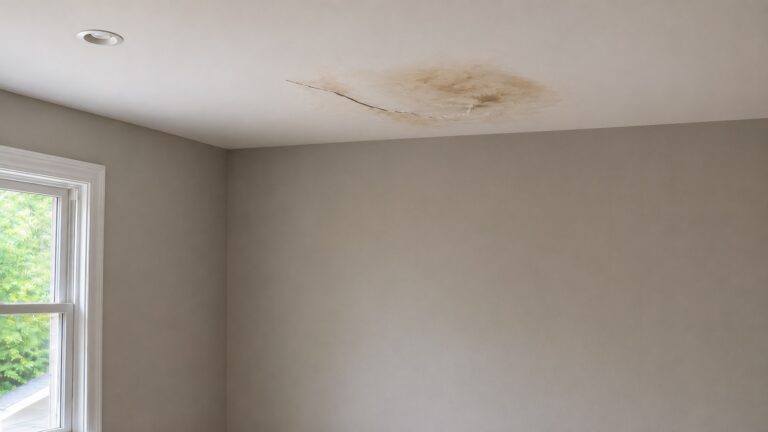
Roof leaks are difficult because the visible interior symptom is often not directly below the exterior failure. A stain in a bedroom ceiling might come from a vent boot, roof valley, flashing detail, nail hole, lifted shingle, or damaged underlayment several feet uphill. If the repair focuses only on the roof area above the stain, it may miss the real source.
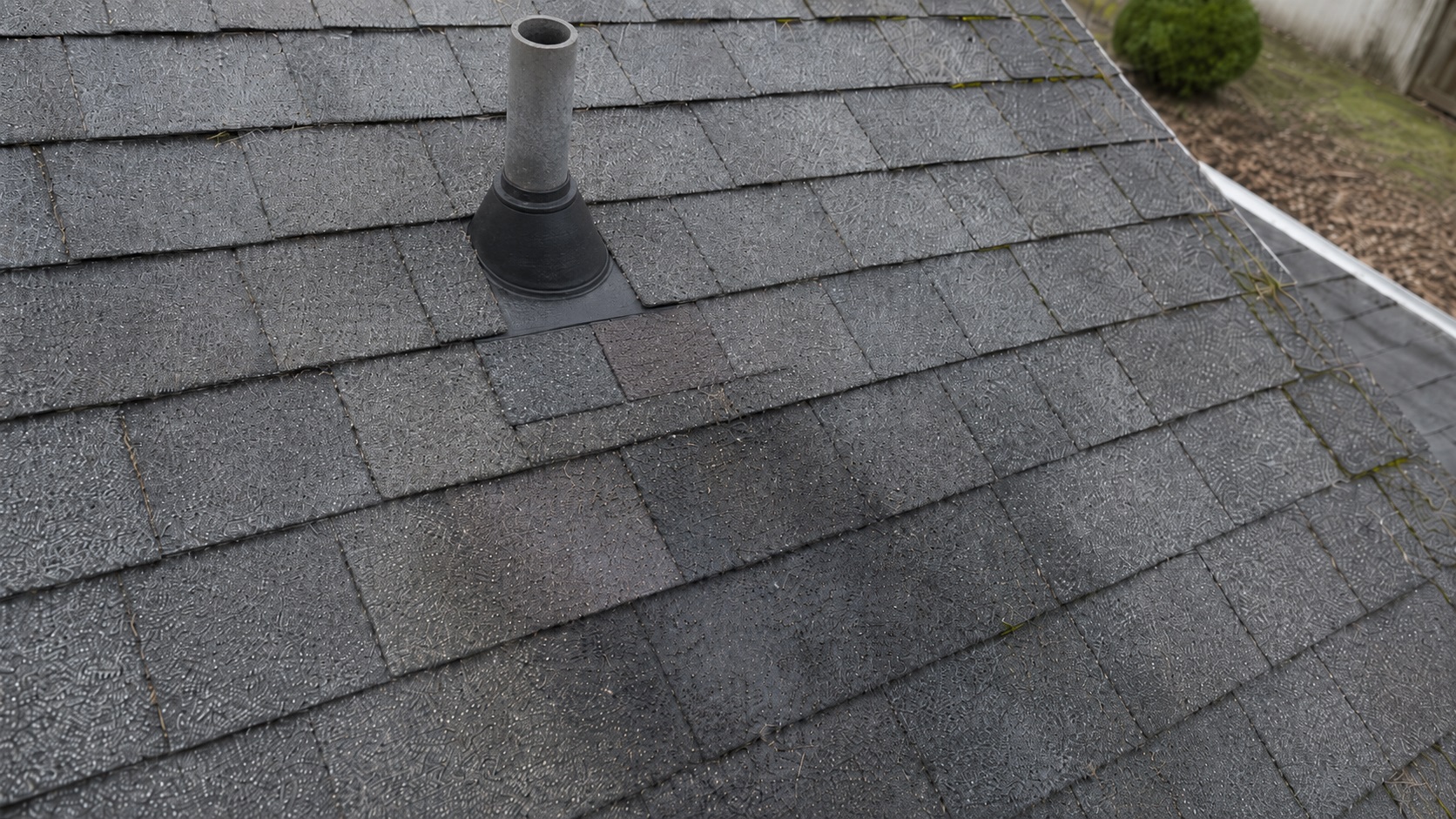
Another common issue is a repair that covers the symptom without correcting the cause. Roof cement, caulk, or patching compound may temporarily slow water, but those materials do not necessarily fix cracked flashing, failed pipe boots, damaged shingles, deteriorated underlayment, or soft roof decking. The leak may stop during light rain and return during the next storm with enough water volume to expose the weakness.
Old moisture can also confuse the situation. Wet insulation, damp drywall, and stained ceiling materials may continue showing symptoms after a roof repair. That does not always mean the roof is still leaking, but new wetness after rain is a different matter. The key is to compare timing, location, and whether the area actually gets wet again.
A returned roof leak should be treated as a diagnostic problem, not just a patching problem. The real question is not only where the stain is, but where water entered and which roof detail failed to control it.
The Original Leak Source Was Misidentified
One of the most common reasons roof leaks return after repairs is that the original source was never correctly found. The repair may have been made near the visible ceiling stain, but water may have entered somewhere else and traveled before appearing indoors.
Water follows gravity, but it also follows materials. It can run along roof decking, drip onto rafters, travel across truss members, soak insulation, move along drywall seams, and finally show up in a location that does not match the actual roof entry point. This is why a ceiling stain can be misleading, especially in homes with complex roof lines, vaulted ceilings, attic insulation, or multiple roof features above the same room.
For example, a stain near an interior wall may look like it comes from the roof directly above that wall. In reality, water may be entering higher up the slope around a vent pipe, then running down the underside of the roof deck before dropping onto insulation. A repair made at the lower area may not touch the true source.
The same thing can happen with roof valleys, chimneys, vents, skylight-adjacent areas, wall intersections, and flashing details. If the first repair did not account for roof geometry and water movement, the leak can return even if the patched area looks improved.
Misidentified leaks are especially common when repairs are made during dry weather without confirming the water path. A roof may look damaged in one area while the active leak is coming from another. A good diagnosis looks for alignment between the exterior feature, attic evidence, interior staining, and storm timing.
The Repair Only Covered the Surface Symptom
Surface patching is another major reason roof leaks return. A visible crack, gap, nail head, or lifted edge may be covered with caulk or roof cement, but the actual failure may be deeper in the roof system. If water is entering behind flashing, under shingles, around a boot, or through deteriorated underlayment, a surface patch may only delay the leak.
Roof cement can be useful as a temporary emergency measure in some situations, but it is not the same as correcting a failed roof detail. It can crack, shrink, separate from dirty or wet surfaces, and become brittle as it ages. When it fails, water often returns through the same path or finds a new path around the patch.
Heavy visible sealant around a roof feature is often a clue that the area has leaked before. If a vent, flashing edge, chimney transition, or pipe boot has several layers of patching material, the previous repair may have addressed the symptom rather than the system. More sealant does not necessarily make the repair better. In some cases, it hides the real failure point and makes later diagnosis harder.
A surface patch is most likely to fail when the underlying material still moves, flexes, rusts, cracks, or separates. If flashing is lifted, a pipe boot is split, shingles are brittle, or the deck below is soft, the patch is being asked to do the work of a proper repair. That is why leaks often return after the first heavy rain instead of during light drizzle.
Flashing Problems Were Patched Instead of Corrected
Flashing problems are one of the most common reasons roof leaks return after repairs. Flashing is supposed to redirect water away from vulnerable transitions, such as chimneys, walls, valleys, vents, dormers, and roof edges. When flashing is loose, rusted, poorly integrated, bent, or separated from the roof surface, water can continue entering even if the area has been covered with sealant.
A recurring flashing leak often looks like a repair that worked briefly, then failed again during the next strong storm. This happens because the patch may have covered a visible gap without correcting how water moves through the flashing detail. If water is still getting behind the flashing, traveling under shingles, or entering through an exposed fastener, the leak can return as soon as runoff reaches that weak point.
Flashing should not depend entirely on surface caulk to keep water out. Caulk can help with small details, but the flashing itself has to be positioned and integrated correctly. If the flashing edge is lifted, if step flashing is missing, if counterflashing is separated, or if metal has corroded, adding more sealant may only hide the problem temporarily.
Signs that flashing may still be involved include stains near walls, chimneys, roof transitions, valleys, or vents; old roof cement around flashing edges; rust marks; lifted metal; or leaks that return after wind-driven rain. If the symptoms point to flashing, it helps to compare them with signs roof flashing is failing. For a deeper explanation of the water-control mechanics, see why roof flashing failures cause leaks.
Roof Valleys or Penetrations Were Missed
Some roof leaks return because the first repair focused on a general roof area but missed a specific high-risk feature. Roof valleys and roof penetrations are two of the most common examples. Both can leak in ways that look like ordinary shingle problems from inside the home.
A roof valley leak may show up as a ceiling stain below a roof-plane intersection, but the visible stain may not make the valley obvious from indoors. Valleys carry concentrated runoff from two roof slopes, so debris buildup, worn shingles, rusted valley metal, or damaged underlayment can create leaks that only appear during heavy rain. If a repair only patched nearby shingles while the valley channel continued to fail, the leak can return.
Roof penetrations create a different recurring-leak pattern. Plumbing vent pipes, exhaust caps, roof vents, flue pipes, and other openings interrupt the roof surface. If a pipe boot is cracked, flashing is lifted, fasteners are rusted, or sealant around the opening has failed, water can enter around the penetration. A patch on nearby shingles will not stop water that is entering through the boot or flashing around the opening.
This is why recurring leaks should be evaluated by roof feature, not just by ceiling stain location. If moisture appears below a roof intersection, compare the pattern with signs roof valleys are failing. If the leak appears below a vent, pipe, exhaust cap, or other roof opening, compare it with signs roof penetrations are leaking.
Missing one of these details does not always mean the first repair was careless. Roof leaks can be difficult to trace, especially when water travels before it becomes visible. But when a leak returns after repair, valleys and penetrations should be reconsidered because they are frequent sources of repeat moisture problems.
Water Was Traveling Before It Appeared Indoors
A roof leak can return after repairs because the visible indoor stain was never directly below the true entry point. Water may enter through a small roof opening, run along decking or framing, soak insulation, and then appear on ceiling drywall in a different location.
The final stain may tell you where water ended up, not where it entered. Roof slope, framing layout, insulation, ceiling cavities, and the path of least resistance can all shift the visible damage away from the source.
Complex roof designs make this even more difficult. Dormers, intersecting roof planes, valleys, chimneys, vents, skylights, and wall transitions can all redirect water. A repair made near the interior stain might miss the uphill feature that actually allowed water in.
Insulation can also hide the path. Water may soak into attic insulation before reaching the ceiling. During one storm, the insulation may absorb enough water to prevent a visible drip. During the next storm, the same insulation may become saturated and release water into the ceiling below. This can make the leak seem inconsistent even though the roof source is still active.
When a roof leak returns, the best question is not simply “what is above the stain?” A better question is “what roof features are uphill, nearby, or connected by framing to the stain?” That wider view is often what separates a temporary patch from a real diagnosis.
Old Moisture Was Mistaken for a New Leak
Not every stain that appears after a roof repair means the repair failed. Sometimes old moisture is still trapped in insulation, drywall, wood, or ceiling materials. After the roof source is corrected, these materials may continue releasing moisture, darkening, or showing stains for a while.
Wet attic insulation is one of the most common reasons for confusion. Insulation can hold water after a leak and release it slowly. If the insulation was not checked after the roof repair, it may continue dripping onto the ceiling or keeping drywall damp even though the roof opening has been fixed.
Ceiling drywall can also continue to discolor after the active leak has stopped. A stain may spread slightly as old moisture moves through the material or as remaining dampness dries unevenly. That is different from a stain that gets actively wet again after rain. The difference matters because old staining may require drying and interior repair, while new wetness suggests the roof source may still be open.
A simple test is to mark the edge of the stain lightly with painter’s tape or take a straight-on photo in the same lighting. If the stain expands after rain, darkens, feels damp, or lines up with new attic wetness, treat it as active. If it stays unchanged through several storms, the roof repair may have worked and the remaining issue may be trapped moisture or interior damage.
Do not repaint, seal, or cover the ceiling area until you know whether the stain is stable. If the mark changes after rain, treat the roof leak as active. If it stays unchanged through several storms, the next step may be drying, insulation replacement, or ceiling repair rather than another roof patch.
Keep photo records after the repair. Take a clear photo after the repair, then take another after each major storm. If the stain grows or changes, you have evidence of an ongoing problem. If it remains unchanged, the remaining issue may be interior drying, insulation replacement, or ceiling repair rather than a failed roof repair. A structured follow-up process is covered in how to monitor roof areas after repairs.
The Leak Only Appears During Certain Weather
Some roof leaks return only during certain weather conditions. This can make the repair seem successful for weeks, then suddenly fail during one specific storm. Intermittent leaks are still real leaks. They often need more careful diagnosis because they depend on wind direction, rain volume, snowmelt, or temporary drainage conditions.
Heavy rain can overwhelm weak areas that do not leak during light rain. A small flashing gap, cracked pipe boot, worn valley, or lifted shingle edge may shed water during a drizzle but leak when runoff volume increases. This is especially common near valleys, roof transitions, and penetrations where water is concentrated or redirected.
Wind-driven rain can expose different weaknesses. Rain that blows uphill, sideways, or under raised edges can enter places that normal downward-flowing rain does not reach. A roof repair may seem effective during calm rain but fail when wind pushes water under flashing, shingles, or vent edges.
Snowmelt can also reveal leaks differently than rain. Melting snow may release water slowly over hours, allowing moisture to sit near roof edges, valleys, penetrations, or flashing details. In cold climates, ice buildup can temporarily block drainage and force water under materials. Even if ice dams are not the main issue, freeze-thaw movement can stress older repairs and brittle sealant.
Debris can create storm-specific leaks too. Leaves, pine needles, and shingle granules may form temporary dams in valleys or around roof features. During dry weather, they may look harmless. During heavy rain, they can slow drainage enough to redirect water under shingles or flashing.
When a repaired roof leaks only under certain conditions, document the weather pattern. Note whether the leak appears during hard rain, wind from one direction, long soaking rain, snowmelt, or storms after debris buildup. That information can help identify whether the original repair failed or whether another weather-sensitive leak source was missed.
More Than One Roof Problem Exists
A roof leak may return after repairs because there is more than one weak point in the roof system. This is especially common on older roofs, storm-damaged roofs, or roofs with several penetrations, valleys, flashing transitions, and previous patch areas close together.
For example, a cracked pipe boot may be repaired correctly, but a nearby valley may still be shedding water poorly. A damaged shingle may be replaced, but lifted flashing near a wall may continue leaking. A roof vent may be sealed, but aging shingles around the same area may still allow wind-driven rain beneath them.
When multiple roof problems exist, the first repair may reduce the leak without eliminating it. The homeowner may notice that the stain grows more slowly, leaks less often, or appears only during stronger storms. That does not always mean the repair did nothing. It may mean one leak path was corrected while another remains.
This is why recurring leaks often require a system-level inspection rather than another small patch in the same visible spot. The roof should be evaluated by feature: shingles, flashing, valleys, penetrations, fasteners, underlayment, roof decking, and drainage patterns. If several materials are aging at the same time, the repeated leak may be part of broader common roofing material failures, not one isolated defect.
Multiple problems are also more likely after storms. Wind can lift shingles, loosen flashing, crack old sealant, and push debris into valleys during the same event. If a repair fixes only the most obvious damage, a less visible weakness nearby may remain active.
How to Tell Whether the Roof Repair Actually Failed
After a roof repair, the most important question is whether the area is actively getting wet again or whether old moisture is still showing up. A repaired roof area should be monitored through several rain events, especially heavy or wind-driven storms. One dry day does not prove the leak is fixed, and one old stain does not automatically prove the repair failed.
Start by comparing the stain before and after the repair. If the stain stays the same size, does not darken, and feels dry after rain, the roof repair may have worked. If you already marked or photographed the stain after the repair, use that record instead of relying on memory.
If the stain grows, darkens, feels damp, drips, or develops a musty smell after rain, the leak should be treated as active. A recurring leak may not always drip visibly. Sometimes the only clue is damp insulation, new staining, or a ceiling mark that slowly expands after each storm.
Weather timing is also important. If the area only gets wet during heavy rain, wind-driven rain, or snowmelt, the repair may have corrected an obvious defect but missed a storm-sensitive weakness. If the area becomes damp during cold weather without rain, condensation or attic ventilation problems may need to be considered separately.
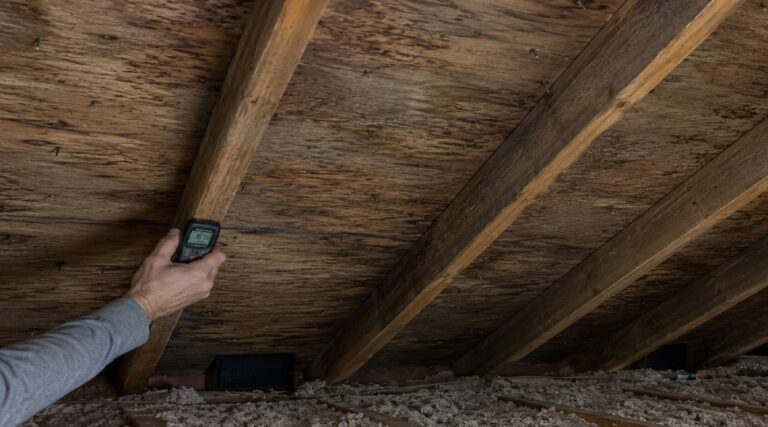
Attic evidence can help confirm whether the roof repair failed. If it is safe to inspect the attic, look for fresh wet insulation, dark roof sheathing, water trails, or damp framing near the suspected roof area. Do not step on ceiling drywall, walk on unsupported insulation, touch wet electrical materials, or inspect during an active storm. If the leak path is hidden, unsafe, or near electrical fixtures, professional diagnosis is safer than repeated guessing.
When Recurring Roof Leaks Need Professional Diagnosis
A recurring roof leak needs professional diagnosis when it has returned after more than one repair, when the source is still uncertain, or when moisture has already reached interior materials. Repeated patching without a clear diagnosis can make the roof harder to evaluate and may allow hidden damage to spread.
Professional inspection is especially important when ceiling stains grow after rain, attic insulation is wet, roof decking looks dark or soft, framing shows staining, or the leak appears near electrical fixtures. These signs suggest the problem is no longer limited to the exterior roof surface.
You should also get a deeper inspection if the previous repair relied heavily on caulk, roof cement, or surface patching. Those materials may be temporary measures, but they do not always correct failed flashing, cracked boots, damaged underlayment, or hidden water paths. If the same area keeps leaking after surface repairs, the roof detail needs to be evaluated more thoroughly.
Complex roof areas also deserve professional attention. Valleys, dormers, chimneys, skylights, wall intersections, roof penetrations, and low-slope transitions can all produce leaks that are difficult to trace from inside the home. If several of these features are near the stain, guessing at the source can lead to another failed repair.
A qualified roofer should be able to explain what was found, why the previous repair did not solve the problem, what material or detail is failing, and how the proposed repair changes the water path. If the explanation is vague or the solution is simply “add more sealant,” ask more questions or seek another opinion. For broader guidance, review when to hire a roofing contractor for moisture problems.
FAQ About Roof Leaks Returning After Repairs
Why is my roof still leaking after a roofer fixed it?
Your roof may still be leaking because the original source was misidentified, the repair only covered the surface symptom, another nearby leak source exists, or water is traveling before it appears indoors. A returned leak usually means the water path needs to be traced more carefully.
Can old wet insulation make it look like a leak returned?
Yes. Wet insulation can continue releasing moisture after the roof source is repaired. If the ceiling stain stays dry after rain, old moisture may be the issue. If it gets wet again after storms, the leak should be considered active.
Why does my roof only leak during heavy rain?
Heavy rain can overwhelm weak flashing, lifted shingles, cracked pipe boots, worn valleys, or temporary debris dams. A leak that appears only during heavy rain is still a real leak. It may simply need higher water volume or wind pressure to show up.
Is roof cement a permanent fix for a recurring leak?
Usually no. Roof cement may temporarily slow water entry, but it does not permanently correct failed flashing, cracked boots, damaged shingles, deteriorated underlayment, or soft decking. If a leak keeps returning after roof cement, the underlying source was likely not fixed.
Should I call the same roofer back if the leak returned?
If the repair is recent, the original roofer should usually have a chance to inspect the leak again. If the leak keeps returning, the explanation is unclear, or the repair only involved surface patching, a second opinion may be reasonable.
How long should I monitor a roof after repair?
Monitor the repaired area through several rain events, especially heavy or wind-driven storms. Some leaks do not appear during light rain. Photos, date notes, and attic checks can help show whether the stain is stable or actively returning.
What to Remember About Recurring Roof Leaks
- Roof leaks often return because the original water source was misidentified.
- A ceiling stain does not always sit directly below the roof entry point.
- Surface patching with caulk or roof cement may not correct failed flashing, boots, underlayment, or shingles.
- Roof valleys, penetrations, and flashing details are common missed sources of recurring leaks.
- Old wet insulation or drywall can make it look like a leak returned, even after the roof source is fixed.
- Heavy-rain-only leaks are still active leaks and should not be dismissed.
- Recurring leaks after more than one repair usually need deeper professional diagnosis.
Stopping the Leak Means Finding the Full Water Path
Roof leaks return after repairs when the full water path has not been corrected. The first repair may have addressed a visible symptom, but water may still be entering through missed flashing, a roof valley, a penetration, damaged shingles, hidden underlayment, or another nearby weak point.
The most useful approach is to compare patterns: where the stain appears, when it gets wet, which roof features are nearby, what repair was attempted, and whether the area changes after new storms. A recurring leak is evidence that the roof and interior moisture pattern need to be evaluated together.
By separating active wetness from old staining, avoiding repeated surface patches, and tracing the leak to the real roof feature, homeowners can prevent the same ceiling stain from turning into a long-term moisture problem. Recurring roof leaks fit into the larger challenge of finding, fixing, and preventing moisture problems in homes, where the goal is not just to stop one drip, but to prevent the moisture from coming back.

One Comment
Comments are closed.