
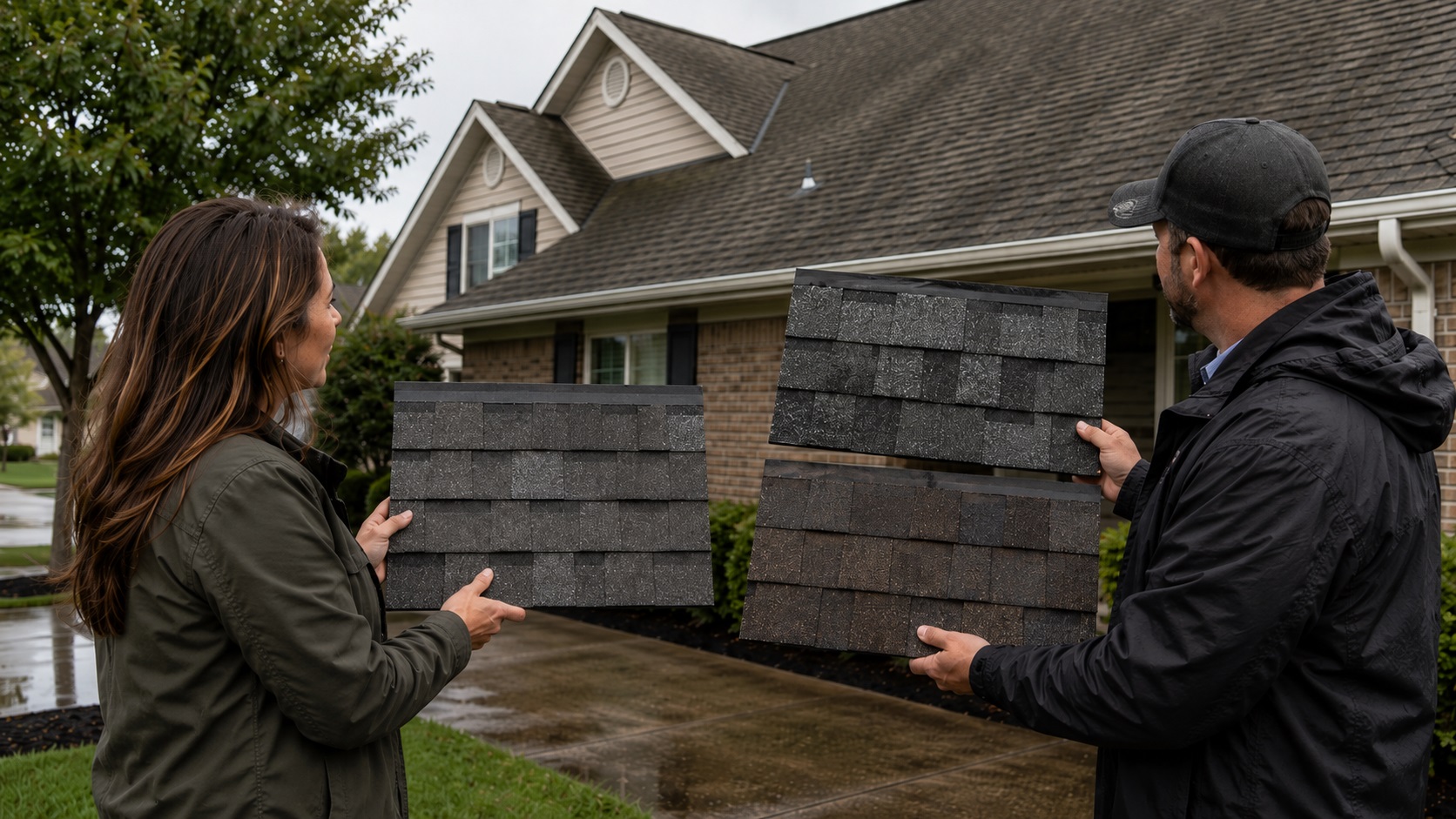
How to Choose Roofing Shingles
Choosing roofing shingles is not just a color decision. The right shingle should match how your roof handles rain, wind, heat, algae growth, impact damage, and long-term wear. A shingle that works well on one house may be a poor fit for another if the climate, roof design, ventilation, or installation quality is different.
Many homeowners start by comparing price, warranty length, or appearance. Those factors matter, but they should not be the whole decision. A good roofing shingle choice begins with the problems the roof needs to resist. In a wet climate, moisture shedding and algae resistance may matter more. In a windy area, wind rating and installation details become more important. In a hail-prone region, impact resistance may justify the upgrade. In a hot climate, heat exposure and roof color may affect long-term performance.
The best shingle is not always the most expensive one. It is the shingle that fits the home’s roof design, climate exposure, budget, expected ownership timeline, and full roof system. Shingles work with underlayment, flashing, starter strips, ridge caps, ventilation, drip edge, and contractor workmanship. A good shingle installed poorly can still leak. A budget shingle installed on the wrong roof can become a costly mistake.
This guide explains how to choose roofing shingles based on type, durability, climate, cost, warranty, and installation risk. It focuses on asphalt roofing shingles because they are one of the most common residential roofing choices. If you are still deciding between asphalt, metal, tile, slate, cedar, or rubber roofing, start with how to choose the right roofing material before narrowing the decision to shingles.
Start With the Roof Problems You Are Trying to Prevent
Before comparing brands, colors, or warranty promises, identify the roof problems your home is most likely to face. Shingles should be chosen for a specific house in a specific environment.
Start with the climate. A roof in a hot, sunny region faces different stress than a roof in a damp, shaded, high-rainfall area. A roof near trees may deal with debris, algae, moss, and slower drying. A roof in an open windy area may need stronger wind resistance. A roof in a hail-prone region may benefit from impact-resistant shingles. A roof in a humid climate may need better algae resistance and good ventilation support.
Next, look at the roof design. A simple gable roof with broad open slopes is easier to protect than a complex roof with valleys, dormers, skylights, chimneys, sidewalls, and multiple penetrations. Complex roofs have more places where water can collect, slow down, or enter if flashing and installation details are weak. In those cases, shingle quality still matters, but roof system details matter even more.
Also consider the existing roof condition. If your current roof has curled shingles, granule loss, repeated algae streaking, wind-lifted tabs, soft decking, or recurring leaks, those symptoms may point to performance needs for the next roof. They may also indicate ventilation, drainage, decking, or installation problems that should be corrected before new shingles are installed.
Choosing shingles should support long-term moisture control. A roof that sheds water well, dries properly, and is installed correctly helps prevent moisture problems from spreading through the home. But shingles must be part of a complete roof system that addresses common roofing material failures, flashing weak points, ventilation, and drainage.
Understand the Main Types of Asphalt Roofing Shingles
Most homeowners choosing roofing shingles are comparing asphalt shingle options. Asphalt shingles come in several categories, and each category has a different balance of cost, appearance, durability, weight, and performance features. This section is a selection overview, not a full brand ranking.
3-Tab Shingles
3-tab shingles are the older, flatter, more basic style of asphalt shingle. They have a uniform appearance and are usually less expensive than architectural or premium shingles. For homeowners working with a tight budget, they may seem attractive because the upfront cost is lower.
The tradeoff is that 3-tab shingles are generally thinner, less dimensional, and less durable than many architectural shingles. They may have lower wind resistance, shorter expected service life, and less visual depth. They can still work in some situations, especially on simple roofs in lower-risk climates, but they are no longer the default best value for many roof replacements.
Be cautious about choosing 3-tab shingles only because they are cheaper. If the home faces high wind, heavy rain, frequent storms, intense sun, or long-term ownership needs, the lower upfront price may not be the best long-term decision.
For a deeper side-by-side comparison, see architectural shingles vs 3-tab shingles.
Architectural Shingles
Architectural shingles, also called dimensional shingles, are thicker and more layered than 3-tab shingles. They are one of the most common choices for modern asphalt roof replacements because they usually provide a better balance of appearance, durability, wind resistance, and warranty options.
Architectural shingles create a dimensional look that can improve curb appeal without moving into the cost range of premium designer shingles. They are often a strong middle choice for homeowners who want better performance than 3-tab shingles but do not need the highest-end shingle line.
For many homes, architectural shingles are the practical baseline. They often make sense when you plan to stay in the home, want better storm resistance, or want a roof that looks more substantial than a flat 3-tab roof.
Premium or Designer Shingles
Premium or designer shingles are built for a higher-end appearance and may be designed to resemble slate, shake, or other traditional roofing materials. They are usually heavier, more expensive, and more visually distinctive than standard architectural shingles.
These shingles may make sense for higher-value homes, homes where curb appeal matters strongly, or homeowners who want a more substantial roof appearance without choosing real slate, tile, or cedar. They may also include upgraded performance features depending on the product line.
The main caution is cost. Premium shingles can look excellent, but a designer appearance is not enough if the shingle does not fit the roof structure, climate, installation requirements, or warranty terms.
Impact-Resistant Shingles
Impact-resistant shingles are designed to better withstand impact from hail or debris compared with standard shingles. They are often considered in areas where hailstorms are common, but they can also be useful for homes exposed to falling branches or frequent severe weather.
Impact resistance does not mean the roof is damage-proof. A severe hailstorm can still damage shingles, flashing, gutters, vents, skylights, and other roof components. The value of impact-resistant shingles is that they may reduce the likelihood or severity of certain impact damage compared with lower-rated shingles.
Homeowners considering impact-resistant shingles should ask for the specific impact rating, not just a general claim that the shingle is “storm resistant.” Also ask whether the warranty treats impact damage differently and whether the product qualifies for any insurance discount in your area. Discounts vary, so they should not be assumed.
Algae-Resistant Shingles
Algae-resistant shingles are designed to reduce dark streaking caused by algae growth on the roof surface. They are especially relevant in humid, shaded, wooded, or high-rainfall areas where roofs stay damp longer.
Algae resistance is mostly about roof appearance, but it can still matter in moisture-prone environments. Dark streaks can make a roof look older than it is, and damp shaded conditions can also support moss, debris buildup, and slower drying. Algae-resistant shingles do not replace proper roof cleaning, drainage, sunlight exposure, or ventilation, but they can help reduce visible staining.
If your current roof has heavy black streaking, recurring algae, or shaded areas that dry slowly, algae-resistant shingles may be worth considering. But they should be paired with a roof system that sheds water properly and does not trap debris.
Cool Roof Shingles
Cool roof shingles are designed to reflect more solar heat than standard dark shingles. They may be useful in hot climates, especially where attic heat, cooling costs, or roof surface temperature are concerns.
Cool roof shingles are not necessary for every home. Their value depends on climate, roof color, attic ventilation, insulation, energy goals, and local code or incentive programs. In some regions, a lighter or more reflective shingle may help reduce roof heat load. In other regions, the benefit may be less important than wind resistance, algae resistance, or impact performance.
Homeowners should ask whether the shingle has a recognized cool roof rating and whether the color options still fit the home’s appearance. A shingle can be more reflective without being plain white, but performance varies by product and color.
Choose Shingles Based on Your Climate
Climate should heavily influence shingle selection. Roofing shingles spend years exposed to sun, rain, wind, temperature swings, humidity, and storms. A shingle that performs well in a dry, mild climate may not be the best choice for a wet, shaded, storm-prone, or high-heat region.
In wet climates, focus on shingles and roof system details that support water shedding and drying. Architectural shingles, algae-resistant options, proper underlayment, drip edge, flashing, ventilation, and clean drainage paths all matter. The shingle itself is important, but the roof must also move water off the surface efficiently.
In humid climates, algae resistance and ventilation become more important. Humid air and slow drying can increase roof staining, attic moisture risk, and surface growth on shaded roof areas. Homeowners in these regions may also want to compare broader best roofing materials for high humidity when deciding whether asphalt shingles are the right long-term choice.
In high-wind areas, ask about wind rating, fastening requirements, starter strip requirements, and whether the contractor follows the manufacturer’s wind warranty installation instructions. A high wind rating is not just a label. It depends on correct installation details.
In hail-prone areas, impact-resistant shingles may deserve serious consideration. They cost more, but they may reduce damage risk and may improve the roof’s ability to handle storm exposure. The homeowner should still check the warranty and insurance implications instead of assuming impact-resistant means fully covered.
In hot sunny climates, compare heat exposure, color, reflectivity, attic ventilation, and shingle quality. Dark shingles may absorb more heat, while lighter or reflective shingles may reduce surface temperature. However, roof color should be balanced with appearance, neighborhood style, and the home’s overall energy design.
In cold climates, freeze-thaw cycles, ice dams, snow load, and underlayment details may matter more than shingle appearance. The shingle must be paired with proper attic insulation, ventilation, ice and water protection where needed, and flashing details that can handle snow and melting water.
If your region gets frequent rain, storms, or long damp seasons, it may also help to compare the best roofing materials for wet climates before assuming asphalt shingles are automatically the best fit.
Compare Durability Before You Compare Color
Color matters, but durability should come first. The shingle should be able to handle the home’s weather exposure, roof slope, drainage patterns, and expected ownership timeline.
Durability depends on several factors:
- Shingle thickness and construction
- Wind rating
- Impact rating
- Algae resistance
- Fire rating
- Granule quality and retention
- Installation requirements
- Roof ventilation
- Roof complexity and drainage
A simple way to narrow the choice is to ask: What is the biggest threat to this roof — wind, hail, heat, algae, poor drying, low slope, complex flashing, or long ownership? The best shingle upgrade is the one that addresses that specific risk.
A lower-cost shingle may look acceptable at installation but wear faster under severe exposure. A better shingle may cost more upfront but offer stronger wind performance, better appearance retention, improved algae resistance, and longer useful life when installed correctly.
This does not mean every homeowner needs premium shingles. It means durability should be compared before choosing by color alone. Once you narrow the decision to shingles that fit the home’s risk profile, then compare colors, textures, and curb appeal.
Once you know which type of shingle fits your roof, you can compare most durable roofing shingle brands or review best asphalt shingle brands compared. But brand research should come after you understand the performance needs of your actual roof.
Balance Budget, Lifespan, and Risk
Choosing shingles is partly a budget decision, but the cheapest roof is not always the lowest-cost roof over time. If a lower-cost shingle wears faster, loses granules early, lifts in wind, stains heavily, or needs replacement sooner, the long-term value may be weaker.
Start by asking how long you expect to own the home. If you plan to sell soon, a basic architectural shingle may be enough if it fits the roof and market. If you plan to stay for many years, it may make sense to pay more for better durability, stronger wind resistance, algae protection, or a longer non-prorated warranty period.
Also consider the risk level of the roof. A simple roof in a mild climate may not need the same shingle upgrade as a steep, complex roof in a storm-prone or humid region. The more exposure the roof faces, the more important it is to avoid choosing solely by lowest bid.
Budget should also include the full roof system, not just the shingle. A roof replacement quote may include underlayment, starter strips, ridge caps, flashing, drip edge, ventilation work, ice and water protection, deck repairs, and cleanup. A quote with better system components may cost more but provide better long-term protection.
When comparing price, ask what you are actually getting:
- Which exact shingle line is included?
- Is it 3-tab, architectural, premium, impact-resistant, or another type?
- What underlayment is included?
- Are matching starter strips and ridge caps included?
- Will flashing be replaced or reused?
- Are ventilation corrections included?
- Is deck repair included or priced separately?
- What warranty level applies?
A better shingle choice is usually the one that matches your risk level at a cost you can justify, not the one with the lowest price or the most dramatic sales pitch.
Check Wind, Impact, Fire, and Algae Ratings
Performance ratings help you compare shingles more objectively. They do not tell the whole story, but they are more useful than choosing based only on appearance.
Wind rating matters if your home is exposed to strong storms, open terrain, coastal weather, or frequent gusts. Ask for the wind rating of the exact shingle being quoted and ask what installation steps are required for that rating to apply. Some wind warranties depend on specific starter strips, nail patterns, sealant strips, or installation instructions.
Impact rating matters in hail-prone regions. Many impact-resistant shingles are tested under rating systems that classify how well they resist impact. A higher impact rating may reduce damage risk, but it does not make the roof hail-proof. Gutters, vents, flashing, skylights, and other roof components can still be damaged during a severe storm.
Fire rating also matters, especially in dry or wildfire-prone areas. Many asphalt shingles have strong fire ratings when installed as part of an approved roof assembly, but homeowners should confirm the rating for the product and installation system being used.
Algae resistance matters in humid or shaded areas. If your roof has visible black streaking, tree shade, or slow-drying sections, algae-resistant shingles may help preserve appearance longer. They do not eliminate the need for proper drainage, trimming overhanging branches, or keeping debris from collecting on the roof.
The key is to confirm ratings for the exact shingle product. Do not assume every shingle from the same brand has the same wind rating, impact rating, algae warranty, or fire classification. Product lines vary, and installation requirements can affect whether the rating and warranty apply.
Match the Shingle to the Roof Design
The shape of the roof should influence the shingle decision. A simple roof with broad slopes places less demand on details than a complex roof with many intersections. The more complex the roof, the more important shingle quality, roof system components, and contractor skill become.
On a simple roof, the main concerns may be overall durability, wind exposure, ventilation, and appearance. On a complex roof, water management becomes more challenging. Valleys, sidewalls, chimneys, dormers, skylights, and penetrations all create places where roof leaks are more likely if details are handled poorly.
For complex roofs, ask how the contractor will handle valleys, flashing, starter courses, ridge caps, underlayment, and penetrations. Shingle choice still matters, but the installation details often determine whether the roof performs well. A premium shingle will not protect the home if the flashing is poorly installed.
Roof slope also matters. Asphalt shingles are designed for sloped roofs, and low-slope areas may need special underlayment, different installation details, or a different roofing system. If your roof has shallow slopes, ask whether the chosen shingles are approved for that slope under the manufacturer’s instructions and what extra water protection is required.
Roof deck condition matters too. New shingles should not be installed over soft, rotten, delaminated, or moisture-damaged decking. If the roof deck is weak, fasteners may not hold properly, and leaks or wind problems may follow. A contractor should inspect the deck during tear-off and replace damaged sections before the new shingles are installed.
Choosing shingles without considering the roof design is one of the fastest ways to make a good product underperform. The shingle must fit the roof’s shape, slope, exposure, and installation requirements.
Do Not Choose Shingles by Warranty Alone
Warranty matters, but it should not be the only reason you choose a shingle. A long warranty does not automatically mean the shingle is the best fit for your roof. It also does not guarantee that every roof problem will be covered.
Roofing warranties often depend on product type, installation method, contractor certification, ventilation, registration, and whether the failure meets the written warranty terms. A shingle may advertise a strong warranty, but that protection may become limited if the roof is installed incorrectly or if required components are missing.
Use warranty as a support factor after confirming the shingle fits the home. First compare climate fit, durability, ratings, roof design, ventilation needs, and contractor experience. Then compare the warranty details. If the warranty is strong and the shingle is also appropriate for the roof, that is a better decision than choosing a shingle only because the warranty language sounds impressive.
Homeowners should understand how roofing warranties work, review what roofing warranties actually cover, and compare roofing warranties before treating warranty length as a quality rating.
Also remember that warranty strength and contractor quality are connected. If the warranty requires certified installation, specific components, registration, or correct ventilation, the contractor must understand and follow those requirements. A strong warranty can become much weaker if the roof is not installed according to the rules.
Ask the Contractor These Questions Before Choosing
The contractor should be able to explain why a specific shingle is right for your home. If the recommendation is only based on price, color, or what the contractor usually installs, ask for more detail. A good roofing proposal should connect the shingle choice to your roof design, climate exposure, ventilation, warranty, and long-term performance needs.
Before choosing shingles, ask the contractor:
- Why are you recommending this specific shingle for my roof?
- Is this a 3-tab, architectural, premium, impact-resistant, algae-resistant, or cool roof shingle?
- What wind rating applies to this shingle?
- What installation steps are required for the wind warranty to apply?
- Does this shingle have an impact rating?
- Does it include algae resistance?
- Is this shingle appropriate for my roof slope?
- What underlayment, starter strips, and ridge caps are included?
- Will old flashing be reused or replaced?
- Will attic ventilation be checked before installation?
- What happens if damaged roof decking is found?
- What manufacturer and workmanship warranties apply?
These questions help reveal whether the contractor is simply selling a product or actually designing a roof system for your home. A contractor who cannot explain the shingle choice clearly may also be weak on the details that affect leak prevention.
If you are comparing roofers, do not evaluate shingles separately from installation quality. The best shingle choice can still fail if the contractor cuts corners. Homeowners should compare proposals, warranty terms, flashing details, ventilation planning, and service response when they choose a roofing contractor for leak repairs or full roof replacement.
When Upgrading Shingles Is Worth the Cost
Upgrading shingles is worth considering when the added performance matches a real risk on your home, such as wind, hail, algae staining, heat exposure, longer ownership, or curb appeal on a higher-value house.
Architectural shingles are often worth the upgrade over 3-tab shingles for homeowners who want better appearance, stronger performance, and a more modern roof. They are commonly a practical middle ground because they improve durability and curb appeal without reaching the cost of premium designer shingles.
Impact-resistant shingles may be worth the cost in hail-prone areas, storm-exposed regions, or neighborhoods where roofs commonly suffer impact damage. They may not prevent every hail claim, but they can improve resistance compared with lower-rated shingles.
Algae-resistant shingles may be worth it in humid, shaded, wooded, or high-rainfall regions. If your current roof has black streaks or stays damp under tree cover, algae resistance can help the new roof maintain its appearance longer.
Cool roof shingles may be worth considering in hot climates where solar heat gain is a concern. They can be more useful when paired with good attic ventilation and insulation. They may be less important in regions where wind, hail, rain, or freeze-thaw cycles are bigger concerns.
Premium or designer shingles may be worth the cost when curb appeal, home value, and visual style are major priorities. They may also make sense on higher-end homes where a basic shingle would look out of place. However, appearance should still be balanced against roof structure, contractor skill, and long-term moisture protection.
Do not upgrade just because the salesperson says it is “better.” Upgrade when the shingle solves a specific problem: stronger wind resistance, better impact performance, improved algae protection, better appearance, longer expected service life, or better fit for the home’s roof design.
FAQ About Choosing Roofing Shingles
Are architectural shingles better than 3-tab shingles?
Architectural shingles are usually thicker, more dimensional, and more durable than 3-tab shingles. They often provide better appearance and stronger performance, but they cost more. For many modern roof replacements, architectural shingles are a better value unless the project has a very tight budget or low-risk conditions.
Are impact-resistant shingles worth it?
Impact-resistant shingles can be worth it in hail-prone or storm-exposed areas. They are not damage-proof, but they may reduce the severity of impact damage compared with standard shingles. Ask for the specific impact rating and confirm whether insurance discounts or warranty terms apply in your area.
Should I choose shingles based on warranty length?
No. Warranty length should support the decision, not control it. Choose shingles based on climate fit, durability, ratings, roof design, installation requirements, and contractor quality first. Then compare warranty terms, exclusions, registration rules, and workmanship coverage.
What shingles are best for humid climates?
In humid climates, architectural shingles with algae resistance are often a strong option, especially when paired with good ventilation and proper roof drainage. However, the best choice depends on shade, rainfall, roof slope, attic ventilation, and whether a different roofing material may perform better long term.
What should I compare before choosing a shingle brand?
Before choosing a brand, compare the shingle type, wind rating, algae resistance, impact rating if hail is common, roof slope approval, required installation components, and warranty conditions. Brand matters, but the wrong product line from a strong brand can still be a poor fit for your roof.
Can better shingles prevent roof leaks?
Better shingles can improve roof durability, but shingles alone do not prevent leaks. Leaks often start at flashing, valleys, penetrations, roof edges, or poor installation details. A good roof depends on the full system, including underlayment, flashing, ventilation, decking, and workmanship.
Should I let the contractor choose the shingles?
You can use the contractor’s recommendation, but do not accept it blindly. Ask why that shingle fits your climate, roof design, budget, warranty needs, and long-term plans. A good contractor should explain the reasoning clearly and provide the exact product details in writing.
Choose the Shingle That Fits the Roof, Not Just the Bid
Choosing roofing shingles starts with understanding your roof’s real risks. Climate, wind, humidity, hail, roof complexity, shade, ventilation, and ownership plans all affect which shingle makes sense. For many homeowners, architectural shingles provide the best balance of cost, appearance, and durability, while impact-resistant, algae-resistant, cool roof, or premium shingles are worth considering only when they match a specific risk or goal.
The right shingle is only one part of the roof. Underlayment, starter strips, ridge caps, flashing, ventilation, decking, and installation quality all affect whether the roof protects the home from water intrusion. Choose shingles as part of a full roof system, not as a standalone product.
Roofing Shingle Selection Checklist
- Choosing roofing shingles should start with climate, roof design, and performance risks.
- 3-tab shingles cost less but are usually less durable than architectural shingles.
- Architectural shingles are often the best balance of appearance, durability, and cost for many homes.
- Premium shingles are mainly useful when appearance, home value, or upgraded performance justifies the cost.
- Impact-resistant shingles may be worth considering in hail-prone or storm-exposed regions.
- Algae-resistant shingles are useful in humid, shaded, wooded, or high-rainfall areas.
- Cool roof shingles may help in hot climates when heat exposure is a major concern.
- Wind, impact, fire, and algae ratings should be confirmed for the exact product being installed.
- Warranty length should not be the main reason for choosing a shingle.
- The full roof system and contractor workmanship can matter as much as the shingle itself.
2 Comments
Comments are closed.