
Best Roofing Materials for Wet Climates
The best roofing materials for wet climates are materials that shed water quickly, resist moisture-related deterioration, dry well after rain, and work with a roof system designed to keep water out. Heavy rain, wind-driven rain, shade, tree debris, moss, algae, and long damp seasons can all stress a roof differently than a dry climate.
There is no single roofing material that is perfect for every wet climate.
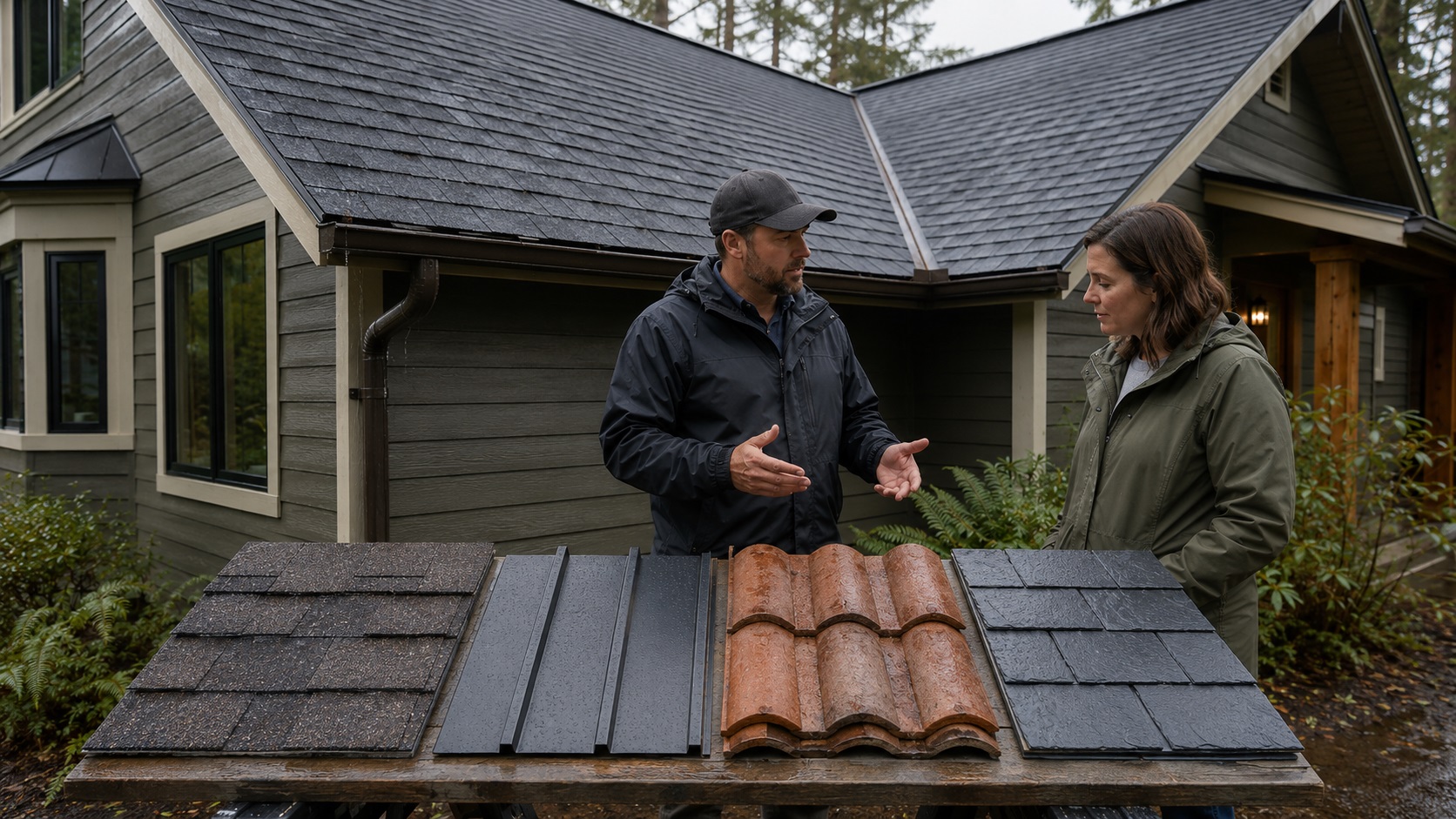
As a quick rule, metal is usually the strongest low-rot option, architectural asphalt shingles are usually the most practical budget-conscious option, slate is the strongest premium natural option, tile works best on homes designed for it, synthetic roofing can be a useful lightweight alternative, and cedar is usually the highest-maintenance choice.
Those rankings can change based on roof design. Architectural asphalt shingles may be the most practical choice for one home, while metal, slate, tile, or synthetic roofing may be better for another. The right answer depends on slope, structure, installation quality, storm exposure, shade, debris, and how much maintenance the homeowner is willing to handle.
The most important point is that roofing material alone does not prevent leaks. A premium roof covering can still fail if the underlayment is weak, the flashing is wrong, the roof slope is too low, valleys are poorly detailed, or the attic cannot dry properly. Wet-climate roofing is about the entire roof assembly, not just the visible surface.
For most wet-climate homes, the safest decision is to choose the material and the roof assembly together. A good choice should match your roof slope, rain exposure, tree cover, storm risk, budget, and maintenance tolerance—not just look durable on paper.
What Makes a Roofing Material Good for Wet Climates
A good wet-climate roofing material should move water off the roof efficiently, resist long-term moisture damage, and dry out between wet weather events. In rainy climates, roofs often stay damp longer, collect more debris, and face repeated water movement through valleys, edges, penetrations, and roof-to-wall intersections.
- Water shedding: The material should move rain off the roof quickly instead of holding water, debris, or moss.
- Moisture resistance: It should resist rot, corrosion, granule loss, cracking, algae staining, or freeze-thaw damage for the conditions in your area.
- Drying behavior: It should dry reasonably well after rain, especially on shaded or tree-covered roof slopes.
- Installation tolerance: It should work with your roof slope, flashing details, fasteners, underlayment, and roof geometry.
- Maintenance demand: It should match how much cleaning, inspection, moss control, and debris removal you are realistically willing to do.
This is why wet-climate roofing should be evaluated through both material performance and roof system design. A roof that resists common roofing material failures is usually one where the visible covering and the hidden water-control details work together.
Quick Wet-Climate Material Ranking
| Roofing material | Wet-climate strength | Main caution |
|---|---|---|
| Metal roofing | Excellent water shedding and no rot | Needs correct seams, fasteners, coatings, and flashing |
| Architectural asphalt shingles | Practical and widely available | Depends heavily on installation, ventilation, and algae/moss control |
| Slate | Premium moisture-resistant natural material | Heavy, costly, and installation-sensitive |
| Clay or concrete tile | Durable surface with good rain performance | Heavy and highly dependent on underlayment |
| Synthetic roofing | Lightweight alternative to slate, shake, or tile | Quality varies by product and manufacturer |
| Cedar shakes or wood shingles | Can work with good drying and maintenance | Higher risk of moisture retention, moss, and rot |
Best Overall for Wet Climates: Metal Roofing
Metal roofing is often the best overall roofing material for many wet climates because it sheds water quickly, resists rot, and dries faster than many textured or absorbent materials. On a properly sloped roof, rain moves off metal panels efficiently, which can reduce the time water spends sitting on the roof surface.
Metal roofing can also perform well in regions with frequent storms, heavy rain, and long wet seasons because the material itself does not absorb water. It is not vulnerable to rot the way wood shakes are, and it does not lose protective granules the way asphalt shingles can. With the right coating and installation, metal can be a strong long-term choice for wet environments.
That does not mean metal roofing is leak-proof. Metal roofs still depend on seams, fasteners, flashing, penetrations, underlayment, roof slope, and expansion details. If fasteners are installed poorly, panels are not detailed correctly, incompatible metals are used, or flashing is weak, a metal roof can still leak.
Corrosion resistance also matters. In coastal or high-rainfall environments, the metal type, coating system, fasteners, and compatibility with nearby materials should be chosen carefully. A low-quality metal roof or poorly protected fastener system may create problems long before the roof reaches its expected service life.
Metal roofing is usually most attractive for homeowners who want strong water shedding, low rot risk, and long-term durability. It may cost more upfront than asphalt shingles, but its lower maintenance needs and longer service potential can make it a strong wet-climate option.
Best Common Choice: Architectural Asphalt Shingles
Architectural asphalt shingles are the best common choice for many wet-climate homes because they are widely available, familiar to contractors, cost-effective, and suitable for a broad range of sloped residential roofs. They are not always the absolute best material for wet weather, but they are often the most practical balance of price, appearance, durability, and availability.
In rainy climates, architectural shingles usually make more sense than basic 3-tab shingles because they are generally thicker, more durable, and better suited to wind and repeated wet weather when installed correctly.
Asphalt shingles work by shedding water down the roof surface. They depend on proper slope, correct nailing, starter strips, underlayment, ridge caps, drip edge, flashing, and ventilation. In wet climates, those system details are just as important as the shingle itself.
Architectural shingles may also be available with algae-resistant features, which can be useful in damp, shaded, wooded, or humid areas. Algae resistance will not stop all roof staining or prevent moss growth by itself, but it can help the roof maintain its appearance longer in wet environments.
Homeowners choosing asphalt shingles in rainy regions should focus on product quality, wind rating, algae resistance, contractor skill, underlayment, flashing, and ventilation. For a deeper shingle-specific decision process, review how to choose roofing shingles based on climate, budget, ratings, and roof design.
Asphalt shingles are usually not the lowest-maintenance wet-climate material, but they can be a good choice when the roof is properly designed and installed. The biggest mistake is treating shingles as the only water barrier. In a wet climate, the full system matters.
Best Premium Natural Option: Slate Roofing
Slate roofing is one of the strongest premium natural roofing options for wet climates when the home can support the weight and the roof is installed by skilled slate professionals. Slate is dense, durable, and highly resistant to moisture-related deterioration. It does not rot like wood or depend on protective granules like asphalt shingles.
Slate can perform very well in rainy regions because it sheds water effectively on properly sloped roofs and can last a long time when the roof structure, flashing, fasteners, and underlayment are correct. It is especially attractive for homeowners who want a natural material with strong durability and a high-end appearance.
The main drawback is cost. Slate is expensive to purchase, heavy to install, and requires experienced installers. The roof structure must be able to carry the load, and repairs should be handled by someone who understands slate roofing. Poor installation can crack tiles, create weak flashing details, or reduce the roof’s expected performance.
Slate is not the best fit for every wet-climate home. It is usually most appropriate for higher-value homes, historic homes, luxury properties, or homeowners who want a long-term premium roof and are willing to pay for correct installation and maintenance.
In wet climates, the flashing and underlayment beneath slate are still critical. Slate may be durable, but water can still enter at valleys, penetrations, walls, chimneys, and broken or missing pieces. Like any roof material, slate needs a complete water-management system.
Best for Certain Homes: Clay or Concrete Tile
Clay and concrete tile can perform well in some wet climates, especially on homes designed for tile roofing. Tile sheds water from the visible roof surface and can be very durable when installed correctly. It is common in many regions where rain, sun, and long service life are major considerations.
The important thing to understand is that tile roofs are not waterproof only because the tiles are hard. Wind-driven rain and moisture can move beneath tile in some conditions, so the underlayment system is extremely important. In many tile roof assemblies, the underlayment is the primary secondary water barrier protecting the roof deck.
Tile roofing is also heavy. The roof structure must be designed or verified to support the load. Concrete tile can be especially heavy compared with asphalt shingles or many metal systems. If the home was not built for tile, structural evaluation may be needed before choosing it.
Tile can also be more vulnerable in freeze-thaw climates if the wrong product is used or if water gets into areas where freezing and expansion create stress. In wet climates with freezing conditions, homeowners should confirm that the tile product is suitable for that environment.
Tile roofing can be a strong wet-climate option when the home has the right slope, structure, underlayment, flashing, and installer experience. It is less ideal when the roof is low-slope, structurally unsuitable, frequently walked on, or installed by a contractor without tile-specific skill.
Best Lightweight Alternative: Synthetic Roofing
Synthetic roofing can be a useful wet-climate option for homeowners who want the appearance of slate, shake, or tile without the same weight or maintenance demands. Synthetic slate and synthetic shake products vary widely, but many are designed to resist moisture absorption, impact, cracking, and decay better than some natural alternatives.
The advantage of synthetic roofing is that it can offer a premium look with lower structural weight than natural slate or concrete tile. It may also avoid some of the moisture concerns associated with wood shakes. For homes where real slate is too heavy or cedar is too maintenance-sensitive, synthetic roofing may be worth considering.
The caution is product quality. Synthetic roofing is not one single material. Different products may use different polymers, composites, recycled materials, manufacturing methods, warranties, and installation systems. Wet-climate performance depends on the exact product, not just the word “synthetic.”
Homeowners should compare UV resistance, impact resistance, fire rating, wind rating, installation requirements, and warranty terms. They should also ask how long the product has been used in climates similar to theirs and whether the contractor has experience with that specific system.
Synthetic roofing can be a strong alternative in wet climates when the product is proven, the roof design is appropriate, and the installer follows the manufacturer’s details. It should not be chosen only because it looks like slate or cedar at a lower weight.
Higher-Maintenance Choice: Cedar Shakes and Wood Shingles
Cedar shakes and wood shingles can be beautiful, but they are usually a higher-maintenance choice in wet climates. Wood is an organic material. It can absorb moisture, dry slowly, support moss or fungal growth, and become vulnerable to rot if it stays damp too long.
This does not mean cedar can never work in a wet region. It means the roof must be designed and maintained carefully. Cedar performs best when it can dry between wet weather events. Good sun exposure, airflow, roof slope, spacing, ventilation, and maintenance all matter.
Cedar is riskier in heavily shaded areas, wooded lots, coastal dampness, long rainy seasons, or homes where debris collects on the roof. Leaves, needles, moss, and moisture can hold water against the wood and shorten its service life. Neglected cedar roofs can deteriorate faster than homeowners expect.
If a homeowner wants cedar in a wet climate, they should ask about appropriate preservative treatment, ventilation beneath the shakes, cleaning requirements, moss management, fire rating, local code issues, and installer experience. They should also avoid assuming that oiling or coating is always helpful. In some humid conditions, the wrong treatment can interfere with drying and create new problems.
Cedar is best for homeowners who value the appearance and are willing to maintain it. For low-maintenance wet-climate performance, metal, slate, tile, synthetic roofing, or architectural asphalt shingles are often more practical choices.
What Matters More Than the Roofing Material
In wet climates, the roofing material is important, but it is not the only thing that determines whether the roof stays dry. Many roof leaks begin at details rather than in the middle of the roof field. Valleys, chimneys, skylights, vents, dormers, sidewalls, roof edges, and penetrations often matter more than the surface material itself.
A strong wet-climate roof needs both a suitable roof covering and reliable water-management details beneath and around it. If those details are weak, even an expensive material can leak.
Underlayment and Roof Deck Protection
Underlayment is the layer beneath the roof covering that helps protect the roof deck if water gets past the visible material. In wet climates, underlayment quality matters because wind-driven rain, ice, damaged shingles, lifted panels, broken tiles, or flashing defects can allow water to reach the secondary protection layer.
Some wet or storm-prone regions may benefit from stronger underlayment strategies, ice and water protection in vulnerable areas, or sealed roof deck approaches. A sealed roof deck can help reduce water entry if the primary roof covering is damaged during severe weather. This is especially relevant in areas with hurricanes, high winds, or wind-driven rain.
Underlayment is not a substitute for a good roof covering, but it is a critical backup. Homeowners comparing wet-climate roofing options should ask what underlayment is included, where self-adhered membrane will be used, and how valleys, eaves, rakes, walls, and penetrations will be protected.
Flashing at Roof Intersections
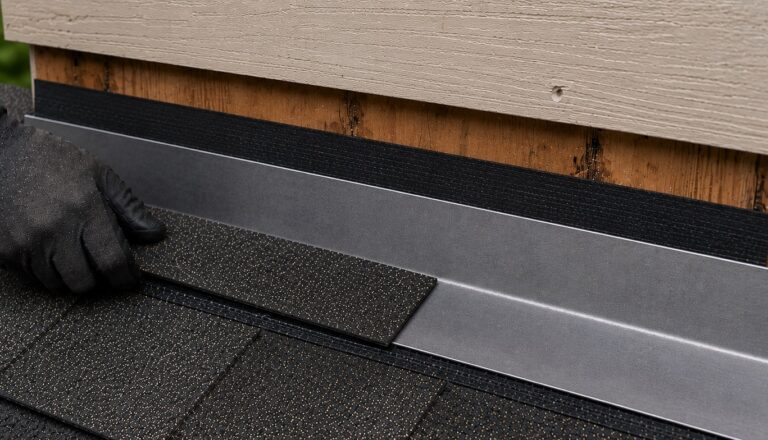
Flashing is one of the most important leak-prevention details on any roof. It directs water away from vulnerable intersections where the roof meets walls, chimneys, skylights, vents, dormers, valleys, and other transitions.
In wet climates, flashing mistakes can cause recurring leaks even when the roofing material is high quality. A metal roof, slate roof, tile roof, or asphalt shingle roof can all leak if flashing is missing, reused incorrectly, poorly lapped, sealed with temporary caulk instead of proper metal details, or not integrated with the roof covering.
This is why homeowners should pay attention to why roof flashing failures cause leaks. Wet-climate roof performance depends heavily on how water is managed at transitions, not just how the open roof surface performs.
Roof Slope and Drainage
Roof slope affects how quickly water leaves the roof. Steeper roofs usually shed water faster, while lower-slope roofs hold water longer and require more careful detailing. Some roofing materials are not appropriate for low-slope conditions unless special installation methods are used.
Drainage also includes valleys, gutters, downspouts, overhangs, and roof geometry. If water is concentrated into valleys or dumps from an upper roof onto a lower roof, the lower area may experience more wear. In wet climates, those heavy-flow areas deserve extra attention.
Before choosing a material, confirm that it is appropriate for your roof slope. A material that performs well on a steep roof may not be suitable for a low-slope section. If your roof has mixed slopes, the contractor may need to use different materials or extra water protection in certain areas.
Ventilation and Drying Potential
Wet-climate roofing is not only about stopping rain from entering. It is also about helping the roof assembly dry. A roof that traps moisture can develop roof deck problems, attic condensation, insulation issues, and premature material deterioration.
Ventilation helps manage heat and moisture beneath the roof deck, but this article should not be treated as a full attic ventilation guide. The key wet-climate point is simple: choose a roofing material and roof assembly that can dry between wet weather events.
Drying potential also depends on sunlight, tree cover, roof orientation, and debris. North-facing or heavily shaded roof slopes may stay damp longer. Those areas may need more maintenance and a material that resists algae, moss, or moisture retention.
If humidity is the main issue rather than heavy rainfall, homeowners should also compare the best roofing materials for high humidity, because humid-air moisture behavior is not identical to heavy rain exposure.
Gutters, Debris, and Maintenance
Wet climates often bring leaves, needles, moss, algae, and debris. When debris collects in valleys, gutters, roof edges, or behind chimneys, it slows drainage and holds moisture against the roof. Over time, that can increase leak risk and shorten the life of the roof system.
Gutters and downspouts must move water away from the roof edge and foundation. Overflowing gutters can back water up under roof edges, rot fascia, stain siding, and contribute to moisture problems around the home. Even the best roofing material performs poorly if water cannot drain away properly.
Maintenance should match the material. Metal roofing may need fastener, coating, and flashing checks. Asphalt shingles may need moss, algae, granule, and flashing monitoring. Tile and slate may need broken pieces replaced carefully. Cedar needs more frequent cleaning and drying management. Synthetic roofing should be maintained according to the manufacturer’s instructions.
Roofing Materials That Need Extra Caution in Wet Climates
Some roofing materials require extra caution in wet climates. That does not always mean they should be avoided, but homeowners should understand the tradeoffs before choosing them.
Basic 3-tab asphalt shingles may be less ideal in wet, stormy, or high-wind regions because they are generally thinner and less durable than architectural shingles. They may still work on simple roofs in mild climates, but they are often not the strongest wet-weather choice.
Cedar shakes and wood shingles require caution because they can absorb moisture and dry slowly. In shaded or rainy climates, wood roofs need strong airflow and regular maintenance to avoid moss, decay, and premature deterioration.
Low-quality metal roofing also deserves caution. Metal can be excellent in wet climates, but poor coatings, incompatible fasteners, weak flashing, or careless installation can lead to corrosion or leaks. Homeowners should compare metal type, finish, fastener system, and installer experience.
Tile and slate require caution when the roof structure, slope, or installer skill is not appropriate. The material itself can be durable, but broken pieces, poor underlayment, weak flashing, or structural limitations can create expensive problems.
The riskiest choice in a wet climate is not always a specific material. It is a material installed in the wrong roof assembly. A roof covering that does not match the slope, climate, structure, maintenance level, or installer skill can fail even if the material has a strong reputation.
How to Choose Based on Your Specific Wet Climate
The best roofing material for a wet climate depends on what kind of wet climate you have. Heavy rain, coastal moisture, shaded forest conditions, wind-driven storms, humid summers, and freeze-thaw cycles all create different roofing demands.
If your area gets frequent heavy rain, prioritize water shedding, flashing quality, underlayment, and roof slope. Metal roofing, architectural asphalt shingles, slate, tile, and quality synthetic materials can all work, but the installation details must be strong. Valleys, eaves, rakes, walls, and penetrations should receive special attention because those are the areas where heavy rain often exposes weak workmanship.
If your area has wind-driven rain, focus on both the roof covering and the secondary water barrier. Metal roofing may be a strong option, but seams, fasteners, and flashing must be correct. Asphalt shingles should have strong wind ratings and proper starter strips, nail placement, and edge details. A sealed roof deck or upgraded underlayment may be worth considering in storm-prone regions.
After severe wind, hail, or storm damage, avoid walking on the roof yourself. Check from the ground or attic when safe, and have a qualified roofing professional inspect suspected damage, lifted materials, or leak-prone details.
If your home is in a wooded or shaded area, drying time becomes a major factor. Roof slopes that stay shaded may collect moss, algae, leaves, and needles. In those conditions, metal, slate, tile, synthetic roofing, or algae-resistant architectural shingles may be better choices than materials that hold moisture or require frequent cleaning. Cedar should be chosen carefully because shade and debris can shorten its life.
If your wet climate also has high humidity, the roof material should be paired with strong attic ventilation and moisture control. Humid air can slow drying and contribute to roof deck or attic moisture problems even when the roof covering is not actively leaking. This is where material selection overlaps with ventilation, insulation, and indoor humidity control.
If your region has both rain and freeze-thaw cycles, choose materials and details that can handle water followed by freezing temperatures. Tile, slate, asphalt, metal, and synthetic products may each have specific cold-weather considerations. Proper underlayment, flashing, and drainage become especially important because trapped water can expand when it freezes.
If the home is near the coast, corrosion resistance becomes more important. Metal roofing can still be a strong option, but the coating, fasteners, metal type, and compatibility with salt air should be selected carefully. The cheapest metal roof may not be the best coastal roof if corrosion protection is weak.
The best wet-climate choice is usually the material that fits your actual exposure, not the material with the most impressive reputation. A rainy mountain home, a coastal home, a shaded forest home, and a storm-prone inland home may all need different roof priorities.
Before choosing a material, ask the contractor three wet-climate questions: what underlayment will be used in valleys and edges, how roof-to-wall and chimney flashing will be handled, and how the roof assembly will dry after long rainy periods. The answers often reveal more about leak risk than the material name alone.
FAQ About Roofing Materials for Wet Climates
What is the best roofing material for heavy rain?
Metal roofing is often one of the best overall choices for heavy rain because it sheds water quickly, resists rot, and dries well. Slate, tile, synthetic roofing, and architectural asphalt shingles can also work when installed correctly. The best choice depends on roof slope, budget, structure, climate, and installer skill.
Is metal roofing better than shingles in wet climates?
Metal roofing often performs better than asphalt shingles in wet climates because it sheds water faster and does not absorb moisture. However, architectural asphalt shingles can still be a practical wet-climate choice when installed with strong underlayment, flashing, ventilation, and drainage. Metal is not automatically better if it is installed poorly.
Are asphalt shingles okay in rainy climates?
Yes, asphalt shingles can work in rainy climates, especially architectural shingles with good installation details. They need proper slope, underlayment, flashing, ventilation, starter strips, ridge caps, and drainage. In very wet or shaded areas, algae-resistant shingles and regular roof maintenance may be important.
Is cedar roofing a bad choice for wet climates?
Cedar is not always a bad choice, but it is higher maintenance in wet climates. Wood can absorb moisture, dry slowly, and become vulnerable to moss, algae, fungal growth, or rot if neglected. Cedar works best where the roof has good slope, airflow, sunlight, treatment, and regular maintenance.
Do tile roofs work well in rainy areas?
Tile roofs can work well in rainy areas when the roof is designed for tile and the underlayment, flashing, slope, and drainage are correct. The tiles shed water, but the underlayment beneath them is critical. Tile is heavy, so the home must also be structurally suitable.
What roof details fail first in wet climates?
The first wet-climate failure points are often valleys, chimneys, skylights, vent boots, sidewalls, eaves, gutters, and other transitions where water concentrates or changes direction. Underlayment and roof deck protection matter because they act as backup protection when rain gets past the visible roof covering.
Key Takeaways
The best roofing material for a wet climate is the one that matches your rain exposure, roof slope, structure, maintenance tolerance, and installer skill. Metal roofing is often the strongest overall choice. Architectural asphalt shingles are the most practical common option. Slate, tile, and synthetic roofing can perform very well in the right conditions. Cedar can work, but it requires more maintenance and better drying conditions.
- Metal roofing is often the best overall roofing material for many wet climates because it sheds water quickly and does not rot.
- Architectural asphalt shingles are a practical common choice when installed with strong wet-weather details.
- Slate is a premium natural option with strong moisture resistance, but it is heavy, expensive, and installation-sensitive.
- Clay and concrete tile can work well in rainy climates when the roof structure, slope, underlayment, and flashing are correct.
- Synthetic roofing can be a useful lightweight alternative, but product quality and installation requirements vary widely.
- Cedar shakes and wood shingles are higher-maintenance choices in wet climates because they need good drying conditions.
- No roofing material is leak-proof by itself; wet-climate performance depends on the full roof assembly.
One Comment
Comments are closed.