
Smart Water Shutoff Systems vs Leak Sensors
Smart water shutoff systems and leak sensors both help reduce water damage risk, but they do not do the same job. A leak sensor detects water in a specific location and alerts you. A smart water shutoff system can detect abnormal water activity or respond to connected sensors, then close a valve to stop the water supply.
That difference matters because many plumbing leaks become expensive when water keeps flowing after the leak starts. A sensor can warn you that water is present, but someone still has to respond. A shutoff system can reduce the amount of additional water released by closing the supply line. Both tools can be useful, but they protect the home in different ways.
The right choice depends on your home’s layout, leak risk, budget, and response time. A small home with visible plumbing may only need targeted sensors. A larger home with finished rooms below plumbing, second-floor laundry, older supply lines, or long periods of vacancy may need active shutoff protection. Understanding the difference helps you choose the right layer of protection for the kinds of leaks described in how plumbing leaks cause structural damage.
Smart Water Shutoff Systems vs Leak Sensors: The Basic Difference
The basic difference is simple: leak sensors detect water, while smart water shutoff systems can stop water after a leak condition is detected. A leak sensor is mainly an alert device. A smart shutoff system is an active control device.
A leak sensor is placed where water is likely to appear, such as under a sink, near a water heater, behind a washing machine, or beside a dishwasher. When water touches the sensor, it can sound an alarm, send a phone alert, or notify a smart home hub. This gives the homeowner a chance to respond before the leak spreads farther.
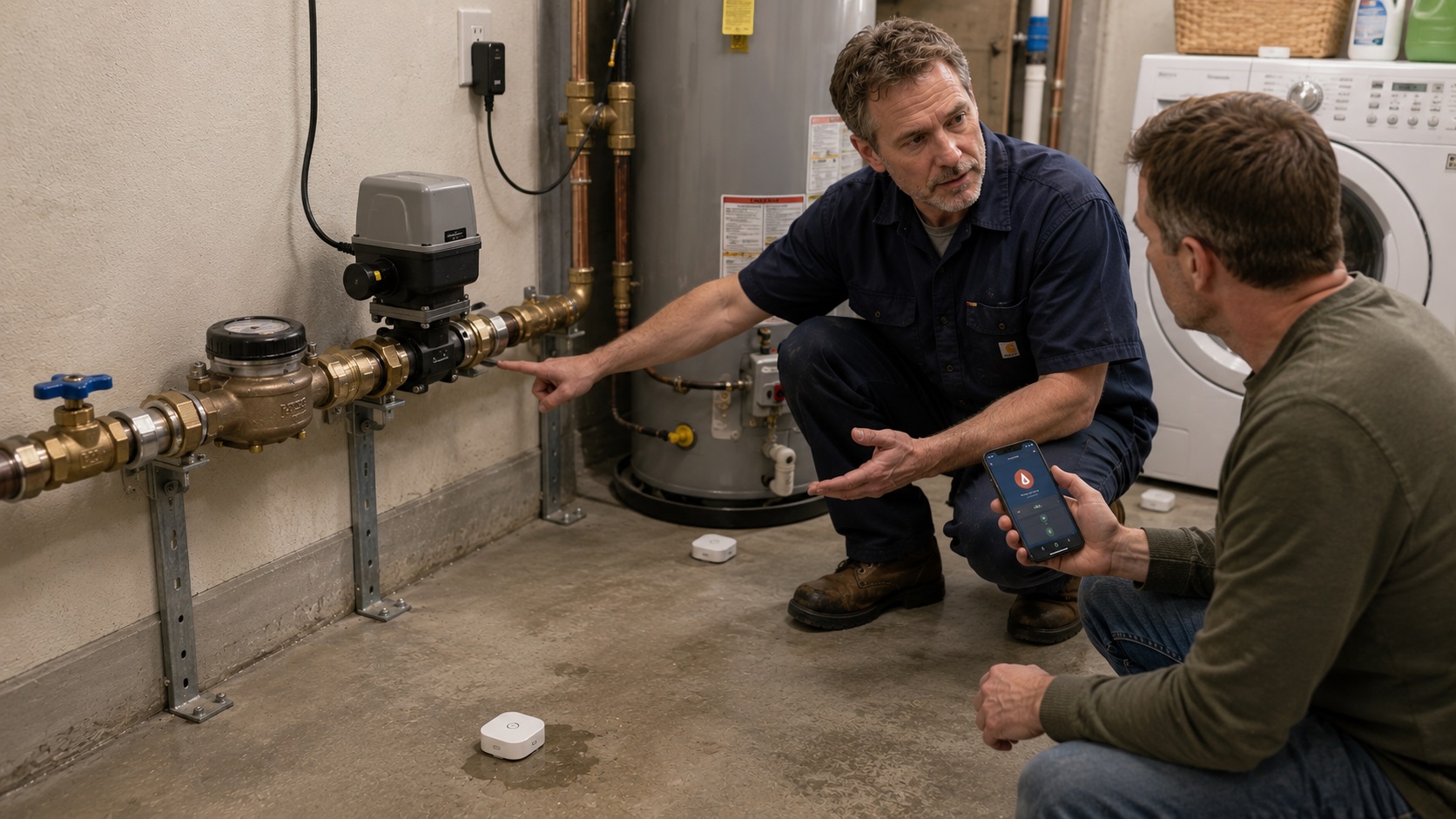
A smart water shutoff system usually protects a larger part of the plumbing system. Depending on the design, it may monitor water flow, pressure, or usage patterns. If it detects abnormal activity, or if a connected sensor reports water, the system can close a valve and stop additional water from entering the protected plumbing line.
In practical terms, leak sensors are warning devices. Smart shutoff systems are response devices. The best choice depends on whether your main risk is missing the leak or letting it continue after detection.
How Leak Sensors Protect a Home
Leak sensors protect a home by detecting water at specific high-risk locations. They are usually small devices that sit on the floor, inside a cabinet, near an appliance, or beside plumbing equipment. Some use metal contacts on the bottom of the device. Others use probes or sensing cables that can cover a longer area.
The main strength of a leak sensor is location-based detection. If you place a sensor under a kitchen sink, it can detect water in that cabinet. If you place one near a water heater, it can detect water at the base of the tank or supply connection. If you place one behind a washing machine, it can warn you when water reaches the floor in that area.
Common leak sensor locations include:
- Under kitchen sinks
- Under bathroom sinks
- Behind washing machines
- Near water heaters
- Under dishwashers
- Behind toilets
- Near refrigerator water lines
- In basement utility areas
Leak sensors are useful because many early leaks start in predictable places. Sink supply lines, toilet valves, appliance hoses, dishwasher connections, and refrigerator ice maker lines can leak slowly before the damage is obvious. A sensor placed in the right location may catch water before it spreads across flooring or soaks into cabinets.
The limitation is that the sensor has to be near the water. If the leak happens several feet away, inside a wall, under flooring, or behind an appliance where no sensor is placed, the sensor may not detect it until water travels far enough to reach the device. Leak sensors are only as effective as their placement.
For better coverage, place sensors at the lowest point where water would naturally collect, not just beside the appliance or pipe. A sensor sitting uphill from a slow leak may stay dry while water moves under cabinets, baseboards, or flooring.
Another limitation is response. A sensor can alert you, but it usually cannot stop the water by itself. If you are home and respond quickly, that may be enough. If you are away, asleep, or unable to reach the shutoff valve, the leak can continue even after the alert. For homeowners starting with lower-cost protection, a guide to water leak sensors for early detection can help identify sensor-style options without assuming they replace active shutoff.
How Smart Water Shutoff Systems Protect a Home
Smart water shutoff systems protect a home by adding action to leak detection. Instead of only warning that water may be present, they can close a valve and stop additional water from feeding the leak. This is the main reason they provide a different level of protection than basic sensors.
Depending on the system, a smart shutoff device may monitor water flow, pressure, water-use patterns, or signals from connected leak sensors. If the system detects unusual activity, it can send an alert and may shut off the water automatically or allow the homeowner to shut it off remotely through an app.
This is especially useful when no one is home. A leak sensor under a sink may send an alert, but if the homeowner is at work, traveling, or asleep, the water can continue flowing. A shutoff system can reduce that delay by closing the supply valve before someone physically reaches the home.
The system does not repair the leak, prove the area is dry, or remove water that has already escaped. Cabinets, flooring, drywall, insulation, and subfloor materials may still need inspection and drying after shutoff. Its job is to limit the amount of additional water that enters the plumbing system after a leak condition is detected.
For a more detailed explanation of monitoring, alerts, and valve closure, see how smart water shutoff systems work.
Detection vs Shutoff: Why the Difference Matters
Detection and shutoff solve different parts of the leak response timeline. Detection tells you water has appeared. Shutoff helps limit how much more water can enter the plumbing after that point.
Imagine a washing machine hose starts leaking while the homeowner is away. A leak sensor behind the washer may detect water on the floor and send an alert. That alert is valuable because it identifies the problem early. But if the homeowner cannot respond quickly, the hose may continue leaking until someone closes the valve.
With a smart shutoff system, the response can be stronger. If the system detects abnormal flow or receives a signal from a connected sensor, it can close the water supply. That does not erase the water already released, but it can reduce how much more water enters the laundry room, flooring, ceiling below, and surrounding wall cavities.
The same principle applies to sink cabinets, water heaters, dishwashers, refrigerator water lines, toilet supply lines, and hidden pipe leaks. The more likely a leak is to run unnoticed, the more valuable automatic shutoff becomes.
This does not mean shutoff systems are perfect or sensors are weak. A sensor may detect water in a specific cabinet before a main-line monitor recognizes a small leak pattern. A shutoff system may stop water supply but may not show exactly where the leak started. That is why the two tools often work best together.
Coverage Differences: Localized Protection vs Whole-Home Protection
Leak sensors provide localized protection. They monitor the exact area where they are placed. If a sensor is under a bathroom sink, it protects that cabinet area. If a sensor is behind a washing machine, it protects that floor area. If a sensor is near a water heater, it protects that mechanical area.
This location-based protection is useful because many leaks start near known risk points. It also helps identify where the problem is. If the app says the sensor under the dishwasher detected water, the homeowner knows where to inspect first.
The weakness is that sensors do not protect areas where they are not installed. A sensor under one sink will not detect a leak under another sink. A sensor near a water heater will not detect a refrigerator water line leak. A sensor may also miss water inside a wall until it spreads far enough to reach the device.
Smart water shutoff systems can provide broader protection when they are installed on the main water supply line. In that position, the system can stop water to much of the house if a leak condition is detected. This makes the system more useful for hidden leaks, unattended leaks, and leaks that occur outside the range of individual sensors.
The tradeoff is that a whole-home shutoff system may not always identify the exact leak location by itself. It may tell you that unusual water activity happened, but you may still need to inspect fixtures, appliances, water heaters, cabinets, exposed plumbing, and nearby finished materials to find the source and confirm what got wet.
Placement also matters. A smart shutoff system only protects the plumbing downstream of where it is installed. If the device is placed after certain branches or equipment, it may not cover every water line in the home. That is why planning where smart shutoff systems are usually installed is important before choosing a system.
Cost and Installation Differences
Leak sensors are usually the lower-cost and simpler option. Most can be placed near leak-prone areas without cutting into plumbing, changing valves, or hiring a plumber. That makes them practical for homeowners who want a fast first layer of protection and for renters who cannot modify the water supply system.
Because sensors are location-based, the total cost depends on how many areas you want to monitor. One sensor may protect a water heater area. Another may protect a washing machine. Others may be needed under sinks, near toilets, under dishwashers, or behind refrigerators with water lines. The cost can increase as coverage expands, but each sensor is usually easier to add than a whole-home shutoff device.
Smart water shutoff systems usually cost more because they involve active control of the water supply. Some systems are installed on the main water line, which may require plumbing labor, fittings, valve work, or access to the main shutoff area. Homes with older plumbing, tight access, corrosion, or unusual pipe layouts may need more preparation before installation.
The higher cost can be worth it when the home has higher damage exposure. A shutoff system is not only paying for detection; it is paying for water control when no one is there to respond. That matters most in homes where an unattended leak could damage finished spaces, ceilings, floors, cabinets, or stored belongings.
For a deeper cost-versus-risk discussion, review whether a smart shutoff system is worth the cost before comparing individual models.
When Leak Sensors Are Enough
Leak sensors may be enough when the home needs targeted early warning more than automatic water shutoff. They are especially useful when the homeowner can respond quickly to alerts and when the main concern is watching specific high-risk spots.
For example, a homeowner may place sensors under sinks, near a water heater, behind a washing machine, and under a dishwasher. If someone is usually home, or if a trusted neighbor or property manager can respond quickly, those alerts may provide enough protection for many common leaks.
Leak sensors may be the better first step when:
- The budget is limited.
- The home is usually occupied.
- The plumbing is easy to inspect.
- The homeowner rents and cannot modify plumbing.
- The main concern is one appliance or fixture area.
- The home has no finished basement or vulnerable rooms below plumbing.
- The homeowner wants simple alerts before investing in a shutoff system.
Leak sensors are also useful for areas where a whole-home shutoff system may not clearly identify the source. If a sensor under the kitchen sink detects water, the homeowner knows exactly where to inspect. That location detail can make response faster.
The main caution is that sensors depend on response. If an alert is ignored, missed, or delayed, the water may keep flowing. For lower-risk homes, that may be acceptable. For higher-risk homes, relying only on alerts may leave too much time for damage to spread.
When a Smart Shutoff System Is Better
A smart water shutoff system is usually better when an unattended leak could cause serious damage. The more time a leak could run before someone notices, the more valuable active shutoff becomes.
Second-floor laundry is one of the strongest examples. A washing machine hose or connection leak upstairs can affect flooring, ceiling drywall, insulation, lighting, and rooms below. A sensor behind the washer may alert the homeowner, but a shutoff system can help stop the water supply if the homeowner is not nearby.
Finished basements are another strong case. A plumbing leak above or inside a finished basement can spread into walls, flooring, baseboards, and stored belongings. Because finished materials can hide moisture, reducing the amount of water released can make a major difference.
Smart shutoff systems are also stronger for vacation homes, rental properties, and homes left empty during work hours or travel. In those cases, a leak may go unnoticed for a long time. Automatic shutoff can reduce the damage window even when no one is there to hear an alarm or check a phone alert immediately.
A shutoff system may also be the better choice in homes with older plumbing, previous leak history, water heaters in finished areas, refrigerator water lines, dishwashers over finished flooring, or expensive wood flooring and cabinetry. These homes have more to lose if water continues flowing after a leak starts.
The important point is that smart shutoff systems are not better because they are more expensive. They are better when the home needs active water control, not just detection. If the home’s risk is mainly one or two visible areas, sensors may be enough. If the risk is unattended whole-home water release, shutoff protection is stronger.
When You Should Use Both Together
The strongest protection often comes from using leak sensors and a smart shutoff system together. Sensors help detect water in specific locations. The shutoff system helps stop additional water from feeding the leak. Together, they cover more of the leak response process than either tool alone.
This combination is especially useful in high-risk homes. A sensor under a dishwasher can detect water in the cabinet or floor area. A sensor near a washing machine can detect water before it spreads across the laundry room. A sensor near a water heater can catch early water at the base of the tank or supply connection. If those sensors are connected to a compatible shutoff system, the system may also close the main valve.
The advantage is that the homeowner gets both location detail and active protection. The sensor tells you where water appeared. The shutoff system limits how much more water can enter the plumbing after the alert. That can make the response faster and reduce the chance that water continues spreading through hidden spaces.
Using both together is most useful when:
- The home has second-floor plumbing or laundry.
- The home has a finished basement.
- Water-using appliances sit near finished flooring or cabinets.
- The homeowner travels often.
- There has already been a plumbing leak in the home.
- The plumbing layout has hidden or hard-to-inspect areas.
- The homeowner wants both targeted alerts and automatic shutoff.
This combined approach still does not replace maintenance. Hoses, valves, fittings, and appliance supply lines still need inspection and replacement when they age. The goal is layered protection, not dependence on one device to solve every leak risk. A smart system should support normal habits that prevent hidden plumbing leaks.
Which Option Should You Choose?
The right choice depends on the level of protection your home needs. Leak sensors are usually the better first step when you want simple, affordable detection in specific areas. Smart shutoff systems are usually better when you need the system to take action if nobody responds quickly.
Choose leak sensors if:
- You want lower-cost protection.
- You rent or cannot modify plumbing.
- You mainly want to monitor a few high-risk areas.
- Someone is usually home to respond to alerts.
- Your plumbing is visible and easy to check.
- You want a simple first layer of water leak protection.
Choose a smart water shutoff system if:
- You want the system to stop water automatically or remotely.
- A leak could go unnoticed for hours.
- You have finished rooms below plumbing.
- You have second-floor laundry or bathrooms.
- You travel often or leave the home vacant.
- You have older plumbing or past leak history.
- You have expensive flooring, cabinetry, ceilings, or finished basement space at risk.
Choose both if your home has high damage exposure and multiple leak-prone areas. In that case, leak sensors provide targeted detection, while the shutoff system provides active water control. This is often the strongest setup for homes where a plumbing leak could become expensive before anyone notices.
Neither option replaces a broader whole-home moisture prevention plan. Leak sensors and shutoff systems mainly help with plumbing-related leaks. Other moisture problems, such as roof leaks, condensation, basement seepage, or humidity issues, need separate prevention methods.
If you are ready to compare equipment after deciding which protection level fits your home, review both water leak sensors for early detection and smart water shutoff systems based on your home’s risk level.
Frequently Asked Questions
Do leak sensors shut off water?
Most standalone leak sensors do not shut off water. They detect water and send an alert or sound an alarm. Some sensors can trigger shutoff when they are connected to a compatible smart water shutoff system, but the sensor itself is usually a detection device.
Are smart shutoff systems always better than leak sensors?
No. Smart shutoff systems provide stronger active protection because they can close a valve and stop additional water supply, but leak sensors can be better for renters, targeted appliance monitoring, and low-cost coverage in specific areas. The better choice depends on risk, response time, and whether plumbing modifications are possible.
Can leak sensors trigger automatic shutoff?
Some leak sensors can trigger automatic shutoff when they are paired with a compatible shutoff valve or smart water system. In that setup, the sensor detects water and the system closes the valve. Compatibility depends on the specific devices and system design.
Are leak sensors enough for a home?
Leak sensors may be enough for lower-risk homes, renters, or homeowners who mainly want alerts in specific areas. They may not be enough when a leak could run unattended for hours, especially in homes with finished basements, second-floor laundry, or frequent travel.
Do I need both leak sensors and a smart shutoff system?
You may need both if your home has high water damage exposure. Sensors can detect water near appliances and fixtures, while the shutoff system can stop additional water flow. Together, they provide stronger protection than either option alone.
Which is better for vacation homes?
A smart shutoff system is usually better for vacation homes because a leak may go unnoticed for days. Leak sensors can still help identify where water appears, but automatic shutoff is more useful when no one is present to respond quickly.
Which is better for renters?
Leak sensors are usually better for renters because they do not require plumbing changes. A renter can place sensors under sinks, near appliances, or around water heaters, while a whole-home shutoff system usually requires owner approval and plumbing access.
Which is better for second-floor laundry?
A smart shutoff system is usually stronger for second-floor laundry, especially when paired with a sensor behind the washing machine. A sensor can detect water early, while the shutoff system can stop additional water before it damages the floor and ceiling below.
Final Decision: Sensors, Shutoff, or Both?
Choose leak sensors when targeted alerts are enough. Choose a smart shutoff system when a delayed response could allow serious water damage. Choose both when you want location-specific detection plus active water control.
Quick Comparison Summary
- Leak sensors detect water in specific locations and send alerts.
- Smart water shutoff systems can close a valve to stop additional water supply.
- Leak sensors are usually cheaper, easier to place, and better for targeted monitoring.
- Smart shutoff systems are stronger for unattended leaks and high-risk homes.
- Sensors help identify where water appears, while shutoff systems help stop continued flow.
- Lower-risk homes may only need sensors, while high-risk homes often benefit from both.
- Neither option addresses roof leaks, basement seepage, condensation, or humidity problems, so plumbing leak protection should be only one layer of a broader moisture prevention plan.
One Comment
Comments are closed.