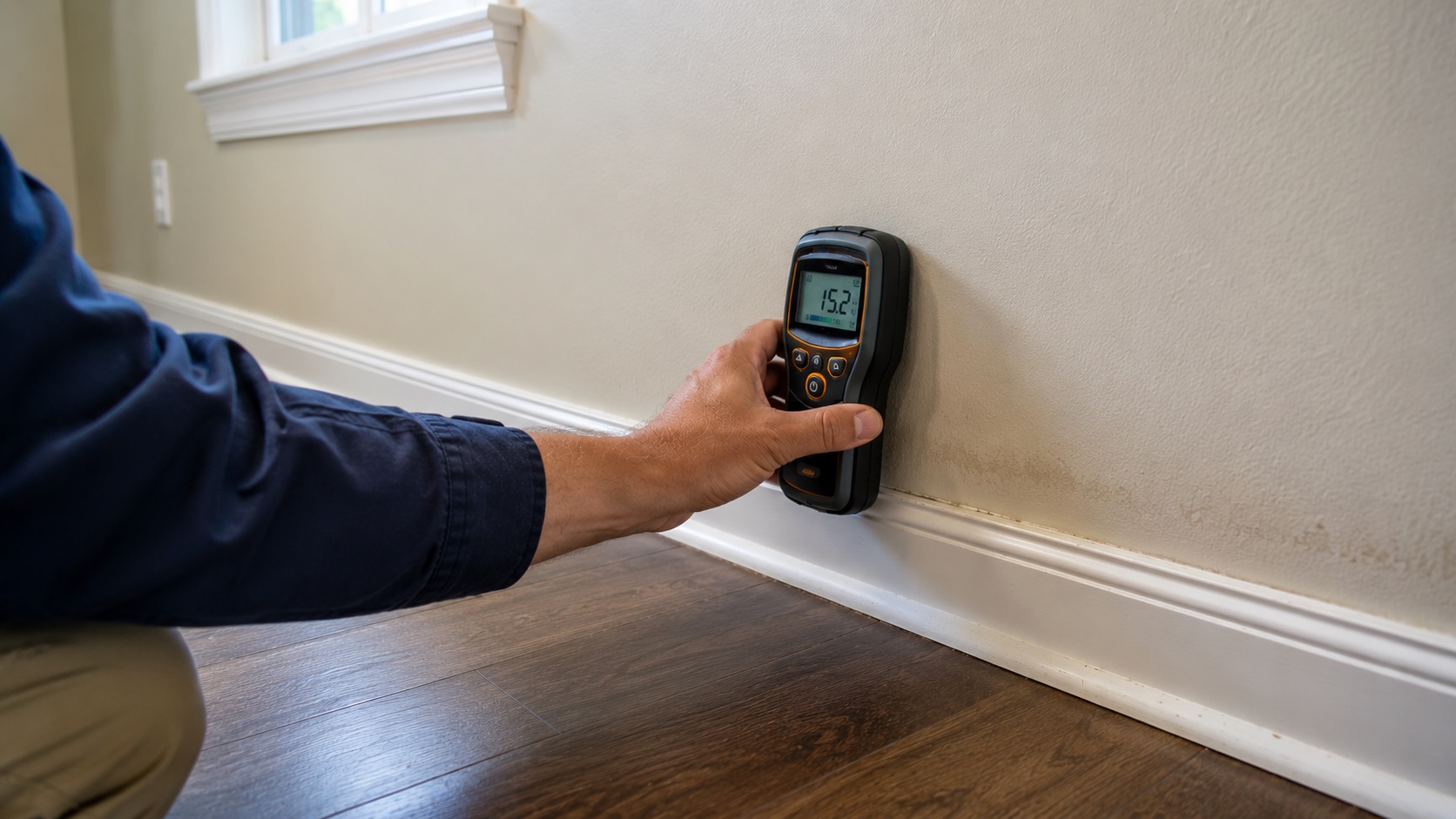
Protimeter SurveyMaster Moisture Meter Review: Is It Worth It?
The Protimeter SurveyMaster BLD5375 is worth considering if you need a high-end dual-function moisture meter for repeated inspections, not just a quick one-time moisture check. It combines non-invasive scanning with pin-style measurement, which makes it useful for investigating wet drywall, damp wood, post-leak repairs, basement moisture, flooring concerns, and repeated moisture problems.
This is not the cheapest or simplest meter for casual DIY use. It fits best for inspectors, restoration workers, landlords, property managers, contractors, and serious homeowners who need to compare moisture conditions across building materials and document what they find.
If you are still deciding which type of moisture meter fits your situation, see our guide to the best moisture meters for detecting hidden water damage. This review focuses only on the Protimeter SurveyMaster.
Disclosure: This article may contain affiliate links. If you buy through these links, we may earn a commission at no extra cost to you.
Quick Verdict on the Protimeter SurveyMaster
- Best for: Inspectors, restoration professionals, landlords, property managers, contractors, and serious homeowners who need both pin and non-invasive moisture readings.
- Not ideal for: Budget shoppers or casual homeowners who only need a simple moisture meter for occasional use.
- Main strength: Dual-function moisture testing lets you scan surfaces non-invasively and then use pins when closer material contact is needed.
- Main limitation: It costs more and requires more interpretation than basic homeowner moisture meters.
- Bottom line: The Protimeter SurveyMaster is worth considering if you expect repeated moisture checks, but it is probably more tool than most one-time DIY users need.
Protimeter SurveyMaster BLD5375 Overview
The Protimeter SurveyMaster BLD5375 is built around a practical inspection workflow: scan first, then confirm where appropriate. Non-invasive mode helps you compare suspicious areas without immediately marking a finished surface. Pin mode gives a more direct material contact reading when small pin marks are acceptable.
That combination is the main reason to consider this meter over a basic pin-only or pinless-only model. It lets a user move from broad screening to closer checking without switching tools.
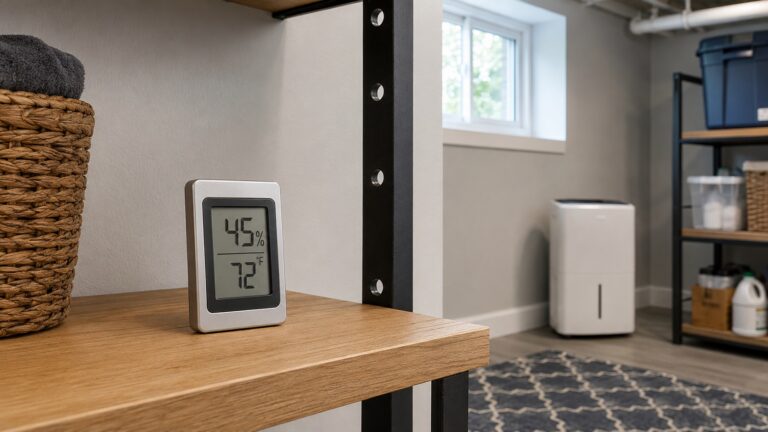
For broader testing context, see our guide on how to test indoor humidity levels and moisture conditions. A moisture meter checks material moisture, while a hygrometer checks air humidity. Both can be useful, but they answer different questions.
Important Product Details
- Model reviewed: Protimeter SurveyMaster BLD5375.
- Meter type: Dual-function pin and non-invasive moisture meter.
- Common materials: Wood, drywall, concrete, and other building materials, depending on testing mode and surface conditions.
- Documentation features: Bluetooth support and app-based reading storage are listed for the newer SurveyMaster model, which can help with repeated checks and inspection records.
- Included items shown on the Amazon listing: SurveyMaster instrument, case, HD MC probe, quick start guide, and wood calibration chart.
- Warranty note: Protimeter lists a two-year warranty for its instruments, but buyers should confirm current warranty terms from the seller before purchase.
The SurveyMaster is especially relevant when you are checking building materials after leaks, floods, seepage, or damp conditions. It can help identify moisture patterns in wood, drywall, concrete, and other building materials, depending on the surface and the testing mode used. It is a diagnostic tool, not a complete moisture solution.
Because Amazon availability can change, check the current listing if you want this exact SurveyMaster version rather than another Protimeter model. See availability on Amazon.
Key SurveyMaster Features That Matter in Real Inspections
Pin and Non-Invasive Moisture Testing
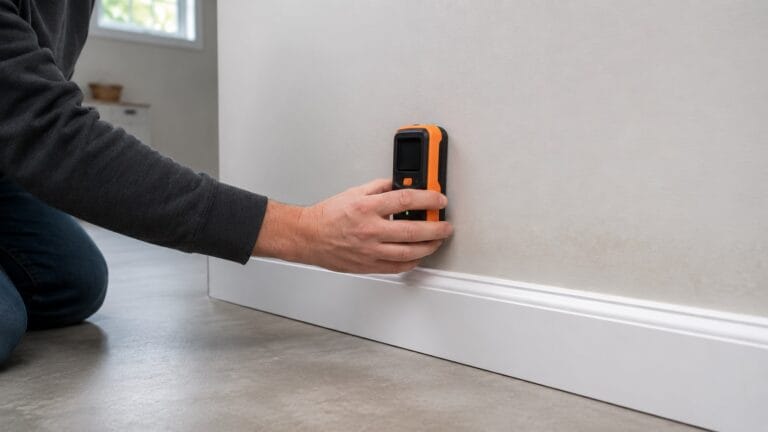
The SurveyMaster’s main advantage is its dual testing style. In non-invasive mode, it can scan finished surfaces such as drywall, flooring, trim areas, and ceilings without making holes. In pin mode, it uses physical pins to contact the material more directly.
That makes the meter useful when you want to screen a larger area first and then check specific spots more closely. For example, you might scan around a baseboard, window trim, or repaired leak area, then use pin readings where the surface can tolerate small marks.
The limitation is that neither mode should be treated as automatic proof of the leak source. Pinless readings can be affected by density, layers, surface coverings, and construction details, while pin readings only measure where the pins contact. For help interpreting moisture risk, see our guide to moisture levels that indicate water damage.
Bluetooth and Reading Documentation
The newer SurveyMaster model includes Bluetooth support for use with Protimeter’s app ecosystem. This can be useful for users who want to save readings, compare areas, or document moisture conditions over time.
That feature matters most for inspectors, restoration professionals, landlords, and serious homeowners monitoring a problem area after repairs. For example, if a basement wall, lower drywall section, or wood floor was recently wet, saved readings can help show whether conditions are improving, staying the same, or getting worse.
For casual homeowners, Bluetooth may not be essential. Many people only need a quick reading and do not need app-based records. But for repeated moisture problems, documentation can become valuable because moisture patterns over time are often more useful than one isolated reading.
Calibration Checks and Inspection-Oriented Controls
The SurveyMaster is designed more like an inspection instrument than a basic household gadget. Features such as calibration checks, field calibration support for non-invasive mode, hold functions, backlighting, and moisture indicators help support more serious inspection work.
These features are useful when readings matter and the user expects to check multiple areas. A backlit display helps in darker spaces. A hold function helps when the reading is taken in an awkward position. Moisture indicators can make readings easier to interpret quickly, especially when moving across surfaces.
The limitation is that more advanced features also mean a steeper learning curve. A homeowner who wants a simple yes-or-no answer may find the SurveyMaster more technical than expected. Moisture meters are most useful when the user understands what the reading does and does not prove.
Non-Invasive Screening Before Opening Walls or Trim
The non-invasive mode is most useful as a screening step. If readings are suspicious near drywall, baseboards, flooring, windows, or a repaired leak area, the meter can help narrow down where closer inspection may be needed. It does not eliminate the need to inspect the source, but it can help you avoid guessing blindly. For more detail, see our guide on how to detect moisture without opening walls.
How the Protimeter SurveyMaster Performs in Home Moisture Checks
In real use, the Protimeter SurveyMaster is best understood as a moisture investigation tool, not an automatic leak finder. It can help compare moisture conditions, identify suspicious patterns, and decide where closer inspection is needed.
The strongest workflow is comparative testing. Check the suspect area, nearby areas, and a known dry area when possible. A single reading can be misleading, but a pattern across drywall, wood, trim, or flooring can help show whether one area is behaving differently from the rest.
For the most useful comparison, test the same material type when possible: suspect drywall against dry drywall, suspect trim against dry trim, or suspect flooring against similar flooring nearby. Comparing different materials can make readings harder to interpret.
This is especially helpful after water damage, when a surface may look dry before the material beneath it has fully dried. Non-invasive scanning can help map the area, while pin testing can be used where direct contact is acceptable.
The tool still has limits. It does not confirm mold, prove the exact origin of a leak, or replace direct inspection when severe damage is suspected. It is most valuable when used as part of a broader moisture investigation.
Best Uses for the Protimeter SurveyMaster
The SurveyMaster is strongest when moisture conditions are uncertain and a basic meter would not provide enough flexibility. Good use cases include checking drywall after plumbing leaks, scanning around windows after wind-driven rain, checking wood near basements or crawl spaces, investigating damp flooring, and monitoring repaired areas after water damage.
It is also useful when documentation matters. Landlords, property managers, inspectors, and restoration workers may benefit from saving or comparing readings across multiple rooms, units, or inspection visits.
Where the SurveyMaster May Be Too Much Tool
The main downside is that the Protimeter SurveyMaster may be more expensive and more technical than many homeowners need. If you only want to check one small spot after a minor spill or one-time leak, a simpler pin meter may be enough.
It may also disappoint users who expect automatic answers. A moisture meter can show moisture patterns, but the readings still need to be interpreted alongside the material, leak history, room conditions, drainage, plumbing, ventilation, and recent weather. Pinless readings are useful for scanning, but they should not be treated as exact hidden moisture percentages in every material. Pin readings are more direct, but pins can leave small holes and may not reach deep hidden layers.
Finally, this product is not the right tool if your real need is something else. It is not a hygrometer for room humidity monitoring, not a smart leak sensor for automatic alerts, not a thermal camera, and not a mold test kit. It helps investigate moisture in materials. That is valuable, but it is a specific job.
Do not use any moisture meter reading as a reason to ignore visible structural damage, active leaking, sewage exposure, electrical hazards, or soft flooring. Those conditions need direct inspection and, in some cases, professional help.
Who the Protimeter SurveyMaster Is Best For
Buy the Protimeter SurveyMaster if you need a serious moisture meter for repeated use, property inspections, restoration checks, or ongoing moisture problems. It makes the most sense for home inspectors, restoration professionals, landlords, property managers, contractors, and advanced homeowners dealing with recurring leaks or uncertain material moisture.
It is especially worth considering if you want one instrument that can scan non-invasively and also use pins when needed. View the product on Amazon.
When a Simpler Moisture Meter Makes More Sense
Skip the Protimeter SurveyMaster if you only need a low-cost meter for occasional DIY checks. A basic pin meter may be enough for firewood, one small drywall area, or a minor repaired leak.
Also skip it if your real need is a different tool. A hygrometer is better for room humidity, a smart leak sensor is better for automatic water alerts, a thermal camera is better for temperature-pattern scanning, and a mold test kit is needed if you are trying to confirm mold contamination.
The SurveyMaster can help locate suspicious moisture patterns, but it still requires interpretation. It will not automatically tell you where a leak starts.
Protimeter SurveyMaster vs Basic Meters, Thermal Cameras, and Leak Sensors
Compared with a basic pin-type moisture meter, the SurveyMaster is more versatile because it adds non-invasive scanning. Compared with a pinless-only meter, it gives you the option to use direct pin contact when closer checking is appropriate.
Compared with a thermal camera, the SurveyMaster answers a different question. Thermal imaging shows temperature patterns that may suggest moisture, air leakage, missing insulation, or thermal bridging. A moisture meter checks material moisture more directly.
Compared with a smart leak detector, the SurveyMaster is more diagnostic but less automatic. Leak sensors can alert you when water reaches a specific spot. The SurveyMaster is a manual inspection tool for investigating materials after a concern already exists.
Frequently Asked Questions
Is the Protimeter SurveyMaster good for homeowners?
Yes, but mostly for advanced homeowners. It makes the most sense if you are dealing with repeated leaks, water damage, damp walls, wet flooring, basement moisture, or post-repair monitoring. For one-time casual checks, a simpler meter may be enough.
Does the Protimeter SurveyMaster detect mold?
No. The SurveyMaster detects moisture conditions in materials; it does not test for mold. Moisture readings can help identify areas where mold risk may be higher, but they do not confirm whether mold is present.
Can it find hidden leaks inside walls?
It can help identify suspicious moisture patterns that may point toward a hidden leak, but it does not automatically locate the source. If readings suggest moisture behind a wall, use the meter as a screening tool and then investigate whether the cause is plumbing, condensation, exterior water entry, roof leakage, or another source.
Is pinless moisture testing enough by itself?
Pinless testing is useful for scanning and comparing areas without making holes, but it should not be treated as perfect proof by itself. Materials, layers, density, and construction details can affect readings. When possible, suspicious areas should be checked against nearby dry reference areas and confirmed with additional inspection.
Why choose this instead of a cheaper moisture meter?
The main reason is the dual-function design. Cheaper meters may be fine for basic checks, but the SurveyMaster is better suited for users who want non-invasive scanning, pin readings, documentation features, and a more inspection-oriented workflow.
Final Verdict on the Protimeter SurveyMaster BLD5375
The Protimeter SurveyMaster BLD5375 is a strong choice for serious moisture investigation because it combines non-invasive scanning and pin-style testing in one instrument. That makes it useful when you need to compare readings across drywall, wood, flooring, basement materials, or repaired leak areas.
It is best for inspectors, restoration professionals, landlords, property managers, contractors, and advanced homeowners who expect to use a moisture meter repeatedly. If you only need a basic one-time moisture check, it may be more advanced than necessary.