Best Air Movers for Drying Floors, Carpets, and Water Damage
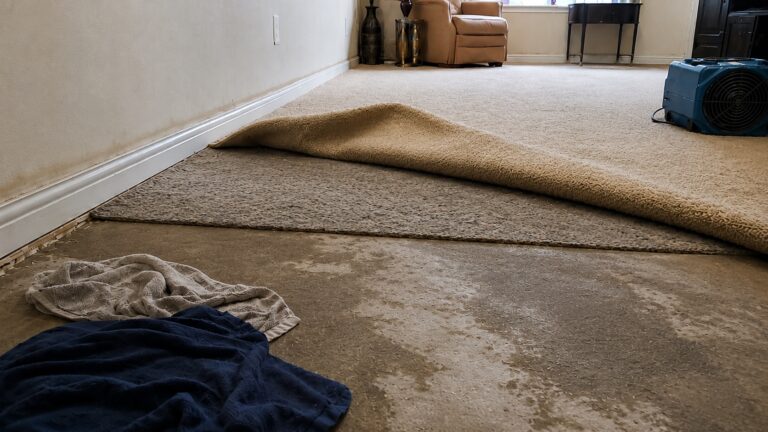
After a plumbing leak, appliance overflow, or minor flood, removing standing water is only the first step. Flooring, carpet, baseboards, drywall, cabinets, and subfloors can continue holding moisture long after the visible puddle is gone. Directed airflow helps move damp air away from wet surfaces and increases evaporation, which is why restoration crews use air movers rather than relying only on ordinary household fans.
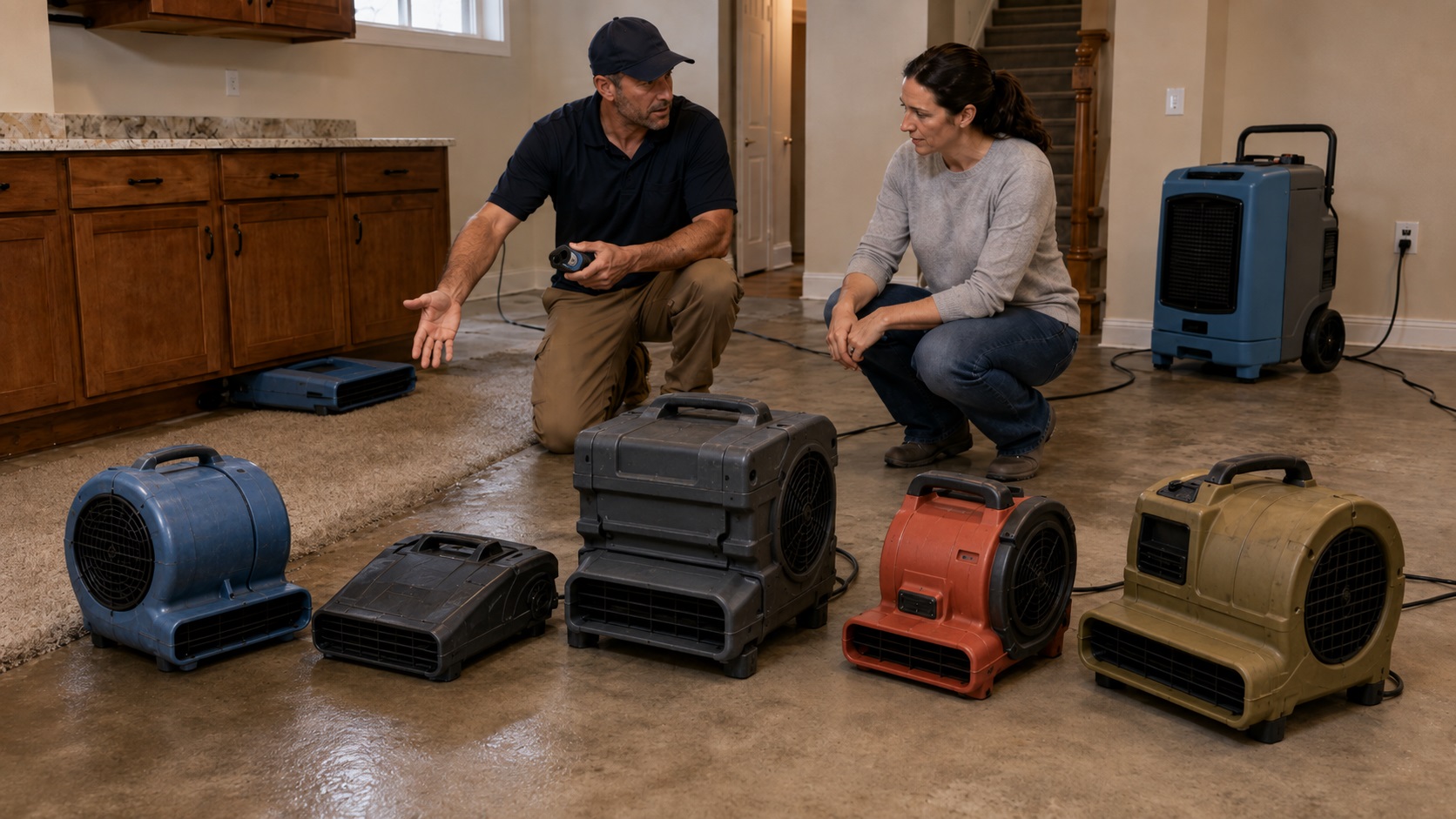
The best air movers for drying floors, carpets, and water damage create concentrated airflow that can be aimed across flooring, toward lower walls, or beneath cabinets. Compact models suit isolated household leaks, while high-output restoration blowers are better suited to broad carpet, flooring, or basement drying.
An air mover does not remove moisture from the building by itself. It normally works best alongside dehumidification, safe outdoor air exchange, water extraction, and moisture testing. For a complete recovery sequence, see our guide to drying a house after flood damage and our broader guide to preventing recurring moisture damage.
As an Amazon Associate, this site earns from qualifying purchases. This does not affect the price you pay. Our recommendations are based on research, product reliability, and real-world usability in moisture-prone environments.
Quick Picks: Air Movers for Home Water-Damage Drying
- Best Overall Air Mover: XPOWER P-230AT Mini Mighty 925 CFM Centrifugal Air Mover
- Best Compact Homeowner Air Mover: DEWALT DXAM-2260 Portable 600 CFM Air Mover/Floor Dryer
- Best Budget Air Mover for Small Wet Areas: Lasko U12104 High Velocity Portable Utility Fan
- Best Low-Profile Pivoting Air Mover: VEVOR 600 CFM Pivoting Utility Fan
- Best Low-Amp Utility Blower: Air King 9550 Commercial Grade Pivoting Utility Blower
- Best High-Output Professional Air Mover: XPOWER P-830 Pro 1 HP 3600 CFM Air Mover
Which Air Movers Work Best for Wet Floors, Carpet, and Water Damage?
Best Overall Air Mover: XPOWER P-230AT Mini Mighty 925 CFM Centrifugal Air Mover
The XPOWER P-230AT offers the strongest balance of directed airflow, portability, positioning flexibility, and restoration-oriented features in this comparison. Its centrifugal housing concentrates airflow more effectively than a typical household fan, making it suitable for wet carpet, hard flooring, lower walls, baseboards, and localized water exposure after appliance or plumbing leaks.
The compact body is easier for a homeowner to carry and store than a large contractor blower. It also includes a timer and an onboard power outlet, which are practical features when drying equipment must run for extended periods. Its outlet can be aimed across a floor or repositioned toward a wall rather than simply circulating air throughout the room.
Key Features
- Manufacturer-rated airflow of up to 925 CFM
- Three operating speeds for adjusting airflow to the drying area
- Four placement angles for floors, carpets, walls, and general circulation
- Built-in three-hour timer for controlled operation
- Onboard electrical outlet for approved multi-unit configurations
- Stackable housing for easier storage
- Compact body with integrated carrying handle
- ETL and CETL safety certification
Pros
- ✔ Strong airflow without the bulk of a full-size restoration blower
- ✔ Timer is useful for shorter drying sessions
- ✔ Multiple angles help target floors and lower wall sections
- ✔ Stackable design suits homeowners who may eventually use two units
- ✔ Low amp draw is helpful when other drying equipment is operating
Cons
- ✖ More equipment than necessary for very small spills
- ✖ Does not replace water extraction or dehumidification
- ✖ Concentrated airflow can spread dust or mold spores if the area is contaminated
Best For
- Homeowners who want one versatile air mover for carpet, flooring, baseboards, and minor flood recovery
- Drying after washing-machine, dishwasher, water-heater, or plumbing leaks
- Users who need a compact restoration-style unit rather than a general utility fan
Check the XPOWER P-230AT on Amazon to see current availability.
Best Compact Homeowner Air Mover: DEWALT DXAM-2260 Portable 600 CFM Air Mover/Floor Dryer
The DEWALT DXAM-2260 is a practical step between a small utility blower and a larger restoration machine. Its manufacturer-rated 600 CFM output is appropriate for localized wet areas, damp carpet, utility rooms, and sections of flooring affected by a clean-water leak.
The compact housing makes it easier to move between rooms, and its established tool-brand design may appeal to homeowners who prefer familiar equipment. Multiple operating positions allow airflow to be directed across a floor or angled toward damp walls and cabinets. It also includes onboard outlets, although users must still follow the unit’s load limits and the capacity of the household circuit.
Key Features
- Manufacturer-rated airflow of up to 600 CFM
- Three fan speeds
- Several operating positions for horizontal and angled drying
- Two onboard outlets for compatible equipment connections
- Compact centrifugal housing
- Integrated handle for room-to-room portability
- Designed for floors, carpets, ventilation, and localized drying
Pros
- ✔ Easier to transport and store than a large professional blower
- ✔ Concentrated airflow is more useful for drying than a standard box fan
- ✔ Recognizable brand with a homeowner-friendly design
- ✔ Onboard outlets may simplify a carefully planned multi-unit setup
Cons
- ✖ Lower airflow than the XPOWER P-230AT and P-830
- ✖ Does not include a built-in drying timer
- ✖ One unit may not be enough for several wet rooms
Best For
- Homeowners who want a compact air mover for occasional leak cleanup
- Small carpeted areas, laundry rooms, kitchens, and entryways
- Users who value portability more than maximum airflow
Check the DEWALT DXAM-2260 on Amazon to see current availability.
Best Budget Air Mover for Small Wet Areas: Lasko U12104 High Velocity Portable Utility Fan
The Lasko U12104 is a compact utility blower intended for smaller residential jobs rather than major restoration work. It can help move air across a damp bathroom floor, laundry-room surface, small carpet section, or recently cleaned area. Its pivoting body provides more control than a fixed household fan, while the carrying handle and compact footprint make it easy to store between uses.
Its airflow is substantially lower than the dedicated centrifugal air movers in this guide. That limitation is important: the Lasko can support drying after a minor clean-water spill, but it should not be treated as a substitute for several restoration blowers after widespread flooding.
Key Features
- Manufacturer-rated airflow of up to approximately 289 CFM
- Three operating speeds
- Wide pivoting range for directing airflow
- Two grounded accessory outlets
- Long power cord for residential placement flexibility
- Integrated carrying handle
- Circuit breaker and reset protection
- ETL-listed design
Pros
- ✔ Compact enough for closets, utility rooms, and small wet areas
- ✔ Simple controls suit occasional homeowner use
- ✔ Pivoting design makes it easy to aim along a floor
- ✔ Useful beyond water cleanup for ventilation and general air circulation
Cons
- ✖ Much lower airflow than restoration-style air movers
- ✖ Not appropriate as the main drying tool after a large flood
- ✖ Broader utility-fan design produces less concentrated drying force
Best For
- Minor sink, tub, appliance, or doorway leaks
- Small patches of damp carpet or hard flooring
- Homeowners who want an inexpensive blower for occasional use
Check the Lasko U12104 on Amazon to see current availability.
Best Low-Profile Pivoting Air Mover: VEVOR 600 CFM Pivoting Utility Fan
The VEVOR 600 CFM model combines moderate airflow with a highly adjustable pivoting housing. That design is useful when airflow must be directed beneath cabinet toe-kicks, across narrow floor sections, toward a damp wall base, or into an awkward corner where a larger centrifugal blower may not fit comfortably.
Its airflow places it above small residential utility fans but below high-output restoration machines. It therefore makes the most sense for localized drying and as a supplementary unit rather than the only blower used during a major water-loss event.
Key Features
- Manufacturer-claimed maximum airflow of 600 CFM
- Pivoting body for changing the airflow angle
- Compact, low-profile floor placement
- Multiple speed settings
- Integrated handle for portability
- Suitable for floors, cabinets, workshops, and localized wet areas
- Housing designed for directional airflow rather than whole-room circulation
Pros
- ✔ Easier to aim into tight areas than many fixed-position blowers
- ✔ Moderate airflow fits small and medium residential drying zones
- ✔ Low-profile design works near cabinets and furniture
- ✔ Portable enough to reposition as drying progresses
Cons
- ✖ Less established restoration track record than XPOWER or DEWALT
- ✖ Customer experiences with noise and housing quality may vary
- ✖ Better suited to localized drying than broad structural drying
Best For
- Drying beneath cabinet edges and around kitchen leaks
- Directing air across narrow strips of flooring
- Homeowners who need more airflow than a small utility fan without buying a large blower
For cabinet-specific drying steps, see how to dry cabinets after a kitchen leak.
Check the VEVOR 600 CFM Pivoting Utility Fan on Amazon to see current availability.
Best Low-Amp Utility Blower: Air King 9550 Commercial Grade Pivoting Utility Blower
The Air King 9550 is a compact commercial-grade utility blower with published airflow and sound specifications. It is not a high-output restoration machine, but it offers a practical residential option for small leaks, damp floor areas, ventilation, and occupied spaces where extremely powerful airflow may be unnecessary.
Its low electrical draw can be useful when a dehumidifier or other drying equipment is already operating on the household electrical system. The pivoting housing also makes it easier to aim airflow across a surface rather than simply blowing into the center of a room.
Key Features
- Three speeds with manufacturer-rated airflow up to approximately 310 CFM
- Published sound ratings across the speed range
- Low maximum amp draw
- Two protected 120-volt accessory outlets
- Wide pivoting adjustment
- Compact commercial-grade housing
- Integrated handle
- ETL-listed design
Pros
- ✔ Low electrical demand is useful when other drying equipment is running
- ✔ Published airflow and sound information improves comparison accuracy
- ✔ Established ventilation brand
- ✔ Adjustable angle works for floors and lower walls
Cons
- ✖ Airflow is closer to a compact utility blower than a restoration machine
- ✖ Shorter cord than some competing models
- ✖ Not intended to handle widespread structural drying alone
Best For
- Small household leaks and damp utility spaces
- Homes where a dehumidifier and blower may need to operate at the same time
- Occupied rooms where moderate airflow is more appropriate than a large restoration unit
Check the Air King 9550 on Amazon to see current availability.
Best High-Output Professional Air Mover: XPOWER P-830 Pro 1 HP 3600 CFM Air Mover
The XPOWER P-830 Pro is intended for larger drying projects where compact homeowner blowers may not provide enough airflow. Its high-output motor and large centrifugal housing can move air across broad carpeted areas, floors, and exposed structural materials. It is closer to the equipment used by restoration contractors than the smaller residential models in this comparison.
That higher output comes with additional weight, electrical demand, noise, and storage requirements. It is most appropriate for homeowners who regularly manage rental properties, maintain large basements, or want equipment capable of supporting a more substantial clean-water drying project.
Key Features
- Manufacturer-rated airflow of up to 3,600 CFM
- One-horsepower motor
- Three speed settings
- Four operating positions
- Stackable housing
- Heavy-duty centrifugal design
- Integrated carrying handle for moving the unit between drying zones
- ETL and CETL certification
Pros
- ✔ Far higher airflow than compact homeowner models
- ✔ Suitable for larger carpet and flooring areas
- ✔ Multiple positions support floor and wall drying
- ✔ Professional-style construction for demanding use
Cons
- ✖ Heavier and harder to store than compact air movers
- ✖ Higher amp draw requires more careful circuit planning
- ✖ Does not include the same daisy-chain convenience as some smaller models
- ✖ Excessive for isolated spills and small household leaks
Best For
- Large basements, broad carpeted rooms, and more extensive clean-water exposure
- Landlords, property managers, and frequent restoration-equipment users
- Homeowners who need a high-output restoration blower rather than a compact utility fan
Check the XPOWER P-830 Pro on Amazon to see current availability.
Compare Airflow, Portability, and Drying Uses at a Glance
| Product | Category | Best Use | Key Strengths | Main Limitation | Amazon |
|---|---|---|---|---|---|
| XPOWER P-230AT | Best Overall | Carpet, floors, lower walls, and localized flood drying | Manufacturer-rated 925 CFM, timer, four positions, onboard outlet, and stackable housing | More equipment than needed for very small spills | View on Amazon |
| DEWALT DXAM-2260 | Best Compact Homeowner Model | Laundry rooms, kitchens, carpet sections, and occasional leaks | Manufacturer-rated 600 CFM, compact design, multiple positions, and onboard outlets | Lower airflow than larger restoration models | View on Amazon |
| Lasko U12104 | Best Budget Option | Small wet areas and minor residential spills | Manufacturer-rated 289 CFM, compact housing, pivoting adjustment, and accessory outlets | Not suitable as the primary blower after major flooding | View on Amazon |
| VEVOR 600 CFM | Best Low-Profile Pivoting Model | Cabinets, corners, narrow floor sections, and localized leaks | Manufacturer-claimed 600 CFM, wide pivoting range, and portable housing | Less established restoration track record than XPOWER or DEWALT | View on Amazon |
| Air King 9550 | Best Low-Amp Utility Blower | Small rooms, utility areas, and occupied residential spaces | Manufacturer-rated 310 CFM, low amp draw, published sound data, and adjustable angle | Lower airflow than dedicated restoration air movers | View on Amazon |
| XPOWER P-830 Pro | Best High-Output Professional Model | Large carpeted rooms, basements, and broad drying zones | Manufacturer-rated 3,600 CFM, heavy-duty motor, four positions, and stackable design | Heavier, higher-draw, and excessive for small leaks | View on Amazon |
Choose the Right Airflow, Size, and Power Draw for the Wet Area
Match the Machine to the Size of the Wet Area
A small pivoting utility blower may be sufficient for a damp bathroom floor or a narrow section of carpet. It is unlikely to be sufficient for a flooded basement, several wet rooms, or broad carpet saturation.
For localized residential leaks, the Lasko, Air King, VEVOR, and DEWALT models are easier to store and reposition. The XPOWER P-230AT provides a stronger all-purpose option. The P-830 is better reserved for larger spaces or frequent restoration work.
Do not rely on a fixed square-foot coverage claim. Drying requirements depend on the amount of water, material type, room shape, temperature, humidity, airflow path, and whether water has reached concealed layers.
Understand CFM and Air Velocity
CFM describes the volume of air moved, but it does not tell the whole story. A centrifugal air mover can direct a concentrated stream across a wet surface, while a general fan may distribute its airflow over a much wider area.
Higher CFM is useful for broad drying zones, but placement can be more important than purchasing the largest motor. Two compact units aimed from different directions may dry an irregular room more evenly than one powerful blower positioned in a corner.
For material-specific steps beyond equipment placement, see how to dry flooring after minor flooding.
Match the Airflow Angle to Floors, Walls, and Cabinets
For wet flooring, the outlet should normally be positioned close enough to sweep air across the surface. For lower drywall or baseboards, an angled or upright position may work better. Pivoting utility blowers offer continuous adjustment, while centrifugal models typically provide several fixed positions.
A low-profile or pivoting model can be especially useful when drying near cabinets. However, airflow directed at the cabinet exterior cannot confirm that the wall cavity or floor beneath it is dry.
If drywall or wall framing was exposed, follow the additional steps in how to dry walls after water damage.
Check Amp Draw Before Running Several Machines
Air movers are often used with dehumidifiers, wet vacuums, pumps, and other electrical equipment. All of those devices create a load on the circuit.
An onboard outlet does not mean that an unlimited number of machines can be connected. Follow the air mover manufacturer’s connection limits, account for the amp draw of every connected device, and avoid overloaded extension cords or power strips.
Decide Whether Compact Storage or Contractor Output Matters More
Compact air movers usually weigh less, occupy less storage space, and are easier to carry upstairs. Larger professional machines offer more output but can be inconvenient for homeowners who only need them occasionally.
Stackable housings are helpful when storing several units. Cord wraps, balanced handles, and stable placement angles also matter during repeated repositioning.
Look for Safety Certifications
Choose equipment with recognized electrical safety certification, such as ETL or UL listing. Even certified equipment must be kept out of standing water and connected only to a dry, safe electrical source.
How Air Movers and Dehumidifiers Work Together
Air movers increase evaporation by replacing the humid layer of air directly above a wet surface with drier moving air. The water does not disappear. It becomes water vapor in the room.
A dehumidifier removes part of that water vapor from the air and collects or drains it away. Without dehumidification or controlled outdoor air exchange, indoor humidity can rise until evaporation slows significantly. Moisture may also migrate to cooler surfaces and condense elsewhere.
For this reason, air movers and dehumidifiers perform different but complementary jobs:
- Air mover: Encourages moisture to leave carpets, flooring, wood, drywall, and other surfaces.
- Dehumidifier: Removes evaporated moisture from the surrounding air.
- Moisture meter: Helps determine whether materials are actually drying.
Our comparison of the best dehumidifiers for mold prevention explains the moisture-removal side of the drying process.
How to Position and Run Air Movers Safely After Water Damage
Remove Standing Water First
An air mover should not be used as a substitute for pumping, mopping, or extracting standing water. Remove bulk water first whenever it is safe to do so. Never place a blower in a puddle or touch electrical equipment while standing on a wet surface.
Confirm the Water Is Not Contaminated
Clean water from a recently broken supply line is different from water containing sewage, outdoor floodwater, or long-standing microbial contamination. Category 2 and Category 3 water losses require additional safety precautions and usually warrant professional restoration.
Do not aggressively blow air across sewage residue, contaminated carpet, animal waste, or suspected hazardous dust.
Position Airflow Across the Surface
Air generally dries a surface more effectively when it travels across it rather than striking one small spot directly. Start with the outlet aimed along the length of the wet floor or carpet. Adjust the angle if the air is lifting carpet edges, moving contaminated debris, or failing to reach the damp area.
Create a Controlled Drying Zone
Close off unaffected rooms when appropriate, remove wet contents, and give the airflow a clear path. Open interior doors, drawers, or cabinet doors only when doing so is safe and helps expose clean, damp surfaces.
Avoid trapping extremely humid air in a sealed room unless a dehumidifier is operating effectively inside it.
Reposition the Air Mover
One placement may not dry every side of a room. Move the blower periodically to reach corners, wall edges, cabinet bases, and the opposite side of furniture. More than one air mover may be needed for irregular spaces.
Verify Drying With Measurements
Do not stop merely because the surface feels dry. Carpet backing, wood subflooring, drywall cores, sill plates, and enclosed cavities can remain damp. Compare moisture readings from the affected area with readings from a known dry area made of the same material.
Our guide to the best moisture meters for hidden water damage can help homeowners choose a suitable testing tool.
Common Air-Mover Mistakes to Avoid
Blowing Air Across Visible or Suspected Mold
Strong airflow can spread spores, contaminated dust, and fragments to unaffected rooms. Do not aim an air mover directly at visible mold unless the area has been assessed and properly contained.
Assuming Surface Dryness Means the Structure Is Dry
A floor may feel dry while padding, underlayment, or subflooring remains wet. Likewise, drywall paint may feel dry even when insulation or framing inside the wall is damp.
Using Too Much Equipment on One Circuit
Several low-amp air movers can still overload a circuit when combined with a dehumidifier or extraction equipment. Check ratings rather than assuming every onboard outlet is available for another blower.
Trying to Dry Materials That Should Be Removed
Contaminated carpet padding, swollen particleboard, deteriorated drywall, and waterlogged insulation may require removal rather than prolonged airflow. Additional drying time cannot restore material that has lost structural integrity or cannot be cleaned safely.
Buying Only by the Largest CFM Number
A very large blower may be difficult to position, noisy in an occupied home, and excessive for a small wet area. The right combination of placement, dehumidification, and moisture verification is usually more important than choosing the highest claimed airflow.
Ignoring Carpet and Subfloor Layers
Directing air over the top of carpet does not guarantee that the padding and subfloor are drying. Carpet may need to be lifted or removed depending on the water source, duration, construction, and contamination level. See our carpet and subfloor flood-recovery guide for a broader decision process.
Frequently Asked Questions About Air Movers
What is the difference between an air mover and a regular fan?
An air mover is designed to produce concentrated, directional airflow across surfaces. A regular household fan generally circulates air over a broader area. Air movers also commonly include multiple drying positions, stackable housings, heavy-duty motors, onboard outlets, or restoration-oriented construction.
Will an air mover remove moisture from a room?
No. It helps moisture evaporate from wet materials, but the resulting water vapor remains in the indoor air. A dehumidifier or controlled air exchange is often needed to remove that moisture from the drying environment.
How many air movers do I need?
The number depends on the size and shape of the wet area, the materials involved, airflow obstructions, and the severity of the water exposure. A small leak may require one compact unit. A larger room or several wet surfaces may need multiple units aimed from different directions.
Can I use an air mover on wet carpet?
Yes, when the water source is clean and the carpet is considered salvageable. However, airflow over the carpet surface may not dry wet padding or subflooring. Contaminated carpet and padding generally require professional evaluation and may need removal.
How long should an air mover run after a leak?
There is no universal time. Drying may take hours or several days depending on the material, humidity, temperature, water depth, and equipment setup. Continue monitoring moisture levels rather than using time alone as the stopping point.
Can I leave an air mover running overnight?
Many restoration-style air movers are intended for extended operation, but the unit must be in good condition, correctly positioned, connected to a safe dry circuit, and operated according to the manufacturer’s instructions. Do not leave questionable wiring, overloaded cords, or equipment near standing water unattended.
Should windows be open while an air mover is running?
That depends on outdoor conditions. Opening windows can help when outdoor air is substantially drier than indoor air. It can slow drying when the outdoor air is hot and humid. In humid conditions, closing windows and using a dehumidifier is often more effective.
Can air movers dry inside walls or beneath flooring?
They can support drying when hidden materials are properly exposed, but surface airflow alone may not reach enclosed cavities. Wet insulation, wall cavities, carpet padding, and subfloors may require access, removal, specialized drying systems, or professional restoration.
Final Air Mover Recommendations by Drying Situation
For most homeowners, the XPOWER P-230AT is the strongest overall choice. It delivers restoration-style airflow while remaining compact enough for storage and occasional residential use.
Choose the DEWALT DXAM-2260 when portability and familiar controls matter more than maximum output. The Lasko U12104 is the more practical choice for minor spills and small damp areas where a full restoration blower would be unnecessary.
The VEVOR 600 CFM Pivoting Utility Fan is useful around cabinets, corners, and narrow floor sections. The Air King 9550 is a practical option when low electrical draw matters and only moderate airflow is needed.
For larger rooms, broad carpeted areas, or frequent property-maintenance work, the XPOWER P-830 Pro provides substantially more airflow. Its added size and electrical demand make it less convenient for ordinary household spills, but more appropriate for demanding drying projects.
Regardless of the model, use the air mover as one part of a complete drying process. Remove standing water, control indoor humidity, avoid spreading contamination, and verify the final moisture level before reinstalling flooring or closing damp cavities.