Signs of Moisture Under Vinyl Flooring
Common signs of moisture under vinyl flooring include bubbling, lifting seams, curling edges, soft or spongy areas, musty odors, dark staining along plank joints, and adhesive failure. Vinyl can look dry on the surface while moisture remains trapped between the flooring and the subfloor.
These symptoms matter because trapped moisture can weaken adhesive, affect underlayment, and eventually reach plywood, OSB, or concrete below the vinyl. The earlier you recognize the pattern, the easier it is to inspect the source before the floor becomes unstable or mold conditions develop.
For broader floor, wall, cabinet, and room-by-room warning signs, review how to find hidden moisture in different areas of your home. This vinyl-specific guide stays focused on the surface changes, odors, seam problems, and subfloor warning signs that suggest moisture may be trapped below vinyl flooring.
Why Moisture Under Vinyl Flooring Is Easy to Miss
Vinyl flooring is designed to resist water from above, but that resistance can work against homeowners when moisture becomes trapped underneath. Instead of soaking through the surface and drying quickly, water often stays sealed between the vinyl and the subfloor.
This trapped moisture creates a slow, hidden deterioration process. Adhesives weaken, materials expand, and subfloors begin absorbing moisture long before dramatic damage becomes visible.
Several features of vinyl flooring make hidden moisture especially likely:
- Water-resistant surface layers limit evaporation
- Tight seams trap moisture between planks or sheets
- Adhesive layers can hold moisture against subfloor materials
- Underlayment materials may retain moisture for extended periods
- Subfloors often absorb moisture before visible symptoms appear
In many cases, moisture problems begin after events that seem minor, such as a small appliance leak or a spill that appears to dry quickly. However, water can move laterally beneath vinyl surfaces, spreading farther than expected.
Even small amounts of water can remain trapped when the floor system has little airflow or drying access.
Symptoms may appear several feet from the original leak or spill because water can travel under the vinyl before visible damage shows up.
Common Signs of Moisture Under Vinyl Flooring
The most reliable way to identify moisture problems under vinyl flooring is by recognizing physical changes in the flooring surface. These changes often begin subtly but gradually worsen as moisture continues to affect underlying materials.
Quick check: Symptoms are more concerning when two or more signs appear together, such as bubbling plus odor, soft flooring plus seam staining, or lifting edges near a known leak source.
Bubbling or Blistering in the Vinyl Surface
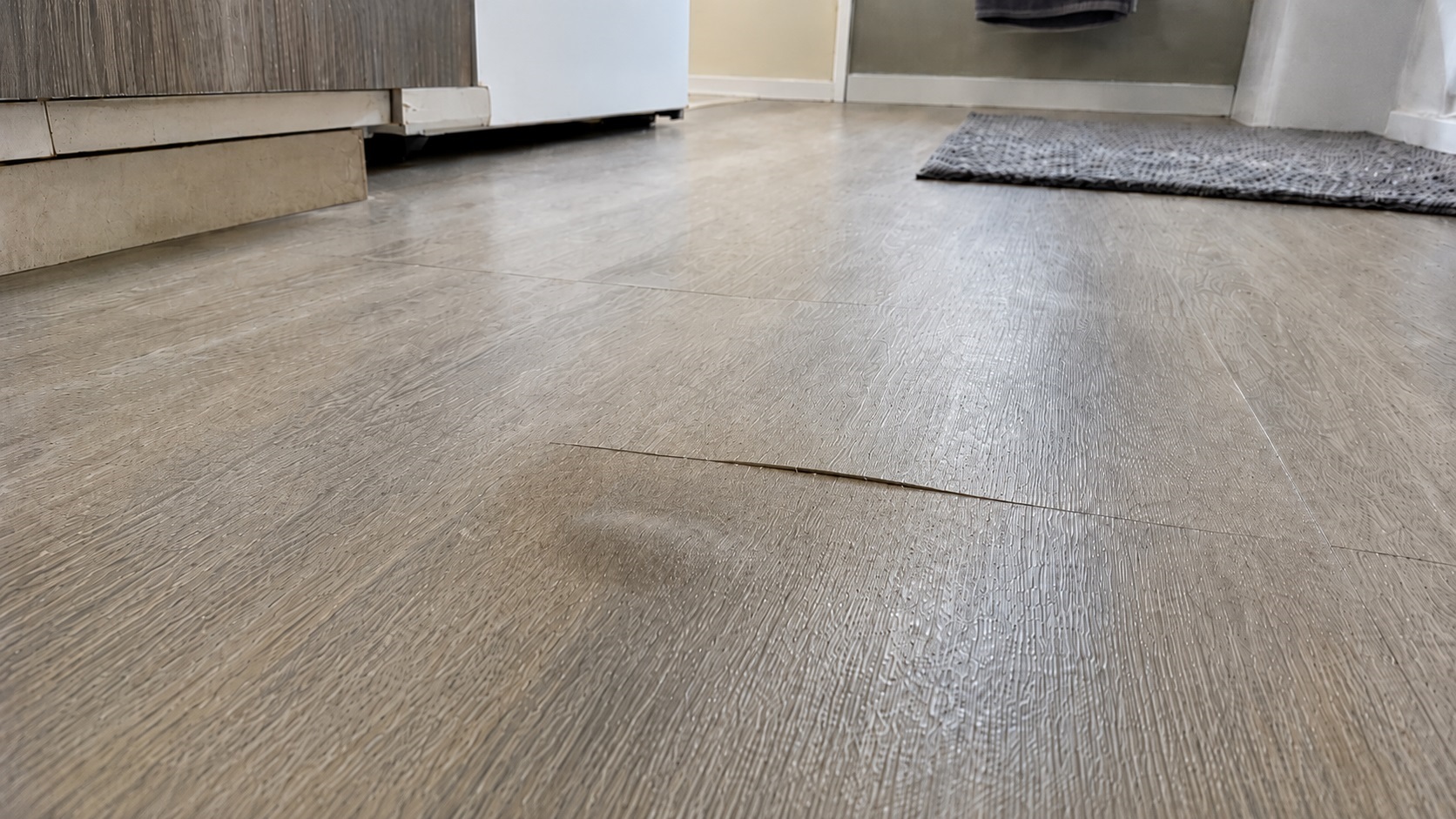
Bubbling is one of the most recognizable signs of trapped moisture. This occurs when moisture weakens the adhesive bond between the vinyl and the subfloor. As the bond fails, sections of vinyl lift slightly, forming bubbles or blisters.
These bubbles may appear in:
- Kitchen floors near appliances
- Bathrooms near sinks or toilets
- Basements or slab-on-grade areas
- Entryways exposed to wet shoes or outdoor moisture
At first, bubbles may be small and easy to miss. If moisture remains trapped, they may expand or appear in nearby areas.
It’s important to understand that bubbling does not always mean mold is present. However, it strongly suggests that moisture has affected the adhesive layer and requires further investigation.
Lifting Corners or Curling Edges
Another early sign of moisture under vinyl flooring is lifting along edges or seams. When moisture affects adhesives or causes expansion beneath the flooring, corners and seams may begin to curl upward.
This is especially common:
- Along room perimeters
- Near baseboards
- Around floor transitions
- At doorway thresholds
Edge curling often develops slowly, and homeowners may initially assume it results from normal aging. However, when curling occurs in localized areas—especially near plumbing fixtures—it often signals moisture intrusion.
Loose Seams or Separation Between Planks
Vinyl plank flooring relies on tight connections between planks. Moisture beneath the flooring can weaken these connections, causing visible gaps or separation.
Signs of seam problems include:
- Visible spacing between planks
- Uneven plank alignment
- Movement when stepped on
- Clicking sounds under pressure
Loose seams allow additional moisture to enter, worsening the problem over time. In environments with ongoing humidity or repeated leaks, these seam failures may spread across larger areas.
If separation appears alongside other symptoms such as odor or softness, deeper inspection may be necessary. Methods for evaluating hidden moisture more thoroughly are covered in how to inspect flooring for hidden moisture, which explains practical ways to confirm moisture presence without immediate removal.
What Moisture Symptoms Under Vinyl Flooring Usually Mean
Not all flooring symptoms indicate the same level of damage. Some changes signal minor moisture exposure, while others suggest deeper structural concerns. Understanding what each symptom typically means helps homeowners decide whether simple drying may resolve the issue or whether professional inspection is necessary.
Soft or Spongy Areas Underfoot
Soft or spongy flooring is one of the most concerning signs of moisture under vinyl flooring. This usually means moisture has reached the subfloor and begun weakening its structure.
When moisture saturates plywood or OSB subflooring, the wood fibers can swell, weaken, and compress under weight. That is why the floor may feel flexible, uneven, or spongy when walked on.
Common situations that lead to soft flooring include:
- Leaks that went unnoticed for days or weeks
- Standing water that soaked beneath flooring
- Repeated minor leaks in the same area
- Moisture trapped under poorly dried vinyl
If the flooring feels soft in multiple locations or continues worsening, moisture may have spread into the subfloor. For a deeper diagnosis of structural softness, see why flooring feels soft after water damage.
Musty or Damp Odors Near the Floor
A musty smell often signals hidden moisture beneath vinyl flooring, even when visible damage is minimal. Odors develop when organic materials—such as wood subfloors or dust trapped beneath vinyl—remain damp long enough to support microbial growth.
This odor may:
- Appear strongest in the morning
- Become more noticeable in humid weather
- Persist despite normal cleaning
- Return quickly after temporary airing
Persistent odor suggests moisture is not drying naturally. If left unresolved, these conditions can eventually support mold growth. For broader signs of hidden mold developing beneath flooring systems, reviewing signs of mold under flooring can help determine whether further action is needed.
Dark Staining or Discoloration Along Seams
Moisture often enters through seams, edges, or transitions. When water travels under vinyl, staining may develop along plank joints or at the room perimeter.
This discoloration may appear as:
- Darkened seam lines
- Yellow or brown staining
- Shadow-like discoloration under the surface
- Uneven fading near moisture entry points
Staining usually indicates moisture movement rather than surface damage alone. When combined with bubbling or odor, it strongly suggests trapped moisture beneath the vinyl.
Adhesive Failure or Tacky Residue
Vinyl flooring depends heavily on adhesives. Moisture weakens these adhesives, causing them to soften or release from the subfloor.
Signs of adhesive failure include:
- Loose flooring that shifts slightly
- Sticky or tacky residue appearing near seams
- Sections of vinyl lifting without visible cracking
- Uneven surface areas that feel detached
Adhesive breakdown allows moisture to spread more easily beneath the flooring. This creates a cycle where additional moisture exposure leads to larger affected areas.
Common Sources of Moisture Under Vinyl Flooring
Moisture rarely appears under vinyl flooring without a clear entry point. Identifying likely sources helps homeowners understand how the problem began and how to prevent recurrence.
Appliance Leaks
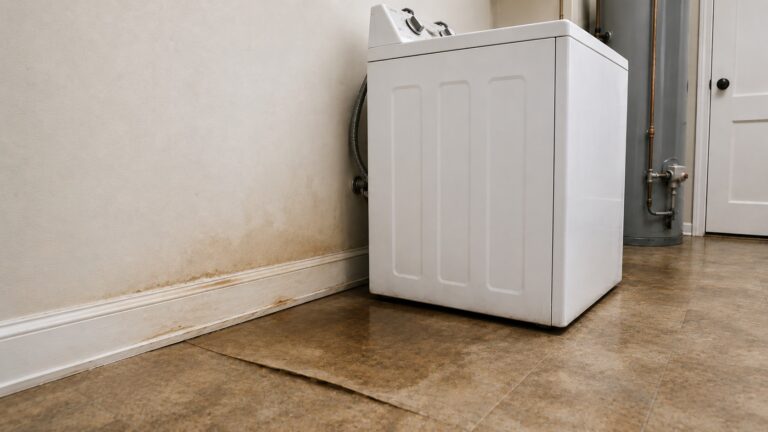
Kitchen appliances are among the most common sources of hidden flooring moisture. Dishwashers, refrigerators, and washing machines can leak slowly over time, allowing water to seep beneath vinyl flooring without immediate detection.
These leaks often go unnoticed because:
- Water flows beneath the appliance
- Floor surfaces dry quickly on top
- Moisture spreads beneath the vinyl layer
- Damage occurs before visible pooling appears
Appliance-related moisture problems are especially common around dishwashers, where slow leaks may persist for months before symptoms appear.
Bathroom Fixtures and Plumbing
Bathrooms create multiple opportunities for water intrusion. Toilets, sinks, tubs, and showers all introduce moisture into confined spaces.
Moisture from plumbing may reach vinyl flooring through:
- Loose toilet seals
- Slow pipe leaks under sinks
- Overflow incidents
- Shower or tub splash-out
- Improperly sealed fixtures
Bathroom moisture problems often produce localized symptoms near plumbing fixtures. Early signs frequently appear at seams surrounding the toilet base or vanity area.
Water Spills and Minor Flooding
Even small flooding events can leave lasting moisture beneath vinyl flooring. When water spreads across the surface, it may seep through edges and remain trapped beneath the flooring.
This commonly occurs after:
- Broken supply lines
- Overflowing sinks or bathtubs
- Heavy rain entering through doors
- Wet mopping with excessive water
After minor flooding, the surface may appear dry while moisture remains trapped underneath. This article focuses on warning signs; step-by-step recovery guidance belongs in how to dry flooring after minor flooding.
Moisture Rising Through Concrete Slabs
Homes built on concrete slabs can develop vinyl flooring problems when slab moisture or vapor pressure affects the adhesive layer from below. The surface may look dry while moisture conditions beneath the vinyl continue weakening the bond.
Slab-related moisture issues often produce:
- Widespread bubbling
- Uniform discoloration
- Recurring adhesive failure
- Persistent humidity near the floor
These symptoms may develop gradually and appear in large sections rather than isolated spots.
Why Vinyl Flooring Changes Shape When Moisture Is Trapped
Vinyl itself may resist water, but the adhesive, underlayment, and subfloor below it can still absorb or hold moisture. That is why the first visible changes often look like lifting, bubbling, seam movement, or softness rather than obvious surface water.
Adhesive Weakening and Separation
Most vinyl flooring systems rely on adhesives to bond the flooring securely to the subfloor. When moisture reaches the adhesive layer, the adhesive can soften, dissolve, or lose its grip.
This leads to several noticeable effects:
- Floor sections that shift slightly under pressure
- Raised areas that return temporarily when pressed down
- Uneven walking surfaces
- Localized lifting around seams
Adhesive failure often spreads outward from the original moisture source. As moisture continues moving beneath the flooring, additional sections may loosen over time.
Expansion of Subfloor Materials
While vinyl itself resists water absorption, subfloor materials beneath it often do not. Wood-based subfloors such as plywood or oriented strand board (OSB) absorb moisture readily.
As subfloor materials absorb water, they expand slightly. This expansion can push against the vinyl above, creating pressure that leads to bubbling or distortion.
Common results of subfloor expansion include:
- Raised areas that feel uneven
- Visible rippling or distortion
- Permanent deformation in vinyl surfaces
- Difficulty keeping seams aligned
Even minor expansion can create noticeable surface changes, especially in tightly installed vinyl flooring systems.
Movement Between Flooring Sections
Vinyl plank systems depend on tight connections between individual pieces. When moisture affects the subfloor or underlayment, these connections may loosen.
This can result in:
- Gaps appearing between planks
- Shifting movement when stepping on affected areas
- Clicking or creaking sounds
- Misaligned plank edges
Movement between planks often signals that underlying materials are no longer stable. This type of symptom deserves closer inspection, especially if it appears after a known leak or water exposure.
When Moisture May Have Reached the Subfloor
The biggest warning sign is moisture that has moved beyond the vinyl surface and into the subfloor. Surface-level moisture may be easier to resolve, but subfloor involvement usually requires more careful drying, inspection, or repair.
The clearest warning signs are widespread softness, persistent odor, and symptoms that keep spreading.
Persistent Softness in Multiple Areas
If softness appears in more than one location, it usually indicates moisture spread beneath the flooring. Localized softness near a single seam may reflect minor damage, but widespread softness suggests deeper structural impact.
This often occurs when:
- Water spreads under large flooring sections
- Leaks remain active for extended periods
- Moisture enters from multiple locations
Widespread softness is one of the strongest indicators that subfloor materials are affected.
Long-Term Odor That Does Not Improve
Odors that persist even after cleaning or ventilation often indicate trapped moisture beneath flooring materials. When moisture remains sealed under vinyl, airflow cannot remove it naturally.
Persistent odor may indicate:
- Moisture trapped below flooring layers
- Damp organic material supporting microbial growth
- Early mold development beneath the surface
If odors continue despite drying attempts, professional inspection may be required to determine the extent of moisture spread.
Flooring That Continues to Deteriorate Over Time
Moisture problems rarely remain static. If symptoms continue worsening over weeks or months, this usually indicates that moisture remains active beneath the flooring.
Progressive deterioration may include:
- New bubbles forming in previously unaffected areas
- Seams lifting farther apart
- Soft spots expanding
- Visible staining spreading outward
When symptoms spread, the likelihood of subfloor involvement increases significantly.
When to Inspect Further or Call a Professional
Not every flooring issue requires immediate professional repair, but certain warning signs strongly suggest the need for deeper inspection. Acting early can prevent more extensive structural damage.
Situations That Justify Further Inspection
Additional inspection is recommended when:
- Bubbling continues expanding over time
- Softness becomes noticeable during normal walking
- Odors remain despite cleaning
- Seams or edges repeatedly lift
- Moisture exposure occurred recently and the floor still smells damp, feels soft, or shows spreading surface changes
Start by checking the nearest likely source: appliance supply lines, toilet bases, sink cabinets, exterior doors, wet mopping patterns, and slab areas where moisture may rise from below. Then inspect seams, lifted edges, transitions, and soft spots. Practical inspection methods are described in how to inspect flooring for hidden moisture.
When Professional Help Is Strongly Recommended
Professional assistance becomes important when moisture may have caused structural damage or when symptoms worsen quickly.
Safety note: Do not seal, glue down, or cover moisture-damaged vinyl until the source is fixed and the affected materials are confirmed dry. If the floor feels unstable, if water came from sewage or contaminated flooding, or if you see visible mold growth, stop the inspection and get professional help.
Situations that often require professional evaluation include:
- Large areas of soft or unstable flooring
- Repeated leaks affecting the same location
- Strong or persistent musty odors
- Evidence of subfloor deterioration
- Uncertainty about the moisture source
In severe cases, moisture damage beneath flooring can affect structural integrity. Early professional involvement reduces the risk of more costly repairs later.
Frequently Asked Questions About Moisture Under Vinyl Flooring
Can moisture stay trapped under vinyl flooring?
Yes, moisture can remain trapped under vinyl flooring for long periods. Because vinyl surfaces resist water, moisture underneath does not evaporate easily. This creates conditions where dampness can persist even when the floor looks dry on the surface.
Trapped moisture often remains hidden until symptoms such as bubbling, odor, or softness appear. This is why early signs should never be ignored, especially after leaks or flooding events.
Does bubbling vinyl always mean water damage?
Bubbling vinyl strongly suggests adhesive failure or trapped moisture, but it does not always indicate major water damage. In some cases, poor installation or aging adhesives can also cause bubbling.
However, when bubbling appears alongside other symptoms—such as odor, softness, or staining—it is more likely linked to moisture problems beneath the flooring.
Can mold grow under vinyl flooring?
Yes, mold can grow beneath vinyl flooring when moisture remains trapped long enough. Organic materials such as dust, wood subflooring, and adhesives provide a food source for mold if they stay damp.
If mold develops beneath vinyl flooring, symptoms may include persistent musty odors, dark staining, or worsening surface damage. If the warning signs look more like mold than moisture alone, compare them with signs of mold under flooring.
Should vinyl flooring be removed if moisture is underneath?
Not all moisture problems require immediate flooring removal. Minor moisture exposure may resolve with proper drying if detected early. However, removal may become necessary when subfloor materials remain wet or damaged.
Removal decisions should depend on the amount of moisture present, how long it remained trapped, the condition of the subfloor, and whether visible symptoms are spreading. When damage appears widespread or persistent, professional assessment may be necessary to determine whether flooring removal is required.
Can a moisture meter detect water under vinyl flooring?
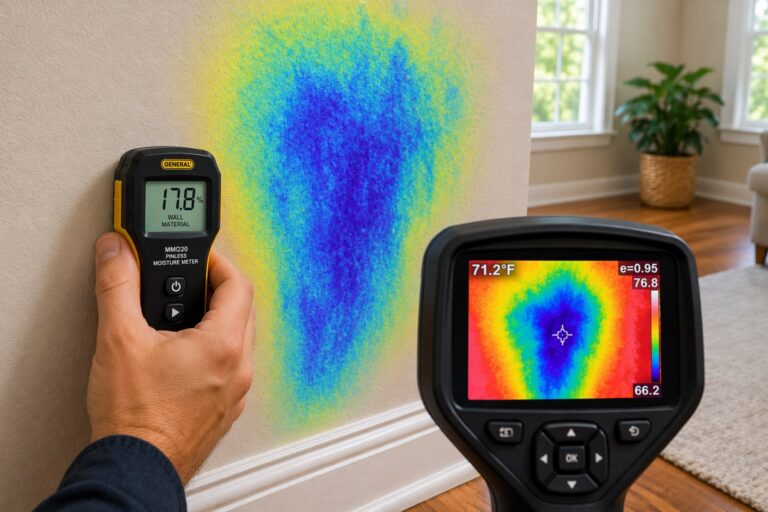
Moisture meters can help detect elevated moisture levels beneath vinyl flooring, especially near seams or edges. However, readings may vary depending on flooring thickness and subfloor material.
Using a moisture meter along edges, transitions, or exposed areas can provide valuable information when investigating hidden moisture problems.
What to Do When Vinyl Flooring Shows Moisture Signs
If vinyl flooring shows bubbling, lifting seams, curling edges, soft spots, musty odors, or dark seam staining, treat it as a hidden moisture warning rather than normal wear. Check nearby leak sources, look for spreading symptoms, and avoid covering or resealing the area until the moisture source is understood.
If the affected area grows, feels soft underfoot, smells musty, or follows a recent leak or flood, inspect further before assuming the floor has dried. Early action reduces the chance of adhesive failure, subfloor deterioration, and mold growth beneath the vinyl.
For moisture concerns affecting floors, walls, cabinets, windows, or other specific areas, use how to find hidden moisture in different areas of your home as the broader room-by-room inspection guide.
Key Takeaways
- Bubbling, curling, and loose seams are common early signs of moisture under vinyl flooring.
- Soft or spongy areas often indicate that moisture has reached the subfloor.
- Persistent odors suggest trapped moisture that may support mold growth.
- Moisture can enter through seams, leaks, spills, or rising slab moisture.
- Early detection reduces the likelihood of structural damage and costly repairs.
- Professional inspection may be necessary when symptoms spread or worsen.