
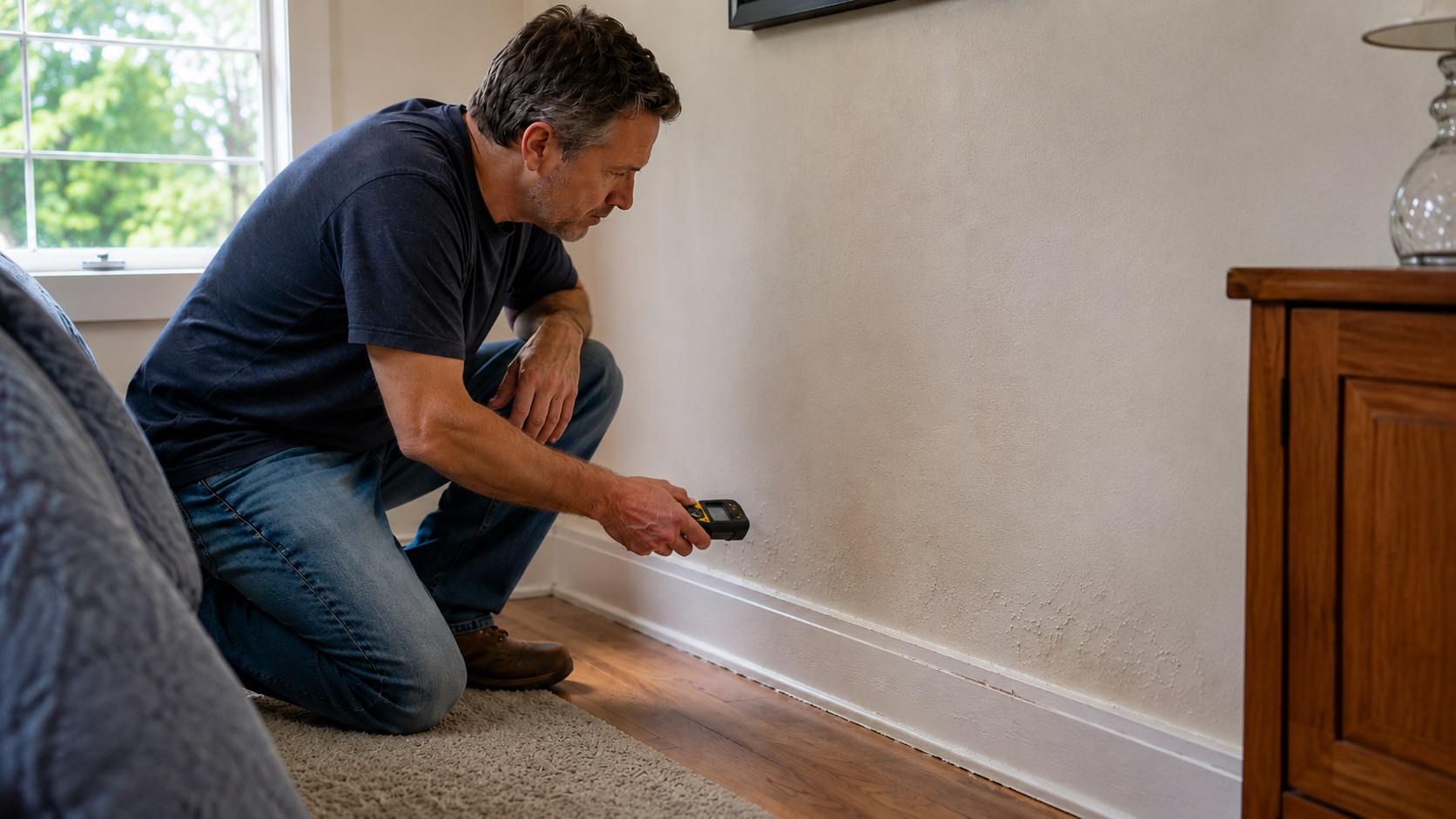
How to Detect Repeated Moisture Problems
To detect repeated moisture problems, look for a pattern instead of judging one stain, odor, damp spot, or mold patch by itself. Moisture that keeps coming back in the same area, under the same conditions, or after cleaning, drying, or repair usually means the visible symptom is only part of the problem.
A stain that darkens after rain, a musty odor that returns during humid weather, mold that comes back after cleaning, or trim that swells again after drying all point to one basic question: what is still allowing moisture to return?
This guide explains how to detect repeated moisture problems by comparing timing, location, recurrence, and material behavior. It is not a full repair manual, mold cleanup guide, basement waterproofing tutorial, or room-by-room inspection checklist. Instead, it helps you identify the moisture pattern so you can choose the most likely next inspection path.
If you are trying to understand the broader home moisture system, this topic fits inside the larger guide to how to find, fix, and prevent moisture problems in homes. This page focuses specifically on repeated moisture detection: recognizing patterns, comparing triggers, and deciding which inspection path makes sense next.
Repeated Moisture Problems Are Usually a Pattern, Not a Single Symptom
A one-time moisture event usually has a clear cause. A pipe burst, overflowing sink, roof leak during one storm, appliance overflow, or spilled water can create obvious damage that is tied to a specific event. Repeated moisture is different. It may appear slowly, disappear temporarily, and then come back when the same conditions return.
That is why repeated moisture problems should be diagnosed as patterns instead of isolated marks. The key is not just what you see. The key is when it appears, where it appears, how often it returns, and what seems to trigger it.
For example, a ceiling stain that darkens only after wind-driven rain suggests a different moisture pathway than a ceiling stain that appears below an upstairs bathroom after showers. Damp baseboards along an exterior wall point in a different direction than damp cabinet flooring under a sink. Mold that comes back in a bathroom corner may involve humidity and airflow, while mold that returns behind a wall or near flooring may involve hidden moisture inside materials.
Repeated moisture is often confusing because the surface may dry between events. Dry paint, dry trim, or a stain that looks old does not always mean the moisture source is gone. Porous materials can hold moisture internally, water can travel from another location, and hidden cavities can stay damp after the visible surface improves.
Why the Same Moisture Problem May Disappear and Return
Moisture problems can seem intermittent because many sources are intermittent. A roof leak may only show during certain rain directions. A drain leak may only appear when a fixture is used. Condensation may only form when indoor humidity rises and a surface is cold enough. Basement seepage may only happen after heavy rain saturates the soil. A slow plumbing leak may wet materials gradually before the surface shows signs again.
This is why repeated moisture detection starts with observation instead of assumptions. You are not only looking for water. You are looking for a repeated relationship between a symptom and a condition.
- Moisture that returns after rain may point toward exterior water entry, roofing, flashing, siding, windows, doors, foundation drainage, or basement seepage.
- Moisture that returns after plumbing use may point toward supply lines, drain lines, fixtures, appliance hoses, or hidden pipe connections.
- Moisture that returns during humid weather may point toward condensation, poor ventilation, cool surfaces, or indoor humidity control issues.
- Moisture that returns after cleaning or repainting may mean the source was never corrected.
- Moisture that returns after drying may mean hidden materials were still damp or became wet again from the same source.
None of these patterns proves the cause by itself, but each one narrows the search. Repeated moisture detection is the process of narrowing possibilities until the most likely source becomes clear.

Common Signs That a Moisture Problem Is Repeating
Repeated moisture problems often start with small signs. The damage may not look dramatic at first. In many homes, the earliest clue is not standing water but a repeating change in smell, color, texture, or material shape.
The most important warning sign is recurrence. A stain that appears once may be old damage. A stain that darkens again, spreads, smells musty, or returns after being painted over is more likely connected to an active or unresolved moisture source.
Stains That Come Back
Water stains on ceilings, walls, baseboards, flooring, cabinet bottoms, or around trim can remain visible long after moisture dries. That means an old stain alone does not prove an active problem. The concern increases when the stain changes.
A recurring stain may:
- Darken after rain
- Expand along drywall seams or ceiling edges
- Reappear through primer or paint
- Return in the same area after drying
- Show a new ring around an older mark
- Appear with odor, softening, bubbling, or swelling
When a stain changes repeatedly, treat it as a moisture pattern rather than a cosmetic issue. The next step is to connect the timing and location to a likely source.
Musty Odors That Return
A musty odor that comes and goes is one of the most common repeated moisture clues. It may be stronger after humid weather, after rain, when HVAC airflow changes, when a cabinet is opened, or when an enclosed area has been closed for a while.
Odor alone does not identify the exact source. It does tell you that moisture may be affecting materials, dust, hidden cavities, or poorly ventilated spaces. The key question is whether the smell returns in the same place or under the same conditions.
For example, a musty smell under a sink after using the fixture suggests a different path than a musty smell near an exterior wall after storms. A musty basement after heavy rain is different from a musty closet during humid weather. Each pattern points the inspection in a different direction.
Mold That Reappears After Cleaning
Mold that returns after cleaning is one of the clearest signs that moisture is still present or still returning. Cleaning can remove visible growth from some surfaces, but it does not fix a hidden leak, condensation problem, wet material, poor airflow pattern, or exterior water entry source.
This does not mean every recurring mold spot proves severe hidden damage. It means the moisture condition that allowed growth may still be active. The correct response is to look for the moisture pattern before repeatedly cleaning, repainting, or covering the surface.
If recurring mold is part of a broader moisture pattern, the mold issue should be handled only after the water source or humidity source is understood. For mold-specific cleanup guidance, use how to remove mold permanently after the moisture pattern has been traced.
Swollen Trim, Soft Flooring, or Bubbling Paint
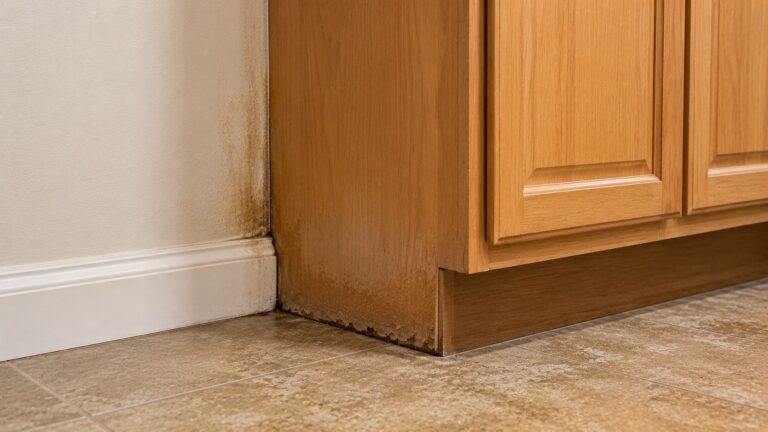
Some repeated moisture problems show up as material movement instead of obvious wetness. Wood trim may swell, MDF baseboards may puff, laminate flooring may cup, paint may bubble, drywall may soften, and cabinet bottoms may warp.
These signs matter because building materials often respond to moisture before water is visible. If the same material keeps changing shape, softening, or separating, the problem should not be treated as normal wear until moisture has been ruled out.
Material symptoms are especially important near:
- Baseboards along exterior walls
- Cabinet floors under sinks
- Window and door trim
- Bathroom walls and flooring
- Ceilings below bathrooms, roofs, or attics
- Basement walls and floor edges
- Laundry rooms and appliance areas
When these symptoms repeat, the goal is to identify whether the trigger is plumbing use, rain, humidity, condensation, basement seepage, or hidden moisture trapped behind the surface.
Step One: Track When the Moisture Comes Back
The first step in detecting repeated moisture problems is to track timing. Timing often gives the strongest clue about the source.
Instead of asking only, “Where is the moisture?” ask, “When does it return?” A symptom that follows rain has a different meaning than a symptom that follows showers, laundry, dishwashing, humidity spikes, or HVAC use.
Moisture After Rain
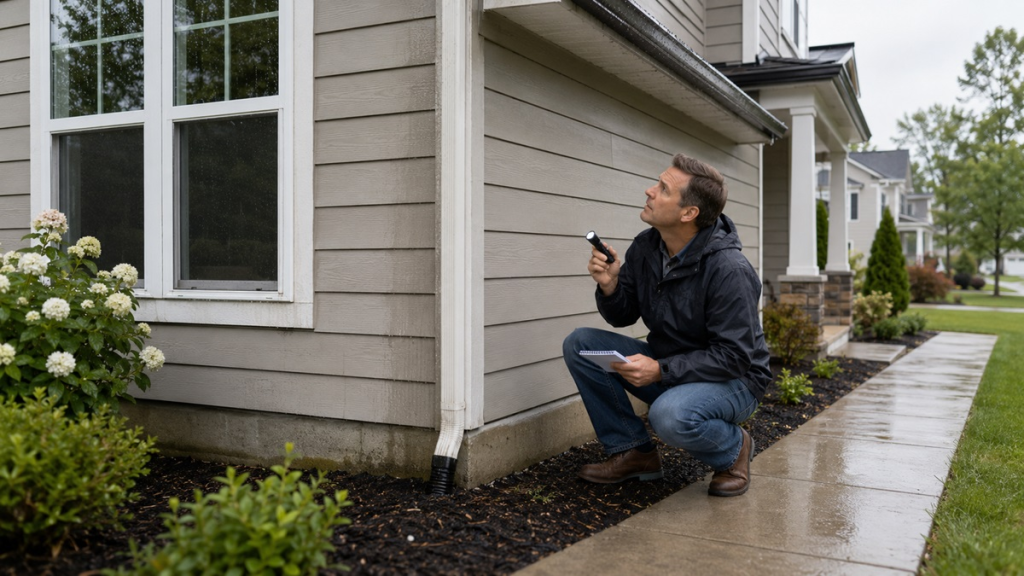
Moisture that returns after rain often points toward an exterior water pathway. This may involve roofing, flashing, siding, windows, doors, chimneys, wall penetrations, foundation drainage, grading, gutters, or basement seepage.
The important detail is not just that it rained. Notice the type of rain. Did the moisture appear after heavy rain, wind-driven rain, long soaking rain, snowmelt, or storms from a certain direction? Did it show up immediately, or did it appear hours later?
Rain-related moisture can travel before it becomes visible indoors. Water may enter at one point, follow framing or sheathing, soak insulation, run behind trim, or appear at a ceiling edge far from the original entry point. If the pattern is strongly connected to rain or exterior wetting, the next diagnostic path is usually exterior water entry rather than indoor humidity alone.
Moisture After Plumbing Use
Moisture that returns after using a sink, shower, toilet, dishwasher, washing machine, refrigerator water line, or upstairs bathroom may point toward plumbing. Slow plumbing leaks can be difficult to notice because they may not drip constantly or visibly.
Watch for symptoms that appear after repeated use rather than immediately. A drain connection may leak only when water runs. A supply line may seep slowly. A shower enclosure may allow water into a wall only during use. An appliance hose may leak only under pressure or during a cycle.
In areas where leaks may repeat between inspections, simple leak sensors can help catch water early under sinks, near appliances, around water heaters, in laundry rooms, and in basement utility areas. For monitoring options, see the guide to the best water leak sensors for early detection.
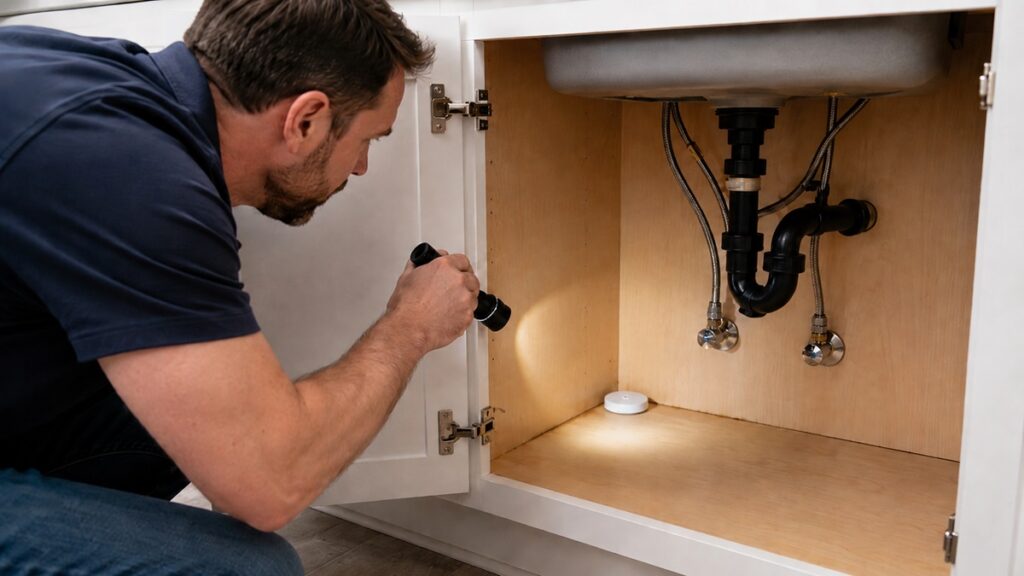
If the repeated moisture seems tied to fixtures, appliance use, or plumbing activity, the problem may fit the hidden leak pathway. For broader warning signs, use signs of slow hidden water leaks as the next supporting guide instead of relying only on visible dripping.
Moisture During Humid Weather
Repeated moisture that appears during humid weather may be related to indoor humidity, condensation, poor ventilation, or cold surface temperatures. This type of problem often feels less obvious than a leak because no water source may be visible.
Humidity-related moisture often shows up as condensation, damp-feeling surfaces, musty odors, mildew-like growth, or recurring mold in areas with poor airflow. It may appear on windows, exterior-facing walls, bathroom surfaces, closets, basements, crawl spaces, or areas where furniture blocks air movement.
The key is to look for a pattern across conditions. Does the problem get worse when the air feels heavy? Does it appear in multiple rooms instead of one isolated plumbing area? Does it show up on colder surfaces? Does the smell or dampness improve when ventilation or dehumidification improves?
If humidity appears to be part of the problem, the next step is not to guess. Measure it. A basic hygrometer can help you see whether indoor humidity is staying high enough to support repeated moisture problems. For that part of the process, see how to test indoor humidity levels.
Moisture That Returns Seasonally
Some repeated moisture problems appear during the same season each year. This can happen because weather, temperature, indoor humidity, soil moisture, and ventilation patterns change throughout the year.
Seasonal recurrence may include window condensation during colder months, basement dampness during rainy seasons, crawl space humidity during warm humid weather, or wall moisture during freeze-thaw cycles.
Seasonal patterns are important because they can make a moisture problem seem random when it is actually predictable. If the same area becomes damp during the same type of weather each year, the source is probably connected to seasonal conditions rather than a one-time event.
For a broader seasonal overview, see seasonal moisture risks every homeowner should know. If the pattern is tied more to indoor humidity changes, how seasonal changes affect indoor moisture and how seasonal weather affects indoor humidity explain the humidity side of the problem.
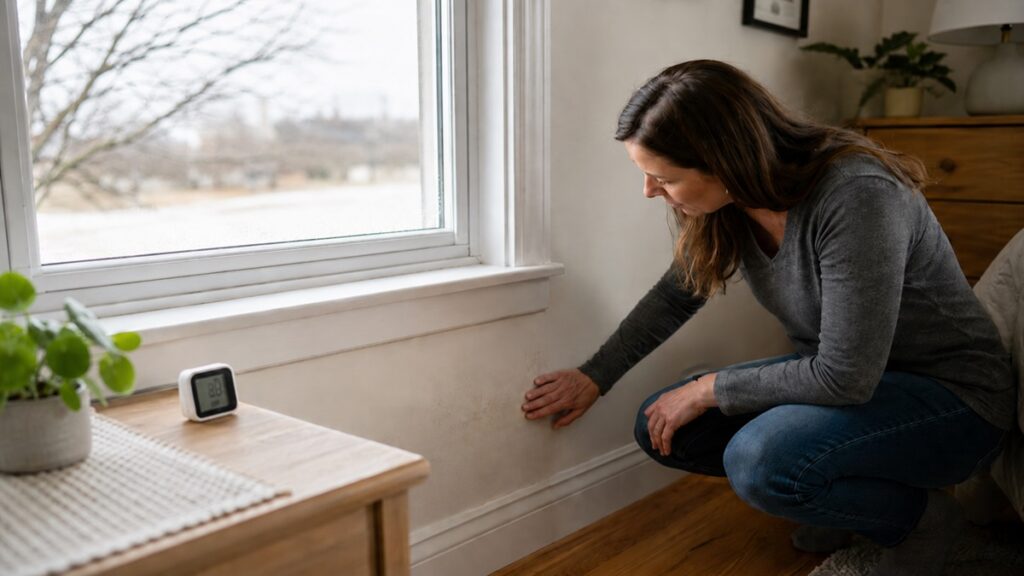
Moisture After Cleanup, Drying, or Repair
One of the most frustrating repeated moisture patterns happens after the homeowner already cleaned, dried, painted, sealed, or repaired the area. This can make the problem feel like it came back from nowhere, but usually one of three things happened.
First, the original moisture source may still be active. Cleaning mold, drying a surface, or repainting a wall does not repair a plumbing leak, exterior leak, basement seepage path, or condensation problem.
Second, hidden materials may not have been fully dried. Drywall, wood, insulation, subflooring, cabinets, trim, and wall cavities can stay damp after the visible surface looks better.
Third, the repair may have covered the symptom instead of correcting the pathway. Paint, caulk, patching, trim replacement, or surface cleaning can hide damage temporarily while the same moisture source keeps feeding the area.
When moisture returns after an attempted fix, the issue moves from simple detection into recurrence analysis. That is where the article on why moisture problems keep returning becomes the more specific next step.
Step Two: Use Location to Narrow the Moisture Pattern
After timing, location is the next major clue. Moisture that appears in a ceiling has different likely sources than moisture behind baseboards, under a sink cabinet, around a window, or along a basement wall.
Location does not prove the source by itself, but it helps narrow the possibilities. A repeated damp spot under a bathroom is not diagnosed the same way as repeated moisture on a north-facing wall, a window sill, a basement corner, or an attic roof deck.
For a more detailed location-based inspection system, use how to find hidden moisture in different areas of your home. This section gives the hub-level overview so you can understand how location changes the diagnostic path.
For specific inspection paths, start with signs of hidden moisture in walls when wall symptoms are unclear, how to detect moisture without opening walls when you need non-invasive checks, and moisture levels that indicate water damage when readings need interpretation.
If the moisture appears near a common problem area, choose the guide that matches the location. Bathroom wall symptoms fit signs of water damage behind shower walls, lower-wall trim problems fit how to detect moisture behind baseboards, attic symptoms fit how to detect hidden moisture in attics, and below-grade symptoms fit how to inspect basements for moisture damage.
Repeated Moisture in Walls
Wall moisture that keeps returning may involve plumbing inside the wall, exterior water entry, condensation, damp insulation, or moisture trapped behind paint, trim, or wall coverings. Watch whether the same wall area darkens after rain, feels cool and damp during humid weather, softens near plumbing, or develops recurring odor.
For wall-specific symptom checks, use signs of hidden moisture in walls. For non-invasive inspection methods, use how to detect moisture without opening walls.
Repeated Moisture in Ceilings
Ceiling moisture that returns usually points upward or sideways: roof leaks, attic condensation, upstairs plumbing, HVAC condensation, or water traveling along framing before it appears below. Compare the timing with rain, bathroom use, HVAC cycles, and attic conditions before assuming the stain is old.
Repeated Moisture Around Floors and Baseboards
Floor-edge and baseboard moisture can repeat because water collects at the lowest visible edge of a room. Look for swelling, cupping, soft flooring, darkened trim, musty odor near the floor, or dampness that follows mopping, plumbing use, exterior rain, slab moisture, or bathroom humidity.
Repeated Moisture in Kitchens and Bathrooms
Kitchens and bathrooms have several built-in moisture sources, so repeated dampness in these areas must be interpreted carefully. The source may be plumbing, drain lines, supply connections, fixture use, shower splash, appliance leaks, condensation, ventilation problems, or past water damage that was never fully dried.
In kitchens, repeated moisture often appears under sinks, near dishwashers, around refrigerator water lines, under cabinets, along flooring edges, or behind baseboards.
In bathrooms, repeated moisture may appear around tubs, showers, toilets, vanities, tile edges, exhaust fan areas, ceilings, and walls that stay damp after use.
The most useful question is whether the moisture follows water use. If symptoms increase after showers, sink use, toilet flushing, dishwasher cycles, or washing machine use, plumbing or fixture-related moisture becomes more likely than general humidity alone.
Repeated Moisture Around Windows and Doors
Windows and doors are common repeated moisture locations because they combine exterior exposure, framing joints, sealants, trim, temperature differences, and indoor humidity. The same visible symptom can come from rain entry, condensation, poor flashing, failed seals, air leakage, or water running down from above.
Repeated window or door moisture may show up as peeling paint, swollen trim, soft drywall, dark sill stains, mold in corners, condensation that returns, or musty odors around the opening.
Timing helps separate causes. Moisture after rain suggests exterior entry. Moisture during cold or humid weather may suggest condensation. Moisture at the lower corner of a window or door may involve drainage, flashing, sill slope, or water traveling inside the assembly.
Repeated Moisture in Basements and Crawl Spaces
Basements and crawl spaces can develop repeated moisture because they are connected to soil, foundation walls, drainage conditions, humidity, vapor movement, plumbing, and air leakage. Moisture may appear after rain, during humid seasons, near floor-wall joints, on foundation walls, around sump systems, or in enclosed storage areas.
Repeated basement or crawl space moisture should be tracked by weather and season. If dampness follows heavy rain, exterior drainage, gutters, grading, foundation cracks, hydrostatic pressure, or sump system performance may be involved. If dampness appears during humid weather without visible seepage, humidity and ventilation may also matter.
Basement and crawl space moisture can affect odors and humidity in the rest of the home, so repeated moisture in these areas should not be ignored even when living spaces look dry.
Repeated Moisture From Slow Hidden Leaks
Slow hidden leaks are one of the most common causes of repeated moisture problems because they can wet materials gradually without creating an obvious puddle. The leak may stop and start depending on plumbing use, pressure, fixture activity, or appliance cycles.
A slow leak may be hidden behind drywall, under cabinets, below flooring, inside ceilings, near appliance connections, behind shower walls, under sinks, or around drain assemblies. Because the leak is concealed, the first visible sign may be a stain, smell, warped material, or mold growth rather than dripping water.
This is why repeated moisture should not be ruled out just because you do not see active water. Many hidden leaks are discovered because the same area keeps changing over time.
Why Slow Leaks Are Easy to Miss
Slow leaks are easy to miss because they often produce small amounts of water over a long period. The moisture may soak into wood, drywall, insulation, or cabinet material instead of forming a visible puddle. It may also evaporate from the surface while leaving hidden materials damp.
Some leaks only happen when a fixture is used. A drain leak may stay dry until water runs through the pipe. A shower wall leak may only appear during showers. An appliance line may only leak during a cycle. A toilet seal may show symptoms only after repeated use.
By the time the surface shows staining, odor, or swelling, the moisture may have been repeating for days, weeks, or longer.
How Hidden Leaks Create Repeated Symptoms
Hidden leaks create recurring symptoms because the water source keeps reactivating. The visible surface may dry between events, but the next plumbing use or pressure cycle adds moisture again.
Common repeated symptoms from hidden leaks include:
- Cabinet bottoms that keep warping
- Drywall that softens near plumbing walls
- Ceiling stains below bathrooms or kitchens
- Musty odors near fixtures
- Flooring that cups or feels soft
- Mold returning near baseboards, trim, or cabinets
- Water marks that slowly expand over time
If these signs match your situation, move from broad pattern detection into a more specific hidden leak investigation. The supporting guide on signs of slow hidden water leaks is the better next step for that pathway.
Repeated Moisture From Exterior Water Entry
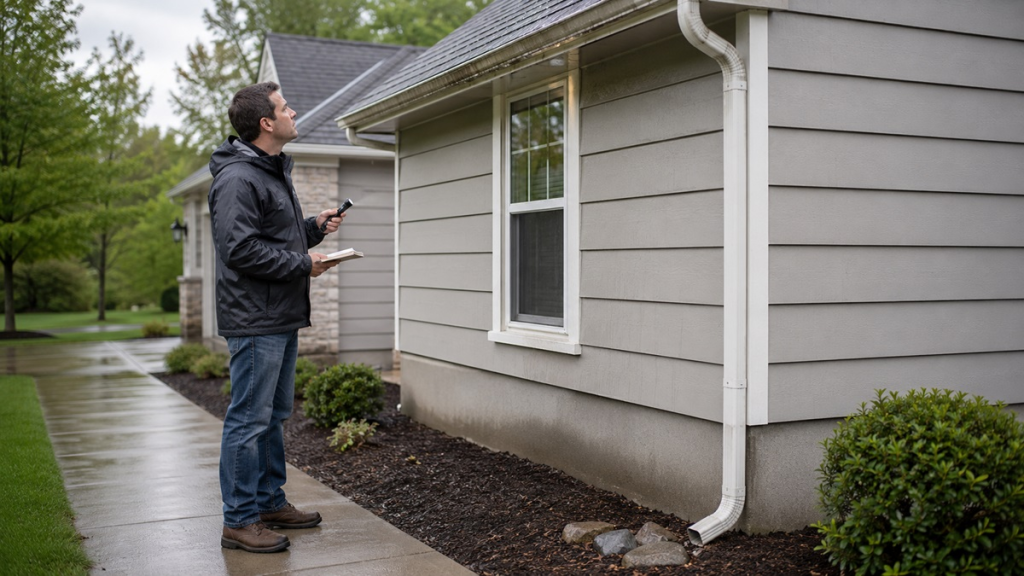
Exterior water entry is likely when moisture returns after rain, wind-driven storms, snowmelt, gutter overflow, or saturated soil. The visible damp area may be far from the entry point because water can travel along framing, sheathing, insulation, or trim before showing indoors.
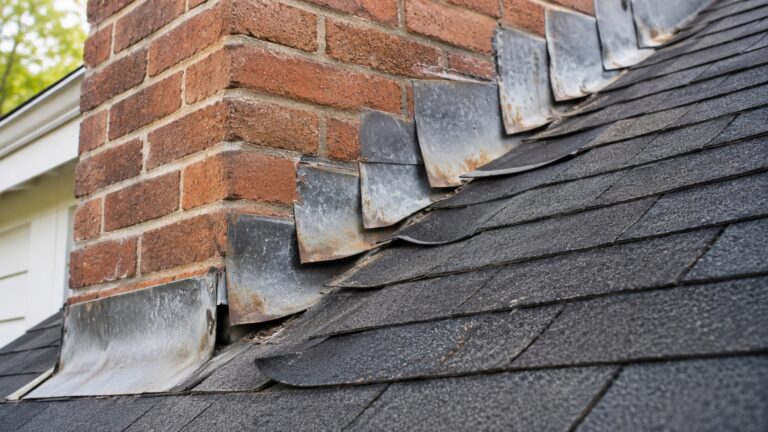
Common exterior pathways include roofing, flashing, chimneys, siding edges, window and door openings, wall penetrations, gutters, grading, foundation cracks, and basement seepage. The goal in this article is not to diagnose every exterior defect, but to recognize when the recurrence pattern points outside.
If the repeated moisture clearly follows storms or exterior wetting, move from pattern detection into exterior inspection. For the broader structural pathway, see how water enters homes through structural gaps.
If the pattern points to a specific exterior system, use the guide that matches the likely entry path: how to find roof leaks before mold forms for roof-related timing, signs of hidden roof moisture for roof or attic symptoms, why exterior walls develop moisture problems for wall-entry patterns, signs of failed exterior flashing for flashing-related leaks, signs gutters are overflowing for drainage clues, signs water is entering through wall penetrations for vents and utility openings, signs of water leaks around chimneys for chimney-area symptoms, and why chimneys leak during rain for recurring rain-related chimney moisture.
Repeated Moisture From Humidity and Condensation
Not every repeated moisture problem is caused by liquid water leaking into the home. Some recurring moisture problems come from water vapor in the air. When indoor humidity stays high, or when warm moist air reaches a cold surface, condensation can form repeatedly.
Humidity-related moisture is often mistaken for a leak because it can create staining, mold, odors, damp surfaces, and material damage. The difference is that the source may be air movement, ventilation, temperature difference, or indoor moisture load instead of a broken pipe or exterior gap.
Condensation on Cold Surfaces
Condensation forms when moist air contacts a surface cold enough for water vapor to turn into liquid water. This often happens on windows, exterior walls, cold corners, poorly insulated areas, basement surfaces, metal surfaces, and hidden cavities where warm indoor air meets cooler materials.
Repeated condensation may show up as:
- Window moisture that returns in the morning
- Dampness on exterior-facing walls
- Mold in cold corners
- Musty smells in closets or behind furniture
- Surface mildew in bathrooms
- Moisture near poorly ventilated areas
Condensation problems often get worse when indoor humidity is high, airflow is restricted, or surfaces stay cold. They may improve when ventilation, air circulation, insulation, or humidity control improves.
Poor Airflow and Enclosed Spaces
Repeated moisture often collects in areas where air does not move well. Closets, corners, behind furniture, under cabinets, inside storage areas, basements, crawl spaces, bathrooms, and rooms with poor ventilation can hold damp air longer than open spaces.
Poor airflow does not create water by itself, but it allows moisture to linger. When damp air stays trapped against a surface, the material may remain cool and wet long enough for odor, staining, mildew, or mold to develop.
This is why two rooms in the same house may behave differently. One room may feel dry while another develops repeated musty odors because of shade, poor airflow, colder surfaces, stored items, or a ventilation imbalance.
When to Measure Indoor Humidity
If moisture appears in multiple areas, worsens during humid weather, returns on windows or cold surfaces, or creates musty air without a clear leak, indoor humidity should be measured instead of guessed.
A hygrometer can help show whether humidity is staying high enough to contribute to repeated dampness. However, a humidity reading should be interpreted as one clue, not the entire diagnosis. High humidity may explain condensation and damp air, but it does not rule out a roof leak, plumbing leak, basement seepage, or exterior water entry problem.
Measure humidity in the rooms where symptoms appear, then compare those readings with other areas of the home. If the problem is concentrated in a bathroom, basement, closet, crawl space, or exterior-facing room, that location may have a local moisture or ventilation problem even if the rest of the house seems normal.
Repeated Moisture After Cleanup, Drying, or Repair
Moisture that returns after cleanup or repair is one of the clearest signs that the original problem was not fully resolved. The surface may have looked better for a while, but the underlying moisture pathway may still be active.
This is common when the repair focuses on visible damage instead of source control. Paint can cover a stain. Caulk can hide a gap. Cleaning can remove visible mold. A fan can dry the surface. New trim can replace swollen trim. But none of those actions prove the moisture source is gone.
When Cleanup Does Not Remove the Moisture Source
Cleaning is not the same as moisture control. If mold, mildew, odor, staining, or dampness returns after cleaning, the likely issue is not that the surface was cleaned incorrectly. The likely issue is that moisture conditions are still supporting the problem.
For example, mold may return on a bathroom wall if humidity remains high and ventilation is poor. A stain may return on a ceiling if the roof leak was not fixed. A cabinet may keep swelling if a supply or drain leak continues. A basement wall may keep dampening if water pressure outside the foundation has not been controlled.
The repeated symptom is a signal to stop treating only the visible surface and start looking for the active moisture pattern.
When Materials Were Not Fully Dried
Some materials dry slowly, especially when moisture is trapped behind finished surfaces. Drywall, subflooring, framing, insulation, cabinets, trim, and wall cavities can stay damp even when the visible side feels dry.
If materials were not fully dried, the area may develop recurring odors, staining, softness, swelling, or mold. This is especially common after leaks, floods, shower failures, appliance overflows, basement seepage, or water that entered behind walls and floors.
Surface drying can create a false sense of resolution. The visible layer may improve while hidden layers remain damp. That is why repeated moisture after drying should be taken seriously, especially if the same smell or material change returns.
When Repairs Covered the Symptom Only
A repair can be technically neat but still incomplete if it does not address the source. Replacing drywall without fixing the leak, repainting a stain without confirming dryness, caulking a recurring gap without understanding water movement, or replacing baseboards over damp lower walls can all allow moisture to return.
The goal is not to avoid repairs. The goal is to repair in the right order. Source first, drying second, material repair third, monitoring afterward.
If the problem keeps coming back after cleanup, drying, patching, painting, or repair, the more specific guide to why moisture problems keep returning can help analyze the recurrence pattern in more detail.
For more specific recurrence patterns, use signs of moisture returning after repairs when the problem comes back after work was done, why moisture returns after cleanup when the area looked clean or dry but became damp again, and how to monitor areas after leak repairs when you need a structured follow-up process.
How to Track Repeated Moisture Patterns Over Time
Repeated moisture problems are not always confirmed during one inspection. In many homes, the pattern becomes clear only after several observations across rain, plumbing use, humidity changes, appliance cycles, or seasonal shifts.
Simple tracking helps separate an isolated damp spot from a recurring moisture source. The goal is to compare the same area under different conditions instead of relying on memory or a single visual check.
Document Visual Changes
Take photos of the affected area from the same angle each time you inspect it. Record the date, recent weather, humidity conditions, and any plumbing or appliance use that happened before the moisture appeared.
For stains, lightly mark the outer edge with pencil or painter’s tape if the surface allows it. If the stain grows beyond the mark after rain, humidity, or fixture use, that change is strong evidence that moisture is still active.
Track Odors as Well as Visible Damage
Musty odors often return before new staining is obvious. Note whether odors become stronger after humid days, storms, shower use, basement dampness, or when enclosed spaces such as cabinets and closets are opened.
Recurring odor patterns matter because hidden materials can stay damp even when the surface looks normal. A smell that returns in the same area should be treated as part of the moisture pattern, not as a separate air-quality issue.
Keep a Simple Moisture Log
A moisture log does not need to be complicated. Record the location, date, visible symptoms, weather conditions, humidity readings if available, and what changed since the last inspection.
After several entries, the pattern often becomes clearer. Moisture that follows rain, humidity spikes, plumbing use, appliance operation, or cold-weather condensation will usually show a repeated trigger over time.
Simple Tools That Help Confirm a Moisture Pattern
Visual signs and timing patterns are useful, but simple tools can make repeated moisture easier to confirm. These tools should support your observations, not replace source diagnosis.
Moisture Meters
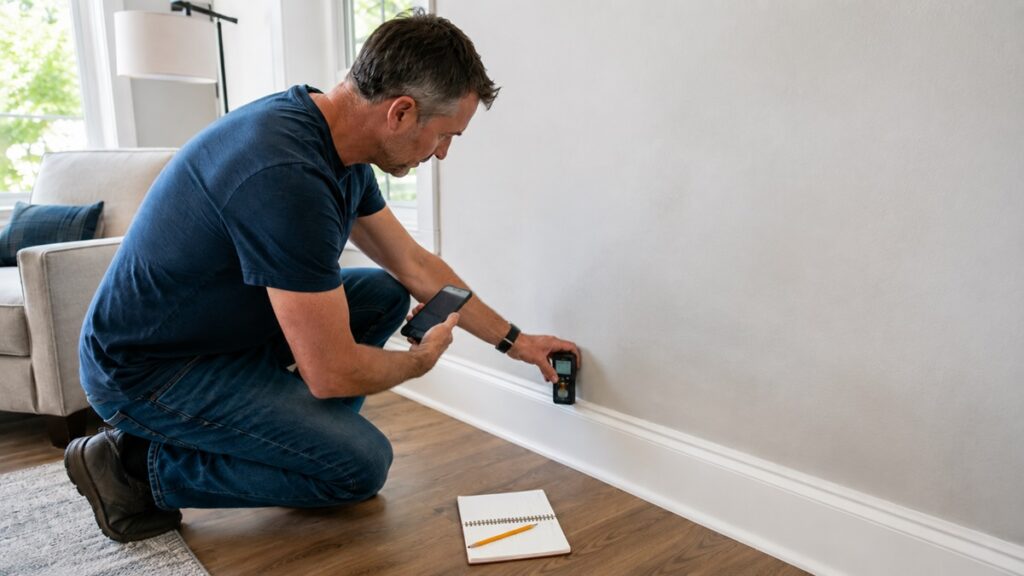
A moisture meter can help compare a suspicious area with a nearby dry baseline. Use it to track whether readings rise after rain, plumbing use, humidity spikes, or repairs. Do not rely on one reading by itself, because different materials and surface conditions can affect the result.
For product-specific options, see best moisture meters for hidden water damage.
Hygrometers
A hygrometer helps show whether indoor humidity may be contributing to condensation, musty odors, or repeated dampness. This is especially useful when moisture appears in multiple rooms, enclosed spaces, basements, closets, or on cold surfaces. If you need a simple monitoring tool, compare options in the guide to the best hygrometers for home humidity.
If humidity seems connected to the problem, compare readings in the affected room with other areas of the home and continue with how to test indoor humidity levels.
Photos, Marks, and Repeated Readings
Photos, pencil marks, humidity readings, and repeated moisture meter checks work best together. They help show whether the problem is stable, drying, spreading, or returning after specific conditions.
How to Narrow Down the Likely Moisture Source
Once you have tracked timing and location, the next step is to match the pattern to the most likely source category. This does not replace a detailed inspection, but it helps you avoid guessing.
The goal is to move from “there is moisture here” to “this moisture behaves like a rain-related problem,” “this behaves like plumbing,” “this behaves like condensation,” or “this behaves like an unresolved repair.”
If It Follows Rain
If moisture appears after rain, start thinking about exterior water entry. The source may be above, beside, or below the visible symptom.
Possible rain-related sources include:
- Roof leaks
- Flashing failures
- Chimney leaks
- Siding gaps or failures
- Window or door leaks
- Gutter overflow
- Foundation cracks
- Basement seepage
- Poor grading or drainage
Rain-related moisture should be compared against storm direction, rain intensity, exterior wall exposure, roof conditions, and foundation drainage.
If It Follows Plumbing Use
If moisture appears after using a fixture or appliance, the pattern may involve plumbing. This is especially likely when symptoms appear near bathrooms, kitchens, laundry rooms, utility rooms, ceilings below plumbing, or cabinets under fixtures.
Possible plumbing-related sources include:
- Supply line leaks
- Drain leaks
- Loose fixture connections
- Shower or tub enclosure leaks
- Toilet seal problems
- Dishwasher leaks
- Washing machine hose leaks
- Refrigerator water line leaks
Plumbing-related moisture often repeats with use. If the area looks dry until a fixture or appliance runs, that timing is an important clue.
If It Follows Humidity Changes
If moisture worsens when the home feels humid, when windows sweat, when closets smell musty, or when multiple rooms feel damp, humidity and condensation should be investigated.
Humidity-related moisture may involve:
- High indoor humidity
- Poor ventilation
- Cold surfaces
- Air leaks
- Blocked airflow
- Undersized or poorly used dehumidification
- Bathroom or kitchen moisture that is not exhausted well
Humidity does not rule out leaks, but it can explain repeated dampness that appears broadly, seasonally, or on cold surfaces rather than in one fixture-related location.
If It Follows HVAC Use
Some repeated moisture problems appear when heating, cooling, or air movement changes. HVAC-related moisture can involve condensation, clogged drain lines, poor duct insulation, air leaks, cold surfaces, or humidity imbalance.
The pattern may appear near supply vents, ducts, ceilings, attic areas, air handlers, condensate lines, or rooms that stay colder or more humid than the rest of the home. A damp ceiling near ductwork, a musty smell when the system runs, or recurring condensation near vents can all point toward air and temperature conditions rather than a simple plumbing leak.
HVAC-related moisture should still be diagnosed carefully. A ceiling stain near a vent could come from duct condensation, but it could also come from a roof leak above the duct or a plumbing line nearby. Timing, location, and repeated conditions matter.
If It Returns After Repair
Moisture that returns after repair usually means the repair did not address the entire moisture system. The visible damage may have been corrected, but the moisture source, hidden damp material, or repeated trigger may still remain.
Look at what was repaired and what was not. Was the wall patched but the leak never found? Was mold cleaned but humidity never measured? Was a stain painted over without confirming the area was dry? Was trim replaced while the lower wall remained damp? Was a basement surface sealed without improving drainage?
When a moisture problem returns after repair, it is a warning to slow down and re-check the source before repeating the same surface fix.
If It Spreads or Affects Structural Materials
Repeated moisture becomes more serious when it spreads, softens materials, affects wood, damages subfloors, weakens framing, or causes recurring mold. Structural symptoms do not always mean the home is unsafe, but they do mean the problem should not be treated as only cosmetic.
Warning signs that deserve closer attention include soft floors, sagging areas, crumbling drywall, swollen framing, persistent wood odor, visible rot, recurring dampness near joists or beams, or water damage that keeps expanding.
If the pattern suggests structural materials are being affected, the next step may be broader evaluation through structural moisture problems in homes rather than continued surface-level cleanup.
When Repeated Moisture Needs Professional Inspection
Many repeated moisture patterns can be observed by a homeowner, but not every source can be safely or accurately confirmed without professional help. Hidden wall cavities, roof assemblies, structural framing, basement seepage, electrical-adjacent moisture, and persistent mold conditions may require tools, access, and experience beyond basic DIY inspection.
A professional inspection is especially important when repeated moisture affects structural materials, appears after multiple failed repairs, returns with mold, involves hidden plumbing, follows storms but the entry point is unclear, or appears in areas that are hard to access without damaging finishes.
Hidden Structural Damage
Repeated moisture near framing, subfloors, joists, beams, wall cavities, roof sheathing, or foundation areas should not be ignored. Wood and engineered materials can weaken when moisture persists long enough, especially when drying is poor or the source keeps returning.
Signs that need closer evaluation include softness, sagging, repeated swelling, darkened wood, crumbling material, persistent musty odor, or damage that spreads even after surface repair.
Recurring Mold Growth
Mold that returns after cleaning is usually a moisture-control problem before it is a cleaning problem. If the same area grows mold repeatedly, the source may be a leak, condensation, humidity, hidden damp material, or exterior water entry.
Small surface issues may be manageable in some situations, but recurring mold in wall cavities, ceilings, floors, basements, crawl spaces, HVAC-adjacent areas, or large areas should be handled carefully. The source needs to be corrected before cleanup is treated as complete.
Persistent Basement Seepage
Basement moisture that returns after heavy rain, appears at the wall-floor joint, spreads across the floor, or creates ongoing dampness may involve drainage, foundation cracks, hydrostatic pressure, sump performance, grading, gutters, or exterior waterproofing conditions.
Because basement moisture can involve soil pressure and foundation systems, repeated seepage may require more than surface sealing or a dehumidifier. The visible water is often the result of a larger water-control problem outside or below the foundation.
Roof or Exterior Water Entry
If moisture returns after rain and the entry point is not obvious, professional inspection may be needed to evaluate roofing, flashing, chimneys, siding, windows, doors, gutters, penetrations, or exterior wall transitions.
Roof and exterior leaks can be especially misleading because water may travel before it appears inside. A ceiling stain does not always mean the roof defect is directly above it, and a wall stain does not always mean the entry point is directly behind the wall.
Plumbing Leaks Inside Walls
Repeated moisture near plumbing walls, ceilings below bathrooms, kitchen cabinets, laundry areas, or appliance connections may require a plumber or leak detection specialist if the source is hidden. Opening walls without a clear plan can create unnecessary damage, but ignoring repeated plumbing moisture can allow the problem to spread.
Professional help is especially important if moisture appears near electrical components, affects multiple levels, follows fixture use, or keeps returning after basic visible connections have been checked.
What to Do After You Identify the Moisture Pattern
Detecting the pattern is only the first step. Once you know when and where moisture returns, the next goal is to confirm the source, stop the moisture pathway, dry affected materials, repair damage in the right order, and monitor the area afterward.
The correct next step depends on the pattern. A rain-related wall stain needs a different follow-up than a damp cabinet under a sink, a musty closet, a recurring basement seepage line, or mold that returns after cleaning. If the visible signs suggest hidden damage behind finishes or inside materials, use how to evaluate hidden water damage before assuming the surface repair is enough.
Confirm the Source Before Covering Damage
Do not rush to paint, patch, caulk, replace trim, install new flooring, or cover stains before the source has been identified. Covering moisture damage too early can hide the symptom while the same problem continues behind the surface.
Stop and get professional help if the material is soft, crumbling, sagging, structurally weakened, near electrical components, or contaminated by sewage, floodwater, or long-term unknown moisture. Repeated moisture is not only a cosmetic problem when it affects building materials.
Before repairing finishes, confirm whether the pattern points toward plumbing, exterior water entry, humidity, condensation, basement seepage, HVAC moisture, or incomplete drying. The repair should match the source, not just the visible mark.
Dry Materials Properly
Repeated moisture often continues because materials were never fully dried. Drying should include the affected material, not just the visible surface. In some cases, this may require airflow, dehumidification, material removal, moisture readings, or professional drying methods.
Drywall, insulation, subfloors, cabinets, trim, and wall cavities can hold moisture longer than expected. If the area still smells musty, feels soft, reads damp, or changes again after drying, assume the drying process or source control needs more attention.
Monitor the Area After Repair
After the source is corrected and materials are dried or repaired, continue watching the area. Repeated moisture problems are best confirmed as solved by time and conditions, not by appearance on the day of repair.
Monitor the area after the same triggers that caused the problem before. If the stain appeared after rain, check after several storms. If the dampness followed shower use, check after normal bathroom use. If the odor returned during humid weather, check when humidity rises again.
Monitoring helps confirm whether the source was actually fixed or whether the same pattern is still active. For the prevention stage, use how to prevent recurring moisture damage as the next supporting guide.
Use the Right Next Article Based on the Pattern
Repeated moisture detection works best when each pattern leads to the right next inspection path. Use the symptom pattern to choose the next guide instead of trying to solve every possible moisture issue at once.
- For the broader recurrence pathway, start with why moisture problems keep returning.
- If the problem seems hidden, slow, or leak-related, start with signs of slow hidden water leaks.
- If the problem depends strongly on location, use how to find hidden moisture in different areas of your home.
- If the problem appears after rain or exterior wetting, use how water enters homes through structural gaps.
- If the problem appears humidity-related, start by learning how to test indoor humidity levels.
- If the problem has moved from detection to prevention, continue with how to prevent recurring moisture damage.
Frequently Asked Questions About Repeated Moisture Problems
How do I know if a moisture problem is recurring?
A moisture problem is recurring when the same symptom returns in the same area, under the same conditions, or after the same trigger. Examples include stains that darken after rain, musty odors that return during humid weather, mold that comes back after cleaning, or dampness that appears after plumbing use.
Can moisture come back even after the surface looks dry?
Yes. A surface can look dry while hidden materials remain damp. Drywall, wood, insulation, subflooring, cabinets, and wall cavities can hold moisture behind the visible surface. Moisture can also return if the source was never corrected.
Does recurring mold always mean there is a leak?
No. Recurring mold means moisture conditions are still present or returning, but the source may be a leak, condensation, high humidity, poor ventilation, damp materials, or exterior water entry. The pattern should be diagnosed before assuming one cause.
Should I use a moisture meter to check repeated damp areas?
A moisture meter can help identify suspicious areas, compare readings, and track whether materials are drying. However, readings must be interpreted carefully based on the material, baseline conditions, location, and repeated measurements. A meter is a useful clue, not a complete diagnosis by itself.
When should I call a professional for repeated moisture?
Call a professional when moisture keeps returning after repairs, affects structural materials, appears with recurring mold, follows rain but the entry point is unclear, appears near electrical components, or may involve hidden plumbing, roofing, basement seepage, or wall cavities.
Can a dehumidifier fix repeated moisture problems?
A dehumidifier can help when repeated moisture is caused by high indoor humidity, damp air, or condensation. It does not fix plumbing leaks, roof leaks, exterior water entry, basement seepage, failed flashing, or wet materials that need repair or removal. If humidity is part of the pattern, a dehumidifier may help control conditions, but the source still has to be identified.
Final Step: Confirm the Pattern Before Repairing the Surface
Repeated moisture problems should be diagnosed by pattern before the surface is repaired or covered. The most useful clues are when the moisture returns, where it appears, what conditions make it worse, and whether it comes back after cleaning, drying, or repair.
A recurring stain, musty smell, damp surface, swollen trim, soft floor, or mold spot is not just a cosmetic issue when it keeps returning. It is a sign that water, vapor, condensation, humidity, or hidden dampness is still interacting with the home.
Start by tracking timing. Then track location. Compare the pattern against rain, plumbing use, humidity, HVAC activity, basement conditions, and previous repairs. Once the likely pathway becomes clearer, move into the right supporting guide instead of guessing.
The goal is not simply to hide the damage. The goal is to identify the source, correct the moisture pathway, dry affected materials, repair in the right order, and monitor the area long enough to confirm the problem is truly resolved.
2 Comments
Comments are closed.