
Signs of Mold Growth in HVAC Systems
Common signs of mold growth in HVAC systems include musty odors when the system starts, visible spotting near vents or air handler components, recurring allergy symptoms during airflow, stale or damp air from vents, and dark buildup that returns after cleaning.
These signs matter because HVAC mold can spread odors and particles through more than one room. A single dark vent does not always mean the duct system is contaminated, but repeated odors, moisture, and visible growth together are strong reasons to inspect the system more carefully.
If you are already dealing with visible mold anywhere in your home, start by reviewing this complete mold removal guide, which explains how mold spreads and why moisture control is critical to preventing long-term problems.
Why Mold Growth in HVAC Systems Is Often Hard to Detect
Mold inside HVAC systems usually begins on surfaces homeowners rarely see, such as coils, drain pans, air handler interiors, and duct surfaces where moisture and dust collect.
The most common locations where mold develops inside HVAC systems include:
- Evaporator coils that produce condensation during cooling
- Drain pans that collect water from condensation
- Air handler cabinets where moisture and dust accumulate
- Interior duct surfaces, especially insulated ducts
- Return air pathways where dust collects
In many cases, homeowners first notice subtle changes in air quality before seeing visible mold. For example, a musty smell may appear only when the system turns on, or allergy symptoms may worsen while the HVAC is running. These early signs are easy to overlook or misinterpret as dust buildup or normal seasonal changes.
If your home also shows signs of general HVAC moisture issues, you may want to compare symptoms with this related guide on signs of moisture problems in HVAC systems, which explains how moisture conditions often develop before mold appears.
Common HVAC Mold Warning Signs
HVAC mold signs usually appear gradually, so the pattern matters as much as any single symptom.
The most reliable signs of mold growth inside HVAC systems include:
- Musty odors coming from air vents
- Visible mold around vents or air handler components
- Recurring allergy symptoms that worsen during system operation
- Unusual buildup or discoloration near airflow openings
- Persistent damp or stale indoor air
While a single symptom does not always confirm mold growth, multiple warning signs appearing together significantly increase the likelihood of mold activity somewhere inside the system.
Understanding each sign individually helps distinguish between harmless dust buildup and actual mold growth. The following sections break down these warning signals in detail so you can better evaluate what you are seeing or smelling inside your home.
Musty Odors That Appear When the HVAC System Runs
One of the earliest and most recognizable warning signs is a musty smell that appears when heating or cooling begins. This odor often disappears shortly after the system shuts off, which can make it difficult to trace the source.
Unlike general household odors, HVAC-related mold smells typically follow specific patterns:
- The odor becomes noticeable within minutes of system startup
- The smell travels through multiple rooms at once
- The intensity increases when airflow is strong
- The odor fades when the system stops running
This pattern happens because airflow carries microscopic mold-related gases from contaminated surfaces. When the system turns on, air movement distributes these gases through supply vents, making the smell easier to detect.
Many homeowners mistake this odor for dust buildup, especially when systems have not been used for several months. However, dust odors usually disappear quickly after the first few minutes of operation, while mold-related smells tend to return repeatedly during normal use.
If musty odors continue after replacing air filters or cleaning visible surfaces, the source may be deeper inside the system. At that point, further evaluation of hidden moisture sources becomes important. You can learn more about locating moisture risks in mechanical systems by reviewing how to detect moisture inside HVAC systems.
Visible Mold Around Vents and HVAC Components
Visible growth near vents or HVAC components is one of the strongest indicators that mold may be developing inside the system. While mold often starts in hidden areas, it can eventually appear at visible openings where air enters or exits the ductwork.
Common places where visible mold may appear include:
- Supply vent covers and surrounding drywall
- Return air grilles
- Edges of duct openings
- Inside accessible portions of the air handler
- Drain pans and nearby components
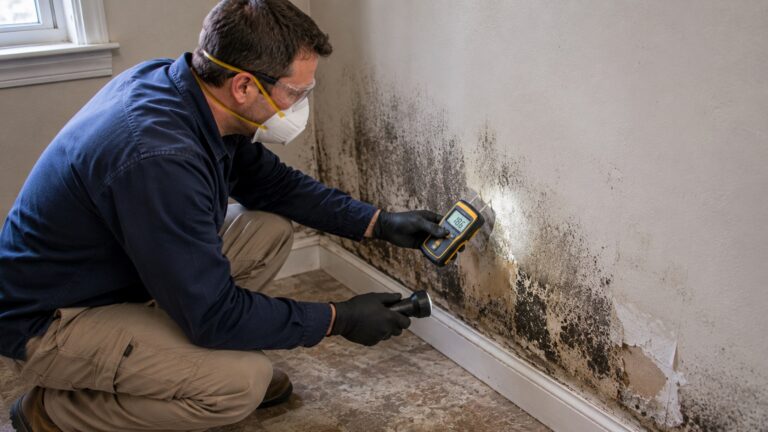
Mold growth typically appears as irregular dark spots, speckling, or patchy discoloration. In some cases, it may look fuzzy or slightly raised rather than flat like dust. The pattern is often uneven, spreading outward over time rather than forming a uniform layer.
It’s important to understand that visible mold near vents does not always mean the entire duct system is contaminated. However, it does suggest that moisture and airflow conditions near the system deserve closer inspection, especially if odor or dampness is also present.
If you suspect mold inside ductwork specifically, you can compare what you’re seeing with this guide on signs of mold growth in HVAC ducts, which focuses on duct-specific warning signs and how they differ from general HVAC contamination.
How to Tell Mold Apart From Dust Around Vents
One of the most common mistakes homeowners make is assuming that any dark buildup around vents is mold. In reality, most vent discoloration is caused by dust, lint, and airborne particles being pulled toward airflow openings.
Key differences between dust and mold include:
- Dust: Typically dry, gray, and uniform; wipes away easily without smearing
- Mold: Often irregular, darker, patchy, or clustered near moisture; may smear or leave residue when disturbed
- Dust: Returns quickly in a similar pattern after cleaning
- Mold: Gradually expands or spreads beyond the original area
Another important distinction is location. Dust tends to accumulate evenly around vents due to airflow patterns, while mold often appears in localized clusters where moisture is present.
Do not scrape, brush, or vacuum suspected mold on vents or inside openings, because disturbance can release more particles into the air.
Recurring Allergy or Respiratory Symptoms During HVAC Operation
Mold inside HVAC systems can affect indoor air quality by distributing spores throughout the home. This can lead to symptoms that appear or worsen when the system is running.
Common symptom patterns include:
- Sneezing or coughing that increases when the HVAC system is on
- Eye irritation or throat discomfort during airflow
- Worsening asthma or allergy symptoms indoors
- Symptoms that improve when leaving the home
These reactions can happen when airflow carries particles from contaminated surfaces into living spaces, even when mold is not visible at vents.
It’s important to note that these symptoms can also be caused by dust, pollen, or other airborne irritants. However, when symptoms consistently align with HVAC operation—especially alongside odors or visible signs—mold becomes a more likely contributor.
If you’re unsure whether air quality issues are related to moisture or contamination, it may help to review how HVAC systems develop moisture conditions in the first place. This is explained in why HVAC systems develop moisture problems, which provides context for how mold-friendly environments form.
Persistent Damp or Stale Air Coming From Vents
Another subtle but important sign of mold growth in HVAC systems is air that feels damp, heavy, or stale when it comes through vents. This sensation is often difficult to describe, but many homeowners notice that the air does not feel clean or fresh even when the system is working normally.
This type of airflow can result from:
- Moisture buildup inside ducts or air handler components
- Reduced airflow allowing humidity to linger
- Biofilm or mold growth affecting air quality
Unlike temperature issues, which are usually obvious, air quality changes can develop gradually. Homeowners may become accustomed to the smell or feel of the air, only recognizing the difference after spending time outside the home.
If airflow also seems weak or uneven, it may indicate a related issue with system performance. In that case, reviewing signs of poor airflow in HVAC systems can help determine whether airflow problems are contributing to moisture retention and mold risk.
Unusual Buildup or Discoloration Near Airflow Openings
In some cases, mold growth presents as subtle discoloration rather than obvious patches. This may appear as staining, darkened areas, or slight changes in surface texture around vents or nearby materials.
These changes are often mistaken for:
- Smoke residue
- General dust accumulation
- Normal aging of materials
However, when discoloration appears alongside other warning signs—such as musty odors or damp airflow—it becomes more likely that mold or moisture-related contamination is involved.
Pay attention to whether the affected area changes over time. Mold-related discoloration tends to expand slowly, especially if moisture conditions remain unchanged.
Recurring buildup after cleaning is another important clue. If surfaces repeatedly develop dark residue despite regular maintenance, the source may be inside the HVAC system rather than on the surface itself.
Behavior Patterns That Suggest Mold Is Inside the HVAC System
Beyond visible signs and odors, HVAC-related mold problems often reveal themselves through consistent behavior patterns. These patterns help distinguish system-based contamination from isolated room issues.
Watch for these recurring patterns:
- Musty smells that return every time the system cycles on
- Odors that appear stronger during cooling than heating
- Air quality that worsens during high humidity conditions
- Symptoms that affect multiple rooms at the same time
- Mold or discoloration that reappears after cleaning
These patterns are stronger clues than a single dirty vent because they follow system operation and affect more than one area.
For example, if a musty smell appears only when the air conditioner runs, the issue is often linked to condensation-related moisture inside the system. You can learn more about this specific scenario in signs of mold growth from HVAC condensation, which focuses on cooling-related moisture patterns.
Signs the Problem May Be in Ductwork vs the Air Handler
The signs below do not confirm the exact source, but they can help you decide whether the problem appears closer to the air handler or more spread through the duct network.
Indicators of Air Handler or Equipment Mold
- Strong odors near the indoor unit
- Visible moisture or buildup inside accessible panels
- Water accumulation in or around the drain pan
- Smell is strongest when standing near the unit
These signs suggest mold growth near components like the evaporator coil or drain system, where condensation is most common.
Indicators of Duct-Related Mold
- Odors are evenly distributed across multiple rooms
- Mold appears around several vents, not just one
- Smell intensity is similar throughout the home
- Symptoms occur regardless of proximity to the air handler
When these signs are present, the issue may involve duct interiors. Duct contamination can be more complex because it affects a larger portion of the airflow system.
For a deeper look at duct-specific warning signs, refer to this guide on HVAC duct mold signs, which explains how mold behaves differently inside duct materials.
What HVAC Mold Is Commonly Confused With
Not all HVAC-related symptoms are caused by mold. Several other issues can produce similar signs, making it important to evaluate all possibilities before drawing conclusions.
Dust and Airborne Particles
Dust accumulation is the most common cause of vent discoloration and indoor air complaints. Unlike mold, dust:
- Appears dry and uniform
- Does not spread outward in irregular patterns
- Does not produce a persistent musty odor
Humidity-Related Dampness
High indoor humidity can create a damp or heavy feeling in the air without mold being present. This is especially common in homes with poor ventilation or high outdoor humidity.
If humidity levels remain elevated, mold risk increases over time. To separate general humidity from HVAC contamination, measure indoor humidity and compare rooms using this guide on how to test indoor humidity levels.
Condensation Stains
Condensation can leave water marks or slight discoloration near vents. These stains:
- Do not have a fuzzy or textured appearance
- Do not continue spreading once dry
- Typically fade over time if moisture is controlled
Mold, by contrast, tends to persist and gradually expand if moisture conditions remain favorable.
When HVAC Mold Becomes a Serious Problem
While early signs of mold may be subtle, certain conditions indicate that the problem has progressed beyond minor contamination. These situations require closer attention and often professional evaluation.
Moderate Risk Indicators
- Recurring musty odors that do not go away
- Visible discoloration near multiple vents
- Air quality that feels consistently stale
High-Risk Indicators
- Visible mold inside HVAC components
- Standing water in drain pans or surrounding areas
- Strong odors affecting the entire home
Critical Indicators
- Mold returns repeatedly after cleaning
- Multiple rooms show signs of contamination
- HVAC performance declines alongside air quality issues
At higher risk levels, the issue is often tied to persistent moisture problems. These underlying conditions are explained in more detail in why HVAC systems stay damp, which helps connect symptoms to long-term system behavior.
When to Stop DIY Inspection and Call a Professional
Homeowners can safely observe visible signs, odors, and general system behavior. However, do not open sealed HVAC compartments, reach near electrical components, or disturb suspected mold inside the system without proper training.
Consider professional inspection if:
- Mold is visible inside the air handler or duct openings
- Odors persist despite cleaning and filter replacement
- Water accumulation is present inside the system
- Symptoms affect multiple rooms consistently
- Mold returns after repeated cleaning attempts
HVAC professionals and mold remediation specialists can safely access internal components, identify moisture sources, and determine whether cleaning or system repairs are required.
If mold is confirmed, the next step is addressing both contamination and moisture control. You can review the full process in this mold removal and prevention guide, which explains how to stop mold from returning after cleanup.
Frequently Asked Questions About Mold in HVAC Systems
Can mold actually grow inside an HVAC system?
Yes, mold can grow inside HVAC systems when moisture is present for extended periods. Areas like evaporator coils, drain pans, and insulated ducts are especially vulnerable because they combine moisture, dust, and limited airflow for drying.
Does a musty smell always mean there is mold in the HVAC system?
No, not always. Musty smells can sometimes come from dust buildup or temporary humidity changes. However, if the odor appears repeatedly when the system runs and does not go away after filter replacement or cleaning, mold becomes a more likely cause.
Is black dust around vents always mold?
No. Most dark buildup around vents is dust or airborne particles being pulled toward airflow openings. Mold usually appears more irregular, spreads unevenly, and may leave residue when disturbed. Comparing multiple signs together provides a more accurate assessment.
Should homeowners open HVAC components to check for mold?
No. Opening sealed HVAC components or ductwork can be unsafe and may damage the system. Homeowners should limit inspection to visible areas like vents and accessible surfaces. Internal inspection should be handled by qualified professionals.
What to Do Next If You See HVAC Mold Signs
If you notice musty odors during system operation, visible spotting near vents, recurring symptoms during airflow, or buildup that returns after cleaning, treat the issue as a warning sign rather than a surface-cleaning problem.
If symptoms point to a moisture-related issue, understanding the underlying cause is essential. You can continue learning about how these problems develop in why mold forms inside HVAC systems, which explains the conditions that allow mold to grow in the first place.
For a broader understanding of how moisture affects different areas of the home, review this guide to finding hidden moisture, which helps connect HVAC issues to larger indoor moisture patterns.
Key Takeaways
- The strongest HVAC mold signs are musty odors during operation, visible growth near vents or components, stale airflow, and symptoms that worsen when the system runs
- Dust around vents is common, but irregular, spreading, moisture-linked discoloration is more concerning
- Signs in several rooms may point to HVAC involvement rather than isolated room mold
- Duct mold, condensation mold, and general HVAC moisture problems should be checked through their more specific warning patterns
- Call a professional if mold is visible inside components, odors persist, water is present, or symptoms affect multiple rooms

One Comment
Comments are closed.