
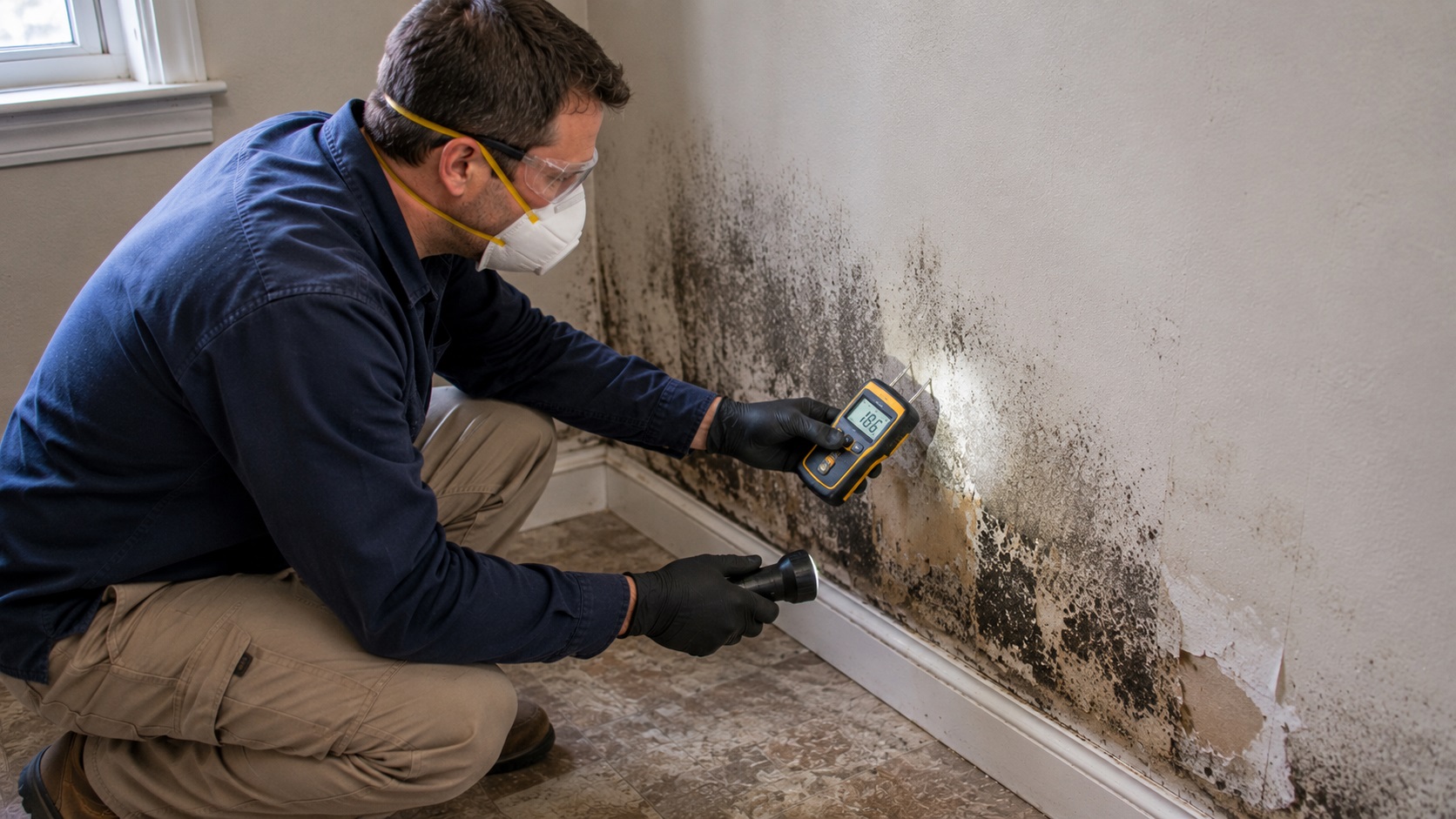
When to Hire a Mold Remediation Professional
Finding mold in your home does not always mean you need a full remediation crew. A small patch of surface mold on a bathroom wall is very different from mold spreading behind drywall, growing after a leak, returning after cleaning, or affecting porous materials like insulation, carpet, subflooring, or framing.
The line is crossed when the problem is no longer just a cleanable surface spot. You should consider hiring a mold remediation professional when mold is large, hidden, recurring, connected to water damage, affecting porous materials, near HVAC pathways, or risky for someone in the home.
This guide explains when professional remediation makes sense, when limited DIY cleanup may be reasonable, and what warning signs suggest the problem is bigger than surface cleaning. For broader mold prevention and cleanup guidance, see How To Remove Mold Permanently.
When Mold Cleanup Becomes More Than a DIY Job
Mold cleanup becomes more than a DIY job when the problem is no longer limited to a small, accessible, surface-level area. Professional mold remediation is usually worth considering when mold is widespread, hidden, recurring, connected to water damage, growing on porous materials, or located in areas that are difficult to clean safely.
The key distinction is this: cleaning visible mold is not the same as solving a mold problem. A homeowner may be able to wipe down a small patch of surface mold on a hard, nonporous material, but that does not address mold inside wall cavities, under flooring, behind baseboards, in insulation, or inside HVAC-related areas.
Professional remediation is not just “stronger cleaning.” A proper remediation approach usually focuses on controlling the work area, removing contaminated materials when needed, drying affected spaces, correcting the moisture source, and preventing mold from spreading during the work.
You should start thinking about professional help when the mold problem involves any of the following:
- Mold covers a large area instead of one small isolated patch.
- The mold keeps returning after cleaning.
- The mold is suspected behind drywall, under flooring, above ceilings, or inside cabinets.
- The mold appeared after flooding, sewage backup, roof leaks, plumbing leaks, or long-term dampness.
- Porous materials such as drywall, insulation, carpet, padding, or ceiling tiles are affected.
- The mold is in a crawl space, attic, basement, HVAC system, or other hard-to-control area.
- Someone in the home has asthma, severe allergies, immune concerns, or strong symptoms around the affected area.
In many homes, mold is only the visible symptom. Serious mold decisions should be tied to moisture control, not just cleaning products. For a broader explanation of how moisture problems start and return, see How to Find, Fix, and Prevent Moisture Problems in Homes.
The Practical Size Rule: Small Patch vs. Larger Mold Problem
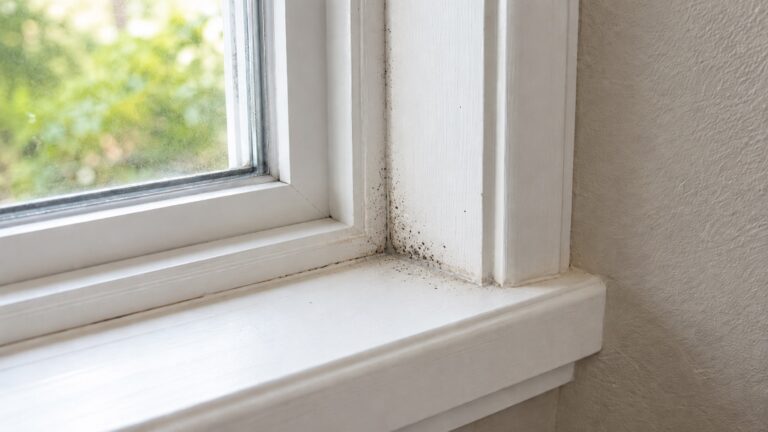
One common guideline is that a small mold area may be more suitable for careful homeowner cleanup, while larger areas often require professional help. The EPA mold cleanup guidance uses about 10 square feet, roughly a 3-foot by 3-foot patch, as a practical reference point for small cleanup situations.
That does not mean every area under 10 square feet is safe for DIY, and it does not mean every area slightly over that size is automatically a disaster. Size is only one factor. Location, material type, moisture source, recurrence, and occupant sensitivity matter just as much.
A small area may be more reasonable for DIY cleanup when all of these are true:
- The mold is on a visible, accessible surface.
- The affected material is hard or semi-hard, not deeply porous.
- The moisture source is obvious and already corrected.
- The mold is not spreading behind materials.
- The mold has not returned repeatedly after cleaning.
- The work does not require tearing open walls, ceilings, ductwork, or flooring.
For example, a small patch of mildew-like surface growth on bathroom paint may be manageable if the bathroom humidity problem is corrected and the surface is intact. But a small visible spot on drywall after a hidden plumbing leak may only be the part you can see. The actual affected area may be inside the wall cavity, behind trim, or in damp insulation.
You should be more cautious when the mold is growing on or near porous materials. Drywall, insulation, carpet padding, ceiling tiles, unfinished wood, and subflooring can hold moisture below the surface. In those cases, surface cleaning may leave contaminated or damp material behind.
The same caution applies after a basement flood, roof leak, pipe leak, appliance leak, sewage backup, or repeated condensation problem. A professional may be needed to determine what is wet, what can be saved, what should be removed, and whether the moisture source has truly been corrected.
The size rule is only a starting point: small, isolated, surface-level mold may be a cleaning problem; large, hidden, recurring, or moisture-driven mold is usually a remediation problem.
Hire a Mold Remediation Professional When Mold Is Hidden
Hidden mold is one of the strongest reasons to bring in a professional. The visible patch may be small, but growth can extend behind drywall, under flooring, above ceilings, inside cabinet cavities, or behind trim. Once mold is inside enclosed materials, surface cleaning is usually not enough.
Hidden mold is especially likely when there has been a slow leak, repeated condensation, roof intrusion, plumbing failure, or long-term dampness. A musty odor, soft drywall, swollen trim, stained ceilings, warped flooring, or mold returning in the same area can all suggest that the problem extends beyond the surface.
Mold behind drywall, trim, or flooring
Mold behind drywall or trim can be difficult to evaluate without disturbing materials. The risk is not only that mold may be present; it is that opening contaminated materials without containment can spread dust, spores, and debris into surrounding rooms.
Professional help is usually wise when mold is suspected inside wall cavities, behind baseboards, beneath flooring, or around built-in cabinets. These areas often trap moisture and limit airflow, which allows mold to keep growing even after the visible surface is wiped clean.
This is also where many DIY cleanups fail. A homeowner may clean the front of a wall, repaint the area, or remove visible staining while damp or contaminated material remains behind the surface. If you are dealing with repeated growth after cleaning, see Why Mold Keeps Coming Back After Cleaning.
Mold in attics, crawl spaces, and basements
Attics, crawl spaces, and basements create different risks than a small bathroom surface patch. These areas often involve framing, insulation, sheathing, masonry, vapor barriers, drainage systems, or ventilation problems. Mold in these spaces is often tied to a broader building moisture issue.
In an attic, mold may point to roof leaks, condensation on sheathing, poor ventilation, bathroom exhaust dumping into the attic, or damp insulation. In a crawl space or basement, mold may be connected to standing water, exposed soil, failed vapor barriers, drainage problems, wall seepage, foundation cracks, condensation, or poor air movement.
These are not just cleaning scenarios. They are moisture control and building-system problems. If the mold is widespread or connected to structural wood, insulation, or repeated water intrusion, a remediation professional or qualified moisture specialist can help determine whether materials need to be cleaned, dried, removed, sealed, or repaired.
Call a Professional When Mold Keeps Coming Back
Mold that keeps coming back after cleaning is one of the clearest signs that the underlying cause has not been solved. The source may be a hidden leak, condensation, high humidity, poor ventilation, damp framing, wet insulation, or water trapped behind materials.
Recurring mold should not be treated as a normal cleaning chore. If you clean the same area repeatedly and the mold reappears, the problem is probably not the cleaner you used. It is more likely that the surface is staying damp, the material behind it is contaminated, or the room conditions are still supporting mold growth.
Professional help becomes more important when recurring mold appears:
- In the same wall, ceiling, cabinet, or floor area
- After a previous leak repair
- Behind paint, caulk, baseboards, or trim
- In a basement, crawl space, or attic
- Near HVAC equipment, ducts, or air returns
- After flooding or long-term dampness
A good remediation decision starts with the question: why is this area still supporting mold? If the answer is unclear, professional evaluation may be more useful than repeated cleaning. The goal should be to stop the moisture pattern, not just remove the latest visible growth.
Get Professional Help After Flooding, Sewage, or Major Water Damage
Mold after a major water event should be handled more cautiously than a small surface patch. Flooding, sewage backup, stormwater intrusion, long-term plumbing leaks, or large appliance leaks can saturate materials quickly. Once water enters drywall, insulation, carpet padding, subflooring, framing, or ceiling cavities, the visible surface may not show how far the moisture traveled.
Professional remediation is especially important when the water may be contaminated. Sewage backups, floodwater, and dirty stormwater can introduce bacteria, debris, and other contaminants in addition to mold risk. These situations should not be handled like ordinary household mildew.
Even clean-water leaks can become serious if they are not dried quickly and completely. Water can wick into drywall, soak base plates, collect under flooring, or remain trapped behind cabinets. If you are unsure whether the structure is dry, professional inspection and drying may be needed.
You should consider hiring a professional after water damage when:
- Mold appears after a flood, sewage backup, or stormwater intrusion.
- Drywall, insulation, flooring, or carpet padding stayed wet.
- There is a musty smell even after surface drying.
- Moisture readings remain high.
- Water entered wall cavities, ceilings, subfloors, or crawl spaces.
- The leak source was repaired but staining, odor, or mold continues.
In these cases, professional remediation may involve more than removing mold. It may also require controlled demolition, drying equipment, moisture mapping, material removal, and verification that the affected area is dry enough to rebuild safely.
Porous and Structural Materials Often Need More Than Surface Cleaning
The material affected by mold matters as much as the size of the patch. Mold on a hard, nonporous surface is very different from mold in drywall paper, insulation fibers, carpet padding, wood framing, or subfloor materials. Porous materials can absorb moisture and allow mold growth below the visible surface.
Drywall, insulation, carpet, and padding
Drywall is especially vulnerable because the paper facing can support mold growth and the gypsum core can hold moisture. If mold is only on the painted surface and the wall is dry and solid, cleaning may be possible in limited cases. But if drywall is soft, swollen, crumbling, stained from the back side, or affected by a leak, it may need removal rather than surface cleaning.
Insulation is another concern. Fiberglass, cellulose, and other insulation materials can trap moisture and contamination. Once insulation is moldy or wet for too long, it is often difficult to clean effectively. A professional can help determine whether insulation needs removal and whether the surrounding cavity is dry.
Carpet and padding also deserve caution. Carpet fibers may be cleaned in some limited surface cases, but padding can hold water and contamination underneath. If mold is beneath carpet after flooding, plumbing leaks, or long-term dampness, removal is often safer than trying to clean only the surface.
Wood framing, subfloors, and structural materials
Mold on structural wood does not always mean the wood has lost strength, but it does mean moisture has been present. Joists, studs, rafters, roof sheathing, sill plates, and subfloors should be evaluated carefully when mold appears with dampness, staining, softness, decay, or repeated moisture exposure.
Professional help is especially important if mold is found on wood that also shows signs of rot, weakening, swelling, delamination, softness, sagging, or long-term water exposure. In those cases, the question is not only how to clean the surface. The bigger question is whether the wood is still sound, whether it can dry properly, and whether a repair contractor is needed.
Be Careful With Mold in HVAC Systems or Air Pathways
Mold near HVAC equipment, ductwork, air returns, supply vents, or air handlers should be handled more carefully than mold on an isolated wall surface. HVAC systems move air through the home, so contamination near air pathways can create a wider concern than a single visible patch.
You should consider professional help if you see or suspect mold:
- Inside ductwork
- On or near air returns
- Around supply registers
- Inside an air handler or blower compartment
- Near evaporator coils, condensate pans, or drain lines
- On insulation or materials connected to the HVAC system
HVAC-related mold can be tied to condensation, clogged drain lines, poor filtration, oversized cooling equipment, damp duct insulation, or poor airflow. Do not assume that wiping a register or cleaning the surrounding wall solves the problem if moisture or contamination may be inside the system.
This type of situation can also be easy to misread. A dirty vent is not always mold, and a musty smell from the HVAC system does not always prove mold contamination. But if the odor appears when the system runs, if visible growth is present near air pathways, or if moisture is collecting around HVAC components, a professional inspection may be a safer next step than opening or cleaning ductwork yourself.
Use a Lower Threshold for Professional Help in Health-Sensitive Homes
Some households should use a lower threshold for professional mold help. Mold exposure concerns are not the same for every person, and this article should not be used as medical advice. Still, it is reasonable to be more cautious when someone in the home may be more sensitive to indoor air contaminants.
Consider professional help sooner if the home includes:
- Someone with asthma
- Someone with significant mold allergies
- Infants or very young children
- Older adults with respiratory vulnerability
- Someone with immune system concerns
- Someone experiencing symptoms that seem worse in the affected area
In these situations, the concern is not only whether mold can be cleaned. The concern is whether the cleanup can be done without spreading contamination or leaving hidden moisture behind. If symptoms are part of the concern, the homeowner should also speak with a qualified healthcare professional. For broader indoor air and exposure context, see Mold Exposure and Indoor Air Quality: Complete Home Guide.
When a Mold Inspection May Come Before Remediation
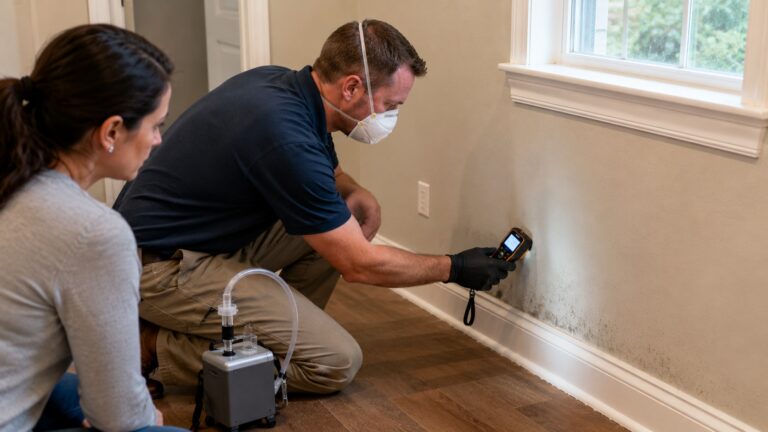
Sometimes the right next step is not immediate remediation but a professional mold or moisture inspection. This is especially true when you know something is wrong but cannot tell how far the problem extends.
An inspection may make sense when:
- There is a strong musty odor but little or no visible mold.
- Mold appears in one area, but the moisture source is unclear.
- You suspect mold behind walls, ceilings, floors, or cabinets.
- A leak was repaired but the area still smells damp.
- You are unsure whether materials are dry enough to rebuild.
- You need documentation before making repair decisions.
- You want a clearer scope before hiring a remediation company.
Mold testing is not always required when visible mold and moisture damage are already present. In many cases, the more important question is not “what kind of mold is this?” but “where is the moisture coming from, how far has it spread, and what materials are affected?”
A good inspection should help define the scope of the problem. It may include visual inspection, moisture readings, humidity checks, leak investigation, material assessment, and recommendations for whether cleanup, drying, removal, or repairs are needed. For pricing details, see How Much Does Mold Inspection Cost?.
What a Mold Remediation Professional Should Actually Solve
A mold remediation professional should do more than make the visible mold disappear. If the work only treats the surface but leaves wet materials, hidden growth, or the moisture source behind, the problem can return.
A proper professional remediation plan should address four basic goals:
- Containment: keeping mold-contaminated dust and debris from spreading into unaffected areas.
- Removal: cleaning or removing contaminated materials based on the material type and severity.
- Drying: reducing moisture in affected materials and surrounding spaces.
- Moisture correction: identifying and correcting the leak, humidity, drainage, condensation, or ventilation problem that allowed mold to grow.
Containment matters because mold cleanup can disturb settled spores, dust, and debris. Removal matters because some materials can be cleaned while others may need to be cut out and replaced. Drying matters because mold will return if the affected area stays damp. Moisture correction matters because mold is usually a symptom of an underlying water problem.
If the remediation company cannot explain how it will contain the area, address moisture, handle affected materials, and confirm the scope of work, that is a warning sign. The decision to hire should come before the decision about which company to hire.
Cost Should Not Be the Only Deciding Factor
Cost is a real concern, especially when mold remediation may involve containment, material removal, drying equipment, inspections, or repairs. But the cheapest option is not always the safest option if it only removes visible staining and ignores hidden moisture.
A small surface cleanup should not be priced like a major remediation project. At the same time, a serious hidden mold problem should not be treated like a quick wipe-down. The scope should match the risk, the material affected, and the cause of the moisture problem.
Professional mold remediation costs can vary based on the size of the affected area, the materials involved, whether demolition is needed, whether drying is required, and whether the source of moisture has already been repaired. For deeper cost planning, see How Much Does Mold Remediation Cost?.
The better question is not simply “Can I avoid paying for remediation?” It is “Will this approach actually solve the mold problem without letting it spread, return, or damage more materials?”
When You May Not Need Professional Mold Remediation
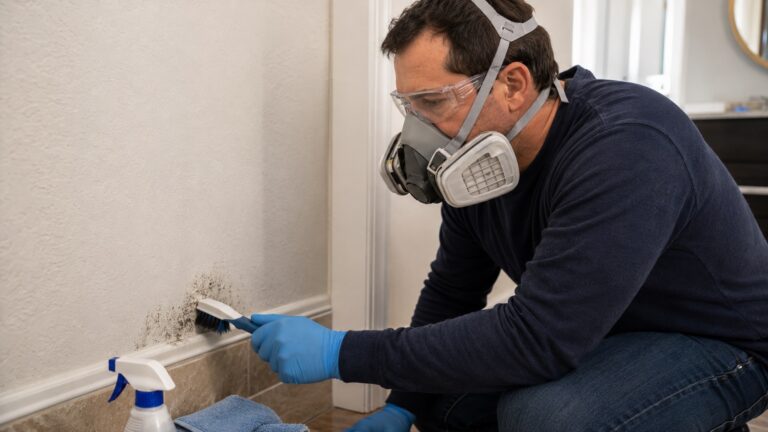
Not every mold problem requires a professional remediation company. In some cases, the mold is small, visible, surface-level, and tied to a simple moisture source that has already been corrected. Those situations may be reasonable for careful homeowner cleanup if the affected person is comfortable doing the work safely.
Professional remediation may not be necessary when all of the following are true:
- The mold covers only a small isolated area.
- The mold is on a visible, accessible surface.
- The material is not soft, crumbling, swollen, or deeply porous.
- There is no evidence of hidden moisture behind the surface.
- The mold has not returned repeatedly after cleaning.
- The moisture source is known and has already been fixed.
- The cleanup does not require opening walls, ceilings, floors, ductwork, or insulation.
- No one in the home is unusually sensitive to mold or indoor air irritants.
For example, a small patch of surface mold on bathroom paint may not require a remediation company if it developed from poor ventilation, the paint is intact, the area is dry, and the bathroom humidity problem is corrected. In that situation, the homeowner’s main job is to clean safely, improve ventilation, reduce moisture, and monitor the area.
But even a small mold patch deserves attention if it is a clue to a bigger moisture problem. If the same spot keeps returning, if the wall feels soft, if there is a musty smell, or if staining spreads after rain or plumbing use, the problem may no longer be simple surface mold.
What to Do Next If You Decide to Hire a Professional
If the mold problem appears large, hidden, recurring, or connected to serious water damage, the next step is to hire carefully. Mold remediation is not a service where you should choose based only on the lowest price or the fastest available appointment.
Before hiring, try to understand what the company is actually proposing. A reliable mold remediation company should be able to explain what area is affected, how it will prevent contamination from spreading, which materials can be cleaned, which materials may need removal, how the area will be dried, and what moisture source must be corrected.
Ask for a clear scope of work before approving the job. The scope should describe the affected areas, containment plan, removal or cleaning approach, drying needs, disposal process, and any recommended repairs. If the company gives vague answers, pushes unnecessary testing, refuses to explain the work, or promises unrealistic results, slow down before signing.
Once you know the problem is beyond DIY, these next-step guides can help you move carefully:
- How to Choose a Mold Remediation Company
- Questions to Ask Before Hiring a Mold Remediation Company
- How to Avoid Mold Remediation Scams
The goal is not just to remove visible mold. The goal is to control the affected area, remove or clean the right materials, dry the structure, and correct the moisture source so the same problem is less likely to return.
FAQ
How much mold is too much to clean yourself?
A small isolated area of surface mold may be manageable for some homeowners, especially if it is on a visible, cleanable surface and the moisture source has already been fixed. A commonly used practical threshold is about 10 square feet, but size is not the only factor. Hidden mold, recurring mold, mold on porous materials, HVAC-related mold, or mold after flooding may require professional help even if the visible area looks small.
Should I hire a professional for mold behind drywall?
Yes, professional help is usually wise when mold is suspected behind drywall. Drywall can hold moisture, the paper facing can support mold growth, and the visible patch may not show how far the problem has spread inside the wall cavity. Opening moldy drywall without containment can also spread contaminated dust and debris into surrounding areas.
Do I need professional mold remediation if mold keeps coming back?
Recurring mold is a strong sign that the underlying moisture problem has not been solved. You may need a professional if mold returns in the same place after cleaning, especially near leaks, damp walls, ceilings, floors, cabinets, basements, crawl spaces, attics, or HVAC systems. The issue is usually not just the mold on the surface but the moisture pattern that keeps feeding it.
Can I clean mold myself if I wear a respirator?
A respirator can reduce exposure during limited cleanup, but it does not make every mold job safe for DIY. Protective equipment does not replace containment, moisture correction, proper material removal, or professional evaluation when mold is large, hidden, recurring, or growing in porous materials. If the job requires disturbing drywall, insulation, flooring, ductwork, or structural materials, professional help may be safer.
Should I test for mold before hiring a remediation company?
Testing is not always necessary when visible mold and moisture damage are already present. In many cases, the more important questions are where the moisture is coming from, how far the damage extends, and which materials are affected. Testing or inspection may be helpful when there is a musty odor with no visible mold, when the affected area is unclear, or when documentation is needed before repair decisions.
Is professional mold remediation worth it for hidden or recurring mold?
Professional mold remediation is usually worth it when mold is hidden, recurring, connected to water damage, or growing in materials that may need removal. The value is not just cleaning; it is containment, safe material handling, drying, and moisture correction.
Key Takeaways
- Small, isolated surface mold may sometimes be handled without a remediation company if the moisture source is fixed.
- Large, hidden, recurring, or water-damage-related mold usually deserves professional evaluation.
- Mold behind drywall, under flooring, in insulation, or near HVAC systems is more serious than surface mold.
- Recurring mold usually means moisture is still present or contaminated material remains.
- Professional mold remediation should address containment, removal, drying, and moisture source correction.
- Once the problem is beyond DIY, choose the remediation company carefully before approving the work.
2 Comments
Comments are closed.